A decade ago, biohacking was considered fringe.
Today, it’s attracting entrepreneurs, investors, executives and high performers from around the world who are searching for a better answer to a question that has plagued ambitious people for generations:
How do you perform at your highest level without burning out?
That question took center stage at the 2026 BEYOND Biohacking Conference in Austin, Texas, where more than 5,000 attendees from around the world gathered to explore the latest breakthroughs in longevity, neuroscience, personalized medicine and human performance.
Hosted by biohacking pioneer Dave Asprey, the event brought together an impressive lineup of thought leaders, physicians, researchers and performance experts, including bestselling author and purpose coach Jay Shetty, happiness and leadership expert Arthur Brooks, longevity physician Dr. Gabrielle Lyon, brain-performance specialist Jim Kwik, and dozens of other innovators working at the intersection of health, technology and human potential.
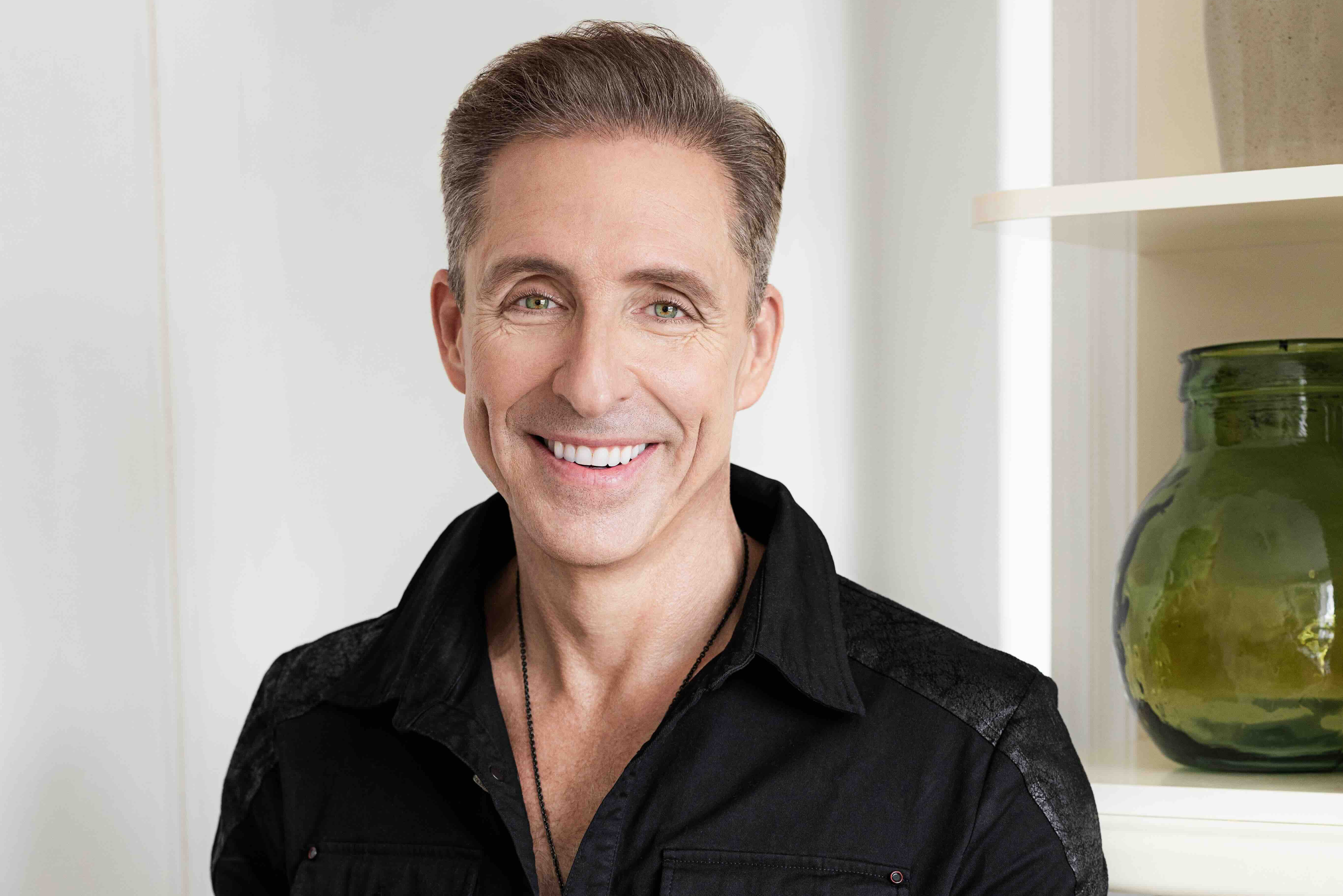
For Asprey—the entrepreneur, author and founder widely credited with launching the modern biohacking movement—the conference represented more than just another industry event. It was proof that optimizing human performance has evolved from a niche interest into a global movement.
“What started as about 100 people meeting in a bar in San Francisco has become something much bigger,” Asprey says. “We’re seeing a quantum leap in our ability to understand what’s going on in our bodies.”
What began as a small gathering of self-experimenters has grown into what many now consider the premier event in biohacking, longevity and consciousness. Industry analysts project the biohacking and longevity market could surpass $200 billion in the coming years, fueled by growing demand for personalized health, performance optimization and healthy aging.
One of the biggest themes emerging from this year’s conference was the rapid advancement of personalized health data—from biological-age testing and microbiome analysis to AI-powered diagnostics and neuroscience tools designed to help individuals better understand their own bodies and brains.
For entrepreneurs, Asprey believes that shift could change everything.
The New Competitive Advantage
Entrepreneurs have always looked for an edge.
Some search for better strategies. Others invest in coaches, masterminds or leadership development. Increasingly, many are turning inward—toward their own biology.
One of the biggest themes emerging from this year’s conference was the rapid advancement of personalized health data.
Companies showcased technologies capable of measuring biological age, microbiome health, genetic predispositions and physiological performance with a level of precision that would have seemed impossible just a few years ago.
According to Asprey, access to that information is fundamentally changing the way people approach health.
“Laboratory testing is now available without begging for a permission slip from your doctor,” he says. “It lets you know where to direct your energy, your effort and your dollars so you can get results.”
For business owners accustomed to tracking key performance indicators, the concept feels familiar.
You can’t improve what you don’t measure.
And increasingly, entrepreneurs are realizing that their most valuable asset isn’t their business—it’s their own capacity to lead it.
Much of Asprey’s current work centers on helping high performers apply those principles in real life. Through 40 Years of Zen, his immersive neuroscience program for executives and entrepreneurs, Asprey and his team use advanced brain mapping and neurofeedback technology to help leaders identify stress patterns, improve resilience and unlock peak cognitive performance.
Participants often include founders, CEOs, investors and other high-achieving leaders seeking to improve decision-making, emotional regulation and performance under pressure.
The goal, he says, isn’t to make everyone think alike. It’s to help people become more effective versions of themselves.
Why Average Advice Doesn’t Work for Exceptional People
One of Asprey’s most provocative messages for entrepreneurs is deceptively simple:
Stop trying to be average.
For decades, public health recommendations have largely been built around what works for the majority of people. The challenge, Asprey argues, is that entrepreneurs rarely fit neatly into average categories.
“Public health looks at a million people and says, ‘This works for most people, so let’s make everyone do it,'” he says.
That approach may help someone struggling at the lower end of the performance curve. But Asprey believes it can also limit high performers.
“If you’re already operating at a high level and you follow advice designed for average outcomes, you can actually reduce your performance.”
Instead, he advocates a more personalized approach.
Biohacking, at its core, is about identifying what works specifically for you.
Whether it’s nutrition, sleep, recovery, cognition or stress management, Asprey believes personalized data allows people to amplify their natural strengths instead of conforming to generalized standards.
“We all want to be above average in our own unique way,” he says.
That’s one reason Asprey believes biohacking has become so relevant to entrepreneurs. Rather than prescribing the same solution for everyone, personalized biohacking considers genetics, nutrition, sleep patterns, stress responses and cognitive strengths.
The result is a more individualized approach to performance—one that preserves creativity, intuition and innovation rather than forcing high performers into a standardized mold.
It’s also why Asprey pushes back against the notion that biohacking is only for wealthy men with access to expensive technology.
Many of the most powerful bio hacks, he says, are free: sunlight, sleep, movement and stress regulation.
Women, he adds, have long been among the strongest adopters of biohacking because they tend to be more aware of subtle physiological changes.
“When you combine intuition with data, that’s where real power happens.”
The Entrepreneur’s Greatest Challenge Isn’t What You Think
Ask most people what makes entrepreneurship difficult, and they’ll point to funding, competition or market uncertainty.
Asprey sees it differently.
“The single biggest thing that determines whether you’re going to win or not is your capacity to endure suffering without breaking,” he says.
After creating companies that have generated more than $1 billion in lifetime revenue, Asprey knows firsthand that entrepreneurship often requires carrying burdens few others understand.
When something goes wrong, responsibility eventually lands on the founder’s desk.
No matter how exhausted you are.
No matter how complicated the problem.
No matter what else is happening in your life.
“If nobody else can solve it, it’s yours,” he says.
That reality creates a unique form of pressure—one that can slowly erode energy, decision-making ability and mental resilience.
The solution, Asprey believes, isn’t simply working harder.
It’s building biological resilience.
Over the years, Asprey has worked with thousands of entrepreneurs and executives, and he believes one of the biggest misconceptions about success is that resilience is purely mental.
In reality, biology often plays a major role.
According to Asprey, many founders fall into one of two categories: “worriers” and “warriors.” Some are naturally predisposed toward anxiety and hypervigilance, while others push relentlessly until they burn out.
Understanding those biological differences allows entrepreneurs to make targeted changes to nutrition, supplementation, sleep and lifestyle habits that can dramatically improve resilience.
“If you have biological and neurological resilience, the weight isn’t that heavy anymore,” he says. “You can look at a challenge and think, ‘I’ve got this.'”
The Two Experiences That Break Entrepreneurs
Throughout his work with executives, founders and high-performing leaders, Asprey has identified two emotional experiences that consistently create lasting damage.
The first is injustice.
The second is betrayal.
Injustice occurs when someone does everything right and still experiences negative consequences.
Betrayal occurs when trust is intentionally violated.
For entrepreneurs, both are remarkably common.
In Asprey’s experience, as many as 90% of entrepreneurs have experienced some form of betrayal from a trusted employee, partner or colleague during their careers.
The problem isn’t that these events occur.
The problem is that many entrepreneurs aren’t psychologically prepared for them.
When founders believe business should always be fair, they often suffer far more when reality proves otherwise.
Resilient entrepreneurs, on the other hand, understand that setbacks are part of the journey.
They don’t personalize every challenge.
They learn from it and keep moving.
The Lesson Every Founder Needs to Hear
Perhaps Asprey’s most valuable advice for entrepreneurs has nothing to do with supplements, wearables or cutting-edge technology.
It’s about identity.
Too many founders become their businesses.
Their self-worth becomes intertwined with company performance.
When revenue drops, they feel like failures.
When a lawsuit emerges, it feels like a personal attack.
When a deal falls apart, they experience it as a threat to their own survival.
Asprey believes this mindset is one of the fastest paths to burnout.
“When there’s a threat to the business, it feels like a threat to yourself,” he says.
The healthier alternative is learning to separate who you are from what you do.
A business is something you build.
It is not who you are.
Asprey also advocates practical risk management. While entrepreneurs naturally embrace uncertainty, he believes many make the mistake of concentrating too much risk in a single venture.
Diversifying investments, maintaining multiple income streams and building redundancy into both business and personal finances can reduce stress while improving long-term resilience.
A Powerful Demonstration of Human Potential
One of the most memorable moments from this year’s conference came when Asprey invited his 19-year-old daughter onto the main stage for a live neuroscience demonstration.
Using real-time brainwave technology, the audience watched as she moved into a deeply regulated meditative state while her neurological patterns were displayed and analyzed.
Despite standing in front of thousands of attendees and being playfully put on the spot by her father, she remained remarkably composed and focused.
To Asprey, it demonstrated something he has spent decades studying:
The human brain can be trained.
Stress responses can be regulated.
Performance can be improved.
And resilience can be built.
Why Energy Is the Ultimate Currency
If there is one theme that ties Asprey’s work together, it’s energy.
Not motivation.
Not productivity.
Energy.
Every day, he says, the body produces a finite amount of biological energy.
The question is where that energy gets spent.
Fear consumes energy.
Poor sleep consumes energy.
Chronic stress consumes energy.
Inflammation consumes energy.
The more energy devoted to survival, the less remains available for creativity, leadership, innovation and growth.
According to Asprey, many people unknowingly spend enormous amounts of energy on automated fear responses, food cravings and chronic stress patterns.
Entrepreneurs who improve sleep quality, regulate stress and align nutrition with their biology can redirect more of that energy toward leadership, relationships, creativity and strategic thinking.
“The goal isn’t just to have more energy,” he says. “It’s to have energy available for the things that matter most.”
That focus on sustained energy and cognitive performance also inspired Danger Coffee, Asprey’s specialty coffee company, which has developed a loyal following among entrepreneurs, investors, technology leaders and other high performers seeking to optimize mental clarity and focus.
“Most pressure actually comes from your own thoughts,” Asprey says.
The Future of Success
As artificial intelligence accelerates medical discovery and personalized health technology becomes more accessible, Asprey believes the future of human performance will become increasingly individualized.
AI, he says, is poised to transform medicine, longevity research, neuroscience and even meditation by helping practitioners uncover insights that once took weeks—or months—to discover.
For business owners accustomed to using data to drive growth, Asprey sees AI as the next evolution of personal performance optimization.
The entrepreneurs who thrive won’t necessarily be the ones who work the hardest.
They’ll be the ones who understand themselves the best.
The ones who know how to recover faster.
Focus longer.
Think more clearly.
And remain resilient when challenges arise.
“Biohacking has always been about changing the environment around you and inside you so that you have control of your state,” Asprey says.
Despite the sophisticated technology, genetic testing and AI-powered tools, Asprey says true success remains surprisingly simple.
At its core, biohacking isn’t about chasing perfection—it’s about creating enough energy, resilience and awareness to fully engage with life.
For entrepreneurs, that may mean building a better company. For others, it may mean showing up more fully for family, community and the people they love.
Success, Asprey says, is ultimately about “finding beauty in the things you do every day.”
Featured image provided by Asprey.