
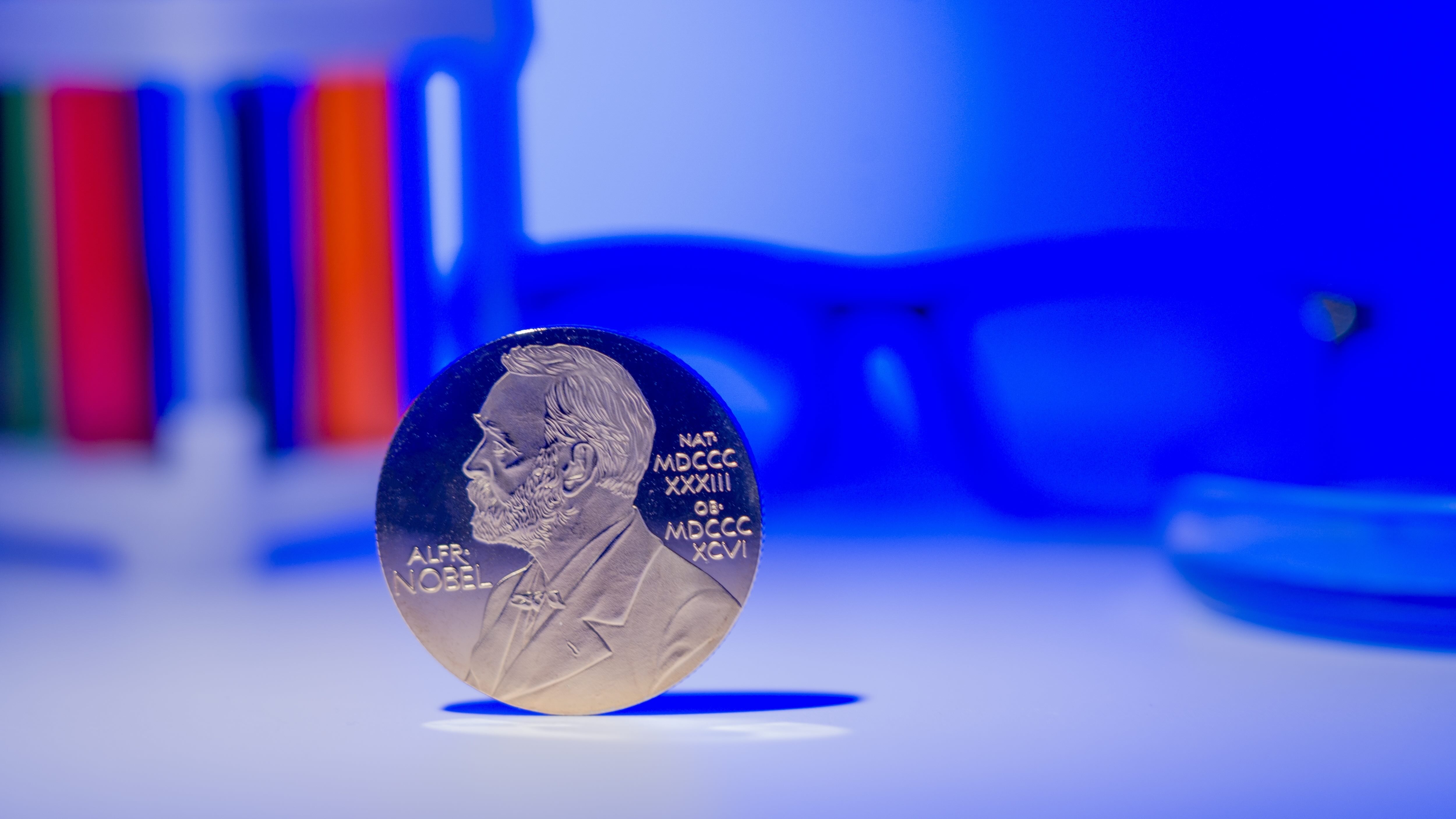
Henri Kagan was 95 when he was named a winner of the Nobel Prize in Chemistry. Navi Pillay, who won the Peace Prize, is 85 and still serves as a judge on the International Court of Justice. Of the 10 people named 2026 Nobel Prize winners this month, nine are 70 or older.
Most of them did their defining work in their 30s and 40s and were recognized for it decades later. In between came years of steady work on a single question, often with no promise it would pay off.
We might not all be in the running for a Nobel, but we all know what it feels like to chase something we’re never sure we’ll catch. This year’s winners lived with that uncertainty for 20, 30, even 50 years, and their stories, along with the research behind them, show what that kind of persistence can lead to.
How Old Are the 2026 Nobel Prize Winners?
The 2026 Nobel Prize winners range in age from about 55 to 95, with an average age of about 77. For most of them, the key work came much earlier, at an average age of about 44.
Henri Kagan, chemistry: 95. He described the “nonlinear effects” at the center of his prize in 1986, at 56.
Navi Pillay, peace: 85. In 1973, at 31, she took on a case that helped secure basic legal rights for political prisoners on Robben Island.
Robert E. Hall, economics: 83. His key 1982 paper with Fredric Mishkin came when he was about 39.
Francis Halzen, physics: 82. He proposed the IceCube neutrino observatory in 1988, at 44.
Anne Carson, literature: 76. Autobiography of Red, the verse novel widely regarded as her greatest work, came out in 1998, when she was about 48.
Kenso Soai, chemistry: 76. He reported his self-amplifying chemical reaction in 1995, at 45.
Georg Nagel and Peter Hegemann, medicine: both in their early 70s. They identified light-sensitive proteins in algae in the early 2000s, in their late 40s.
Michael Woodford, economics: about 71.
Karl Deisseroth, medicine: about 55. He put those algae proteins into nerve cells in 2005, at about 34.
How Long Does It Take to Win a Nobel Prize?
Longer than it used to. In physics and chemistry, most Nobel Prizes now go to work done more than 20 years before the award.
A 2014 letter in Nature by physicist Santo Fortunato and colleagues tracked the gap between discovery and prize:
Physics: 60% of prizes since 1985 went to work done more than 20 years earlier, up from 11% before 1940.
Chemistry: 52%, up from 15%.
Physiology or medicine: 45%, up from 24%.
The authors warned that if the trend continues, the average laureate’s age is likely to exceed life expectancy by the end of the century. Because the Nobel can’t be awarded posthumously, they wrote, the lag threatens the prize itself. Patience, it turns out, has an expiration date.
At What Age Do People Do Their Best Work?
Most great innovators make their biggest contributions in their 30s and 40s, and that age has been creeping up. Northwestern economist Benjamin Jones studied the ages at which Nobel winners in physics, chemistry, medicine, and economics and great inventors produced their landmark work. He found that 42% of those achievements came in people’s 30s and 40% in their 40s. Only 7% came at 26 or younger.
Over the 20th century, the typical age of great achievement rose by about eight years once Jones accounted for field and nationality. One explanation he offers is that every field keeps growing, so people spend more of their early careers just learning what’s already known before they can add to it.
The 2026 laureates are broadly consistent with that pattern. Their key work clustered between 31 and 56. Deisseroth, the whippersnapper of the group at a spry 55, was about 34 when he made his breakthrough and has kept building on it for two decades.
What Kept the 2026 Laureates Going?
None of them knew the work would end in a prize. Halzen’s proposal to bury thousands of light sensors deep in Antarctic ice, a pitch that would not survive most budget meetings, took more than 20 years to complete and cost about $279 million. “No one knew whether it would succeed,” he told reporters at the announcement. “So many things could’ve gone wrong.”
Others followed their curiosity into unlikely subjects. The medicine prize traces back to basic research on a single-celled alga, work with no obvious use at the time. Carson once spent seven years reading Proust, then wrote a book about one of his characters because she didn’t want the experience to end.
Several never stopped. Pillay’s legal career spans more than 50 years, from Robben Island to a UN tribunal in Rwanda to the International Court of Justice, where she still sits. Carson, who has Parkinson’s disease, started taking boxing lessons in her 70s. When she heard she’d won, she told Iceland’s public broadcaster, “Crazy, I think they’re all crazy.”
What Does This Mean for Your Own Long Game?
Here’s what this year’s prizes suggest for careers outside science.
Give your work more time. If some of the biggest payoffs can now take 20 years or more to be recognized, a slow year doesn’t mean your work is going nowhere. That’s especially true early in a career, when deliberate practice is still building the base.
Expect your peak later than you think. Jones’s research puts most major contributions in people’s 30s and 40s, which takes some pressure off the race to build a career before 40.
Let curiosity lead sometimes. Pond algae and Antarctic ice weren’t obvious bets. Combining unusual interests, the idea behind skill stacking, can lead somewhere no one else is looking.
Stay active as you age. Pillay and Carson are still working in their 70s and 80s. Research on “SuperAgers” and new longevity findings suggests staying mentally and physically active makes that more likely. And if you’re thinking about a change, it’s rarely too late to switch careers.
Most of this year’s laureates spent decades on work that few people outside their fields were watching. The prize, when it finally came, recognized something they had been doing all along.
Featured image from AntonSAN/Shutterstock