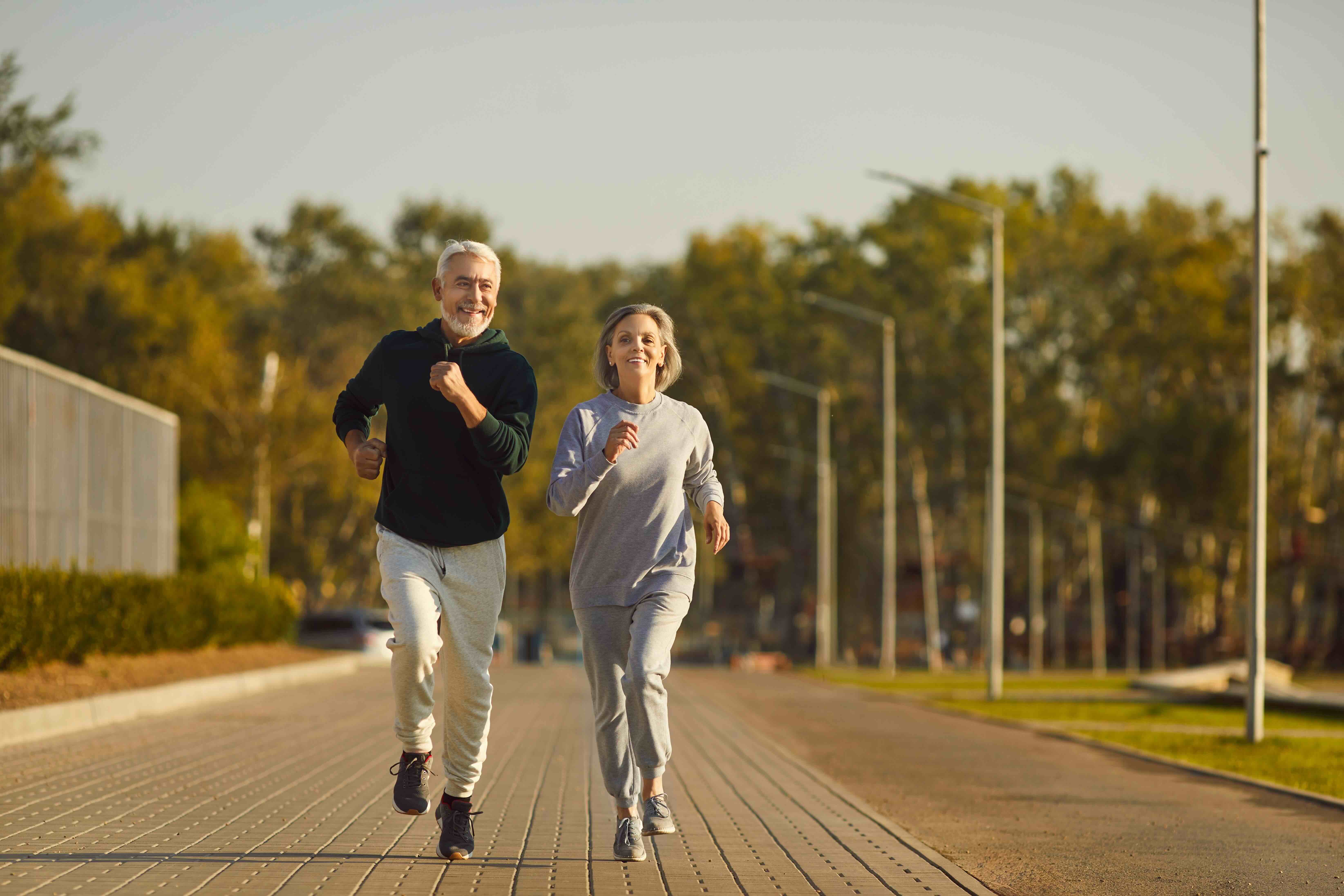

Most of what people believe about aging was formed decades ago, when the science was thinner and the assumptions were darker. The working model—that physical and cognitive decline are inevitable, that the goal is simply to slow the slide—is being replaced by something more accurate and more demanding.
This year’s research is specific in a way that earlier longevity science wasn’t. Not “exercise more” but exactly how many minutes. Not “stay social” but a precise mortality comparison that changes how seriously you should take it. Not “eat enough protein” but the number that’s almost certainly higher than what you’re currently targeting. Five findings from 2026 that are worth updating your operating assumptions around.
1. Decline Is Not the Default—But Your Mindset Makes It One
The starting premise most people bring to aging is wrong. A Yale School of Public Health study published in 2026 tracked nearly 4,000 adults ages 19 to 94 over three years and found that 45% of adults 65 and older improved in at least one area—roughly 32% improved cognitively and 28% improved physically. Led by researcher Becca R. Levy and published in the peer-reviewed journal Geriatrics, the study found something more actionable: People who held more positive attitudes about their own aging were significantly more likely to show these gains.
That’s not a motivational footnote. It’s a mechanism. The way you think about what’s coming shapes the biological and behavioral choices that determine whether it arrives. If you’ve already written off your 70s as a period of managed decline, you are actively contributing to that outcome. The practical move here is to audit the assumptions you’re carrying about your own future health because the data increasingly suggests they are the most important variable you can control.
2. The Exact Amount of Strength Training That Pays Off
For years, the advice has been vague: lift weights, build muscle, do resistance training. A June 2026 study in the British Journal of Sports Medicine finally puts a number on it. Researchers tracked 147,374 people over 30 years and found that 90 to 120 minutes of strength training per week was the longevity sweet spot, linked to a 13% lower risk of death from any cause, a 19% lower risk of death from cardiovascular disease and a 27% lower risk of death from neurological disease. Critically, they found no additional mortality benefit above 120 minutes per week.
That’s three sets of data points that change the conversation. First, the specific window (90-120 minutes) gives you an actual target instead of a vague directive. Second, the neurological protection finding—27% lower risk—is striking and underreported; most discussions of strength training focus on cardiovascular and metabolic benefits. Third, the ceiling matters: Doing more doesn’t help. Two focused sessions of 45 to 60 minutes weekly is not a beginner’s approach. It’s the evidence-backed optimum. If you’re already doing more, you may be spending time that could go elsewhere.
3. Cardio & Strength Together Are a Different Category
The same 30-year study found that combining strength training with aerobic exercise produces benefits that neither generates alone. Participants who accumulated high levels of both—30 to 44 MET hours of aerobic activity weekly alongside 60 to 119 minutes of strength training—saw a 45% lower risk of death compared with those doing minimal amounts of either. At the highest aerobic volumes, mortality risk dropped 53% to 58% regardless of the amount of strength training.
The practical interpretation isn’t “do more.” It’s that aerobic and strength training operate on different biological pathways and stacking them produces compounding protection rather than redundant protection. If you’ve been treating your weekly workout as a choice between cardio and strength, the data argues for both—not as a performance goal, but as a longevity strategy. A structured week that includes three cardio sessions and two strength sessions, each around 45 minutes, clears both thresholds.
4. Social Isolation Has a Mortality Number, & It’s Alarming
Stanford Medicine’s longevity research for people in their 40s and 50s cites a finding that deserves more attention than it typically gets. A study analyzing data from 2.3 million adults, published in Nature, found that social isolation increases the risk of premature death by about 30%, a mortality risk comparable to smoking 15 cigarettes per day.
Most high-achievers in their 40s and 50s treat social connection as a discretionary item that gets trimmed when schedules are full. The data says this is a serious miscalculation. Stanford’s Abby King, Ph.D., who has spent decades researching health behaviors across the lifespan, frames this explicitly: “Social connection is really important for healthy aging—for your brain and for your emotional health. Finding ways to stay engaged with others, whether through community groups, volunteer work or simply maintaining close friendships, is one of the most protective things you can do for your long-term health.”
The midlife years—when careers and family demands peak—are precisely when social connection tends to contract. Building structural habits around it now (a standing dinner, a recurring commitment, a consistent community) isn’t a lifestyle choice. Based on the mortality data, it’s closer to a health intervention.
5. Your Protein Target Is Probably Too Low
The standard dietary recommendation for protein is 0.8 grams per kilogram of body weight per day. Stanford Medicine’s experts say that number is wrong for adults over 40, and the gap matters. Starting around age 40, you lose approximately 1% of muscle mass per year; the rate accelerates through your 50s. To counter that loss, Stanford’s research puts the effective target for adults over 40 at 1.0 to 1.2 grams of protein per kilogram of body weight daily, 25% to 50% higher than the standard recommendation.
For a 165-pound person, that means roughly 75 to 90 grams of protein per day, distributed across three meals of 20 to 30 grams each plus a 15- to 20-gram snack. Most people eating a standard Western diet fall significantly short of this, particularly at breakfast. The practical adjustment isn’t complicated—it’s adding a structured protein source to every meal rather than treating protein as incidental—but it requires knowing the actual target, which most people don’t.
What All 5 Findings Have in Common
Each of these studies challenges a passive assumption about aging: that decline is inevitable, that vague effort is enough, that social life is optional, that the standard guidelines apply to you. What they suggest instead is that healthspan—the number of years you’re genuinely functional, sharp and strong—is far more responsive to deliberate choices than most people act like it is.
The extra years are coming. The research is increasingly precise about how to make them count.
Featured image from tech_BG/Shutterstock