
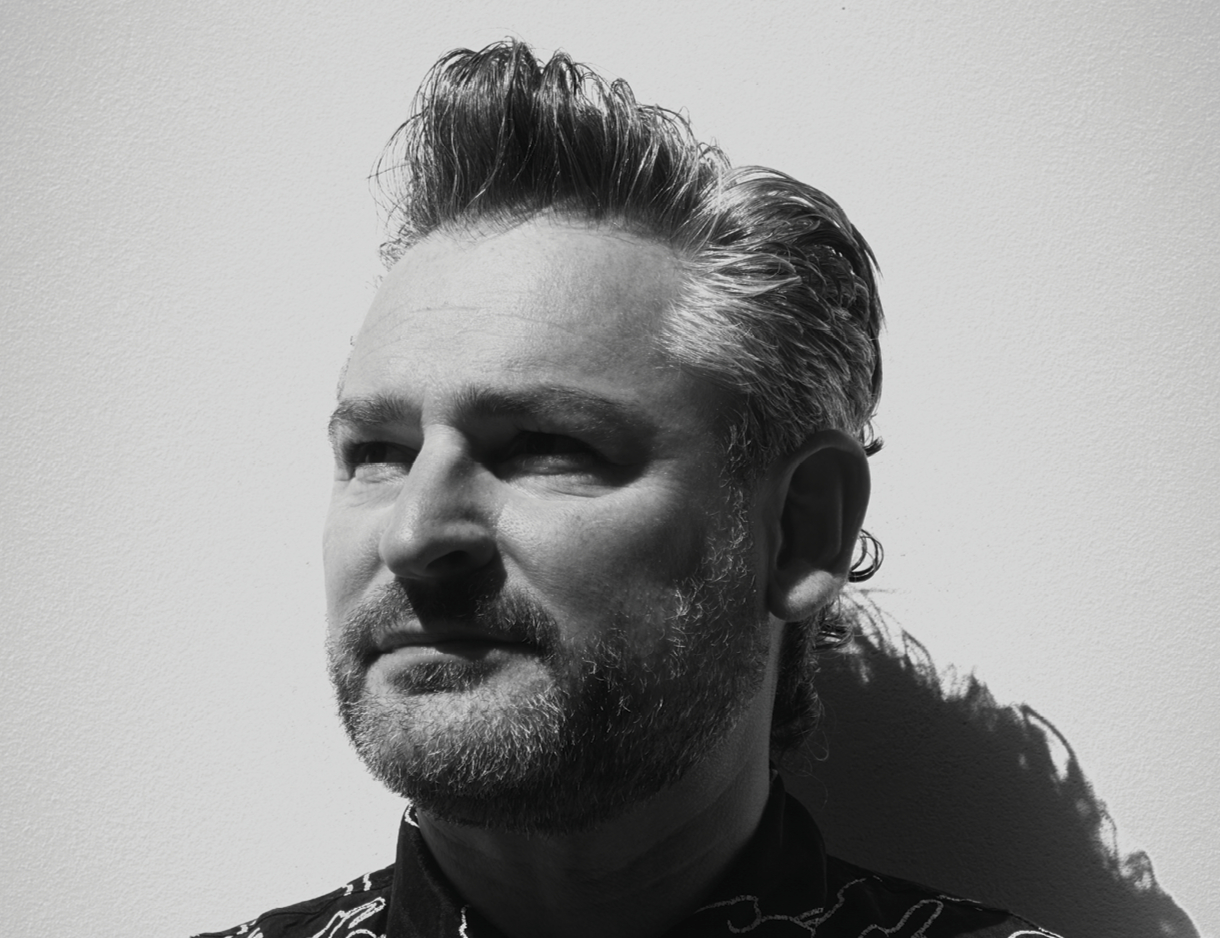
Frederik Pferdt spent over a decade leading innovation at Google. As the company’s first chief innovation evangelist, Pferdt worked with approximately 100,000 “Googlers” (Google employees) to find confidence in their ideas, no matter how risky they may seem. He trained about 80 teams per year on the concept of innovation. In that time, he had an epiphany that might surprise most traditional business leaders.
Innovation isn’t about technology or money or resources. True innovation is all about your “mindstate.”
Now an author, entrepreneur and podcaster, Pferdt has made it his mission to help people prepare for the future rather than try to predict it. His approach centers on a simple but powerful belief: Everybody has the ability to shape their own future by the choices they make and by the decisions they take.
The Six Dimensions of Innovation
Through his work at Google, Pferdt identified six distinct dimensions that allow people to be truly innovative: optimism, openness, curiosity, empathy, experimentation and what he calls “dimension X,” or each person’s unique superpower. But unlike fixed personality traits, these dimensions are all trainable skills.
“I deeply believe that you can train yourself to be more open, to be more curious, to be more empathetic and so forth—that allows you to be more innovative,” Pferdt says. This insight fundamentally changed his approach to leadership development, moving away from command-and-control structures toward something far more human-centered.
Better Questions Lead to Better Answers
Pferdt’s philosophy challenges conventional leadership wisdom. “For me, leadership is not about having all the answers,” he says. “It’s about creating the conditions for people to really discover better ones—that is, discovering better questions and better answers.”
The best leaders he’s observed, “focus less on being right and more on helping others to learn fast and take action and grow.” This shift from authority-based to facilitative leadership creates environments where teams can thrive even during uncertain times.
That shift can be as small as the language we use. At Google, Pferdt introduced an improv exercise that encouraged teams to shift from “yes, but” to “yes, and” when responding to ideas. “We built on each other’s thoughts and ideas. And that shift really turned tension into breakthroughs,” he recalls. “It’s a subtle shift in language, but also in your posture [and] your language, to really shape an environment where people are open to new ideas.”
Building Psychological Safety Through Failure
Creating cultures that support teams through both success and failure requires intentional effort to build psychological safety. Pferdt developed measurable practices that demonstrably increase peace of mind within teams.
One is as effective as it is simple: leaders sharing their own failures. “If you, as a team lead, share something that went wrong—it could be in your private life, it could be something new you tried over the weekend, whatever it is—and you share that failure with each other, people will actually follow,” he explains.
Pferdt takes this concept further by helping teams prepare for failure before it happens. At Google, he created the Penguin Award, inspired by observing penguins while onboard a ship bound for Antarctica. “There’s always one penguin that jumps into the water first. The rest of the colony stays back and just patiently waits to see if that one penguin that took a risk either comes back with food or becomes food. There’s a 50/50 chance.”
The Penguin Award recognizes team members who took risks at the beginning of a project, not at the end when success was already determined. In doing so, it signals to teams that risk-taking itself is valued, regardless of outcomes.
Navigating Uncertainty with Radical Optimism
Pferdt’s approach to leadership becomes particularly valuable during more challenging times. He advocates for “radical optimism,” or retraining ourselves to ask, “What’s the best that can happen?” rather than the worst. This mindset shift helps leaders move from paralysis to possibility.
He illustrates this mindset by recalling his own experience of wildfires—forcing his family to evacuate their home a few years ago. Rather than focusing on what he couldn’t control in that situation, Pferdt chose to reframe the situation as an adventure for his family. He even continued taking business calls from his VW camper van. “How do we want to show up in this situation that we can’t control?” became his guiding question.
Pferdt refers to this concept as the “shape of concern” versus the “shape of creation,” and it provides a practical framework for leaders facing uncertainty. The shape of concern includes everything that worries you but remains outside your control. But the shape of creation encompasses everything you can actually influence through your choices and actions.
The Future Rewards the Curious
As workplaces continue evolving with remote work, AI integrations and large-scale generational shifts, Pferdt believes, “The future rewards the curious, not the cautious.” Leaders who maintain their curiosity and create environments that reward exploration will be better positioned to navigate these ongoing changes.
He also predicts that “kindness is going to peak” in workplace culture. “People want to work in an environment that shows kindness. That can be small acts of kindness where your peers are showing respect and kindness to you, but also where you can be kind to yourself.”
For leaders looking to transform their approach, Pferdt offers a simple starting point: Focus on asking better questions rather than providing all the answers. “I think in a world where AI now gives you great answers, it’s upon us humans to ask better questions.”
To immediately explore how to grow a future-ready mindstate visit awareness. frederikpferdt.com.
Featured image © Ashley Bats
This article was first published in the January/February 2026 issue of SUCCESS® magazine. Get your copy here.