As a kid, Olympia LePoint would look up at the night sky from her South Central Los Angeles home, watching “stars” as they moved through the air. Those stars turned out to be lights from planes, but that only fueled her innate curiosity.
At age 6, LePoint took a serendipitous school field trip to NASA’s Jet Propulsion Laboratory north of LA. Seeing a mission control room and jet engines up close launched her lifelong journey devoted to math, science and helping others understand their practical applications.
Less than two decades later, she was working for the world’s largest aerospace company doing exactly that: helping NASA launch space shuttles. Now, the award-winning rocket scientist, author and keynote speaker is a sought-after artificial intelligence expert, using her background to help others understand AI—and stay ahead of it.
Against All Odds
LePoint grew up in one of LA’s most infamously dangerous neighborhoods, abundant with drugs, sex trafficking and gang-related violence.
“It was tough to study because every time I would come back home to my area, I would worry if I was going to make it through the night,” she says.
When she was 10, a classmate—who’d been recruited into a gang—sliced open her face with a filed-down ring after an argument. Following the incident, her mother enrolled her in a safer school, but that new environment also came with a lengthy commute. Her grades suffered, and, in eighth grade, she failed one of her favorite subjects: math. Through perseverance and the help of a tutor, she shifted her mindset and grades.
“I realized then that school was an opportunity for me to transform the way I was thinking and understand how to access information,” LePoint wrote in Newsweek.
At 16, she left her South Central LA home for her freshman year at California State University, Northridge. “I jumped at it because I had an opportunity to change my environment,” she says.
There, she got her first job—as a math tutor.
She sat side by side with hundreds of students over the next five years, “reading through hundreds of books, becoming my own little human intelligence.”
One of the only women in her classes, LePoint quickly became a top student, graduating as one of the top five students in a graduating class of 6,500.
By 21, LePoint was directly supporting NASA as a Boeing analyst. Soon, she was officially a rocket scientist, using mathematics to calculate risk assessments and the probability of catastrophic explosions.
Interestingly enough, the skills LePoint picked up as a tutor boosted her success at Boeing. She found herself in meetings, tasked with presentations that could result in literal life-or-death outcomes.
“They didn’t understand it; they didn’t appreciate the information,” she says. So, she found another way to present it by quizzing nearly every team member, from fluid dynamics to combustion chamber, to better understand their individual parts. Eventually, she generated a guidebook from their responses that outlined how the engine was going to operate safely.
“I’ve always had this ability to see the future before it happens,” she says. “And what I learned to do in that role is to use mathematics and science to show people what the future was going to be—that came through mathematical probabilistic risk assessments. Ironically, the same sort of mathematics that’s used in artificial intelligence.”
Her method resulted in the advanced program winning $500 million in new engine contracts and a $7 million award fee.
But LePoint faced a significant amount of adversity in the role. While working on one advanced NASA rocket program, she was one of five women—and the only woman of color—out of 500 engineers.
In her time with Boeing, LePoint helped launch 28 successful NASA Space Shuttle missions and won an assortment of awards, including the Modern-Day Technology Leader Award at the Black Engineer of the Year Awards. People magazine lauded her as a modern-day “Hidden Figure,” referencing the Oscar-nominated film that chronicles the real-life story of three Black women who were essential to astronaut John Glenn’s launch into orbit.
“The truth is this: If we do not have a way to reprogram our minds to overcome fear, we will never be successful at our own specific missions in life,” LePoint said in a TED Talk.
Pursuing Passion
After leaving Boeing at 30, LePoint worked for a well-known, worldwide banking institution where she used mathematical modeling to optimize money distribution—and single-handedly solved a problem that had stumped a major consulting firm’s six-person team.
But LePoint wasn’t passionate about banking, so she pivoted back to her first love: education. Now, she’s been teaching mathematics for nearly 20 years. Along the way, she started her own company, creating math and science textbooks that emphasize real-world applications (most recently, she’s published an AI literacy handbook).
She left teaching for three years to care for a family member navigating health issues. When it was time to return to the classroom, her position was no longer available, leaving her wondering, What’s next?
The artificial intelligence boom hadn’t landed just yet, but LePoint saw it on the horizon. More importantly, she knew it was something that people generally didn’t know about or understand.
The more she studied AI, the more it felt familiar.
“When I got to machine learning, I started looking at it, like, ‘What? This is what I did for my master’s degree. They’re just calling it something else,'” she recalls. “Artificial intelligence is the mathematical probabilistic risk assessments, which I was building all along for NASA.”
A few months later, she was back in the classroom—this time at her alma mater as a research methods professor, where she focused on AI and biometrics. Less than a year later, she was teaching and creating curriculum for UCLA’s AI literacy summer program.
Her involvement with this pioneering program garnered interest from organizations and TV programs wanting LePoint’s insight on this emerging technology. The burning question: What can we expect from AI?
Staying Ahead of AI
As AI continues to evolve, every level of the modern workforce should prepare to work with, not against, the technology. LePoint pinpoints five specific ways to stay ahead of AI.
Become ‘AI Literate’
We all have a role to play when it comes to understanding AI. “It doesn’t matter if you’re 8 or 88,” she says. “We need to understand what this technology is.”
A solid understanding of AI helps you know when it’s not functioning properly. The first step can be as small as understanding common AI terminology, such as “guardrails.” These are a set of policies, processes and standards that keep AI systems operating safely and responsibly—and within defined boundaries. Guardrails help ensure that the AI isn’t being used “in a dangerous way,” LePoint says.
Fact-Check AI. Always.
AI can be wrong. It may feel like old news by now, but LePoint feels that it bears repeating—especially with the threat of data poisoning.
Bad actors flood the internet with fake information, “poisoning” the algorithm. In AI terms, it scrapes the internet. “[The algorithm] doesn’t necessarily know how to identify if that particular information is true or not,” LePoint says. “Because AI is not human, right?.... And people are making incorrect, sometimes dangerous, decisions based on the AI results from information that’s not even accurate.
“Humans always have to be a deciding factor after using AI,” LePoint says. “No matter what type of situation, you always have to have humans making the end decision on different projects.”
Support Ethical Companies
Recognize companies that invest in responsible AI use. “Not all technology companies are equal,” she says.
Look for technology companies that are dedicated to innovation and creating guardrails along the way to ensure checks and balances.
“Our job as investors, as people who create success in the future, is to identify the artificial intelligence companies that are responsible and... do business with any type of AI platform that does not look out for the well-being of humans,” LePoint says.
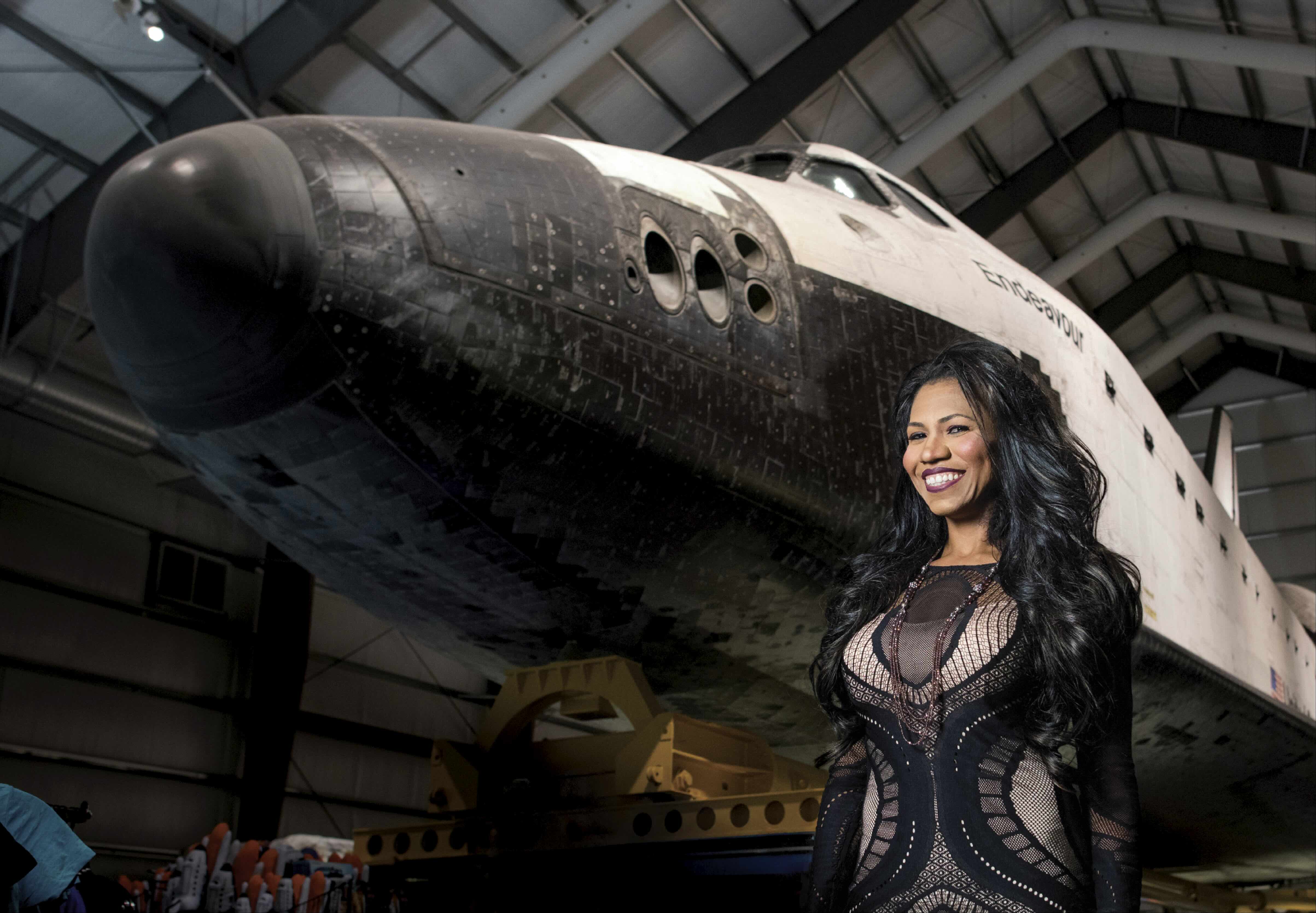
Featured image ©Todd Tyler
This article was first published in the March/April 2026 issue of SUCCESS® magazine. Get your copy here.