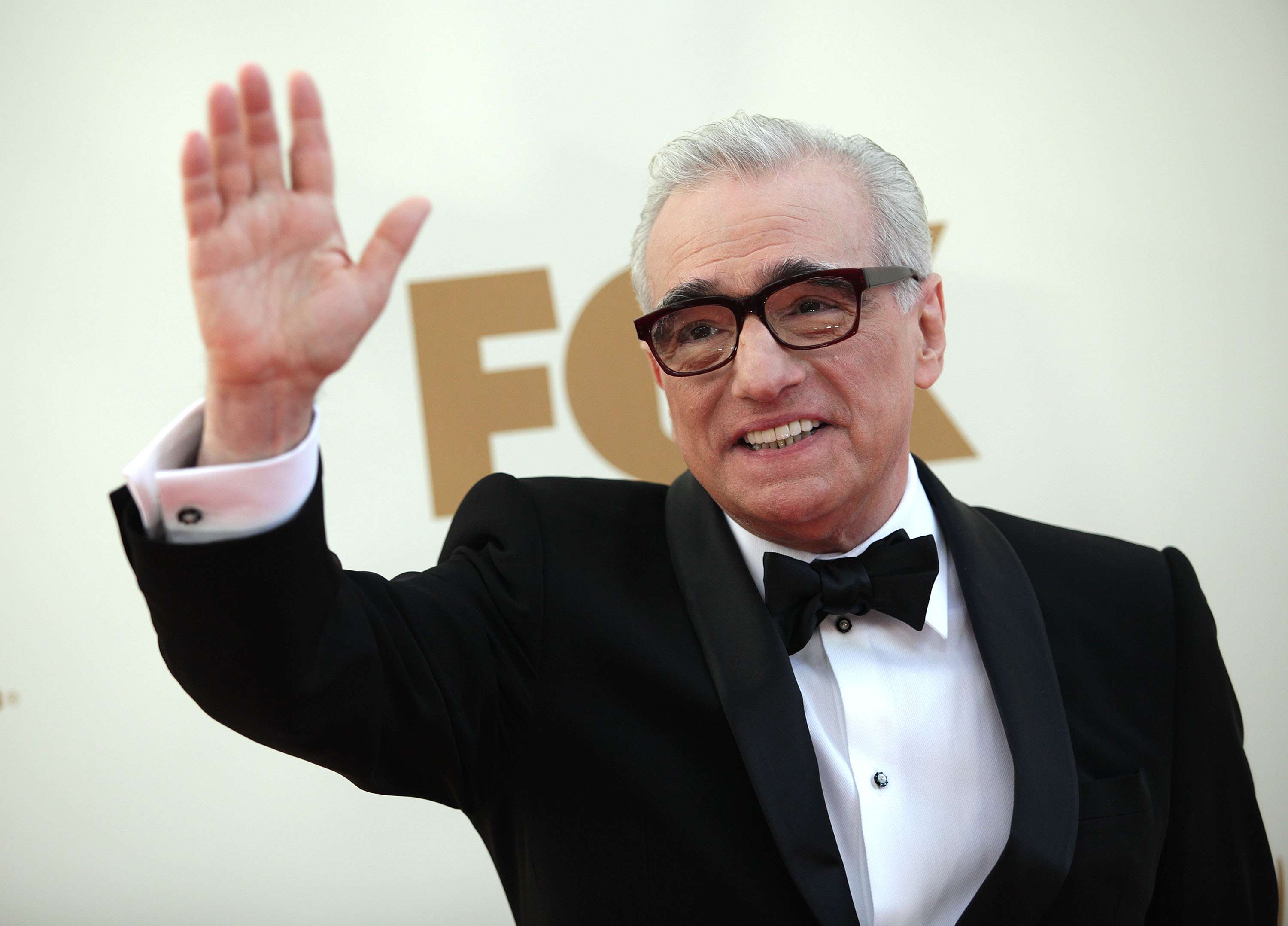
For 70 years, Martin Scorsese sketched his own storyboards.
Long before cameras rolled, before actors stepped onto a set and before cinematographers framed a shot, the Academy Award-winning director put ideas on paper. It was part of a creative process that helped produce some of cinema’s most influential films.
Now, Scorsese has introduced a new tool into that process.
Less than 24 hours ago, news broke that the 83-year-old filmmaker had joined generative AI company Black Forest Labs as an adviser. The company also revealed that Scorsese has been using its FLUX image-generation platform during pre-production to help visualize scenes and communicate ideas to his team.
The headline immediately sparked debate about artificial intelligence, filmmaking and the future of creative work. Yet the most interesting part of the announcement isn’t what it says about artificial intelligence; it’s what it says about relevance.
After a career that’s already secured his place in film history, Scorsese is still experimenting with new ways to work. That decision offers a useful lesson for entrepreneurs navigating technological change in their own industries.
What One Of Hollywood’s Greatest Storytellers Sees In AI
For years, conversations about AI focused on disruption. The discussion centered on what technology might replace, eliminate or automate.
Guillermo del Toro and Seth Rogen spoke out against the technology at the Cannes Film Festival last month, and below-the-line workers, screenwriters and actors have continued to express apprehension and even horror at the prospect of being replaced by AI.
Scorsese’s announcement points to a different reality.
“For 70 years, I’ve been creating my own storyboards. There’s always been this problem of how do you communicate what you see in your head to your cast and crew. There are some things you have to see and feel,” he said when announcing the partnership.
His focus wasn’t on replacing creativity. It was on reducing friction.
In the same statement, Scorsese explained that the AI technology allows him to “share what I’m visualizing more clearly and efficiently to my creative team, the production designer, art designer and cinematographer.”
He described the experience of immediately visualizing and sharing storyboards as “creatively freeing.”
For Scorsese, the problem is time. “During the pre-production process, time costs money and this allowed us to move faster without sacrificing quality or craft,” he said.
Scorsese wasn’t looking for inspiration; he was looking for efficiency. He already developed the vision. The challenge was communicating that vision faster and more clearly to the people responsible for bringing it to life.
This reflects a mindset common among effective leaders. They don’t adopt every new technology that appears. They evaluate whether it solves a meaningful problem or speeds up a process.
The Lesson Beyond Hollywood For Entrepreneurs
Scorsese’s career offers a useful counterexample to the idea that expertise and experimentation are opposing forces.
Throughout his decades in filmmaking, he’s repeatedly embraced technologies that expanded what was possible on screen. In discussing his work with Black Forest Labs, he pointed to earlier examples, noting that he used 3D technology in Hugo and de-aging technology in The Irishman.
“Cinema is a young medium, only around 125 years old, so we have to be open to how it can evolve,” he said.
That perspective extends well beyond filmmaking.
Industries change. Markets shift. New competitors emerge. Technologies evolve. Entrepreneurs who remain successful over decades share one characteristic: They stay curious long after they earned the right to stop learning.
Curiosity doesn’t require abandoning standards. Scorsese remains known for storytelling. Nothing about this announcement suggests those values have changed. The tool changed, but the objective didn’t.
Many entrepreneurs frame adaptation as a choice between preserving quality and embracing innovation. The strongest leaders recognize a third option. They use new tools in service of the standards they already hold.
Scorsese put it this way, “I’m interested in the intersection of technology and storytelling, and seeing how that can push the bounds of creativity to create deeper and richer experiences for audiences.”
The lesson for entrepreneurs has little to do with filmmaking and everything to do with longevity.
A career built over decades can create confidence, but it can also create blind spots. Expertise remains valuable, but relevance depends on maintaining the curiosity that made expertise possible in the first place.
The entrepreneurs who continue making an impact are the ones willing to ask a simple question whenever something new emerges: Could this make the work more efficient?
Scorsese’s answer is yes.
Most entrepreneurs spend years building expertise. The harder task is preventing that expertise from becoming certainty.
Scorsese’s announcement is a reminder that staying relevant requires the same mindset that creates success in the first place: the willingness to keep learning and adapting after you’ve already proven yourself.
Featured image provided by DFree/Shutterstock