In 1960, a psychologist named J.C.R. Licklider published a paper called “Man-Computer Symbiosis.” His argument, radical at the time and still underappreciated today, was that the future of computing resided not in machines that replace human intelligence but in systems where humans and machines operate together as a mutually enhancing, combined entity. He borrowed the word “symbiosis” from biology, based on an observation of two different species whose combination produces something neither can achieve alone.
Today, we are awash in excitement about what AI systems can do autonomously, and that excitement is warranted. But what we have accomplished to date reflects only half of Licklider’s vision: the machine half.
Your Brain Still Beats the World’s Best Supercomputers
Before dismissing the value the human half can add, consider this: The human brain, operating on only about 20 watts of power, still dramatically outperforms the world’s best supercomputers in multiple arenas, like sensory integration, situational awareness and operating in ambiguous, novel environments. These human faculties are not just better than what AI offers; they are complementary to it. Once we combine these capabilities in the right way, the result will be far more powerful than either operating alone.
Currently, the integration between AI and the human user is, at best, thin. Claude responds to what I type, not to who I am or the state I’m in. As this evolves, as AI systems develop the ability to read the human in the loop and adapt accordingly, the symbiosis that Licklider imagined will become not a vision but a practical reality, yielding performance gains and a richness of experience that will make today’s AI vision look like a prelude.
We Already Have a Preview of What’s Possible
Early evidence has shown the potential gains from true human-machine teaming. As just one example, AI tutors that respond to a student’s real-time attention and engagement can more than double learning speed and information retention—not by changing what they teach but, rather, by continuously adapting to keep students operating at their best.
This is not an edge case. It shows, in tangible terms, how much better things can become as AI’s awareness of a human’s state grows, while at the same time giving us a glimpse into what a truly collaborative system will ultimately be capable of.
3 Ways AI Currently Reads Humans—and Why None Work Well Enough
AI systems currently rely on three approaches for understanding the human state. The first asks users to self-report. But self-perception is unreliable even under normal circumstances, and stress makes it worse. The second infers state from camera-based facial expression data, useful in narrow cases like drowsiness detection, but weak as a general measure of cognitive state.
The third approach, and the one that has delivered the most value to date, has been to infer state from behavior: from typing patterns, response times, word choice. That technique has proven genuinely useful. For example, typing speed offers meaningful insights into cognitive load, and typing error rates have been linked with frustration levels. Nonetheless, behavioral data remains a far weaker proxy for a person’s state than what the industry needs.
The Missing Signal: What Your Nervous System Already Knows
Going meaningfully further will require going straight to the source: neurophysiological signals, for example, from the brain, heart and eyes, that reflect how the nervous system is actually responding to the demands placed on it. Decades of neuroscience and human factors research have shown that task-relevant cognitive states like fatigue, overload and stress are far more measurable via these signals than through any of the methods described above. Moreover, the hardware required here is more accessible today than most people realize.
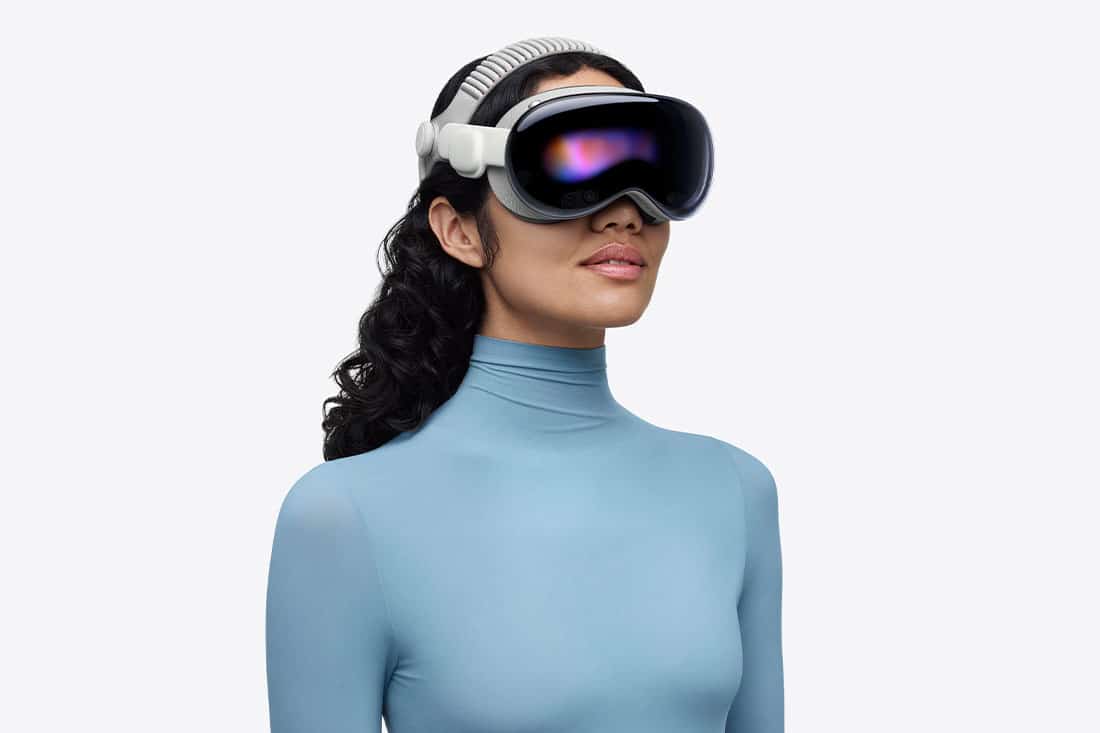
An EEG sensor embedded in a sweatband or a hard hat can capture neural activity directly. Heart rate tracings, accessible from any modern smartwatch, can reflect the autonomic signatures of cognitive load with greater precision than behavioral data. Eye tracking systems integrated into computer monitors can measure gaze patterns and pupil diameter, both reliable proxies for alertness and mental effort.
Those data streams, processed and analyzed together in real time via AI, can produce a continuous picture of a user’s cognitive state. That is the missing context. Feed it into the system, close the loop and symbiosis begins to look less like a metaphor and more like an engineering problem.
The Industry Is Starting to Move
The industry has begun to take notice. More than a dozen startups, including Egra, Piramidal and Zyphra, have been seeded during the past two years to develop neurophysiologically grounded foundation models, and several hyperscalers are quietly moving in the same direction.
At Optios, the company I run, we’ve built a platform that identifies task-relevant brain states in real time from multimodal sensor data, feeds that information into AI systems and applies reinforcement learning to continuously improve how the system interacts with each individual user.
Supporting all this, a growing number of hardware and consumer electronics companies have been integrating non-invasive neurophysiological sensors directly into their products, building the infrastructure this ecosystem will depend on. Surgically implanted brain-computer interfaces represent the far end of the potential hardware spectrum, but they remain years from practical deployment.
A $12.5 Billion Opportunity Nobody Is Claiming Yet
According to MarketsandMarkets, the global AI agents market is projected to reach $52.6 billion by 2030, roughly a tenfold increase from 2024. A significant portion of that involves high-stakes, human-in-the-loop deployments where the operator’s state directly affects outcomes. We estimate that at least a quarter of AI agent deployments will require human-state awareness to achieve optimal performance. That represents a $12.5 billion opportunity at the crossroads of neurophysiology and AI, which, as of now, remains largely untapped.
The AI industry has poured enormous resources into building models that understand language, code, images and tools. What it has not yet invested in, seriously or at scale, is teaching those models to understand the person on the other side. That is the next step. And when it arrives, man-computer symbiosis will no longer be science fiction.
Featured image from PeopleImages/Shutterstock