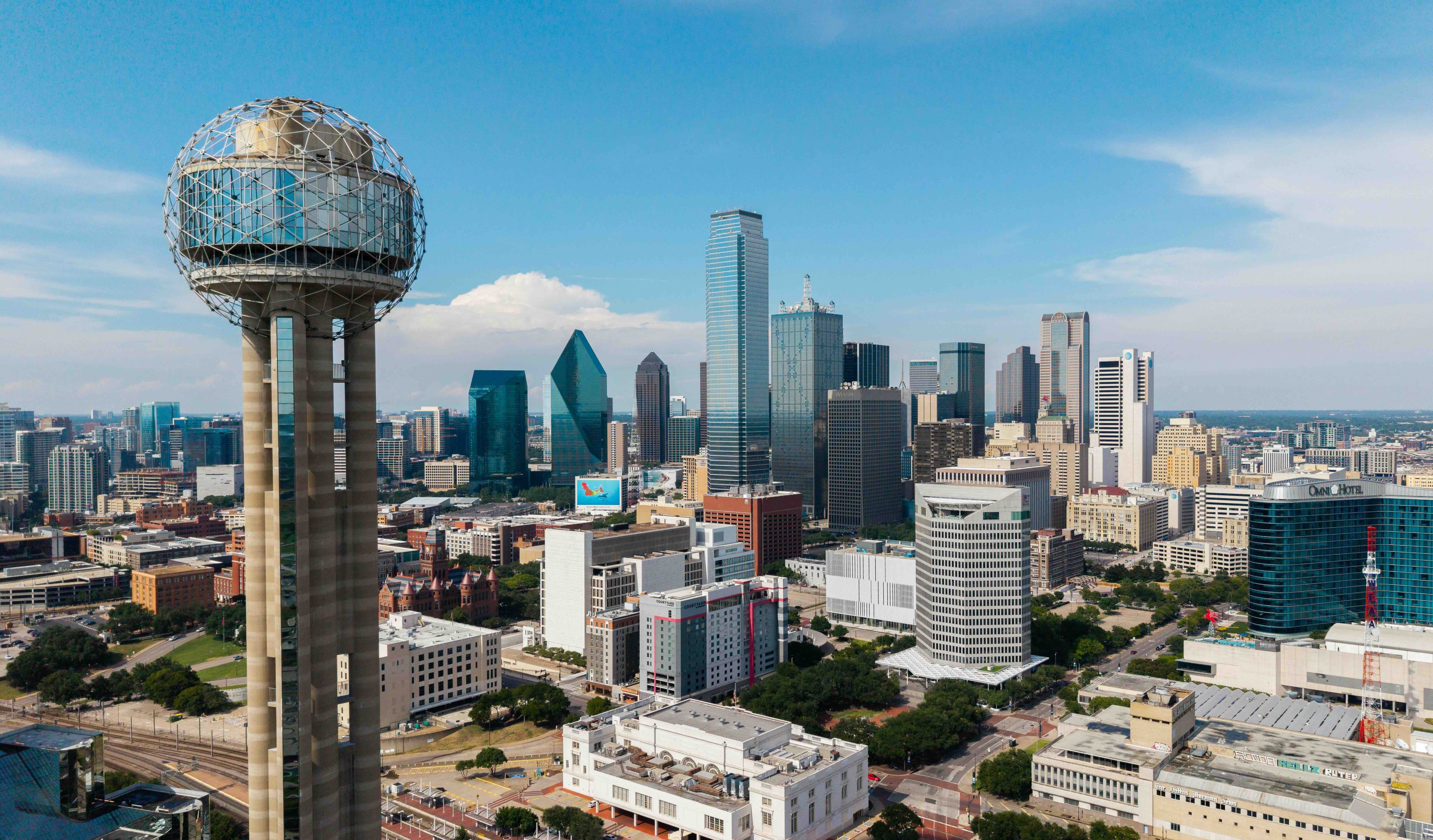
In a dusty, wind-whipped construction site surrounded by highways and office towers, hundreds of workers are building Goldman Sachs’ biggest bet on the future of banking, and it isn’t in Manhattan. The New York investment bank is spending roughly $700 million on an 800,000-square-foot Dallas campus set to open in 2028, with room for more than 5,000 employees.
Goldman isn’t alone. A cluster of major banks, a new stock exchange and thousands of relocating jobs have turned North Texas into what local bankers and boosters now call “Y’all Street,” a play on Wall Street’s nickname that’s becoming less of a joke and more of a business reality. If you lead a company, manage a team or advise clients in finance, this shift is worth understanding, because it’s reshaping where financial talent, capital and opportunity are concentrating.
What’s Actually Being Built in Dallas Right Now
The construction happening around Dallas goes well beyond one company. Bank of America is developing a new tower in Uptown that will house 1,000 employees, and Scotiabank’s new Victory Park office is expected to bring more than 1,000 jobs to the area. Morgan Stanley is reportedly exploring a 500,000-square-foot lease in Uptown, roughly twice the size of Bank of America’s new footprint.
None of this is small-scale hedging. These are multiyear, multibillion-dollar commitments from firms that could have expanded almost anywhere in the country.
So what does this mean for you? Where major banks choose to build isn’t a bet on this quarter. It’s a bet on where they expect financial talent and client demand to sit for the next decade, and it’s worth reading their real estate decisions the way you’d read any other leading indicator.
The Exchanges Are Following the Bankers
The infrastructure of finance is following the people. The Texas Stock Exchange, a homegrown startup backed by Goldman Sachs and BlackRock, opened for trading this July after years of buildup, becoming the most serious new U.S. stock exchange challenger in decades.
Its established rivals didn’t wait to see how it would perform. Both the New York Stock Exchange and Nasdaq opened Texas outposts over the past year, landing dual listings from companies like AT&T, Vistra Corp. and D.R. Horton. Even NYSE President Lynn Martin, whose exchange has anchored Wall Street’s identity for more than two centuries, acknowledges the shift: “Texas has actually become our biggest state.”
That’s a notable admission coming from the incumbent, not the upstart. When the exchange most synonymous with Wall Street says its biggest state isn’t New York, it’s a signal worth factoring into where you expect financial infrastructure, and financial jobs, to grow next.
Why Bankers Are Actually Choosing Dallas
The pull isn’t only about incentives on paper. Texas is now the fastest-growing state in the country, and North Texas alone is on track to reach 9 million people within the year, creating a deep, growing pool of financial talent to hire locally instead of relocating it from elsewhere.
The state has also outgrown its old reputation as strictly an oil-and-gas company town. Texas now holds more Fortune 500 headquarters than any other state, giving banks a growing base of corporate and wealthy individual clients to serve without routing everything through a New York office.
Aasem Khalil, the Goldman Sachs partner who runs its Dallas office and moved there from New York a decade ago, describes it as an evolution rather than a raid on Wall Street. Goldman is building in what he calls “the beating heart of Y’all Street,” and he’s quick to note that competitors like JPMorgan Chase and Morgan Stanley are making similar moves. That’s the pattern worth tracking: When multiple direct competitors expand in the same city independently, it’s rarely a coincidence.
This Isn’t Wall Street Losing—It’s Wall Street Expanding
It’s tempting to read this as Dallas beating New York. The reality on the ground is less dramatic and more instructive.
“I don’t think Dallas looks at things as a zero-sum game,” Khalil told NPR, calling the region’s growth “just the natural evolution of the financial services industry.” However much Goldman invests in Dallas, it isn’t abandoning its Manhattan headquarters, and the same holds true across most of the banks expanding there.
The bigger story is consolidation of scale wherever it can be found, not a single city winning at another’s expense. Curt Farmer, former Comerica CEO and now vice chairman of Fifth Third following its $10.9 billion acquisition of the bank, put it plainly: “As scale becomes increasingly important to compete, it’s likely we’ll see more banks combine in the years ahead.”
So what does this mean for you? Dallas isn’t replacing New York so much as becoming a second, essential hub, and treating financial power as concentrated in one city is already an outdated assumption to build a strategy around.
What the Shift Means for Your Career or Business
If you work in or around finance, this isn’t a trend to watch passively. Growing financial hubs need accountants, consultants, commercial real estate professionals, recruiters and vendors of every kind, and early movers into an expanding market tend to build the strongest local relationships before it gets crowded.
If you’re weighing where to build a career, a client base or a business, treat concentrated corporate expansion as a leading indicator, not a lagging one. By the time a trend is obvious to everyone, the best local partnerships and lowest-cost entry points are usually already claimed.
Whether or not “Y’all Street” ever rivals Wall Street outright, the smarter move right now is the same one Goldman, Bank of America and Scotiabank have already made: show up where the growth is heading, not just where it’s always been.
Featured image from MediaLins/Shutterstock