
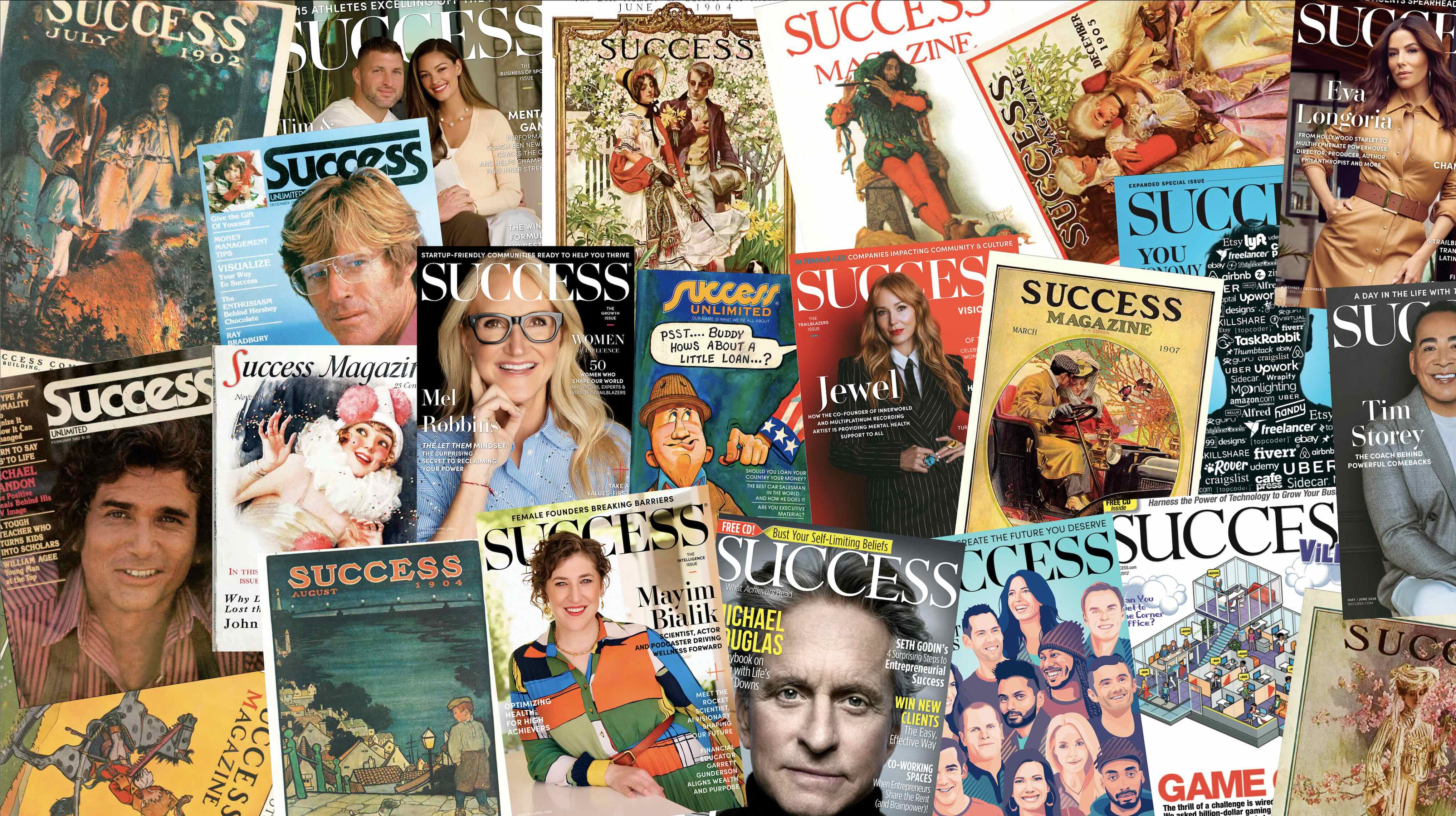
I came to SUCCESS® through the side door. A year and a half ago, I was a payment disputes analyst. No professional tech background, no high-level media background, no business card that said anything impressive. What I had was a belief that I could become someone capable of more and the willingness to work at it every single day. That belief is now my job. I build with AI for a 129-year-old company whose entire reason for existing is the idea that success is learnable.
So when I started digging into what this magazine has actually been saying since Orison Swett Marden founded it in 1897, I wasn’t reading it like a historian. I was reading it like someone who lived it. And here’s what struck me: The core message never changed. Marden wrote about character, relationships, health and purpose as the foundation of achievement. Jim Rohn taught that success is not something you chase down; it’s something you attract by the person you become. For over a century, SUCCESS has said the same thing: It’s about your whole life, not just how much you get done.
What the Evidence Keeps Finding
Modern research has now confirmed it, with some of the most rigorous data ever collected.
The Harvard Study of Adult Development is the longest-running scientific study of human health and happiness in the world. It began in 1938 with 724 men and has grown across generations to 2,500 participants. After 88 years of medical exams, interviews, brain scans and blood work, the study’s clearest finding is almost embarrassingly simple: Good relationships keep us happier and healthier. The people most satisfied in their relationships at age 50 were the healthiest at age 80. Not the wealthiest. Not the most accomplished. The most connected.
Gallup reached a similar conclusion from a completely different direction. Their global study spanning more than 150 countries identified five universal, interconnected elements of well-being: career, social, financial, physical and community. The critical word is “interconnected.” Gallup’s research found that focusing on just one element in isolation can actually damage your overall well-being. You cannot optimize your career while your relationships and health quietly collapse and call the result success.
And here’s a finding worth sitting with: Gallup’s chairman and chief scientist report that having engaging work has five times the impact on your well-being as the number of vacation weeks you get. Meaning at work matters more than escape from work.
Those findings say what Marden and Rohn said decades ago. The difference is that now there’s research behind it. The quality of your relationships. Liking what you do each day. The person you become along the way. This is what 88 years of Harvard data and Gallup surveys across 150 countries say predicts flourishing. It’s also what SUCCESS has been publishing since before either study existed.
Why This Isn’t Just Theory
I’m not sharing this as an academic exercise. I’m sharing it because I’m proof of it. My transformation didn’t start with a technical skill. It started with mindset, daily practice and people who believed in me before the results showed up. The skills came after. They always come after.
For 129 years, this magazine has held one thesis: Invest in the whole person, and achievement follows. The data finally caught up. The rest of the world is just now learning what our readers have always known.
Featured image by PJ McDonnell/Shutterstock