
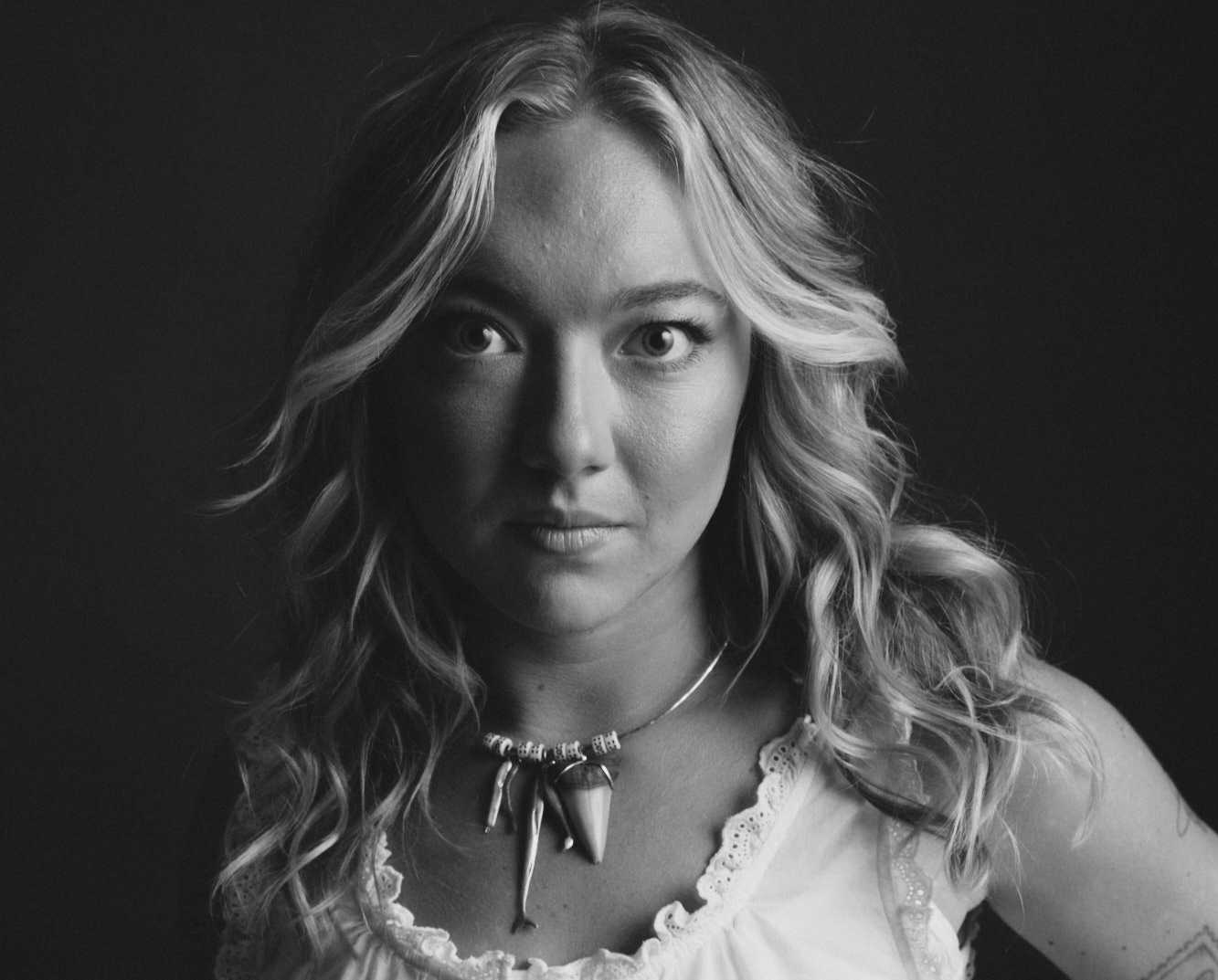
No matter how much you accomplish, there’s always that voice in the back of your head going, “You shouldn’t be doing this. You’re not qualified. Please sit down!” Ah, yes. It’s the voice of imposter syndrome.
Eva Benefield knows all about this struggle.
Her name might not sound familiar, but she’s had her share of tragedies and, for a period of time, her name was a headline.
Eva Benefield lost her mother when she was 14 from a heart attack. Five years later, her father was shot and killed by his new wife. Tabloids called it the “Black Swan Murder.” At 19, she was suddenly on her own. No income, no degree, no plan but plenty of strangers suddenly keeping tabs on her.
The attention wasn’t easy to accept at first, but Benefield chose to embrace it with a little humor. The first TikTok she put out about her situation blew up, and her followers jumped instantly by the hundreds of thousands.
The likes and reactions arrived for reasons she wished never happened, but the comments said she’d made them feel less alone, and this became a part of her own healing journey.
“I can do something with this. I can help other people,” she remembered thinking. At the time, she needed their help too. So she kept going.
After a while, she turned the attention into community, and then into a business people could support.
But this isn’t where things got easier for her.
If you’ve ever questioned your own success, Benefield’s story is a lesson on imposter syndrome, “manufactured adversity” and how to remind yourself of your own power.
What Causes Imposter Syndrome?
When we talk, Benefield, 25, is in Charleston, South Carolina. Her hair is pulled back, just coming from the gym. She’s wearing a pink-and-black striped tee. She sits up straight and speaks confidently. Her dog Sully is seated on the floor right by her side. In addition to providing emotional support, Sully serves loyally as a muse for her art.
She runs Ghost Cowboy, her Lowcountry art and apparel brand, which continues to grow year over year since launching. As a kid, she wanted to be an illustrator, reading Peanuts in the Sunday paper and Shel Silverstein with her dad (she’s got Where the Sidewalk Ends tattooed on her back).
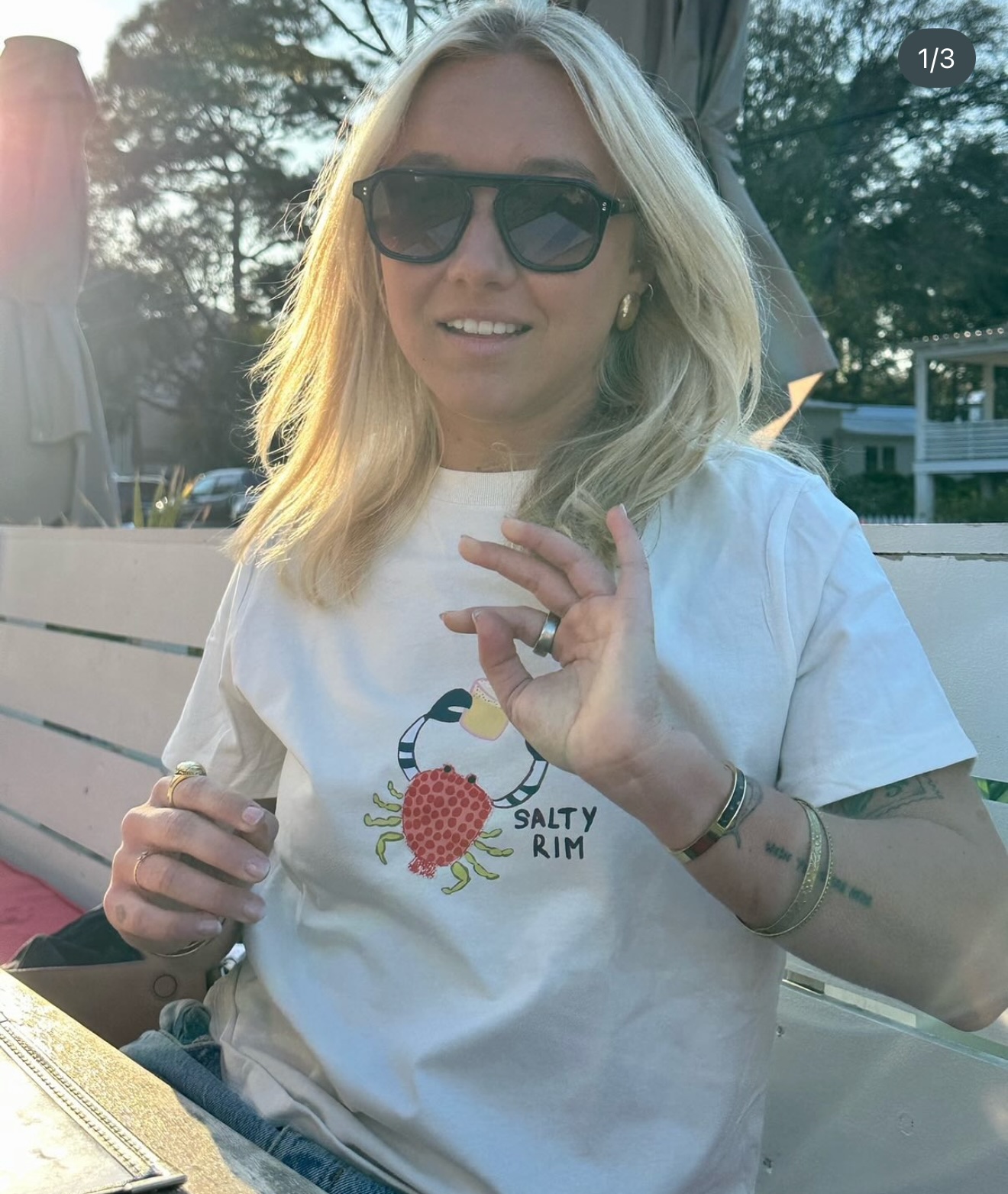
She’d tried starting a business with her art before but stalled when logistics got messy. That changed when she landed marketing work at a Charleston monogram and print shop, and had access to the machines for her own production.
As she was continuing to see her social platforms grow, she embraced her attention and started sharing her creations with her newfound community. And it didn’t take long for her designs to go viral.
Quick pops of cash proved demand faster than any business plan could.
But unfortunately, the owner of the monogram shop tried to claim her work as his, and with no legal background, she was forced to defend her IP and the brand she worked so hard to build.
To make matters worse, this trial began just after her father’s murder trial ended.
These days, thankfully, Benefield is in control of her brand and production systems. She mentions that Ghost Cowboy is her firstborn, but over time she wants it to become self-operating so she can write more and chase entertainment and production.
She just released her memoir, Ghost Girl: Surviving the Black Swan Murder, which debuted at No. 14 on the New York Times Hardcover Nonfiction list. Her goal was to get the book out, prove the audience, then tell the story as a series or film the way she wants it told.
From the outside, Eva is checking all the boxes.
But deep down, she’s conflicted. She feels that she’s only been able to achieve these feats because of the audience that came from her tragic past.
She doesn’t allow herself to sit in that way of thinking for long, though. While the initial opportunity came from an audience who found her by way of something completely out of her control, she is proving her self-worth through what she calls “manufactured adversity.
Life will hand you hard seasons either way, but it’s important to choose some of your own too, on purpose.
How to Build Confidence When You Feel Like a Fraud
Benefield is chasing a Boston Marathon qualifying time between heat-press orders and PR interviews.
You may be asking yourself why she is running this path in life, literally and figuratively.
“Every other hard thing I’ve gone through was not my choice,” she says. “And so this is a choice of mine… manufactured adversity… you can’t cheat the work.”
Benefield wants a Boston qualifier, as a way of proving to herself just how powerful she is.
“Everything else, I wouldn’t say I cheated with growing my business, but I had some unlucky mishaps that just caused a traction that I can’t really explain.”
People often ask how her business grew so fast. She’s honest that the attention from the worst chapter of her life created the reach. She just redirected it into the brand she’d been trying to build beforehand. This success left her wrestling with imposter syndrome. A company that felt like it grew out of nowhere and then a bestseller she was never expecting.
The marathon is different. She either puts in the miles or she doesn’t. Her first three training blocks ended in IT band syndrome, but she’s prepared now. She’s got a PT, and she’s determined to achieve her December goal.
She sees “manufactured adversity” as the hurdles you put in your own way to build up your confidence and silence the internal critics.
“I have to put in the work to get that qualifying time so it can help me get through the imposter syndrome,” she said.
And it turns out that when you reframe the struggle as a signal of growth instead of as an immovable roadblock, you will go further.
In a 2022 Psychological Science paper, Cornell’s Kaitlin Woolley and the University of Chicago’s Ayelet Fishbach ran five experiments with 2,163 adults. When people treated discomfort as a signal of growth instead of a reason to quit, they stayed more engaged and reported more progress on hard personal-growth tasks, from improv classes to writing about difficult emotions.
Hard doesn’t have to mean something went wrong. Sometimes it means you’re doing the work.
Benefield already talks that way.
“This is a hard rep in a training block where it’s uncomfortable, and I hate it,” she recalled thinking, “but it’s only going to make me grow.”
How to Quiet Self-Doubt
Benefield still spirals. Simple things can trip the old alarm. When that happens, movement is what gets her out of her head fastest.
“If I can just throw my headphones in and get out of my head and into my body, that’s where I find the most relief instantaneously,” she said.
After everything, health became something she could control. She started getting bimonthly bloodwork and using a sleep monitor ring amongst other biometric tools. Through all of this, she’s learned to look at the trends across weeks, not every day, and listen more closely to her body.
And when the to-do list starts to get too overwhelming, Benefield comes back to a short line: do the next right thing. One checkbox. Then another.
Her book lands in the same place. Be honest about what happened. Don’t let the worst chapter become the whole identity.
The line that carried her through the hard years. The one her parents kept repeating. Everything always works out somehow.
“You shouldn’t say, ‘Well, I’m going to be a terrible person because I had all these terrible things happen to me,'” she says. “It’s cooler to come out the other side and be a great person.”
How to Overcome Imposter Syndrome
Benefield’s advice for you? Choose a hard thing you can own, but don’t get stuck on the tiny details. Treat it like a job before it pays like one. And keep a little delusion.
“Anything is yours if you’ll go out and get it."
Images provided by Eva Benefield/Ghost Cowboy