
This week, more than 6,000 sleep scientists, physicians and researchers gathered in Baltimore for SLEEP 2026—the 40th annual meeting of the Associated Professional Sleep Societies. They presented over 1,400 research abstracts covering everything from neurodegeneration to AI-powered sleep diagnostics. And if there’s one signal worth pulling from all that science, it’s this: The conventional wisdom on sleep and productivity has been wrong in ways that matter specifically to high-achievers.
You’ve probably optimized your calendar, your nutrition, your workout schedule. Sleep, if you think about it at all, is the thing you’ll fix “later.” Here’s why that math doesn’t work—and what the latest research says you should actually be doing instead.
The Sleep Gap Is Widening Among High-Achievers
The Global Wellness Institute’s 2026 sleep trends report identifies a growing “sleep gap”—a disparity in sleep quality that correlates directly with cognitive performance and economic outcome. Poor sleep is associated with higher rates of chronic illness, reduced cognitive performance and decreased productivity. The gap reinforces itself; worse sleep drives worse decisions, which drives worse results, which drives more stress, which drives worse sleep.
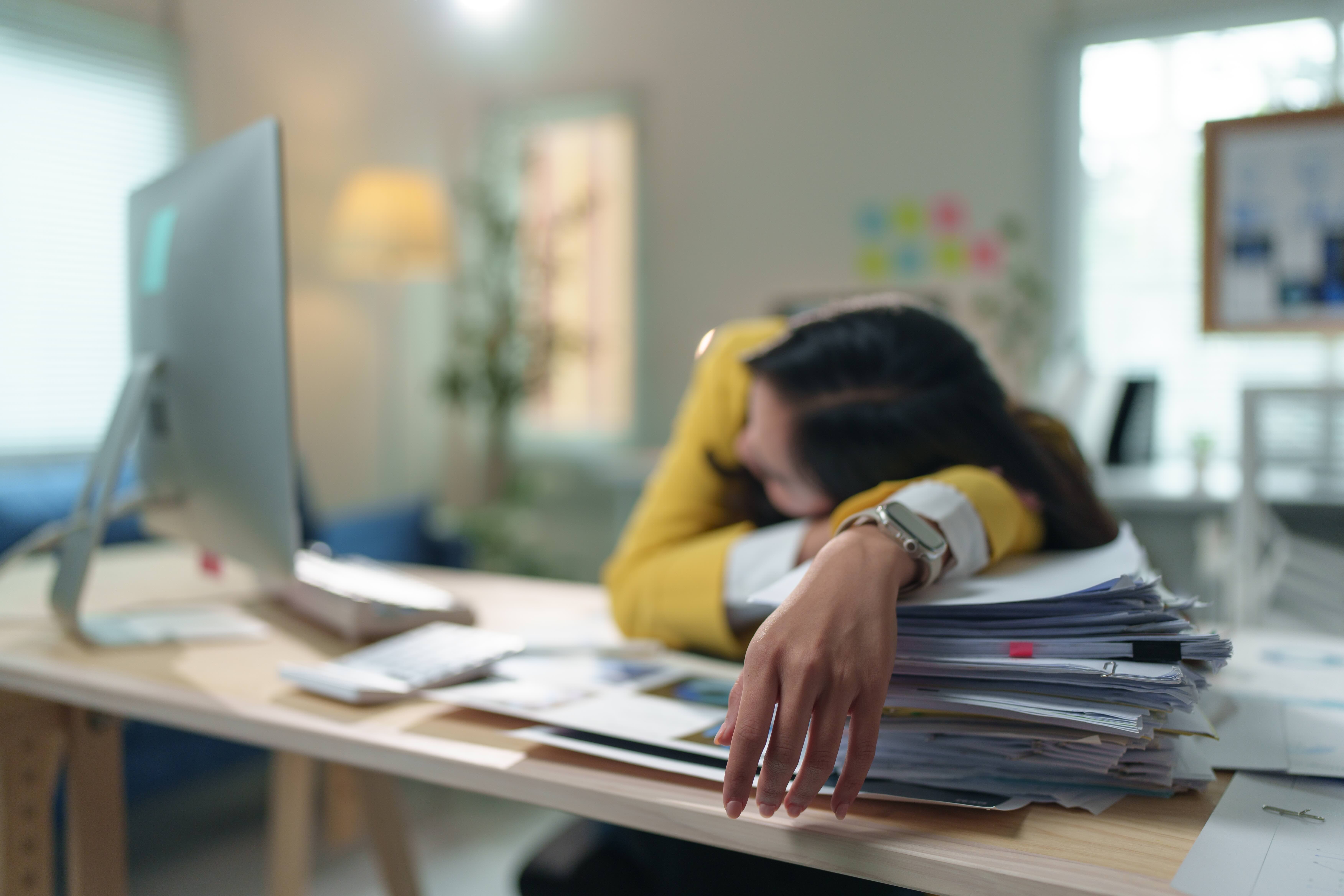
For high-achievers, that cycle is especially dangerous because the early symptoms are invisible. You don’t feel impaired. You feel tired but functional. That distinction matters: Research published in Frontiers in Neuroscience in 2025 found that sleep-deprived individuals showed significantly slower reaction times and prolonged neural response latency, even when they reported feeling only mildly sleepy. You adapt to a lower baseline and call it normal.
The economic scale of that adaptation is staggering. A landmark study by RAND Europe—still the most cited quantification of its kind—calculated that sleep deprivation costs the U.S. economy up to $411 billion a year, representing 1.2 million lost working days annually. That’s not a health statistic. That’s a productivity statistic.
The Science Just Changed What ‘Good Sleep’ Means
Here’s the finding that should reframe how you think about sleep: It’s not primarily about how many hours you get.
A landmark 2024 study by researchers Daniel Windred, Angus Burns and colleagues, published in the journal Sleep, analyzed more than 10 million hours of accelerometer data from nearly 61,000 adults and found that sleep regularity—the consistency of your sleep and wake times from day to day—is a stronger predictor of all-cause mortality than sleep duration. People with the most regular sleep schedules had a 20%-48% lower risk of dying from any cause compared to those with the most erratic sleep patterns.
The implications for high-achievers are immediate. You can get seven hours on a Tuesday and four on a Thursday because you had a late call and an early flight, and you still feel like you’re “doing fine on sleep.” But your nervous system isn’t averaging those nights. It’s processing the inconsistency as a chronic stressor, one that degrades executive function, impulse control and emotional regulation—exactly the capacities that separate good decisions from great ones.
A 2025 editorial in Sleep reinforced the point directly: The growing body of evidence suggests that regularity deserves equal, if not greater, consideration than sleep duration for health optimization. The field has moved on from counting hours. Your sleep strategy should, too.
What Cognitive Performance Research Actually Shows
Sleep deprivation doesn’t just make you tired. It degrades the specific mental capacities that high performance runs on.
A 2025 study published in the International Journal of Indian Psychology examining sleep deprivation among working professionals found that poor sleep results in reduced information retention, slower reaction speed, diminished analytical thinking and weakened focus. Adequate sleep, by contrast, produces sharper complex problem-solving capacity and faster cognitive processing. These aren’t marginal differences. They’re the difference between your best thinking and a competent facsimile of it.
The mechanism matters here. During REM and slow-wave sleep, the brain actively consolidates information from the day—processing new knowledge, pruning irrelevant data and stabilizing memories so they’re accessible when you need them. Chronic sleep restriction compresses these cycles, which means you’re not just tired the next day. You’re also working with a less organized, less complete version of everything you learned the day before.
For leaders managing teams, the stakes are even higher. Sleep-deprived judgment is reliably overconfident judgment. You think you’re performing well because the subjective sense of impairment diminishes faster than the actual impairment does. That gap—between how sharp you feel and how sharp you actually are—is where the expensive decisions get made.
The 3 Levers That Actually Move the Needle
Most sleep advice fixates on sleep hygiene basics that you already know and mostly ignore. What the research actually supports for high-performer optimization comes down to three specific levers.
Lock your wake time first. The fastest way to improve sleep regularity isn’t controlling when you fall asleep—it’s controlling when you wake up. Your circadian rhythm anchors itself around a consistent wake signal. Set your alarm for the same time every day, including weekends, for 21 days. Within two weeks, your body will begin anticipating sleep onset more predictably, making it easier to fall asleep and stay asleep.
Treat your pre-sleep window like a meeting you can’t move. High-achievers schedule everything except sleep. The 60-90 minutes before bed is a cognitively active time for most leaders—email threads, late calls, content consumption. Every one of those inputs is signaling your brain to stay alert. Start treating 9:30 p.m. not as “winding down time” but as a scheduled cognitive shutdown: device-off, low light, low stimulation. Nonnegotiable, like your 8 a.m. board call.
Stop optimizing for total hours; start tracking consistency. If you use a wearable, the metric worth monitoring isn’t total sleep time; it’s night-to-night variation in your sleep window. Aim to keep your sleep onset and wake time within a 45-minute range across seven consecutive days. That single metric, more than any supplement or gadget, is the one the research consistently links to performance and longevity outcomes.
The Competitive Advantage You’re Leaving on the Table
Here’s the thing about sleep in a performance context: Because most high-achievers underinvest in it, the ones who get it right accumulate a compounding edge that’s invisible to everyone around them.
Faster decision-making, sharper pattern recognition, higher emotional regulation under pressure, better retention of strategic information—all of these improve measurably with consistent, adequate sleep. And they degrade measurably without it, in ways you may not notice but your team will.
The SLEEP 2026 conference this week had a focus on circadian science, AI-powered sleep diagnostics and new research on the relationship between sleep and neurodegeneration. The direction of travel in sleep science is clear: This is no longer a wellness topic. It’s a performance infrastructure topic. The leaders who treat it that way first will hold an edge that compounds quietly, over months and years, in exactly the way chronic sleep deprivation does—just in the opposite direction.
Start with the wake time. Lock it. Hold it for three weeks. Everything else follows.
Featured image from Prostock-studio/Shutterstock