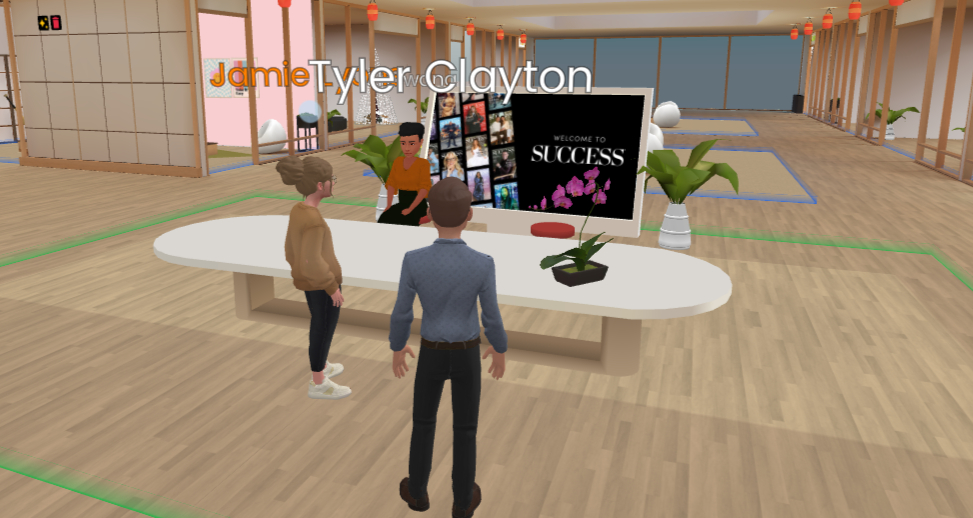

Three colleagues. One trivia tournament. One absurdly small prize. More genuine team cohesion than most companies generate from a $500-per-head offsite.
That scenario played out in a story circulating on one business podcast this week, and the details are almost laughably unremarkable: a workplace trivia competition between co-workers, contested for a reward nobody actually needed. But the response was disproportionate to the stakes. The laughter lasted longer than the game. The inside jokes stuck around for weeks. The team that had been politely professional before was now, somehow, a unit.
You’ve probably seen this dynamic play out before. A low-budget, low-pressure moment that seemed like it shouldn’t matter ended up mattering most. Here’s why that isn’t a coincidence and how to replicate it deliberately.
The Research Most Leaders Overlook
Most managers assume performance is driven primarily by compensation, recognition and clearly stated goals. All those things matter. But a landmark Harvard study by professor Teresa Amabile and researcher Steven Kramer found something more surprising: The single biggest driver of employee engagement, creativity and output was simply making progress, even small, incremental forward movement on work that felt meaningful.
After analyzing nearly 12,000 diary entries from 238 employees across seven companies, Amabile and Kramer found that frequent small wins consistently produced more creativity, higher engagement and stronger team relationships than any other variable they studied. Not bonuses. Not top-down recognition. Small, frequent wins. Their research, published in the Harvard Business Review, became one of the most influential management findings of the past two decades for good reason: It upended the assumption that bigger incentives always produce better results.
The implication for leaders is significant. You don’t need elaborate incentive systems or quarterly offsites to shift team energy. You need regular, low-stakes moments where people experience progress, compete playfully and feel the social glue of shared experience. The trivia tournament is just one vehicle for that mechanism. Fortunately, it’s not the only one.
Why the Prize Barely Matters
Here’s the counterintuitive part: The size of the reward is almost irrelevant.
Research from the Wharton Neuroscience Initiative shows that game-like structures activate the brain’s dopamine system—the same reward circuitry triggered by meaningful accomplishment. Crucially, this activation occurs whether the prize is a cash bonus or a coffee mug. The brain responds to the architecture of pursuit and completion, not to the market value of what’s at the end of it.
This is why low-stakes challenges often outperform high-stakes incentive programs for creative, knowledge-work teams. High stakes introduce anxiety, and anxiety narrows thinking. Low stakes keep the nervous system regulated while still delivering the neurological reward of winning or even of simply competing hard.
Stuart Brown, founder of the National Institute for Play, has spent decades documenting how play in adults drives the same cognitive gains—creativity, adaptability and problem-solving capacity—as it does in children. His research makes one point with unusual force: Play isn’t a break from performance. Play is a pathway to it. The opposite of play, Brown argues, isn’t work. It’s stagnation.
The practical implication for your team is straightforward. The activities most likely to move the needle on performance aren’t the expensive ones. They’re the ones that feel slightly ridiculous, require minimal preparation and give everyone a moment to be unexpectedly excellent in a low-consequence environment.
The Hidden Payoff: Psychological Safety at Scale
There’s a deeper mechanism at work when low-stakes competition goes well, and it’s one of the most rigorously studied concepts in organizational science.
Harvard Business School professor Amy Edmondson has spent three decades studying psychological safety, the shared belief that a team is safe for interpersonal risk-taking. In 2024 research covered by HBS Working Knowledge, Edmondson and colleagues found that psychological safety is among the strongest predictors of team performance, particularly in high-pressure and fast-changing environments. When people feel safe enough to be wrong, they take the kinds of intelligent risks that actually move organizations forward.
Low-stakes team challenges are one of the fastest, most accessible ways to build that safety. When someone gives a confidently wrong answer in a trivia round, makes a ridiculous prediction or loses a made-up bet to a colleague, they are practicing the most important micro-skill in high-performing teams: being wrong in front of other people without consequence. That practice compounds. Teams that laugh together at low stakes tend to disagree more productively at high stakes, share bad ideas more freely in early-stage brainstorms and flag problems earlier before they become crises.
This is the ROI most leaders don’t see on the balance sheet. The zero-budget trivia tournament is, in functional terms, a psychological safety investment. The more comfortable your team gets being imperfect in low-consequence moments, the more they will take the kind of risks your organization actually needs.
3 Formats You Can Run This Week
You don’t need a facilitator, a retreat center or a line item in next quarter’s budget. You need 15 minutes and a willingness to look slightly ridiculous first.
The Weekly Micro-Competition
Pick one small, contained challenge that has nothing to do with work. A photo submission contest (best desk plant, most chaotic cable setup), a single trivia question sent to the team channel every Monday or a one-sentence weather prediction for the week. The winner gets credit, not cash. Run it for four consecutive weeks and watch what happens to the quality of off-topic conversation in team meetings. You are not playing games. You are warming up the cognitive and social architecture that makes hard conversations easier.
The ‘Wrong Answer Only’ Brainstorm
Before your next problem-solving session, spend five minutes asking the team to generate the worst possible ideas for the challenge at hand. Deliberately terrible suggestions, actively encouraged, the more absurd the better. Two things happen immediately: people laugh, and they relax. Psychological safety research consistently shows that environments where imperfection is normalized produce more innovative output when the stakes rise. The bad-idea brainstorm isn’t a waste of time. It’s a warm-up, and warm-ups determine performance.
The Peer Recognition Bracket
Run a bracket-style recognition challenge: nominate teammates for made-up, highly specific awards. Think “Most Likely to Respond to Slack at 6 a.m.” or “Best at Turning a Three-Sentence Ask Into a Two-Sentence Masterpiece.” Have the team vote in rounds. No cash prize, no performance implications. What you get is a structured reason for people to observe and articulate what they genuinely value in each other, which does more for team cohesion than most formal recognition programs ever manage to deliver.
The Case for Starting Smaller Than You Think
The default leadership instinct is to scale team-building: book the venue, hire the facilitator, build the agenda. Sometimes that is exactly right. But the science consistently points in a different direction for the day-to-day cohesion that actually sustains performance over time.
The smallest meaningful challenge—repeated often, kept low-stakes, made slightly absurd—compounds into something that expensive programs rarely produce: genuine trust. Amabile’s research is clear on this. Small wins, run consistently, create the positive inner work life that drives creative output and strong team relationships. The grand gesture is memorable. The small win is structural.
Start this week. Pick the most ridiculous prize you can find in your desk drawer, call it a trophy and see what happens. The science suggests you’ll be surprised.
Featured image from PeopleImages/Shutterstock