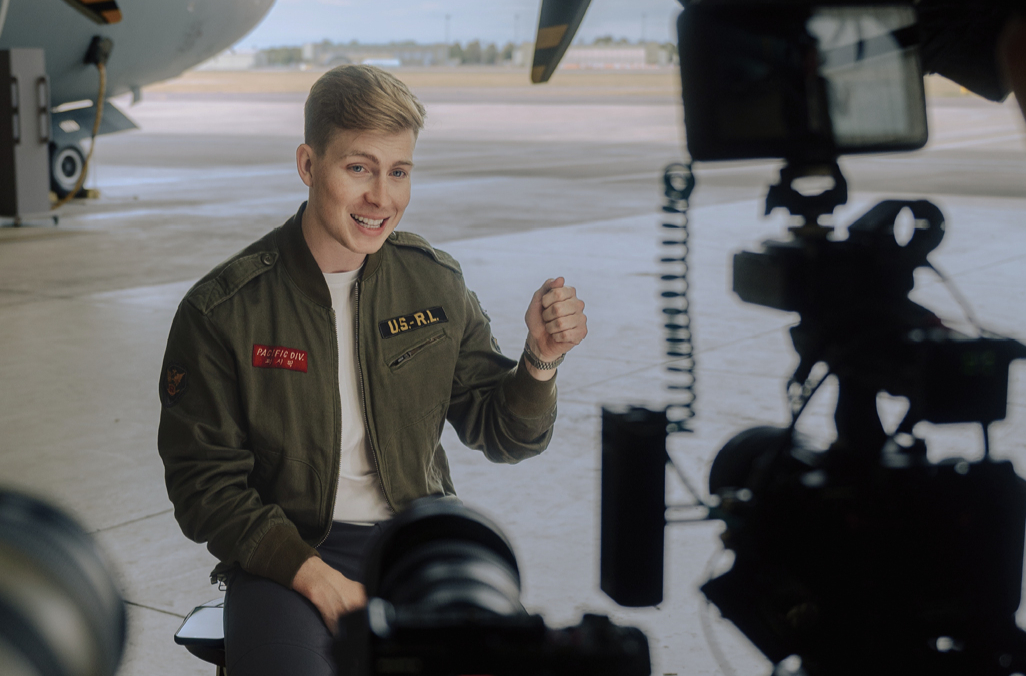
Named to this year’s Forbes 30 Under 30 list, former U.S. Air Force officer Sam Eckholm expanded his career from flight lines to filmmaking—turning his deep understanding of military life into a thriving media company. Through Access Granted, his documentary series on YouTube, he’s redefining how defense stories reach the public, blending military discipline, creativity and purpose. At a time when the gap between civilian and military life continues to widen, Eckholm’s goal is to bridge that divide by revealing the resilience of the people in uniform. Having witnessed the grit required for service, Eckholm brought that same core value to entrepreneurship, viewing every failure as a necessary course correction and every viewer interaction as a deposit in his “economy of trust.”
Eckholm shares how his mission to connect service and storytelling became his ultimate blueprint for growth and long-term success.
Why Did Sam Eckholm Start Telling Military Stories?
SUCCESS®: What first made you see storytelling as your next mission after the Air Force?
Sam Eckholm: For me, when I was 18 years old—deciding whether or not I wanted to join the military—I realized there wasn’t too much out there that accurately and authentically portrayed these service members and what this life is like. I made it my goal at that point that once I did my time in uniform, I was going to come back and tell these stories on my own through my lens. It’s about telling those stories, connecting people to a largely secretive and mystified world of military, aerospace and defense.
How Did Military Training Prepare Sam Eckholm for Entrepreneurship?
S: Leaving a structured environment like the military for the uncertainty of entrepreneurship definitely takes courage. What gave you the confidence to take that leap?
SE: I had to reinvent myself and what we were going to do. I’m having the credibility of [attending] the Air Force Academy, and done my time and having seen this world firsthand gave me that trust in that experience.... I didn’t have full faith that it would work. I knew I was going to try and do my best.... At the forefront of our mind is being authentic, credible and telling good stories.
S: In those early days of content creation when things didn’t go as planned, how did you adapt?
SE: When I was in the military, resilience really [wasn’t] optional, right? It’s critical. So, you kind of learn to adapt and communicate under pressure. You recover quickly from setbacks. Those are the same principles I took over when founding this business and this company.... I think they complement both consistency, discipline, trust.... The biggest advantage our team has is being able to be adaptable and flexible. We can do a lot with a little.
What Stories Does Access Granted Tell About Military Life?
S: You’ve said your goal is to show the human side of defense. How does resilience show up in the stories that you tell?
SE: I think the resiliency comes through in the pieces that we do because we’re covering incredibly complex topics. I’m [immersed] with a B-52 nuclear bomber unit that’s training for the worst day that could come. We’re spending a week on a Navy ship with a crew who hasn’t set foot on land in months.... I mean, talk about the resiliency those people have to go through to remain positive and focused and in control of these incredible responsibilities. The stories are there. We just have to uncover them.
Why Is Trust the Most Valuable Currency in the Creator Economy?
S: The creator economy changes constantly. How do you stay flexible while keeping your goal or mission clear?
SE: The biggest thing about surviving in a creator world is not losing sight of your audience and what got you here.... I look at the creator economy as an economy of trust. People don’t just buy a product, right? They buy belief in a channel, a host, a story, a person. Focusing on our core principles of what we do best, staying true to our brand and what got us here.… That’s what keeps me grounded.
S: What kind of resilience does that take behind the scenes?
SE: If you are trying to do this long term, you realize that at a certain point, you’re maxed out.... I knew that no matter how good I am at editing or filming, there are people better than me who can focus 100% of their time on that.… Everything changes once you have a team. It’s no longer just you. It’s about supporting them and making sure they’re taken care of. That also motivates me.
S: Looking back, what kind of impact do you hope your storytelling will have in the next chapter of your career?
SE: What I also didn’t realize is that these videos are also so helpful for military members and their families as well. Creating a sense of pride not just for people looking to join but for people who are serving.… As I look to the future, we also want to dive into new stories that are a little bit different than just the military. Maybe longer-form, documentary-type pieces where we’re really immersing the viewer in a world that they have no idea ever existed.... I just want to educate people and lift the veil on this secret world of what’s out there.
What’s Sam Eckholm’s Biggest Lesson From the Air Force?
S: If you had to sum up the biggest lesson you carried from the Air Force into entrepreneurship in just a sentence or so, what would it be?
SE: I think I would say it’s not going to be easy. The biggest lesson I learned is that if it were easy, everyone would be doing it.
This article was first published in the May/June 2026 issue of SUCCESS® magazine. Get your copy here.