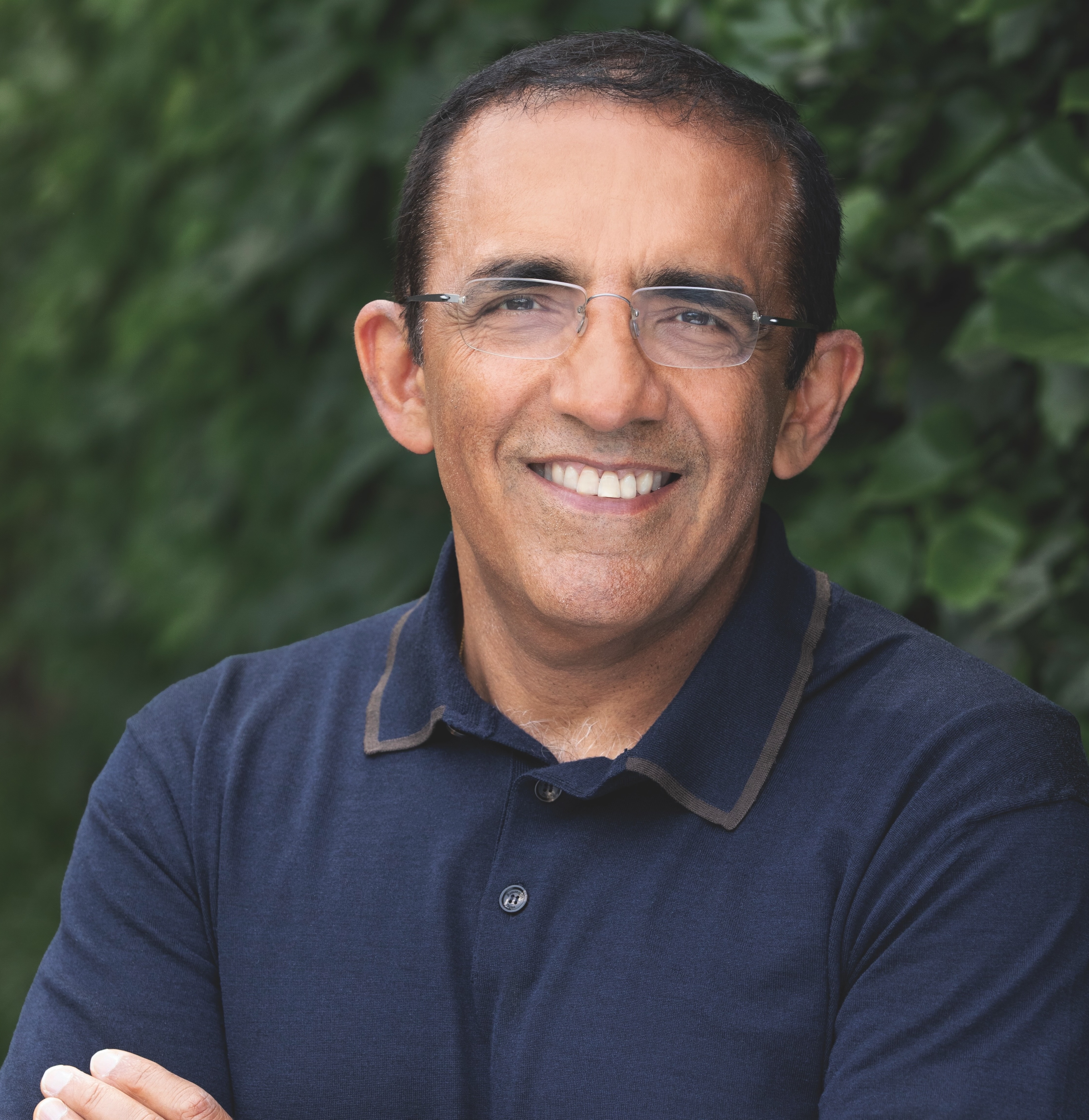

Amanda Cosme-Reddie still remembers what it felt like to walk into a room and have to prove herself.
“Going back to my childhood, I moved from Chicago to Cave Creek, Arizona,” she says. “The demographics are very different, and I spent a lot of time trying to fit into a world that I wasn’t ready for. That followed me throughout my career.”
For a lot of ambitious professionals, especially women and underrepresented leaders, those early lessons become a career strategy later on: blend in, overdeliver and collect receipts.
Today, Cosme-Reddie is the founder and CEO of TAKe Brand Consulting and The Multifaceted Executive, where she advises aspiring and tenured executives navigating leadership growth, career transitions and increasing responsibility without compromising their values or sense of purpose.
For her, the most difficult lesson in her career has been realizing that influence doesn’t come from proving your value. It comes from demonstrating it consistently. “Once I started to really focus on not proving my value but demonstrating it, everything shifted for me,” she says. That distinction became foundational to how Cosme-Reddie now thinks about leadership.
In proving mode, professionals become consumed with managing perception, like over-explaining decisions, chasing recognition and searching for external confirmation that they belong. In demonstration mode, the focus shifts toward intentional decision-making, aligned values and measurable outcomes.
“The work itself becomes the evidence,” Cosme-Reddie says.
The Achievement Trap
People-pleasers are at risk of emotional exhaustion, reduced productivity and chronic stress. Cosme-Reddie describes the impulse to prove yourself at work as a psychological pattern that can shape how ambitious professionals define achievement, authority and even self-worth.
“I fell into this trap where we’re often looking for being rewarded,” she says. “Getting the recognition, getting the achievements, getting the promotions. Over time, it made me think about my own worth.”
Once validation becomes tied to performance, the motivation behind the work begins to shift. The focus is no longer solely on solving problems or driving outcomes. It becomes increasingly tied to visibility and reassurance: making sure effort is noticed, credibility is acknowledged and value is constantly reinforced.
Cosme-Reddie says the pattern can look productive from the outside while gradually eroding confidence internally. “Trying to prove myself created burnout,” she says. “It created feelings of being set back and not being far enough along to where I needed to be.”
Breaking that cycle starts with reflection rather than productivity. Cosme-Reddie encourages leaders to examine the motivations behind their decisions before focusing on external outcomes. What do they actually want? Which values are shaping their choices? Are decisions being driven by intention or by perception?
For Cosme-Reddie, that internal clarity became the turning point. Once decisions became more aligned with her values, external validation stopped carrying the same weight.
Before goals or action plans, there are deeper decisions that determine whether our decisions will serve us or slowly hollow us out. The Glassdoor Worklife Trends Report for 2026 shows just how deeply this gap between values and actions is shaping the work experience.
Two Ways Of Leading
Psychology experts define those who spend their time “proving themselves” at work as operating from a fixed mindset or an insecure attachment style. According to 2026 workplace data, this behavior is a primary driver of burnout, micromanagement and a staggering $322 billion in annual business costs.
Cosme-Reddie draws a clear line between leaders who spend their energy proving themselves and those who focus on demonstrating value through their work. The difference reshapes how decisions are made, how relationships develop and whether leadership becomes sustainable over time.
“Proving your values is emotionally driven and demonstrating your value is from a values-driven approach,” she says.
In proving mode, leadership becomes closely tied to perception because executives begin searching for signals that confirm their credibility. Over time, that mindset can weaken trust and turn professional relationships into transactional exchanges rather than meaningful partnerships.
“When we’re trying to prove our value, we’re often seeking validation, over-explaining our decisions, highlighting our credentials and all the things that we think made us successful,” she explains. “That causes us to work harder to recognize our worth, and those actions become reactions of what we think others perceive of us.”
When leaders spend significant mental energy managing how they’re perceived, they have less capacity for strategic thinking, problem-solving and long-term impact. This is where leadership starts to revolve around optics rather than intention.
Demonstrating value, Cosme-Reddie says, operates from a different foundation entirely. Instead of trying to convince others of their capability, leaders focus on making intentional decisions rooted in values and objectives. Results, rather than self-promotion, become the proof point.
For leaders accustomed to constant performance, the shift can feel unfamiliar at first. “In essence, proving your value is asking for validation,” Cosme-Reddie says. “Versus demonstrating, where you create value through the results you have.”
For Cosme-Reddie, values are not abstract ideals reserved for mission statements or leadership retreats. She describes them more like an operating system, one that shapes decisions, relationships and reputation over time. That realization became clearer as her career evolved.
“Being a value-driven leader was helping me build my brand in the process,” she says. “That was one of those aha moments. If I’m leading with my values, then people see who I am, and I don’t have to try to fake it or put on a show… because of that, my trust and influence grew with people.”
Research highlights the substantial return on investment for a value-driven leadership approach, with data demonstrating up to 40% higher employee engagement and up to 25% higher revenue.
The influence Cosme-Reddie describes wasn’t built through self-promotion; it came through consistency. Over time, aligned decisions and repeatable outcomes created trust that no amount of explanation could manufacture.
‘Shoulda, Woulda, Coulda’ Effect
In 2026, nearly 3 out of 4 leaders say their stress levels have climbed significantly since stepping into their current role. Cosme-Reddie works with high-stakes leaders and says she sees the same pattern: chronic overcommitment, exhaustion and the persistent feeling that no amount of achievement is enough.
Rather than focusing on performance strategies, Cosme-Reddie begins with reflection. Many leaders, she says, move so quickly through professional milestones that they rarely stop to examine whether the life they are building is actually aligned with what they want.
“Sometimes we don’t take time to just stop and reflect,” she says. “Ask yourself, is this really what I want? Am I truly living out a life that is purposeful for me?”
The challenge, she explains, is that career expectations are often inherited long before they are consciously chosen. Family dynamics, cultural messaging and workplace norms can shape definitions of success, leaving little room for people to ask what fulfillment looks like on their own terms.
Cosme-Reddie believes that disconnect widens when leaders spend more time defining values for organizations than for themselves. Companies regularly invest in mission statements, leadership principles and culture initiatives, yet many executives have never clarified the personal values guiding their own decisions.
“We understand what values are, and we do it a lot for our businesses, but we don’t practice that ourselves,” she says.
For Cosme-Reddie, the issue is not philosophical. It’s operational. Leaders who lack internal clarity struggle to create consistency for the people around them. “If you don’t have your own values, how are you going to now help a team create values to operationalize on a daily basis at work?” she asks.
That absence of clarity can surface in everyday leadership decisions. Without a clear internal framework, executives may default to reactive choices shaped by pressure, perception or immediate demands.
“One of the patterns is you can make these very sporadic decisions and that gets you into that ‘shoulda, woulda, coulda’ effect,” she says.
The dynamic becomes even more complicated when approval-seeking enters the equation. Amanda sees people-pleasing as one of the most common behaviors tied to burnout, particularly among ambitious professionals trying to maintain credibility or avoid disappointing others.
“People care too much about what other people think,” she says. “That’s where a lot of the people pleasing comes from.” She notes that the pressure can feel especially intense for underrepresented leaders, who are navigating expectations around performance, visibility and representation. In those environments, success can start to feel externally assigned rather than internally defined.
“A lot of people will define success based on what society thinks success looks like, or again, what their boss thinks success looks like,” she says.
Cosme-Reddie encourages leaders to define success through the lens of their own values rather than inherited expectations. That shift, she argues, creates a more sustainable form of confidence rooted in self-awareness instead of external approval.
“When you are living by your values,” Cosme-Reddie says, “you know what’s right for you and what’s not right for you.”
Sustainable Leadership Without Executive Burnout
Cosme-Reddie remembers a period early in her career when ambition meant saying yes to nearly everything. Like many high performers at work, she believed willingness and capability were inseparable, that being seen as dependable required constant availability.

“Earlier in my career, I was ready and willing to do anything,” she says. Qualities like adaptability and initiative felt essential to advancement. Even the language commonly celebrated on resumes reinforced that mindset. “Self-starter,” for example, was treated as evidence of drive and leadership potential.
Looking back, Cosme-Reddie sees how easily those traits can become liabilities when boundaries are absent.
“Self-starter was on there,” she says with a laugh. “It’s so funny because it was almost like that led to burnout because I was taking on too many things.”
As her career progressed into more senior leadership roles, her understanding of ambition began to change. Advancement no longer depended on doing everything. It required discernment through understanding which opportunities aligned with her long-term direction and which ones added more pressure, more depletion or more noise.
“When I started to get into higher-level roles where I had to be more thoughtful about what I said yes to and what I committed to, ambition shifted for me,” she says.
That shift moved ambition away from volume and toward alignment. Instead of measuring success by how much she could carry, Cosme-Reddie began evaluating opportunities through the lens of purpose, reputation and strengths.
“It wasn’t about how I can do all these different things,” she says. “It was about how do I do the things that align with the brand I’m building? How do I do the things that align with my skill set?”
The philosophy eventually shaped the framework behind her concept of the “multifaceted executive,” a term she uses to describe leaders whose talents and interests extend across multiple areas without requiring them to sacrifice themselves in the process. Rather than glorifying overextension, the idea reframes ambition around intentionality, allowing room for range, growth and sustainability at the same time.
Breaking The ‘Proving Cycle’
In 2026, leadership research continues to point in the same direction: Trust and relational consistency are stronger predictors of performance and decision quality than visibility or self-advocacy.
For years, Cosme-Reddie believed influence came from proving herself repeatedly through working harder, explaining more and making herself indispensable at every opportunity. Over time, she realized that approach was costing more than it was creating.
Instead of managing perception, she focused on clarity, consistency and decisions aligned with her values. Influence became less about convincing people she belonged and more about creating results that spoke for themselves.
As she puts it, “The work itself becomes the evidence.”
The philosophy now shapes not only how Cosme-Reddie leads, but also how she advises the executives she works with today. The goal is no longer endless validation or constant performance. It’s sustainable leadership built on intentional decisions and aligned values.
Article image courtesy of Amanda Cosme-Reddie
Featured image from PeopleImages/Shutterstock