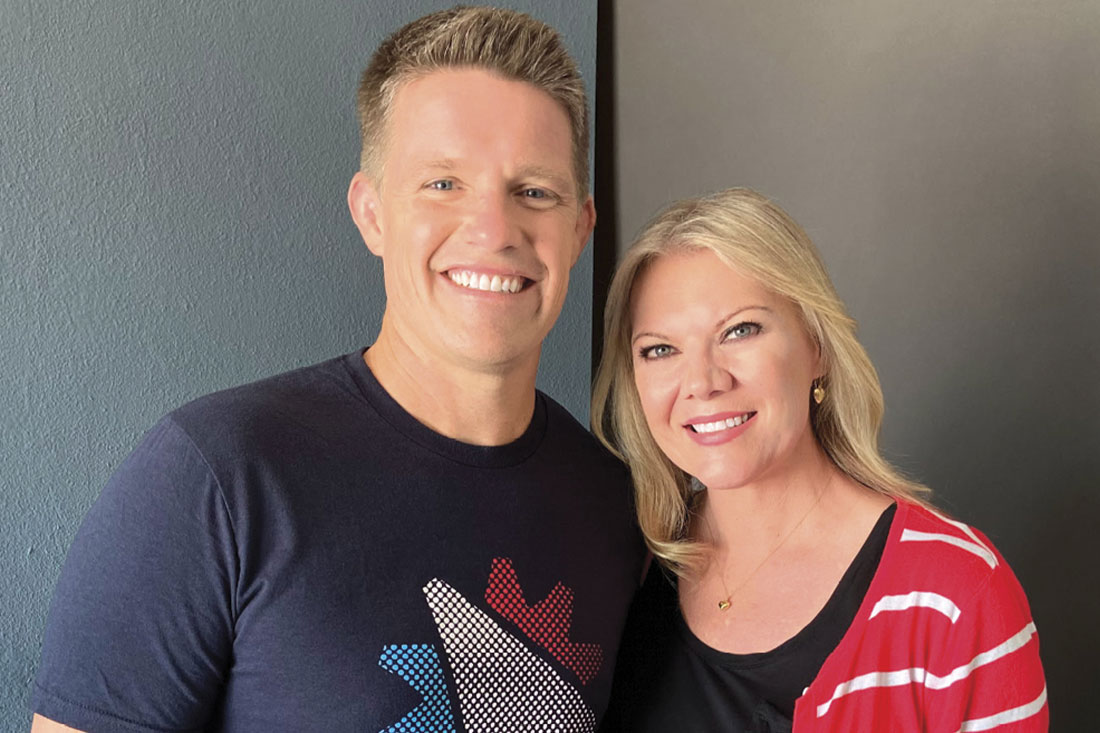

Many executives rise through the ranks because they understand strategy, operations and the mechanics of running a business. But these highly capable leaders often struggle to communicate their ideas clearly and confidently–a major limitation that can hold back both the business and their own personal career progression.
“If you have the greatest product and the greatest team and the greatest vision, none of it exists unless you can communicate it effectively,” says Lynn Smith, founder and CEO of Lynn Smith Media & Communications. “Because if the marketplace doesn’t know what your product is, they can’t want it.”
Five years ago, Smith left her longtime career in TV news to launch her own consultancy. Today, she helps high-level executives at Fortune 500 companies overcome some of their biggest communication challenges–from public speaking to on-air interviews and more.
“They’re taught their skill, and they’re taught the tactical, but they’re never taught effective communication,” she says. “So, I set out to fix that.”
Why do Executives Struggle to Communicate?
Smith spent 15 years working as a reporter and anchor for top news organizations like NBC, MSNBC and CNN. But when she first started out, she says, she was “terrible.”
“I had a news director say to me, ‘You’re never going to make it to a top 10 market within 10 years,' because I was horrible on a teleprompter,” she says.
Once, after she bombed a live shot, her photographer pulled her aside and told her something she’s never forgotten: “You have all the ingredients to bake a great cake,” he said. “You just have to know how to put them together.”
She spent the next 15 years crafting the perfect recipe for effective communication, which now serves as the foundation of her coaching framework.
“I set out to reverse engineer what it took for me to show up on camera, be confident and connect to a black hole, essentially, within a camera and make it [so that] people at home felt like they were talking to a friend, in addition to drilling down a story into something really clear and concise,” she says.
Most coaching programs target the symptoms of poor communication, Smith says—the shaky hands, the rambling, the filler words like “um” and “so.” But she takes a different approach by helping executives uncover and address the root problem.
“We treat the disease of their poor communication, which is fear,” she says. “The fear of saying the wrong thing, the fear of not looking smart, fear of imposter syndrome and ‘I don’t belong here.'”
How to Quiet Your Inner Critic
This fear often manifests as something Smith calls “the brain bully”—that inner voice whispering doubts or catastrophizing about everything that could go wrong, she says.
Once Smith helps executives beat their brain bully, then they can work together on tactical communication skills—things like the formula for a sound bite and how to deliver their message with magnetic energy.
Overcoming the brain bully, she says, starts with externalizing it. She encourages executives to give theirs a name—hers is called Bob, after her son’s pet fish, for example. From there, she helps them claim, reframe and tame their brain bully.
“You have to use this power phrase: ‘Sit down; watch this,'” she says. “And it’s almost like you’re performing for your brain bully, but you’re inviting it in, not trying to silence it. You’re giving its power back to yourself from externalizing it, and you’re reminding yourself of the purpose of your communication with that reframe, rather than living in the fear.”
It’s not a one-and-done process, either, because the brain bully requires constant maintenance, she says.
“You will continuously have your brain bully come back up,” she says. “This is something that you do each day. You name it, you claim it, you reframe it and you tame it.”
What Skills Cannot Be Replaced by AI?
Effective communication is even more important in the age of artificial intelligence, Smith argues. Everything in business will eventually be automated, she says, but human energy and presence—which she calls “presence capital”—can never be replaced. It’s the only thing executives should be focusing on right now if they want to thrive in the workplace of the future.
“We can have an apocalyptic view, or we can choose to have the view that we become more valuable, just in a different way,” she says. “I truly believe in the future, humans—their function will be to bring human energy into the room to close deals, to use their persuasion through their stories and their expertise that a computer doesn’t have…. Your unique experience and your unique vision will be your currency.”
She adds: “My goal is to make you impossible to replace.”
3 Ways to Build Executive Presence & Communicate with Confidence
Practice meditation and gratitude. Most of us are stuck on a hamster wheel that threatens to run us ragged. The fix? A daily practice of meditation and gratitude. Smith finds these techniques help her clients take control of their mental state, allowing them to navigate even the most stressful moments with greater ease and confidence.
Explore your personality. Smith is a fan of the Enneagram, a model that sorts people into nine personality types. “I would encourage people to really understand their personality because you are the only thing in your life in which you have zero competition–your story, your human aspects, all of those things,” she says. “You have no competition [for] that. So why not invest in it and understand it?”
Ignore the outside noise. Everyone has an inner critic–the brain bully. But external critics exist, too. It’s important to address both and not let either stop you from achieving your goals. “What is that version of accomplishments that could be yours if your brain bully, internally and externally, wasn’t stopping you from it?” she says. “What’s the book you would write? [Who’s] the person that you would impact purely because of your communication? What’s the crisis that you avert because you’ve beaten the internal and external brain bully?”
Image courtesy of ©Jenny Sherman
This article was first published in the September/October 2026 issue of SUCCESS® magazine. Get your copy here.