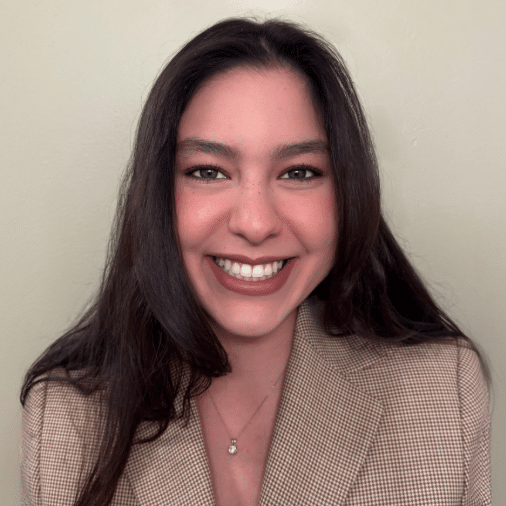
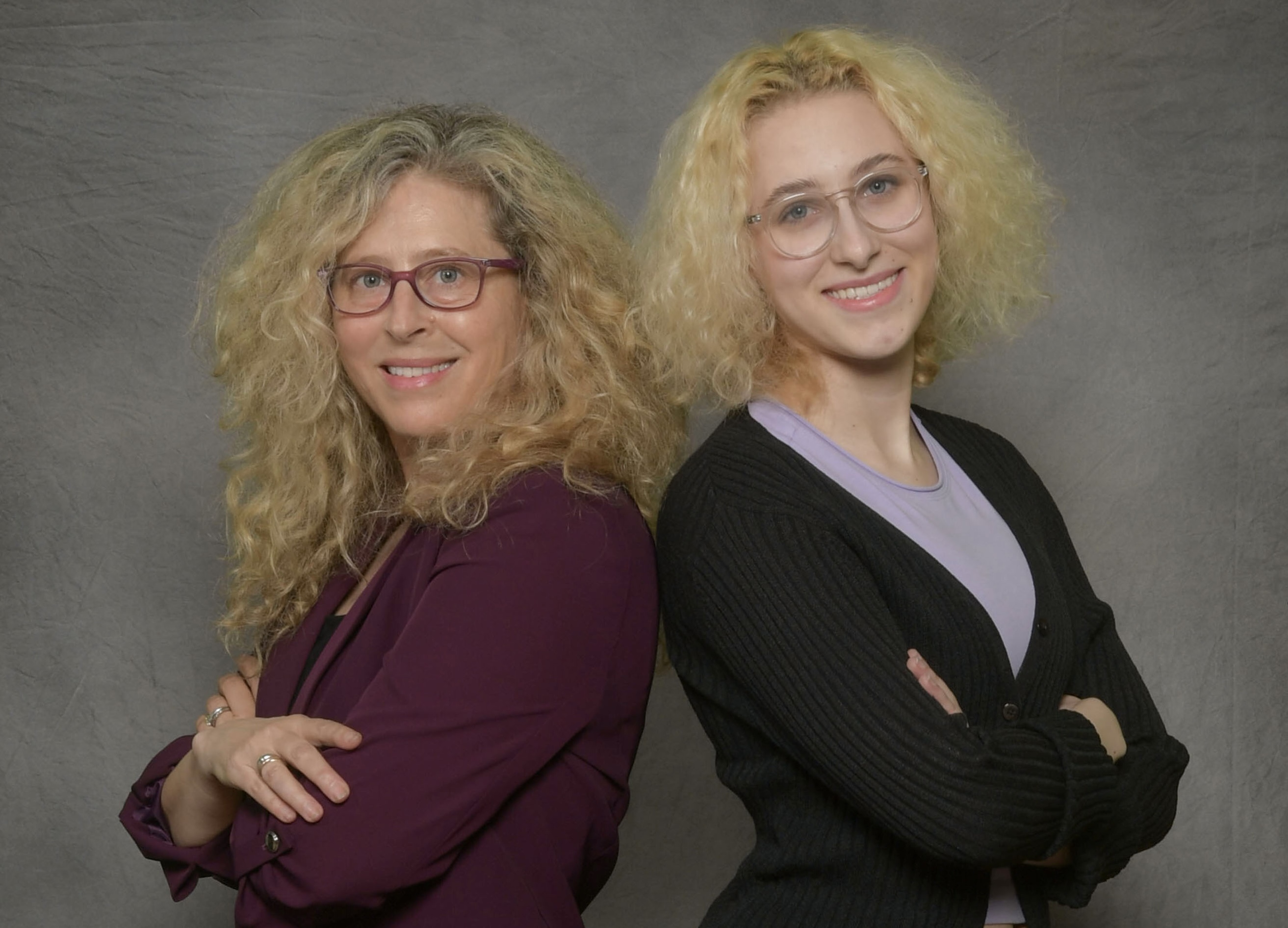
The MRI was on Monday, March 9, 2020. Marta Eliza Miller was 13, a competitive figure skater logging more than 20 hours on the ice each week, when she arrived at Children’s Hospital Los Angeles for three consecutive scans.
With figure skating tests days away and COVID about to shut the country down, Marta and her mother, Corrina, were walking into one of the most uncertain weeks of her young athletic career. Still preparing for upcoming skating tests, these scans would reveal what her scoliosis meant for the sport she loved.
Marta and her mother, Corrina, sat down for dinner still carrying the weight of it all: the ominous hospital visit, the looming diagnosis call, the possibility that this test might be Marta’s last on the ice.
While awaiting those MRI results, they made a decision most people may not have considered.
Corrina posed a question at the dinner table: “If there’s a change and you’re not going to be able to skate, what if we did something to help others who might be in the same situation as you?”
In the midst of all the uncertainty, the idea clicked immediately.
“You know what? Let’s do something.”
Marta and Corrina turned inward uncertainty into outward action—before they had a medical verdict, before they had a business plan and before they had proof that anything would work.
Five years later, the Marta Eliza Miller Foundation (MEMF) has raised more than $1 million dollars and funded and mentored programs across 50 states and Puerto Rico.
When you face a setback—a diagnosis, a layoff, a failed launch—your instinct may be to shrink your world. Marta and Corrina went the opposite direction.
Why Building Outward Beats Retreating Inward
Corrina described the foundation as “silver lining hope.” No matter what the spine specialist said on the phone, they already had a next chapter forming: “We were going to do this foundation, and we were going to create some sort of positive change.”
Marta was equally direct. “Right when my mom brought it up, I wanted to do it.” She had been fundraising as a junior ambassador for Children’s Hospital Los Angeles (CHLA) for years. Starting a foundation focused on scoliosis felt like a natural extension—and, critically, it gave her something specific to hold onto while waiting for medical news.
The doctor’s call brought relief due to Marta’s ingrained athleticism. Corrina recalled that the specialist told them a 48-degree curve would typically warrant surgery for a sedentary student, but Marta was active, pain-free and still pursuing skating at an elite level.
Relief did not mean the fear disappeared. A 48-degree curve on an X-ray is tangible in a way words are not. The reality was plain: The spine carries every nerve to the brain, the structural core of the entire body and movement.
That fear needed somewhere to go. Building the MEMF foundation gave it one—and the more the family poured into it, the wider that outlet grew.
What Support-Based Philanthropy Actually Looks Like
Here is where Marta’s story diverges from typical awareness campaigns—and where you can extract a model.
MEMF does not tell families how to handle scoliosis. Corrina was explicit: “We are not here to identify what is the way to treat scoliosis because every case is different. Some people will never need surgery. Some people will need surgery. And it’s really about learning what is best for your body and doing what makes the most sense. We’re here as a support group to acknowledge that scoliosis exists.” The foundation’s posture is what builds trust.
Children’s Hospital Los Angeles invited Marta to speak before trustees—including at the California Club—when she was still 13. The hospital later named two rooms in her foundation’s honor: a casting room and an exam room in the Jackie and Gene Autry Orthopedic Center, where Marta had received care since her initial diagnosis at age 10.
Scoliosis, Corrina noted, is “kind of this invisible diagnosis.” The condition can affect metabolism, emotions and neurology. Some people feel pain. Some do not. Marta felt pain only during specific skating moves. An estimated 3% of the world has scoliosis, Corrina said—a figure she learned only after Marta’s journey began. Corrina herself was diagnosed last year.
Marta’s foundation motto captures the inclusivity that stance requires: “Stand tall, be strong, dream big.” As Corrina explained, that means “stand tall in whatever capacity you can stand tall, because it’s your spine”—and recognize that strength is not purely physical.
How a Family Operation Scaled Without a Playbook
You might assume a successful foundation requires consultants, salaried staff and years of planning. Marta and Corrina have none of that.
“We figured it out on our own,” Marta said. “We just went with the flow. I don’t think we ever expected to get to this level.” That “level” being a seven-figure foundation that partners with major children’s hospitals and delivers grants and mentorship to families navigating scoliosis from coast to coast.
The operation runs lean: Marta, Corrina and a volunteer board. That proximity to the mission keeps overhead low and authenticity high.
The scale-up came through execution, not spectacle. In Scoliosis Awareness Month (June), the foundation donates to scoliosis programs and children’s hospitals in every state, including Puerto Rico—a logistical challenge Corrina described as “really exciting” because some states lack dedicated scoliosis programs at all. The team maps spine centers, orthopedics departments, neurology programs and alternative treatment providers state by state.
They also joined forces with Setting Scoliosis Straight Foundation, a 30-year research organization working with doctors worldwide. Partnership, not competition, accelerated their national rollout.
The contrast is instructive. Institutions bet on her. A few individuals in her immediate orbit did not. Your credibility in philanthropy—as in business—is built by the people who see your follow-through, not by the people who question your motives.
They just kept showing up, state by state, family by family, until the foundation became exactly what they once wished had existed for them.
The Impact of MEMF
If you were to walk into CHLA, you may find a child in the Marta Eliza Miller Foundation casting room, sitting with the same uncertainty Marta once felt waiting to get braces fitted.
When prompted about what Marta would tell that hesitant child, her answer was not a speech. It was a practice. “I’d probably tell them that everything’s going to be OK, and just to take one step at a time.… That’s what we did, and honestly, that was the best way for me to cope with it, just to go with the flow.”
Corrina added a perspective worth carrying into any uncertain season of your life: “You can always plan for the best day, but living with the unplanned is where life really happens.”
Marta’s medical chapter has since shifted. Her curve stabilized to between 30 and 32 degrees, resulting in a discharge last October. Marta now mentors other young figure skaters, including a young skater in Boston whose mother reached out while her daughter was being braced.
That kind of peer connection is exactly what the foundation aims to scale. Where Marta’s support happened organically through word of mouth and a mother’s instinct to search for someone who understood, the foundation is building infrastructure so those connections don’t depend on luck. Part of that means reducing the practical burdens that make the journey harder than it has to be.
The foundation is piloting support for Momentum, a CHLA app that lets parents take monthly spine measurements at home, reducing the need for quarterly X-rays and radiation exposure.
Making the Move Despite the Uncertainty
Marta’s story is a template for converting uncertainty into contribution. This approach enables a skill that compounds in every arena you care about.
Corrina framed it as, “having human compassion and just learning that the challenges are building blocks to making you a better human and more empathetic to the world around you.”
Marta wants scoliosis to become “more of a movement.” This in practice entails educating people that scoliosis is “a common word and a common thing,” not a source of stigma or silence, says Marta.
You can start smaller and still run the same play:
Name the fear, then name the contribution. Marta and Corrina did not wait for certainty before acting.
Build community before you build a brand. Their motto works because it includes everyone, not just the highest performers.
Partner where you cannot scale alone. Setting Scoliosis Straight and CHLA extended reach Marta could not have built solo.
Measure impact in results, not just dollars. A named casting room in daily use is proof that outlasts any press cycle.
Purpose gets attention, and systems earn results. And sometimes, the most powerful system starts at your own dinner table.
Your move: Identify one problem you understand personally. Ask what a single family, team or community would need to feel less alone in it. Then build one concrete thing—an introduction, a fundraiser, a resource list—this month. You do not need permission or a perfect plan. You need the same instinct Marta had when her mother spoke: “Let’s do something.”
Featured image courtesy of Shore Fire Media/Jeremy Jines