

The world feels increasingly uncertain, shaped by shifting geopolitics, economic volatility and rapid technological change. But even as global trends come and go, uncertainty will undoubtedly remain a constant presence in our lives. That’s why journalist and author Simone Stolzoff believes learning to cope with the unknown is an essential skill. In his new book, How to Not Know: The Value of Uncertainty in a World that Demands Answers, Stolzoff breaks down the blurry world of uncertainty, transforming it into something both manageable and beneficial.
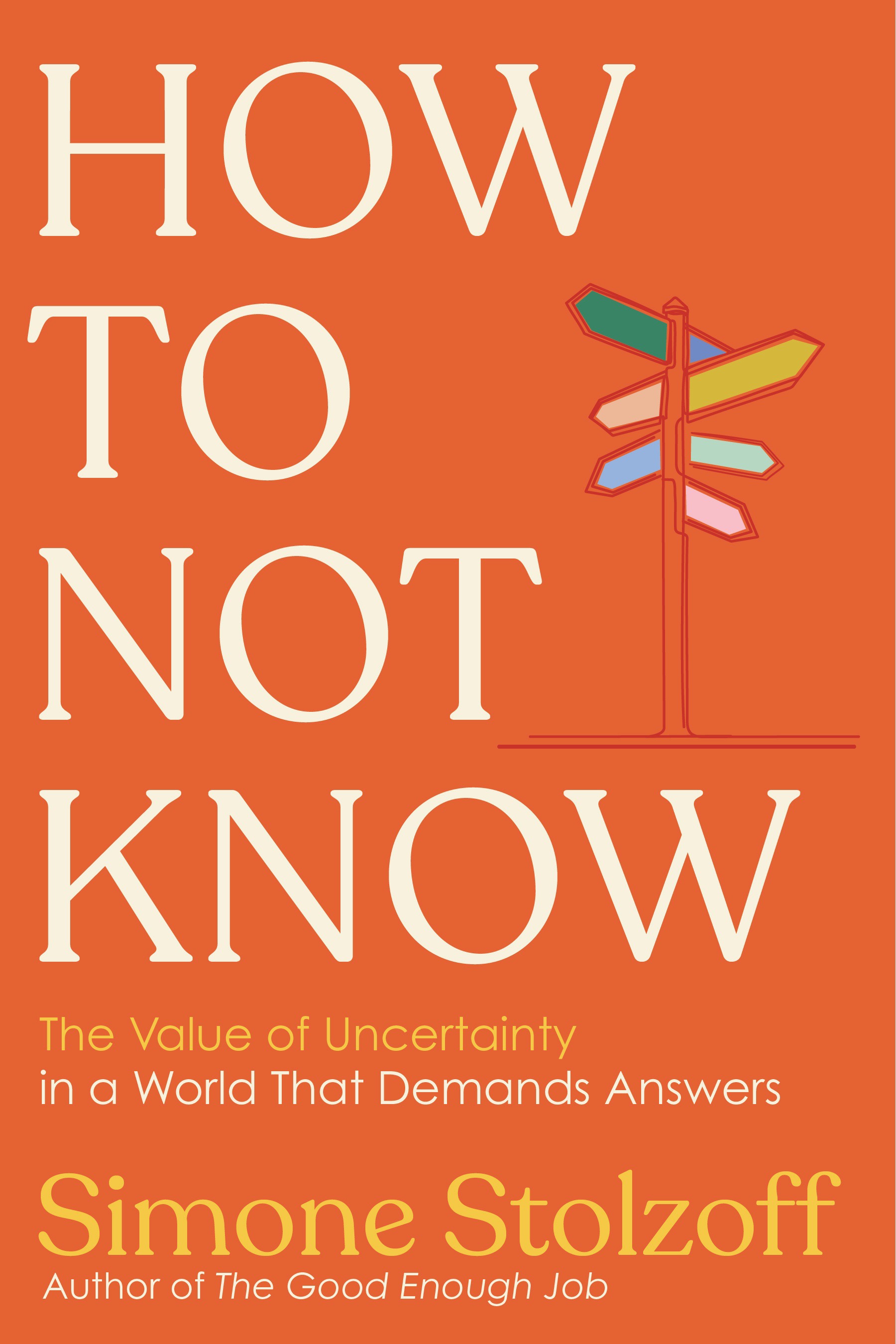
Stolzoff was inspired to write How Not to Know while touring around to promote his first book, The Good Enough Job: Reclaiming Life From Work. “The most common question that I’d receive from readers or the audience members was, ‘How should I think about my career in the wake of all this economic uncertainty on the horizon?’” Stolzoff says. “Whether driven by a layoff or the threat of [artificial intelligence], everyone seemed to be anxious about their careers and wanted to know how to deal with that uncertainty.”
Those queries sent Stolzoffon on a multi-year reporting journey, gathering stories and talking to people in various fields to understand how best to face the unknown. He wanted to frame uncertainty not as a problem, but as an inevitable part of life.
Stolzoff also has more personal reasons for writing the book. A self-described “natural doubting person,” he can recall numerous moments in his own life when he felt stuck trying to make a difficult decision. “I wanted to be able to develop more tolerance for uncertainty, to be able to make decisions not with the expectation that I should know for sure, but knowing that, in spite of doubt, I can still make choices and move forward,” he says.
Stolzoff jokes that he wrote the book he’d want to read. In doing so, he has also tapped into a growing wave of societal anxiety, as people search for ways to cope in a world defined by relentless, rapid change.
Understanding Uncertainty
Humans’ physical and emotional relationship with the unknown is rooted in biology. Whether the source was a disturbing sound coming from some bushes or the prospect of eating a potentially poisonous berry, uncertainty likely arose to help protect us from dangerous or even deadly outcomes. Stolzoff points out that our brains are wired to eliminate uncertainty as quickly as possible.
In modern times, this often manifests as anxiety, which technology has sent into overdrive. Humans are not meant to process everything, everywhere, all at once, but that’s exactly what social media and the 24/7 news cycle require us to do. “When you are applying that same threat response framework to an email in your inbox or a line that you read in the news, it can be incredibly destabilizing,” Stolzoff says.
Though uncertainty was once a survival mechanism, it no longer needs to feel quite as threatening, he says. He hopes How Not to Know will help readers understand and make that shift.
Organizing the Unknown
Developing a higher acceptance for uncertainty does more than just assuage anxiety. Research suggests individuals, organizations and communities with higher levels of tolerance for uncertainty tend to be more creative, innovative, adaptable and resilient. How Not to Know is a roadmap to harnessing this power.
“The book does two things,” Stolzoff says. “One is it tells a series of stories, of case studies that can hopefully be relatable, each of which has different lessons imbued in them of how to get better at dealing with uncertainty. And then if you take the arc of the book as a whole…. it arms readers with both a guide and tools for facing the unknown.”
The book is divided into three sections: comfort, hubris and control. In each, Stolzoff shares anecdotes of people dealing with uncertainty relevant to that particular topic. He hopes readers will be able to recognize themselves in these stories, which range from a woman deciding to leave a cult to a couple considering a divorce.
Comfort, hubris and control—which Stolzoff refers to as the “horsemen of delusion”—represent traps that keep us yoked to uncertainty. “When you see these things coming, they are signs that you may be choosing a certain path over an optimal path,” he says.
1. Comfort wants you to remain where it feels safe. Creativity flourishes from tolerating uncertainty long enough to crystallize original perspectives, not derivatives of what’s already been done, he says.
2. Hubris claims you know best and should stay committed to your opinions of how the world works. The flip side of hubris is intellectual humility, which can give you a more accurate picture of the world, according to Stolzoff.
3. Finally, control is the desire to know exactly how events will unfold, says Stolzoff. Accepting outcomes you cannot control is the antidote, and recognizing this can help you focus energy on tasks you can influence.
Taming Turbulence
Developing a higher tolerance for navigating unexplored territory is not an entirely straightforward process. However, Stolzoff offers several techniques that can help your brain get more accustomed to dealing with uncertainty.
1. Avoid reaching for your phone the moment you cannot remember a fact. Instead, sit with not knowing.
2. Try a new route to work or order something different at a restaurant. Both are ways to microdose yourself into accepting the unfamiliar.
3. Take inventory of past challenges you navigated. Reminding yourself of these successes can boost your confidence and conviction to do so again.
Featured image by voronaman/Shutterstock