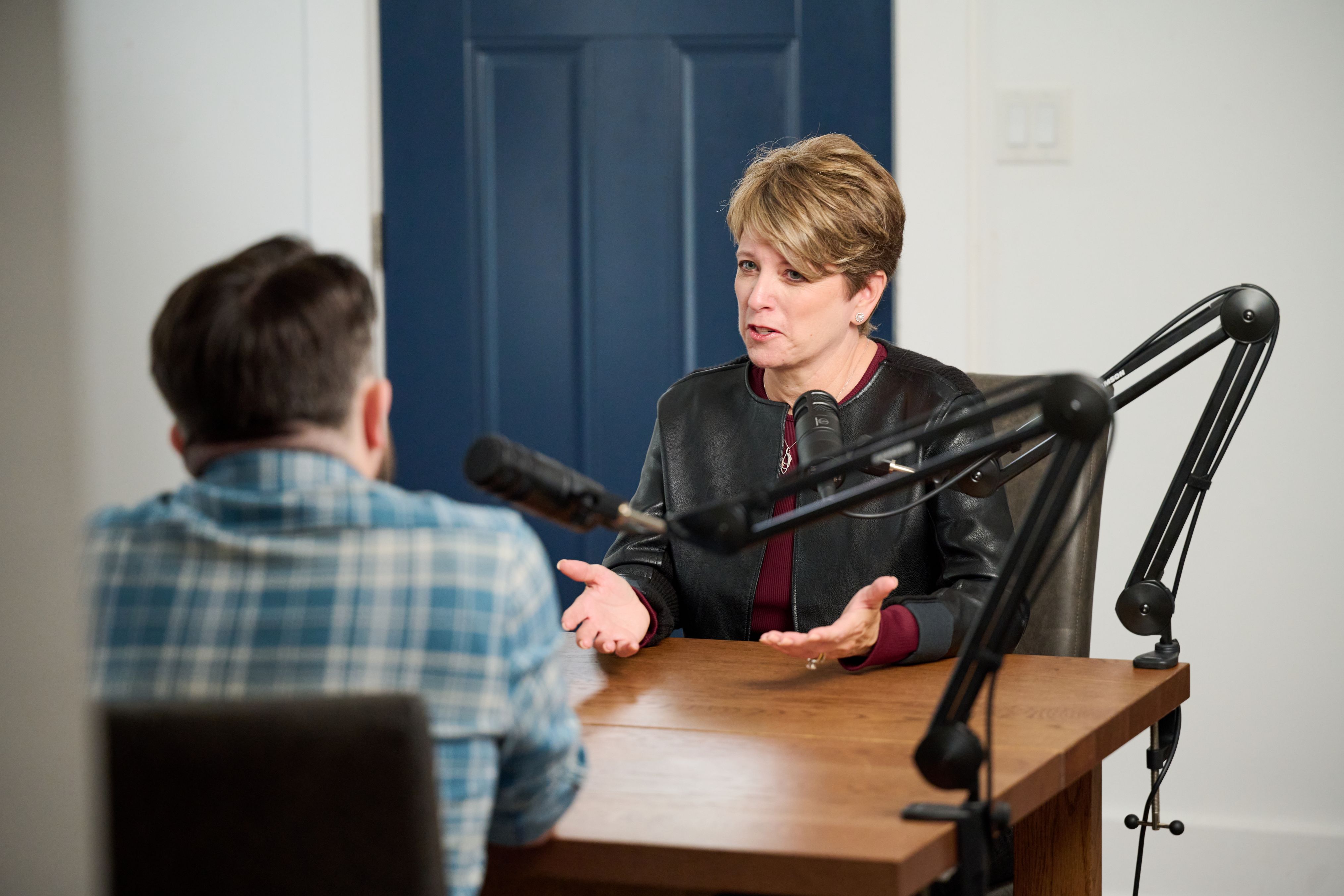
Angie Hicks, the co-founder of Angi (formerly Angie’s List), gets stopped in grocery stores and airports, and contractors and customers line up to talk to her, asking for mentorship or thanking her for providing a service that helps them find the best support for their most precious possession: their home.
The company is a matchmaking-style platform centered on connecting homeowners with professionals like contractors and plumbers and is now worth over $1 billion. It’s hard to believe the polished pro got her start selling memberships (for access to reviews and ratings for local contractors) door-to-door in Columbus, Ohio.
Hicks shared a bit about her journey with SUCCESS+.
SUCCESS+: How did you end up in a business focused on home improvement?
Angie Hicks: I ended up starting the business with my co-founder, Bill Oesterle, who I had interned for when I was in college. The reason I probably said yes to Bill was more about the fact that I knew him and trusted him. Quite honestly, I did not know much about home improvement at the age of 22.
S+: The business started in Columbus, Ohio. How did it expand into other markets?
AH: A year after we started, we bought Unified Neighbors, which was the Indianapolis business we patterned Angi after. It was a call-in service and a printed newsletter, and we patterned it after Unified Neighbors, which developed out of door-to-door sales.
So when we bought it, I think they had 6,000 or 7,000 members at that point, and they probably hadn’t marketed it for 20 years. It was just this neighborhood thing that people knew about and always came to trust.
S+: What does being an entrepreneur mean to you?
AH: It took me a long time to kind of view myself as an entrepreneur. I didn’t think I had the typical characteristics of an entrepreneur. I think entrepreneurs are visionaries; the big idea person, they’re charismatic, risk-takers. I was not a risk taker, so I was like, “I just don’t think I have it.” But I think Bill saw in me what probably was one of the important characteristics of an entrepreneur that I didn’t give credit to, which was perseverance. So if door-to-door was going to be the thing, as much as it was going to pain me to do it, I was going to do it.
By the fall of 1995, we decided we’d start running some advertising. So we ran a little 2x3 ad in the weekly newspaper that said, “Tired of lousy service?” with some clip art of a house. We ran that ad and, lo and behold, the phone started ringing. Then we sold 100 memberships at the home and garden show. We took the exact same ad, put it in The Columbus Dispatch, and the phone rang. If there is anything that I’m most happy about, it’s that the phone rang.
S+: What were some career-changing decisions you made?
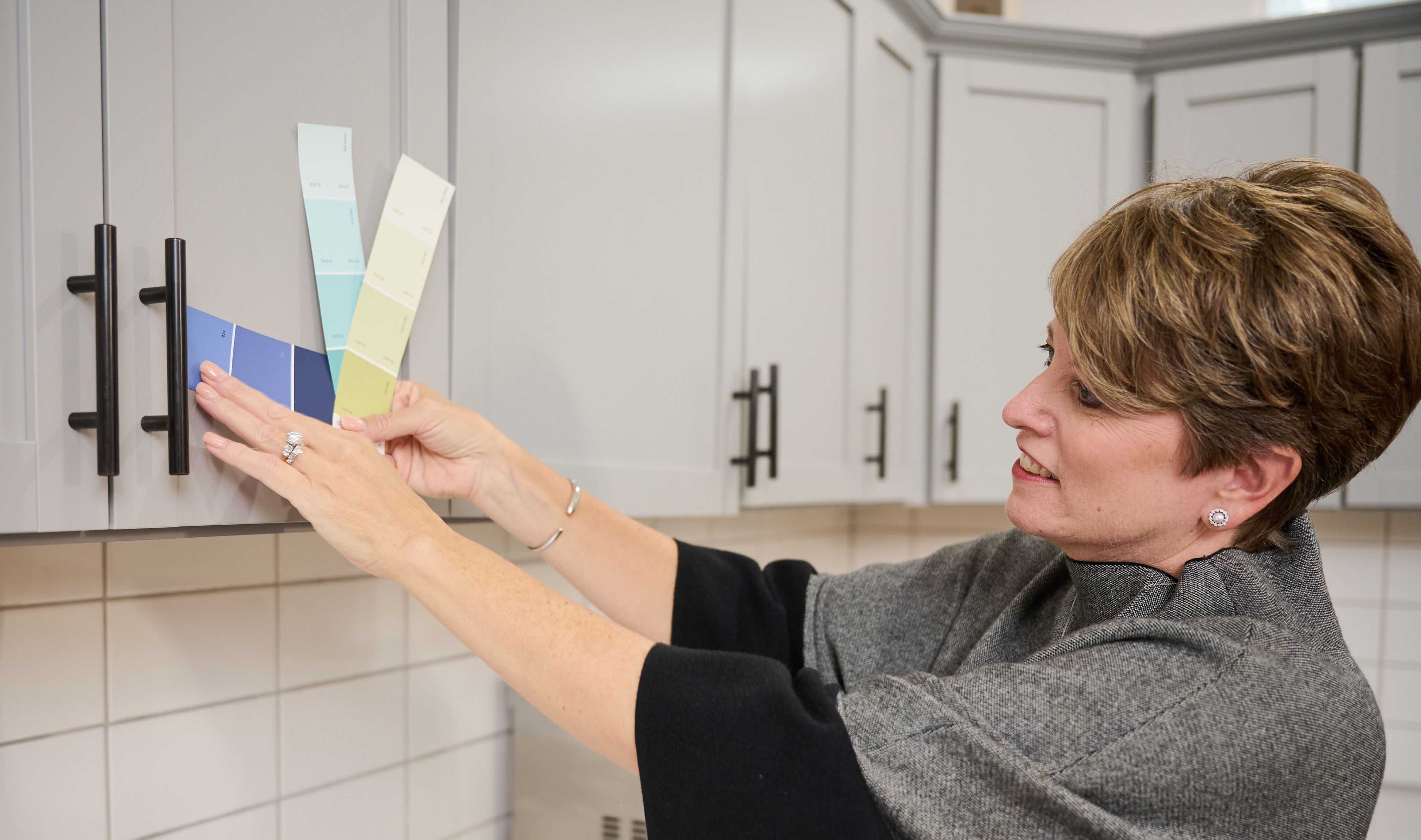
AH: I think there were two or three decisions in my career that seemed inconsequential at the time, and the name change would have been one of them.
When it was suggested we call it Angie’s List, I thought, “We’ve got, like, what, 1,000 members? OK? I just answer the phone every day.” It didn’t seem like a big decision, because I didn’t see it as being bigger than necessarily this little neighborhood thing in Columbus, Ohio.
The other inconsequential decision is when the marketing team came and said, “Hey, Angie, the biggest question we get is whether there’s an Angie. Would you consider being in the commercials?” And I was like, “OK, we can test it. We’re not spending much money, so it doesn’t really matter.” And then that took off.
S+: What’s one of the biggest things you’ve seen reinforced by the work you’ve done the last 30 years?
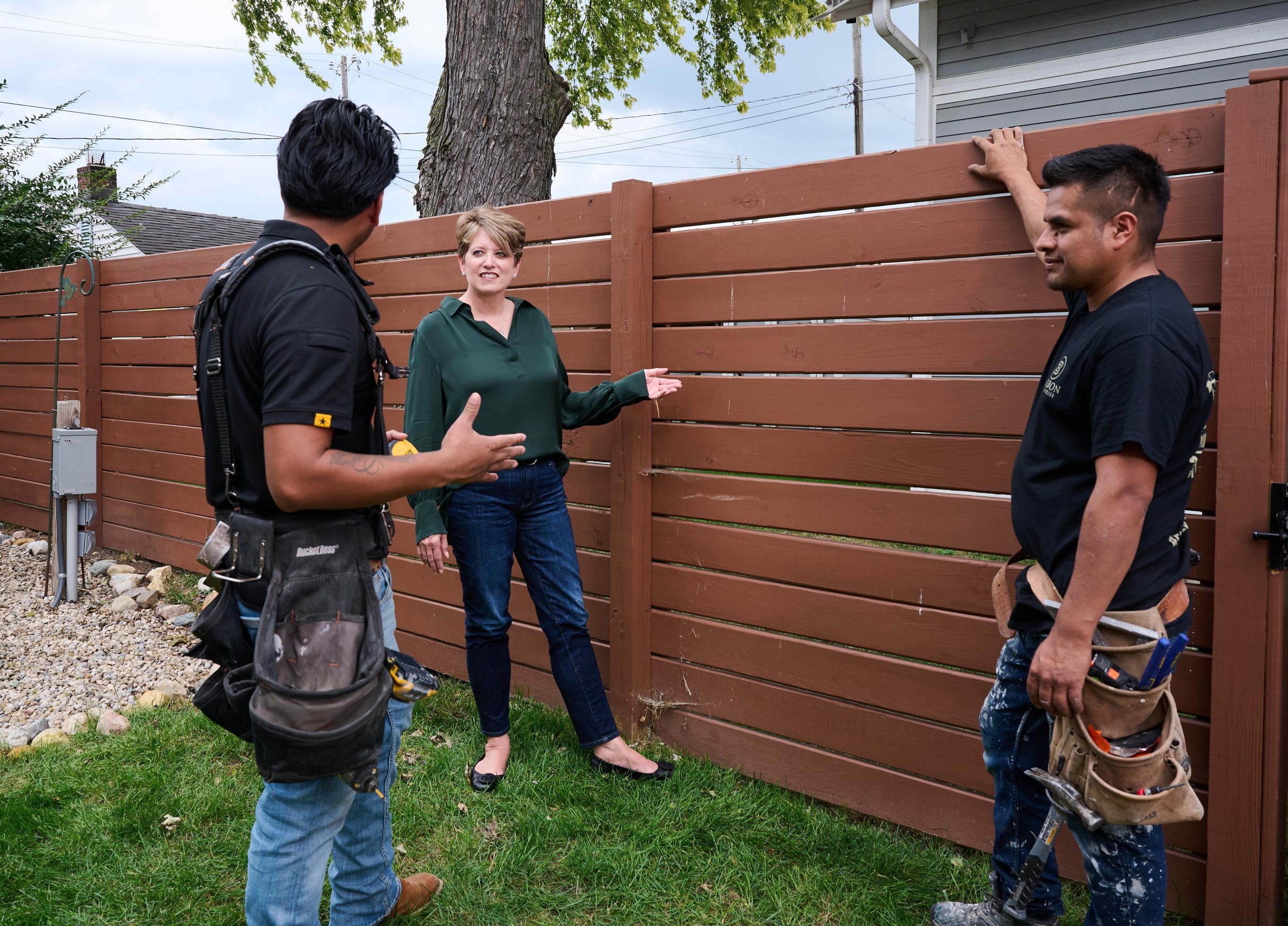
AH: It’s an industry where a lot of times homeowners can feel like they aren’t sure what they’re doing. They have spent a lot of money; it’s a big decision. It’s where they raise their kids. It’s like there are all of these emotions that go into these projects; having trust is such a big factor.
Most of these pros are small businesses—three or four people that are trying to build their business and feed their family and do all these things. And so I see how relationships are so important in understanding who to trust and who to use.
I’ve been a believer that brands don’t replace relationships. People like people, and being willing to get on a phone and just talk with someone goes a long way. And in a world that is very digital, I think we don’t do enough of that.
S+: What principle guides your business?
AH: I think, “What are we trying to do?” And it’s always been, “How do we help homeowners find top-quality skilled pros to do work around their homes and help those pros build their business?”
If you would have asked me that question in 1995, I would have given you an answer very similar to that. If you’ve got a good foundation, your purpose doesn’t change, your mission doesn’t change. And I think that’s an important element because I think that allows a business to stay true to its core.
S+: What’s one piece of advice you’d give someone launching a startup?
AH: Celebrate the small wins. I think sometimes when you’re starting, it’s really hard, and you’re trying to do something big, but you forget to break it down into small things. I can claim that I have a lot of perseverance, but there were a lot of times I was like, “This is ridiculous. If we’re only going to sell 27 memberships in September, this isn’t really working.” But you have to turn it around. Otherwise it just becomes a grind. So, I was like, “You know, would we like to be selling 10 memberships a day? Yeah. But two right now is a really good number.”
S+: How does your 30-year milestone feel?
AH: I get people asking, “How do you go 30 years doing the same thing?” Or, “How do you stay focused?” And I think there are two things that I think about. One: Do I like the people I’m working with? Two: Am I learning new things? And if I’m saying yes to both of those things, then I’m excited. When you’re 30 years into a role, I think you constantly have to be learning new things. You can’t fall in the trap of “We do this because we’ve always done this.” You need to be learning from everyone on the team and figuring out new perspectives and new insights.
This interview has been edited for length and clarity.
Image courtesy of Angie Hicks
This article was first published in the September 2025 issue of SUCCESS+ digital edition. Get your FREE copy here.