Music is Aloe Blacc’s hobby. It’s a curious statement, given that Blacc is a Grammy-nominated, multi-platinum and diamond-certified artist with megawatt hits like “I Need a Dollar,” “Wake Me Up” and “The Man.” But Blacc, born Egbert Nathaniel Dawkins III, insists that music was never something he considered as a career option.
“I don’t know any first-generation [American] kids who were told they were allowed to do the arts,” Blacc says. “You’ve got to be really practical and… make something of yourself.”
Aloe Blacc’s Path From Ernst & Young to Chart-Topping Hits
That belief system is evident in his winding career road that included attending the University of Southern California on a full scholarship, where he studied linguistics and communications and spent a summer working in the university’s neuroscience lab. After graduation, he took a traditional job at Ernst & Young, but Blacc says music “kept raising its hand more and more.”
Opportunities to collaborate and tour with musician friends became a source of joy, and after being laid off from his “safe” job in corporate America, he decided to focus on music and signed with an indie record label in 2006. Six years later, he joined major record label XIX Recordings/Interscope Records, and by 2014, his music was topping Billboard charts.
What Is an Artivist? How Aloe Blacc Uses His Platform
It was a new calling as an artist, but he was also learning how his music and platform could drive positive social change. “Artivists”—artist-activists who were using their platforms to speak truth to power, humanize the vulnerable and empower positive change—became inspirations to him. Among those artivists were Bono, Bruce Springsteen, Chuck D from Public Enemy, Tom Morello from Rage Against the Machine and Blacc’s mentor Harry Belafonte, a Grammy Award-winning musician and social champion who served as a strategist to and financial supporter of the Rev. Martin Luther King Jr.
“I believe artists have a duty and a responsibility to use their voice for positive social transformation because… we can use our skill set to sway public opinion and introduce information, ideas, concepts that might otherwise take a long time for adoption,” Blacc says. “We have the ability of translation, and I feel like if you’re going to open up somebody’s centers of self-identity, their belief systems, their emotive centers, there’s a duty to be responsible and treat them with humanity rather than with vanity and greed.”
How Aloe Blacc Founded Biotech Firm Major Inc.
In 2022, as the world was recovering from the ravaging effects of the pandemic, Blacc launched a new mission. He’d been vaccinated and boosted for the virus, but still contracted COVID-19. While he believes it protected him from hospitalization, he had hopes for a solution that would prevent infection altogether.
He began studying the mechanism of the virus, calling on his experiences at USC to decipher medical papers from doctors working in the field, and found a chemical biologist, Gomika Udugamasooriya, Ph.D., of the University of Houston, who was working with a molecule that could do exactly what Blacc was imagining—block the protein interactions that are the gateway to the virus.
Blacc began sponsoring Udugamasooriya’s research, but it soon became clear that philanthropy wouldn’t be enough to make a real impact. They needed a business entity that could take on investors and create a potential commercial return to fund more research and make it feasible to license the university’s intellectual property.
As an answer, Blacc established biotech firm Major Inc., named after his father who retired from the U.S. military as a major, and the two continued Udugamasooriya’s study of modulating immune responses.
As the pandemic wound down, they pivoted to oncology and founded a company called Pepto*ID, under the Major Inc. umbrella, to develop cancer treatment drugs using a novel molecular structure that binds itself to tumor cells and is impervious to mutations.
Preliminary tests have shown efficacy, and Major Inc. recently took on strategically aligned investors to provide financial backing and expertise as it applies for pre-IND, or investigational new drug, status with the Food and Drug Administration to allow for clinical testing and ultimately FDA approval. Blacc calls the drug modality a “game changer” and says it shows great promise for the treatment of pancreatic cancer in particular.
“Pancreatic cancer is an unmet need,” Blacc says. “It’s very difficult to find survivors of pancreatic cancer. The solutions that exist now, and the way that medical practitioners communicate, it’s all about extending life, not assuring life. And we want to be the company that assures life.”
Transferable Skills Behind Aloe Blacc’s Career Pivot
Blacc’s latest album, Stand Together, was inspired by people who are doing good in the world but keeping it secret.
“They don’t really toot their own horn, and I figured I’ll do it for them,” he says. “I use that project as an opportunity to amplify the work of nonprofit organizations in a bunch of different sectors. To create anthems for these organizations and their work.”
As Blacc endeavors to make a positive imprint in the world, his involvement in cancer research is similarly quiet. Biotech discovery is not as flashy or loud as his musical roots, but his prior experiences have prepared him for this new mission.
The earliest days of his career, floating between linguistics and neuroscience at USC, taught him how to process statistics and read medical papers, like the one that led him to Udugamasooriya, and learning from Belafonte and other “artivists” gave him the playbook for how to use his presence in the media to drive positive cultural transformation.
In his chart-topping hit “Wake Me Up,” Blacc sings: “All this time I was finding myself/ And I didn’t know I was lost.” It’s a line that reflects his exploration of self and his place in the world. Of chasing after one passion, only to realize that you were built for an entirely different path.
For Blacc, that path has led him to the intersection of art, social change and scientific discovery.
“Absolutely, it’s a huge pivot,” Blacc says. “But I’m so glad that I’m here.”
This article was first published in the November/December 2026 issue of SUCCESS® magazine. Get your copy here.
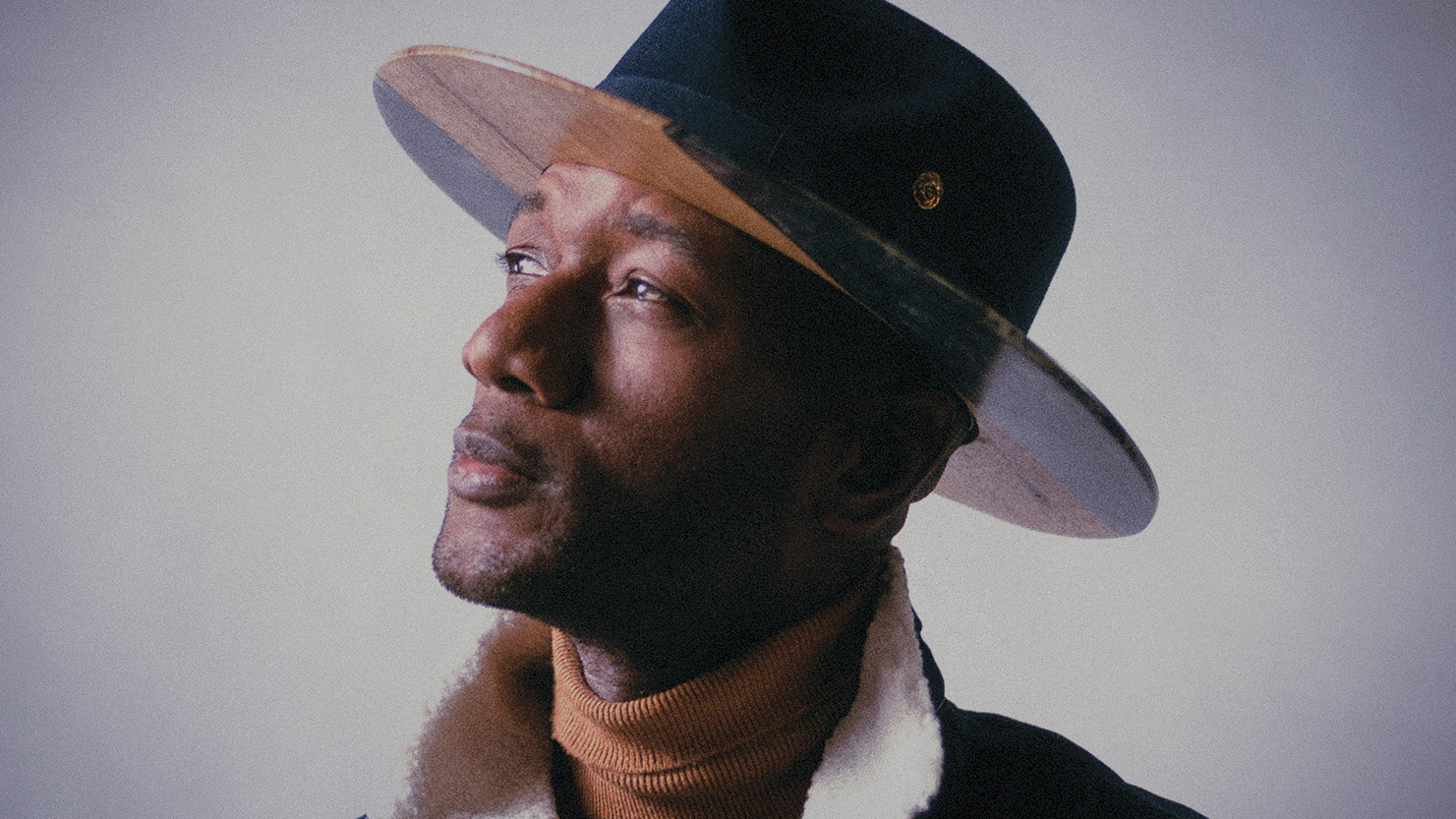
Photo by Zach Bell / Courtesy of Aloe Blacc