If you are one of the 41% of Americans who work remotely at least part of the time, you may be focused on designing the most comfortable and efficient workspace possible. Part of this involves keeping your utility bills affordable, and reducing energy usage can help.
Beyond unplugging office equipment when you aren’t using it, you can upgrade your home office with smart tech tools to maximize sustainability, convenience and even style. There are some practical choices that can deliver real results, says Jason Wise, technology writer and editor who tests the latest tech products to uncover sustainable solutions.
“Small steps with solid payoffs… add up, day by day, until suddenly you notice the savings in your energy bill and feel the difference in comfort,” he notes.
Here are a few of the best smart tech upgrades for your home office, according to Wise and other experts.
How Smart Thermostats Save Energy & Money
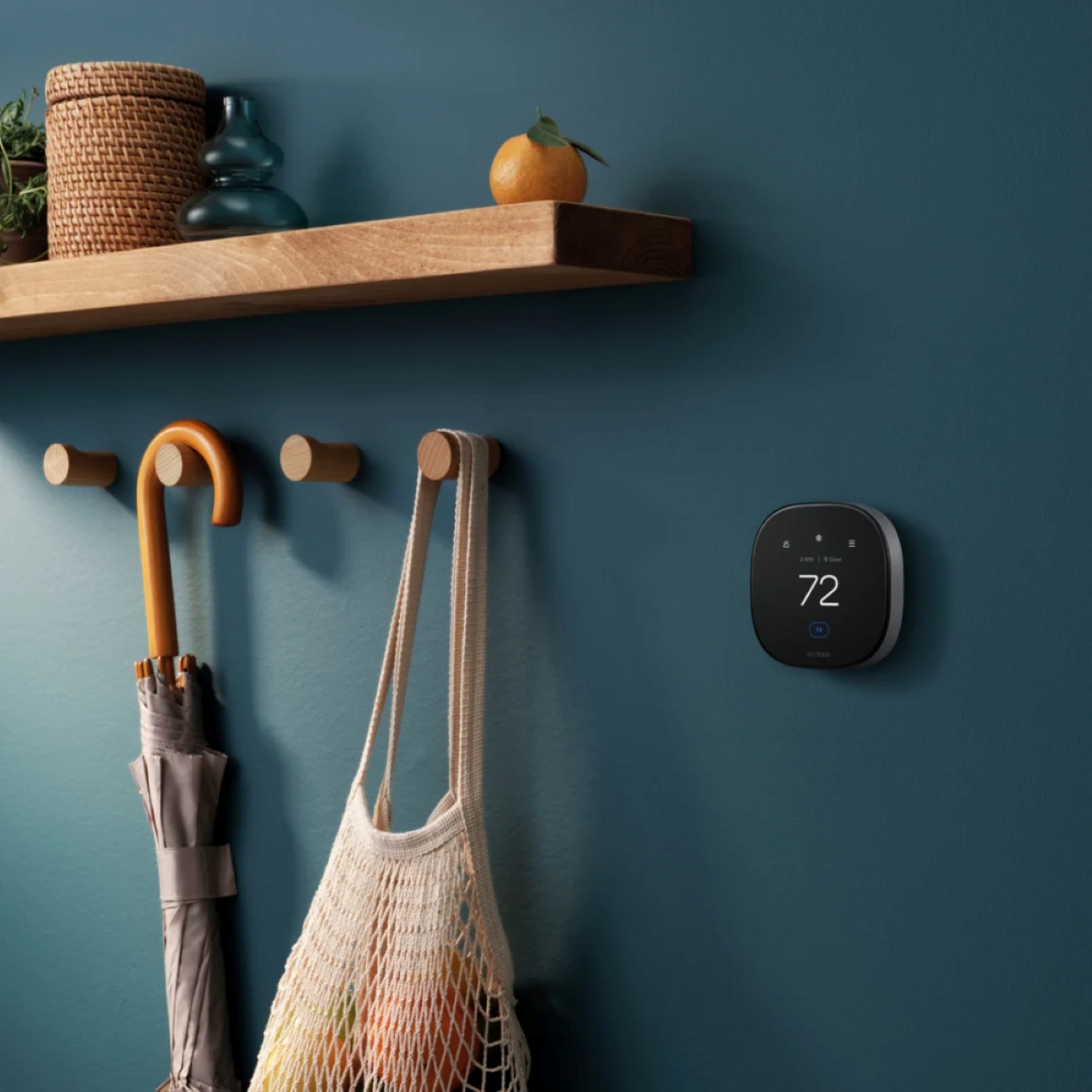
Staying comfortable means balancing heating and cooling throughout the seasons. Installing an Energy Star smart thermostat can reduce your energy consumption and utility bills by an average of $50 per year, according to the U.S. Environmental Protection Agency (EPA). The EPA’s Energy Star rating means a thermostat has met certain criteria for energy efficiency.
“A smart thermostat helps by adjusting the temperature specifically in your office only when you’re actually using it,” explains Daniel Vasilevski, director and owner of Bright Force Electrical in Sydney, Australia. “These thermostats save energy by learning your daily routine and making automatic adjustments to keep the temperature optimized. This reduces unnecessary heating or cooling when the room is empty, minimizing energy waste.”
Smart thermostats are also convenient. An app helps you to control temperature from your phone whether you’re home or not.
Recommended Products:
Google Nest and Ecobee
Smart Blinds & Shades Help Control Heat Loss & Gain
Not only do window coverings like shades and blinds dress up a room and provide privacy, but they also help regulate the indoor temperature. Approximately 30% of a home’s heating energy can be lost via windows, according to the U.S. Department of Energy.
Smart window coverings, which connect to the internet and are controlled remotely, ensure both energy savings and comfort. “[S]mart shades can provide additional insulation from drafts when outside temperatures are extreme,” says Christopher Matos-Rogers, an associate broker and realtor in Atlanta. “[Y]ou can set them to automatically open [or] close when needed.” He programs his smart shades on the east-facing windows to close between 10 a.m. and 2 p.m. during the summer months to reduce morning heat gain so the air conditioner needs to work less.
Recommended Products:
Lutron Serena smart shades and blinds and Levolor InMotion™ smart shades and blinds
Raise the Thermostat 4 Degrees With a Smart Ceiling Fan
Instead of running the air conditioning all day during the warmer months, bump up the temperature on your thermostat and opt for a smart energy-efficient ceiling fan. The National Renewable Energy Laboratory estimates that using ceiling fans and raising the AC by 4 degrees Fahrenheit could reduce building energy costs by as much as 11%.
“Smart ceiling fans might seem like a small upgrade, but they’re a quiet powerhouse for comfort,” says Wise. These products are often compatible with Wi-Fi, Alexa, Google Assistant and an app so you can easily control settings with a voice command. “With the right setup, they adjust speed based on the room temperature and help circulate air effectively. It keeps your heating or cooling system from working overtime and allows for consistent airflow, keeping energy use surprisingly low,” he adds.
Recommended Products:
Hoenofly smart ceiling fan
What a Home Energy Monitor Can Tell You
To tie it all together, experts recommend installing a whole-house home energy monitoring system to collect detailed data on your home’s energy consumption—such as which items are using the most electricity—so you can make adjustments accordingly. These systems are often connected right to your smartphone or computer so you can keep tabs from wherever you are.
When adding new electrical devices to your home or making energy-efficient upgrades, it’s important to have a system in place that manages the new electrical loads properly, says Michael Lotfy Gierges, executive vice president and president of home and distribution at Schneider Electric.
“Home energy management systems bring together electrical devices like electrical panels, appliances, heat pumps and solar into one holistic ecosystem for seamless energy management,” he says. “[This] allows homeowners to monitor, optimize and manage their home’s entire energy consumption, so when upgrades are made, the impact can be tangibly seen.” For example, homeowners can identify and shift their largest energy loads to run when utility costs are lowest, saving on bills, says Lotfy Gierges.
Recommended Products:
Schneider Electric, Sense and Emporia Vue
Smart Lighting Uses Energy Only When You Need It
Lighting accounts for about 15% of your home’s electricity use, and the right lighting can make all the difference in the world when it comes to your productivity during the workday. Choosing smart lighting fixtures for your home office allows you to control how and when lights are used, says Vasilevski. This helps save energy and money, while simplifying your life.
“Smart lighting helps save energy because it reduces the always-on effect of traditional lighting, ensuring energy is only used when and where it’s needed,” he explains. “Instead of leaving lights on all day, you can set them to automatically turn off when you leave the room or adjust brightness based on natural light. This way, you’re only using what’s necessary, which reduces electricity costs over time.”
Also, smart lights can be adjusted for different tasks, like brighter settings for meetings or softer lighting for late-night work, enhancing comfort and efficiency, he adds.
Consider also installing smart switches, outlets and dimmers to reduce energy consumption at the plug level, suggests Lotfy Gierges.
Recommended Products:
Philips Hue, Govee and Nanoleaf
Featured image courtesy of Ecobee
This article was first published in the March 2025 issue of SUCCESS® digital edition. Get your FREE copy here.