
Having your own business is a big responsibility. It takes determination, tenacity and patience to run the show day to day. But when you’re just starting out, there are long days and nights, lots of bootstrapping and a dizzying array of hats to wear. The women at the helm of the companies we’ve profiled below have been in (and won) TV competitions, perfected their product through countless recalibrations and fought to equalize the gender gap in health care research. Ultimately, they’re changing the way we sleep, the way we craft beverages, the way we feed our children and the way we support women’s health care—and we’re here for it all.
Sleeping on the Job
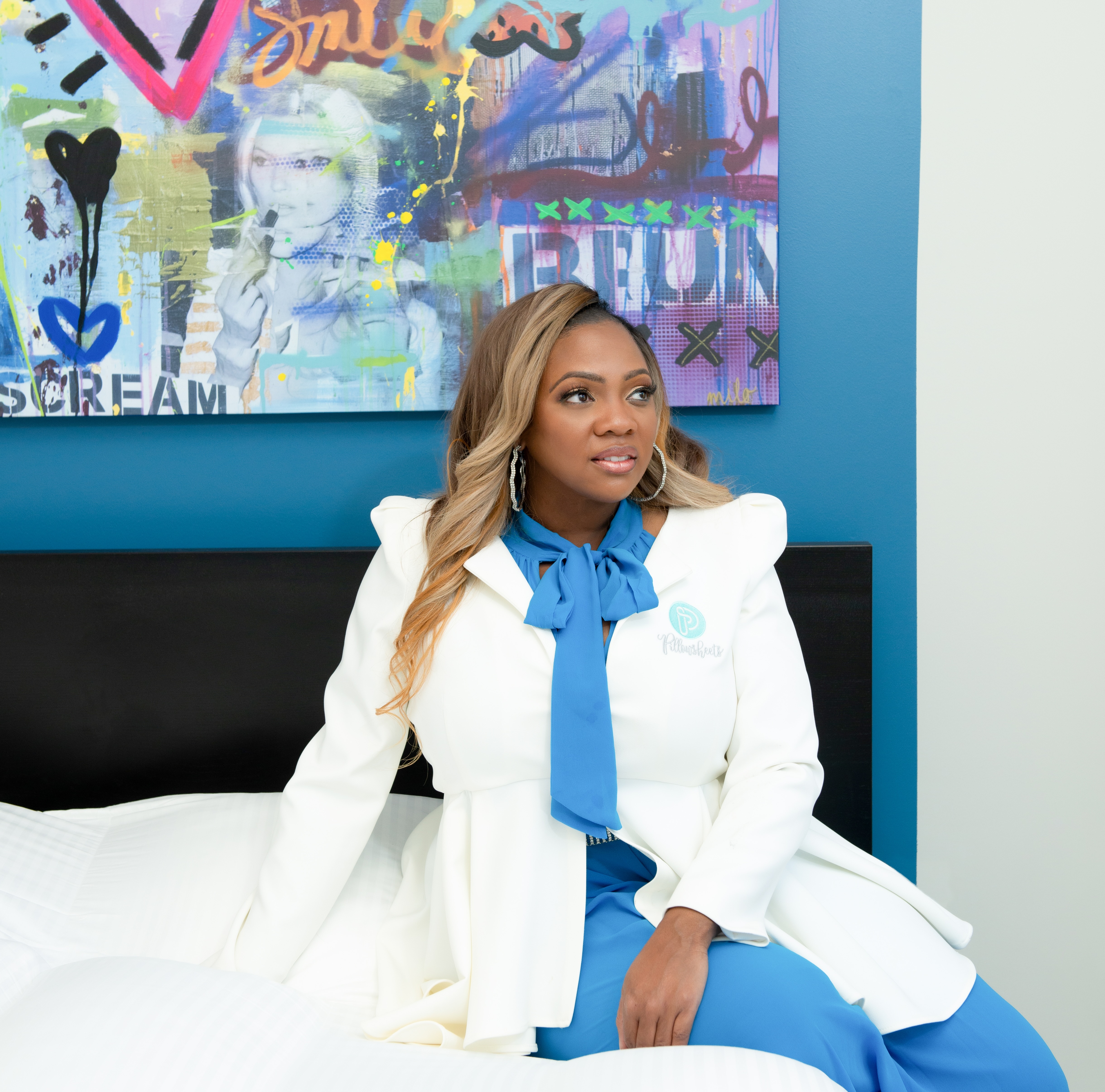
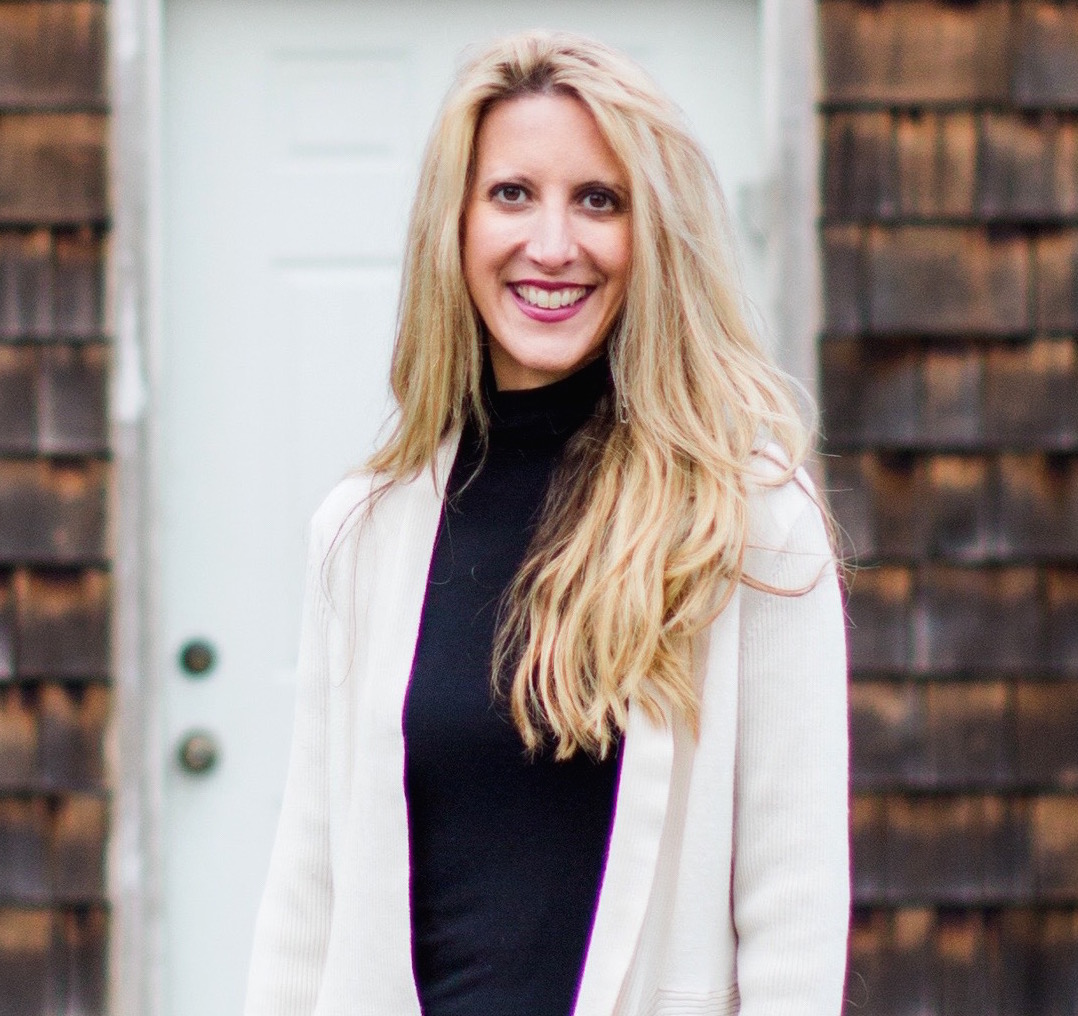
Image courtesy of Nadia Galloway
When Nadia Galloway co-founded the Benjamin Preparatory School of Academics & Performing Arts in Atlanta, she never imagined her observation of babies and toddlers during naptime would serve as the aha moment for a company focused on sleep. A company that not only got her featured on Fox Business’s Billion Dollar Idea, but saw her winning the 2022 season.
As Chief Executive Dreamer of Pillow Sheets—fitted bed sheets with a proprietary poly-fill pillow system—Galloway likens her invention to a peanut butter and jelly sandwich. “It’s the one thing that you don’t think about, but it tastes good together—a pillow and a sheet,” she says.
She says her product offers total body support and transforms any room into the womb. The words she uses are important, given that the concept for her first product, Tiny Dreamers, came from observing teachers interacting with babies during naptime.
She noticed that no matter where the babies were sleeping—curled up on cozy pillows, nestled inside a swing or tucked into their caretaker’s arms—they were always cocooned. And when placed on their backs, they would startle awake because they were moved from their default sleep positions.
“I started doing a little research… and I was like, why is it?” she says.
She discovered that because babies are cocooned in the womb, they naturally want to get back to that comforting position. So she made sure to replicate that feeling with her baby and toddler products, which she pre-launched in 2018. She debuted her Pregnancy Pillow Sheet at the 2019 ABC Kids Expo in Las Vegas, where it won New Product of the Year. In 2020, she got into Target stores. In 2021, Pillow Sheets was on QVC and HSN’s “The Big Find.”
Galloway holds two utility patents, and Pillow Sheets has Medicare, FDA and MHRA (the UK’s version of the FDA) approval, proving that now, there’s no bed on which Pillow Sheets don’t belong.
“A lot of people who are in bed for extended periods of time get bedsores,” she says. “That’s a big thing we solved.”
Creating products that serve so many different needs brings Galloway great joy. “I’m just this crazy dreamer,” she says. “Things are birthed in me, and I bring them to life.”
Her can-do mentality has made her someone others seek out for advice.
Her biggest message centers on being prepared for unexpected setbacks, which she learned in 2024 with her former husband, with whom she co-parented her two children.
“I got the worst call of my life,” she recalls. “He was an Atlanta police officer, and I lost him.”
That year, both her school and Pillow Sheets were thriving—yet her world was crumbling.
“Anybody that wants to explore entrepreneurship has to remember the human factor of just having to deal with what life hands you,” she says. “How can you recoup and rebuild from what is given to you?”
A year after experiencing personal tragedy, she says she won’t let her spirit dim, no matter what obstacles she must overcome.
“My idea of success is not necessarily what others view as success,” she says, “because I feel like if you’re living your purpose, the rewards come.”
For her, the rewards show up most in the dark times, both figuratively and literally. Especially when she’s working from her office, which happens to be a bed.
“There’s no job that you can hold if you don’t get the proper amount of rest,” she says. “It’s really detrimental to your health. And so with that being my purpose, if I’m sleeping... I’m not sleeping on the job. This is my job.”
Getting Canned

©Aubrey Jones Photography/Courtesy of Sodee Pop
Kamaree Oldham’s job centered around helping her children make healthy choices. So when her son begged for a soda while at her mother-in-law’s, she was disheartened to find the usual sugar-laden suspects lining the refrigerator shelves. Frustrated that she couldn’t oblige his simple request, she took matters into her own hands and made what she wished was available, never imagining a simple trip to the kitchen would change the trajectory of her career.
As a registered nurse, Oldham says she knew sodas were highly inflammatory to the body and were filled with chemical preservatives and other sneaky ingredients. So in May 2024, she crafted Sodee Pop, a kid-friendly stevia-based drink, removing artificial dyes, preservatives and high-fructose corn syrup from a beverage not traditionally known for its health benefits.
“I did a quick search on my phone to see if there were any clean sodas for kids out there, and I was not impressed with the result,” she says, adding that it prompted her to purchase organic, natural ingredients and start tinkering with recipes in her kitchen.
When she read that soda accounted for 20% of the total beverage consumption of kids and teens in the U.S., she knew she wanted to be a part of the solution.
With flavors like Orange Fizz, Wild Watermelon and Groovy Grape, Oldham says people seem surprised by how good Sodee Pop actually tastes. Perhaps no one is more surprised than her son, who she says is obsessed with it.
“His current favorite flavor is Lemon Lime Squeeze,” she says. “At the end of the day, it makes me happy knowing that he loves it, and I am putting a better alternative out there for him and other kids!”
Her 8-ounce cans are sold in stores throughout Utah, and Oldham hopes to get Sodee Pop on shelves across the U.S., but for now, people can order directly from the website.
So what lessons has this busy mom of two learned (besides using her car as a soda-mobile to deliver wholesale orders herself, using her house as a shipping station and building a shop in her backyard for house operations)?
“I learned a lot with my first two flavors,” she shares. “I actually re-formulated both of them multiple times, and I really like where they are at now... If I wouldn’t have done my first run of those two flavors, I wouldn’t be where I am today! I was able to soak up the feedback from everyone and taking them and incorporate that when I was reformulating.”
The challenging behind-the-scenes work also taught her a lot.
“You can’t just post on Instagram and expect sales,” she says. “You have to work so hard. All the little details matter... You can have a pretty website and an amazing Instagram account, but if things on the backend aren’t set up appropriately, it’s going to be a challenge.... Probably the biggest thing I have learned is that I do this all on my own! I recently hired two amazing women to help me, and ... Sodee Pop has entered a new level.”
Women’s Health Care: The New Frontier
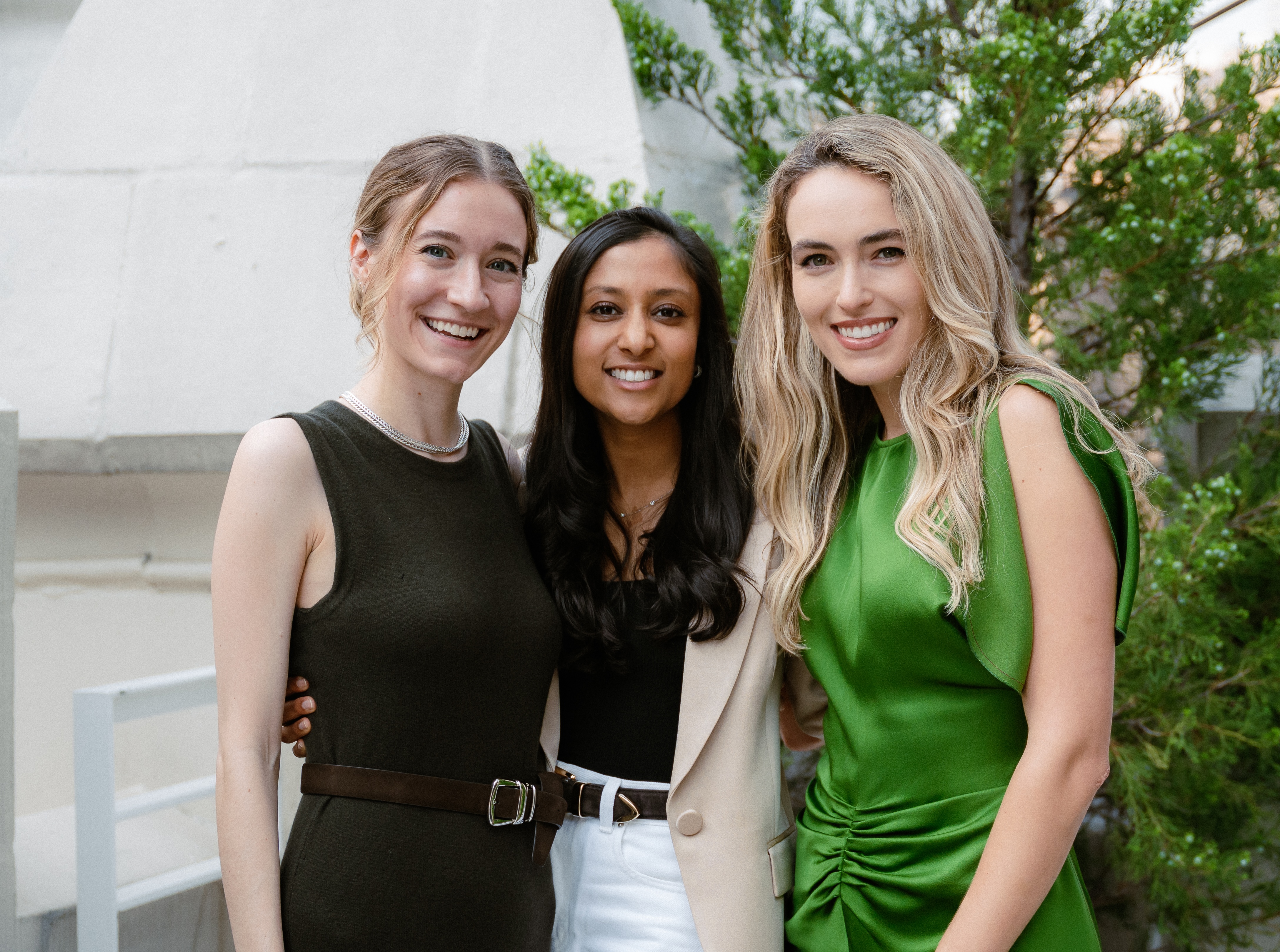
Image couresty of Evvy
New levels aren’t always talked about when it comes to milestones in women’s health care, particularly when it comes to the vaginal microbiome, an area of study that trails behind the gut microbiome, for example. Few are as passionate about discussing this as the co-founders of Evvy—CEO Priyanka Jain, Chief Marketing Officer Laine Bruzek and Chief Scientific Officer Pita Navarro.
When Evvy launched in 2021, the founders weren’t shying away from proclaiming what they were here to do by sharing staggering statistics that served as an awakening for many women who suffered from the lack of attention given to their bodies.
On June 10, 2021, they posted on Instagram: “Just 28 years ago today, on June 10, 1993, Congress passed the NIH Revitalization Act. It finally required the inclusion of women in clinical research. Previously, ‘women of childbearing potential’ were actively excluded from research. In 2021, almost 30 years later, this gender health gap persists globally. That’s why Evvy exists—to create the research and datasets we so desperately need to close the gender health gap.”
Co-founder Priyanka Jain believes the female body shouldn’t be a medical mystery.
“To this day, women are diagnosed on average four years later than men across 770+ of the same diseases,” she says. “To me, this points to a huge gap in our understanding of health and disease in women.”
Evvy’s meteoric rise in the health care marketplace started in 2021, when they launched their at-home vaginal microbiome test, which uses metagenomic sequencing and real-world datasets that help customers decode complex health conditions. In 2023, they expanded their platform to include physician-reviewed results and personalized prescription treatment programs.
Jain is proud that, since their launch, they’ve helped over 70,000 customers get the answers they need, and have built the world’s largest dataset on the vaginal microbiome.
Most importantly, she says, “100% of participants felt supported and empowered—something they rarely felt in the traditional system.”
Evvy is solving a community problem, Jain says, in that “vaginal discharge” is a leading reason women seek heath care advice... yet women suffer from unacceptably high misdiagnosis (>60%) and recurrence (>50%) rates. What’s more, the latest research has uncovered groundbreaking links between the vaginal microbiome and critical health outcomes like infertility, STIs, preterm birth, gynecologic cancers and more. Yet, no one was using comprehensive data on the vaginal microbiome to improve women’s health outcomes.”
Despite Evvy’s growth in such a short amount of time—including building an impressive team of OB-GYNs and vaginal microbiome researchers with decades of experience at organizations like UCSF, Stanford and Harvard—the founders haven’t been immune to the struggles of startup life.
Jain says she learned important lessons about working in health care.
“Precision matters,” she says. “When you’re dealing with people’s health—especially in an area that’s long been ignored—you have to be obsessed with scientific integrity, clarity and empathy at every step. Second, the system isn’t just going to change on its own. We realized early on that to close the gender health gap, we couldn’t just build a better test, we have to create an entirely new model of care, supported by real data, clinical validation and a community that refuses to settle for less. And third, no task is too small when you’re building something this important. That scrappiness in year one helped shape the culture we’re proud of today—where everyone is deeply committed to reimagining what women’s health can look like.”
Featured image courtesy of wellphoto/Shutterstock
This article was first published in the September 2025 issue of SUCCESS® digital edition. Get your FREE copy here.
.jpg)