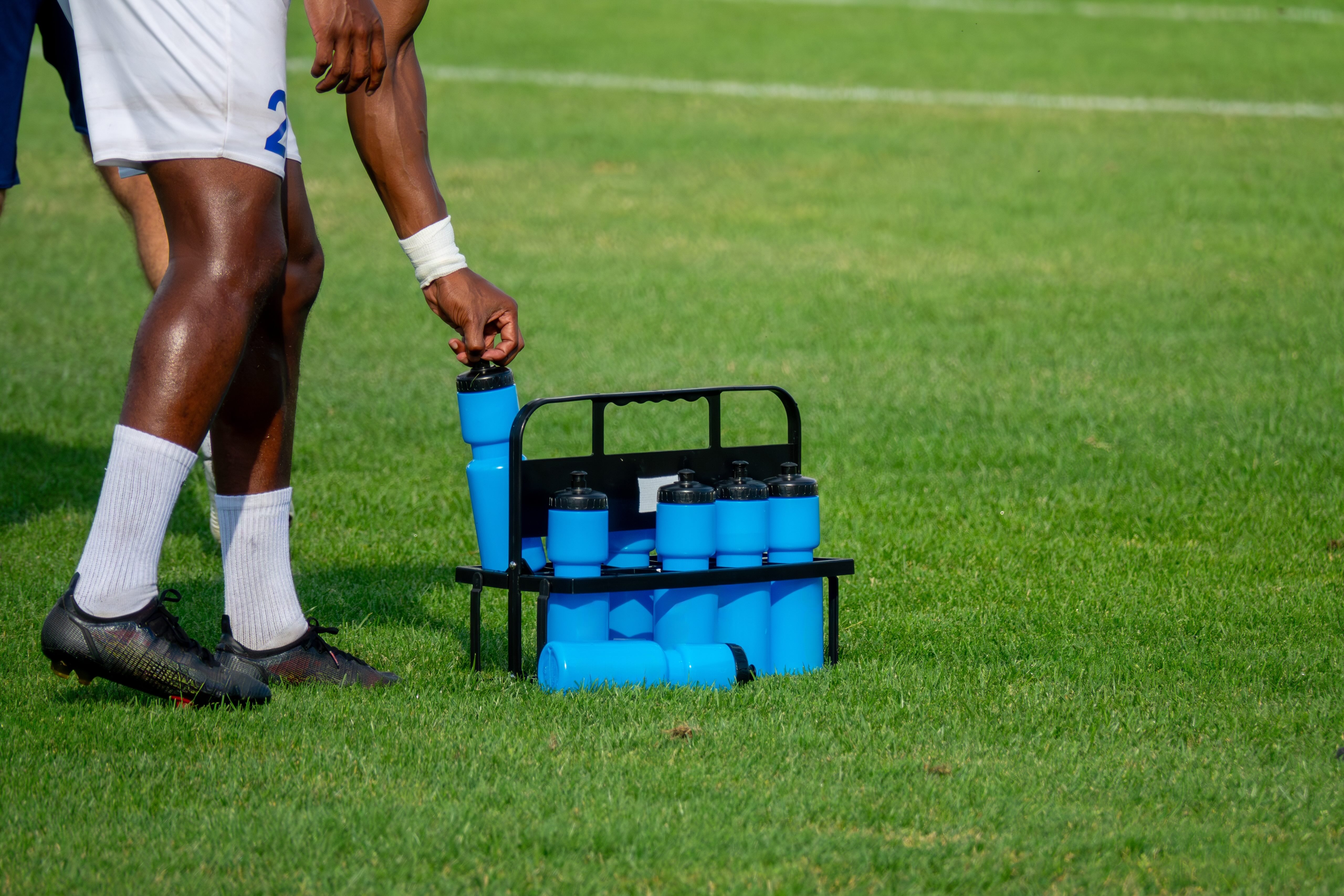
Every match at this summer’s World Cup stops twice, once in each half, for a mandatory three-minute hydration break. It happens whether the stadium is sweltering or fully air-conditioned. Some players treat it as a lifeline. Liverpool defender Virgil van Dijk just finds the whole thing a little odd.
That argument playing out on the pitch is not really about soccer. It is about what happens when you are forced to stop performing at the exact moment you feel unstoppable and whether that stop helps you or hurts you. The answer has real implications for how you run your own day.
Why FIFA Forced Everyone to Stop
FIFA mandated the breaks after coaches and players raised alarms during last year’s Club World Cup, when several matches were played under heat warnings that urged spectators to avoid strenuous activity altogether. The governing body said the rule exists to protect player welfare and to keep conditions consistent across all 104 matches, not just the hottest ones.
Not everyone is convinced it is necessary every time. When Curaçao, the smallest nation by population ever to qualify, took a surprise 1-1 lead against four-time champion Germany, the hydration break arrived right as the upset looked possible. Curaçao conceded twice before halftime and lost 7-1. Former Ireland international Roy Keane summed up the frustration on his podcast, saying, “We love football because of the pace of the game.”
But the break was not designed to protect the scoreline. It was designed to protect the players inside it, and on that measure, it is doing exactly what it was built to do.
The Science Says the Break Is Doing Its Job
Athletes pushing hard in extreme heat risk something called exertional heat illness, where rising internal body temperature puts severe strain on the heart, muscles and nervous system. According to an NPR report, losing as little as 2% of body weight to dehydration is enough to measurably impair physical performance, and players can sweat through 1 to 2 liters an hour in the conditions this tournament has produced.
Yuri Hosokawa, a sports science researcher at Waseda University, has studied what happens when athletes cross that line. She told NPR that once internal temperature climbs too high, athletes can become “confused, aggressive or lose consciousness.” Those are the same signs of exertional heat stroke that require immediate medical attention.
Douglas Casa, CEO of the University of Connecticut’s Korey Stringer Institute, says the cooling methods used during the break matter as much as the break itself. Wet towels applied to the neck, head and arms can lower body temperature by roughly 0.22 degrees Fahrenheit per minute. That is a small number with an outsized effect on whether a player makes it through the second half safely.
The break feels like an interruption because it arrives before the body asks for it, not after. That timing is the entire point, and it is the part most high-performers get backward in their own lives.
Why You Resist Your Own Recovery Breaks
You probably do not wait until you are dizzy to take a break. You wait until the project is finished, the inbox is empty or the deal is closed, which in practice means you rarely take one at all. Most ambitious professionals treat rest as something earned after the work, not something that makes the work possible in the first place.
Research on knowledge workers tells a different story. Zhanna Lyubykh, a management professor at Simon Fraser University’s Beedie School of Business, led a systematic review of 83 studies on workplace breaks and found that recovery during the workday protects performance rather than draining it. As she put it in a Canadian HR Reporter summary of the findings, “employees need work breaks to recover from work.”
The research also found something counterintuitive: How long or how often you break matters less than what you actually do during the break. Scrolling your phone between meetings does not count as recovery. Stepping away from the screen, moving your body or genuinely disengaging does.
How to Build Your Own Mandatory Break
You cannot wait for a whistle to blow. Building hydration breaks into your own schedule means treating recovery as a fixed appointment, not a reward you grant yourself once everything else is done.
Start with three shifts:
Schedule the break before you feel like you need it. Set a recovery window every 90 minutes or so, in line with your body’s natural ultradian rhythm, rather than waiting for fatigue to force the issue. By the time you feel drained, performance has already slipped.
Make the break a genuine stop, not a slower version of work. Step away from screens entirely for at least five minutes. Walk, stretch or simply sit without a task in front of you.
Protect the break the way FIFA protects its rule: without exception, regardless of how the moment feels. Momentum that depends on never stopping is not resilience. It is a countdown.
The Real Test Is What You Do When Play Resumes
The break itself is not where performance is won or lost. What happens immediately after it is. England trailed Croatia at halftime this week before storming back to win 3-0, with manager Thomas Tuchel telling his players at the break to take more risks, not fewer, once the second half began.
That is the actual skill worth borrowing. The break gives you a physical and mental reset. What you do with the minutes right after determines whether that reset translates into anything. Walk back into your next meeting, your next deadline or your next decision with intention, not just relief that the pause is over.
You do not control when the next “hydration break” gets called on your calendar. You control whether you build one in before your body forces the issue and whether you walk out of it ready to be braver, not just rested.
Featured image from Michael Dechev/Shutterstock