

When entrepreneur and investor John Lee quit his job at 23 to start his own business, he did it on the very day he received both a significant pay raise and his dream role. By any traditional metric, it was the wrong move. He had security and a clear path forward. Walking away made no sense—but he was chasing something bigger than money.
“That was the scariest thing I’ve done,” Lee says, noting he had bills, rent, a car—everything depended on a paycheck. When he voiced his fear to his partner at the time, she offered a single question that would reshape his life: “What if it does work out?”
Nearly two decades later, Lee has built global businesses, advised companies across continents, amassed millions of followers and distilled his philosophy into his latest book, Money Unlocked: How to Make It, Keep It and Multiply It. The core message is deceptively simple: Wealth is freedom, not money.
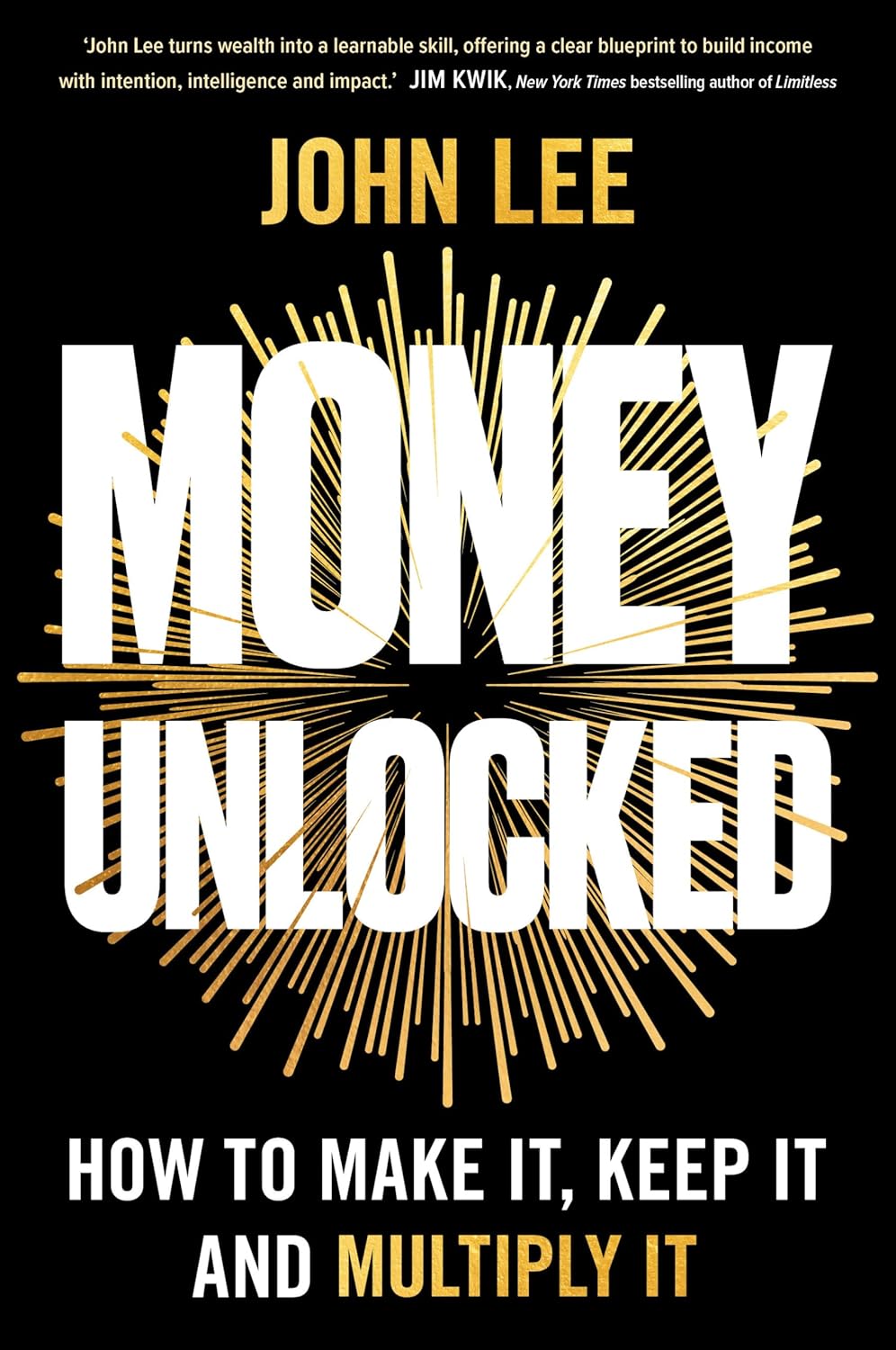
Here are six takeaways from Lee’s book and career.
Redefining Wealth Is Key
Lee’s definition of wealth has little to do with bank balances or luxury purchases. “It’s about buying back your time and doing what you love and living with purpose,” he says. “And so my book kind of redefines wealth as having freedom to do what you want, when you want, with whoever you want—your choice.”
That mindset runs counter to the one Lee grew up with. Raised in a traditionally risk-averse Asian household, he was taught to prioritize security: Study hard, get a stable job and save for a rainy day. But school was a struggle for Lee. Dyslexia made conventional academics difficult, pushing him instead toward creative work in animation and, eventually, entrepreneurship.
Take Risks
Experience, mentorship and pattern recognition reduce uncertainty, so you can minimize or eliminate risk by having the right knowledge and contacts. When you understand what typically happens next, decisions stop feeling like leaps of faith and start looking like calculated steps.
“ I don’t have a crystal ball, but I have enough experience,” he says. “Or I know of somebody else who has enough experience to say, ‘If you do, this is likely to happen.’ So you de-risk the process, which now means it’s not risky anymore.”
Lee also reframes failure from taking risks. “Failure is only feedback,” Lee says. “I treat failure as an iteration of one process. So it’s not really failure—you’re just finding another way of not to do something.”
Build a Personal Brand
When Lee became a successful real estate investor, other professionals became interested in his strategies. He shared them at informal coffee meetings, then eventually began receiving speaking invitations. While his first keynote had six attendees, he was soon speaking in front of 250 investors. “What I realized is the more I spoke, the more deals I would get,” he says. “ How I got to where I am today is because people kept asking me these questions on how I do things.”
That realization—that visibility creates leverage—fueled Lee’s success. He leaned into content creation, posting insights on Facebook, Instagram and TikTok, and eventually went viral. One video, “10 Habits of Self-Made Millionaires,” was viewed by millions of people across multiple platforms. Today, more than 6 million people follow his work across platforms.
“Awareness times attention equals income,” he says. In a world where distribution is power, having a personal brand is a huge asset.
Learn How to Create Money
A central distinction in Money Unlocked is the difference between earning money and creating it. Most people, Lee argues, are trained only for the former. They trade time for pay—but financial freedom comes from systems that generate income with decreasing effort.
Passive income, however, is often misunderstood. “It’s not about doing something once and getting paid forever because that’s unrealistic,” he says. Instead, it’s about putting in effort up front so the income becomes easier and more leveraged over time. Examples of passive income streams include real estate, dividend-paying stocks and digital products.
Take Advantage of Artificial Intelligence
If leverage is the path to freedom, artificial intelligence is the catalyst. Lee rejects the idea that AI will eliminate opportunity. “AI won’t replace your job,” he says. “It’s gonna accelerate your job.”
AI, in his view, is best used to automate anything repeatable, especially writing, content repurposing and systems that once required entire teams. For instance, his own company operates with fewer than 30 people, but functions like one 10 times its size using AI. Once you’ve figured out how to create money, consider how AI and automation can multiply your impact and use all of the tools that are available to you.
Lee has many examples of success stories, including entrepreneurs building tools and platforms without coding experience.
Time Is the Real Currency
Ultimately, Lee returns to time—a resource money can’t replace. He’s fond of a lesson from longtime friend and brain coach Jim Kwik: “Life is the letters between B and D. B stands for ‘birth.’ D stands for ‘death.’ And C is ‘choice’”—life is the space between birth and death; the only thing in between is choice.
People often operate like they have a million years to live, he says, “but unfortunately time is very precious, very finite.”
That urgency fuels his work today. He no longer chases money for its own sake. He writes, speaks and builds because he chooses to—not because he has to.
“ So everything is a choice,” Lee says. “Everything we do in life is a choice, right? You are where you are because of the decisions you’ve made. Doesn’t mean it’s a good or a bad thing. Just means that if you’re not where you wanna be right now, it’s because you’re not making the decision to be where you want to be.”
3 Need-to-Know Money Skills
Despite earning more than ever, many people never feel wealthier. John Lee believes that’s because financial education stops too soon. In Money: Unlocked, he emphasizes three skills schools rarely teach.
1) How to Make Money. Absorb the knowledge of mentors and harness the power and energy of tools like AI to create money and build passive income.
2) How to Retain Money. “ The secret to wealth is when your income increases, staying at your current standard of living is a discipline,” he says. Avoiding lifestyle creep, the phenomenon where discretionary spending rises alongside increasing income, is important.
3) Where to Put the Money. Once you retain the money, where do you put it? Use what Lee calls the 30:30:30:10 strategy. Invest 30% of earnings into your own business, 30% to other people’s businesses, 30% to stable assets and 10% toward high-risk or “moon-shot” opportunities.
Images provided by John Lee.