When Mike Laut was a teenager, his parents made him a deal: He could have a car if he built it himself. So, at age 14, Laut got to work on a 1973 Ford Bronco, pulling the engine, replacing the entire drivetrain, rewiring the electrical system and essentially rebuilding the thing from the ground up. That bright green Bronco has been his daily driver ever since—and it perfectly encapsulates his approach to design.
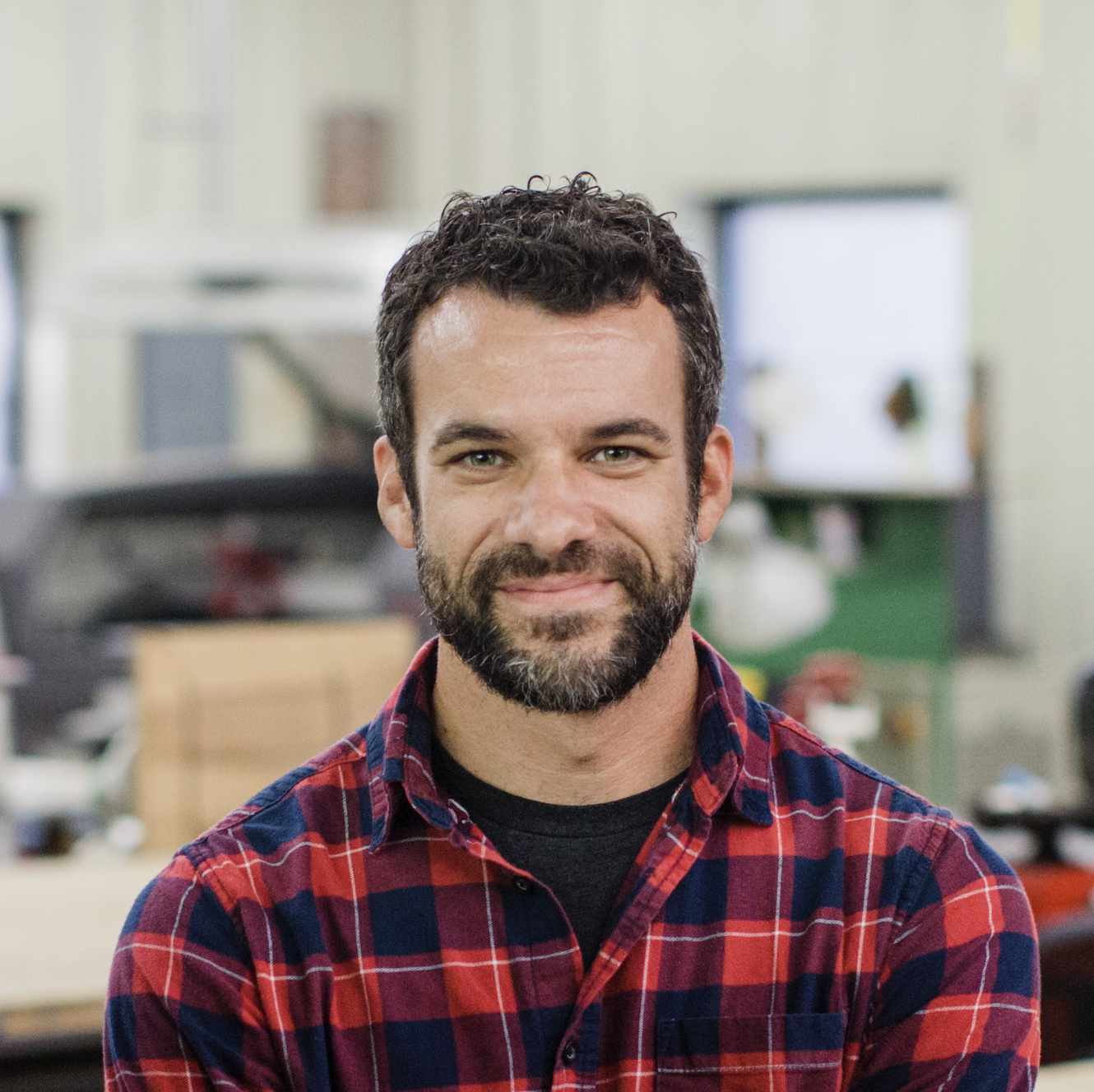
Image of Mike Laut
“Having that hands-on experience really early definitely helped set the stage for a lot of the physical fabrication work we do now,” says Laut, who graduated from NC State University in industrial design in 2008 and founded Laut Design while still in graduate school. What started as Laut’s freelance work has grown into one of the Southeast’s larger creative firms, operating out of a 12,000-square-foot space in Raleigh, North Carolina, that would make the MythBusters crew jealous.
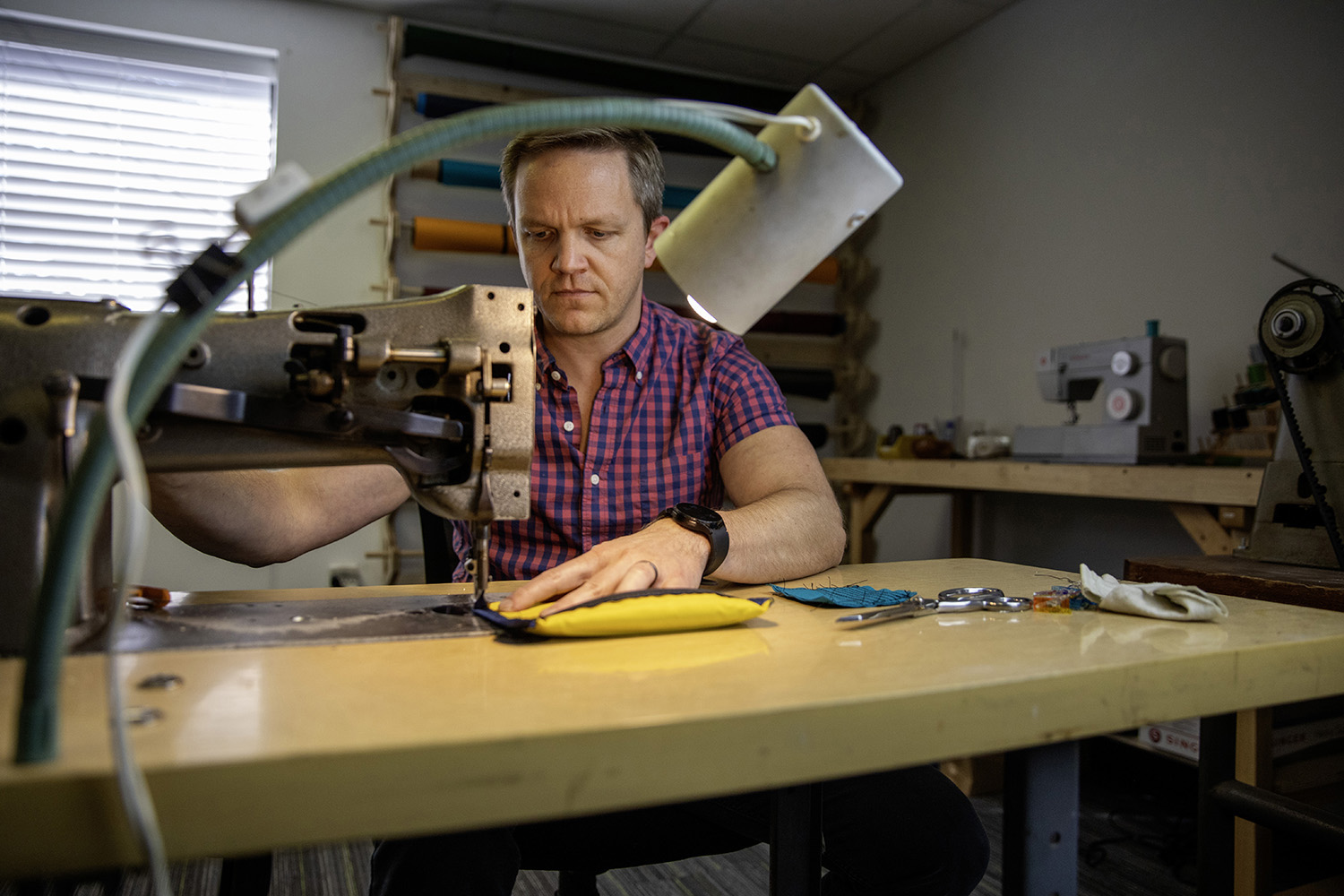
The facility houses everything from 3D printers and CNC machines to welding equipment and paint rooms. There’s even a fully stocked in-house hardware store. But it’s not just the tools that set the Laut Design team apart—it’s their philosophy that intelligent design goes far beyond aesthetics.
What Is Industrial Design?
Laut describes his team’s work as existing at the intersection of three critical elements: art, engineering and marketing. This three-ringed approach was key when developing a soda dispenser for PepsiCo Inc., which was seeking its answer to Coca-Cola’s imposing Freestyle machines. Since the Freestyle’s size was a common complaint, Laut’s team created a countertop device the size of a blender, with all the bulky machinery moved to the backroom.
The biggest challenge was conveying to consumers what the machine actually was and how to use it. “All of the onscreen graphics needed to immediately and very intuitively convey what this device was for,” Laut recalls. The team designed it so customers could operate it one-handed while carrying a tray of food, a purse or even a toddler. “Good design is transparent,” he notes. “If people don’t realize what you’ve figured out, if it just seems intuitive to them, then that’s a huge success.”
How Biomimicry Inspires Smarter Product Design
Laut Design’s work frequently employs biomimicry, or looking to nature for design solutions. In surgical robots, they reference finger joints, wrists and elbows to help users intuitively understand how devices will move. “The human brain is sort of wired to predict that a thing will behave the way that everything from insects to plant life behaves,” he says.
They also borrow design cues from unexpected sources. When tasked with building an automated dog bumper launcher to help train hunting dogs, the team struggled with dispensing bumpers of varying sizes and materials. The solution came from an unlikely place: a toothpick dispenser. “We built a mock-up that was 10 times the physical size to see whether it would do a good job dispensing these things,” Laut recalls. “It worked perfectly.”
Rapid Prototyping Speeds Up the Design Process
The studio environment itself fosters creativity. Unlike a traditional office, Laut Design resembles a colorful workshop filled with artifacts from previous projects, material samples and tools of every variety. “Imagine being in a space that just bleeds creativity from the walls,” he says.
Every Thursday, the team gathers for a catered lunch where anyone can present a project challenge. The designer who wants help presents the project, the background, where they’re at, what they’re looking for, what they’ve tried that failed. Colleagues sketch ideas, fill whiteboards or head downstairs to quickly prototype solutions.
This collaborative approach has helped Laut Design work across remarkably diverse industries. Chainsaws, lawn mowers, medical infusion pumps, surgical robots, kids’ toys, pressure washers—you name it, and Laut Design has probably worked on it. “The variety with all those projects and all those customer industries keeps the creative energy quite high, and I need that in a studio environment,” he says.
AI Is a Tool for Designers, Not a Threat
When it comes to emerging technologies like AI, Laut takes a pragmatic approach. He treats AI tools like power tools, or more efficient versions of traditional methods. “I heard a great quote once that said, ‘AI knows more, but we know better,'” he says.
Rather than viewing AI as a threat, Laut sees it as providing his team with a competitive advantage. “We’re feeding this new wave of tools beautiful drawings and very compelling ideas based on research,” he explains. “It’s sort of like we’re beginning the same race, but we’re already moving 90 mph.”
This forward-thinking approach has defined Laut Design’s 18-year track record. But what truly sets them apart is applying design thinking not just to products but to how the business itself operates. Every document, every process, every client interaction gets the same thoughtful design treatment as its physical products.
The result of all that thoughtful design and attention to detail? A multimillion-dollar studio built on the thesis that design thinking can run a business, not just operate inside of it. And after nearly two decades, Laut still finds himself amazed by their work. “I have to pinch myself and remember: We’re actually getting paid to do this every day,” he says. “It’s so cool. I love it.”
Image courtesy of ©Jimmy Williams/Laut Design
This article was first published in the March/April 2026 issue of SUCCESS® magazine. Get your copy here.