

You did the homework.
So did they.
You both walked in with research, scenarios and talking points, likely drafted with the same AI tools everyone else is using. So why does one person still leave with the better deal, the stronger relationship and the calmer nervous system?
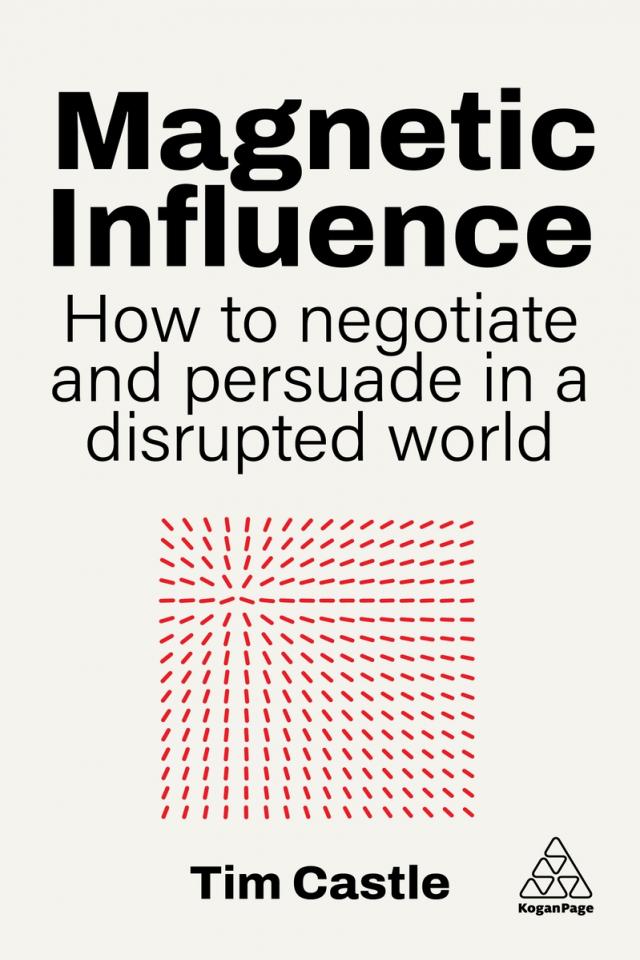
According to Tim Castle, ranked #9 on Global Gurus’ World’s Top 30 Negotiation Professionals (2026), founder of The Negotiators Edge Training Academy and author of The Art of Negotiation and the forthcoming Magnetic Influence: How to Negotiate and Persuade in a Disrupted World (out on Kindle June 3, 2026, and in print June 30, 2026), the differentiator is no longer information. It is influence.
“Intelligence has become abundant,” Castle told SUCCESS®. “Influence has become scarce.”
That is the hybrid negotiator’s edge: machine-speed prep paired with human trust in the room.
The Belief You Need to Unlearn First
Before you touch another prompt, Castle wants you to drop one story: negotiation is not a combat sport. Movies like Wall Street and The Wolf of Wall Street taught generations to treat deals as winner-take-all extraction. Castle sees the cost every day in value left on the table, relationships burned and professionals who wing it until tension spikes, then accept worse terms because they never learned to self-regulate.
“Negotiation is about value creation and expanding the size of the pie,” he said. “It’s about possibility.”
His motto is simple: Believe it is possible. When you believe bigger outcomes are available, you prepare, you listen to understand and you get curious about what the other side actually wants, not just the position they stated. That mindset is what makes AI prep worth doing in the first place.
SUCCESS® Tip: Before your next client call, partnership talk or salary conversation, write one sentence: What value could we create together that neither of us saw at the start?
What a Hybrid Negotiator Actually Does
Castle coined the term hybrid negotiator for professionals who blend AI efficiency with human judgment and know which job belongs where. AI is excellent at analysis, research, scenario planning and blind-spot detection. Treat it like a colleague, not a vending machine: give it full context, define success up front, set guardrails (fact-check, cite sources, no guessing) and ask it to coach you, not replace you.
“If you default to putting all of your negotiation in the hands of the AI, you will get skill erosion,” Castle warned. “You’ll weaken your ability to have that human-centered approach.”
The professionals who dominate this era, he said, can orchestrate multiple agents, override bad AI advice and still walk into the room as the human who builds trust. AI can make you informed; only you can make you influential.
SUCCESS® Tip: Split your prep into two columns: machine (research, objections, trades, role-play) and human (trust, tone, silence, self-regulation). If your plan only fills the first column, you are not ready.
How to Prep When AI Does the Heavy Lifting
Castle’s pre-negotiation workflow starts with structure, not speed. He uses a CODO prompting framework (Character, Objective, Dos and Don’ts, Output) so AI behaves like a specialist, not a generic chatbot. Tell it who to be (“You are an expert negotiator with 25 years of experience”), what you are solving, what it must avoid (hallucination, jargon, sugarcoating) and the format you want back.
Then stress-test. “If you’re going to use AI…the best negotiators will be using multiple LLMs to stress test their assumptions,” Castle said. Different models surface different pockets of value, and humility here is a competitive advantage, like having a polymath team on call.
In the interview, he demoed Magnetic Negotiator, a prep tool built on his Magnetic Influence framework. For a real scenario (securing a paddle venue for a 40-person client event with a $2,500 budget cap), it generated strategy, likely objections, questions to ask, concession trades, openers, follow-up email drafts and post-conversation repair language. The point is not to read scripts robotically. It is to walk in having already thought like a world-class negotiator.
SUCCESS® Tip: Run the same deal through two AI tools. Ask each: Where are my blind spots? What might they value that costs me little? What should I never say out loud?
Why Trust Wins in the First Five Minutes
Castle breaks trust into four components: humanity, transparency, capability and reliability. Capability and reliability are table stakes. In the opening minutes of a high-stakes deal, he doubles down on humanity and transparency.
That does not mean performing perfection. “Don’t try to be perfect,” Castle said. “A world-class negotiator asks the right questions to uncover your interests that go deeper than what you’re presenting.”
Practical trust-builders he uses: light humor to break rigidity when appropriate, questions that show genuine curiosity and research, transparency about how you make money on the deal and redirects when tension rises, such as asking what would make this a good deal for the other side.
SUCCESS® Tip: Open with one question you cannot fake: Where are you at, and what do you really want out of this? Then stop talking.
When Preparation Is Not Enough: Flow and Self-Regulation
Castle learned this negotiating seven-figure media barter deals in London, often across the table from CEOs, CFOs and Chief Revenue Officers while still early in his career. Preparation got him in the room. Flow kept the room from boiling over.
Flow, for Castle, is automaticity: you know your plan, you stay flexible on the path and tension does not hijack you when the other side gets combative. You de-escalate, you return to shared value and you are willing to be vulnerable about where you stand, which paradoxically lowers defenses.
“If you can learn self-regulation and emotional control in today’s age, you’re going to be such a valuable asset,” he said.
That skill also protects you from a classic trap: negotiating against yourself. Castle’s counter is to state your value, state what you need, then go silent. Filling the silence with apologies (“I know it’s off-cycle,” “I know budgets are tight”) undoes your leverage.
SUCCESS® Tip: After you name your number or terms, count to 10 internally. Let them think.
How to Use BATNA So You Stop Negotiating from Neediness
BATNA, your best alternative to a negotiated agreement, is taught in every business school. Castle uses it psychologically. You want abundance and detachment: not fake arrogance, but genuine clarity that you can walk away and still be OK.
Castle still remembers his first salary negotiation, which went so badly, he essentially said, I can’t afford my life; I need you to pay me more. Neediness invited the other side to manage his problem at minimum cost. Today, he frames compensation differently: you are not a cost center, you are a revenue driver linked to outcomes they already want.
Keep three numbers in your head: walk-away (minimum acceptable), target (realistic win) and dream (aspirational anchor). Then hold the line.
“They’re not going to give you a higher value than the value you believe you’re worth,” Castle said. “Your ceiling is always your self-image.”
You need to believe you have options and behave accordingly.
SUCCESS® Tip: Your BATNA is your answer to one question: “If this deal falls apart, what will I actually do instead?” That backup plan is your real leverage because you can only walk away if you have somewhere to walk to.
Write it as one sentence: “If I can’t reach an agreement, I will ___.”
Say you’re freelancing a $5,000 project with another client ready to pay $4,500. Your BATNA, “I’ll take the other client at $4,500,” means you can reject anything below that and feel fine. If the blank instead reads “I’ll scramble to find work,” that’s weak, and the other side will hear the desperation.
So use it two ways: it sets your walk-away point (never accept worse than your alternative), and it calibrates your nerve (a strong backup lets you name your number and sit in silence). If yours is weak, strengthen it first with a second prospect, a parallel offer, a smaller scope or postpone.
The goal isn’t to bluff; it’s to walk in knowing you’ll be OK either way.
The Salary Conversation Castle Wants You to Run Differently
Salary talks are negotiations, not confessionals. Do the groundwork with advocates and senior peers so you understand what the company actually values, not what you assume they value. Differentiate on intangibles competitors cannot copy for less: relationships, network, goodwill and the specific way you unlock information from stakeholders.
Phrase the conversation as a rebalance, not a demand: here is the outcome I deliver, here is how it ladders to what you want, here is the number required to get there. Then go silent.
Castle’s strategic advice: start operating as the person who already holds the role. Over-deliver before the title changes, and the case becomes a natural fit.
SUCCESS® Tip: List three results you have already produced that map to your manager’s top priority. Lead with those, not with your rent payment.
How to Expand the Pie When They Do Not See Your Value Yet
Castle’s barter-industry origin story is a masterclass in reframing. Early-2000s media barter had a damaged reputation, and partners arrived with narratives built on bad experiences. More slides did not fix that. What worked: curiosity, transparency, incremental proof and deals that delivered real value without hidden margin plays.
“People think that talking more is the way to convince,” Castle said. “It isn’t.” Conviction comes when the other side feels understood. Try asking them to walk through how they see the deal, what it would take to change their mind, or how they will justify it internally. Value is rarely only price; it is reputation, risk reduction, internal buy-in and peace of mind.
And sometimes the best outcome is no deal. “The worst deal you can do is a deal that should never have been done in the first place,” Castle said.
SUCCESS® Tip: If they are stuck on a narrative about you, stop pitching. Ask one diagnostic question about their past experience, then mirror back what you heard before offering a new path.
What to Avoid When the Room Gets Hard
Two advanced guardrails from Castle worth memorizing:
First, do not acknowledge ultimatums: Once an ultimatum is spoken aloud, ego makes it harder for the other side to walk it back, even when they know better options exist.
Second, watch for faux experts. Negotiators who have read a book but lack integrative skill can be harder than beginners, extracting and refusing trades while performing toughness without creating value. Your response is calm clarity, traded concessions (never give without getting) and a return to shared goals.
Your 72-Hour Prep Checklist
48 to 72 hours out (AI-assisted)
Define objective, constraints, deadline and minimum acceptable outcome
Research counterpart context: tailwinds, headwinds, risks, internal pressures
Stress-test assumptions across at least two LLMs
Map concession trades (what costs you little, matters to them)
Role-play hostile, rushed and skeptical versions of the call
Day of (human-led)
Re-read your one-pager: opener, three questions, walk-away
Decide your trust focus: humanity and transparency in minute one
Set a self-regulation cue (breath, posture, pause before answering heat)
Plan your silence after you state terms
After
Debrief what built or broke trust
Note language you should not repeat (budget confessions, preemptive apologies)
Capture one relationship action regardless of outcome
Where to Go Deeper
The Art of Negotiation is Castle’s foundational guide for everyday deals. Magnetic Influence, out this June, is the advanced playbook for the AI-centric world: hybrid preparation, influence under automation and the Magnetic framework.
“If you learn advanced leadership with AI,” Castle said, “you’re in the exact position you need to be at the right time.”
The playing field is level on prep. The advantage is still human.
Images provided by Tim Castle.