
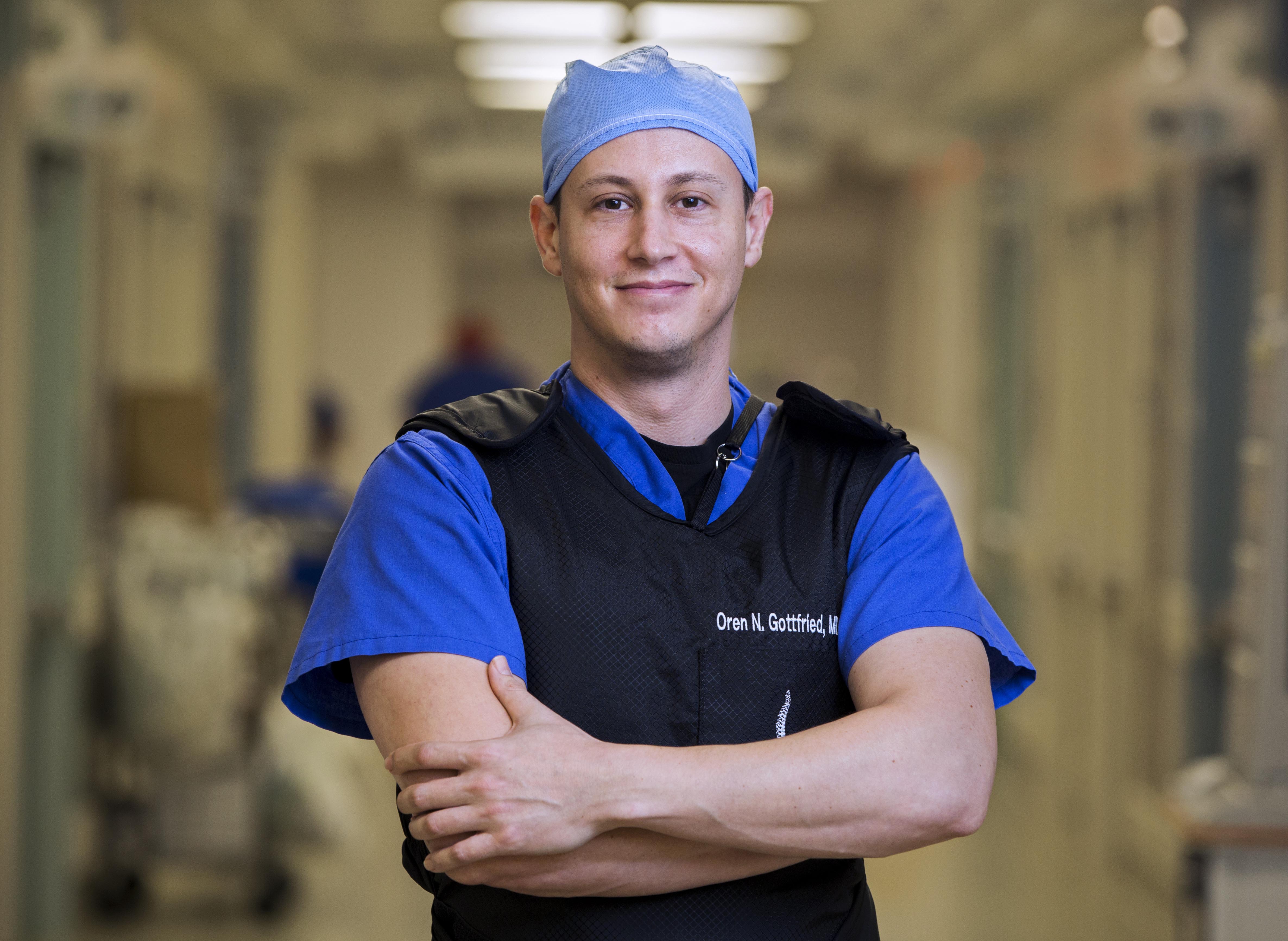
Brilliant Minds isn’t real. It’s just a TV show about a fictional hospital that only exists on NBC. But for all intents and purposes, it is Duke University Hospital.
All because of Dr. Oren Gottfried.
By day, Gottfried is a neurosurgeon and professor of neurosurgery at Duke University School of Medicine in Durham, North Carolina. But, somehow, he still finds time to be a medical consultant to shows like Chicago Med, The Good Doctor, Brilliant Minds, Doctor Odyssey, Doc, Royal Pains and Elementary.
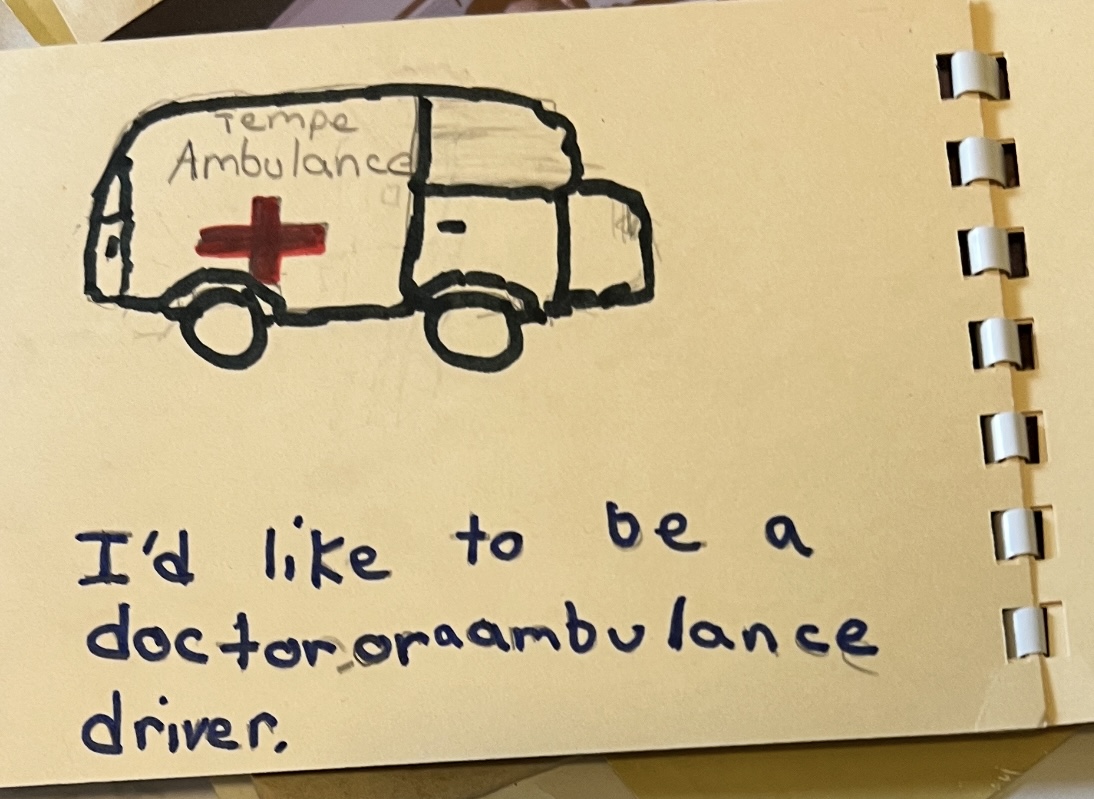
How did he get here? For Gottfried, it started way back in first grade. “I wrote down that I wanted to either be a doctor or an ambulance driver or own an NFL football team. I still have that little journal. I was serious about being a doctor,” he says.
“I dedicated myself to getting into medical school probably in senior year in high school.... I did it all on schedule with no breaks,” he says, adding that he knew he wanted to pursue neurology when he was just a freshman in college.
Add in a little bit of the Doogie Howser, M.D. and M*A*S*H he watched growing up, and you get an extremely intelligent medical doctor willing to dole out his years of higher education and workplace wisdom to TV producers.
That started in 2009, right after Gottfried finished a spinal oncology fellowship at Johns Hopkins and moved south to North Carolina to join the Duke University School of Medicine faculty. “When I was in my first year as faculty at Duke, my secretary said there was a doctor who wanted to speak to me. It was a Los Angeles area code. And no one transfers a patient from California to Duke,” he recalls. “It turned out to be a doctor who’s a writer, and he had a pilot of a TV show he wanted some help on. He had called other people, and no one had answered the call. I was the first one to answer.”
The balance of art and science seemed to come naturally for Gottfried. “I was always telling stories and was always making up stories and creatively trying to be in this alternative universe with all these ideas. It just fit that I could actually do something with my medical knowledge,” he says. “I look at it as just an educational thing, where I can just spread the true information about medicine to the masses.”
His goal is always to tinker with the story as little as possible, all in an effort to make the show’s stories whole while making the show’s medicine whole. “I keep [the writers] on the path and keep the heart of it in the right place. I just steer the details,” he says. It comes down to accuracy.
In other words, if a fictional patient comes to the fictional hospital with blurred vision, Gottfried will make sure the fictional doctors know that it could be a stroke and not just a migraine. Attention to detail matters to Gottfried, knowing how many millions of people are watching or streaming each episode.
Even the ability to fit TV consulting into his busy schedule as an MD is where his schooling and training pay off. “I’m really fast at reading,” he says. “And there’s always a spare moment. It works out well for most of the show’s people because they understand that I’m actually seeing patients and operating.”
It works seamlessly thanks to the three-hour time difference—by the time his day at Duke is winding down, the writers are in full swing.
“Somehow, for the past 15 or 16 years, the timing has just worked. There have been times when I had to stay up late at night or wake up at 4 a.m. and work on it until 6 a.m. I give notes on every single draft, even if I see 20 different drafts.”
That dedication stretches back to Gottfried’s determination to go to medical school, work through years of residency and fellowships, become a neurosurgeon, join a neurology faculty and, ultimately, help coax some medical acumen out of Hollywood.
When he decided to pursue medicine, he never knew he’d end up with his name in the credits of TV dramas. What he did know, intuitively, was that it would not be easy. And that’s his advice for anyone looking to follow his lead.
“You have to love it. If you love it, it’s not bad. But it’s not an easy life at all. It’s such a serious field. The patient comes in with such devastating illnesses, and you have to be able to take care of the patient in front of you. It’s a very tough field, but it’s because of how tough it is that it’s so rewarding,” he says, citing a two-hour back surgery he did recently that gave somebody their life back. “I just came from [the] clinic, and I had a patient [who] said everything about their life is 100% better. Everything. They have no pain; they’re functional. I don’t know many fields besides medicine where I can use my hands and mind and totally reverse someone’s life back to before they had this problem.”
But Gottfried is quick to point out that he is not just a neurosurgeon. He sees patients long before and long after the actual surgery. This may explain why he gives the same kind of time and attention to his TV consulting.
“It’s not even about the surgery. It’s about the relationships,” he says. “I literally see thousands of patients per year and spend hours with each of them. The surgery is such a small part of what I do.” He dedicates hours to patients and their families, seeing surgery as just one part of care. Beyond the operating room, he offers guidance and moral support, even giving patients his cell number so they can reach him with concerns.
That’s why, at the end of the day, Gottfried is completely devoted to neurosurgery. The TV work is nice, but he’d never leave medicine. “There’s nothing more important than my relationship with my patients, and nothing can get in the way of that professionally. TV comes after my patients. People will ask me if I would consider making it my main job, but I can’t give up being able to help people,” he says. “I do this consulting for the love of making TV actually educational and realistic.”
Images courtesy of ©Duke Medicine Photography and Oren Gottfried
This article was first published in the March/April 2026 issue of SUCCESS Magazine. Get your copy here.