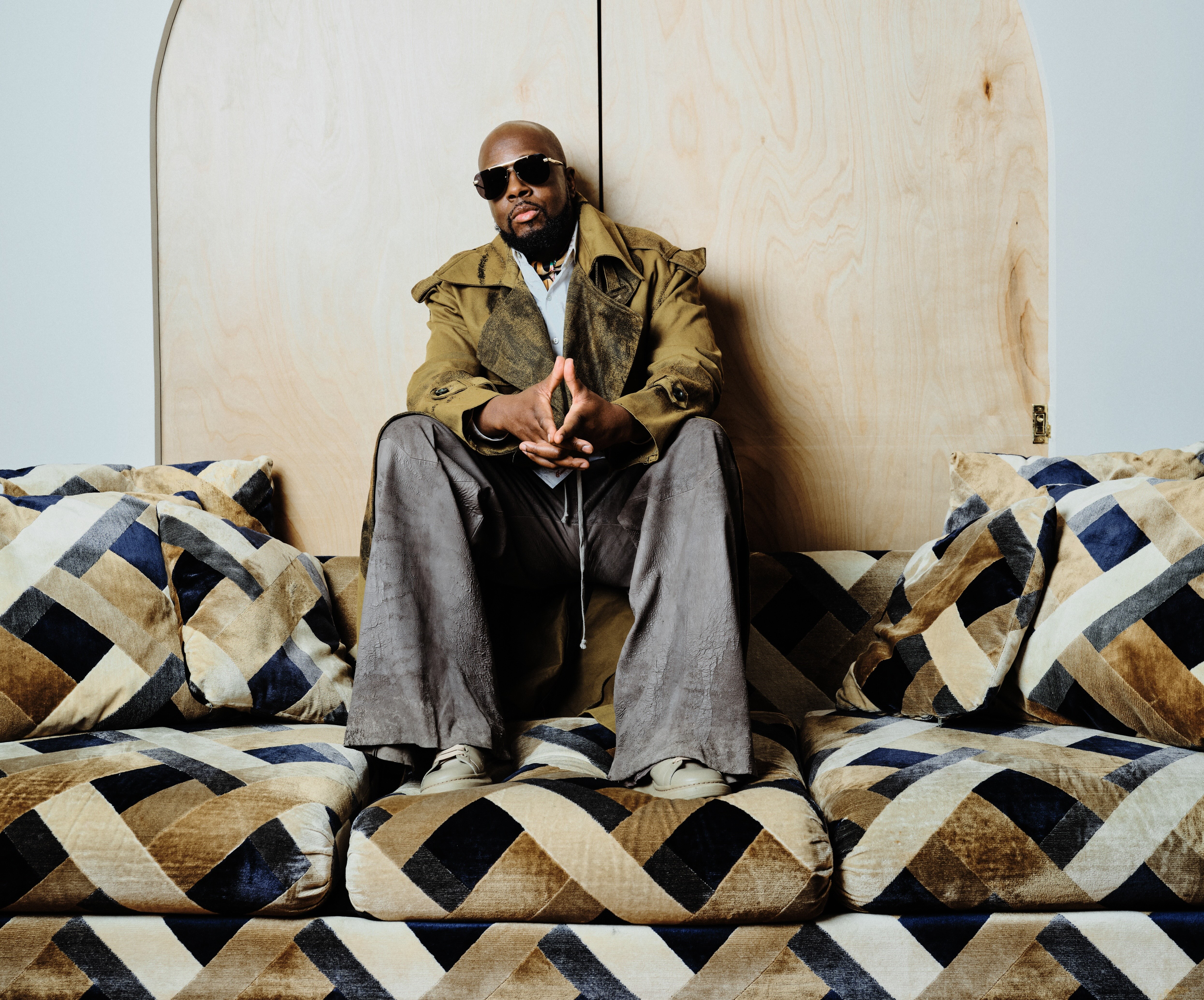
As I’m talking to Wyclef Jean, I notice him using the word “gumbo” as a verb. It’s how he describes the act of melding musical genres and influences to create a diverse sonic experience on his albums. And it’s true–the co-founder of the era-defining 1990s hip-hop group the Fugees, solo artist and three-time Grammy winner has spent decades “gumbo-ing” a cross-cultural, cross-genre approach that is natural extension of his Haitian American identity. The result is a musical catalog that has captivated fans and kept him in demand as a producer and collaborator for more than three decades.
In that time, he’s co-created several chart-topping singles that have almost certainly gotten stuck in your head at some point. There’s “Hips Don’t Lie” with Shakira, “Maria Maria” with Carlos Santana, “911” with Mary J. Blige and “My Love Is Your Love” with Whitney Houston, just to name a few. He holds producer credits on all of those, as well as on tracks by artists across the musical spectrum—from Destiny’s Child and Lil Wayne to Bono and Mick Jagger. When it comes to his solo work, including his Grammy-nominated 1997 album The Carnival and its hit single “Gone Till November,” Jean has long employed an inimitable fusion of Haitian kompa and rara rhythms, hip-hop rhymes, soul emotion, folk melodies and global flavor. He points out that, incidentally, this is how today’s audiences like to listen to music—via playlists that can easily become a melting pot of wildly varying genres.
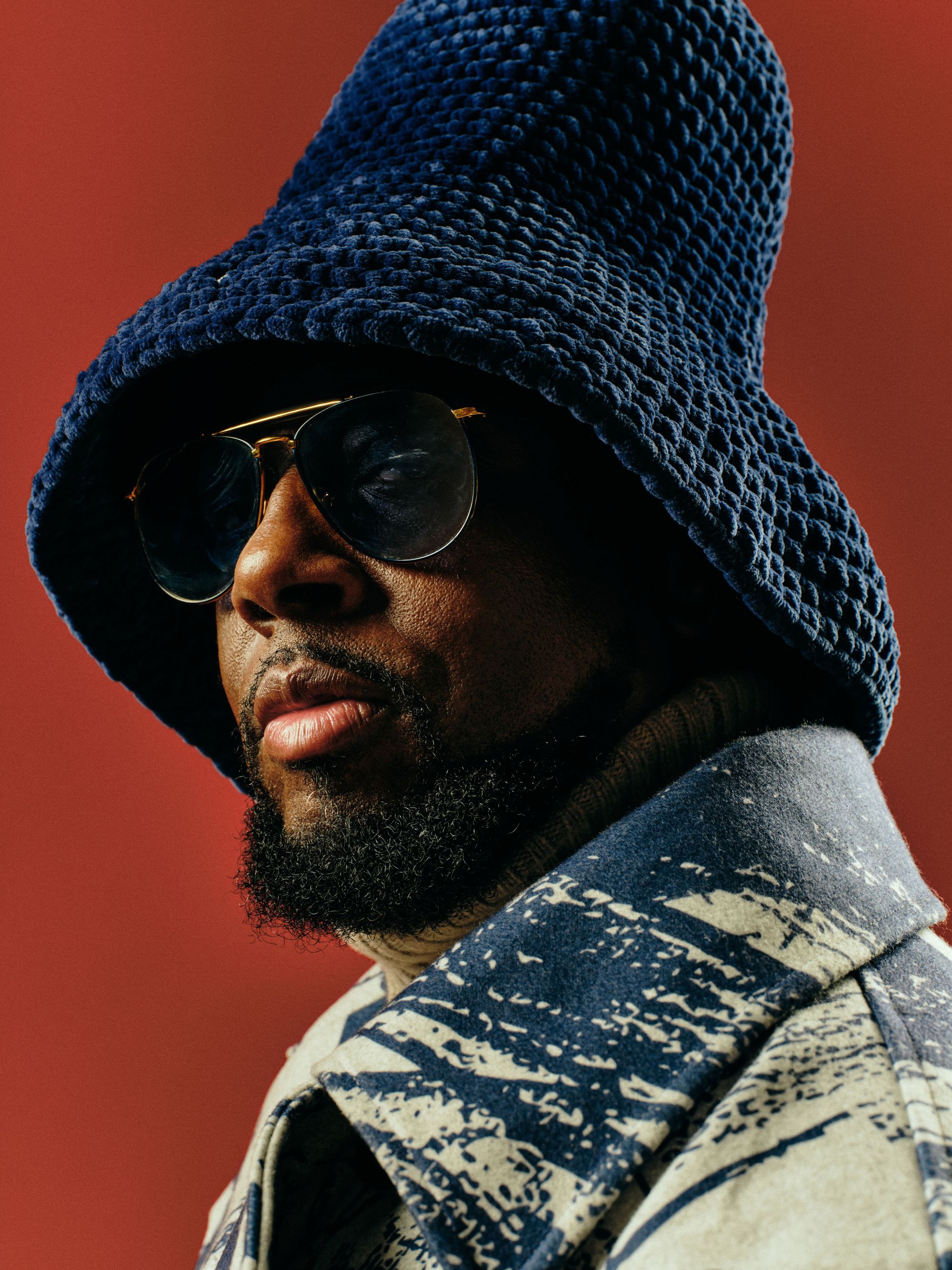
As a creator, Jean is still deep in the mix, going full tilt with music-making, performing and entrepreneurship. Recently, he’s had a series of onstage appearances with former bandmate Lauryn Hill (to the delight of Fugees fans), headlined Blue Note Jazz Club stages in New York and Los Angeles, joined multiple tech-music ventures, collaborated with artists like G Herbo and Flau’jae, who are mainstays among younger listeners, and is hard at work on a seven-album project called Quantum Leap.
I get the sense that, for the 57-year-old, midlife has unlocked something in him. Against a backdrop of major personal events—seeing his daughter step into independent adulthood and the recent death of early collaborator John Forté—he seems to have arrived at a rare moment of clarity about what matters. In fact, he tells me that despite being warned by music industry insiders for years that he’d burn out by now, he is energized. “I feel so excited for the second wind…, and it’s not easy. A lot of people don’t get a second wind,” he says, smiling.
From Haiti to Brooklyn: Wyclef Jean’s Musical Roots
Jean was born in Croix-des-Bouquets, Haiti, and spent his early childhood there, a time he writes about in his autobiography, Purpose: An Immigrant’s Story. Village life revolved around church, where music was always part of the services, as well as playing with his siblings and friends. And despite the overall contentment he describes, periods of scarcity and unrelenting hunger occasionally drove the children to fill up on red dirt from the floor of the family’s hut.
The scene shifted dramatically when he was 9 years old and his parents, who had immigrated to the United States a few years prior on a missionary visa, were able to bring Jean and his brother to join them, settling in the Marlboro Houses projects of Brooklyn and, later, in New Jersey. He remembers the strangeness of the move, as if a UFO had lifted him from everything he knew and set him down in a new world—one where his family had relative means. His father wasted no time setting the terms: “'This is a country of opportunities…. no matter what anyone says to you, don’t ever come to me with an excuse. You have a bus card, and there’s a library,'” Jean recalls him saying.
And, as it turns out, music.
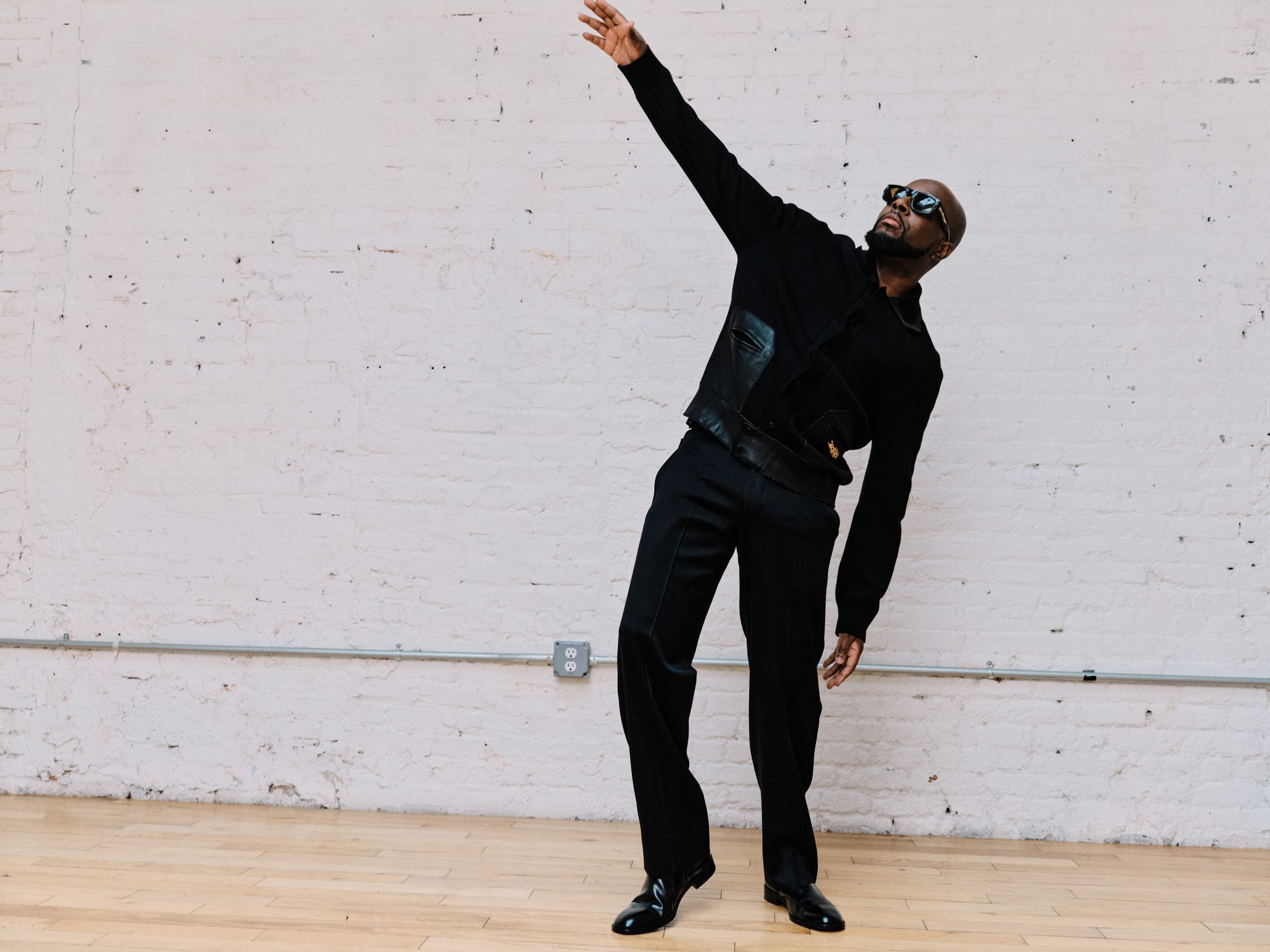
The family invested in a set of toy instruments that the kids immediately loved, instantly dubbing themselves the “Haitian American Partridge Family.” Music ran equally deep at the church where his father preached, and Jean quickly picked up several instruments, eventually taking on the role of musical director. His mother recognized his talent and bought him a real guitar, which he would take to high school and play between classes. One day, music teacher Valerie Price overheard him and immediately drafted him into the school’s music program. “At 16, I was playing over 14 instruments,” he says.
The streets of Brooklyn provided a classroom of sorts, too. While there was crime and violence to navigate, Jean would also visit neighborhood book vendors offering a small selection of titles. “It was more powerful than the actual library,” he says. And it was how he learned the revolutionary histories of Haiti and the U.S., comparing the trajectories of leaders like George Washington and Toussaint Louverture, a frequent subject of his lyrics. These “street libraries” were also how he discovered he was named after John Wycliffe, a 14th-century English Christian reformer and philosopher his father admired.
That grounding—in music, faith, history and identity—continues to shape him. “I’m rooted as a PK,” he says, using shorthand for “preacher’s kid.”
When life gets chaotic, he still turns to that faith, adding that his “current season of life in three words would be family, happiness, spirituality.”
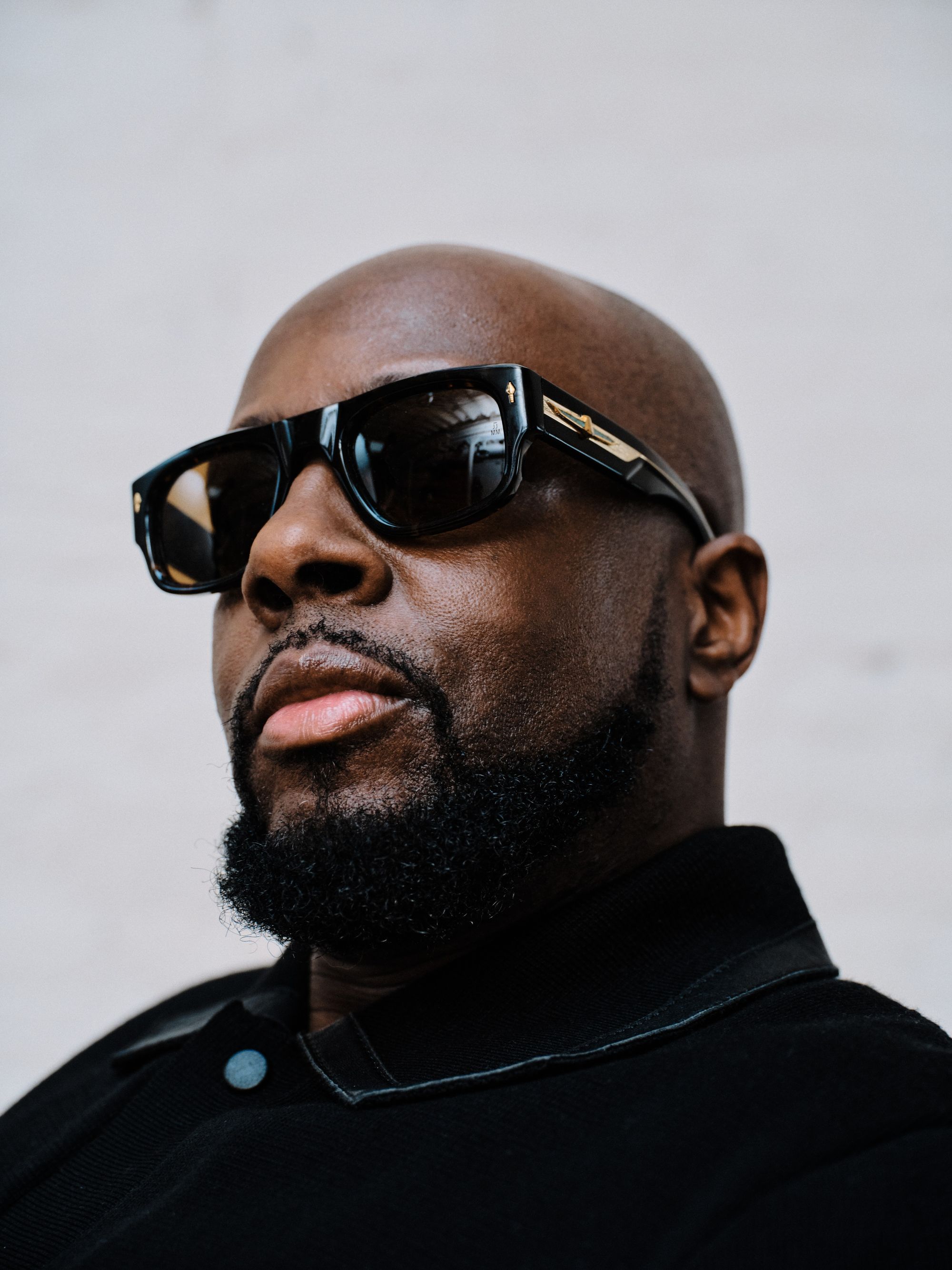
Yéle Haiti, Global Citizen and Youth Music Education
Faith wasn’t the only guiding principle of Jean’s childhood. “I was raised on the idea… that mankind is actually kind,” he says.
And in that spirit, he’s made humanitarian work a core focus. In 2001, Jean created Yéle Haiti, a charitable organization that helped establish musical programs and scholarships for Haitian youth and launched recovery and fundraising efforts following the devastating 2010 earthquake in his home country. At one point, Jean even ran for president of Haiti but was disqualified for not meeting the residency requirements. Today, he continues to do philanthropic work for the Haitian community and is an official ambassador for Global Citizen, an organization whose mission is to drive global progress and reduce poverty.
It’s student music programs, however, that really light him up, earning him the 2026 Impact Award from the Playing For Change Foundation and recognition from Music Will, America’s largest nonprofit school music program.
Case in point: On the day of our interview, he is preparing to perform in Miami with the Nu Deco Ensemble, an organization that reimagines orchestral pieces for modern audiences and hosts educational outreach programs for K-12 students. Videos of Jean’s youth program performance show hundreds of students gathered in the theater for an interactive concert. He shouts to the crowd of kids, “If you love yourself, stand up! If you love yourself, stand up!” They jump to their feet. He walks into the ecstatic audience, spots a young boy dancing and pulls him up to the stage. Between songs, he urges the children to believe in themselves and in the power of music.
When I ask him about the event, Jean says that educational programs like these are “like drinking fresh water every day. It’s literally my passion.” Reflecting on how his high school teacher nurtured his musical talents, he adds, “I just know what that does and how that transforms kids, because I’ve watched the transformation of myself.”
OpenWav, AI and Wyclef Jean’s Business Ventures
Now Jean is helping musicians of all ages reach financial and artistic autonomy with the co-creation of a new app. In 2025, he partnered with Jaeson Ma, a venture capitalist and entrepreneur known for co-founding the music management enterprise 88rising, to launch OpenWav, a music streaming platform where artists retain full ownership of their works while building and monetizing their fan followings. They can promote their recordings, create and sell merchandise, and even manage ticketing for performances.
OpenWav uses artificial intelligence to help musicians design their own branded products and analyze audience data. Separately, Jean has also helped launch a new suite of Google DeepMind tools called the Music AI Sandbox, a testbed for AI-driven music creation. But for all his enthusiasm, he is clear-eyed about the relationship between artist and algorithm. He encourages musicians to adopt the refrain: “I am the master of AI. AI is not the master of I.” And, he says, “At the end of the day, art will cut through all—art that comes from the soul.”
It’s a lesson he takes into another side of his music production ventures at SodoMood Lab, a music composition, scoring, jingle-writing and source library company. Under SodoMood Lab, Jean produced a song, “Paper Right,” for Teachers Insurance and Annuity Association with contemporary artists Flau’jae, Pusha T, Lola Brooke and Capella Grey. Streams of the song benefit First Generation Investors, which promotes financial literacy and investing education for teens. Jean’s SodoMood Lab venture also led to a job scoring and soundtracking the television series The Chi on Showtime—work that he found to be creatively demanding but a welcome challenge.
“My longevity is based on curiosity,” he says.
He urges other artists to embrace exploration, too. “Constantly be curious. Do not be the one behind the door looking through the door. Be the one that’s in the room,” he adds.
Quincy Jones, the Fugees and the Making of The Score
Jean’s enterprising streak didn’t emerge in a vacuum—it was shaped by proximity to icons like Quincy Jones, who became a mentor early in his career. Time spent with Jones, along with figures such as Carlos Santana, Clive Davis, Lyor Cohen and Jimmy Iovine, deepened his admiration for both the music business and music theory—and sharpened his instinct to put it into practice.
“The passion and the pulse, for me, has always been as a music theorist…, the curiosity for constantly wanting to elevate in my field,” he says. “I’m just, in my brain, a forever student and forever a fan of amazing talent. That’s sort of what keeps me going.”
That mindset—part student, part strategist—shaped not just his sound, but his purpose, even going back to the Fugees. When Jean and his bandmates, Lauryn Hill and Pras Michel, began recording together, they saw an opportunity to push against the prevailing currents of hip-hop. Growing up in Brooklyn, Jean had witnessed the violence, rivalries and street realities that dominated much of the genre’s narrative—and felt compelled to offer something different.
“What if I could find a way to give my generation another alternative?” he remembers thinking. That question became a creative North Star, culminating in The Score, the Fugees’ Grammy-winning, genre-shaping album—and a project that signaled a broader ambition: “We’re not going to be music; we’re going to be a movement,” he says.
Setting his own pace and purpose remains central to how Jean measures success. “Don’t look who’s on your right. Don’t look who’s on your left, because only you know what you want to achieve,” he says. “That’s how you define success. Run your own race, at your own time, at your own pace, at your own speed.”
That philosophy is now playing out in real time. Jean’s current pace is accelerating as he prepares to launch an ambitious seven-record project. He can barely contain himself talking about Quantum Leap—named for the idea of moving across time and genre—a seven-album set, released one record at a time, designed to have listeners “leaping into the past, present and future.”
His aim is to build seven distinct “moods,” beginning with a hip-hop release titled Clef Notes. “I’m bringing the ‘90s back, but I’m bringing it back like it’s 2030,” he says.
From there, the project moves to his roots of Jazz, Gospel and eventually what he calls “Caribbean cowboy.” Subsequent releases will span a wide musical spectrum: a reggae album paying homage to Bob Marley and Jimmy Cliff, a jazz record infused with Haitian street rara rhythms and Le Mardi Gras, built around vibrant, dance-driven sounds.
Now, he says, it’s time for “the entrepreneur, the spiritual side and the businessman” in him to converge. He’s even considering launching a venue concept with live music and food. It would be named after his debut solo album, The Carnival, which marks its 30th anniversary in 2027.
The concept: a space where music, creatives and culinary artists come together, and spices, scents, sounds and flavors combine for a fully immersive experience, placing him squarely in his sweet spot as a curator, blending influences into a creative “gumbo” of sound, flavor and culture.
Images courtesy of Stephanie Diani
This article was first published in the November/December 2026 issue of SUCCESS Magazine. Get your copy here.