For more than 30 years, 16 On Center has helped shape Chicago’s music and hospitality scene through a growing collection of bars, restaurants and music venues. Founded by Bruce Finkelman and Craig Golden, the company restores historic buildings across the city, transforming them into neighborhood gathering spots that reflect the local community.
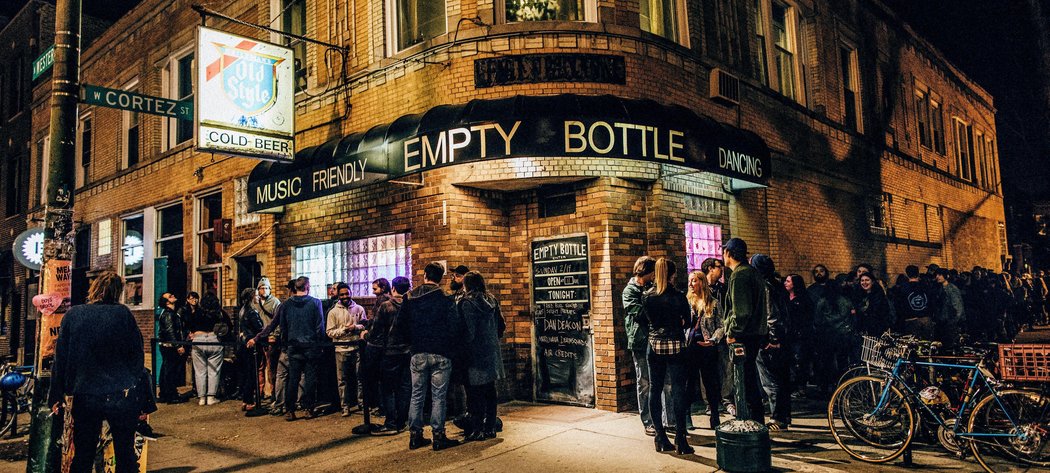
From its first venue–the beloved “cat-ridden hole-in-the-wall” Empty Bottle, which opened in 1992–to the sprawling, indoor-outdoor Salt Shed inside Chicago’s historic Morton Salt Complex, 16 On Center has built a rare, artist-first growth pipeline. The company has given musicians like Wilco and Tyler Childers space to grow from small club shows to massive crowds.
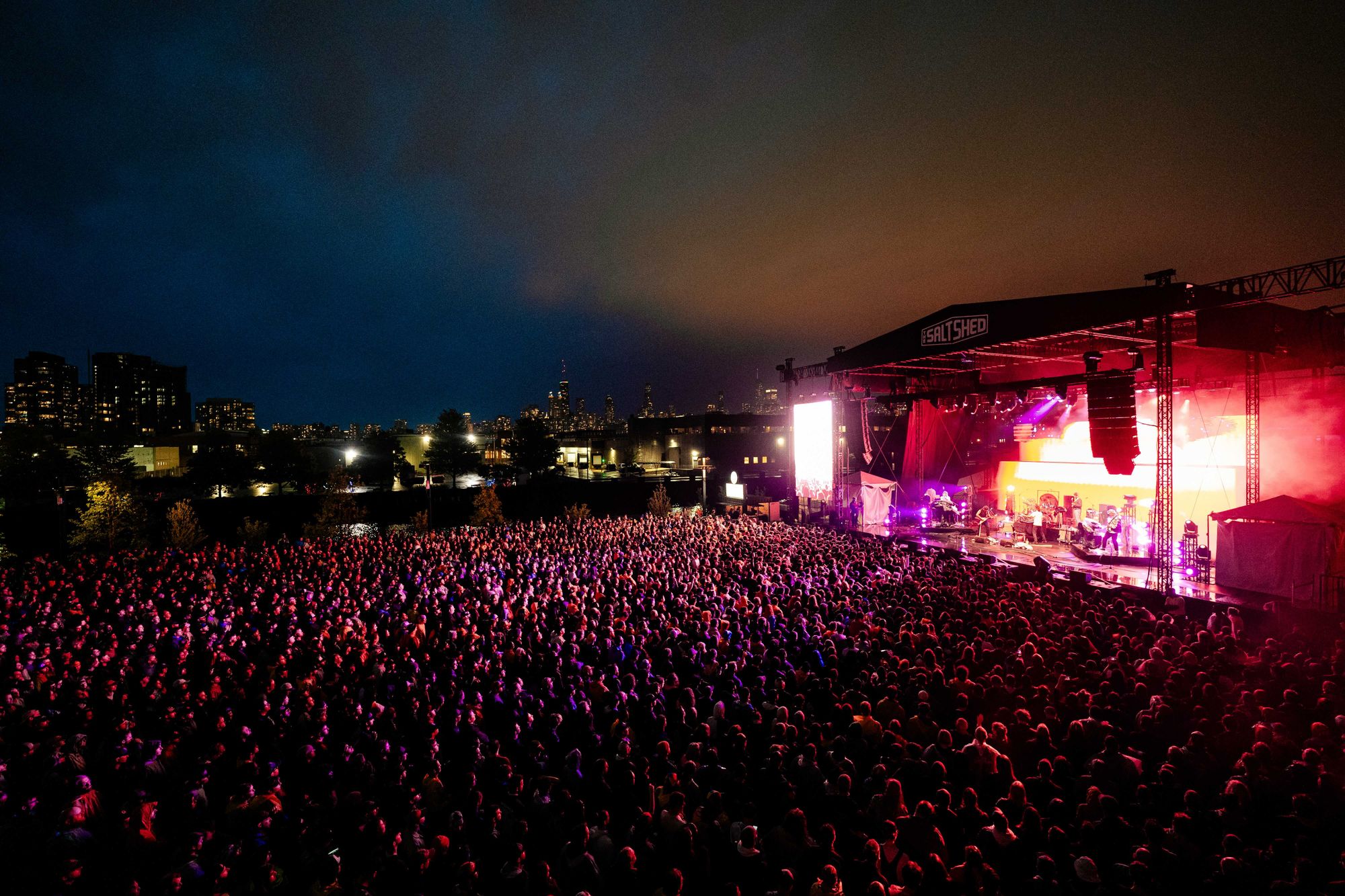
The Salt Shed
How 16 On Center Chooses New Chicago Venues
For Finkelman and Golden, a shared passion for music and the arts—and a deep-rooted love of Chicago’s cultural fabric—shapes nearly every project they take on. Many new ventures begin by happenstance, such as by walking past a building or hearing about one through word of mouth. “The idea is that we don’t necessarily pick the projects, but the projects pick us,” Finkelman says.
Unlike traditional, ROI-driven operators, Finkelman and Golden take a more intuition-led approach. Deciding to create a new venue usually comes down to whether the concept fits the neighborhood, whether they feel an emotional connection to the building and whether their vision is feasible.
Restoring Historic Chicago Buildings as Music Venues
Many of 16 On Center’s best-known venues are housed inside historically significant buildings. Thalia Hall, located in Chicago’s Pilsen neighborhood, opened in 1892 as a multipurpose public hall for the community. It was designated a Chicago landmark in 1989. The Salt Shed, meanwhile, occupies the former Morton Salt warehouse built between 1929 and 1930.
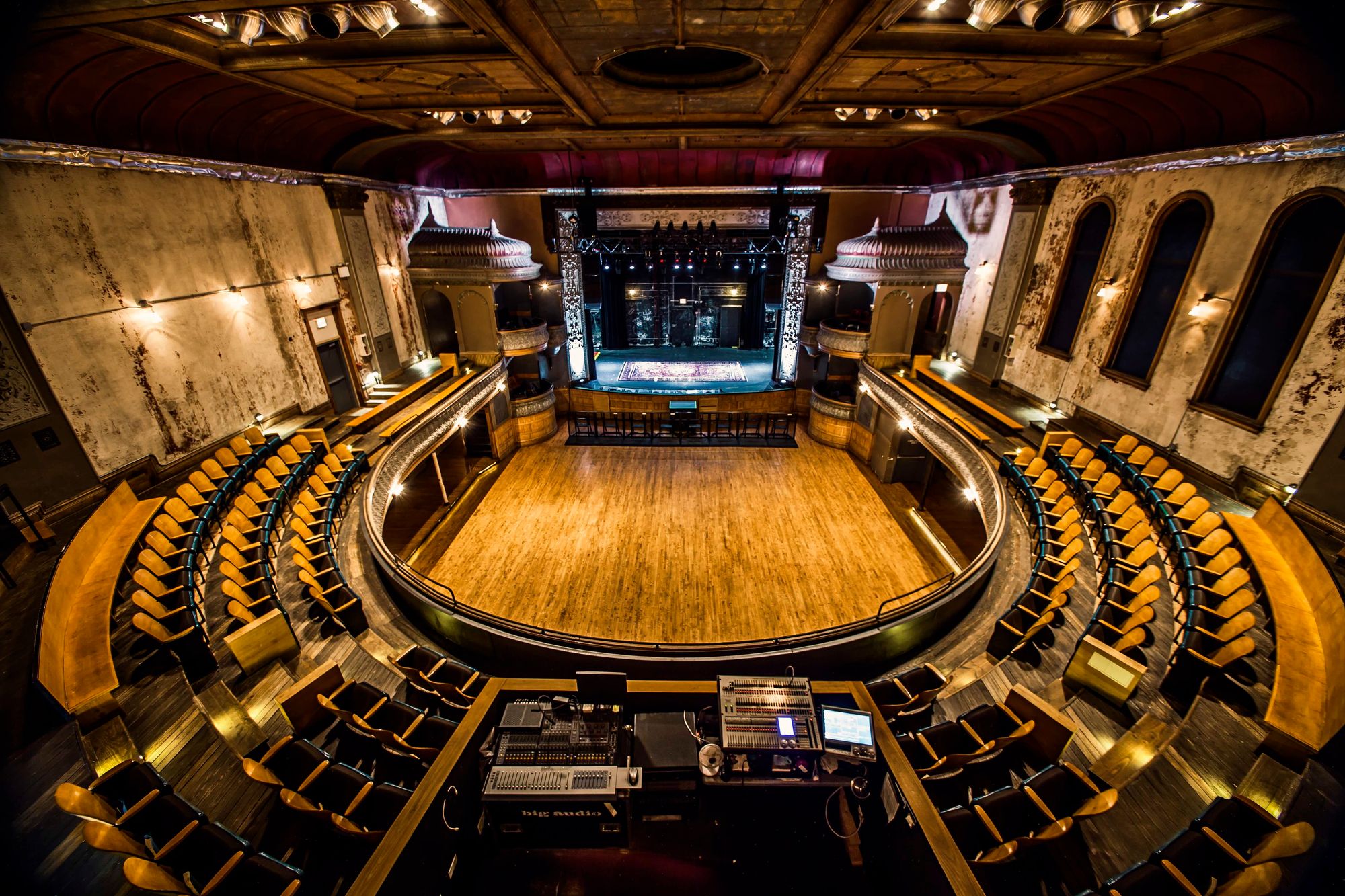
Thalia Hall
Breathing new life into historic buildings has become a defining feature of 16 On Center’s approach. “We like restoring,” Golden says. “It’s part of what makes us happy about doing the [work] we do.”
For them, the character of a building is central to the experience. Additionally, preservation tends to be less disruptive to the surrounding neighborhood than redevelopment. As a friend once told them, “The most sustainable buildings are the ones that you reuse,” Golden says.
“We could have torn down buildings and built new properties quicker than it takes to restore them. But what do you have? You have a vanilla box that has no history to it,” Finkelman adds.
Restoring century-old buildings, however, is no easy feat. “I can tell you from operating these facilities, taking care of plumbing from the 1890s is not as easy as taking care of plumbing in the 2020s,” Finkelman says.
But, for Finkelman and Golden, those hurdles are simply the trade-off for preserving history. “If you [compare] an old building that has a bunch of history [to] the idea of building a new building, we would choose the historical relevance every time,” Finkelman adds.
The company’s name comes from the construction term for a center mark that creates the strongest build—and that’s exactly how they approach each project, by creating the highest quality places that are meant to last.
But 16 On Center is focused on more than just design, construction and historic preservation. They’re also in the hospitality and entertainment business. Beyond the buildings themselves, they’re also motivated by their own passions and interests. They aim to create neighborhood places they like, hoping others will like them, too. Finkelman’s love of garage rock and punk rock, for instance, led to the creation of the Empty Bottle in Chicago’s Ukrainian Village neighborhood, for instance, while Golden’s personality helped shape SPACE, a concert hall and music venue in Evanston with a more rustic-industrial feel.
One factor that sets 16 On Center apart from other hospitality and entertainment companies is that it often owns the buildings, not just the businesses inside them. That gives them the freedom to think about long-term use rather than short-term returns. “We own the whole project from the start until we start booking bands,” Golden says. “We can make a lot of choices that a lot of… corporate entities really can’t.”
A Community-First Model for Chicago Music Venues
With more than a dozen independently operated locations, from Evanston to Hyde Park in Chicago and additional projects in New York City and beyond, the company’s central mission remains the same: to treat every concept as community and every building as a link to living history. In Pilsen, for example, this includes ties to cultural anchors like the National Museum of Mexican Art and the broader Latino community that defines the area, with programming that reflects and supports that context. “It’s our neighborhoods first,” Golden says.
That neighborhood-centered philosophy became especially apparent during the pandemic. “We were naturally like a cornerstone [for] news, food projects, clothing projects—whatever projects needed to be done for COVID-19,” Finkelman says.
All the while, Finkelman and Golden were building The Salt Shed. “It was a two-year period where nobody was doing construction but us, so we had a good long time to figure out what we were doing, and it worked out,” Golden adds.
Their community-centric approach is a big reason why 16 On Center has been so successful for more than 30 years. After spending most of the week working from home or in an office, people are still searching for places to gather and connect—and that’s what the company’s venues deliver. “People are looking for interactive experiences,” Golden says.
16 On Center’s long-term commitment to the community also extends to the artists who perform in its venues. Finkelman likens it to a “pipeline” for talent, an ecosystem that allows bands to grow from small rooms to larger venues throughout their careers.
SPACE and The Empty Bottle each hold around 300 to 350 people, Beauty Bar around 500 and Thalia Hall closer to 1,000. Their largest venue, The Salt Shed, can accommodate between 3,500 and 5,500 people.
“They become friends of ours, people that we care about, and we continue to grow them,” Finkelman says.
All images courtesy of 16 on Center
This article was first published in the November/December 2026 issue of SUCCESS Magazine. Get your copy here.