Something happened Saturday that most leaders recognized immediately—not because they follow finance, but because they’ve lived some version of it.
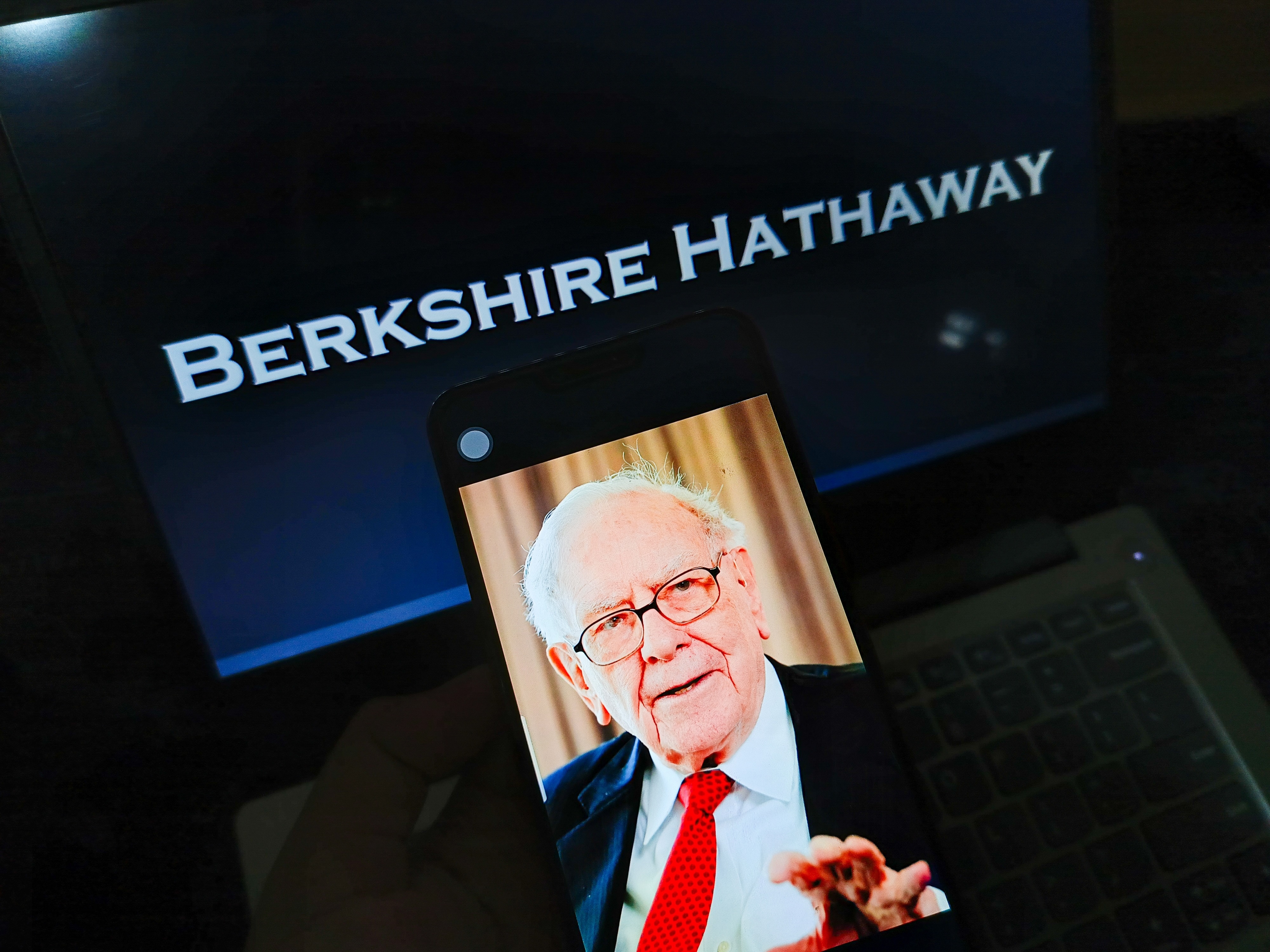
Greg Abel walked onto the stage at the CHI Health Center in Omaha, Nebraska, on May 2, 2026, to run his first Berkshire Hathaway annual shareholder meeting as CEO. Seated in the front row, in a sweater, was Warren Buffett—the man who built the $900 billion empire Abel now leads. Buffett wasn’t on stage. But he was very much in the room.
That image captures a challenge every leader eventually faces: the moment you step into a role that someone else defined. Maybe you followed a founder who built the company from scratch. Maybe you replaced a department head who was beloved. Maybe you inherited a team that still quotes your predecessor. The circumstances vary. The challenge is identical.
Why Succeeding a Legend Is Harder Than It Looks
Your instincts probably tell you this transition is uniquely difficult. Research confirms it. According to a January 2026 Harvard Business Review (HBR) study, founder-CEO handovers are significantly more prone to failure than other leadership transitions, not because the incoming leader lacks skill, but because the structural and emotional weight of the handoff is systematically underestimated.
The numbers at Berkshire make this concrete. Since Buffett announced his departure, Berkshire’s stock underperformed the S&P 500 by 39 percentage points. Abel hasn’t done anything wrong. The market is simply adjusting to uncertainty: the gap between a legend it knows and a successor it’s still figuring out.
That gap is your real leadership problem. And closing it requires a very specific strategy.
The Imitation Trap—and Why It Always Backfires
Here’s the instinct most successor leaders follow: When you’re stepping into something exceptional, you try to replicate it. You adopt your predecessor’s phrasing. You mimic their style. You play it safe because deviation feels like disrespect or, worse, like overreach.
It’s also one of the fastest ways to lose your own credibility.
Buffett used this year’s Berkshire meeting to point directly at a leader who refused that trap. He praised outgoing Apple CEO Tim Cook—who also announced his own retirement this month—for what Buffett called one of the miracles of American business management. Buffett put it plainly: “How would you like to step into the shoes of Steve [Jobs] and come through his record?” Cook did it by building on Jobs’ foundation without pretending to be Jobs. He brought operational precision, supply chain mastery and a quieter style.
Abel is doing something similar. He honored Buffett by hanging a commemorative banner in the rafters of the arena. Then he ran the meeting—his way.
Lead With What You Know, Not What They Were Known For
Longtime Berkshire shareholders noted immediately that Abel’s style felt different. Where Buffett held rooms with storytelling and wit, Abel delivered operational depth. He walked investors through the inner workings of Berkshire’s railroad, energy, insurance and retail businesses in near-granular detail, an approach shareholders described as feeling “more like an investor day” than the freewheeling forum Buffett had always run.
The reviews were solid. According to CNBC, Steve Check, founder of Check Capital Management, called Abel’s debut “very solid—no misspoke words, thorough answers.” German investor Tilman Versch was more pointed: “Everybody misses Warren. But with more practice, I hope Greg can find his own style.”
That last sentence is the one worth holding onto. The goal isn’t to replace your predecessor’s style. It’s to develop your own.
When you step into a leadership role, your credibility comes from doing what you’re actually best at—better than anyone else in the room. Abel’s command of operational detail isn’t a consolation prize for not being as funny as Buffett. It’s a genuine strength that sends a signal: This person knows the machine. The practical question for you is the same one Abel answered on that stage. What do you know so deeply that no one can credibly question it? Start there. Lead from that first.
Define Your Predecessor’s Role Before It Defines You
One of Abel’s most visible decisions wasn’t strategic. It was structural. He didn’t push Buffett out of the frame. He gave him the front row and hung his banner in the rafters. At the same time, he took the stage. He ran the Q&A. He made the calls. Both things happened at once.
That balance—honoring the legacy while physically owning the room—is harder than it looks. The HBR research identified this as the most common failure point in founder transitions: not the successor’s competence, but the structural ambiguity of who is actually in charge.
You cannot lead well from ambiguity. Three actions close it fast:
1. Set the terms of your predecessor’s involvement early
Buffett moved from CEO to chairman, a defined role with defined limits. If your predecessor is still in the picture, formalize their involvement. Undefined presence creates shadow authority that bleeds into every decision you make.
2. Make your first visible decision clearly your own
Abel stated plainly that he would not break up Berkshire’s conglomerate structure. That wasn’t just continuity; it was a judgment call he owned publicly. Your first real decision, even a small one, signals whose instincts are now driving the organization.
3. Give credit freely; claim direction clearly
Abel referenced Buffett’s principles throughout the meeting. And then he told shareholders exactly what Berkshire would look like under his leadership. Both things are true. Both things belong in the same conversation.
The Patience You Owe Yourself—and Your People
There’s one more thing Abel demonstrated in Omaha that rarely gets acknowledged: He showed up knowing he wouldn’t be Warren Buffett.
The hardest part of succeeding a legend isn’t the strategy or the symbolism. It’s the daily experience of being measured against someone who was, by most accounts, irreplaceable and choosing not to let that comparison make you smaller. Research shows that only 11% of companies rate themselves as having a strong leadership team, the lowest rating in a decade. Leadership transitions are exactly where that gap either widens or closes.
The shareholders who assessed Abel’s debut most clearly weren’t the ones looking for a replication of Buffett. They were the ones who said something simpler: give him time to find his style. That window is real—and it applies to you too.
You’re not supposed to arrive as a fully-formed version of the person who came before. You’re supposed to arrive as the beginning of whoever you’re about to become.
Your Successor Framework
The next time you inherit someone else’s legacy, run these checks before you do anything else:
What am I genuinely best at? Lead with that first and loudest—before you worry about what your predecessor did better.
What was my predecessor best at that I’m not? Honor it. Do not fake it.
What does my predecessor’s ongoing role look like? Define it explicitly before someone else fills in the blank.
What is the first decision that’s fully mine? Make it clearly and own it publicly.
Abel’s first hour in Omaha didn’t resolve every question about what Berkshire looks like in the post-Buffett era. But it answered the one that mattered most on day one: Is there someone in charge? The answer, clearly, was yes.
That’s where every great succession starts.
Featured image from Erlin Diah/Shutterstock