
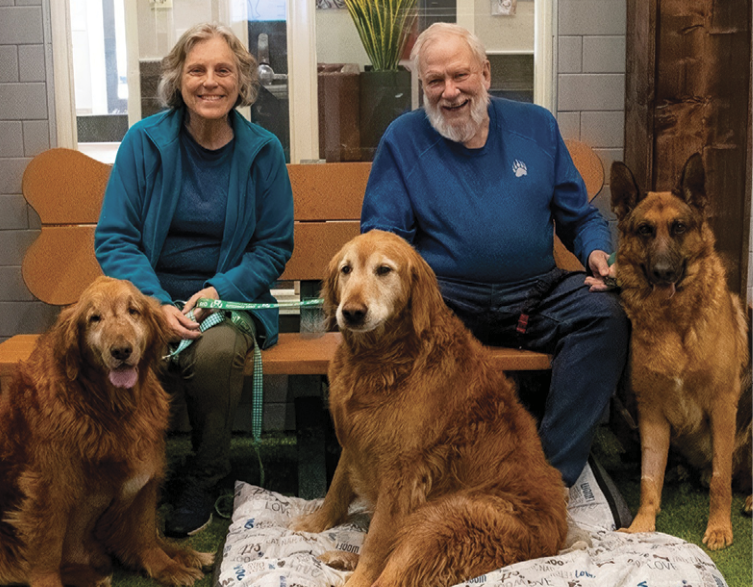
Like most of the new arrivals, Rex showed up at Old Friends Senior Dog Sanctuary in Mount Juliet, Tennessee, with his tail between his legs—feeling dejected, uncertain and unwanted.
An older dog with a degenerative back end, Rex had been given up by owners who could no longer support his increasing needs. He could barely walk. But after a few weeks at his new home, some laser therapy and some custom walking wheels, he was a completely different animal.
“I remember the first day we put him in those wheels, I was the person who had to walk him and see how he’d go,” says Executive Director Mirena Cissell. “He took off running in those things—and I mean running! It was just the most amazing thing to see.”
A former nursing assistant, Cissell has been with Old Friends for over six years now and says working at the 501(c)(3) nonprofit organization is fulfilling. She tells SUCCESS® it’s her dream job, and she gets to spend her days pouring energy into something positive. Founded by Zina and Michael Goodin, Old Friends has helped over 1,400 older dogs since 2012, finding forever homes for some and caring directly for the rest—all while disproving that famous adage, once and for all.
“They say you can’t teach an old dog tricks, [but] that is so not true,” Cissell says.
“Just to see a dog that comes in very shy and feels abandoned and they’re just sad, and then they come into our program… just to see their demeanor change and see the actual dog come out is so amazing,” she adds.
Cissell feels so good because Old Friends makes the world a slightly better place. It might serve a niche issue, but that issue needed to be addressed—and if you have a cause, you could do the same. In many cases, the most effective way to make a difference is by starting a charitable, tax-exempt organization, and today we’ll explore that process.
It’s not a walk in the (dog) park, yet it’s also not as daunting as it may seem. And in the end, seeing the world get a little better is worth the effort.
Here are some steps to starting your own nonprofit.
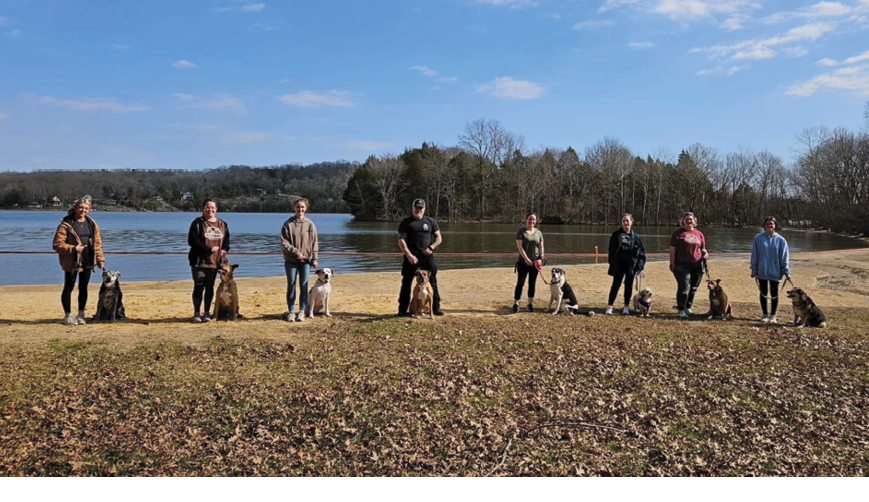
Courtesy of Old Friends Senior Dog Sanctuary
Step 1: Do Your Research
The first step in founding a charity is to recognize and research whether there is a need for another one. Is your cause already being addressed? If so, how can you stand out? According to the National Council of Nonprofits, there are already more than 1.3 million nonprofits in the U.S. alone, so make sure your idea would solve a new problem.
For Old Friends, the Goodins began by volunteering at a local shelter for golden retrievers. After realizing the older dogs went unadopted, they began caring for a few themselves. “They’re like, ‘If golden retrievers—who are a very wanted, full-bred dog—can’t find a home, there’s got to be others that don’t as well,'” Cissell explains.

Courtesy of Matthew Williams-Ellis/Shutterstock
According to Old Friends, senior dogs often come with medical problems or disabilities and face “a much greater chance of euthanasia at shelters than younger dogs.” Many could live happily for years if given the chance, but there were no organizations dedicated to older dogs where the Goodins lived.
“That’s when they thought of starting Old Friends,” Cissell says.
Step 2: Know Your Role
Next, you need to develop a clear mission for your nonprofit and outline its purpose. This will become your “charitable class” and help keep you on track when reality pulls everyone in different directions. For Old Friends, the mission is simple: “To provide a loving home, good food, high-quality vet care, compassion and comfort to senior dogs for the remainder of their lives,” as it says on their website.
From there, additional points of focus can grow. As Old Friends developed, they built a “forever foster” home network while also reaching out to work with other rescue groups and educating the community about caring for older dogs.
Step 3: Find Your Funding
Before you go any further, consider how you’ll source revenue for your organization. Your charity won’t be making profits, but it will need to pay for operations, including any employees.
At Old Friends, the costs add up quickly. On top of upkeep for the specially made facility (complete with non-skid flooring, a big backyard, walking trail, splash pad and a veterinary/nursing/physical therapy department), money is needed for the 120 dogs who live there every day and the 400 more who receive care—but still get their care from Old Friends.
The dogs eat about 900 pounds of dog food per month, need 105 hours of physical therapy each week and have dental exams every year. Plus, nearly 60 employees need to get paid.
According to Cissell, roughly 75% of Old Friends’ income comes from a dedicated group of fellow dog lovers who make small recurring donations each month. The rest is made up by hosting a few fundraising events each year.
This is typical of most nonprofits. They survive on fundraising, either through small-donation drives or a select group of big-hearted benefactors. But you might also sell a product or service, and there may be options for securing public grants. Grants.gov is full of information on the U.S. federal funding system, and individual states offer programs as well.
Step 4: Make It Official
Now we get to the nitty-gritty. The primary benefit of a nonprofit is its tax-exempt status, letting you focus all your resources on the task at hand. But getting that status requires lots of groundwork.
Many forms of nonprofit organizations exist, but the 501(c)(3) designation is by far the most common. They can be created for just about any charitable interest, while others like 501(c)(4) are specifically for social welfare organizations. Go over all the rules and regulations at the IRS website, and plan to meet all obligations—not just once, but every year and in some cases quarterly.
Broadly speaking, you’ll need to meet the requirements to file articles of incorporation in your home state, register for a federal EIN (employer identification number) and then file for tax exemptions with a Form 1023 or 1023-EZ. You may have to file other state-mandated registrations and will have to renew your status on a regular basis. That may sound like a lot of hoops to jump through, but they serve a purpose.
“The hoops are there because nonprofits have this tax advantage over for-profits, and nonprofits are being trusted with community resources,” says Rick Cohen, chief operating officer at the National Council of Nonprofits. He has worked in the sector for over 20 years and says the regulations governing charitable organizations prevent public trust from being abused. “The hoops are there to make sure that those community resources are being stewarded well.”
This can cost anywhere from a few hundred to a few thousand dollars in fees, depending on how many states you plan to operate in. There are also attorney’s fees to consider, since it’s vitally important to get the groundwork laid correctly.
“It could take anywhere from a few weeks to a year to receive your determination letter,” the official recognition of your 501(c)(3) status by the IRS, according to Donorly.com. But it’s not impossible.
Step 5: Get the Word Out
Now you can start making that difference you dreamed about and let others know about it. In the social media age, this doesn’t have to be expensive, but things change rapidly, so be ready to adapt.
Old Friends started with a huge Facebook following in 2012, which made it easy (and free) to raise awareness. But as users change their scrolling habits, the shelter has had to get creative. Rather than spend precious cash on advertising, they’ve been partnering with local organizations like the Nashville Sounds AAA baseball team—becoming a beneficiary of “Tails Waggin’ Tuesdays,” when fans can bring their dogs to games and part of the ticket price goes to a specific animal charity. It’s a novel way of getting and keeping attention—which could be added on to an ever-evolving social media presence. Plus, it generates some income for Old Friends.
“The economy’s changed; everything’s changed,” Cissell admits. “So now I would say spend a good amount of time looking for partnerships, looking for ways to get our name out there.”
Step 6: Keep Up the Good Work
The challenges don’t stop once your nonprofit is up and running. Often, it gets harder. Nonprofits need to keep meticulous track of everything they do, so they can report it on what’s known as Form 990 each tax season. If three consecutive years go by with no 990, tax exemption is automatically revoked.
“That’s basically your tax form you file at the end of the year, and you file your taxes individually,” Cohen explains. “So on there, it’s not just revenues and expenses, but also how many volunteers did you have? How many staff members did you have? What’s your governance structure? What, if anything, did you spend on lobbying expenses?... The challenge is that a lot of people don’t know that they have to do it.”
There will also be unforeseen obstacles, and the world will shift beneath your feet. Cissell’s advice? Stay on top of your obligations, and keep those receipts. Don’t get complacent about your goals, don’t take on too much debt and don’t grow too fast.
“Watch your growing rate...” she says. “Some people will grow too fast, and then they can’t sustain that.”
Taken all at once, starting a nonprofit might seem like a tall order, but few endeavors offer a greater sense of purpose. Even the smallest cause needs a champion, and people like Cissell and the staff at Old Friends Senior Dog Sanctuary prove it.
Featured image courtesy of Sanctuary Caretakers
This article was first published in the November 2025 issue of SUCCESS® digital edition. Get your free copy here.