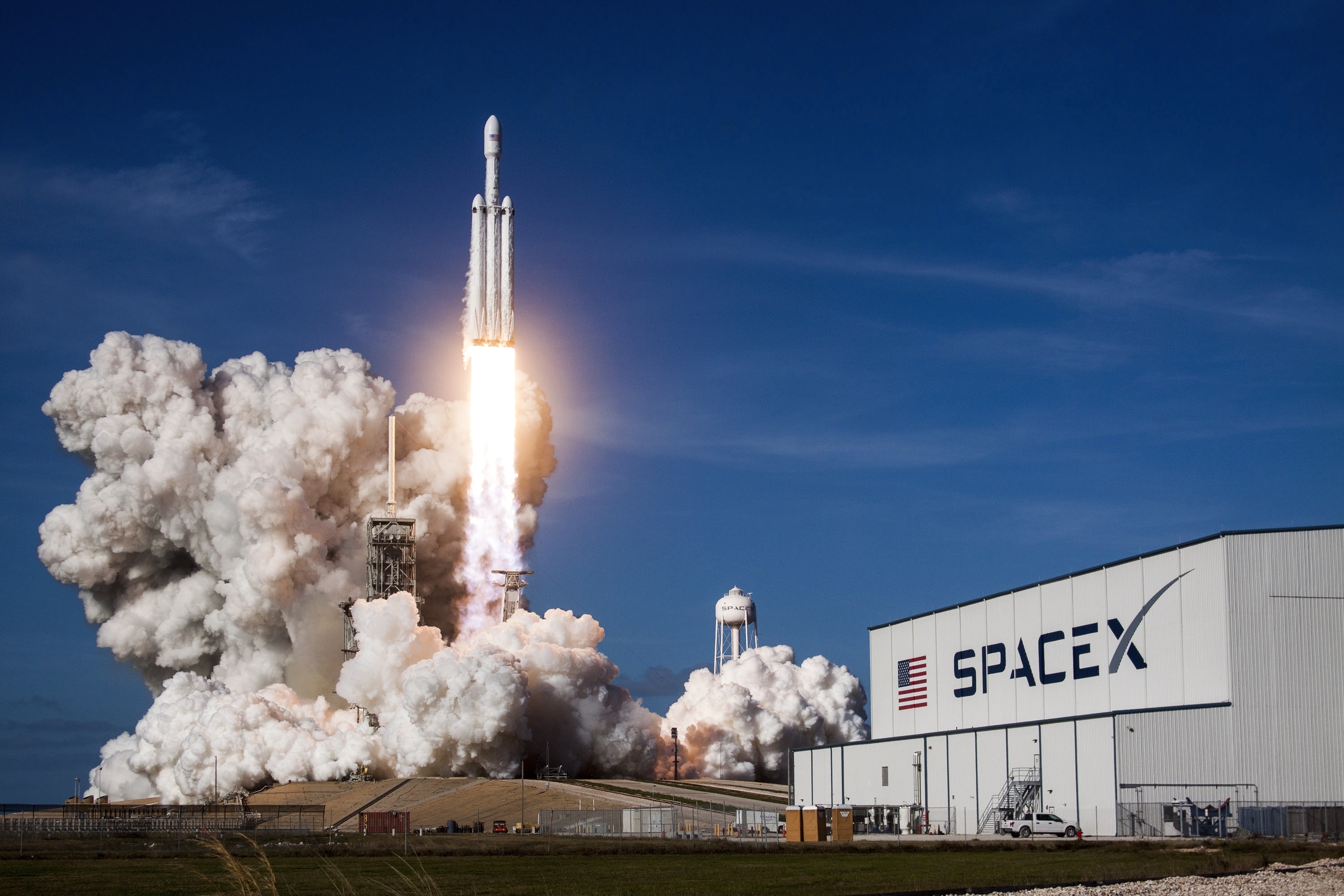
On May 20, 2026, SpaceX filed its S-1 with the Securities and Exchange Commission—the formal opening move toward what is projected to become the largest IPO in history, targeting a valuation of up to $1.75 trillion. Most headlines focused on the rockets, the Mars obsession and Elon Musk’s ironclad voting control. But if you’re a founder, an executive scaling a team or anyone building something intended to last, this 270-page document is a startup strategy masterclass hiding in plain sight.
Strip away the Starlink satellites and the Starship renders. The principles underneath—recurring revenue, vertical integration and long-horizon thinking—apply just as directly to a business with five employees as they do to the most valuable company ever to go public. Here’s what the SpaceX S-1 is actually teaching you.
Why the S-1 Is More Than an IPO Filing
Most founders treat an IPO as a financial event. The SpaceX S-1 is something rarer: a window into how a company thought about building over a 24-year horizon. The filing frames its mission as making humanity multiplanetary and then constructs every business unit around that declared purpose. Launch revenue funded research. Research enabled satellites. Satellites created recurring cash flow. Recurring cash flow is now funding orbital data centers.
That progression didn’t happen by accident, and it didn’t happen fast. SpaceX reported a net loss from operations of $2.58 billion in 2025, even as it generated $18.67 billion in revenue. Investors are pricing the company at $1.75 trillion anyway because the strategy is legible and the mission is coherent. The lesson isn’t to lose money on purpose. It’s that a clearly articulated, long-term strategy buys you the latitude to invest well ahead of profit.
Build a Recurring Revenue Engine Before You Need It
The single most important financial detail in the SpaceX S-1 isn’t the headline valuation. It’s Starlink. The satellite internet business generated $11.4 billion in revenue in 2025—up 83% year-over-year—and posted an EBITDA margin of roughly 63%, according to prospectus analysis by industry researchers reviewing the filing. That recurring subscription base, now serving more than 10 million subscribers across 160 countries, is what makes the rest of SpaceX’s ambition fundable.
Here’s why this matters for your business: SpaceX didn’t build Starlink because it was easy. It built it because recurring subscription revenue is structurally different from transactional revenue. It’s predictable, it compounds and it gives you financial cover to make long-term bets your competitors can’t sustain.
You don’t need satellites to apply this. If your business is primarily transactional—you complete a project, invoice and start hunting the next client—ask yourself what a subscription version of your core value would look like. A retainer model. A maintenance agreement. A digital product layer. Even a modest recurring revenue stream changes the financial stability of your entire operation.
The SpaceX playbook is clear: build the cash engine first, then fund the moonshots with it.
Own More of Your Stack Than You Think You Can Afford
When SpaceX entered the launch market in 2002, the industry standard was to rely on hundreds of specialized suppliers. United Launch Alliance—the Boeing-Lockheed Martin joint venture that previously held a near-monopoly on U.S. government launches—depended on more than 1,200 subcontractors, which drove the cost of a single satellite launch past $400 million per mission. SpaceX went the opposite direction. By bringing approximately 70%-85% of Falcon 9 component production in-house, it replaced a $100,000 industry-standard radio with a $5,000 commercial alternative and applied that same logic across the entire vehicle.
The result was staggering. NASA estimated that developing a rocket equivalent to the Falcon 9 through traditional procurement methods would have cost roughly $4 billion. SpaceX achieved it for $390 million. That’s not just a cost story. It’s a control story. When you own your critical processes, you control your quality, your timeline, your pricing power and your ability to iterate without asking permission.
For your business, vertical integration doesn’t mean doing everything yourself forever. It means being honest about which parts of your value chain create your differentiation versus which ones are genuinely commoditized. The parts that differentiate you? Protect those from outsourcing. The rest is negotiable.
Why Founder Control Is a Strategy, Not Just Ego
One of the most-discussed details in the SpaceX S-1 is Musk’s 85% voting control through a dual-class share structure, meaning he could theoretically vote to fire himself and still win. Most early-stage founders give away decision-making authority gradually, in exchange for capital, without calculating the compounding cost of that trade over time.
The SpaceX approach was deliberate from the beginning. Rather than accepting investors who demanded significant influence over strategic direction, Musk specifically sought partners—including Alphabet, Sequoia and Fidelity—that accepted minority stakes and limited voting rights in exchange for long-term upside. Mission alignment was a filter, not an afterthought.
This matters even if you’re nowhere near an IPO. Every time you accept capital, sign a partnership or add a major stakeholder, you’re either protecting or eroding your ability to make long-term decisions. The SpaceX lesson isn’t “never take outside money.” It’s “know exactly what you’re trading and trade deliberately.” If you’re in a funding conversation right now, don’t just ask what this partner brings in capital or connections, ask what happens to your decision-making authority the first time you seriously disagree.
4 Startup Strategy Takeaways—No Rocket Required
You don’t need $18 billion in revenue or a launchpad in South Texas to apply these principles. Here’s a condensed framework drawn directly from what the S-1 reveals.
1. Anchor to a mission that outlasts market conditions. SpaceX’s mission didn’t change when funding was scarce or when three of its first four rockets failed. Purpose is what allows a company to absorb a $2.58 billion operating loss in a year and still command a $1.75 trillion valuation. Define your “why” in terms of the change you’re making, not the product you’re currently selling.
2. Build one recurring revenue stream before you scale anything else. Identify the most sustainable, predictable version of your core offer and convert it into a repeatable model. Recurring revenue is the foundation everything else is built on.
3. Bring your most differentiating work in-house. Map your value chain. Identify the two or three steps that create the most value for your customers. Protect those from outsourcing. Everything else can be delegated.
4. Treat founder control as a strategic asset with a price. Decide in advance how much decision-making authority you’re willing to trade and under what conditions. Revisit that number every time a new stakeholder enters the picture.
Start with just one of these. The companies that look inevitable in hindsight usually made one disciplined structural decision early and then defended it.
The SpaceX S-1 isn’t a document about rockets. It’s a document about discipline—the kind that lets a company absorb losses, make long-term bets and build something that compounds over decades rather than quarters. Whether you’re scaling a team of five or 500, the principles in that filing are available to you.
You don’t need to colonize Mars. You just need to build like you intend to last.
Featured image from Rawpixel.com/Shutterstock