Think about the last time you gave someone a stretch assignment. A plum project. A promotion recommendation. Now ask yourself: Where were they sitting when you made that call?
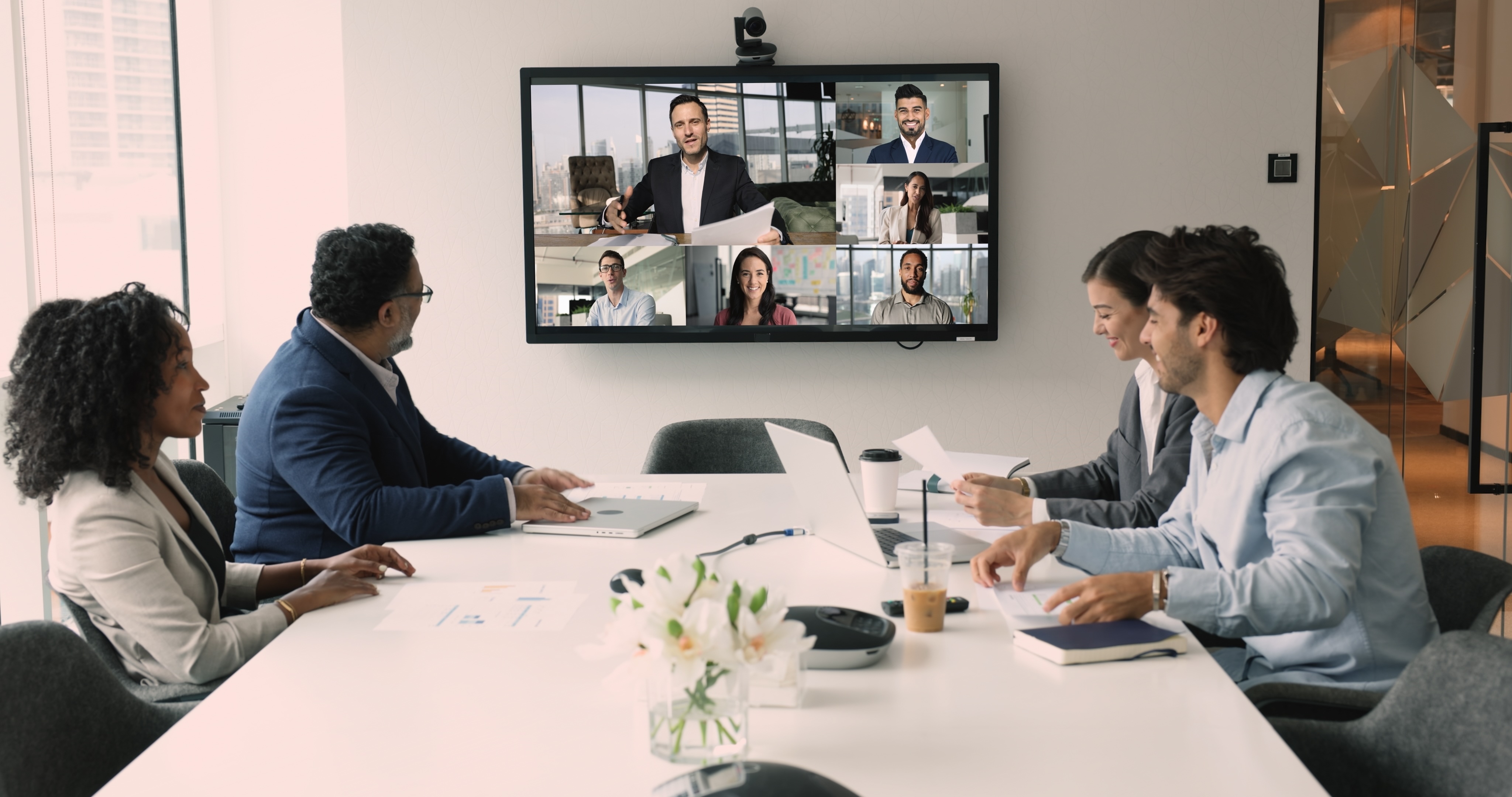
If you manage a hybrid team, there’s a measurable chance the answer influenced your decision more than their performance did. That’s not a character flaw. It’s proximity bias—the documented tendency for leaders to unconsciously favor employees they can physically see. And in a time when as many as 88% of U.S. employers now offer at least some hybrid arrangement, it may be the most consequential management blind spot of the decade.
The research is unambiguous. The consequences are real. And the fix is within your control, but only if you first acknowledge what’s actually happening on your team.
What Proximity Bias Actually Is
Proximity bias isn’t prejudice in the traditional sense. It doesn’t require any ill intent. It’s a cognitive shortcut—the same mental efficiency your brain uses constantly to filter signals from noise—applied to performance evaluation. The people you see regularly feel more present, more committed, more capable. The people you don’t see register as an abstraction. Over time, that abstraction shows up in your decisions.
Harvard Business Review named and defined the phenomenon when hybrid work scaled post-pandemic: the tendency of leaders to favor employees who are physically closer to them at the expense of flexible workers. The mechanism is straightforward. Visibility creates familiarity. Familiarity creates trust. And trust—not output, not results, not measurable contribution—is often what drives the decisions that actually shape someone’s career.
The insidious part is that most managers running hybrid teams don’t believe they’re doing this. They believe they’re evaluating performance. The data disagrees.
The Numbers That Should Make Every Hybrid Leader Uncomfortable
The evidence against unexamined hybrid management has been building for years. It’s now too consistent to ignore.
A 2024 KPMG CEO Outlook survey of more than 1,300 chief executives globally found that 87% say they are likely to reward employees who make an effort to come into the office with favorable assignments, raises or promotions. Read that again: Nearly 9 out of 10 leaders—surveyed, self-reported—openly acknowledge that physical presence influences how they distribute opportunity.
The employee data mirrors it. An Owl Labs State of Hybrid Work 2024 report found that 55% of employees say their managers view those in the office as harder working and more trustworthy than remote colleagues. And according to an Envoy workplace survey, 96% of executives admit they are more likely to notice contributions made in the office than those completed remotely, even when they believe they treat both groups equally.
This isn’t perception. It’s playing out in careers. An analysis of more than 2 million white-collar workers found that remote employees are 31% less likely to be promoted than their in-office or hybrid peers. Fully remote workers are also 35% more likely to be laid off—not because their work is worse, but because managers find it easier to make difficult decisions about people they haven’t built in-person relationships with.
But here’s where it gets most damning. A 2025 peer-reviewed study published in Work, Employment and Society, involving nearly 1,000 UK managers, ran a controlled experiment. When managers were given no performance data about a hybrid or remote worker, those employees faced significantly lower probabilities of promotion and salary increase. When managers are given objective performance data showing the remote employee performs identically to an in-office peer, the penalty disappears entirely. The bias isn’t about output. It’s about the absence of a face.
How This Is Already Costing You
Proximity bias doesn’t announce itself. It accumulates in small, individually defensible decisions: who gets invited to a strategy session, who gets tapped for the high-visibility project, whose name surfaces first when a leadership opportunity opens up. Over months, those decisions compound into patterns that your best remote and hybrid employees can see clearly, even when you can’t.
Around 40% of hybrid workers report feeling obligated to come into the office more often than their role requires, not because it makes their work better, but because they feel the visibility pressure. Your highest performers, the ones with enough options to be selective, will eventually stop performing that loyalty. They’ll leave instead. And 30% of remote and hybrid employees already say that working outside the office actively lowers their chances for professional growth, which means they’ve noticed the pattern you may not have seen yet.
The talent cost is not hypothetical. The most capable people on your team are the ones with the most options. If your advancement decisions consistently favor physical presence over demonstrated performance, you are running a slow-motion talent drain that won’t show up in your metrics until the exits start.
The 4-Part Fix
Proximity bias is a structural problem, which means intention alone won’t solve it. You need structural countermeasures.
Audit the last six months of your decisions. Pull your data on stretch assignments, project leads, performance ratings and promotion nominations from the past two quarters. Map each decision against work location. If your in-office employees received a disproportionate share of high-visibility opportunities, you’ve confirmed the pattern. The audit isn’t punitive—it’s diagnostic. You can’t fix a bias you haven’t measured.
Build performance records that live outside your memory. The single most effective intervention the Work, Employment and Society study identified was straightforward: give managers performance data. When objective output records exist and are used in promotion discussions, the proximity penalty largely disappears. This means creating documented, shared records of each team member’s contributions—written updates, async project notes, quantified results—that you review on a consistent cadence, not just before a performance cycle. What gets written down gets evaluated. What lives only in hallway impressions favors whoever’s in the hallway.
Standardize visibility across the team. Proximity bias thrives when remote and hybrid employees have to create their own visibility while in-office employees get it automatically. Correct this structurally. Rotate who presents project updates in all-hands meetings, regardless of location. Schedule individual skip-level conversations with your remote team members quarterly—the same conversations that happen spontaneously with in-office staff. Ensure key decisions aren’t made in post-meeting hallway conversations that remote employees are structurally excluded from.
Protect the 1:1 for every remote direct report—without exception. The spontaneous, informal check-in that sustains in-office relationships doesn’t happen remotely unless you schedule it. Research from Eurofound identified regular, structured contact between managers and remote workers as one of the most reliable countermeasures to unconscious bias. Cancel that standing 1:1 once, and you’ve sent a message. Protect it like revenue.
The Harder Conversation
Fixing proximity bias ultimately requires accepting an uncomfortable reframe: Physical presence is not a proxy for performance. It never was—it’s just easier to measure.
The leaders who will build the strongest hybrid teams over the next decade are the ones who get there first. They’ll make advancement decisions based on documented output and demonstrated potential. They’ll build visibility structures that don’t require employees to perform loyalty by showing up. They’ll use performance data the way the Work, Employment and Society researchers showed it should be used: the actual basis for judgment, not a post-hoc justification for a decision already made in the gut.
Your best people are watching what you do with the data in front of you. Give them a reason to stay.
Featured image from Fizkes/Shutterstock