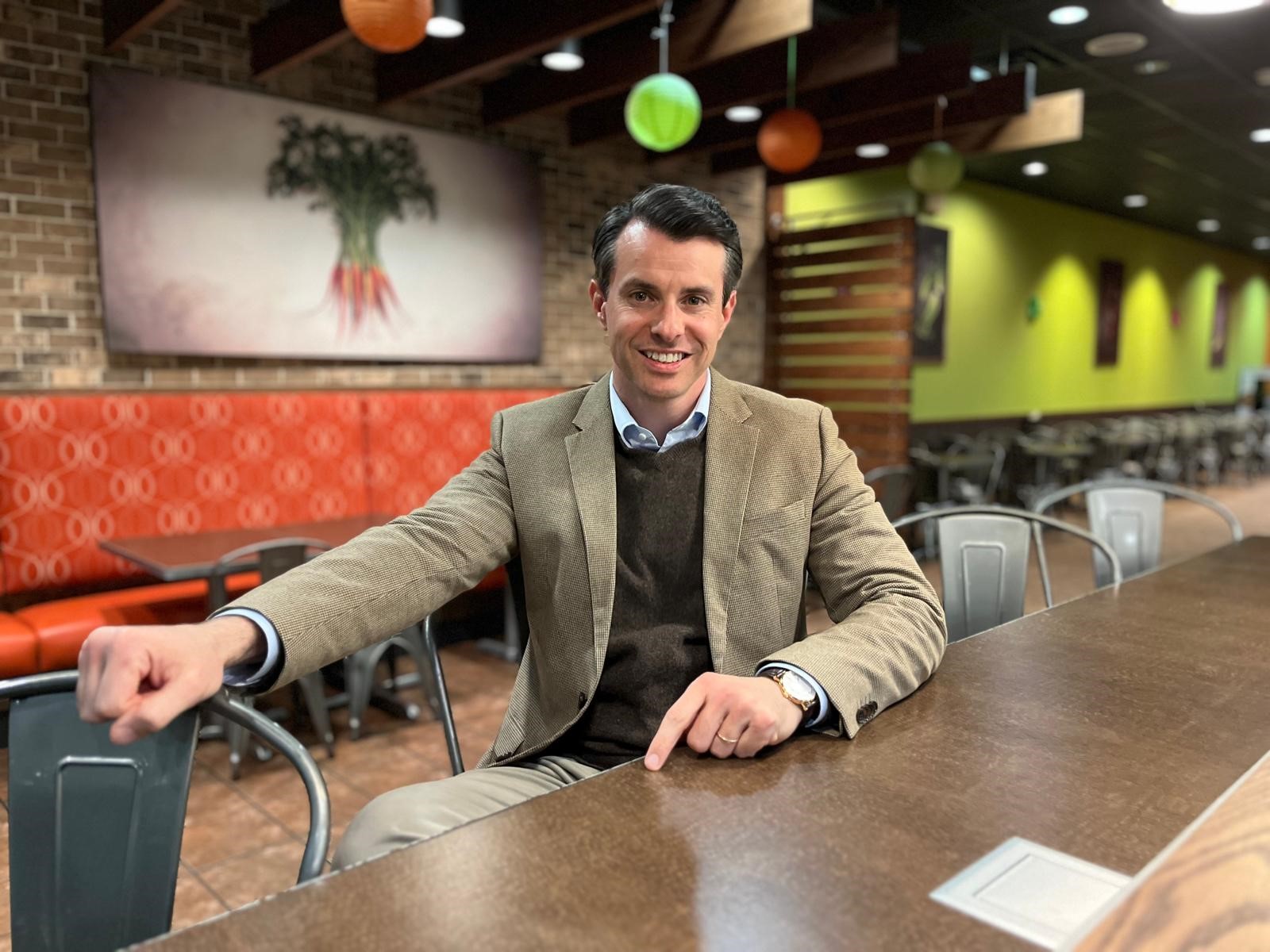
Orhan Veli can measure his success in truckloads of lettuce.
Each morning across his Saladworks restaurants, cases of romaine and iceberg are sliced, washed and prepped before the lunch rush. Multiply that routine across 11 outposts and the scale becomes clear: What began as a single Saladworks franchise location generating about $650,000 annually in 2015 has grown into an operation across the Philadelphia region, producing roughly $11 million in annual revenue.
But the numbers only tell part of the story.
Veli built an impressive franchise portfolio by mastering restaurant operations—and by developing a habit of viewing setbacks differently than most operators. When Saladworks went through bankruptcy and other franchisees began exiting, Veli saw an opportunity to acquire locations. When COVID-19 shut down dining rooms and sent the industry into crisis, he chose to hire people rather than cut staff. In moments when others saw instability, he looked for the next move forward.
“A lot of times, when people see a negative, or they see an obstacle, if you look at it carefully enough, you can uncover that it could be an opportunity if treated the right way,” Veli says.
That perspective—treating challenges as openings rather than roadblocks—is a big part of Veli’s decision-making process. It’s a mindset he began developing long before he owned his first eatery.
When Veli was 11, he and his family moved to the United States from the former Soviet Union. In their new life, money was tight, and work was constant. His father took a job delivering pizzas for Domino’s, while his mother worked in a screen-printing factory. Eating out at restaurants was reserved for special occasions, not everyday convenience.
After living in Florida for a couple of years, the family eventually settled in southwest Pennsylvania. By age 13, Veli took his first job at McDonald’s, working the fryer and learning the rhythms of restaurant life.
At first, it was just a way to earn money for things his parents couldn’t afford. But watching the restaurant’s owner, who operated multiple locations, introduced him to the world of scalable businesses.
“Without even realizing it at a subconscious level, [the experience] kind of left an imprint on me—how it’s possible to own and have a scalable business in the food industry,” he says.
Veli entered the fast-casual restaurant world in the early 2010s. He owned a cheesesteak restaurant in a mall food court but purchased his first Saladworks franchise in 2011.
The concept appealed to him for both practical and personal reasons. Thanks to his extensive experience working back-of-house in restaurants, Veli knew what it was like to spend 10 hours a day in a hot kitchen. But Saladworks’ operations were much simpler than other traditional eateries—and the brand served a product he believed in.
“[At Saladworks], the conditions that you have to work in are a lot nicer,” he says. “You’re not standing over a hot grill. There are no hot ovens or fryers or anything like that.”
How Did Orhan Veli Turn the Saladworks Bankruptcy Into an Opportunity?
The defining moment in Veli’s expansion came in early 2015 when Saladworks LLC filed for Chapter 11 bankruptcy amid lawsuits from the concept’s minority owner and its bank. For many franchisees, the news created uncertainty and prompted them to step away from the brand. But because Veli knew the company was financially strong and had a supportive customer base, he looked at the situation differently.
“I understood the cause of the bankruptcy was not because the company is not operationally sound…” he says. “For me, the way I looked at it, it was an opportunity because there were franchisees that were shaken by this and they wanted out.”
So as other operators exited the system, Veli began acquiring additional locations with the support of his father, lifelong mentor and financial business partner, George Velikhanly. One location turned into two, then several more. What appeared to be a moment of instability for the brand became the beginning of Veli’s most significant growth.
The acquisitions that followed helped accelerate the expansion across the region. But several years later, a far greater test of his approach to business—and his mindset—was on the horizon.
Why Did Orhan Veli Hire More Staff During COVID-19?
In March 2020, Veli opened a new restaurant. Just days later, the COVID-19 pandemic forced widespread shutdowns across the country, bringing much of the restaurant industry to a halt. As federal Paycheck Protection Program (PPP) loans helped stabilize his business by covering rent and payroll, he noticed something unexpected happening in the job market: Many experienced restaurant workers were suddenly out of work.
Because he had funds remaining from a PPP loan, Veli decided to grow his team instead of shrinking it. “We didn’t lay off a single person,” he says.
He began hiring talented employees who had lost their jobs elsewhere. At the time, the decision ran counter to what most operators were doing. But Veli believes that strong teams are the foundation of strong restaurants.
The strategy paid off sooner than he expected. As the industry began recovering in 2021 and some franchisees chose to exit the business, Veli already had something many operators lacked: a deep bench of trained leaders ready to run new locations. “Building a really good crew at a location is imperative,” he says. “Once you have that, the location can thrive.”
That focus on people continues to guide how Veli leads today.
Across his restaurants, he looks for employees who are willing to grow and gives them the opportunity to do so. Some of his top leaders began in entry-level roles and worked their way into management positions by taking on new responsibilities and proving they were ready for more.
“It’s my job to understand who those people are and to supply them those opportunities to fuel their growth,” Veli says.
The philosophy has helped him build a team capable of supporting continued expansion. Today, Veli operates 11 Saladworks locations employing roughly 150 people, along with other hospitality ventures.
“As long as you make sure that other people around you are successful, you end up being successful through that as well,” he says.
Featured image provided by Veli