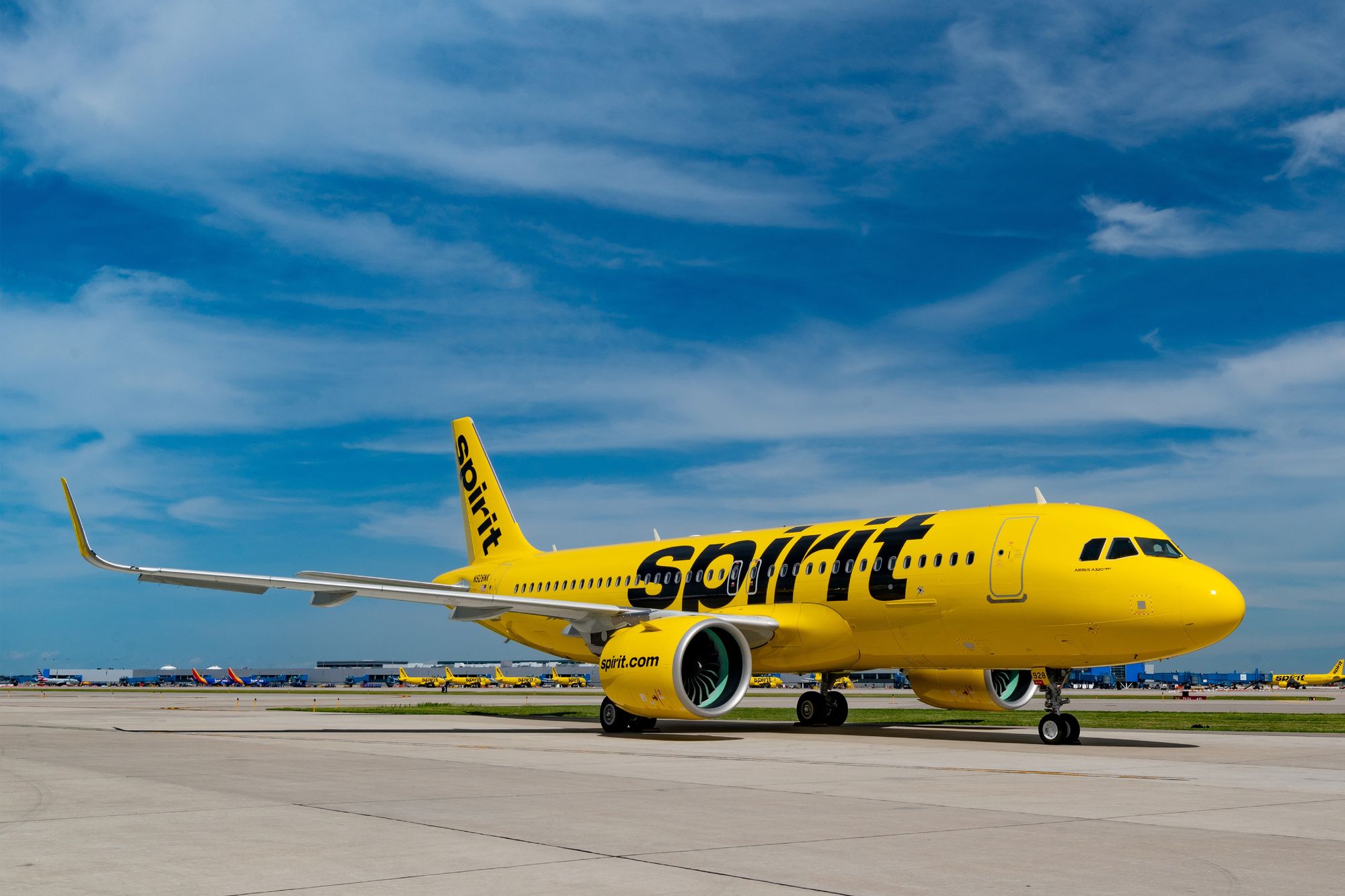
On May 2, 2026, Spirit Airlines shut down. All at once. Overnight. More than 17,000 workers lost their jobs—many of them by email, with less than two hours’ notice. Thousands of passengers were stranded mid-trip, scrambling to find alternative flights at walk-up prices Spirit would not cover.
Spirit’s collapse has been framed as a finance story. Two bankruptcies in under two years, a failed government bailout, spiraling fuel costs. All of that is true. But the more important story—the one that applies directly to your business—runs deeper than the balance sheet.
Spirit didn’t die because it was bad at being cheap. It died because being cheap was the only thing it offered.
What Actually Killed Spirit (It Wasn’t the Price War)
Spirit pioneered the unbundled fare model in American aviation. Strip out every amenity, charge separately for everything from a carry-on to a cup of water and offer the lowest possible base fare. For years, that model worked because the legacy carriers—Delta, United, American—weren’t willing to go there.
Then they did. As competitive pressure mounted, legacy carriers launched basic economy fares specifically designed to match Spirit’s price point on overlapping routes. Spirit’s entire competitive moat evaporated because it had been built on one thing: being cheaper. The moment bigger, better-resourced competitors decided to match that price, Spirit had nothing else to offer.
Shye Gilad, a former airline pilot and professor at Georgetown University’s McDonough School of Business, put it plainly in an NPR interview: “When you’re a low-cost carrier, by definition, you’re relying on having a cost advantage. And they just don’t have that anymore.”
That sentence should stop every entrepreneur and freelancer cold.
The Trap That Catches Most Businesses
Here’s the thing about price-based competition: It almost never starts as a strategy. It starts as a shortcut.
You need clients fast, so you undercut the competitor. You need to win a pitch, so you come in lower. You need to fill your calendar, so you drop your rate. Each of those individual decisions feels reasonable in the moment. But the cumulative effect is that price becomes your value proposition by default, not by design.
Strategy thinker Roger Martin calls this the “faux low cost” trap. In a 2024 analysis drawing on Michael Porter’s foundational work on competitive strategy, Martin argues that genuine cost leadership—the kind Walmart or Vanguard built—requires a meaningful and sustainable cost gap that competitors simply cannot close. Most businesses don’t have that. What they have is a price that’s slightly lower than their competitors, and a value story that isn’t strong enough to justify charging more.
That’s not a strategy. That’s a margin problem waiting to happen.
The data confirms how widespread this is. According to research published by Martal, 65% of sales leaders admit they lose business because they lack a compelling value proposition. When buyers can’t see a clear difference between you and the next option, they default to price. And when price is the deciding factor, someone with a bigger balance sheet or a lower cost structure will always eventually beat you.
How Southwest Stayed in the Fight
The airline industry offers an instructive counterexample. Southwest Airlines flew the same routes Spirit did. It also competed on affordability. But it built something Spirit never did: a genuine, articulated reason to choose Southwest that had nothing to do with being the cheapest option available.
Free checked bags. No change fees. A service culture built around transparency—what the airline itself branded as “transfarency.” These weren’t amenities bolted onto a low-price model. They were structural differentiators that gave customers a specific reason to book Southwest even when the base fare wasn’t the lowest on the route.
The result is that Southwest holds roughly 20% of U.S. domestic capacity with real brand loyalty, a customer base that chooses Southwest partly on price and partly on something price can’t fully explain. That’s the difference between a commodity and a brand.
You don’t have to be Southwest. But you do have to know what your version of “free bags” is.
Run a ‘Moat’ Audit on Your Business
A “moat” is Warren Buffett’s term for the competitive insulation that protects a business from being undercut. Most small businesses and solopreneurs don’t think in those terms—but you should.
Here’s a simple framework for finding yours. Answer these four questions honestly:
What do you do that your competitors can’t easily replicate? Not what you do slightly better. What you do that would take a competitor significant time, resources or institutional knowledge to match. This is your moat.
What do your best clients actually tell other people about you? Not the description on your website. The words they use when they refer you. That language usually points directly to your real differentiation.
What would it take for a larger, cheaper competitor to replace you? If the answer is “offer a lower price,” you don’t have a moat. If the answer involves specific expertise, relationships, processes or a track record that takes years to build, you do.
Where are you already commanding premium rates without resistance? Wherever clients pay your full price without negotiating is where your differentiation is working. Do more of that work. Find more of those clients.
The moat audit isn’t a one-time exercise. Run it quarterly. The competitive landscape shifts fast, and what differentiated you 18 months ago may already be getting commoditized.
How to Price for Value, Not Volume
Once you know your moat, your pricing strategy changes fundamentally. The goal is no longer to undercut the competition. It’s to make the comparison irrelevant.
Research supports this. A 2025 analysis of B2B pricing strategies found that 86% of buyers are willing to pay more for a great customer experience, and 81% cite customer experience as a key competitive differentiator.
A well-documented case from the pricing analytics world found that one consumer brand facing aggressive discounters—instead of matching their prices—added custom product variations and personalized delivery options. The result: a 33% drop in price-sensitive behavior among its customer base and a 21% improvement in margins.
The move that changed everything wasn’t a lower price. It was a better story, backed by a better experience.
For you, this means three things in practice. First, stop quoting rates before you’ve clearly articulated value; the sequence matters enormously. Second, raise your rates in the segment where you’re already winning without discounting. That’s where your brand differentiation is strongest. Third, be willing to lose the clients who only want the lowest price. Those relationships are high-maintenance, low-margin and structurally fragile. They’ll leave you the moment someone cheaper appears.
The Only Question That Matters
Spirit Airlines had a decade of profitability before the market caught up with it. The warning signs were visible long before the bankruptcy filings: margins compressing, market share shrinking, competitors matching the fares it had built its entire identity around. By the time the collapse came, the company had no fallback position.
You don’t have to end up there. But you do have to build something worth choosing before a competitor gives your clients a cheaper alternative.
The question isn’t whether someone can undercut your price. In a transparent market, someone always can. The real question is what you’ve built that price alone can’t replace.
Start there. Build that. Price accordingly.
Your Brand Differentiation Checklist
Before your next client conversation or pricing decision, run through these:
Can you name your three strongest differentiators in one sentence each?
Do your best clients use those same differentiators when they refer you?
Have you raised your rates in the last 12 months where you’re winning without friction?
Are you actively walking away from price-only buyers, or are you still trying to win them?
What’s on your moat audit that a bigger competitor cannot easily replicate?
If any of those land without a clear answer, that’s where to work next. Your brand isn’t your logo or your tagline. It’s the reason someone chooses you when cheaper options exist.
Build that reason. Make it specific. Make it real.
Featured image from Spirit Airlines