Fashion has always been a form of self-expression. Since time immemorial, Indigenous people have been making and wearing garments that reflect their beliefs, identities and connection to the Earth.
But, lately, Native fashion has moved from the margins to the mainstream. Today, you’ll find Indigenous-designed apparel and jewelry gracing the pages of magazines like Vogue, on models strutting down the runway and on actresses smiling for photos on the red carpet.
Meet five Indigenous designers in North America who are shaping the fashion industry with their striking designs.
Jennifer Younger
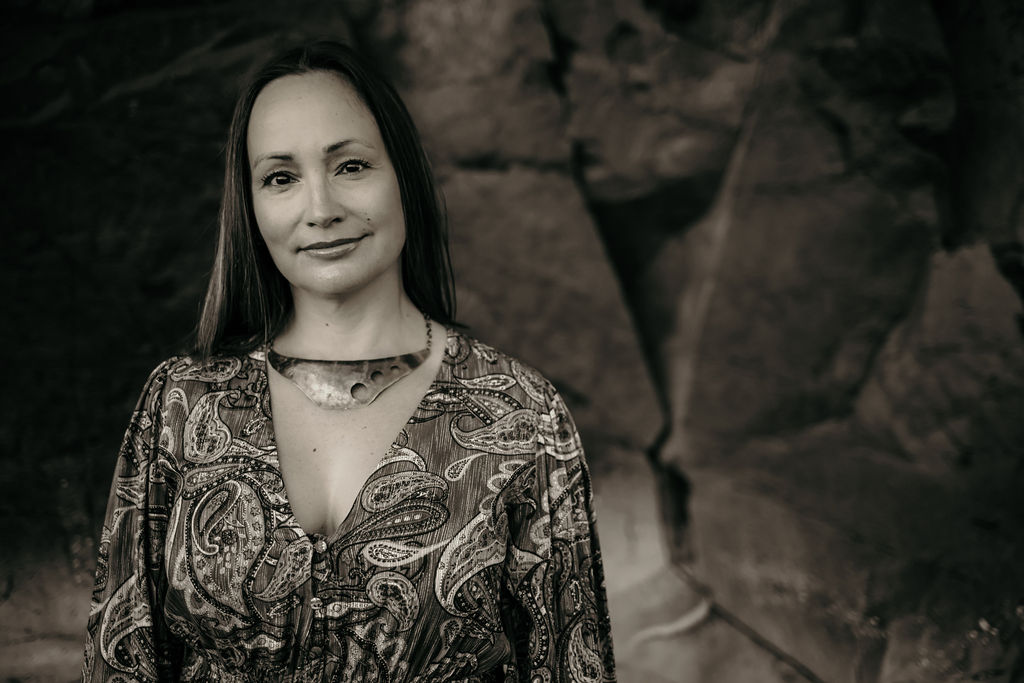
Image courtesy of ©Caitlin Blaisdell
For many years, Jennifer Younger felt distant from her Tlingit heritage. But as she got older, something inside her kept pulling her back. “I wanted to understand where I came from,” she says. “I needed that connection—and I found it through my jewelry design.”
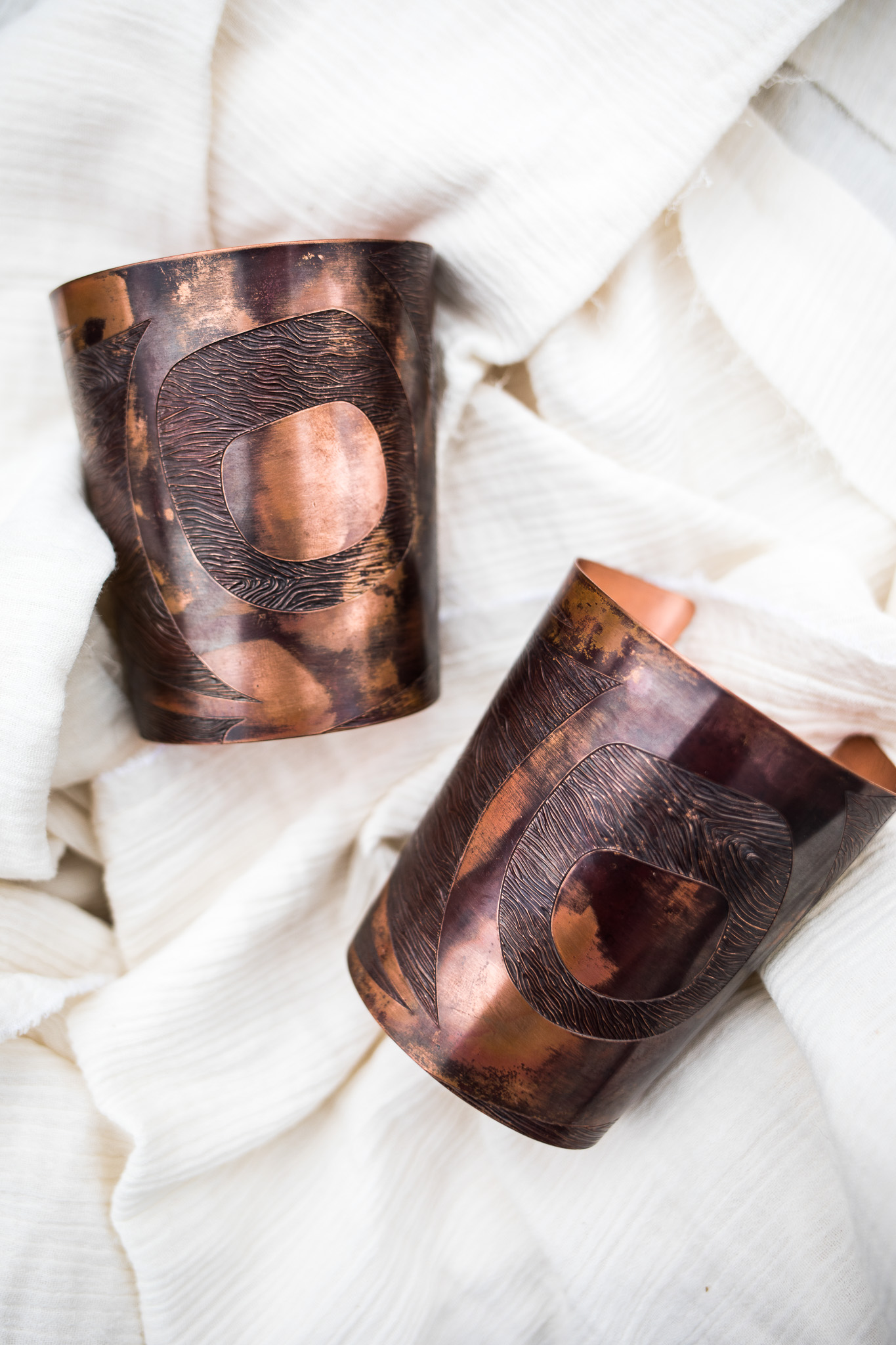
Younger began exploring the patterns, shapes and stories of Tlingit art. Over time, that journey evolved into a full-time practice and, eventually, a business. She works primarily with metal—including copper, silver and gold—to create big, bold designs that are rooted in Tlingit storytelling. She often engraves her pieces with formline—a distinctive Northwest Coast Indigenous style featuring curvy ovoid, U and S shapes—or hones them to reflect the woven bottoms of spruce root baskets, for example. “Creating became my way of honoring the past while creating something meaningful for the present,” says Younger, who is based in Sitka, Alaska.
©Caitlin Blaisdell
Younger weaves her Indigenous identity into every piece she makes. Her heritage influences not only the aesthetics of her jewelry but also the way she approaches her work—with “intention, respect and responsibility,” she says. For those who are non-Native or encountering Alaska Native art for the first time, she hopes her jewelry sparks curiosity.
“I think of each design as an act of cultural continuity,” she adds. “It’s how I honor my ancestors and support future generations. It’s how I push back against the idea that our culture belongs only in the past. I hope my contemporary work helps carry Tlingit design forward.… We are still here. We are still creating. And that story deserves to be worn and shared.” jenniferyoungerdesigns.com
Jontay Kahm
©Tira Howard Photography
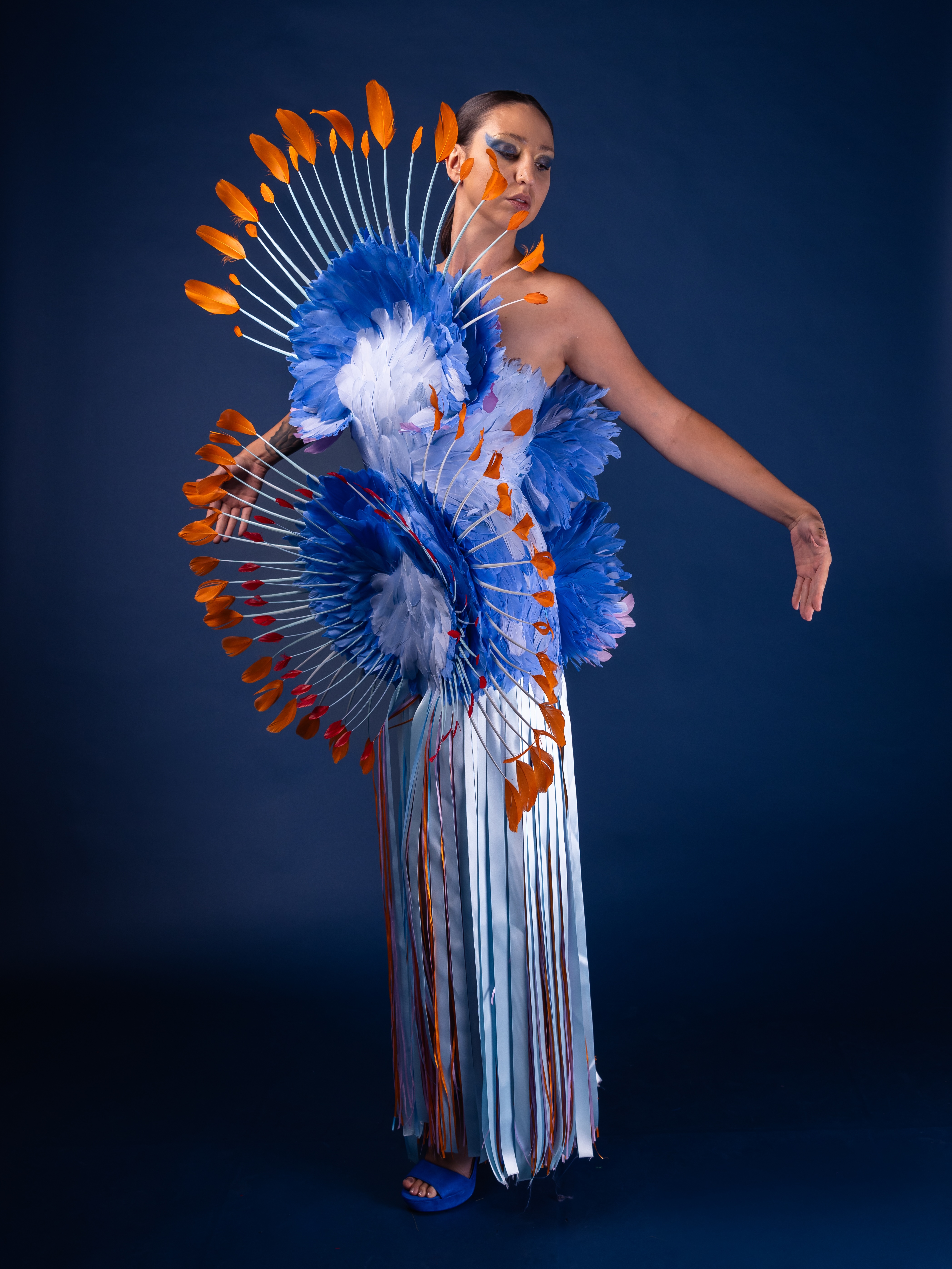
Plains Cree Designer Jontay Kahm remembers the exact moment he fell in love with fashion. In 2009, while he was still in middle school, Lady Gaga released her The Fame Monster album. He became obsessed with her music as well as her style.
Kahm grew up in Saskatchewan, Canada–“a place where there’s no fashion,” he says. But his foray into the field was a total surprise. As a child, he was always surrounded by art because his late father, Jeff Kahm, was an accomplished painter. “I knew I was an artist growing up, but I couldn’t really draw; I couldn’t really paint,” he says. “[Lady Gaga] really brought me to this world of fashion.”
Buoyed by the support of his friends, family members and community members, Kahm started designing and making garments. His high school chemistry teacher often showed up to class wearing his “crazy creations,” he recalls, and his guidance counselor regularly drove him to the fabric store. “People believed in me,” he says.
Kahm’s dad, in particular, was thrilled that his son had discovered an artistic medium he was passionate about. When his father died in 2021, Kahm was devastated. But he channeled his grief into his work, producing his first full collection called Regalian Bodies. Now based in Albuquerque, New Mexico, Kahm continues to draw inspiration from his Plains Cree heritage.
“When my father passed away, I started to look inside myself and ask: What do you want to say as a designer?” he says. “I started to look inside myself, where I come from, and looking at... the beautiful culture I... was born into. What a privilege that is, because there’s so much color and texture and sound.” instagram.com/jontay_kahm
Joe Big Mountain
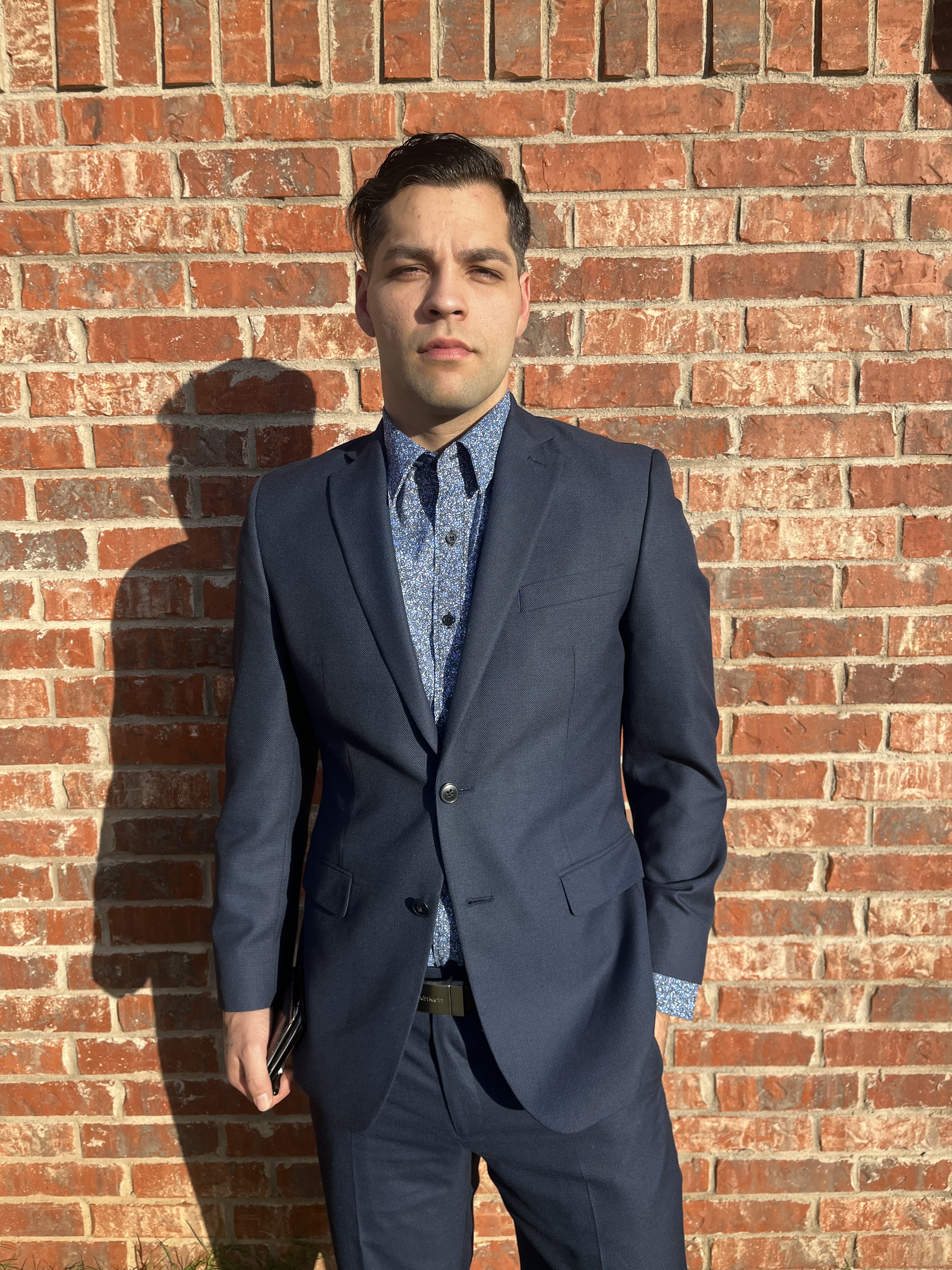
Image courtesy of Joe Big Mountain
In 2024, Lily Gladstone became the first Native American to be nominated for the Academy Award for best actress for her performance in Killers of the Flower Moon. Gladstone didn’t end up winning the Oscar. But she did shine the spotlight on Joe Big Mountain, a 33-year-old Mohawk, Cree and Comanche porcupine quillwork artist who teamed up with Gucci to design the stunning gowns she wore that night. The dresses were later featured at the Smithsonian’s National Museum of the American Indian in Washington, D.C.
Quillwork—a practice that involves using porcupine quills to embellish textiles—is one of North America’s oldest art forms, says Big Mountain, who lives on the Oneida Indian Reservation in Wisconsin. “We almost look at it as medicine,” he says. “A porcupine is a defensive animal, so we believe that when we utilize these quills, and we make things for our families, it’s giving us a sense of protection.... It is quite literally a sacred art form to us.”
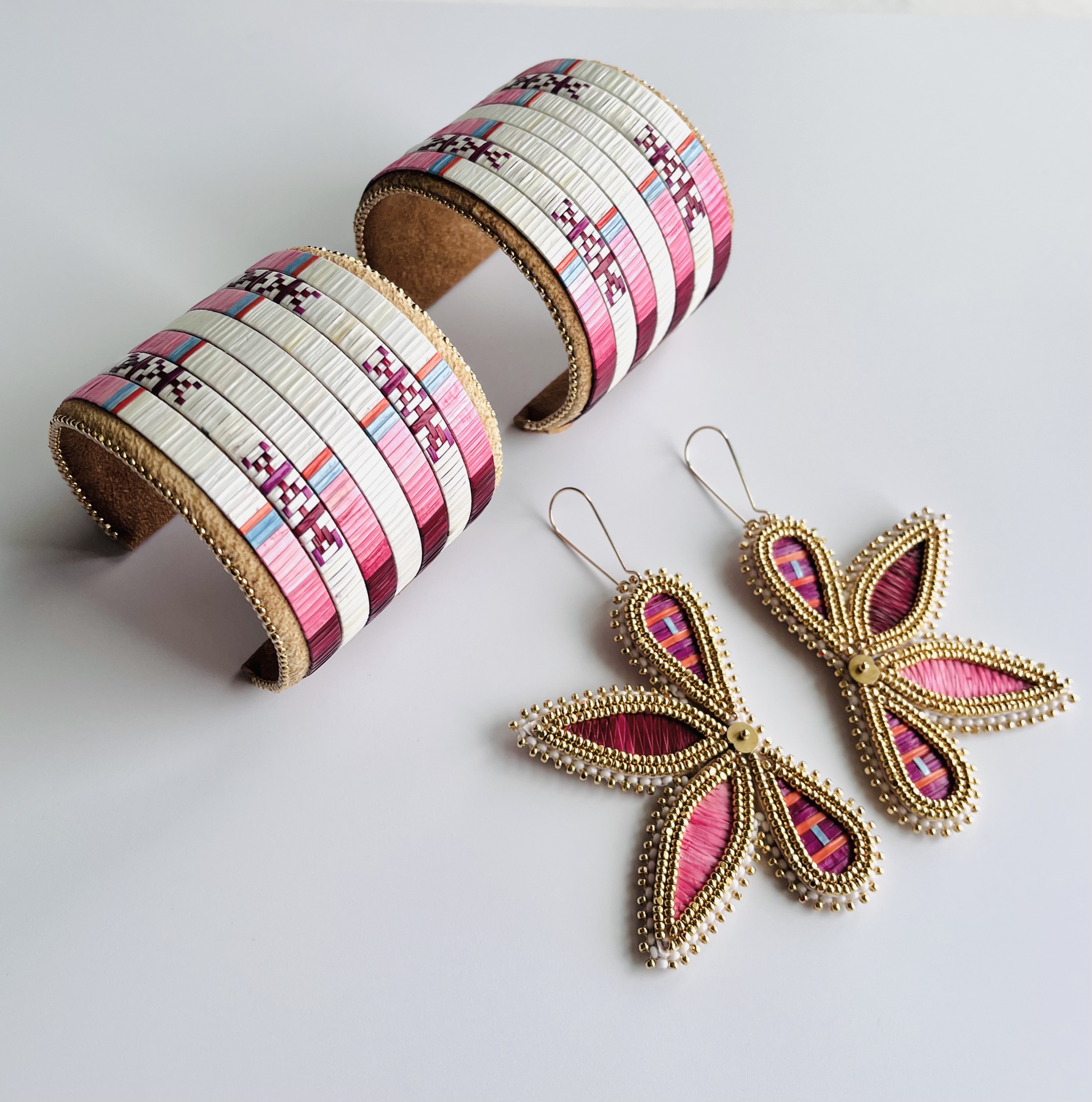
Image courtesy of Joe Big Mountain
Big Mountain grew up participating in competition powwows, which meant traveling around the country to face off against other tribal nations in dancing and singing. He and his siblings made their own regalia, often staying up late to finish their intricate designs. “It typically tells a story,” he says. “Who you are, what clan you are, what your family colors are, designs that have been passed down within your family for generations.”
He learned quillwork from his older sister and never looked back. As he got older, he began selling his designs at powwows and eventually started his own business. Today, Big Mountain uses traditional and contemporary techniques to create earrings, necklaces, cuffs, handbags and more. “Native fashion is growing, and it continues to grow,” he says. ironhorsequillwork.com
Keri Ataumbi
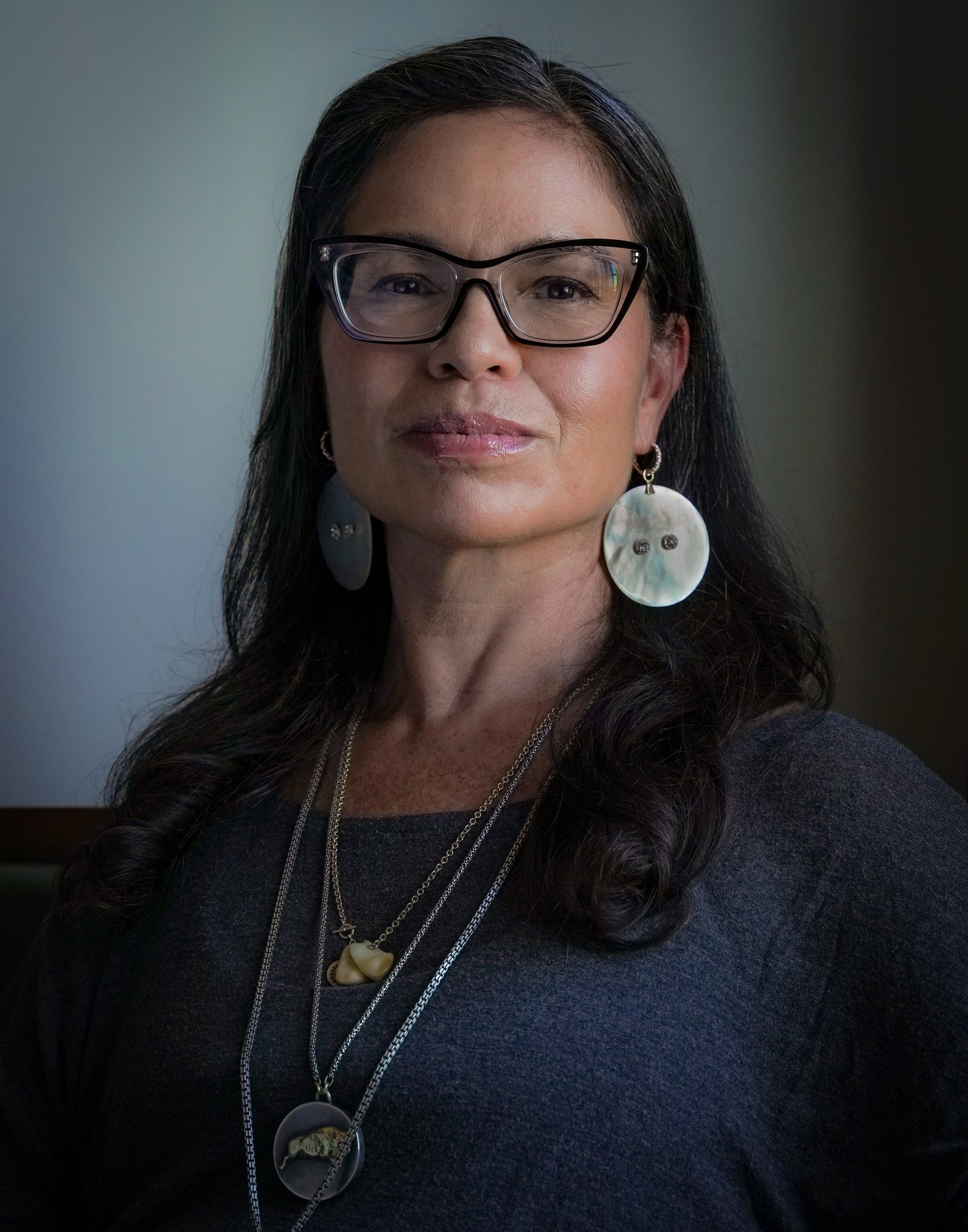
Image courtesy of Razelle Benally
Kiowa metalworker and artist Keri Ataumbi traces her creative roots back to her childhood. Growing up on the Wind River Reservation in Wyoming. Ataumbi spent much of her free time at her mother’s trading post, surrounded by beautiful Native artwork, clothing and crafts. “Her inventory was outrageous because she had been working on it for 30 years, and she was deeply connected and deeply respected,” Ataumbi says. “She also had a huge wall that was all materials—beads and threads and hide and wool and shells, things that Native people use in the work that we do.”
Now based in Santa Fe, New Mexico, Ataumbi specializes in “wearable art”—one-of-a-kind, handmade custom and couture jewelry made from sterling silver, gold, diamonds, shells, elk teeth and other materials. Many of her designs are meant for everyday wear, while others are larger and more sculptural.
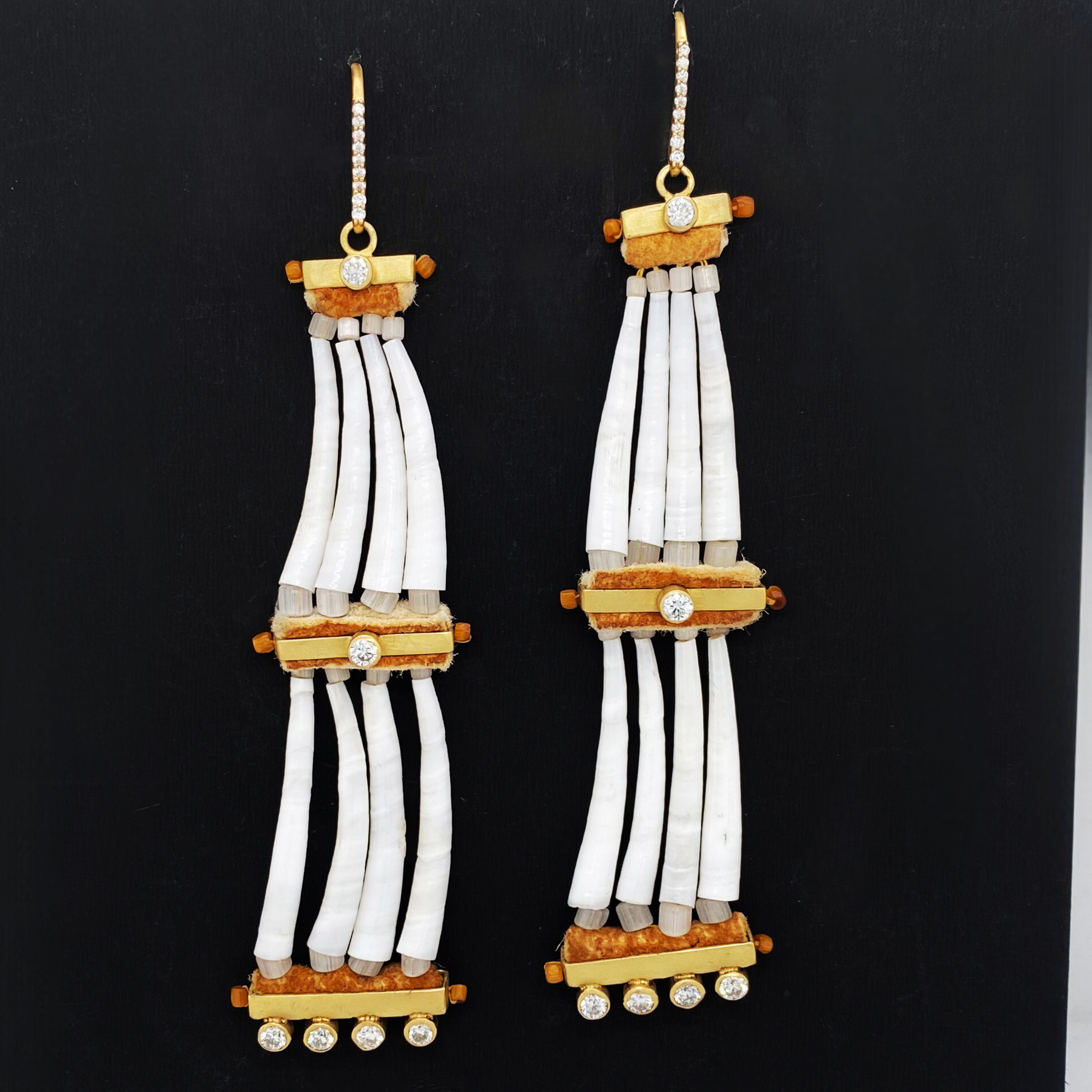
Image courtesy of Ataumbi Metals
These bigger pieces often tell a story, like a belt featuring 82 chocolate diamond-encrusted ants inspired by the Kiowa creation story. “Before we were humans, we were ants,” she says. “We lived under the ground, and one of our mythical beings brought us out of there. And as we came out through a cottonwood tree, we became humans. We became Kiowas.”
More recently, Ataumbi has focused on making contemporary Southern Plains-style jewelry. Made of sterling silver, these pieces are not only lightweight and comfortable to wear, but they also make a statement, she says. “When I was a young jeweler, I really made a point to stay away from [Southern Plains-style jewelry] because I didn’t want to sell my Nativeness,” she says. “As I matured, I realized there was a purpose in that, which is helping educate people to know that it’s not just Southwest jewelry.” ataumbi.com
Elias Jade Not Afraid
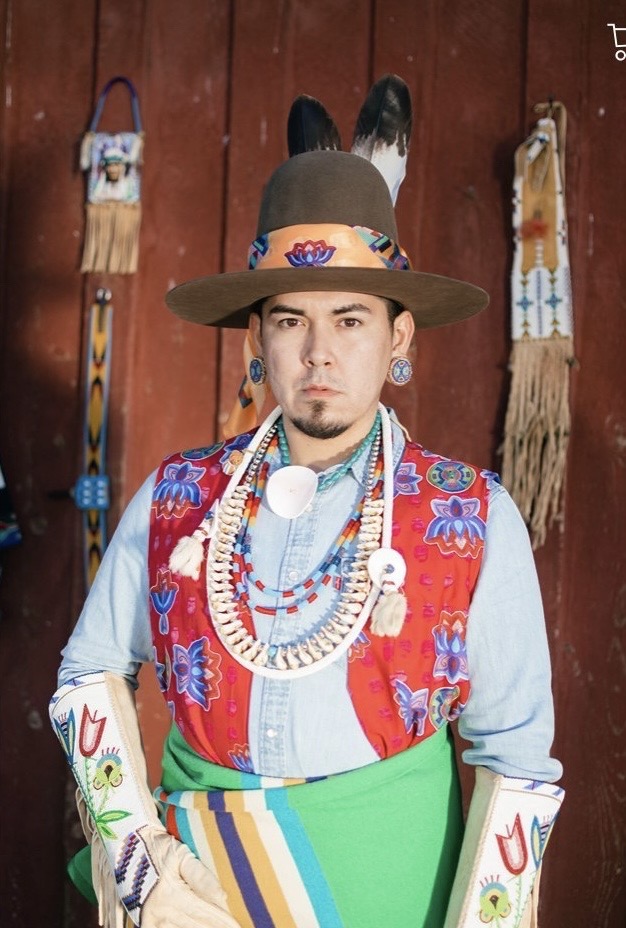
Image courtesy of Emmerson Edmo
It all started on a snowy day. Elias Jade Not Afraid was 12 years old when a winter storm shut down the roads near his home on the Crow Indian Reservation in southern Montana. Bored and stuck indoors, he began sifting through his late great-grandmother’s beadwork. “I started taking it apart,” he says. “I found some needles and some thread, and I tried to put it back together.... I picked it up pretty fast, and as I grew up, I started to learn other beading techniques and different art forms that are significant to my tribe.”
Not Afraid primarily works with antique European glass beads from Venice or the Czech Republic, as well as ermine tail, brain-tanned smoked deer hide, dentalium shells and other materials. He finds creative inspiration nearly everywhere he looks, often preferring to freehand his colorful pieces, which range from earrings and cuffs to bags and harnesses. “I like to keep it traditional as far as the process of making it, but I don’t like to limit myself,” he says. “I kind of just bead what I want.”
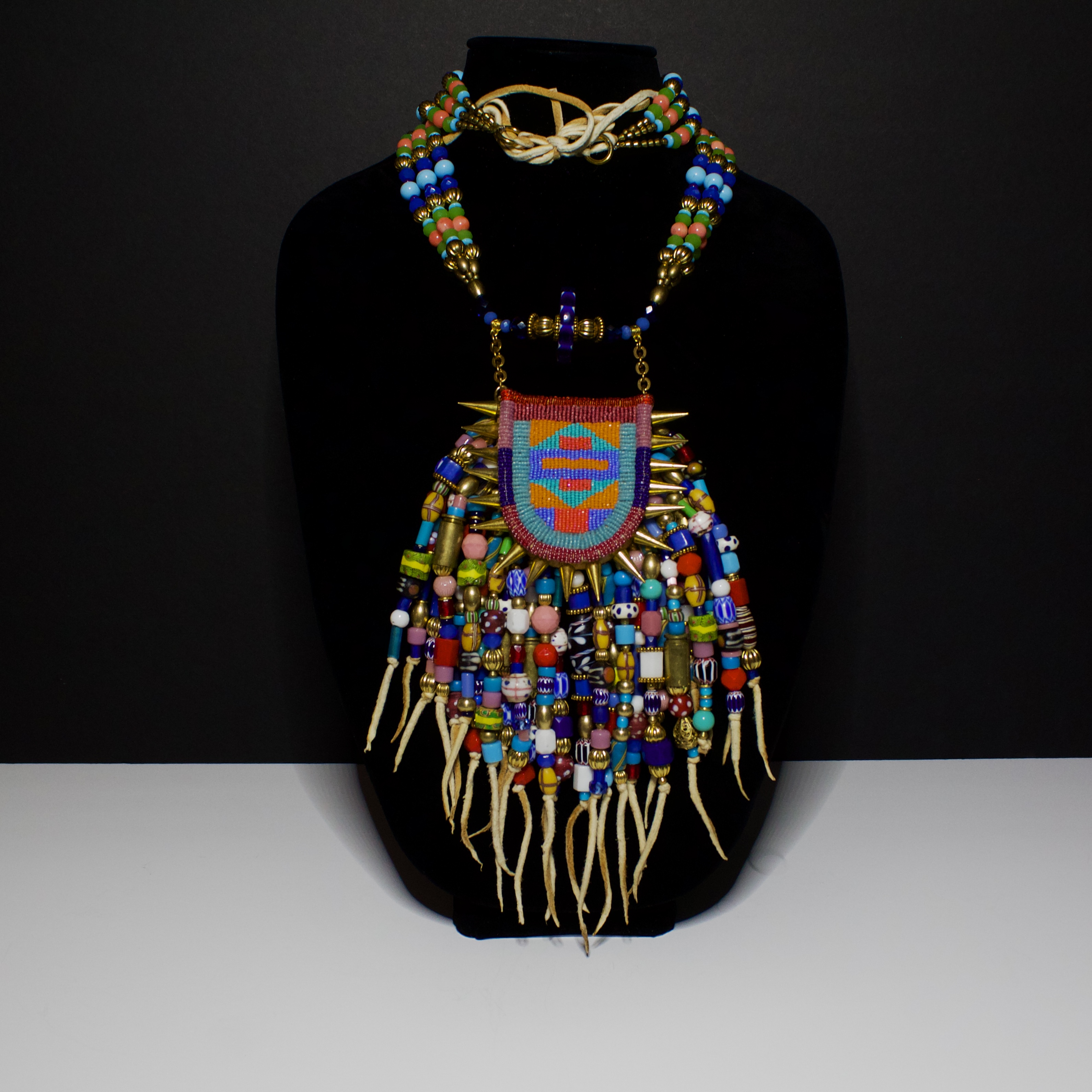
Image courtesy of Elias Jade Not Afraid
So far, that approach has been paying off. He’s created designs for the NFL, Wells Fargo and Crate & Barrel, and his work is on display at the Metropolitan Museum of Art and the Smithsonian’s National Museum of the American Indian, just to name a few accomplishments. ejnotafraid.com
Featured image ©Tira Howard Photography
This article was first published in the January/February 2026 issue of SUCCESS® magazine. Get your copy here.


.jpg)