You’ve probably walked past your most valuable business asset a hundred times without noticing it. Not the product on your shelves or the service in your pitch deck. The empty storage room. The dead corner of your website. The 20 minutes of downtime in your client meetings that nobody’s doing anything with.
That’s the real lesson behind one of this month’s most talked-about small business stories: a failing gas station in Lakeville, Minnesota, that now pulls in almost $5 million a year. The transformation didn’t come from a new product. It came from a business differentiation strategy built entirely around space everyone else had written off.
Why Your Business’ Most Valuable Space Might Be the One You’re Ignoring
Every business has square footage, time or attention it isn’t using well. You inherited it, built past it or stopped seeing it the day it became familiar. That’s exactly what happened to an empty storefront next to an Amoco convenience store outside the Twin Cities.
Restaurateur Tony Donatell took over the struggling gas station in 2024. Instead of expanding the snack aisle or adding another fast-casual counter, he looked at the unused storefront next door and asked a different question: What if this space did something the rest of the property couldn’t?
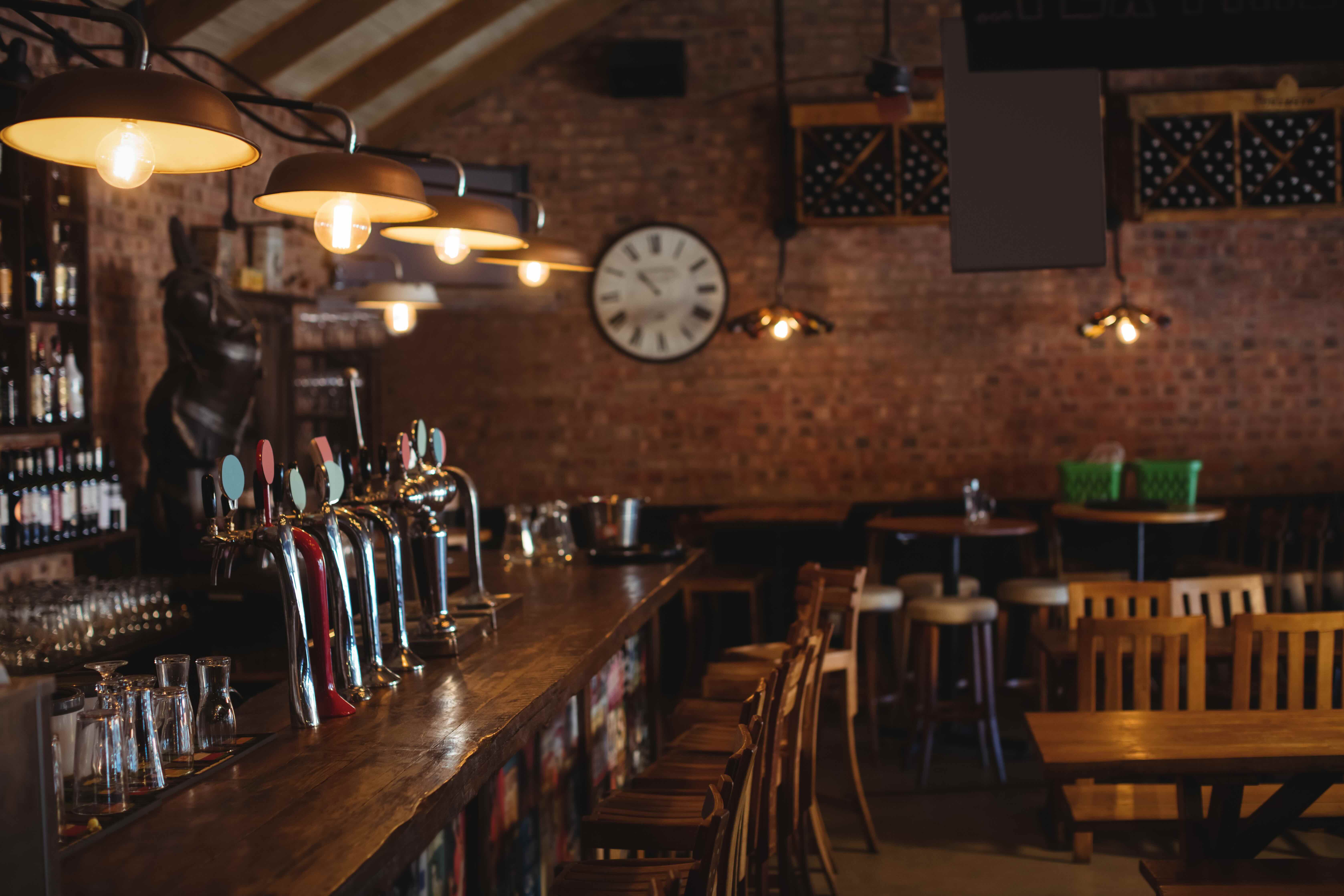
That question turned into The Farmer’s Cellar, a Prohibition-themed cocktail bar hidden behind an ordinary cooler door inside the convenience store. Customers fill their tanks, grab a snack and if they know where to look, step into a room with chandeliers, leather chairs and a menu built around drinks made with liquid nitrogen and centrifuges.
The Gas Station That Became a $5 Million Lesson in Differentiation
Here’s the number that matters: the combined business, gas station, convenience store, and hidden bar- brought in nearly $5 million in revenue in its first year. That’s not a novelty act. That’s a functioning business model built on a simple insight: The most forgettable part of your operation can become the most memorable, if you’re willing to look at it differently.
This is where a lot of entrepreneurs get stuck. You assume differentiation means inventing something entirely new, a product no one’s seen, a market no one’s entered. But the harder, more accessible move is often reframing what you already have. Donatell didn’t build a new gas station. He built a reason for people to want to be at his gas station.
Try this approach: Walk through your business, physical or digital, and list every space, process or moment that exists purely out of necessity. Your waiting room. Your onboarding email. Your checkout page. Ask which one you could make someone actually look forward to.
How to Spot the Overlooked Asset in Your Own Business
The key is to stop treating utility spaces as fixed costs and start treating them as underused inventory. A few places to look first:
Transitional moments: The wait, the checkout, the follow-up email nobody opens
Leftover square footage: Storage rooms, unused corners, slow-traffic hours
Anything customers apologize for: “Sorry it’s a mess back here” is often a sign you’re sitting on an experience, not a liability
Once you’ve identified the space, the next question is whether it can carry a story. A back room is just a back room until it has a reason to exist. The Farmer’s Cellar works because it leans into a specific, coherent theme rather than trying to be everything to everyone.
Differentiation Beats Perfection Every Time
You don’t need a flawless product to stand out. You need a specific one. Bar manager Grant Mohwinkel put it simply when FOX 9 Minneapolis-St. Paul visited the bar, calling it a “fun cocktail bar behind a gas station, of all things.”
That specificity is doing real marketing work. Customers have been documenting their own discovery of the space and sharing it on social media, turning individual visits into free distribution the business never had to buy. So what does this mean for you? A concept doesn’t need mass appeal to spread. It needs to be distinct enough that people want to be the one who tells their friends about it.
The lesson isn’t “hide a bar in your business.” It’s that specificity travels further than polish. A generic upgrade to your existing offer rarely gets talked about. A weird, well-executed idea usually does.
Turning Novelty Into Sustainable Growth
The risk with any gimmick-driven business is that it burns out once the novelty fades. But here’s the thing: The Farmer’s Cellar isn’t Donatell’s first attempt at this model, and that’s what separates a stunt from a strategy.
His restaurant group, Wondrous Collective, has repeated the format before, having opened a similar speakeasy-style concept inside another of its properties back in 2015. The group now operates 12 businesses across the Twin Cities, adding a new concept nearly every year. That’s not a one-off gimmick. That’s a repeatable playbook: find overlooked space, give it a distinct identity and let word of mouth do the heavy lifting.
For your own business, the takeaway isn’t to copy the concept. It’s to copy the discipline. Test the idea in one location, one product line or one part of your customer journey before scaling it everywhere. If differentiation only works once, it was luck. If it works twice, you’ve found a system.
Your Next Move
Actionable optimism means you don’t need permission to start small. Pick one overlooked space in your business this week—physical, digital or a moment in your customer’s experience—and ask what it could become if you stopped treating it as an afterthought.
You already have the raw material. Most high-achievers do. The businesses that stand out aren’t always the ones with more resources. They’re the ones willing to look at what they already have and ask a better question.
Featured image from Wavebreakmedia/Shutterstock