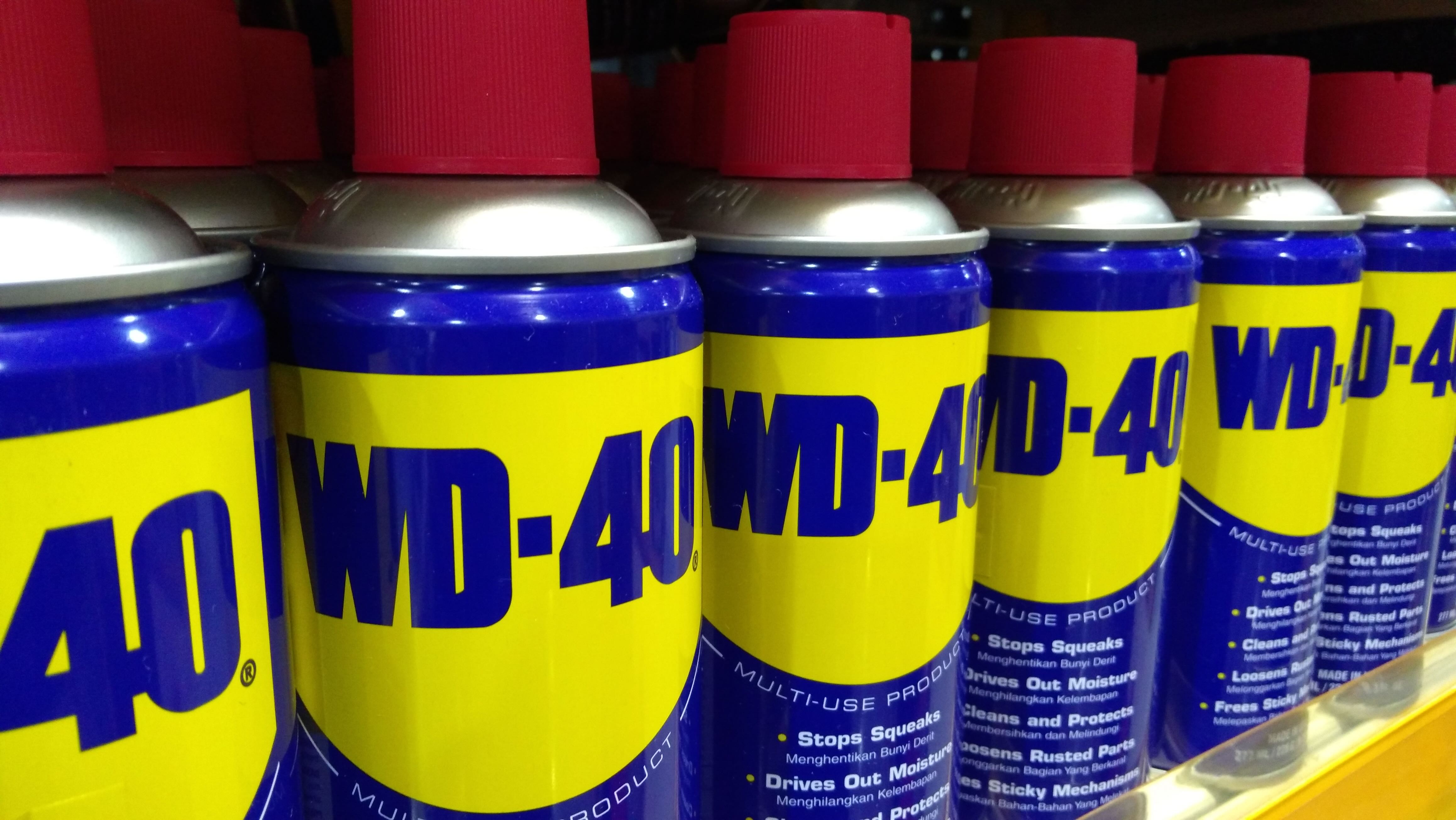
You have probably used WD-40 without ever thinking about the company behind it.
That’s exactly the point.
The century-old maker of a single blue-and-yellow can just posted one of the most impressive earnings beats of the quarter, and it did it without a product launch, a rebrand or a single headline-grabbing pivot.
If you’re building something that feels unglamorous, this is the story to pay attention to. The lesson isn’t really about lubricant. It’s about what actually holds up when markets get choppy.
The Numbers Behind the Surprise
WD-40 reported adjusted earnings of $2.33 per share for its fiscal third quarter, blowing past the $1.59 analysts expected and marking a 51% jump over the same quarter last year. Net sales came in at $195.1 million, a 24% increase year over year, with growth spread across every region the company operates in, including a 29% jump in the Americas.
The company didn’t just beat expectations; it raised its full-year guidance as a result, lifting its adjusted earnings outlook to a range of $6.05 to $6.35 per share. Shares jumped nearly 15% in after-hours trading. For a company that sells one core product most people only think about when something squeaks, that’s a remarkable quarter.
Why ‘Boring’ Products Hold Up When Others Don’t
The reason WD-40 keeps performing isn’t mysterious once you look at what it actually sells. It’s a product people buy because they need it, not because they were persuaded to want it, and that kind of demand doesn’t evaporate when budgets tighten. Analysts covering the report noted that old economy companies built on durable, unglamorous demand are proving they can still win even in a market obsessed with growth stories and AI headlines.
This isn’t just a WD-40 story, it’s a pattern. Government data tracking business survival consistently shows that durability, not excitement, predicts longevity. Only about 34.7% of business establishments founded in 2013 were still operating a decade later, according to the Bureau of Labor Statistics, and the businesses that survive tend to be the ones solving a persistent, unglamorous problem rather than chasing a trend.
What Makes a Business ‘Boring’ (in the Good Sense)
A genuinely durable business usually shares a few traits, and none of them require excitement. The problem it solves is recurring rather than a one-time purchase, which means customers keep coming back without needing to be re-convinced. The demand isn’t tied to a cultural moment, a platform algorithm or a funding cycle, which means it doesn’t disappear the moment attention shifts elsewhere.
It also usually means the competition is thinner than it looks. Plenty of founders want to build the next flashy app or consumer brand. Far fewer want to build the company that makes the thing that keeps machinery from squeaking, which is exactly why WD-40 has faced so little serious competition in over 70 years of existence.
How to Spot Your Own Version of This Opportunity
Start by looking at what you already do that other people find tedious or unglamorous to think about. The gap between “nobody wants to build this” and “everybody needs this” is usually where the real opportunity sits, and it tends to go unclaimed precisely because it doesn’t attract much competition or attention.
Ask whether the problem you’re solving would still exist in a recession, a platform algorithm change or a slow news year. WD-40’s demand doesn’t depend on a cultural trend or a viral moment; it depends on machinery continuing to squeak, which is about as recession-proof as a business need gets. The more your own idea depends on sustained excitement to keep selling, the more fragile it likely is.
Look for categories where the existing players are either too big to care about small improvements or too scattered to have built real brand trust. WD-40 has held its position for decades, not because nobody could theoretically compete, but because building trust in a low-attention category takes patience most competitors aren’t willing to spend.
The Takeaway If You’re Building Something ‘Unsexy’
Stop treating boring as a weakness in your own pitch, your own positioning or your own head. If your business solves a real, recurring problem, that’s not a consolation prize compared to a flashier idea; it’s the actual foundation that durable companies are built on. WD-40 isn’t succeeding despite being boring; it’s succeeding because being essential and unglamorous made it nearly impossible to disrupt.
Look for the unsexy version of your own idea before you chase the exciting one. If you’re deciding between a trend-driven product and a duller one that solves a persistent problem, the data suggests the duller one is the safer long-term bet, even if it’s a harder pitch to make at a dinner party.
Resist the pressure to constantly reinvent something that’s working. Part of WD-40’s advantage is that it hasn’t chased every trend that came through the market over the past several decades. Consistency, not novelty, is what let it compound value quietly while flashier competitors came and went.
Why This Matters Beyond One Earnings Report
This quarter’s numbers are a single data point, but they land at a moment when a lot of founders are chasing the same handful of trendy categories, AI wrappers, direct-to-consumer brands, subscription boxes, all competing for the same attention and the same customers. WD-40’s result is a reminder that there’s an entire category of durable, less-crowded opportunity sitting in plain sight, precisely because it doesn’t generate headlines.
You don’t need permission to build something boring. You need a real, recurring problem and the patience to serve it well for longer than everyone else is willing to.
That patience is the part most founders underestimate. WD-40 didn’t get this quarter’s results from a single clever move; it got them from decades of showing up reliably for a problem that never stopped existing. If you’re weighing a flashy idea against a duller one right now, ask yourself honestly which version you’d still be excited to run in ten years, because that’s usually the one that ends up compounding.
Featured image from SDRon Ismail Pictures/Shutterstock