
Have you ever run around all day, seemingly checking off a thousand items from your to-do list, yet when you fall into bed that night, exhausted, you can’t think of anything major you actually accomplished? Nor are you any closer to achieving your goals or dreams?
It’s an all-too-common story, resulting in disappointment, discouragement and burnout. So how can you take charge and change the narrative? Author and keynote speaker Tanya Dalton did just that by building and honing her philosophy of purposeful productivity. The lessons she’s learned—and applied in a new book—are available to you, too.
“Productivity isn’t about doing more,” Dalton says. “It’s doing what’s most important.”
Who Is Tanya Dalton?
In 2008, Dalton’s traveling husband was missing out on family milestones. Dalton, then a stay-at-home mom with a side business, decided she was going to absorb her husband’s income, enabling him to quit his job and eventually work alongside her. Despite never having taken a single business course, through sheer will, Dalton was able to scale her business and bring her husband on board in 2009, affording them both more time with their family. But that path led to another one.
As friends and family marveled at how she managed to parent full-time, build a new business and still leave by 3 p.m., she realized she was doing things drastically different from most people.
“That realization was what pushed me into wanting to teach other people how to be more productive because it brought me so much happiness.”
Why Busy Doesn’t Mean Productive
Dalton calls it a “badge of busy”—driven by our hustle culture, we labor through our to-do list, yet still feel unaccomplished. She thinks that’s because we get caught up in the quantity—not the quality—of our actions.
“I can tell you to take 50 steps in 50 different directions,” she says. “You don’t know where you’re going to end up, but if you take five steps in the forward direction, you’re going to get closer to where you want to go.”
And when you ignore your financial goals yet again in favor of a shopping spree? Dalton says that’s because we don’t connect our actions of today with ourselves in the future. So your future self can deal with the consequences of you buying too many pairs of shoes.
“We really have to draw that connection between where we want to go in the future and where we are now,” she says.
A lack of prioritization can be another productivity barrier.
“People have this misconception that they need more time, and that’s when they come to me,” she says. “The truth is it’s not about having more time. It’s about being really clear on what’s important to you—what are your priorities?”
When attempting to cull your to-do list, Dalton says you shouldn’t confuse a request with a relationship. Instead of accepting or declining out of affinity or obligation, evaluate if the request would bring you closer to your goals.
“It’s not just about saying no,” she says. “It’s really finding your yes—what is it you want to say yes to?”
What Is Purposeful Productivity?
Dalton’s third book, Purposeful Productivity: Multiply Your Time and Your Happiness, distills the ideas found in her first book, The Joy of Missing Out: Live More by Doing Less, into a two-month daily process that contains bite-sized readings. Following an excerpt, readers answer two questions to help them implement strategies surrounding who they are and what they want.
Dalton feels that being purposeful with your productivity means slowing down.
“It’s about taking away a lot of the noise and a lot of that extra clutter that’s going on in our lives and getting really clear on what we desire and what makes us happy,” she says. “If you think about any goal you’ve ever set for yourself in your entire life, it’s steeped in happiness.”
How do you get started? Dalton first encourages her readers to crystallize their purpose, aka their mission, vision and core values.
“Your mission isn’t what you do; it’s why you do what you do,” she says.
And it can apply to both your professional life and your personal life.
“Purposeful productivity is also about bringing people in and making them a part of it,” Dalton says.
She has separate weekly meetings with her work team and her family to share calendars and decide if others can, for example, pick up the slack if someone needs extra support. By letting everyone in on that week’s plan, Dalton says she is helping them understand how their team is moving together toward their goals.
She also believes it’s important to create systems that work for you, then conduct daily check-ins on how you’re feeling to help determine what works best. So, while common knowledge might dictate against reaching for your phone first thing in the morning, perhaps the texts you receive from your college-age child start your day off on the right foot.
As for the idea that balance is the avenue to achieving harmony at work and at home? Dalton advises to let it go.
“If all things are balanced, we’re not moving anywhere,” she says.
Movement, in any direction, requires shifting—or counterbalance—just like riding a bike.
“The cost of greatness is commitment, and a commitment means more time, more energy, more resources and more money,” Dalton says. “We need to double down and lean into that sometimes for a season, and then we pull back, and we counterbalance and we lean into another area.”
Dalton’s 5-Minute Routine for Peak Productivity
Minute 1: Write down what you accomplished today.
Minute 2: Assess—how did I feel today? Did I put too much on my plate?
Minute 3: What did I do today to get closer to a goal?
Minute 4: Write three things you’re grateful for on that specific day.
Minute 5: Write down what you would like to accomplish tomorrow. “Get it out of your head and onto a sheet of paper,” she says.
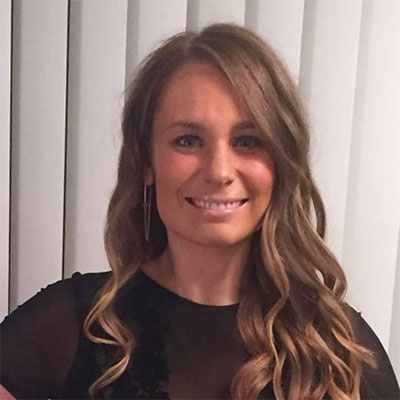
Image courtesy of Tanya Dalton
This article was first published in the November/December 2025 issue of SUCCESS Magazine. Get your copy here.