
You don’t need a camera crew to feel what early-stage founders feel on 60 Day Hustle: a short runway, enormous stakes and a very real gap between “I have a product” and “I can enroll the world in my vision.”
Season 2 of the Prime Video competition—hosted by business personality Rudy Mawer and Michelle Delamor, co-founder and CEO of Sonic Gods Studios—puts twenty Gen Z and Millennial founders through a real accelerator. None of it’s scripted. The prize is $100,000 (facilitated by partner Chime), and the challenges are engineered to surface who can actually execute when the bar moves overnight.
All six episodes dropped at once on Prime Video back in February—bingeable by design. And the lessons they surface? Those translate well beyond the screen.

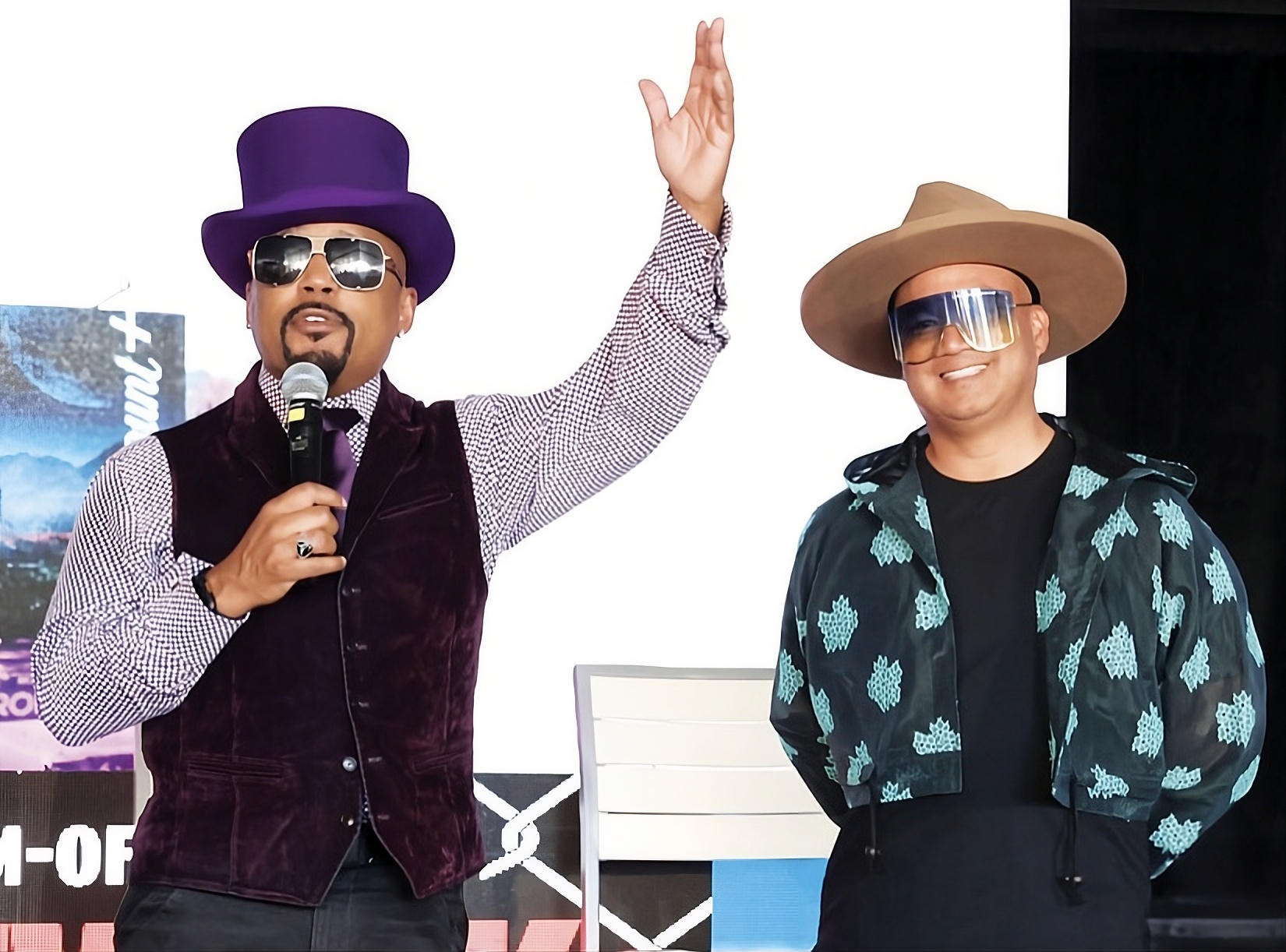
Hosts Rudy Mawer (center) and Michelle Delamor (in off-white) take their seats alongside the Season 2 judges.
Why conviction beats “polish” when you are moving fast
The first thing Delamor and her team assess isn’t the product. It’s the person carrying it.
“The first thing we looked at is founders who represented their company really well from the standpoint of being able to enroll people in their vision,” she explained. “We very quickly assess: do we believe they have what it takes to drive this thing?”
Twenty founders enter. The cuts come fast—and deliberately so. Because, as Delamor points out, that compression mirrors real life.
“Sometimes you are literally in the elevator with the opportunity of your life that you just had no idea was going to happen. And you have 30 seconds. Are you ready?”
The second filter is the offer itself: Is there something genuinely unique about the product, can you articulate a clear, unique selling proposition, and does it stand out on the shelf?
“Is it clear? Or does it look like just every other product in the market?” Delamor said. “That comes down to branding, messaging and the product itself having something pretty unique.”
SUCCESS Tip: Before you chase ads or investors, pressure-test two sentences: what you sell, and why it wins. If strangers can’t repeat it back accurately, your “scale” problem is actually a “clarity” problem.
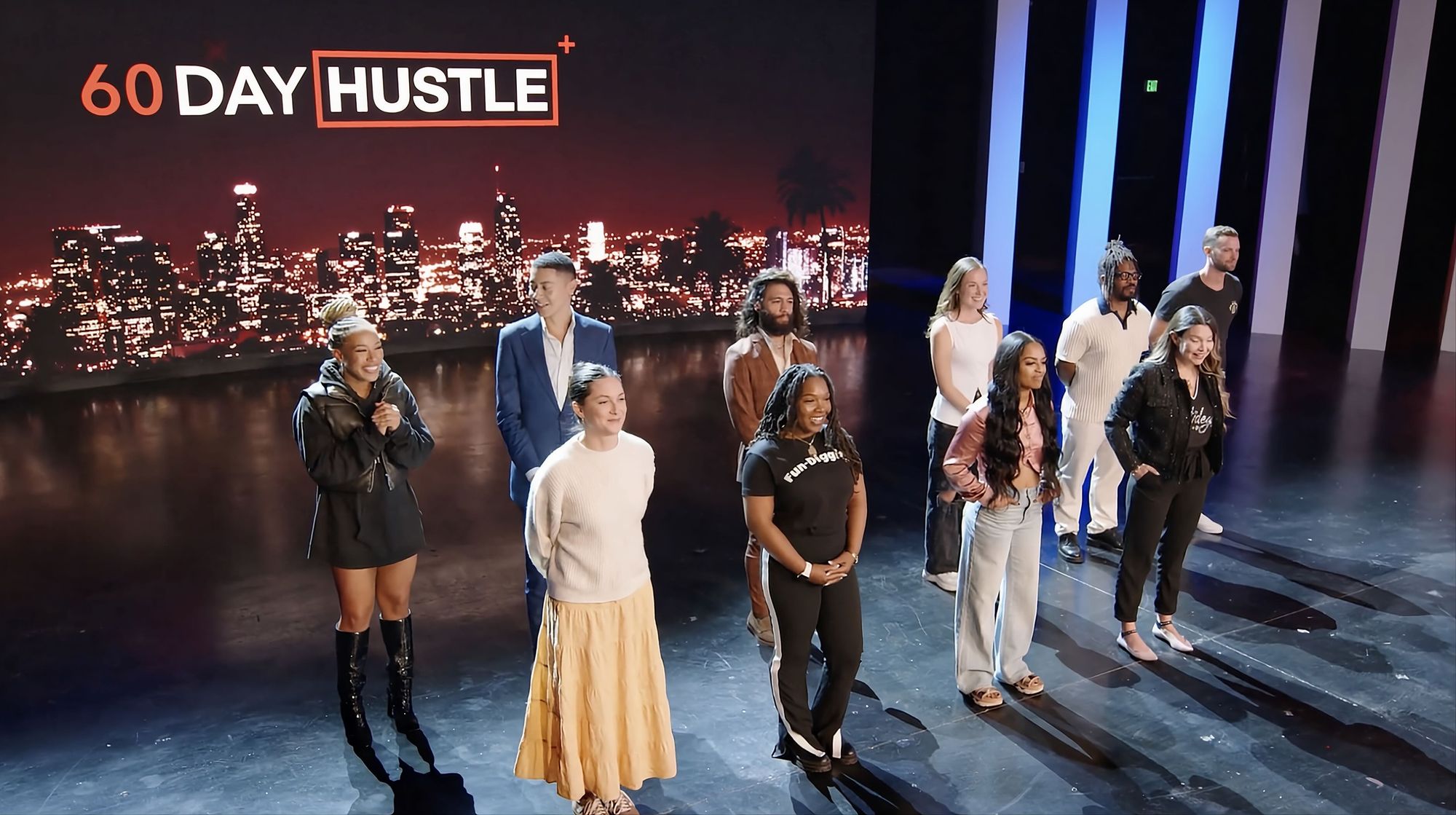
10 founders step up and face the judges.
The mistake that quietly eliminates founders under pressure
When challenges spike—think aggressive growth targets on a four-day clock—Delamor sees the field split almost immediately.
“Some people really retreat, and they almost allow the fear to overtake them,” she said, “while others completely own it and get creative. That’s where they shatter any beliefs of what they thought was possible.”
The results can be staggering. One contestant made more money during a single sales week on the show than she had made in the entire prior year.
There’s a second, subtler trap: founders who refuse what the mentors prescribe because it feels foreign. “Some people are a bit too stuck in what’s familiar to them, and that hinders them,” Delamor said. “Try these new things you’ve never tried before, and you can shock yourself.”
The show’s mentor roster is designed to push exactly that kind of discomfort. The free 60 Day Hustle Business Accelerator course on Udemy lets you learn directly from those same experts—including FBI negotiator Chris Voss, TikTok Shop’s #1 live seller Stormi Steele and brand strategist Chris Do—at your own pace, at no cost.
SUCCESS Tip: Treat your next uncomfortable tactic (live selling, a new channel, a pricing experiment) as a data experiment, not a verdict on your identity. The goal is learning velocity, not comfort.
Copy this playbook: live selling, real feedback, repeat
Asked what SUCCESS® readers should steal from a finalist’s playbook, Delamor points immediately to Cheyenne Brown of Fun-Diggity Funnel Cake Mix. Season 2 introduced TikTok into the ecosystem; it was Brown’s first time doing live selling, and she leaned all the way in.
“She made a ton of money there, and she continued to foster that community,” Delamor said. “It is one of the most incredible opportunities for founders and entrepreneurs right now—to build their audience, grow their audience and actually sell consistently live.”
The proof arrived in real time when the show’s guest mentor, Stormi Steele (founder of Canvas Beauty and TikTok Shop’s top live seller), stepped in front of the camera.
“She was just warming up her audience—very casual—and she made a hundred grand in ten minutes,” Delamor recalled. “The CEO of Kickstarter was one of the guest judges that day, and we’re seeing the orders check out, and he was like, what am I witnessing right now?"
The deeper lesson isn’t about raw sales. It’s about feedback velocity. “You don’t even need the survey and the traditional way of finding out,” Delamor said. “Just get on live and in real time, you can get that instant feedback from the audience—what do they love, what’s not clear about the way you’re communicating your product.”
Brown has since had to expand her entire workspace just to keep up with demand.
SUCCESS Tip: Schedule one low-stakes live session this month. Your objective isn’t perfection—it’s instant feedback on clarity, objections and offer structure.
If you want to be “investable,” align the math before you ask for money
Delamor’s definition of “investable” is unglamorous—in the best possible way.
“What an investor is looking for is someone who has a lot of this figured out so that they can actually put money into something that’s already working, and scale the thing that’s working,” she said. “A lot of people go into early conversations around investment hoping that the investor is going to solve all of their problems.”
That means knowing your customer, owning a channel and having unit economics that at least point in a direction. Capital amplifies proof. It doesn’t manufacture it.
She also stresses the founder as the face who opens doors—not as performance theater, but as the person who can walk a brand into rooms it couldn’t access alone.
SUCCESS Tip: Build a one-page snapshot: customer, offer, unit economics (what it costs to acquire a customer versus what they’re worth), channel tests and what you’d do with $1—not $1 million—tomorrow.
Turn business fundamentals into a “stress test” you can use Monday
One of Season 2’s most-talked-about twists forced founders to simplify on the spot. Contestants assumed they’d be pitching judges—instead, they had to communicate their message clearly enough for a stranger (or a child) to repeat it back.
“Is it simple enough that a kid can understand and repeat that message?” Delamor said. “It was hilarious and amazing and enlightening, and they all learned so much from it.”
The social clip from that challenge has been circulating on the show’s Instagram. In one memorable moment, a founder with a matcha brand launches into “ceremonial grade” and technical jargon—and the kid’s eyes glaze over almost immediately.
“We take these very important business fundamentals and turn them up to 11 for entertainment,” Delamor said. “But ultimately, the lesson is the lesson.”
If your positioning is buried in jargon, you’re not testing product-market fit—you’re hiding behind vocabulary.
SUCCESS Tip: Run your pitch past someone outside your industry—yes, even a kid. If they can’t restate the problem you solve and why it matters, rewrite until they can.
How partner brands were chosen to support the journey—not decorate it
Every partner brand in the 60 Day Hustle ecosystem had to clear one test: does it belong in the journey of a real entrepreneur under real pressure?
“We look at what brands really are additive to that world,” Delamor explained. “These are brands that would actually be used by entrepreneurs or be very valuable to the journey, naturally.”
Here’s how that showed up in practice:
Chime facilitated the $100,000 grand prize and supported the financial conversation throughout the season—a fitting partner for a show built around founders who are just beginning to get their money working for them.
BetterHelp provided therapy access during production—and for at least six months after filming ended. That last part matters. “There is so much volatility that you experience as an entrepreneur,” Delamor said, noting that the mental health toll doesn’t stop when the cameras do.
Delamor knows this firsthand. She was a finalist on American Idol Season 9—Simon Cowell’s last season. “I know what it feels like when you’re going after your dream, and it feels like everything is on the line and there are so many cameras,” she said. “There’s so much that goes on psychologically in your own mind that you’re kind of fighting against.”
That experience shaped how Sonic Gods approached care for its cast—and why the BetterHelp partnership is one of the most meaningful ones for the studio. If you’re navigating the emotional weight of building something from scratch, BetterHelp is offering 20% off your first month as a resource for founders and readers who want that same kind of support.
A 2024 pilot study in Frontiers in Psychology on self-employed individuals in Germany found that stress and how entrepreneurs cope with it significantly affects both their mental health and business performance—suggesting that mental fitness isn’t a personal sidebar, but a factor with real professional consequences.
Udemy gave contestants access to expert-led courses, and the team created a free mentor-led accelerator course for the show’s audience—featuring the same experts who guided contestants on screen, including Chris Voss, Stormi Steele and Chris Do. You can access it for free right now at link.60dayhustle.com/course.
ZenBusiness handled formation and back-office clarity—and the founder went further, personally supporting runner-ups financially after the finale. Ready to get the same support for your venture? Start with ZenBusiness—as low as $0.
Shopify served as the commerce backbone contestants used to run their shops.
TikTok powered the live social selling component that became one of the season’s biggest breakthroughs.
1Password allowed teams to share sensitive materials quickly and securely during fast-moving challenges.
ZipRecruiter provided hiring support as teams scaled; one contestant won an advantage that staffed a full marketing push—designer, content creator and more—through the platform.
Factor kept founders fueled with fast, nutritious meals during nonstop execution days. “As an entrepreneur, sometimes you don’t even have time to think about food,” Delamor said. “What if we supported them with really awesome, nutritious meals that literally take two minutes?”
SUCCESS Tip: Audit your stack the way a showrunner audits a season: what reduces drag this week—legal clarity, commerce, creative assets, hiring, health—and what is just noise?
What the Season 2 finalists signal about grit, execution and momentum
The top three businesses could not look more different on paper—performance beverage, accessible packaged food, sustainable snacks—but Delamor says they shared something impossible to manufacture.
“The number one thing they all had in common is that they all had the grit and the hustle and the drive and the energy that you just believed,” she said. “Regardless, I believe these people are going to make it happen in their lives.”
Here’s where the finalists landed post-show:
Brittany Caldwell, Go Brazee Energy (Charlotte)—Season 2 winner. Retail opportunities are opening, and Sonic Gods continues to support her. The energy drink stands out in a crowded market for what it leaves out: excess sugar and the ingredients that make most energy drinks a questionable choice.
Cheyenne Brown, Fun-Diggity Funnel Cake Mix (Compton)—Surging demand and operational scaling following her live-selling breakthrough. She sent the Sonic Gods team a DM describing what was happening and said she simply couldn’t believe it.
Rachel Domb, Rooted Living (Boston)—Significant momentum around investment conversations post-show, including what Delamor characterized as high-profile celebrity interest.
SUCCESS Tip: Markets reward clarity + distribution + resilience. Your category is not your destiny—your operating tempo is.
Your next 60 days: three moves Delamor would prioritize
If you’re early-stage—say, in the range of the contestants coming in, where even $5K–$10K a month would mean you’re doing well—Delamor’s recommendations are specific:
1. Test messaging until people can repeat it back. “Go out, write down what your message is, and test it with people—coffee shops, friends, family, people you do not know,” she said. “Ask them to repeat it back to you. If they can actually repeat the value in a way that’s simple, your message is not convoluted.” If they can’t, you’re iterating. Either way, you’re learning faster than any focus group can tell you.
2. Build an audience without waiting for perfect production. “You don’t need a polished production, you don’t need all these things,” Delamor said. Start showing up. And seriously consider social selling as a laboratory for message and conversion simultaneously. The feedback loop is real-time.
3. Build as if you might sell someday. “If you start that way from the very beginning, then you’re going to build a company that is truly scalable,” she said. Systems, story and scalability from day one—so you’re not reconstructing the business under due diligence later.
Then stack learning: grab the free Udemy course with the show’s mentors—Chris Voss, Stormi Steele, Chris Do and more—and run one lesson per week alongside your own sprint.

The 60 Day Hustle stage—where 20 founders faced a live audience and a panel of industry titans.
Where the show goes next—and why it matters for you
Season 3 is in motion. Shooting starts in June, and casting is already underway. Long-term, Sonic Gods is building what Delamor calls a million-dollar launchpad initiative—a program to support winners across the twelve months after their finale, still taking shape as the franchise scales.
The studio’s broader ambitions are just as large. “Our mission with 60 Day Hustle is to turn it into the number one business competition show in the world,” Delamor said—with international versions in the works, modeled after the global expansion of shows like American Idol. Sonic Gods is also developing a slate for 2027 across three categories: business, sports and female-led series.
For founders watching from the sidelines, the meta-lesson is the same whether you stream the show or not: treat entrepreneurship like a platform, not a single moment. Partnerships that behave like relationships, messaging you can stress-test under fire and genuine support for your mental game are not soft extras—they’re how you stay in the arena when the timeline shortens.
The rest is execution. Pick your 60 days. Start with clarity. Go live once. Repeat.
Stream all six episodes of 60 Day Hustle Season 2 on Prime Video.
Images courtesy Sonic Gods Studios / Prime Video