For most, the flying cars of science fiction are a distant dream. For visionary Adam Goldstein, they are an immediate production goal.
As the founder and CEO of Archer, Goldstein is ushering in the first new aviation category in nearly a century: electric vertical takeoff and landing aircraft. Inspired by a childhood steeped in “positive” sci-fi, he has transitioned from a successful $100 million software exit at Vettery to the high-stakes world of aerospace. Today, he is scaling a visionary mission to replace grueling hour-long commutes with quiet, 10-minute electric flights. From funding research at his alma mater, the University of Florida, to navigating a historic Federal Aviation Administration (FAA) certification, Goldstein is betting on a future that is beautiful, efficient and finally airborne.
SUCCESS®: You’re a fan of “positive” sci-fi. In a world of dystopian movies, how do you use technology to build a future people actually want to live in?
Adam Goldstein: I love sci-fi movies—films like Back to the Future, Oblivion, Edge of Tomorrow. Some of those examples are a little dark, but at the root of it, it’s about making tech that’s beautiful, useful and integrated into our lives. A great recent example is self-driving cars. A few years ago, they were science fiction; today, they’re all over. We’re on the verge of the same moment for air taxis.
S: You want to turn hour-long commutes into 10-minute flights. How does reclaiming that time change the way a professional performs at work and at home?
AG: Imagine what you would do with your day if, instead of being stuck bumper to bumper, you could fly over traffic? Where would you live? How would you spend your weekends? My guess is that people would live further out from cities in places that would otherwise be unreasonable for daily commutes. On weekends, they’d probably take more trips to the places they want to go and spend way more time with friends and family who live just beyond the threshold of a convenient drive. Air taxis make that future possible.
S: You’re building a category that doesn’t exist yet. How do you keep your team optimistic when you’re facing massive regulatory and technical hurdles?
AG: We’re building the first new category of aircraft the FAA has certified in over 60 years. By definition, that’s extremely hard. The team knows that. Optimism doesn’t come from pretending it’s easy; it comes from progress and a shared vision we’re all working toward. From flight tests, milestones, making mistakes and learning. When you anchor the work to real execution and celebrate tangible wins, momentum follows.
S: This is your second major success. What is the biggest lesson you brought from your first company into the aerospace world?
AG: Aim high. After building a software company [Vettery], I wanted to work on hardware next. It demands patience and comes with greater risk. But the impact of creating a physical product that could change the way the world moves is orders of magnitude larger.
S: You’ve funded an electric vertical takeoff and landing (eVTOL) lab at your alma mater, the University of Florida. Why is it important to you to train the next generation of engineers personally?
AG: The U.S. is in a global competition to define the future of aviation. We’ve pioneered this space… but many of our adversaries are moving quickly to try and build an early lead in powered lift aircraft. There’s a once-in-a-generation opportunity for [our nation] to secure the nation’s leadership in this category for decades to come. That only happens if we enable young engineers in the U.S. to meet this moment.
S: In 10 years, will air taxis be a luxury for the elite, or a daily utility for the average commuter?
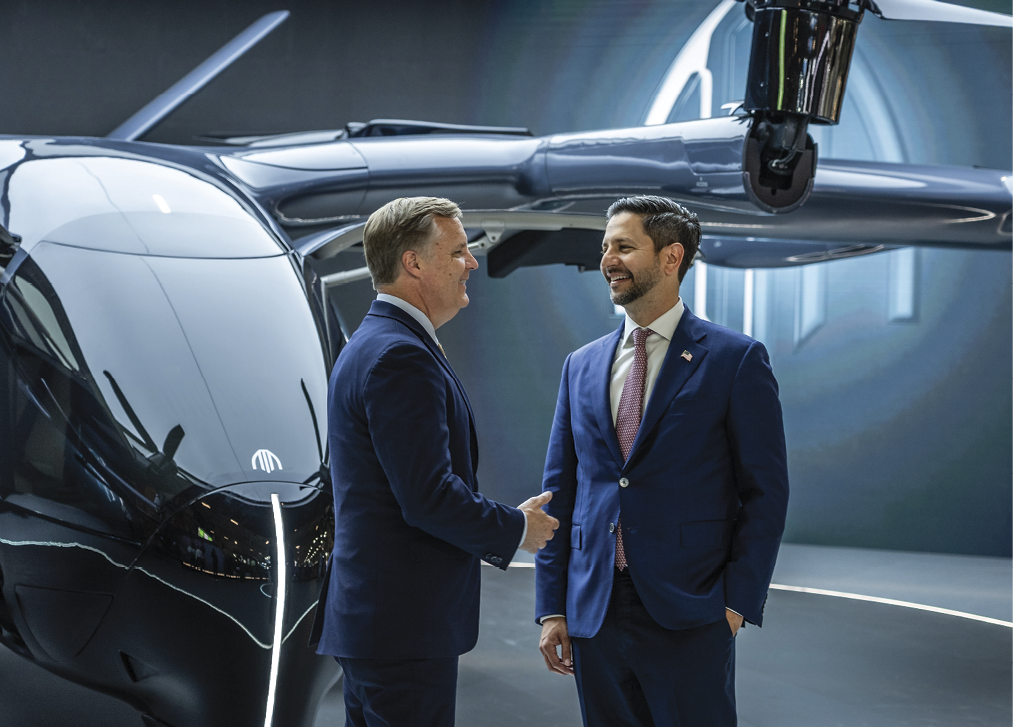
AG: Like anything, air taxis will start more expensive and become affordable as we reach scale. Our target is to have rides in Midnight [Archer’s aircraft] rival the high-end of premium rideshare, like an Uber Black. Between day one of commercial service and year 10, the cost of a flight in an air taxi should continually come down and become more ubiquitous as production ramps up.
S: Beyond the stock price or the technology, what is the one thing you want the name “Archer” to stand for 50 years from now?
AG: Being the mavericks who bet on building a better future.
Featured image provided by Goldstein.
This article was first published in the July/August 2026 issue of SUCCESS® magazine. Get your copy here.