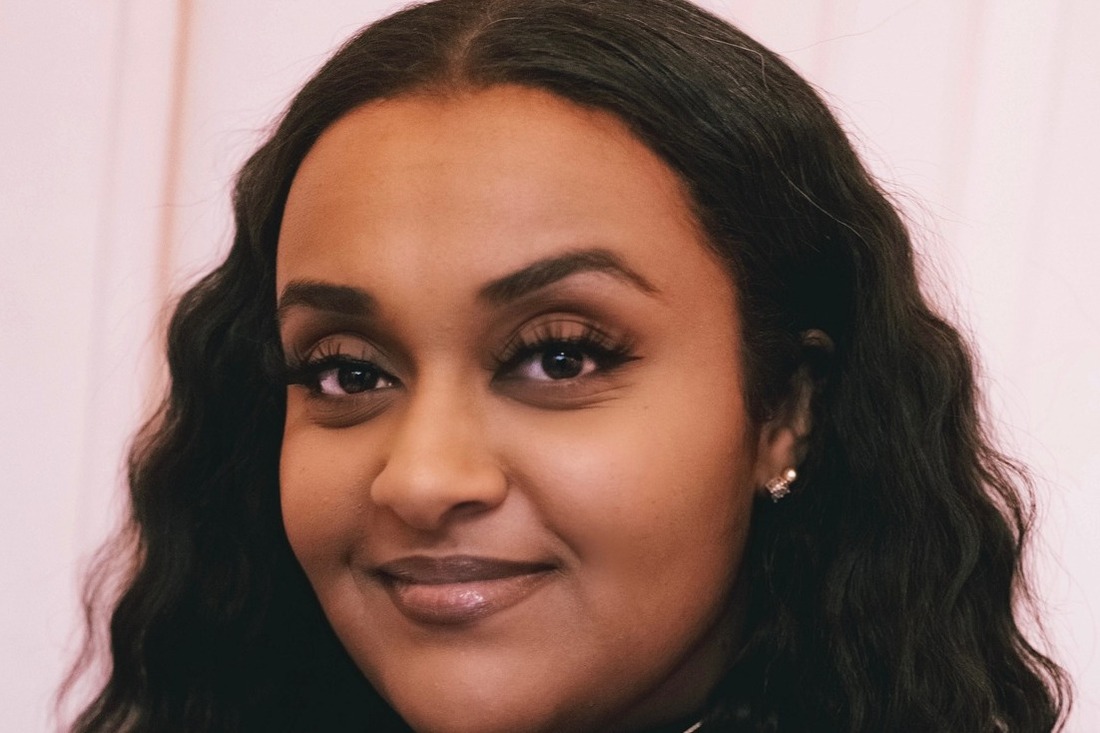
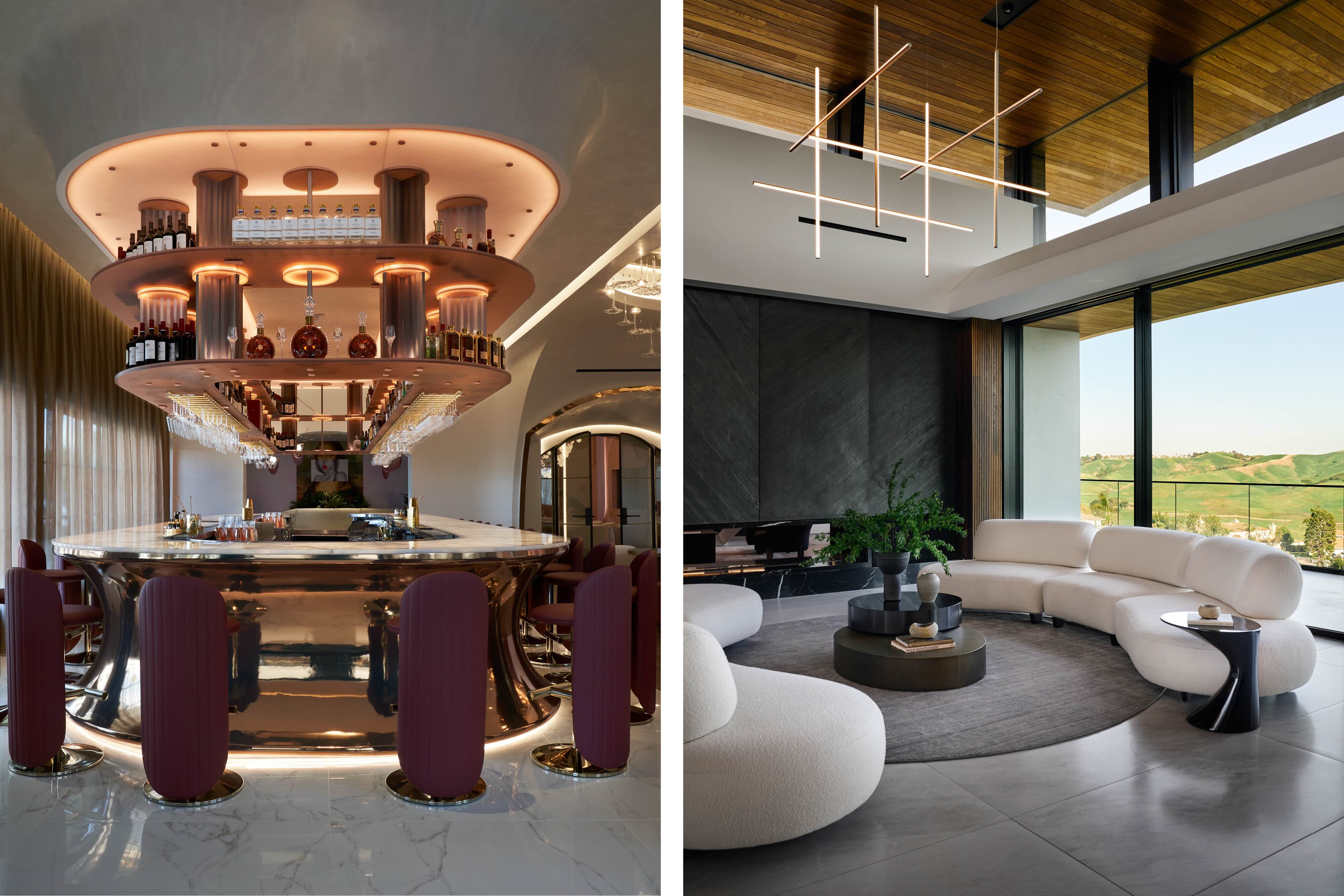
Nina Magon had a $1,000 budget for one of the first design projects that changed the trajectory of her interior design career. Today, the Houston-based luxury interior designer works exclusively with millionaire and billionaire clients.

Nina Magon - Photo Credit: Ali Khan Photography
Not only does this offer creative flexibility (“When we work with generous budgets, we can fully express the breadth of what we do,” she explains), it shores up the business: “Over the past few years, our client profile has evolved into a predominantly high-net-worth audience. That was not the case before,” she says. “During COVID-19, we had to make a strategic decision: Who are the clients who remain steady even if the markets shift? In our experience, the individuals with significant wealth are the least affected by volatility. That realization is what drove me to pivot.”
How Did Nina Magon Go From Lingerie Store Owner to Interior Designer?
Nearly a decade prior, Magon had rocketed onto the design scene. Her very first experience with interior design was actually in a storefront selling Hanky Panky undergarments in Houston’s iconic Galleria. But Magon wasn’t the designer hired to zhuzh up the windows or color-code tables of bras and underwear—she was the store owner. It was an effective way to combine her economics and finance degree with her passion for creativity. But it only took two years of round-the-clock retail hours to know she hated it.
But she learned more than just what she didn’t like. Before working with the designer, Magon had not known there was even a degree for interior design. But after seeing the way strategic design, through merchandising and savvy use of color, changed her store, her interest was piqued.
“So, I wrapped that chapter and asked myself, ‘What exactly is this interior design, and what path [am I] meant to explore?'” she recalls. A few months later, she registered for design school at the Art Institute of Houston. That was back in 2011. By 2013, she was a top contender on NBC’s American Dream Builders, captivating up to 5 million U.S. viewers over nine episodes with that $1,000 budget.
“It was like a boot camp,” she says. “I learned more on that show than I have in any other chapter of my career. It taught me how to create space quickly, how to design with intention, how to draw, how to execute under pressure. Honestly, nothing has shaped my foundation or prepared me for what I do today more than that experience.”
By the time she returned from filming, she had landed the complete design of the new 51Fifteen, the restaurant inside Saks Fifth Avenue in Houston, a major catch—especially for her first commercial project. “But I’m one of those people who, if I’m given the opportunity, I’ll figure it out,” she says.
A quick study in both business and design, Magon has spent the last decade “figuring out” one opportunity after another to create the portfolio of $500 million in real estate projects that she oversees today.
How Much Do Entry-Level Interior Designers Earn at Nina Magon Studio?
It’s a far cry from Nina Magon Studio’s humble beginnings: one employee making $10 an hour in her dad’s office building. Today, she owns the building she offices out of (and entry-level designers make $65,000—an approximately 200% increase). A team of 22 and growing facilitates everything from commercial projects in Texas to dazzling residences around the globe, including along the storied Sheikh Zayed Road in Dubai.
This has all been without VC funding, to boot. But scaling without such support comes at a cost. “It was all my money, my bank balance. I had a little office in my dad’s office..., and I pretty much built everything from there,” Magon recalls.
However, this pressure-cooker growth has forced her to refine the way she thinks about money—both her business and that of her clients. A fine-tuned system of vetting makes that possible—and a project minimum of $6 million.
“I have a dedicated business development director now, and she turns away clients regularly if they don’t meet our minimum,” Magon explains. “It has to be a mutually meaningful engagement. We will never mislead someone by suggesting we can deliver true luxury on a shoestring—that is not who we are. We know our identity with absolute clarity: We are a high-end design studio for individuals, companies and hospitality groups seeking something singular and unforgettable. And exceptional work comes with an investment that reflects its value.”
What Is Nina Magon’s Upcoming Wellness Real Estate Project?
By having her business development team strategize the studio’s undertakings, Magon can focus on what’s on the horizon for the firm. Next up is her biggest venture yet: a multistate wellness-focused real estate development. She is breaking ground on the first location in Houston this year (to be completed in 2028), with four more to follow. The project is inspired by her own family’s experience with a couple of health scares: “I thought that if this proposition works, it would’ve been so helpful for people like my own [family].” And, while the project is in its infancy, Magon says it’s already changed the course of her career.
“It forced me to really think deep: ‘Where am I going in the next five years? How long am I going to design for?'” she explains. “I love design. Design is my life right now, but is there something more for me? Is there another calling? Is there something that’s better suited for me?”
With this move, Magon not only combines her backgrounds, proving maybe they went hand in hand all along, but also takes on a new level of investment. “Everything is coming full circle, finally. My dream was always to go into development, because I’ve worked for so many developers, and I thought: Now it’s my time to start my own fund and do my own project,” she says.
She explains that, after so many years, her firm is finally becoming “our own funder,” establishing a dedicated fund for every city within its wellness real estate portfolio. “There is something profoundly rewarding about that,” she says.
“It fulfills every dimension of what I love,” Magon continues. “It satisfies the design impulse—because, of course, we lead the creative vision. It fulfills the development and real estate ambitions. It aligns with my passion for true luxury. For the first time, everything I have worked toward lives together in one integrated ecosystem.”
Featured images by Par Bengtsson
This article was first published in the May/June 2026 issue of SUCCESS® magazine. Get your copy here.