

Opportunity is not doled out equally to all children. Young Black men, in particular, are disproportionately incarcerated in the U.S. and are one of the least likely demographics to graduate high school.
But there is a way to provide bright futures for children living in low-opportunity environments, believes Riccardo Dale, founder of Free All Minds Academy (FAM), a nonprofit that seeks to reduce arrest rates and increase graduation rates for young men of color. His solution: identifying and filling resource gaps.
After dropping out of high school and becoming homeless at 16, Dale was on track to follow what he calls “the wrong path” until a mentor stepped in and reenrolled him in school. With guidance, Dale became a leader on campus and eventually earned a full scholarship to attend college, while at the same time, he watched a childhood friend descend into a life of violence. Their stories began similarly, but their futures couldn’t have been more different. That unfair disparity sparked Dale’s passion for improving the futures of at-risk teens, and FAM was born.
“I didn’t see myself as any different from him,” Dale says. “I very well could have been in [his] same situation without the right opportunities and guidance. I received some breaks that I know for a fact [he] never received. It made me really wonder, ‘How many kids out there are just like him?'”
Why Do At-Risk Students Need Basic Needs Met Before They Can Learn?
The goal of FAM was to combat a systemic problem that stretched across the nation, but Dale was convinced that infusing resources into the lives of the young men in his community at an early age could prevent problems before they happened.
“I don’t want to wait until a kid has thrown his life away to come and throw a bunch of resources and money behind him,” Dale says.
The goal became focusing on helping kids before their life took a negative turn, and Dale and his team began meeting with students on a weekly basis, helping them make informed decisions about trade school and college. This was an uphill battle, and within a few weeks, it became clear that students couldn’t be receptive to education when their everyday lives felt unpredictable.
“I literally had a student that I’m dropping off to his house, and he doesn’t have a [bedroom] door,” Dale says. “He has six siblings, and his mom is strung out on drugs, and I’m talking to him about college in three years. You could throw all the resources you want at that kid educationally, and that is not going to do him service when his basic needs are not met.”
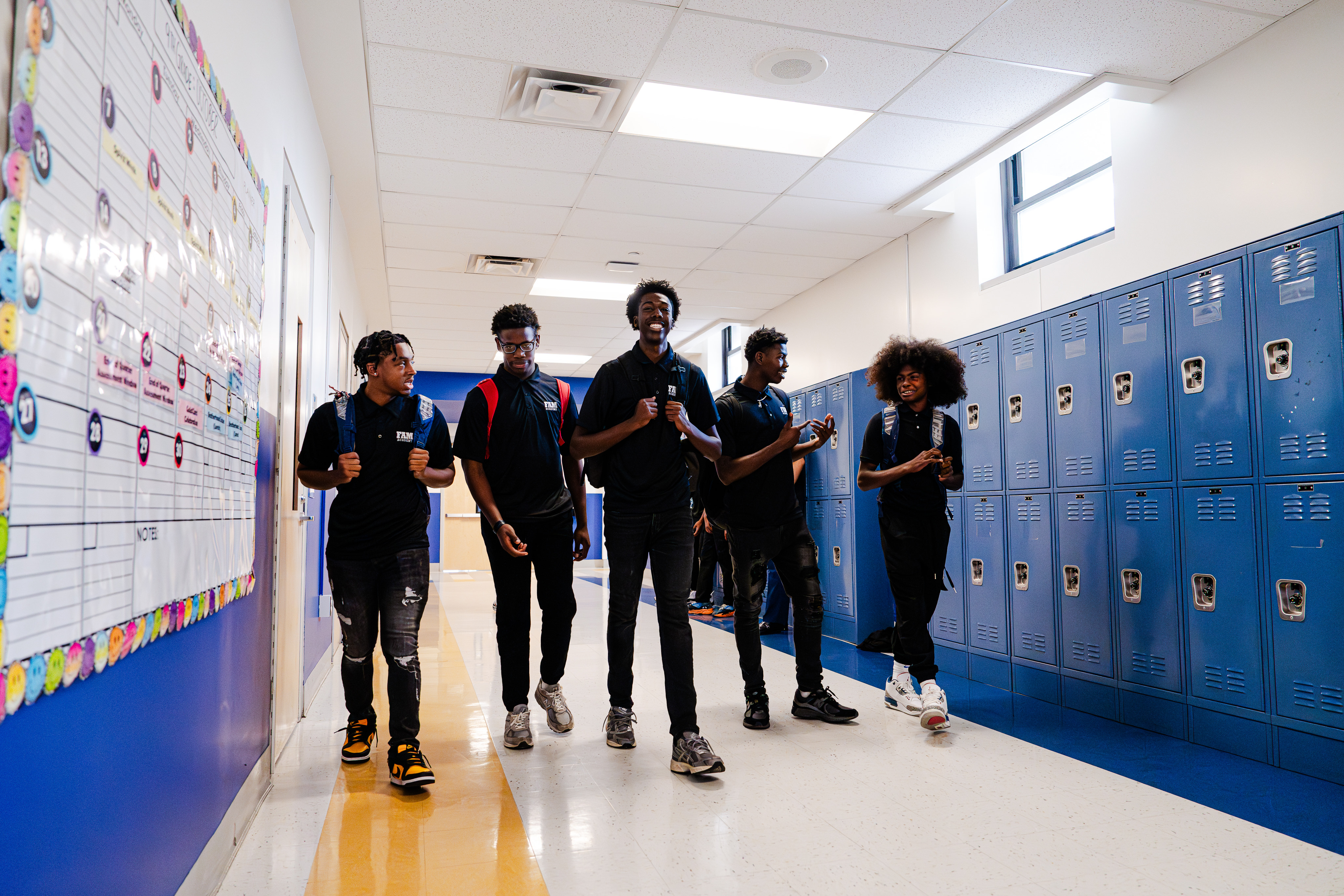
It was an epiphany that expanded Dale’s vision, and FAM reoriented its approach to make sure students had access to food seven days a week, clothing to wear and a place to wash those clothes so they could show up confident and present. With these needs met, he began introducing the students to new career fields and organizations to find what ignited their individual interests and how to effectively motivate them. The addition of a basketball program allowed him access to students who might not otherwise be interested, and Dale designed the rest of his curriculum, including health and wellness classes, tutoring and community engagement workshops, as mandatory for athletic participation.
“It’s self-motivating,” Dale says. “Because I can tap into what you want to do as an athlete, [and] I’m going to get you to do what you need to do.”

How Does Mentorship Help At-Risk Youth Avoid Gang Involvement?
It is not uncommon for Dale to see men in his community—his family members included—succumb to gang affiliation. In the neighborhoods in New Jersey and Pennsylvania where FAM is present, gang affiliation is rampant, but Dale knew from experience that young men were not joining gangs because they were inherently violent.
“Young Black and Brown boys across the country that are making up a mass majority of gang violence, they’re not joining these gangs because they want to be a menace to society,” Dale says. “From the outside looking in, they’re a bunch of stupid teenagers making poor decisions that are bringing down their community. When you take a deeper dive into what that truly is, they’re people who just want a sense of belonging.”
With this in mind, Dale designed FAM to be an exclusive brotherhood and provided a positive version of security, protection and provision that young men typically seek in a members-only gang culture. Students meet Sundays for “family dinners,” a weekly meal that encourages young men to have open conversations about what is going on in their lives, and positive peer pressure from their classmates makes exhibiting good behavior and staying out of trouble the norm.
What Are FAM’s Graduation and College Acceptance Rates?
This consistent connection has produced metrics of success that include a reported 100% graduation rate and a 96% college acceptance rate. Students who Dale says grew up in extremely difficult situations that “were essentially ‘set up for disaster'” are now attending university, taking on paid leadership roles and exhibiting emotional intelligence.
“A lot of these boys don’t have anybody to rely on, and for lack of better words, they don’t have anybody to let down,” Dale says. “It’s a lot easier to throw your life away when nobody’s expecting you to do anything more.”
How Can You Support At-Risk Youth in Your Community?
Today, Dale is working to scale his efforts beyond the East Coast and increase capacity to serve more students who remain on the waiting list due to limited funding and space. FAM is always open to volunteers and donations, but he emphasizes that there are plenty of ways for people to make a positive impact on a local level.
“You can volunteer as a coach in your local rec center or high school,” Dale says. “You can just have a conversation. You never know the difference that it will make to that kid you always see at the pizza shop. The worst thing you could do is just not get involved. There is no level of assistance that is too small.”
Images courtesy of Free All Minds
This article was first published in the September/October 2025 issue of SUCCESS® magazine. Get your copy here.