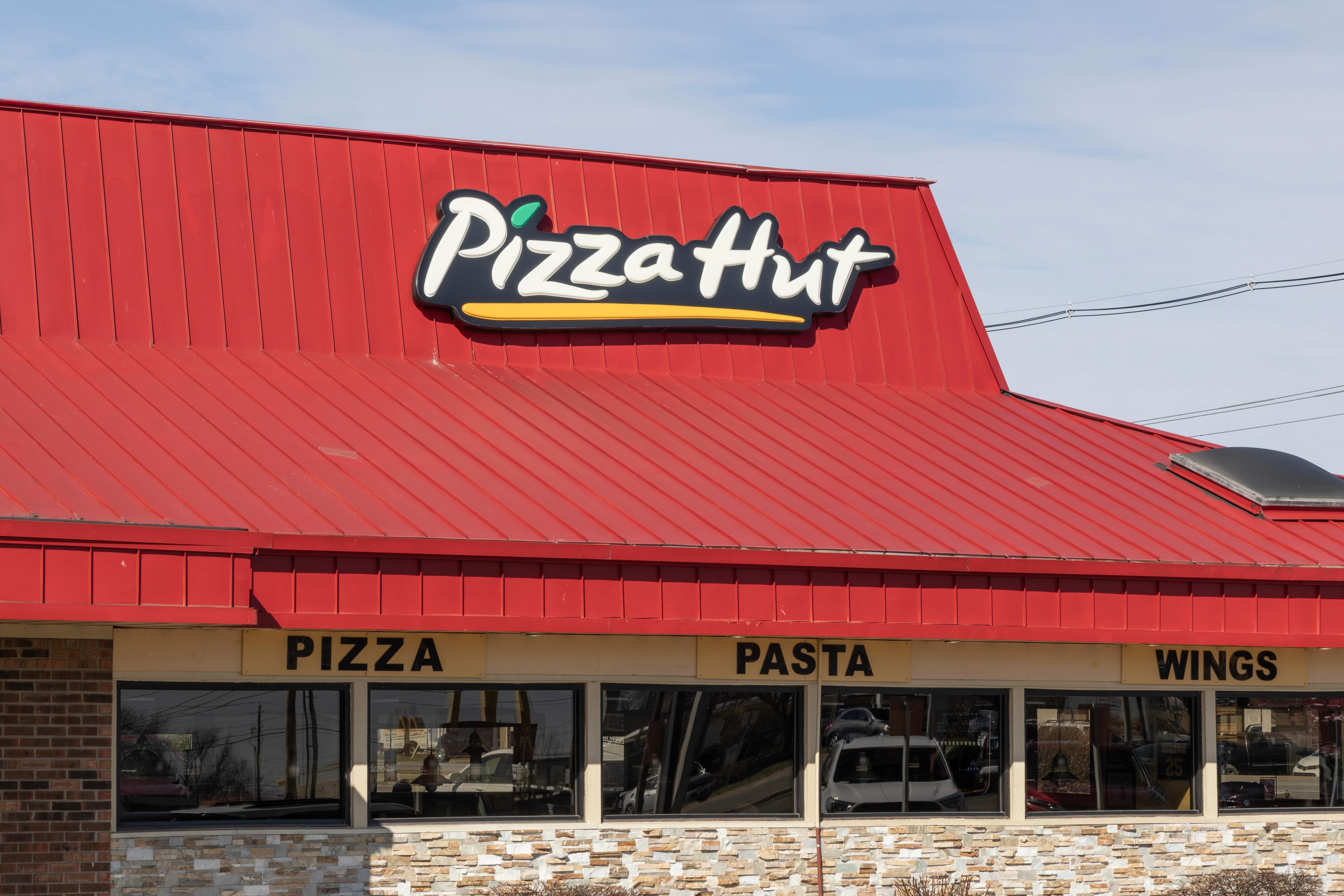
In 1958, two brothers borrowed $600 from their mother, bought a used stove and opened a pizza restaurant in Wichita, Kansas. They named it Pizza Hut because that’s all that fit on the sign. By 1972, they had 1,000 locations and went public on the New York Stock Exchange. By the mid-1990s, Pizza Hut controlled 25% of the entire U.S. pizza market—more than any competitor, more than any chain in the world.
On June 16, 2026, Yum Brands announced it was selling the chain for $2.7 billion. The buyer is a private equity firm with no prior restaurant experience. The U.S. market share, once 25%, has shrunk to under 14%. Pizza Hut now generates roughly 20% less revenue per location than its four major competitors, according to Restaurant Business. 250 American locations are being closed.
This is not a story about bad luck. It is a story about a set of decisions that seemed reasonable—even smart—at the time and how the cumulative weight of them quietly dismantled a dominant brand over 30 years. If you’re building something, you need to know what those decisions look like from the inside.
When Strength Becomes the Enemy
Pizza Hut’s first strategic mistake wasn’t a mistake at all. It was a success that calcified into an identity the brand couldn’t escape.
Through the 1970s and 1980s, Pizza Hut built its dominance on a simple formula: large dine-in restaurants, family dining occasions, a recognizable red roof and a sit-down experience that made pizza feel like an event. It worked spectacularly. The company grew into the largest pizza chain in the world on that model.
The problem was that while Pizza Hut was refining its dine-in excellence, Domino’s was building an entirely different business. Domino’s staked its future on delivery, not dining. By the 1980s, it was the fastest-growing pizza company in America, not because it had better pizza, but because it had better logistics and a clearer customer promise: fast pizza, at home, on time.
Pizza Hut saw this. The chain responded with product innovation: Stuffed Crust in 1995, the Big Foot, the P’Zone, the Cheesy Bites. Each product drove short-term sales excitement. None of them solved the underlying problem. The brand was competing on the wrong dimension while Domino’s was quietly reshaping what pizza customers expected.
Here’s the lesson that applies to every builder: Your biggest asset and your most dangerous liability are often the same thing. Pizza Hut’s dine-in infrastructure was real value until it became an anchor. Every one of those large-footprint restaurants represented a capital commitment that made it harder, not easier, to pivot toward the model customers were migrating to.
The Danger of the Gradual Shift
No single quarter delivered catastrophic news. Pizza Hut’s decline came in increments: a 1% same-store sales decline here, a quarter of underperformance there. By the time the numbers demanded urgent action, the cultural and operational inertia was enormous.
This is how most brand failures actually happen. They’re not sudden collapses. They’re long erosions that feel manageable from quarter to quarter and only look inevitable in retrospect.
Domino’s, by contrast, was running toward a different future with unusual clarity. In 2010, the company made an almost unthinkable public move: It launched a campaign admitting its pizza was mediocre, then reformulated the recipe and dared customers to try it. The campaign was brutally honest and spectacularly effective. From 2010 to 2017, Domino’s stock outperformed Amazon, Apple, Facebook and Google. In 2017, what had once been unthinkable happened: Domino’s surpassed Pizza Hut as the largest pizza chain in the world.
By 2025, Pizza Hut’s same-store U.S. sales fell 5% while Domino’s posted positive growth. The gap between the two chains—once neck-and-neck competitors—had become structural.
The practical question this raises for entrepreneurs is not, “What should Pizza Hut have done?” It’s this: How do you recognize a gradual shift in your own business before it’s structural? The answer almost always comes down to how honestly you’re reading your customers versus how optimistically you’re interpreting your own metrics.
What Happened When They Finally Pivoted
Pizza Hut did eventually attempt a pivot toward delivery and digital. The problem was timing and commitment.
Through the 2000s and into the 2010s, the chain invested in carryout and delivery conversions, reducing its dine-in footprint, transitioning locations, building delivery capability. But the pivot was half-executed. The company was pouring resources into converting away from dine-in while simultaneously trying to maintain and market its dine-in identity. Both suffered. The delivery model never matched the speed and technology investment Domino’s had been building for two decades. The dine-in brand was starved of marketing. As Restaurant Business reported in February 2026: “The long shift from one service model to the other likely worked against either model working to their fullest extent.”
Pizza Hut ended up with 1,000 fewer U.S. locations than it had 20 years earlier. Its three largest competitors—Domino’s, Little Caesars and Papa John’s—grew an average of 211% over the same period. Had Pizza Hut simply grown at Papa John’s rate of 113%, it would have generated an additional $6 billion in system sales in 2024 alone.
This is the trap of the delayed, half-committed pivot. It costs you the old business without earning you the new one. For any entrepreneur managing a transition—from service to product, from in-person to digital, from one customer segment to another—the cost isn’t just the transition itself. It’s the years of ambiguity that exhaust your team, confuse your customers and give your competitors room to own the ground you’re vacating.
The China Paradox & What It Reveals
Here’s the detail that makes the Pizza Hut story genuinely instructive rather than simply cautionary: In China, the brand is thriving.
Pizza Hut China is the largest casual dining brand in mainland China. It posted segment revenue of $2.3 billion and segment operating profit of $183 million in 2025, according to Yum China Holdings. In the first quarter of 2026, it delivered its 13th consecutive quarter of same-store transaction growth. This is why Yum Brands structured the sale as two separate transactions: LongRange Capital gets the struggling international business for $1.5 billion, Yum China keeps the Chinese operations for $1.2 billion.
The same brand, the same product, two completely different outcomes. The difference isn’t the pizza. It’s that in China, Pizza Hut entered a market where dine-in casual dining had genuine headroom to grow, and it executed that model well without fighting a pre-existing identity crisis. It read the market it was actually in, not the market it wished it was in.
This is the deepest lesson in the Pizza Hut story, and it applies directly to anyone building a brand. The model isn’t wrong or right in the abstract. It’s right or wrong for the specific market it’s meeting. The question isn’t, “What worked before?” It’s, “What does this customer actually want right now, in this context, at this moment?”
What to Watch for in Your Own Business
The four signals that preceded Pizza Hut’s decline weren’t invisible. They were recognizable if you knew what you were looking for.
Competitors are winning on a dimension you’re not competing on. Domino’s built a delivery technology platform while Pizza Hut built stuffed crust variants. When your competitor is winning customers on a dimension you’ve categorized as unimportant, that’s a signal worth examining, not dismissing.
Your identity is protecting your model instead of serving your customer. Pizza Hut was “the family dine-in pizza place.” That identity made every delivery investment feel like a brand compromise rather than a brand evolution. When your self-conception is working against your ability to change, the self-conception needs updating first.
You’re in the middle of a pivot with no committed landing point. Partial pivots are often worse than no pivot at all. If you’re transitioning your business model, the cost of ambiguity accumulates daily. Define what you’re becoming, make the commitment credible both internally and externally and execute with full resources behind the new direction.
Your best metrics are in a market you’re not scaling. Pizza Hut China was growing every quarter. The right response to that signal—years earlier—was to ask why the China model was working and whether the operating principles behind it could be applied elsewhere. Your best performance is data. Use it.
The $600 loan that built the world’s largest pizza chain is one of the great American entrepreneurial stories. The decades-long slow erosion that followed is an equally important one because the decisions that led there didn’t look like failure when they were made. They looked like strategy.
The most dangerous moment for any brand isn’t when things are clearly going wrong. It’s when things are going well enough that the early signals get dismissed, and the shift that will redefine the market is quietly happening without you.
Featured image from Jonathan Weiss/Shutterstock