
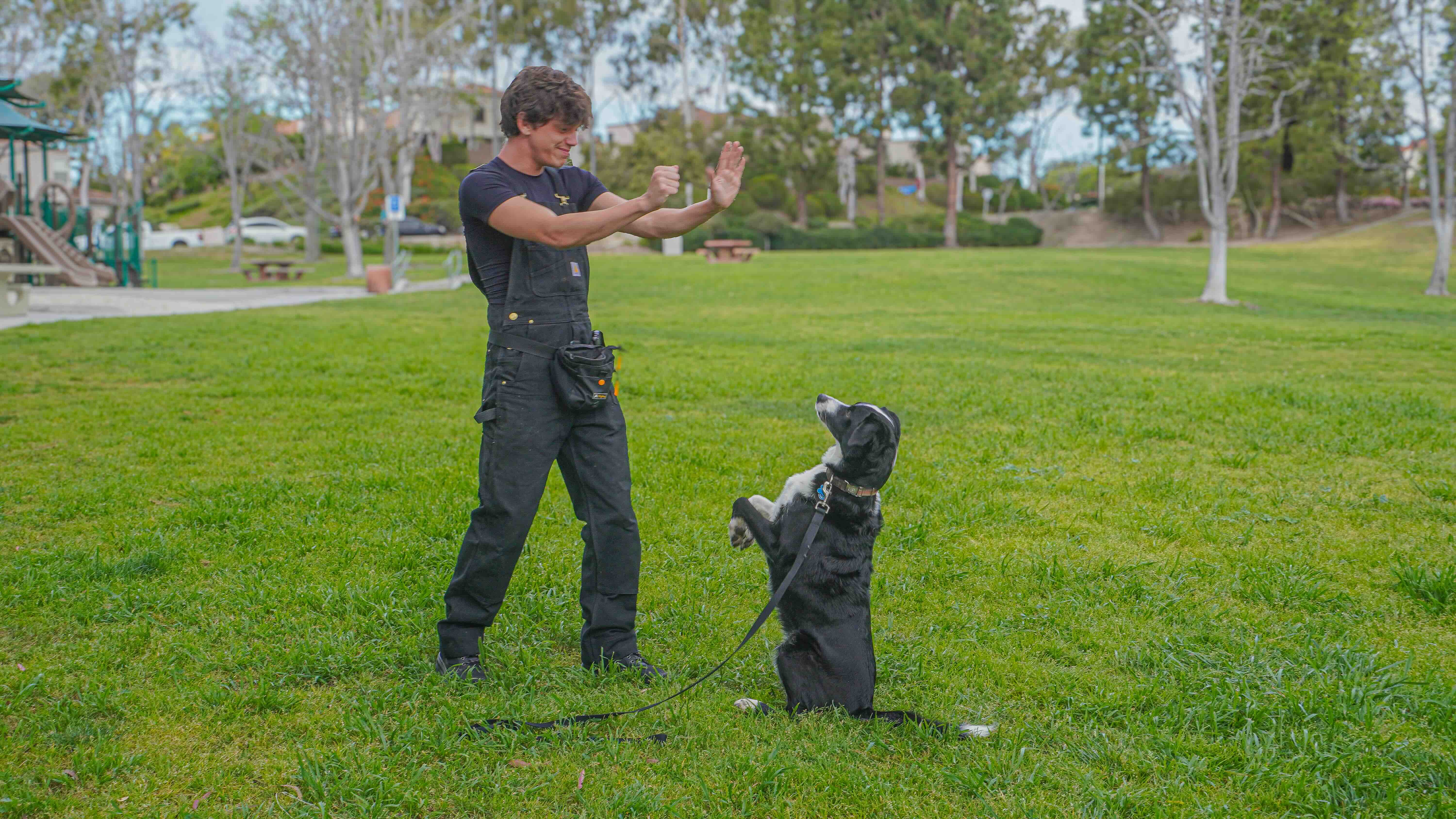
Ethan McMahon was 18 when he brought home an Australian Shepherd-Border Collie mix puppy, named him Bubbles and sent him to a local training facility to get the proper, hands-on training all dogs deserve.
Unfortunately for Bubbles, his time with the trainers was cut short. He came back home early because he cried all night long at the facility, and nothing the team did was helping to curb his puppy antics.
This was McMahon’s first lesson in something every new pet owner eventually learns: It may not be easy, but it will be worth it… if done right.
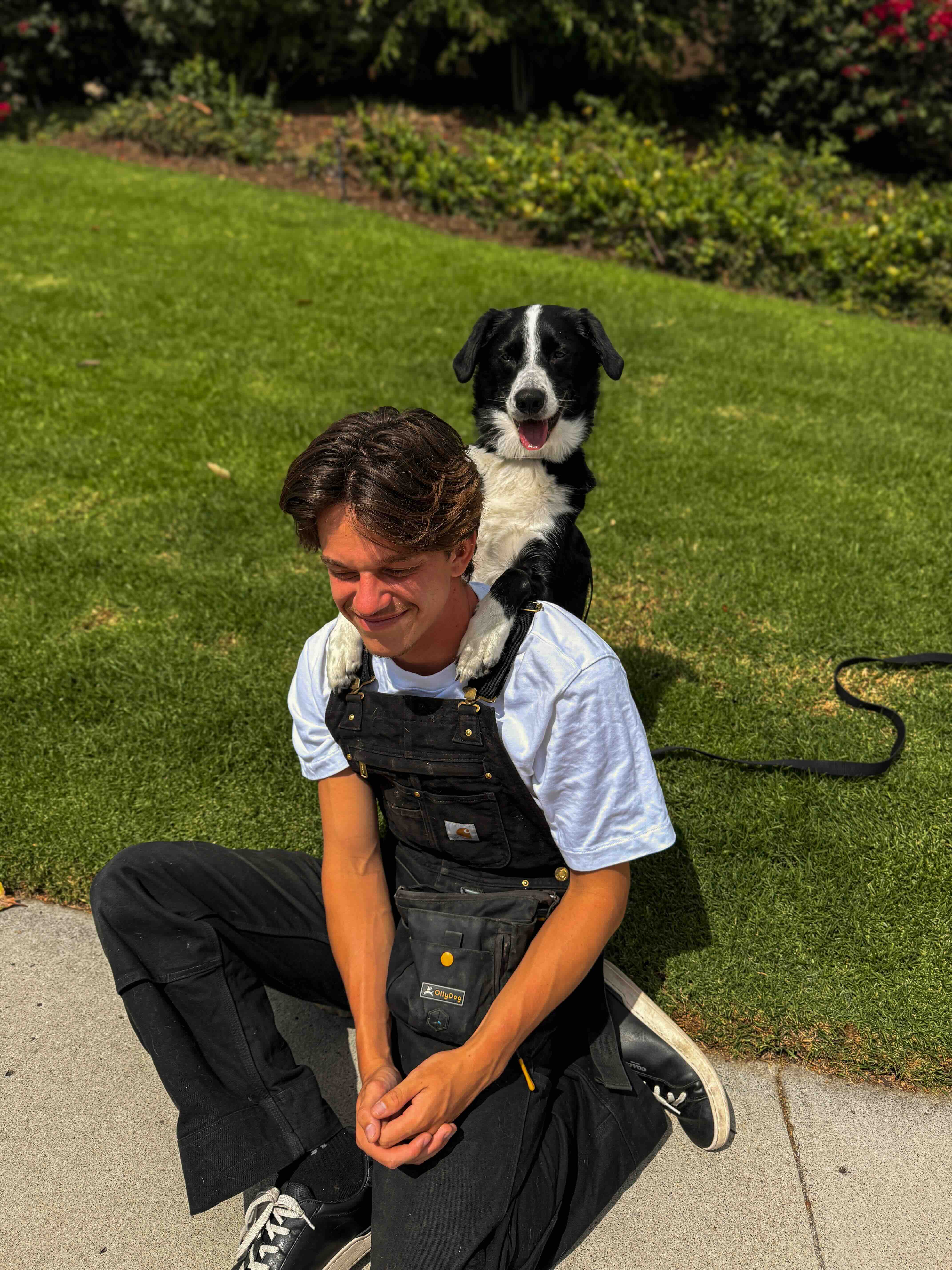
So McMahon taught himself the tricks of the dog-training trade. And when his mom mentioned that a family friend charged about $250 an hour to do the same work professionally, the light bulb went off: This could be a career, and he could spare other families the emotional roller coaster he’d just experienced.
The 23-year-old San Diego dog trainer behind McMahon Dog Training has since turned short-form video into a business pulling 120 to 150 million views in the past year. But that came after two years of building with no content at all and a string of failed product launches. And even after the views arrived, one algorithmic gut-punch nearly took his highest-converting channel down with it.
What carried him through all of it, however, wasn’t a growth hack. It was trust, the same currency that’s reshaping how audiences choose who to believe.
Edelman’s 2025 Brand Trust research found that 80% of people trust the brands they use—more than they trust their own employer, other businesses, the media or the government. The same forces reshaping brand trust are showing up in how audiences trust individual creators. People aren’t just looking for information. They’re looking for someone they already recognize and believe.
McMahon’s path to becoming that person, and what he did when a platform tried to erase it, is the playbook.
Why Solving a Real Problem Beat Selling a Course
At 20, McMahon was still working the floor at Petco when a woman walked in and asked for him by name. She wanted in-home training. Store policy said no. So she asked what it would take for him to do it on his own time. He said $100 an hour. She said done.
He quit that day.
“This is going to work,” he told himself, “and I’ll figure out how.”
For the first two years, he made zero content and grew the business locally, one client at a time. Then his girlfriend, Trish, graduated college into a brutal job market, where thousands of applicants were vying for a single opening, and McMahon, who hated being on camera but needed help, hired her as his content partner instead. She filmed, he trained and they posted.
Three or four months of consistent posting got them almost nothing. But then one video hit 50,000 views overnight, and the next day it hit 100,000, and within a week a different video crossed 5 million. After that, he said, "social media decided, we’re going to show you to the world now.”
It wasn’t a trick hook that did it. It was how he teaches.
“My job is 20% dog training, and 80% human training,” McMahon said. In his videos, he’s rarely performing for the camera. He’s educating the client standing in front of him, and the viewer ends up feeling like that client.
Even so, his first attempts to sell digital products flopped seven or eight times, and he burned thousands of dollars on ads before Perfect Puppy, a roughly $150 course, finally worked. It was built around the exact nightmare he’d lived through with Bubbles: biting, accidents, leash chaos, the cute fantasy that curdles into stress.
“Focusing on solving problems for people is the number one thing that changed everything for us,” he said. A generic “how to train a dog” course never sold. A named, specific pain did.
SUCCESS® Tip: Audit your own offer. Are you selling a course? Coaching? Or are you selling a solution to a problem your best customer already feels in their body?
How a Pair of Overalls Became a Brand System
Ask McMahon what the McMahon brand is in plain language, and he doesn’t reach for a mission statement.
“It’s just me,” he said. “I have to be myself, and I have to enjoy it… People are going to love it or hate it.”
That authenticity shows up in a uniform that started as nothing more than a practical fix. One client’s golden retriever was so slobbery it kept ruining his clothes, so he bought a pair of wipe-clean overalls—right around the time he started making content. And people began noticing the look.
His first 5-million-view video happened to feature the overalls and a yellow shirt, and commenters compared him to a minion from Despicable Me. He leaned into it.
“From that moment, I realized it got so much attention,” he said. “I have to stick to this now.”
That instinct lines up with how brand recognition tends to work: repeated, coherent visual cues—a color, a silhouette, a layout—speed up how quickly people recall and prefer a brand across channels. You don’t need a Fortune 500 budget for that. You need one signature people can spot mid-scroll.
Beyond the overalls, a few things do the same work for McMahon: an educational tone that teaches the owner rather than just commanding the dog, real client dogs on camera (something he was nervous to ask for at first, and clients now request), his age as a built-in differentiator among trainers and soft calls to action folded into value rather than a hard close.
“We keep our content very educational, while just sneaking in as many calls to action as possible where it feels right,” he said. “Focusing on building the trust before we really go in for the shot.”
SUCCESS® Tip: Pick one visual or verbal cue you can repeat for 90 days without getting bored of it, then ask yourself what else you refuse to do, so people know it’s you.
What to Do When Early Success Feels Like 7th Grade
McMahon has already hit goals most 23-year-olds still keep on a vision board. He grew up watching Cesar Millan on The Dog Whisperer and thinking, That’s what I want to do. Now he’s doing a version of it on camera, which leaves him asking a harder question: What’s next?
He compares this stretch of life to being 12 again.
“You’re not a kid when you’re 12, but you’re not really a teenager either,” he said. “From a business and social hierarchy standpoint, that’s exactly where I’m at.”
Mentors in dog training are hard to find, and peers his age are scarce, so he’s pulled business mentors from sales and internet marketing instead. People ask him for advice now too, which feels strange when he’s still scouting his own next mountain to climb.
Some freedoms shrink as influence grows. He can’t take every sales call anymore. People fill out forms just to talk to him, and his assistant, Jess, fields them, and they’re often disappointed it isn’t Ethan on the other end.
That’s the lonely middle of early success though: too far ahead for your old circle, not yet inside the next one.
His advice for it isn’t complicated. Keep going. Plant the tree.
“I compare social media to growing an apple tree in your yard,” he said. “You plant the seed, you water it—no apples. You water it every few weeks—no apples. And then all of a sudden, after a few months, your neighbors are looking at your apple tree like, ‘How’d you get all those apples?'”
The apples come, McMahon said, but only for the people who kept watering when there was nothing to show for it.
“Quite literally anybody can do what I do,” McMahon said. “You just have to try and commit to it and do it every day”—including the stretch when nobody’s watching.
SUCCESS® Tip: If you’re stuck in that awkward middle, say so out loud. The right mentor or peer probably won’t be easy to find. McMahon had to look outside his own category for his, so widen your search before you expect to find one.
When the Platform He Built On Turned Against Him
Instagram was McMahon’s highest-converting channel by far with over 300,000 followers, and roughly 90% of his revenue flowed through it. Then Meta’s AI systems flagged the account for intellectual property violations, even though the content it flagged was his own.
“I violated ‘intellectual property terms of service,’” McMahon told SUCCESS®, dryly naming the notice. “That sucked. That really sucked.”
But when the account went dark, he didn’t just spiral. He asked two questions instead: What can we do right now? How do we make sure this never wrecks us again?
The first move was a new Instagram account, which picked up about 20,000 followers within five days. People already recognized his face, his overalls and his brand. From there, he diversified harder: leaning further into TikTok, including TikTok Shop links for the tools he uses on camera; retargeting ads toward his paid programs; and expanding YouTube, even launching additional channels after scrapers uploaded his own clips and racked up millions of views on them. “Let’s steal our own videos,” he said.
“We’re waiting to see if they’re going to give our account back or delete it permanently,” he said. “Both are realities we might have to face.” What steadied him was knowing that either way, he wasn’t restarting from zero.
The lesson holds whether you sell training, coaching, software or services: A platform can amplify you, but it shouldn’t own your identity or your income mix.
Flourishing, for McMahon, was never a follower count. Past a certain point, he said, the number just becomes arbitrary, a high score you’re chasing for its own sake.
“I’m just enjoying what I do and having the opportunity to continue doing it freely,” he said. Helping one family train their dog at home is good. Putting it online so a thousand families can learn from it is better.
SUCCESS® Tip: Assume one of your channels will eventually fail. Map out where your revenue actually lives right now, and move at least one meaningful stream to a second platform this month, before an algorithm makes that decision for you.
The Action Plan: Brand, Offer, Distribution
None of this requires training a single dog.
Name the pain before you name the product.
Kill the generic offer and write one sentence that sounds like your customer’s worst Tuesday.
Build a recognition system.
The same look, the same tone, the same promise, repeated long enough that strangers can spot you mid-scroll.
Teach in public, sell after trust.
A soft call to action inside real education beats a hard close that feels like a bait-and-switch.
Assume one channel will fail.
Move at least one revenue stream to a second platform before you’re forced to.
Hire for the part of the job you hate most.
McMahon’s growth accelerated once Trish took over content so he could stay with the dogs and clients.
Give yourself permission for the awkward middle.
You’re allowed to outgrow your old rooms before you qualify for the new ones.
Early success isn’t the finish line. It’s the stress test. McMahon passed his with a pair of overalls, a problem-first funnel and a refusal to let one algorithm define the brand he’s building, or the life holding it up.
Images provided by McMahon Dog Training/Ethan McMahon