When Frederick Deese was tapped by the National Security Agency to become a cryptologist, he didn’t even own a computer. A kid from small-town Alabama, Deese grew up struggling with an undiagnosed learning disability that made school challenging and test-taking feel impossible. He enlisted in the Navy, assigned to deck crew members because of his low Armed Services Vocational Aptitude Battery scores, but he quickly stood out as a leader and was promoted to missile tech.
In 2001, before his second stint in the military, Deese’s wife helped him identify his dyslexia. This time, his ASVAB results returned one of the highest scores available, earning him a spot in the Navy’s cryptology program, where he was tasked with hacking and intrusion detection for the United States government.
“I had never touched a laptop,” Deese says. “I didn’t know how to type.”
Working in “theater,” meaning in a conflict or war zone, taught Deese how to detect patterns. Gathering disparate data from satellites, moving vehicles and a target’s text messages, voice recordings and behaviors, Deese became an expert at anomaly identification and pattern recognition. One year into the cryptology program, he was named a senior solutions architect for U.S. Cyber Command within the NSA.
Deese continued to hone his ability to design algorithms and data-based frameworks, holding a Top Secret Sensitive Compartmentalized Information security clearance—the highest security clearance for classified national security information. In 2004, he exited his military career in favor of the government contracting space and found Visual Connections, an information technology consulting firm.
How Is AI Used to Detect Health Care Fraud?
The very skills that helped Deese detect threats to national security now help him prevent fraud, waste and abuse. Applying his ability to develop analytic models that identify anomalies within datasets, Deese now leads complex commercial and government IT projects for the Department of Health and Human Services, the Centers for Medicare and Medicaid Services and the Defense Logistics Agency. In each of these projects, Deese’s goal is to maintain integrity within technology, particularly in the medical health records and billing space.
How Much Does Health Care Fraud Really Cost?
If a diabetic patient is treated for a bruised toe, for instance, Visual Connections audits the billing process to ensure the insurance claims reflect a simple toe injury rather than a fraudulent claim of gout, which would pay out 3,000% more.
This work to ensure honest practices between medical offices and insurance companies is close to Deese’s heart. As a child, he witnessed how his grandmother was exploited by hospitals that used her name to run up hefty billing claims for fraudulent tests and diagnoses.
“When I was doing intelligence, my job was ensuring the safety of our military forces and also eventually the safety of the U.S. in general by identifying these targets early,” Deese says. “When I switched over to health care, it became personal. Even though I wasn’t able to help my grandmother, I could help others who may be having this similar issue, across the spectrum, to identify fraud, waste and abuse that maybe happened to beneficiaries. That meant a lot for me, and that’s why I thought it was very important for me to continue to do government contracting and doing this type of work that is not just developing a system, but also having a meaningful impact.”
How Does Deese Mentor Minority-Owned Businesses in Federal Contracting?
Now a decorated veteran, with two Navy and Marine Corps Achievement Medals awarded for his development of cyber and hardware solutions that add an extra layer of encryption to ship-to-ship transmissions between U.S. naval vessels and a multimillion-dollar enterprise to his name, Deese looks back on his humble beginnings in a hometown that he describes as “down a dirt road” and recognizes that there are many young adults like him who need access to opportunity.
“One of the things I’ve noticed in my experience is that sometimes—not all times—minorities don’t get a chance to get into careers due to the fact that you have these aptitude tests that we’re just not familiar with, especially in a rural area,” he says.
To help bridge this opportunity gap, Deese launched mentoring programs that identify minority-owned companies and deserving young entrepreneurs and professionals within the tech space. Giving back is a core value for Deese, but he believes philanthropy requires more than simply cutting a check. Instead, he leverages his own leadership knowledge to help his mentees enhance their skills. Even though he hasn’t worked heavily in coding since 2010, he understands problem sets and can help new solution architects quickly apply resolutions.
“I feel like I’m really good at coaching them up to the level they need to be, all the way from data analyst to program manager to senior executive to vice president,” he says. “I’m good at identifying and helping mentor them to get to the point where they can be very successful in that space. It’s leadership on both sides—I mentor and coach others to be successful and also help my solution architects deliver value for our customers.”
Deese is particularly committed to helping veterans dealing with financial insecurity and small-business owners with disadvantaged status to align with opportunities within the federal contracting space. It is a mutually beneficial relationship, as Deese estimates that 40% of the small businesses he helps either bring him in as a subcontractor or invite him to bid with them for government contracts within the first year, but there is a broader community impact as well. As a part of his give-back programs, Deese requires that participants create their own philanthropic, knowledge-sharing or community outreach initiatives as a part of his mentoring process.
“One of my goals is to be able to help different types of diverse minorities be successful in government contracting,” he says. “In any industry, having a diverse set of voices changes things, but specifically for technology, it makes sense.”
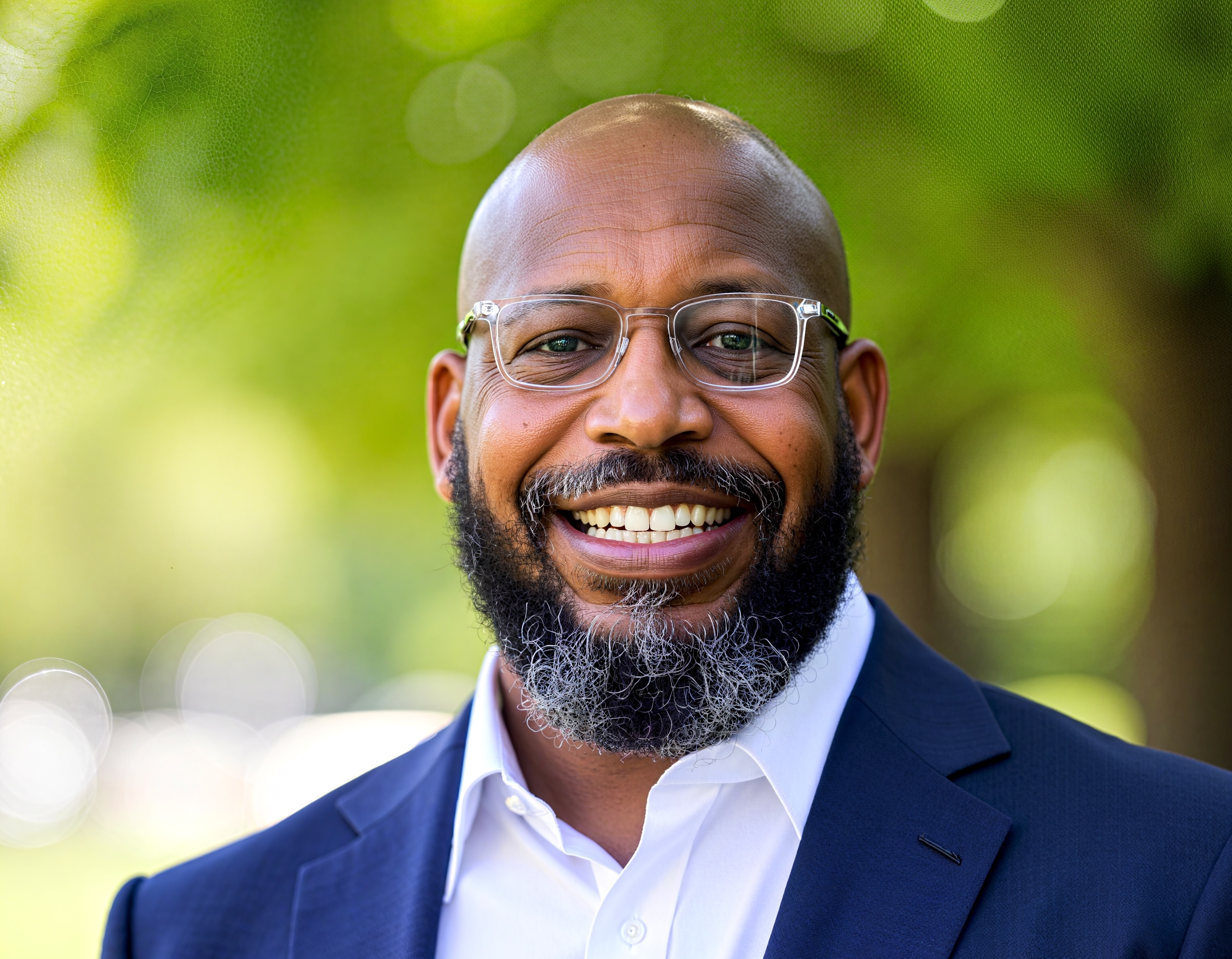
Image courtesy of Visual Connections
This article was first published in the January/February 2026 issue of SUCCESS® magazine. Get your copy here.