
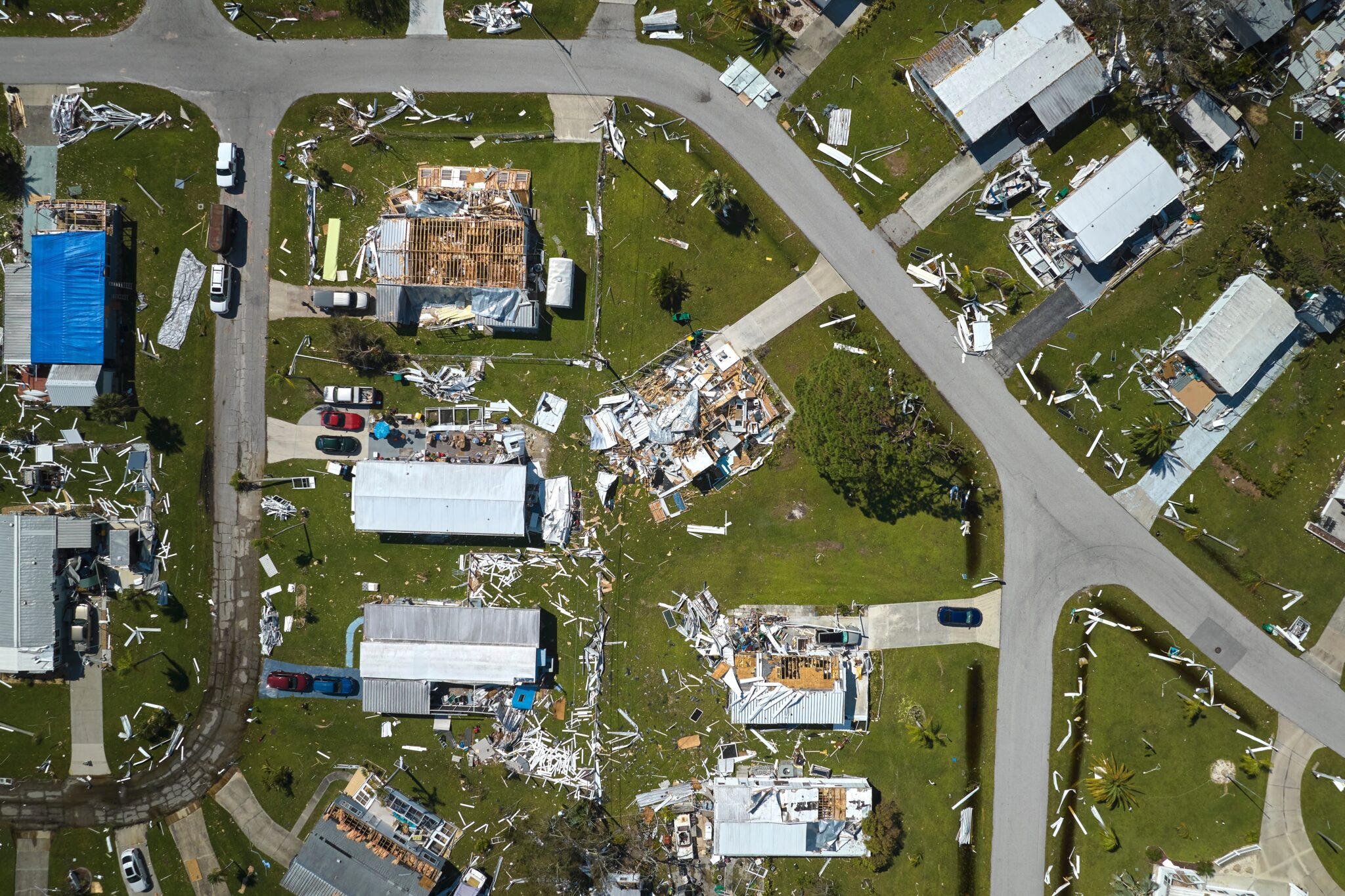
Disasters have a way of exposing truths. A devastating fire often has a mind of its own. A pandemic spreads without mercy. A hurricane does not ask permission before tearing through a coastline. They do not pause for planning meetings or wait for approvals. They test systems. They expose weakness. They teach fast.
But crises not only come with smoke, sickness, storm and surge. Every company faces its own version of a disaster—both big and small.
A sudden downturn.
A cyber breach.
A leadership crisis.
A loss of trust.
A workforce shaken by uncertainty.
A reputation tested in public.
Some storms rip through buildings. Others tear through confidence. Either way, the damage is real.
Most organizations respond with one goal in mind: getting back to business. Reopen the doors. Patch the systems. Replace what was lost. Restore what was broken. But restoration is not transformation. And returning to “normal” is not enough. At Belfor, I urge our teams not to just rebuild as if nothing happened. We rebuild as if everything matters. Because a crisis is not just something to endure. It is something to use.
When disaster hits, whether it is a flooded facility or a fractured culture, you are handed a rare gift: the chance to see your company as it really is. What holds. What cracks. What rises. What fails.
Crisis reveals the truth about leadership, about culture, about resilience. You see who runs toward the problem. You see who steadies others. You see which systems break. And which people do not. The question is not how fast you can get back. It’s how strong you want to become. Do you have the perseverance, smarts, integrity, credibility and fortitude to build forward, not backward?
After all, resilience is not about surviving the next storm. It is about being stronger because the last one happened. Every hit can sharpen your aim, every failure can build your foundation and every disruption can become direction. But that’s if you let it, if you inspire it, if you leverage it.
Storms are inevitable. Building better is a choice. And the only one that matters is this: Will you go back to what was or build what is next?
5 Rules to Build Back Better After Crisis
As a leader, crisis gives you a choice. You can rush back to “normal.” Or you can rebuild something better. Recovery is not just about fixing what broke. It is the moment to see what failed, what held and what must change.
This is where strong companies separate from surviving ones. Here are five rules that will show you how to turn disaster into direction and recovery into long-term strength.
1. Don’t Just Repair: Reckon!
Fixing what broke is only the beginning. What matters is understanding why it broke in the first place.
Strong leaders do not rush past failure. They stop, they study it, they learn from it and they talk through what happened.
Not just the facts. The decisions. The pressure. The mistakes. The missed moments.
Because the truth is simple: If you do not learn from your last crisis, you are rehearsing for the next one. Teams that take the time to reflect together can recover faster, grow stronger and make smarter choices when it matters most. Not because they move on quickly, but because they move on wisely.
Repair the damage, then extract the lesson. That is how you turn a breakdown into a breakthrough.
2. People Before Playbooks
I won’t say which team I root for. I’d hate to divide the room already. But every Sunday, I watch my coach win. Not because he has the perfect playbook but because he prepares every player to win. He does not just draw plays. He builds trust. He drills discipline. He trains for pressure. And when the game turns chaotic, they do not panic. They perform.
Resilience is not a document. It is a decision made in real time by real people.
As a leader, your job is not just to prepare policy. It is to prepare people. Teams trained for pressure can move faster, speak clearer and recover stronger. Not because they are lucky—because they are ready.
Give them the playbook. Give them the authority. And give them the confidence to act.
When people know what to do, they do not freeze or wait or fracture. They adapt. Empowerment is not optional in crisis. It is everything. Touchdown!
3. Build Systems That Bend Before They Break
Rigid systems do not survive pressure. They splinter. Recovery is your moment to fix what made you fragile, not just what was damaged. Strip out the bottlenecks. Clarify who owns what, and replace confusion with command.
Research shows that strong organizations are not the most complicated; they are the most adaptable. When workflows are built to move forward and not freeze, teams can respond faster, think clearer and stay aligned under fire. Not because chaos disappears but because structure holds.
Flexibility without clarity is chaos, and structure without flexibility is failure. Therefore, design your systems to bend so your company does not break.
4. Build Your Bench Before You Need It
When things go wrong, relationships respond faster than resources. The strength of your recovery is not just in your systems. It’s your network.
Strong companies are not silos. They are connected across departments, across disciplines, across partners you trust when it counts.
When teams already know each other, they don’t waste time finding alignment. They act.
Trust built in a crisis is fragile, and partnerships built before a crisis are a force multiplier. If your bench is deep, your recovery is faster. If your network is strong, your company is stronger.
5. Turn Recovery Into Reinvention
Crisis clears the air. Suddenly, people are open: Open to change, open to doing things a better way and open to letting go of what was not working.
But that window does not last long. Leaders who move fast shape what happens next. Leaders who hesitate return to what broke.
Crisis is your moment to rebuild smarter. Fix what failed. Upgrade what survived. Rethink what no longer fits. Rework policies that slowed you down. Reengineer leadership where it faltered.
Invest in systems that prepare you for what is coming, not what already happened.
The strongest companies do not use recovery to catch their breath. They use it to change direction. Growth born from crises does not fade. It hardens. Because when improvement is forged under pressure, it lasts.
And this is the truth disasters teach us if we are willing to learn.
Crisis does not destroy great companies. Complacency does.
Crisis does not define you. Your response does.
Recovery is not your finish line. It is your starting line.
And the companies that rise highest are never the ones who rushed back to “normal.” They are the ones that had the courage to build something better than what came before.
Featured image by Bilanol / shutterstock.com