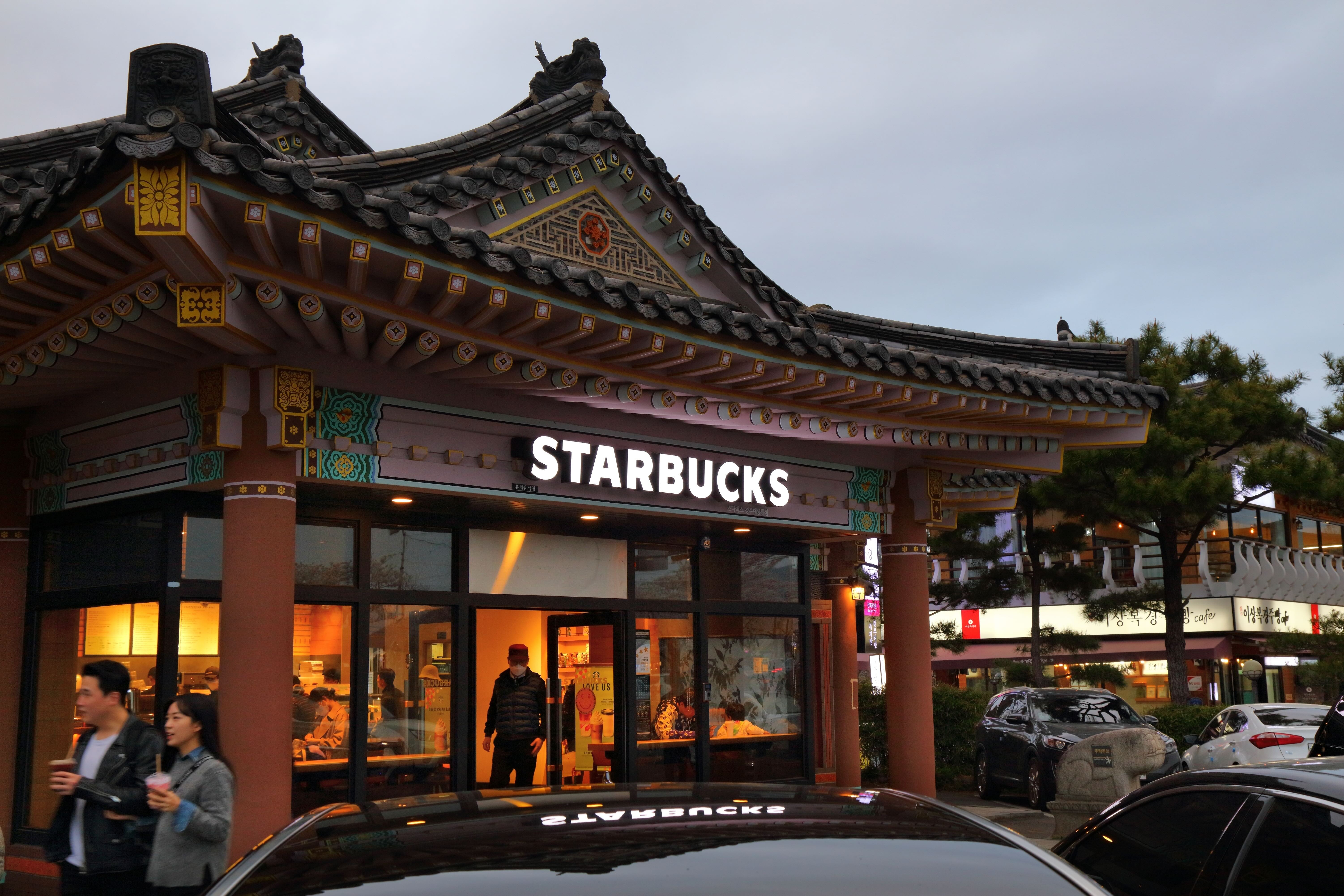
In late May 2026, a tumbler promotion brought a global brand to its knees.
Starbucks Korea launched what it called “Tank Day”—a campaign to sell large stainless-steel tumblers, timed to May 18. The problem: May 18 is the anniversary of the 1980 Gwangju Uprising, a South Korean military crackdown in which hundreds of pro-democracy protesters were killed or injured by troops, tanks and helicopters. The campaign’s slogan—“Thwack it on the table”—made things worse. For many Koreans, the phrase echoed the infamous 1987 police lie used to cover up the torture-death of student activist Park Jong-chol.
The promotion was canceled within hours. The head of Starbucks Korea was fired the same day. Sales dropped what the company’s parent, Shinsegae Group, described as “very significantly”—with transaction data showing a 26% drop in payment volumes immediately after the scandal broke. A partial rebound has since occurred, but spending at Starbucks Korea locations is still running roughly a quarter below pre-controversy levels.
On June 22, every Starbucks in South Korea—more than 2,000 stores—will close early for mandatory history and social sensitivity training. It is the first nationwide early closure in the chain’s 27-year history in the country.
Here’s what that move tells you about brand reputation management—and what you need to do before a crisis finds you.
What the Numbers Say About Brand Trust Right Now
The Starbucks Korea situation didn’t happen in isolation. It landed in a trust environment that was already stretched thin. According to Edelman’s 2026 Trust Barometer, trust in national institutions continues to slide—but consumer expectations of business have gone the other direction. For the first time, business is now viewed as more ethical than NGOs. Brands are filling the trust vacuum that governments and media have left behind.
That’s an opportunity, but it’s also a trap. The higher your trust baseline, the further and faster the fall when something goes wrong. Research compiled by Nadernejad Media in 2026 found that the threshold for consumer relationship termination isn’t a pattern of failures; it’s a single incident where a brand is perceived as fundamentally dishonest or hypocritical. The trust reserve most leaders assume they have simply doesn’t exist at the scale they believe.
This matters for your business regardless of its size. Whether you lead a franchise, run a team or are building a personal brand, you are a trust-based enterprise. And trust, once fractured, follows a predictable and expensive timeline.
The Hidden Cost of a Brand Crisis
A brand crisis rarely announces itself in advance. That’s what makes the Starbucks Korea case so instructive. An internal review revealed that some approving managers had not viewed the attached files showing the actual campaign content, and the campaign’s problematic slogan originated from an AI tool queried for ideas without adequate human review. The failure wasn’t malice. It was a broken approval process and a cultural blind spot.
The financial fallout is never just about the immediate incident. When Delta Air Lines faced a major system failure in 2024, the cascade resulted in over 7,000 flight cancellations and an estimated $550 million in losses. When Bud Light mishandled its influencer campaign backlash in 2023, sales were still down nearly 30% year over year as of early 2024, and the brand lost its long-held position in the U.S. beer market. These aren’t anomalies. They’re the compounding cost of a trust deficit that was never proactively managed.
The question every leader needs to sit with is not “How would we respond to a crisis?” It’s “How exposed are we right now, and does our team actually know?”
Why a Gesture Isn’t Enough—& What Is
You’ve probably seen brands attempt the crisis playbook: apologize quickly, fire someone, issue a statement and wait for the news cycle to move on. Sometimes it works. Often it doesn’t. The difference between brands that recover quickly and those that don’t comes down to whether the response is operational or cosmetic.
Studies by the Institute of Crisis Management have found that companies with proactive trust-building programs recover three times faster from reputational damage than those without. The Starbucks Korea response is notable precisely because it went operational. The June 22 training is companywide; it extends from frontline baristas to Shinsegae executives and the chairman himself. And the company has committed to overhauling its entire marketing approval process—including introducing a social-sensitivity checklist covering history, commemorative dates, politics, disasters, military issues, gender, violence and hate expressions. That’s not spin. That’s a system change.
Research from McKinsey shows that brands with strong emotional connections can retain up to 82% of customers even during major market disruptions. But that retention is only available to brands that have built those connections before the crisis—not during it. Trust is infrastructure, not a crisis tool.
Three Things to Do Before a Crisis Finds You
So, what does this mean for you? If you’re a leader with a team, a brand or a customer base, here are three moves that belong on your calendar now, not after something goes wrong.
Audit your approval process for cultural and contextual risk. The Starbucks Korea failure was partly a process failure—content moved through approval without the right eyes on it. Map out your current content and campaign approval chain. At what point does someone with contextual authority sign off? If the answer is “they don’t,” that’s your first fix.
Build a social-sensitivity review into your standard operating procedures. Starbucks Korea is now implementing a checklist covering history, commemorative dates, disasters and political context. You don’t need a global brand to justify that kind of pre-publication review. A freelancer, a solopreneur, a 10-person company—everyone who produces public-facing content operates in a context. Know yours. A two-question gut check (“Does this date mean something? Does this phrase echo anything?”) costs nothing and can stop a costly mistake.
Invest in trust before you need to withdraw from it. The brands that recover fastest from reputation crises are the ones that had trust equity built up before the incident. That means consistent communication, visible accountability and a record of following through on what you say. Start today. The 2026 Edelman Trust Barometer found that “my CEO” saw net trust gains of 9 points over the past year, while trust in distant institutions continued to fall. People trust the leaders they can see, hear and hold accountable. Show up before you need them to show up for you.
The Real Takeaway From Starbucks Korea
Closing 2,000 stores is a significant, visible act. It cost Starbucks Korea real revenue on top of the revenue it was already losing. But the signal it sends is the point: We are not pretending this didn’t happen, and we are not treating this as a communications problem. We are treating it as an organizational one.
That distinction is what separates brands that recover from brands that don’t. It’s also what separates leaders who earn lasting trust from those who merely manage perception. Your brand is not your logo or your tagline. It’s the sum of every decision your team makes when they think no one is watching—or when an AI-generated slogan slips past the approval process unchecked.
The reviews happen either before a crisis or after one. The difference in cost is enormous. Start the review now.
Featured image from Tupungato/Shutterstock