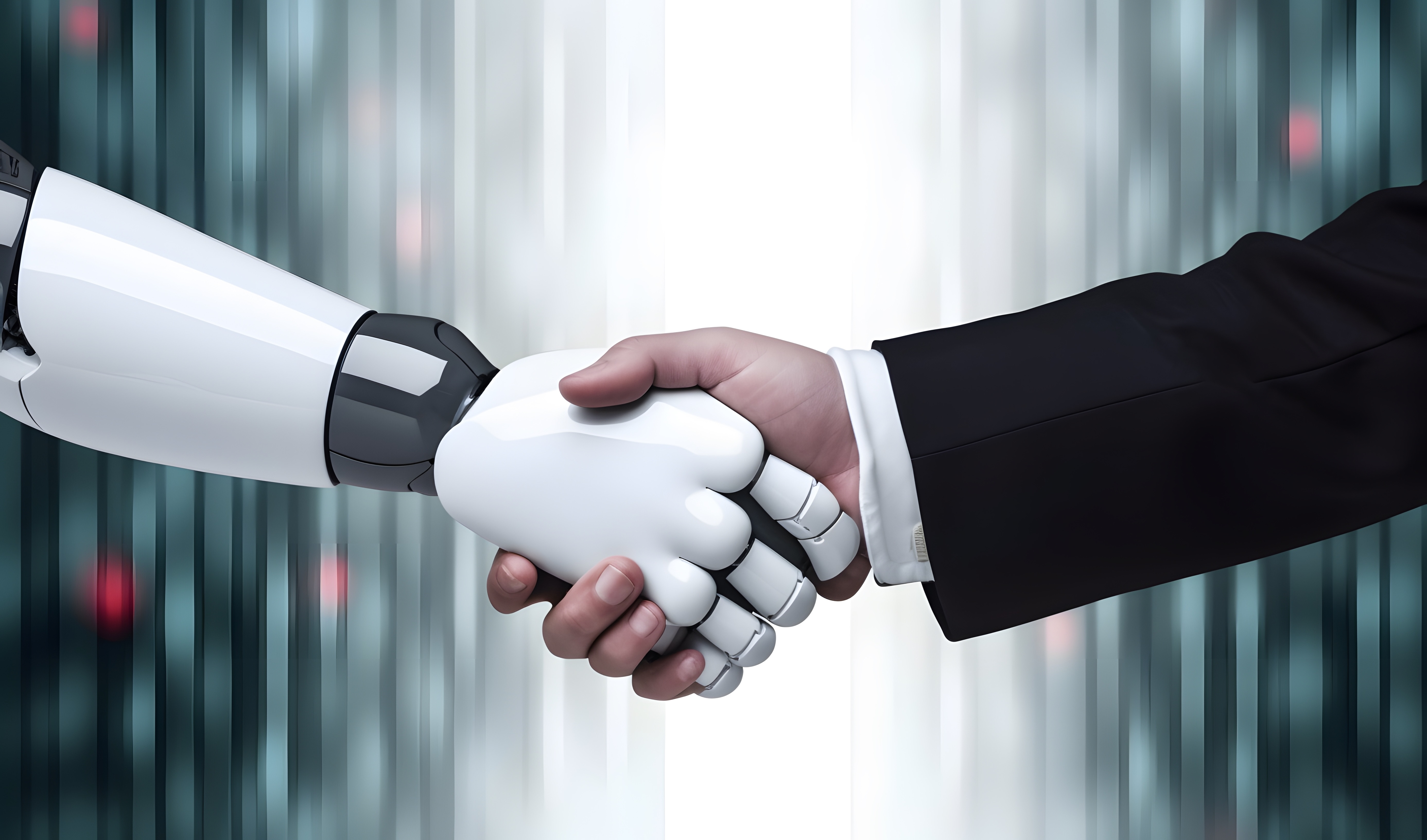

Joanna Stern spent all of 2025 saying “yes” to artificial intelligence. Every task, every decision, every corner of her professional and personal life—if AI could do it, she let it try. Over the course of 12 months, she ran more than 100 experiments: AI therapist, AI research assistant, AI medical diagnostician, AI “boyfriend” (with her wife’s clearance), self-driving family vacations in a Waymo, robot massages, a humanoid that couldn’t load a dishwasher. She documented all of it in her book I Am Not a Robot, an instant New York Times bestseller published in May 2026.
Her conclusion after 365 days was not what anyone expected from a tech journalist. “Very mixed,” she told the Today show, “which is not how I expected this to go.”
That verdict matters, not because it’s pessimistic, but because it’s precise. After a year of ruthless field testing, Stern didn’t come back with a ranking of AI tools or a prediction about AGI timelines. She came back with something more useful: a clear, experience-tested map of where AI genuinely expands what you can do professionally and where handing it the wheel quietly costs you something you didn’t realize you were giving away.
The Tasks AI Actually Conquered
The biggest win, Stern said on CNBC’s Squawk Box, was administrative work. Not creative work, not strategic thinking, not communication—the operational connective tissue that eats hours without producing anything you’d call “insight.”
She built a promotional workflow for her book entirely on AI: a reader uploads a receipt, AI processes it and verifies the shipping address, the data flows into a spreadsheet, the spreadsheet triggers a confirmation email to her publisher. Zero manual steps. She singled out Claude Code specifically, telling CNBC that “multistep processes have gotten extremely better” with current tools. What used to require a developer now requires a prompt.
This is the category where AI is already delivering compounding returns for high-performers: intake processing, scheduling coordination, research aggregation, first-pass document drafts, data transformation between systems. These are tasks that share a common profile—repetitive, rules-based, low-stakes if slightly wrong and collectively consuming 20%-30% of a typical executive’s week. The ROI on delegating this category is measurable and immediate.
The medical findings were equally striking. An AI system detected something on Stern’s breast ultrasound that her human radiologist flagged as worth re-examining. Follow-up scans came back clear, but the moment captured something real about AI’s current superpower: It is a tireless, pattern-matching machine that doesn’t get distracted, doesn’t get fatigued and doesn’t miss the subtle anomaly on image number 47 of a long shift. “They are able to see things that the human eye can’t,” Stern told the Today show.
The Line She Refused to Cross
Here’s where the field report gets instructive. Despite building an AI-automated fulfillment chain and replacing her human research assistant with AI tools, Stern drew a firm line at one task she could technically have outsourced: her own email.
Full email automation is possible. Plenty of tools can read your inbox, draft responses in your voice, send on your behalf. Stern chose not to use them. The risk, in her assessment, was too high—not because AI writes bad email, but because the emails you send are how the people you care about most experience you. It’s where your credibility, your relationships and your reputation compound over time, quietly and invisibly. Delegating that to a system optimized for efficiency, she concluded, was a different category of delegation than delegating a spreadsheet.
That distinction—between tasks where the output is the thing and tasks where the act of doing it is the point—is the most useful framework Stern’s year produced. Scheduling a meeting is a task where the output (a confirmed time) is what matters. Writing to a client you’ve worked with for five years is a task where the act of writing, with your actual attention and judgment, is part of the value being delivered.
When Hallucinations Have Real Consequences
Stern’s family ran a household experiment alongside her professional one: for the duration of the year, they agreed to consult ChatGPT or Claude before turning to other sources for household questions. The most instructive result didn’t involve anything high-stakes. Her son asked ChatGPT about his praying mantis. The AI said it was pregnant. He was thrilled. Two days later, the insect died.
It was, Stern said, an important lesson, and the reaction of her children afterward was unexpectedly useful. “They are questioning AI so much more than the average kid,” she told CNBC, “because they saw us get things wrong and they saw the results of that.” Her 8-year-old and 4-year-old now approach AI outputs with a skepticism most adults haven’t developed because they have personal experience with the gap between confident output and accurate information.
Hallucinations—AI systems generating plausible, detailed and entirely fabricated information—are not a bug being patched out of the technology. They are, as Stern frames it, a structural artifact of how large language models work. The models predict what words should come next; they do not know what is true. In low-stakes contexts, a hallucination is an inconvenience. In high-stakes contexts—legal, medical, financial, reputational—it’s a liability.
The question isn’t whether your AI tool hallucinates. It’s whether you’re verifying the outputs in the domains where being wrong has real costs.
The One Tool She Actually Kept
After 365 days, more than 100 experiments and a book’s worth of field notes, Stern has integrated exactly one AI habit permanently into her daily routine. Not a coding tool. Not a scheduling assistant. Not the robot that was supposed to do her laundry.
She uses a phone AI interface in the car. When she’s driving to an interview or a meeting, she asks it to research the person she’s about to talk to, brainstorm the questions worth asking and pressure-test her assumptions about the conversation before it starts. The commute becomes preparation time. The preparation becomes sharper than what she’d produce staring at a screen.
The tool that stuck was the one that amplified what she was already doing—preparing well for consequential conversations—without replacing the judgment she brings to those conversations themselves. The AI does research. She decides what to ask. The AI generates options. She decides which ones matter. That division of labor, it turns out, is exactly how AI is most productively used: as a thinking partner that expands your options, not a replacement that makes your choices.
The Mantra That Actually Holds Up
Stern emerged from her year with a phrase she’s returned to in every interview since: “I will work with AI, but I am not working for it.”
That’s not a rejection of the technology. She left the Wall Street Journal after 12 years specifically to build a new media company with AI as what she calls her “co-founder.” AI handles infrastructure, research, workflow automation and production logistics. The creative judgment, the questions worth asking, the relationships that make the work matter—those stay with her.
The professionals who will accumulate the most advantage from AI over the next decade are not the ones who use it most aggressively. They’re the ones who are most precise about the division of labor—clear about which of their tasks are administrative overhead ripe for delegation and equally clear about which tasks constitute their actual value. Stern’s year of extreme testing produced a useful shortcut for drawing that line: if outsourcing a task to AI would save you time but cost you the thing that makes you worth listening to, keep it.
That’s not a tech argument. It’s a strategic one. And it’s the most important question any high-achiever should be asking right now—not “how much AI am I using?” but “what have I decided to keep?”
Featured image from Koupei Studio/Shutterstock