FROM OUR PARENT-COMPANY CEO
Building the Future of SUCCESS®
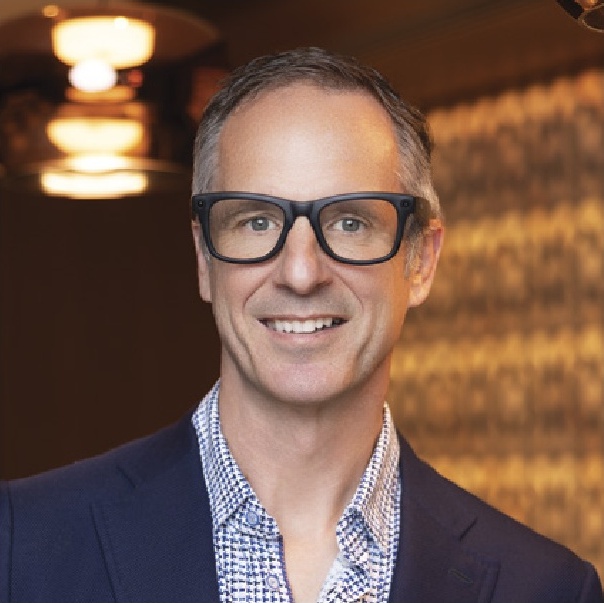
T hirty-five years ago, I was a young salesperson discovering SUCCESS magazine for the first time, absorbing wisdom from Denis Waitley and Zig Ziglar that would fundamentally shape my approach to business and life. I never imagined I’d be involved with the magazine that mentored me.
But that’s exactly the kind of transformation this issue celebrates.
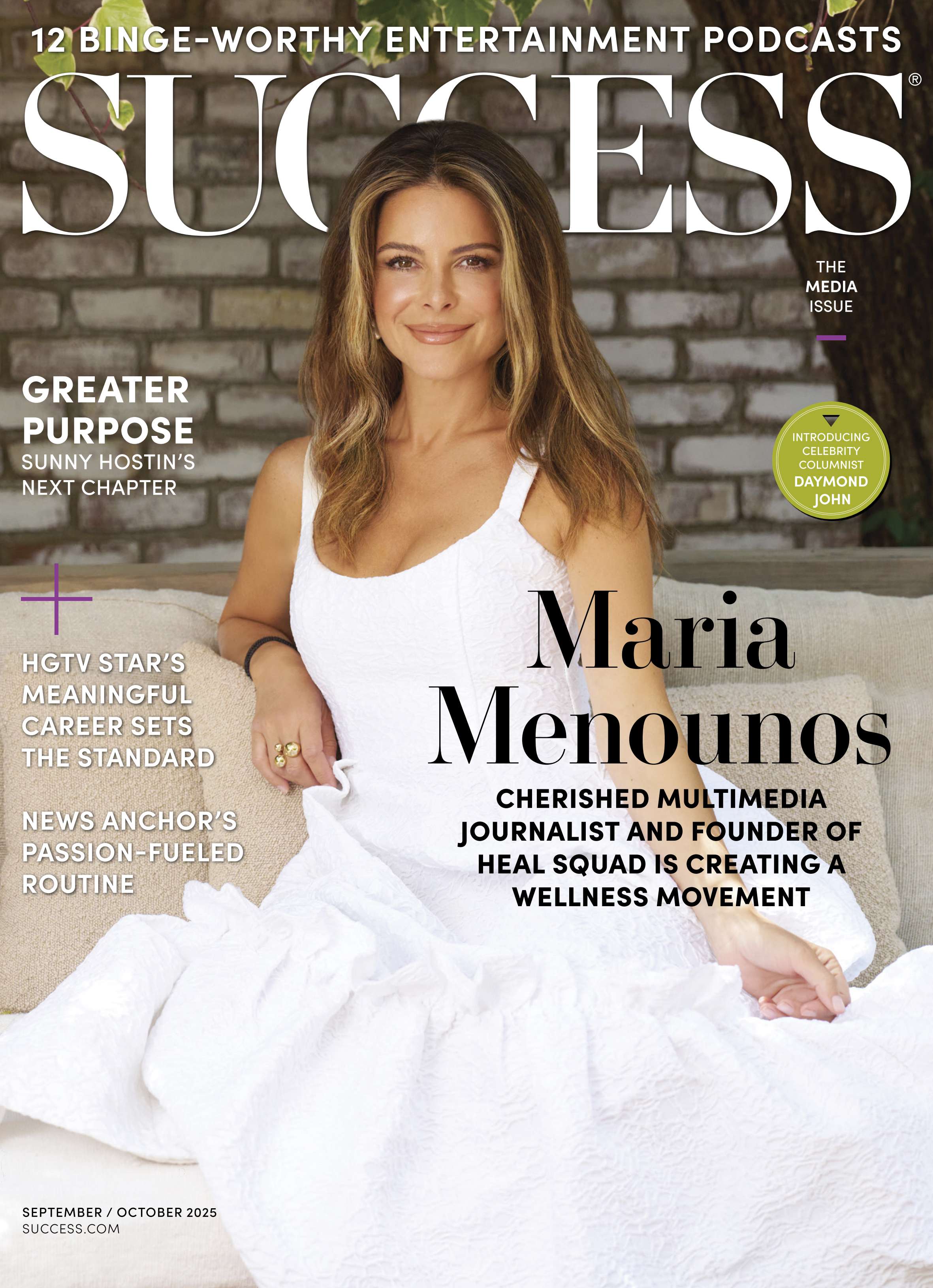
The entrepreneurs featured here—from Maria Menounos turning health challenges into a wellness movement to Sunny Hostin embracing her most creative chapter as an empty nester—all share a common thread. They didn’t wait for permission to reinvent themselves. They saw constraints others accepted and asked themselves, “I wonder if I could do this differently?”
That question has driven my entire career. When everyone insisted real estate brokerages needed physical offices, I wondered if we could build something entirely virtual. When the opportunity arose to acquire SUCCESS, I didn’t wait for perfect conditions. I wired $500,000 personally over a weekend because I believe that opportunities are never missed, they’re just given to someone else.
The media entrepreneurs in these pages prove something I learned building eXp: the old gatekeepers are losing power. Whether it’s Courtland Warren using AI to accelerate personal development, or the innovative CEOs reshaping how we experience entertainment, success now comes from learning faster than industries can adapt, thinking beyond conventional limitations and building without waiting for validation.
This is why we’re introducing more AI-assisted tools inside SUCCESS+ to personalize your growth journey and accelerate your path to achievement. These aren’t just productivity enhancers—they’re thinking partners that help you identify breakthrough opportunities others miss. We’re building what I call the “infinite possibilities framework”—helping you outlearn competitors, outthink constraints and outperform expectations.
These stories aren’t just about media transformation—they’re about the mindset that enables any transformation. Read them as experiments you could run, constraints you could challenge, possibilities you could create.
The future belongs to those who build it. I invite you to be part of our SUCCESS+ community, where we’re pioneering this new frontier together.
Glenn Sanford
CEO of eXp World Holdings

@ceoglenn
Join the SUCCESS+ community.
SUCCESS® magazine September/October 2025, Volume 68, Issue 5 (ISSN 0745-2489) is published bimonthly by SUCCESS Enterprises LLC, 5473 Blair Rd, Suite 100, PMB 30053, Dallas, TX 75231. Periodicals postage paid at Dallas, TX and additional mailing offices. POSTMASTER: Send address changes to SUCCESS magazine, P.O. Box 435 Congers, NY 10920. To subscribe to SUCCESS magazine or to receive our free weekly newsletters and online exclusives, log on to SUCCESS.com. CUSTOMER SERVICE: For service on your subscription, including renewal, change of address or other customer service matters, call 800-570-6414, send an email to Subscriptions@SUCCESS.com or write to SUCCESS magazine, P.O. Box 435 Congers, NY 10920. Please include your mailing label. ARTICLE REPRINTS: Call 866-782-2377. ARTICLE PROPOSALS and unsolicited articles can be emailed to Editor@SUCCESS.com or mailed to Editor, SUCCESS magazine, 5473 Blair Rd, Suite 100, PMB 30053, Dallas, TX 75231. Submissions specifically for SUCCESS.com should be sent to WebEditor@SUCCESS.com. SUCCESS magazine cannot process manuscripts or art material, and we assume no responsibility for their return. ©2025 SUCCESS Enterprises. All rights reserved. Material may not be reproduced in whole or in part in any form without prior written permission. Printed in the U.S.A.
©SARAH HUTCHINSON
FROM THE EDITOR
The Modern Media Mindset
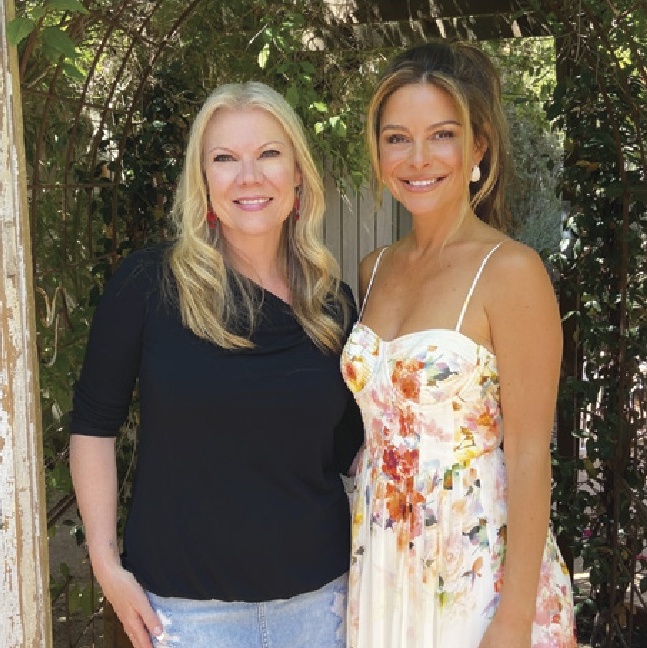
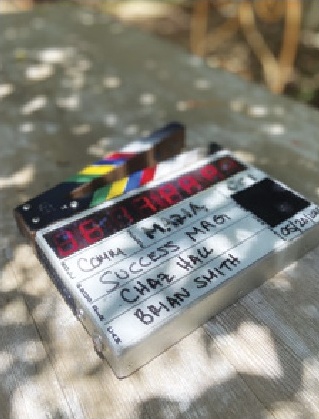
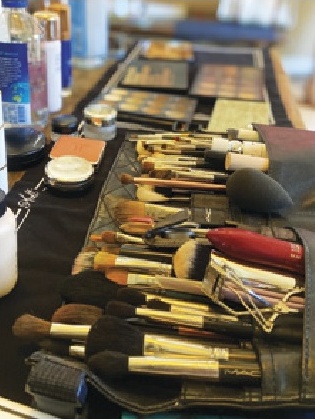


BEHIND THE SCENES
A glimpse into our photo shoot in Los Angeles.
O ver the past 30 years, I’ve had the incredible privilege of telling stories, building brands, launching publications and connecting with audiences across the globe. What started for me as a traditional print career—armed with a notepad, red pen and Rolodex—has evolved into a dynamic, multi-platform journey fueled by innovation, technology and creativity at every turn.
The media landscape is constantly shifting. We’ve watched print give way to digital; seen the rise of social media, streaming content, podcasts, newsletters; and now, the everyday use of AI tools and automation in storytelling. It’s both exhilarating and, if I’m honest, a little bittersweet. Letting go of the “old-school” methods—things we once held sacred like layout boards, in-person editorial meetings and painstakingly curated, handheld recorder interviews—can feel like saying goodbye to an old friend.
I miss those days at the start of my journalism career, back in Toronto, Canada, where running around as an inexperienced reporter with pen in hand was the norm. It was the rush of getting the story firsthand that will always hold a place in my heart. Still, with new software platforms and tech tools giving us the ability to create and share content faster, smarter and more creatively than ever before—we now have access to global audiences at the click of a button. This means the world to me on so many levels. It’s no secret: AI tools are helping us create content faster, brainstorm ideas, analyze trends and connect with consumers in astonishing new ways. These shifts are not just changing how we work—they’re changing who we can reach and why we create in the first place.
That’s why, for our media-themed issue, choosing Maria Menounos for the cover was a natural fit. As a fellow mom, entrepreneur and health advocate, Maria embodies the resilience, reinvention and heart that define the media industry today. Her journey through the entertainment industry—while prioritizing wellness, family and authenticity—mirrors so many of the core values that I hold dear, both personally and professionally.
At SUCCESS, our mission has always been to inspire, empower and support personal and professional growth. What excites me most about this next chapter is that we’re no longer limited by format or geography. From interactive digital issues and short-form videos to device-friendly newsletters and global online communities, there are countless new ways to connect and create meaning in people’s lives.
Yes, change can be daunting. But it can also be the spark for evolution, both individually and collectively. Thank you for being on this incredible journey with us—and with me. As media continues to evolve, so will we.
With gratitude,

Kerrie Lee Brown
Editor-in-Chief
SUCCESS ® magazine
What do you think about our latest issue?
@KerrieLeeBrown

SOFT LAUNCH
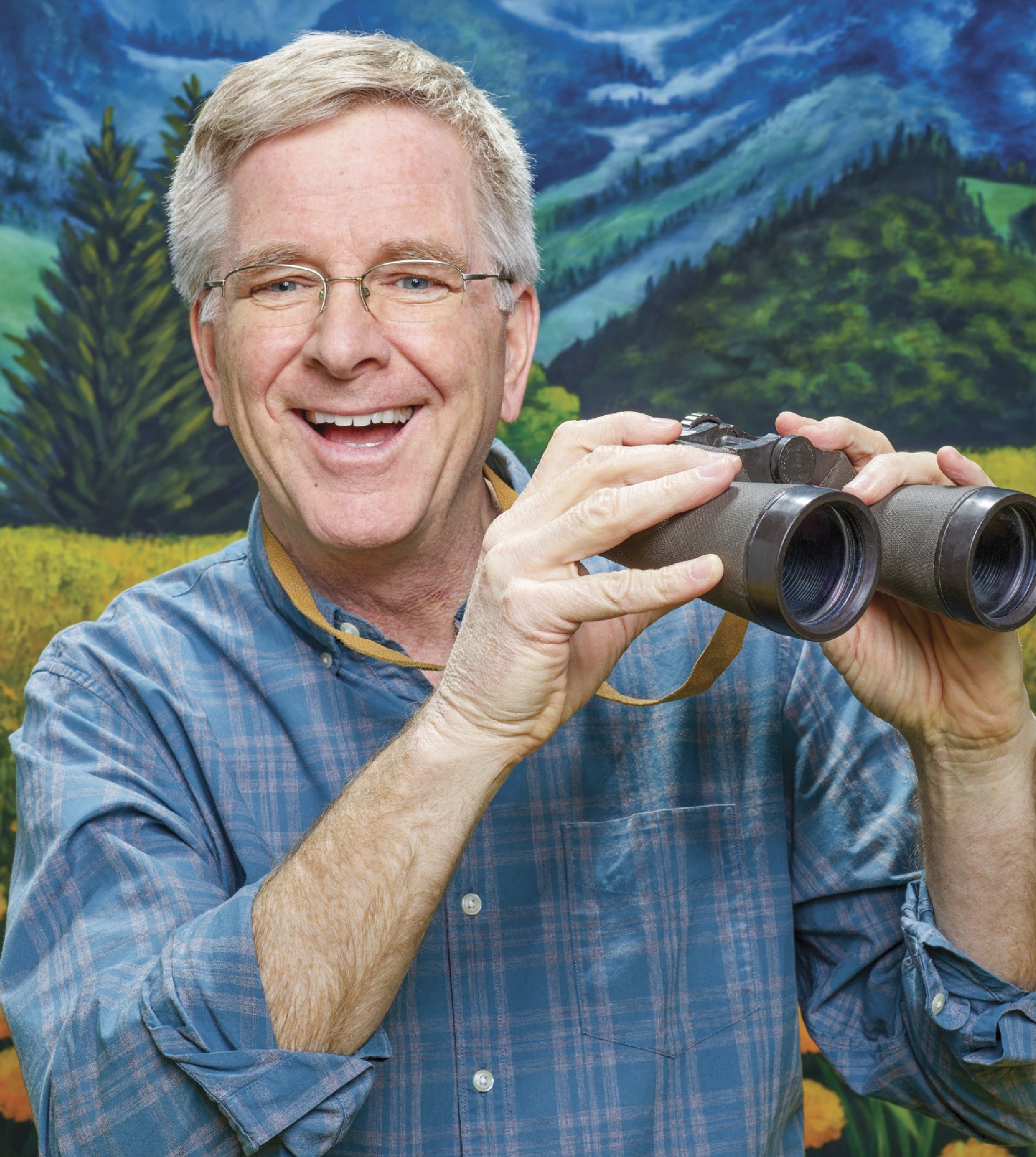
Travel Guru
Rick Steves didn’t set out to become a travel expert—he just wanted to make the most of his summer break from teaching piano. However, one trip to Europe, a knack for storytelling and a genuine desire to help others travel smarter led him to swap piano lessons for travel lectures. That spark became his first travel guide, Europe Through the Back Door, and the beginning of a multimillion-dollar travel empire built on advocating for smarter and successful traveling.
Read more online at SUCCESS.com
©ZACHARY SCOTT
SOFT LAUNCH
New & Noteworthy

Parasocial Relationships
Ever find yourself obsessively following a celebrity or influencer on Instagram? You might be investing in a parasocial relationship—a one-sided emotional connection with someone you don’t actually know (or who doesn’t exist). Social psychologists say these relationships can inspire, comfort and educate—especially during lonely times—but they have their downsides. They’ll never truly return your affection and may even heighten feelings of isolation. Social psychologist Karen Shackleford, Ph.D., explores this in her TEDx Talk, “Sherlock Holmes and Harry Potter are Real.” She explains how parasocial relationships help shape our identities, give meaning to our media experiences and even build our social awareness.
Extending the Experience

Twenty years ago, shows like Friends released 20 to 25 episodes per season. Now, streaming series often release just six to 10 episodes—sometimes all at once—leaving viewers wanting more. The market has responded with extended content: Outlander Kitchen and Harry Potter cookbooks, YouTube shows like Heavy Spoilers or ScreenCrush that unpack hidden meanings in Marvel movies, and even Four Seasons’ “set-jetting” trips to White Lotus filming locations in Maui (Hawaii) or Taormina (Italy)—if you’ve got the cash to spare.
Media Stats

Americans consume digital media about eight hours per day (double what they invest in traditional media). The shift toward more digital media consumption began in 2018. A 2024 study found that the average American spends $1,399 annually on digital entertainment and media, with consumers between ages 35-54 spending the most.
Creativity Is Iterative

According to the “idea ratio,” it takes about 2,000 ideas to get to one successful solution. “If you decide on an idea too soon, you don’t give yourself a chance to actually think of a really big idea,” says Dan Ligon, professor of advertising, public relations and media design at the University of Colorado Boulder. In one of his classes, he challenges his students to come up with 50 ideas to sell a brick that can’t be used as a brick. “They realize that the solution they came up with quickly is almost identical to what 20 other people came up with in exactly the same time. You need to come up with a solution that’s almost as unique as you are,” Ligon says. And that takes time.
Want to Write a Speech? Start With What You Feel
There’s a reason we give a speech rather than have a speech, says Hollywood-trained screenwriter Colin Sweeney, who has now ghostwritten over 400 speeches. “If you want to give an emotional experience,” he says, “you’re probably going to have to go through one as you write it.” His first speech? His father’s eulogy. “The more you can zoom in on unique personal moments in your life and use them to speak to the character of the people you’re honoring, the more other people will project their own experience of life on that.” Like screenwriting, he notes, the more detailed a script you can provide an actor, the easier it is for them to really become that character. “When we’re watching it, we assume we’re in the shoes of that character because there’s lots of detail that we can project our own stuff onto.” Director of TEDxCU Michael Burns agrees. “If the content is something that they care about, are connected to, and their message and structure was developed with the audience in mind…, their delivery will come naturally. Content is how you create confidence on a stage.”
OVEREARTH/SHUTTERSTOCK.COM; PISANSTOCK; MAXX-STUDIO/SHUTTERSTOCK.COM
SOFT LAUNCH | SUCCESS INTERVIEW
Alison Victoria
From fearless risks to full-hearted purpose, this interior design star proves that staying true to yourself is the most powerful way to build success—and inspire others along the way.
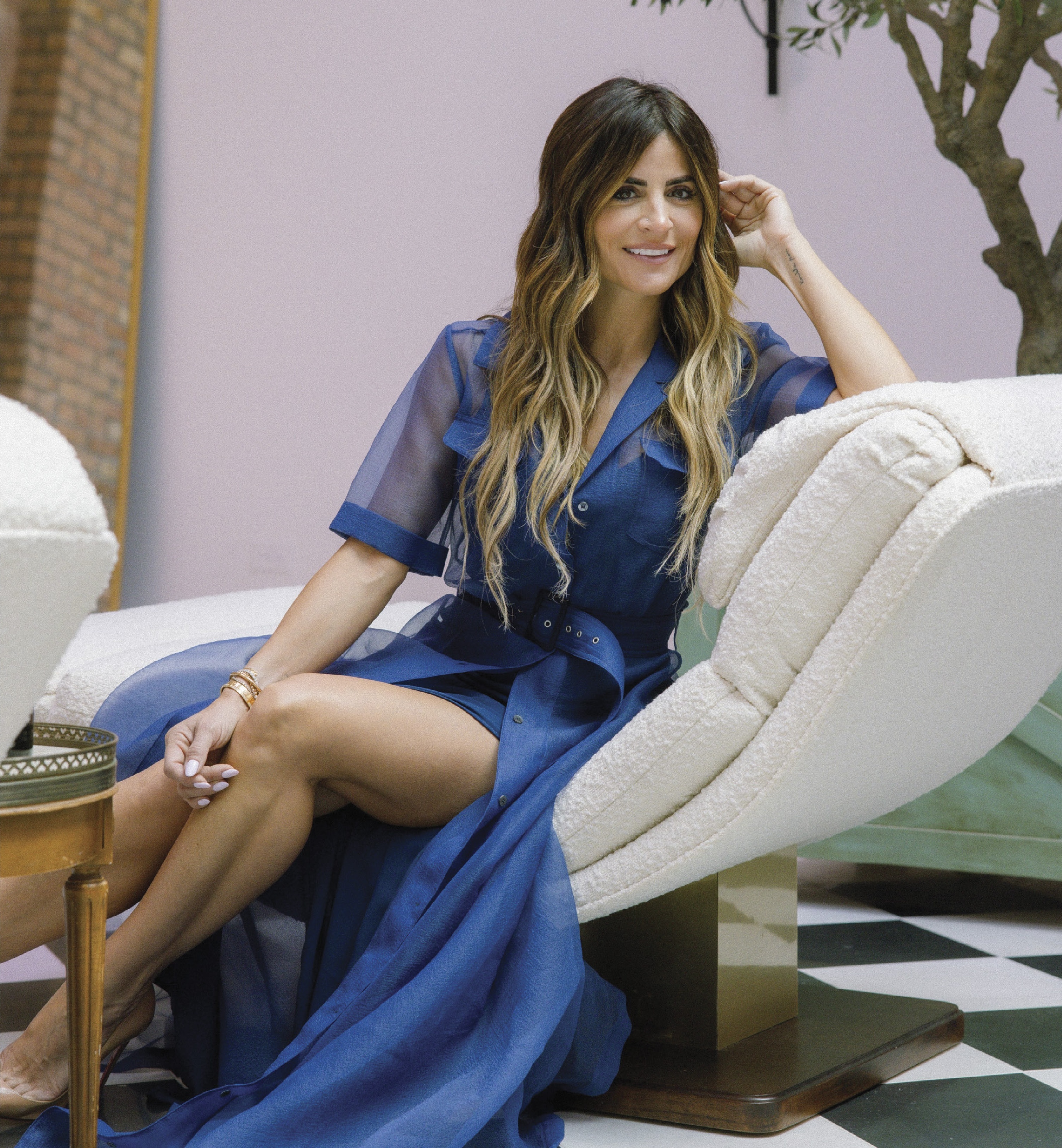
K nown for her signature blend of vintage glamour and modern edge, Alison Victoria has cemented her place as a leading force in the design world. As founder and president of Alison Victoria Interiors, her portfolio spans high-end boutiques, luxury resorts and private residences—including holiday collaborations with the White House. Onscreen, she’s the creator, executive producer and star of HGTV’s Windy City Rehab and co-host of Ugliest House in America and Scariest House in America. This fall, she returns to HGTV with the series premiere of Sin City Rehab.
Offscreen, Victoria launched Briefly Gorgeous Productions to bring raw, authentic storytelling to reality TV. She recently debuted a beauty line with Volition Beauty, inspired by her Greek heritage, and has stylish partnerships with The Tile Shop, Cabinets To Go and her new custom kitchen range hoods with Hoodsly. From homes to products to reality TV, Victoria brings bold vision and timeless style to all she touches.
SUCCESS: You’ve built an impressive career as a designer, TV host and now executive producer. What pivotal moment has shaped your journey the most?
Alison Victoria: There are so many pivotal moments. It’s all different moments that give me the opportunity to make choices. I [remember] look[ing] at the choice to answer that email that I got [from a Sacramento-based production company looking for an interior designer for an HGTV show] 15 years ago and the way that I unapologetically went for it. Then, I just took risks that led me to massive rewards. After that, there were so many pivotal moments—like making the choice to always follow my heart, as hard as it might be. You’ve got one life; it’s not long. Why waste your time doing anything you don’t love or working with people you don’t like or [who] dim your light?

“MY VISION IS TO CONTINUE THE RAW, UNEDITED, UNFILTERED EXPERIENCE THAT ANYONE HAS IN ANY CATEGORY. I’M NOT STICKING WITH HOME. I’M GOING INTO DOCUMENTARIES. I AM GOING INTO ANYTHING THAT IS AUTHENTIC.”
S: With multiple award nominations for Windy City Rehab and the launch of your production company, what’s your vision for the future of reality TV?
AV: My vision is to continue the raw, unedited, unfiltered experience that anyone has in any category. I’m not sticking with home. I’m going into documentaries. I am going into anything that is authentic. I love the fact that 15 years ago, I was given this chance and that someone saw [an opportunity] in me. I continued to just stay true to myself, not changing for anyone. I want to keep finding characters like that in this world—who are passionate and real. I want to make sure that the people [who] I put on television are the same people you would meet if you ran into them at a restaurant. That there is no difference, that there is only one character in their life, and it’s their authentic selves.
S: What’s your creative process like, and where do you draw inspiration?
AV: Inspiration can start anywhere for me. It could start with a fabric… an antique light fixture… or an experience that I had recently, whether it’s through travel, or a restaurant or really anything visual…. It always starts somewhere. So, the process is different for every job I do.
S: Your philanthropic efforts are inspiring. How do you choose the causes you support, and what impact do you hope to create?
AV: My philanthropic efforts were always with animals early on and still are. I’m on the board of PAWS (Pets Are Worth Saving). Habitat for Humanity has always been near and dear to me, especially the Women Build program—getting out there with my team and building homes for people who deserve them. It’s great to follow [the process]—from framing walls to bringing flowers and sitting in the kitchen you helped bring to life. Women Build inspires other women to not just build but to be a part of something important.
The way I got involved with the Chicago Refugee Coalition was through my boyfriend, Brandt Andersen, who has devoted his life to helping refugees through his organization, the REEL Foundation. Because of his film, The Stranger’s Case, and us spending time with refugees in Turkey, Greece and the Middle East, it made me go, Chicago’s having a real crisis right now. How can I get involved?

“INSPIRATION CAN START ANYWHERE FOR ME.”
S: With your busy schedule filming, designing and launching new ventures, how do you prioritize self-care and maintain balance?
AV: I don’t know if I like the word balance because we’re all trying our best to do it all. But if you’re doing it right, you’re admitting that you can’t do it all. That was a huge tipping point for me—realizing I needed help. I’m only as good as the people I work with and surround myself with. Jeff Bezos said he prefers “work-life harmony” over balance—life and work intertwined, not a trade-off. I loved that. For me, it’s about doing a little of what’s important every day. When I’m happy, I feel like I float around the world and happiness is drawn to me.
S: You’re expanding into beauty with a collaboration with Volition Beauty. How does this project connect with your personal values and Greek heritage?
AV: I’m obsessed with olive oil. There is no meal without olive oil and lemon. I have a tablespoon every day. It reminds me of the Greek islands—there’s something nostalgic about it, and I believe it makes a huge difference in my hair, skin and nails. I’ve never worn foundation, and I think that’s helped me age gracefully. I wanted to create something that feels like summer in Greece. It’s clean; it’s fresh. We’ve been through several iterations to perfect it. I just feel like we’ve hit the jackpot with the Glow Drops, [a combination of resveratrol from Greek grapes and squalane from Greek olives], and I can’t wait to hear what people think.
©SARAH BARLOW
SOFT LAUNCH | LEADERSHIP
The Event Alchemist
FOUNDER AND PRINCIPAL OF PINPOINT HALLIE SELTZER CRAFTS A BLUEPRINT FOR MEANINGFUL EXPERIENCES.
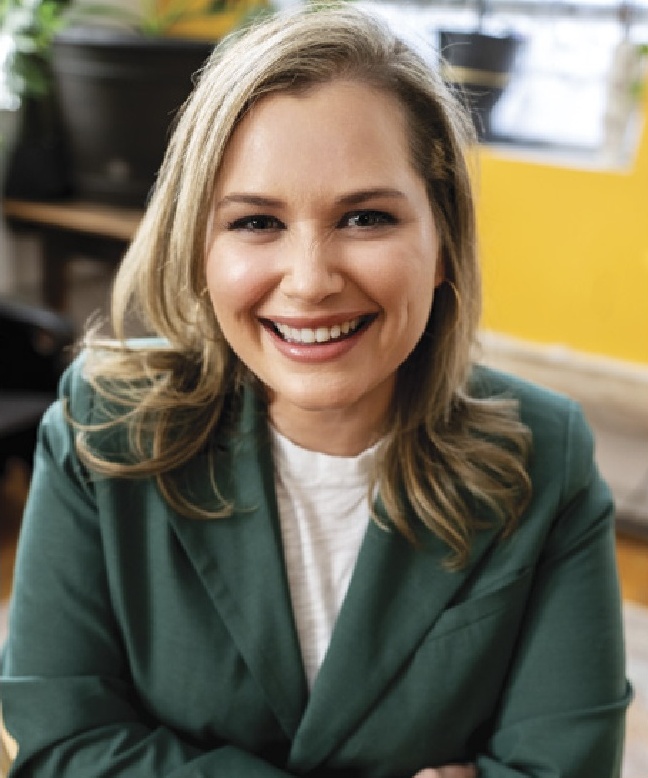
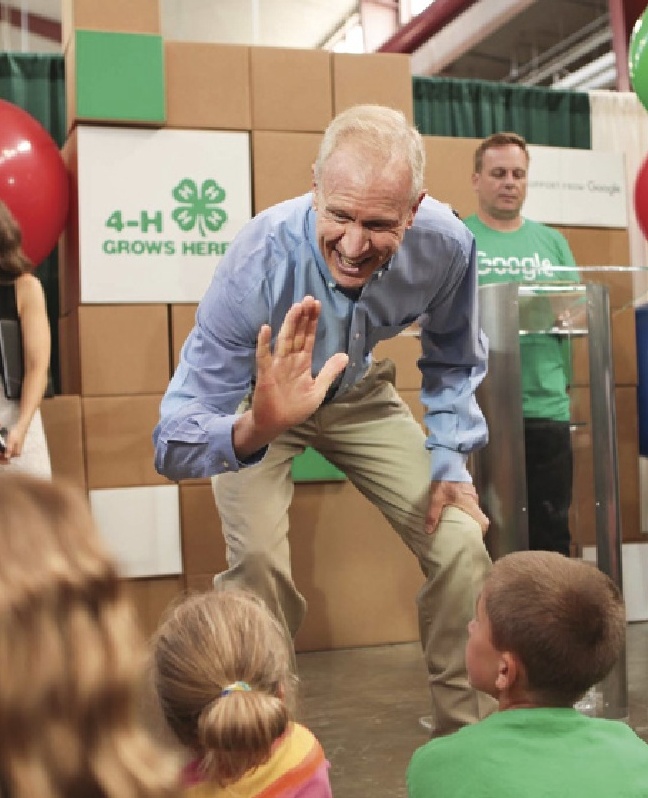
T he classroom falls silent as Selena Gomez leans in, creating an intimate moment with a high school student. It’s not a typical celebrity appearance but a carefully designed event that transforms a simple space into a powerful platform for mental health awareness. This is the magic of Hallie Seltzer’s event production—where every detail is intentional, every moment purposeful.
When Google.org committed $10 million to expanding mental health resources for young people, they didn’t just want an announcement. They wanted an experience that would truly connect. Working with Seltzer’s Pinpoint Productions, they created an event beyond the typical press conference. Students created vision boards, engaged in meaningful conversations and watched as their experiences were validated by a global pop star and California’s leadership.
“It just was one of those events where you could see the lights turning on in the eyes of the kids, the teachers and the room,” Seltzer recalls.
Where most event producers see a room, Seltzer sees potential for transformation. This fundamental difference has been the driving force behind Pinpoint, the groundbreaking event design company rewriting the rules of corporate and nonprofit gatherings.

CLOSING THE INDUSTRY GAP
A decade into her career, Seltzer was fed up with the event industry’s cookie-cutter approach. While other agencies focused on creative execution and technical precision, she craved something deeper—events that were truly meaningful.
“Events are more than just logistics and aesthetics,” Seltzer says. “They’re about making meaning.” Her frustration fueled her motivation. At 29, with nearly 10 years of experience producing massive activations for brands like Bank of America and Samsung, she saw a critical gap. Most agencies were simply executing tasks. She wanted to create experiences that could shift perspectives and inspire action.
Pinpoint Productions launched not from a meticulously crafted business plan but from an unexpected opportunity. A client who wanted to work with Seltzer asked if she had a company—and in that moment, she decided she did.
BEYOND GENERIC EVENTS
Her approach was revolutionary in an industry often focused on spectacle. Seltzer wanted every event to have a purpose, to be designed specifically for the community it served. Whether launching a product or hosting a conference, her team would ask: “Who’s in the room? What context matters? What deeper connection can we create?” This wasn’t just event planning—it was storytelling through shared experiences.
Her approach reached new heights with another Google.org project supporting economic opportunity. Instead of a generic volunteer experience, Pinpoint Productions designed nine region-specific events with Feeding America. In Mesa, Arizona, the community needs looked completely different from those in Pittsburgh, Pennsylvania. By diving deep into local contexts, Pinpoint created volunteer experiences that matter—updating refrigeration, supporting food infrastructure and connecting “Googlers” directly with community needs.
Beyond generic events, these are orchestrated moments of meaningful connection. Whether working with tech giants or nonprofit organizations, Seltzer’s team proves that strategic event design can transform how brands interact with communities.

A LEADERSHIP JOURNEY OF VULNERABILITY
Launching Pinpoint with a “fake-it- ’til-you-make-it” attitude, 30-year-old Seltzer recalls her early years as a crash course in leadership—and survival.
“I was trying to constantly manage up and figure things out as I went,” she says candidly. With early days characterized by relentless work and a reluctance to delegate or automate, Seltzer admits to micromanaging everything, believing that “working her tail off” was the definition of strength. She felt impostor syndrome kick in, which led to burnout and a few teary moments.
Then the pandemic tested her leadership in ways she never anticipated. When live events disappeared overnight, Seltzer made an extraordinary decision.
“I stopped taking a salary for about a year and a half just to keep my team on,” she recalls. Her team shrank from 20 to just three people, but her commitment never wavered.
The most profound lesson came through vulnerability. “The team is kind of everything,” she realized. “Companies are only as strong as their team.” Learning to trust her employees, give them space to contribute and lead with empowerment became her greatest transformation.
“You can give clear direction while allowing space for creativity and collaboration,” Seltzer says.
Her revolutionary approach extended beyond event design to fundamental business philosophy. As a woman-owned business, Seltzer saw diversity not as a checkbox but as a core strategic advantage.
“I truly believe that diversity in every sense of the word is just smart business,” she emphasizes. “We’re building events for everyone. That means having people with different backgrounds, identities and life experiences contributing to planning and executing events to make them truly authentic.”
This commitment means intentionally building a team (now back to about 20 employees) that reflects the communities her events serve. Whether working with tech giants like Google or community organizations like Feeding America, Seltzer understands that meaningful experiences emerge from diverse perspectives.
THE FUTURE OF CONNECTION
In a world drowning in digital noise, Seltzer sees live events as a lifeline of human connection.
“People don’t just want information,” she argues. “They want to feel something. And when they do, they remember it.”
The future of events, according to Seltzer, isn’t about grand spectacles but intentional experiences. “We’ve been seeing that bigger companies are leaning more into smaller-impact events,” she explains. Her vision goes beyond intimate gatherings—it embraces technological innovation.
Artificial intelligence, she believes, will be transformative. “AI is going to help us with efficiency, budget management and generating ideas,” Seltzer notes. But technology won’t replace human creativity—it will enhance it. “Incorporating new technology in a smart way and not being scared of it is what’s going to keep us ahead.”
Her prediction is clear: Events will become more strategic, more meaningful and more technologically integrated. But the core remains unchanged—creating moments that genuinely connect people.
Seltzer points out, “Live events break the noise because human connections really are more important than anything.”
LEADERSHIP WISDOM
For Seltzer, leadership boils down to one essential truth: “Authenticity is everything.” Her most powerful advice cuts to the heart of genuine leadership: “The best leaders set high expectations without making people feel small.”
In a world of constant noise and pressure, she believes true leadership involves navigating challenges “with a sense of calm and care and perspective.” Her final wisdom resonates with simplicity: “You can be thoughtful and constructive without losing kindness.”
This can serve as the blueprint for creating not just successful events but meaningful human experiences.
COURTESY OF PINPOINT PRODUCTIONS
SOFT LAUNCH | TOP OF MIND
Cutting-Edge Media
WHICH MEDIA PLATFORM HAS CONTRIBUTED MOST TO YOUR PROFESSIONAL GROWTH?
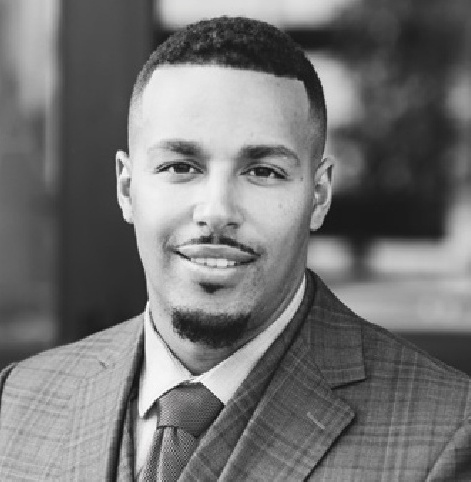
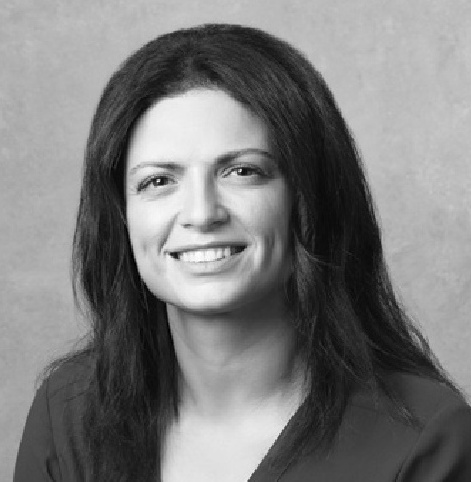
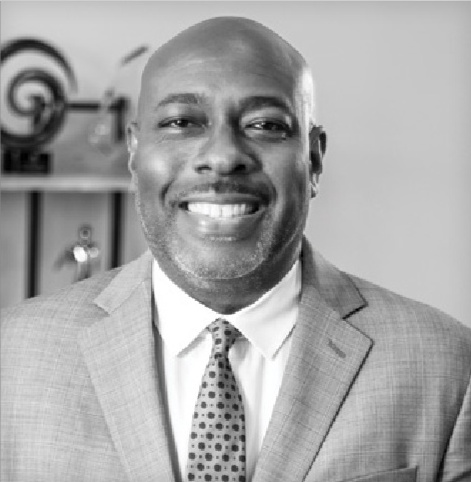
©KELSEY KARAIDOS; ©BRYDGE AGENCY; ©BRANCH; ©CLASSICAL CALIFORNIA
SOFT LAUNCH | ENTREPRENEUR
The Identity Expert
ROCKY GARZA HELPS PROFESSIONALS TRADE BURNOUT FOR SUSTAINABLE SUCCESS BY ALIGNING WHO THEY ARE WITH WHAT THEY DO.

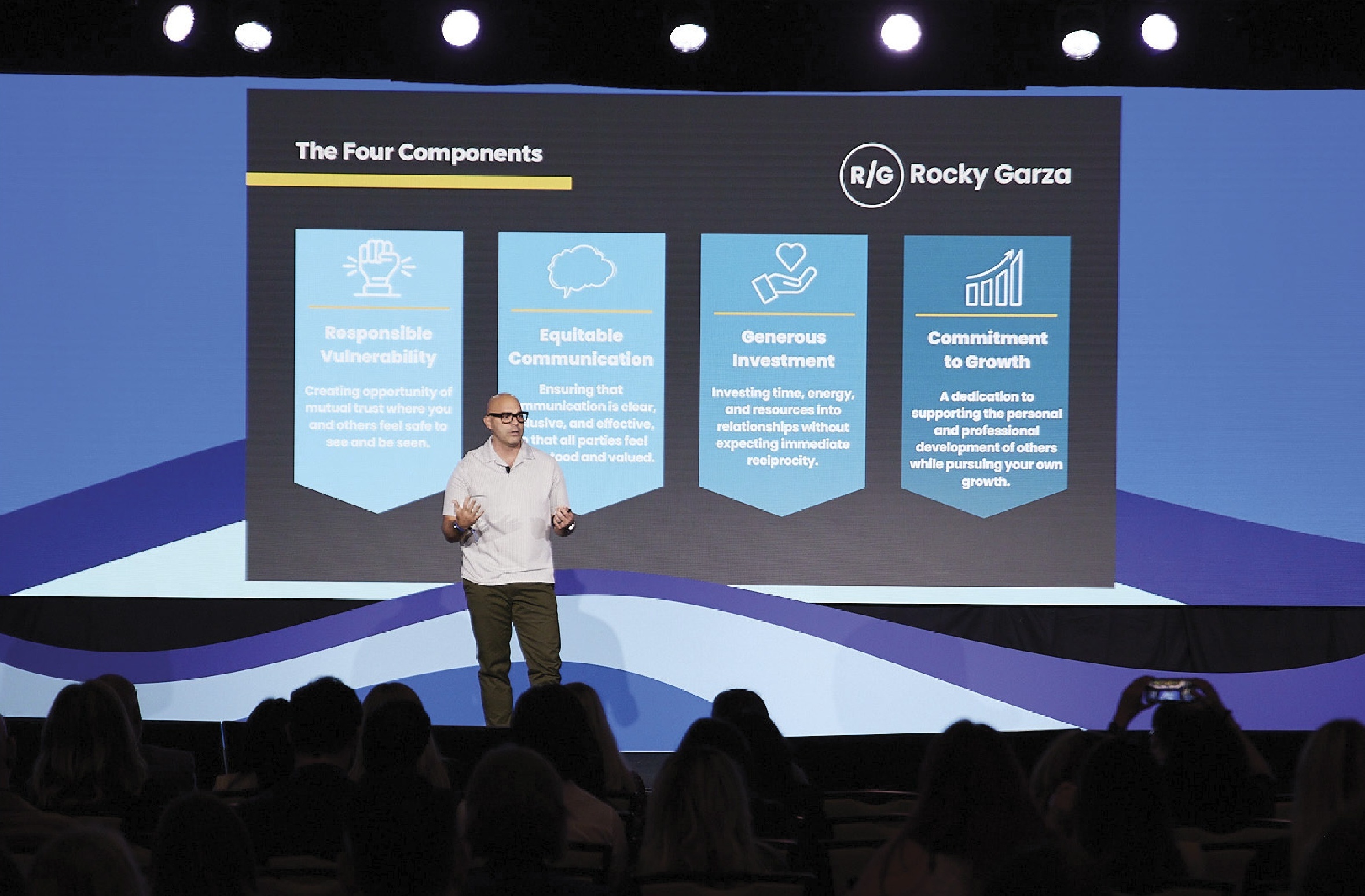
R ocky Garza doesn’t measure success by titles or achievements. For him, success is about understanding who you truly are. The Dallas, Texas-based leadership coach and keynote speaker has spent over a decade helping individuals and organizations discover the unique intersections of personal conviction and professional ambition.
“I’ve never met a person [who] didn’t want to be seen, known and understood,” says Garza, who specializes in helping people gain clarity about their identity. This simple yet profound insight forms the foundation of Garza’s approach to leadership development and personal growth.
SHIFTING PRIORITIES
Garza’s journey to becoming a sought-after leadership coach wasn’t exactly conventional. After eight years in ministry, he and his wife Sarah launched a successful wedding photography business, traveling the world to shoot around 40 weddings each year.
“She quit her job in ’09, I quit my job in 2010, and our parents thought we were crazy,” he recalls of the business’ early days. “This was pre-Pinterest, pre-Instagram. Those things all came about while we were in the throes of wedding photography.”
The turning point came when the couple learned they were expecting their first child. “Personal conviction said, ‘I don’t want to travel 40 times a year and have a kid. I don’t want to be gone every Saturday and have children. That’s not the kind of father that I want to be,’” Garza explains.
“If I could do anything, I’d want to help people know who they are,” he continues. “I’ve spent my whole life trying to figure out what that means, and it’s only been identified by the role I play personally or the title I carry professionally. And surely there has to be more to who I am than how I’m going to be identified at a networking event.”
Personal conviction led to professional reinvention. Garza began helping creative entrepreneurs build businesses that aligned with their values—a service that eventually expanded to include team coaching and keynote speaking.
DISCOVERING YOUR TRUE SELF
At the heart of Garza’s methodology is a process called “identity mapping”—a four-hour journey of self-discovery for individuals and an eight-hour workshop for teams of 15 or fewer. Unlike standard personality assessments, identity mapping doesn’t tell you who are based on someone else’s rubric. Instead, it helps you extract and articulate what you already know about yourself but may lack the language to express.
“I believe every person knows who they are; we just lack the language to describe it such that it’s understandable to anybody else,” Garza explains. “I think we struggle with the right questions and the right curiosity and the right environment to get that out so that we can look at it and then we can understand it.”
The process helps participants identify three key elements: their core values (why they do what they do), their strengths (how they do what they do) and their identifiers (words like “strategizer,” “analyzer” or “caregiver”).
CREATING MEANINGFUL COLLISIONS
Garza says there’s a critical distinction between being a contributor on a team and being what he calls an “impact player.” While everyone contributes something, impact players approach life and work proactively rather than reactively.
“Impact, meaning that I am fully aware of what happens when my life, my world, who I am, collides with somebody else,” he says. “The best players are proactive. They wake up in the morning and they say, ‘I know exactly what I’m going to do today. I’m gonna control what I can control.’”
This shift from reactive contributor to proactive impact player forms the basis of Garza’s leadership development program, The Path. This 24-step process includes identity mapping, the confidence method (addressing fear, doubt and impostor syndrome), the influence appraisal (developing the self-awareness to lead with maximum impact) and strategies for creating lasting habits.
CHALLENGING CONVENTIONAL WISDOM THROUGH MEDIA
With a growing following across platforms like LinkedIn, Instagram and TikTok, Garza uses social media to create what he calls “significant disruption.”
“I love talking about things on LinkedIn that go against typical business knowledge,” he says. “Not because typical business knowledge is bad, but I just want to break the monotony. And not because I want to be right. I just want to make sure that what you think is what you think.”
His content aims to help people recognize their uniqueness, receive affirmation for that uniqueness and believe they can use it for good in the world. This stands in contrast to the typical professional world, where value is often reduced to titles and responsibilities.
“The reason so many folks professionally feel tired and burned out and whipped and distraught is because we have taken that list of uniqueness and affirmation of uniqueness and uniqueness for good, and we have diluted it down to the title and roles and responsibilities,” he explains.
LIVING HIS VALUES
Garza practices what he preaches. When introducing himself at the start of our interview, he began not with his professional achievements but by talking about what matters most in his life, his family: his wife of 16 years and their two children.
“I made a commitment to myself a couple years ago when speaking started picking up again, and I was on stages in front of thousands of people,” he says. “I will not get on that stage and tell you to pursue who it is that you want to be and make sure you don’t sacrifice who you are while sacrificing who I am.”
Through his coaching, speaking and media presence, Garza continues to challenge leaders to find their own path to impact—one that honors both their personal conviction and professional ambitions. In doing so, he’s helping reshape how we think about success, leadership and the meaningful life we all seek to create.
©AFRITINA COKER/COURTESY OF ROCKY GARZA; COURTESY OF ROCKY GARZA
SOFT LAUNCH | HOW TO
Why You Should (Finally) Master the Art of Video
KERI MURPHY WORKS WITH ENTREPRENEURS TO HELP THEM HONE THEIR MESSAGE AND GET COMFORTABLE BEING ON CAMERA.

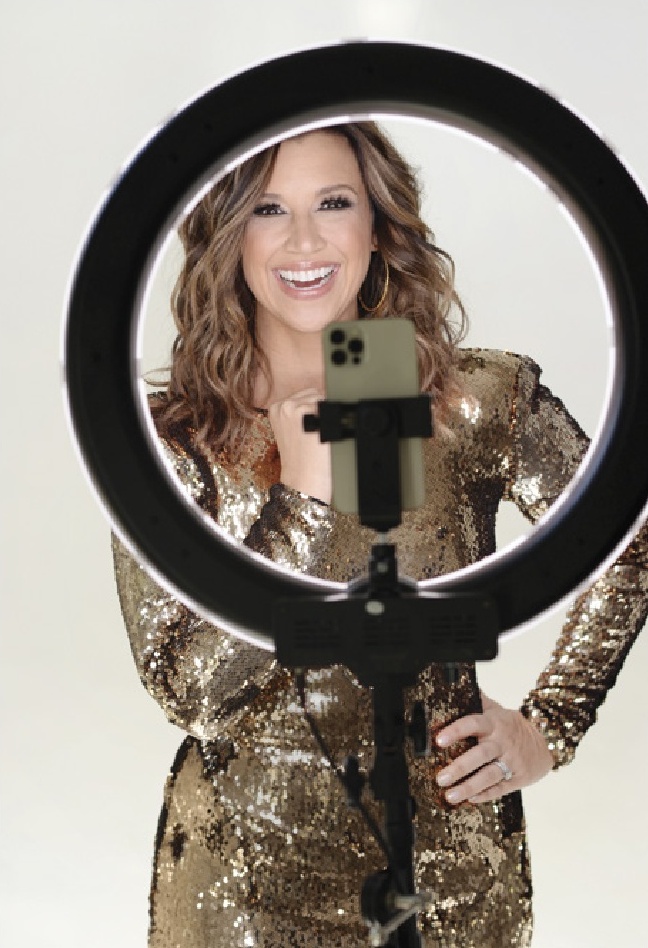
I f the thought of getting in front of a camera and filming a video fills you with terror, you’re not alone. But video doesn’t have to be scary—and, in fact, it might just be the key to your success.
That’s the philosophy of Keri Murphy, an international speaker, media expert and business mentor. Through her company, Inspired Living, Murphy helps entrepreneurs get comfortable being on camera—and, just as importantly, she teaches them how to leverage the power of video to grow their brands.
“If you have a product or service and you are trying to find clients online, you have to be using video,” she says. “You’re going to become obsolete. This is the way of the world.… It’s vital.”
MURPHY’S ON-CAMERA ROOTS
As a little girl growing up in Portland, Oregon, Murphy always wanted to be in front of the camera. After lots of begging, her mother agreed to sign her up for local modeling and acting classes when she was 11. Murphy spent her teens doing commercials and independent films, with a goal of someday becoming a supermodel or Mary Hart on Entertainment Tonight, she says.
In her 20s, she launched an interior design business, then bought and grew a talent agency. But even as she branched out into entrepreneurship, she never forgot her video roots. “I was still on camera all the time, promoting my business and doing lifestyle segments with the local morning show,” she says. “I was in New York doing fashion week segments.”
Then, the 2008 recession hit, and Murphy lost everything. It was devastating, but the experience taught her an important lesson—one that she still carries with her today. “The business is an extension of me, but it’s not all that I am,” she says.
Murphy moved to Los Angeles to work in television hosting, but after a few years, she felt unfulfilled. She remembers feeling called to do something big with her life, but at the time, she didn’t yet know what that was. After a period of personal development, traveling and soul-searching, she realized she wanted to help people get more comfortable expressing themselves.
“IT’S NOT LIKE BACK IN THE DAY WHEN NETWORKS WOULD COME SCOUT SOMEONE AND DEVELOP YOU. IF YOU DO HAVE BIG DREAMS OF WRITING A BOOK OR SPEAKING ON BIG STAGES OR WHATEVER IT MAY BE, NOW YOU NEED TO COME PACKAGED AND READY.”
BUILDING ONLINE COMMUNITIES AND MOVEMENTS
With that goal in mind, she launched Inspired Living in 2011. Since then, she’s interviewed hundreds of celebrities and successful entrepreneurs on ILTV, the company’s media channel. In addition, Murphy teaches entrepreneurs how to use video to reach new clients and grow their businesses.
She offers programs for entrepreneurs who are at various stages in their video journey, but one of the most popular is an immersive, two-day training and video shoot in Los Angeles. Participants hone their messages, work on their body language and practice being in front of the camera. Then, Murphy brings in celebrity hair and makeup artists, brand photographers and other experts for a video shoot. Participants go home with videos they can use on their websites, in email newsletters, on social media and wherever else they want to make an impact.
Murphy works with a wide array of individuals, from fitness trainers and plastic surgeons to executive coaches and real estate agents. To succeed in their businesses, entrepreneurs must first establish themselves as a trusted resource and an authority in their field, says Murphy. They must also create an emotional connection with their ideal clients. Video is the best way to achieve both of those goals, no matter what industry they’re in.
Some of her clients are using video as an advertising and marketing tool, but most want to master the medium so they can build online communities and movements. They’re developing online courses and building out YouTube channels but also growing their audiences so they can achieve even bigger dreams, like writing books, securing speaking engagements, starting product lines or establishing brand partnerships.
“Everything really depends on your audience right now,” Murphy says. “It’s not like back in the day when networks would come scout someone and develop you. If you do have big dreams of writing a book or speaking on big stages or whatever it may be, now you need to come packaged and ready.”
OVERCOMING FEARS AROUND VIDEO
Many entrepreneurs—especially women—come to Murphy with a lot of nerves and anxiety around being on camera. But she helps them overcome those fears by reminding them that how they look is not nearly as important as what they’re saying and how they’re saying it. Confidence and credibility are key. “Video is not about you,” she says. “You’re just a conduit to a message.… Overall, if you show up as a credible source with a solution, I really don’t care what you look like.”
She also encourages entrepreneurs to act as if they’re only talking to one person—their ideal client—rather than every single person on the internet. And, in Murphy’s training sessions and video shoots, everything is unscripted because, she says, “You can’t be in your head and your heart at the same time, and video is all from your heart.”
Above all else, Murphy advises entrepreneurs to focus on what sets them apart from everyone else and refine their messaging accordingly. Then, she encourages them to dive right in to the wonderful world of video. “Embrace the fact that you know enough, that you have something valuable to share,” she says. “The more you let fear stand in the way of you showing up, the harder it’s going to be.”
©DEBBIE WALTON/COURTESY OF KERI MURPHY; ©ISAIAH MAYS/COURTESY OF KERI MURPHY
SOFT LAUNCH | WELL-BEING
From Diagnosis to Drive
MULTIPLE SCLEROSIS COACH KAREN DWYER FOCUSED ON SMALL, SUSTAINABLE CHANGES TO TURN HER HEALTH AROUND IN THE FACE OF AN MISDIAGNOSIS. HERE’S HOW SHE’S HELPING OTHERS DO THE SAME.
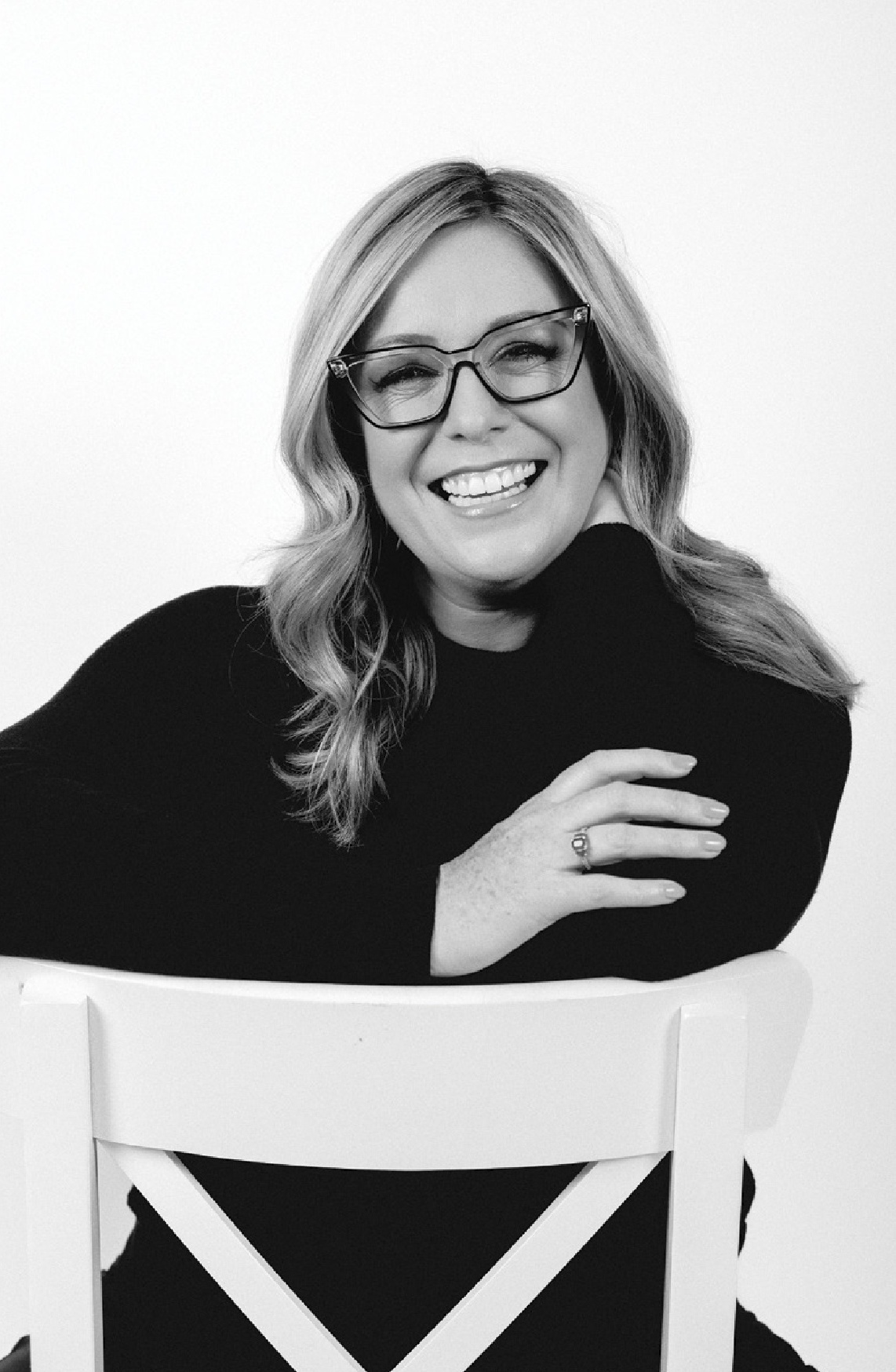
G rowing up, MS to Success founder Karen Dwyer dreamed of someday being successful. Her childhood vision? Hitting the hair salon for a weekly professional blowout. Today, the Dublin-based entrepreneur and chronic illness advocate gets her hair blown out twice a week.
And while Dwyer looks forward to her regular hair appointment, it’s nothing compared to the joy and fulfillment she’s experienced as a health coach on a mission to help people with multiple sclerosis take charge of their health—and change their lives in the process. MS is an unpredictable autoimmune disease that causes the breakdown of nerves’ protective covering; it impacts nearly 3 million people worldwide.
While Dwyer doesn’t have an MD, RN or a PT after her name, she offers something many health care professionals don’t—lived experience with multiple sclerosis and its physical, mental and emotional toll. Though her diagnosis in 2011 hardly felt like a gift, navigating lifestyle changes, mindset shifts and daily challenges has become her greatest asset as a coach and founder.
When Dwyer learned that MS was responsible for the right-sided numbness she’d been experiencing, she had a 7-year-old, a brand new baby and an inexplicable sense that everything was going to be OK. While she acknowledges it sounds strange, she was struck by an inner knowing that said, “You’re beating this.”
Though her instincts were right, there was no shortage of hurdles along the way. From optic neuritis to crushing fatigue, an episode of acute swelling in her brain, and weekly injections of an immunosuppressant that forced her into bed for entire weekends, Dwyer struggled to handle her new diagnosis along with motherhood, a full-time marketing manager position and what she describes as a toxic relationship.
Within a few years, she’d withdrawn from most social activities, but when her illness forced her to step away from work, “I felt like I buried myself and my confidence six feet under,” she recalls. Things got worse when her partner left on Christmas about a decade ago.
Two weeks later, she attended a conference that would change her life. There, she was asked to reflect on what she was grateful for. Initially, she drew a blank. Until she realized she had not been responsible for herself and her own actions. Waking up to that reality, she describes, “was like a wet fish across the face.”
One year later, her doctor told her, “Whatever you’re doing, keep doing it.” By then, Dwyer’s energy had returned, she was off the immunosuppressants that gave her flu-like symptoms, and her doctor said her MS lesions had shrunk. Most importantly, she was finding joy and peace again. She remembers leaving the clinic that day and pausing to smell the flowers.
While she made many lifestyle changes that year, including experimenting with diet and movement, she also shifted her attitude. Instead of “white-knuckling the whole thing” and feeling desperate for each new supplement or lifestyle change to work, she took a more relaxed approach, viewing each treatment as an experiment.
“WE EXIST TO BRIDGE THE GAP BETWEEN THE MEDICAL MODEL AND EVERYDAY LIFE.”
Over time, she learned that, along with subtle changes to her routines including eating, moving and even breathing differently, gratitude played a significant role in her health. “It does prime and rewire your brain,” she explains. Inspired, she published a gratitude journal in hopes of giving others the chance to benefit from a gratitude practice.
But that was just the beginning. Dwyer started spending hours on the phone with strangers seeking MS support and advice. While she’s adamant that “I don’t have a cure for MS,” Dwyer was always happy to share her story in hopes that others could learn from it. “Then, I would start waking up at 4 a.m. being like, ‘I forgot to tell her this!’”
Eventually, Dwyer quit her corporate job to coach full time. “It was a really exciting time, but I had no idea how to run a health business program online,” Dwyer admits. So while she was busy helping people find holistic, personalized ways to improve their health and quality of life, building relationships and garnering testimonials, without a sustainable business plan, her bank account rapidly shrank.
Dywer wasn’t about to let finances stop her, though. “We exist to bridge the gap between the medical model and everyday life,” she says, and given the breadth of that gap, walking away was not an option. Instead, she did something completely novel—she asked for help. First, she got a loan from her mom. Next, she engaged a business mentor.
With support, Dwyer has grown her business exponentially. Today, her team includes more than a dozen practitioners, including a neurologist, a naturopath and a habit coach, just to name a few, as well as administrative staff. Her clients, who hail from 27 countries, are offered as many as a dozen virtual group coaching sessions each week, where they can access the strategies, community and hope they need to envision a brighter future.
“IT’S LIKE YOUR NEIGHBOR NEXT DOOR PUTTING THEIR ARMS AROUND YOU AND SAYING, ‘I’VE GOT YOU, AND WE’RE GONNA WORK WITH WHAT YOU’RE DOING RIGHT NOW.’”
Though it’s evolved over the years, Dwyer’s business has always been true to its mission: changing lives by giving individuals like her the tools to take charge of their health, one person at a time.
What sets Dwyer apart is her multifaceted, holistic approach. “We meet people where they are at,” Dwyer says. “It’s not a cookie-cutter program. It’s not like you have to go vegan or do these crazy workouts or meditate for three hours a day,” she explains. “It’s like your neighbor next door putting their arms around you and saying, ‘I’ve got you, and we’re gonna work with what you’re doing right now,’” Dwyer says.
Instead of attempting to make sweeping changes overnight, the focus is on small, sustainable adjustments. Dwyer’s approach empowers clients to make the right daily “micro decisions” in order to change the mindset and habits that may be holding them back.
After all, it was a series of micro decisions, beginning with adopting an attitude of gratitude, that started Dwyer on the healing journey that evolved into a coaching business that’s changing lives worldwide. ◆
EDITOR’S NOTE: CONSIDER CONSULTING WITH YOUR HEALTH CARE PROVIDER BEFORE MAKING ANY MAJOR CHANGES TO YOUR CARE PLAN.
©FIONA MADDEN PHOTOGRAPHY
SOFT LAUNCH | MONEY
Cash Flow
MEET KRISTY KIM, THE ENTREPRENEUR HELPING IMMIGRANTS, WOMEN AND OTHER MARGINALIZED COMMUNITIES BUILD THEIR FINANCIAL FUTURES.
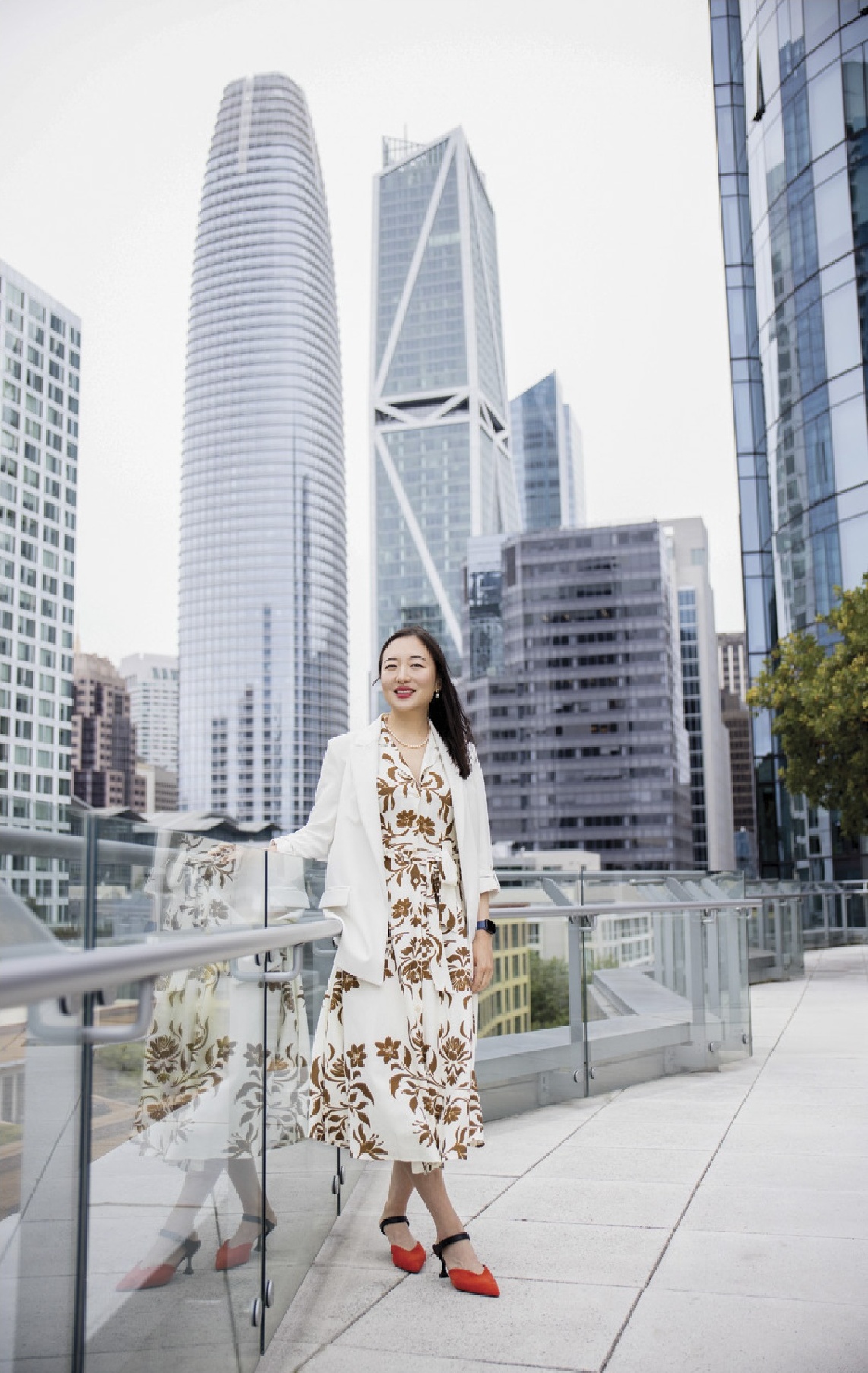
T omoCredit co-founder and CEO Kristy Kim knew she was going to be an entrepreneur since she was 10 or 11 years old—but things didn’t fall in place until she attempted to buy her first vehicle after college. “I would say the pivotal experience that led me to Tomo... was [that] I wanted to buy my first car while working as an investment banker in San Francisco,” she says.
Kim, a first-generation Korean immigrant who graduated from the University of California, Berkeley, applied for an auto loan at a Lexus dealership and was rejected right away. After struggling to figure out why and where to go for answers, Kim eventually realized it was because she had no credit history in the United States.
“I am well educated, worked hard to get a job and got a job, and I was making a six-figure income,” she says. “I did all the right things as an immigrant I was told to do. And then here I am not having [any] credit history in the U.S., so I am getting rejected within seconds of applying for an auto loan.”
Kim realized she wasn’t alone: So many students, immigrants, women and other members of marginalized communities struggle to secure leases for apartments, make big purchases such as cars or get approved for mortgages due to their lack of credit history or low credit score. In 2018, she founded TomoCredit in hopes of helping others understand and improve their financial wellness.
TomoCredit offers a credit card that’s designed to help users build their credit score as quickly as possible and receives a small fee from merchants for every purchase made with the card. To apply for it, all individuals need is a valid Social Security number or individual taxpayer identification number. TomoCredit uses alternative data sources such as bank account information to process card applications (so a traditional credit score isn’t necessary) and helps users build their scores using a weekly autopay option.
The credit card is built on Kim’s realization that a wealth of transaction records detailing spending habits exists in individuals’ bank account summaries—data that might make them credit-worthy. To launch TomoCredit, Kim found an engineer to analyze the formatting of bank account data and eventually zero in on patterns related to account balances with the goal of training an underwriting model, a structured process used by lenders, insurers and investors to evaluate and assess the risk associated with providing financing and determining the terms and conditions of transactions.
Once it gained momentum and knew how to approach the datasets, Kim shared the findings with risk managers at banks such as CitiBank or Wells Fargo and asked if it was valuable for helping individuals gain access to credit even if they don’t have any credit history. Because many big banks are set in their ways and have processes that benefit the broader population, she knew starting her own company would be the only way to provide the best service to the overlooked communities she wanted to serve.
“I have a best shot at being the A+ service for the segment of consumers who don’t have good credit or a good credit score but good cash flow and want to get help on how to improve their credit,” she says.
Since the company started, it has evolved to offer memberships that consumers can customize to their needs and also has an AI-powered credit assistant that provides TomoScores. The cash flow-based credit score helps businesses evaluate the creditworthiness of borrowers who lack a traditional credit score.
“EVENTUALLY, WE ARE DOING THIS BECAUSE WE BELIEVE THAT THE MARKET AND THE CREDIT SYSTEM WILL EVENTUALLY CHANGE IN THE WAY THAT WE DESIRE.”
“Whether it is paying off your credit card or researching your auto loan interest rate, come to us because we can offer you more personalized advice…. Unlike other companies, we’ve been training our underwriting model over the past six years with 6 billion-plus transaction data,” she says. “We’ve been training our model to give you personalized [financial] advice based on your own income level and own spending patterns.”
Every week, the TomoCredit team chats with about 50 customers over the phone to gather feedback about what other features it can add to help them reach financial goals. (For example, a user might request to dispute credit report errors via their online dashboard.) In the future, Kim hopes to continuously provide more tools and resources for customers and become their long-term “financial co-pilots”—rather than just a short-term solution.
While TomoCredit continues to innovate, Kim says the company still follows the same mission it started with, which her staff of 30 is happy to remind her of when things get stressful. “It’s not about one single feature or one single business model, one unhappy customer, one happy customer,” she says. “Eventually, we are doing this because we believe that the market and the credit system will eventually change in the way that we desire.”
Even though change to the credit system is slow, it is happening, Kim says. The evidence is in more acknowledgment of better underwriting or the need to use more AI and datasets. “My team is like, ‘Kristy, you know what? Maybe you don’t feel it every day, but definitely things are moving in the right direction.’”
Kim thinks that increasing credit access will remain a benefit to America’s economy despite any changes in the political system, thanks to capitalism and lenders’ appetite for expanding their businesses. “No matter who’s in the White House or where we are in the political environment—increasing credit access to consumers is always important and then it benefits everybody,” she says. “It not just benefits the consumers, it benefits lenders, too.”
COURTESY OF KRISTY KIM
SOFT LAUNCH | A DAY IN THE LIFE
Dana Perino
THE FOX NEWS CHANNEL ANCHOR AND HOST HAS TO KNOW EVERYTHING BEFORE SHE GOES LIVE, SO SHE MAKES SURE SHE’S ALWAYS WELL READ AND WELL RESTED.

D ana Perino’s workday consists of three parts: consuming news, reporting news and analyzing news. Yet she still finds time to take a breather from the news. It’s almost a mandatory part of her job as a FOX News Channel anchor. She knows when to lean in and when to lean out.
She may not have known exactly where she’d end up after getting her graduate degree in public affairs reporting, but she saw herself as being visible. “I couldn’t do what I’m doing now if I hadn’t done all the other things: worked on Capitol Hill, met a guy on an airplane, married him, lived in England, moved to San Diego, moved to Washington D.C., worked in the Justice Department, moved over to the White House, came to FOX and moved to New York [City],” she tells SUCCESS. “None of what I’m doing today would’ve been possible without all of that.”
We sat down with Perino in New York City to find out what her weekdays look like now that she’s very visible as a co-host of the most-watched cable news show.
“MY FAVORITE THING TO DO IS HAVE A HARD COPY OF THE WALL STREET JOURNAL ON SATURDAYS.”
4:45 A.M. | PRAY FOR GRACE
Since Perino doesn’t have the luxury of waking up with the sun, she opts for the Hatch Sleep app, which uses lights to get her up before dawn. “I love mornings. I think that’s my natural disposition but also because [of] my family: We’re ranchers,” she says. “The first thing I do is have a quiet moment of meditation and prayer…. I ask for grace and mercy…. I start the day with that intentionality.” Then, before she even turns on a light, Perino scrolls through news compilation emails for domestic news, Middle East news, editorials and op-eds. “I wish I had time to read hard copies. My favorite thing to do is have a hard copy of the Wall Street Journal on Saturdays,” she says.
5:30 A.M. | WORKOUT
Forever a multitasker, Perino has a Peloton in her Manhattan apartment so she can exercise while she digs deeper into the day’s headlines. “I can do a 20-minute ride and 30 minutes of weights. And then I’ll check my phone,” she says. Three podcasts that Perino manages to pack in before the sun even rises are The Daily Punch, The Headlines and The Daily. “I listen at 1.5 speed,” she says.
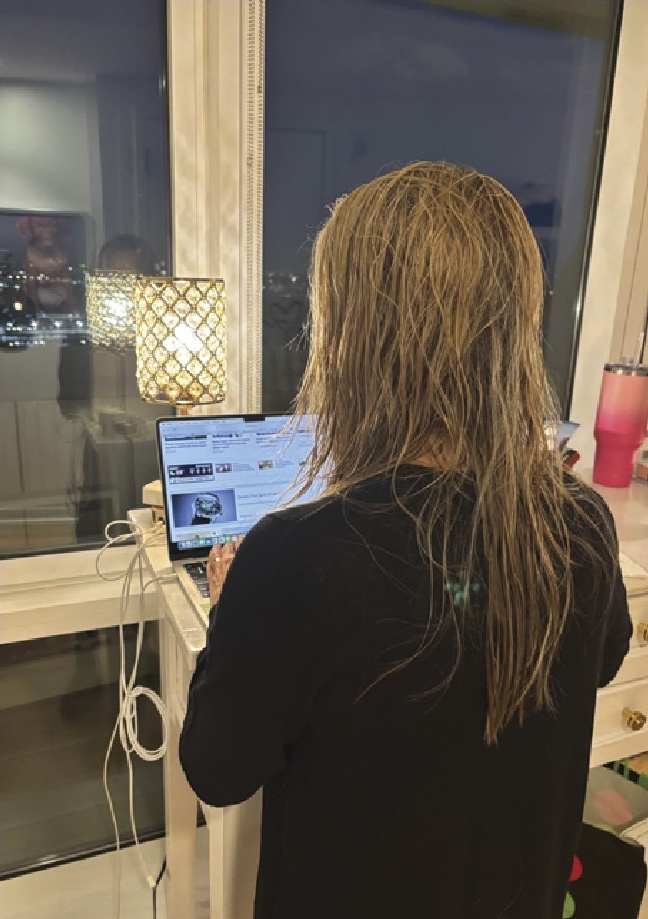
6:30 A.M. | SHOWER
Her morning shower is part of the disciplined routine. “My husband makes my mushroom coffee. I have coffee while I scroll through the websites: Fox News, Daily Mail, Drudge Report and National Review as I look out over the Hudson River.”
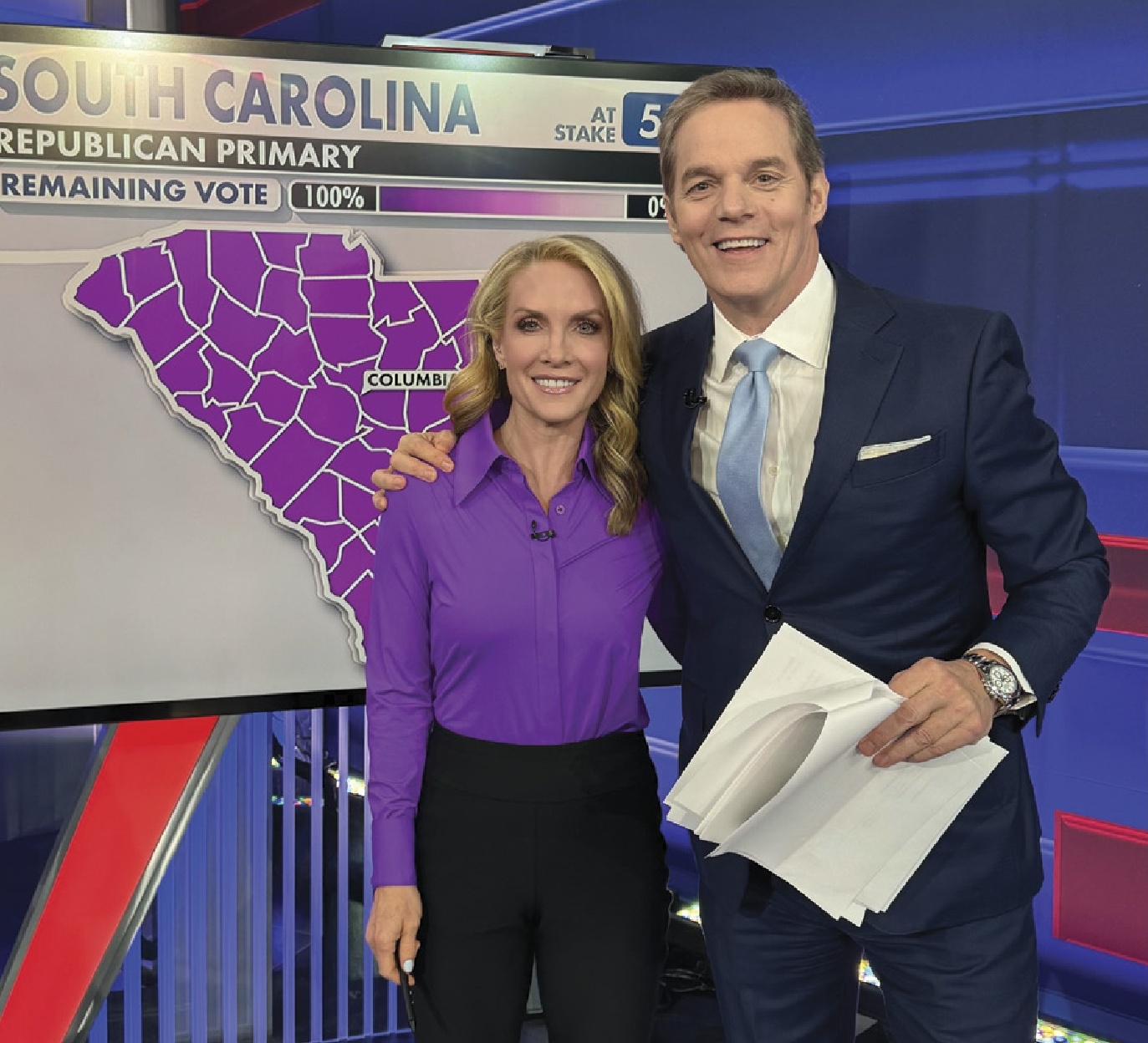
6:45 A.M. | THE RUNDOWN
Like clockwork, at 6:45 a.m., Perino gets on a call with her America’s Newsroom co-anchor Bill Hemmer and her executive producer for a rundown of the two-hour live show. After that wraps, she leaves for the studio. “I have a car service, so it’s only a 10-minute drive. With my long workday, I couldn’t do a long commute. I wouldn’t be able to do this work,” Perino shares, “and I love my job.”
7:45 A.M. | CONNECT
Right when she gets into the office, Perino has her favorite part of her day. “My assistant and I have a chat about all kinds of things… when it’s just the two of us in the office. That’s when I have breakfast: Qi’a with berries and a splash of almond milk.”
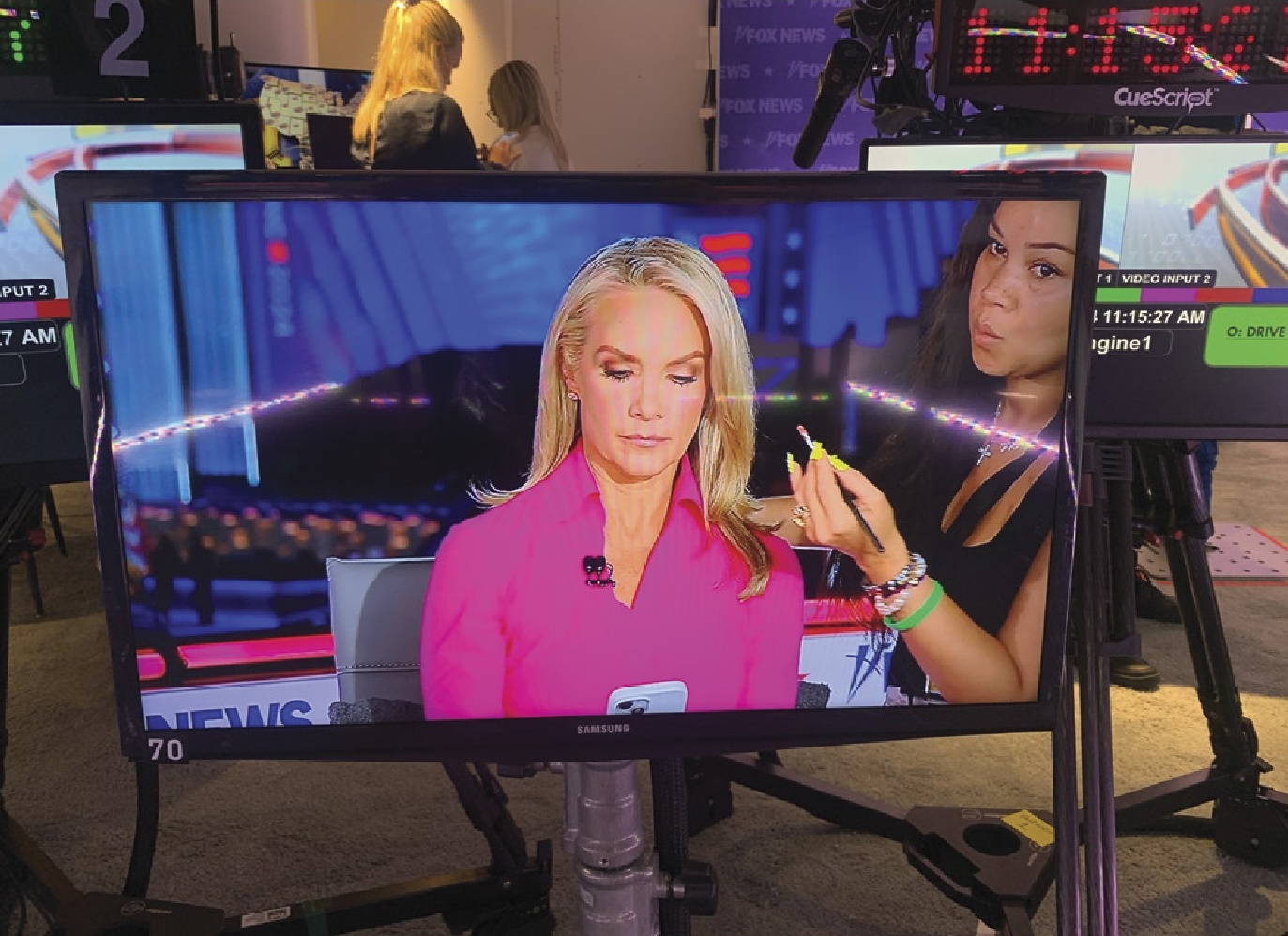
8 A.M. | HAIR, MAKEUP, COFFEE
Perino’s hair and makeup team works together to get her camera ready in less than 45 minutes. “I’m uncomfortable with this much makeup, but I know that, on camera, I look my very best,” she admits. “Then, I grab another coffee.” By 9 a.m., she’s ready to wake up the rest of America with the news she’s had on her mind since 4:45 a.m.
“WHEN I WAS THE PRESS SECRETARY (FOR PRESIDENT GEORGE W. BUSH), NOBODY EVER CARED WHAT I THOUGHT PERSONALLY. I HID BEHIND THAT, SPEAKING ON BEHALF OF THE PRESIDENT. BUT NOW I’M LIVE ON THE AIR. AND I WORK AT A PLACE WHERE I’M NOT GOING TO GET CANCELED OR FIRED FOR ANYTHING I SAY. EVER.”
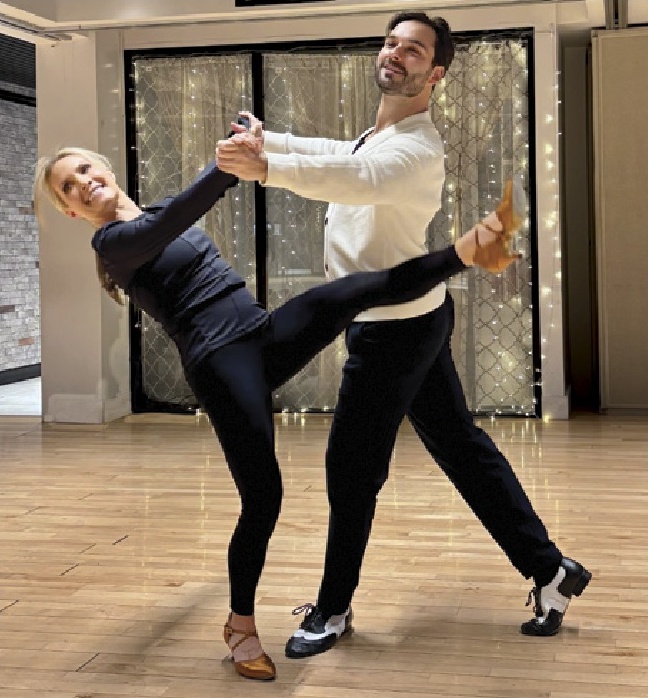
11:15 A.M. | EXIT THE BUILDING
After the morning show wraps, Perino has a break until she’s on the air again for her evening show. She uses that time to walk away from the studios. “I have a 2:30 p.m. private pilates appointment at Columbus Circle. It’s about a 20-minute walk or I can take the subway. On other days, I have ballroom dancing lessons. I get exercise, and I get off my phone,” she says, even though she uses the time on the way there to listen to more podcasts, like Ruthless or The Ben Shapiro Show.
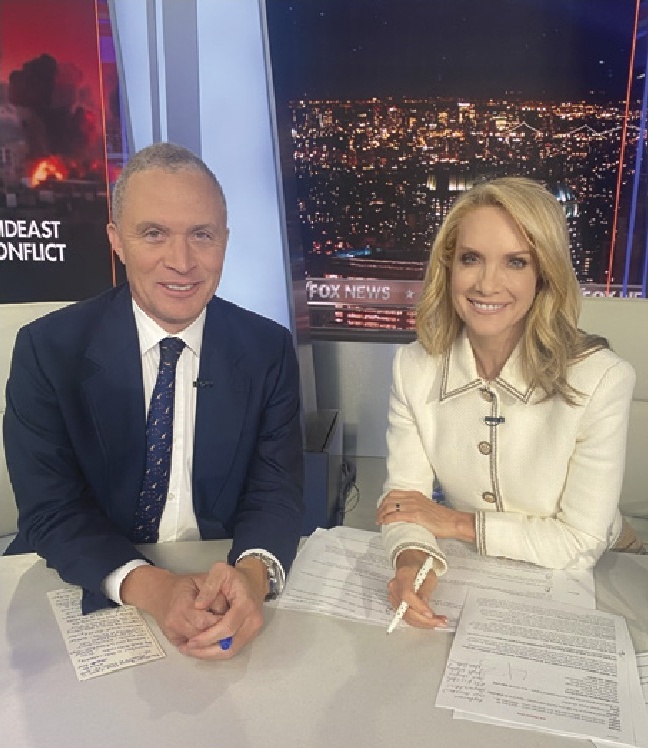
Perino and her The Five co-host Harold Ford Jr. during special coverage.
4 P.M. | FORMING OPINIONS
“The thing about The Five is that it’s a different show [because] you’re giving your opinion. I’ve learned how to do news in the morning and opinion in the afternoon. It’s a balancing act,” she says. So, in the hour leading up to that, Perino’s asking herself (and others) how to report, analyze and opine on the issues of the day. After a quick hair and makeup touch-up, she’s on the set of The Five at 4:50 p.m. “When I was the press secretary (for President George W. Bush), nobody ever cared what I thought personally. I hid behind that, speaking on behalf of the president,” she says. “But now I’m live on the air. And I work at a place where I’m not going to get canceled or fired for anything I say. Ever.”
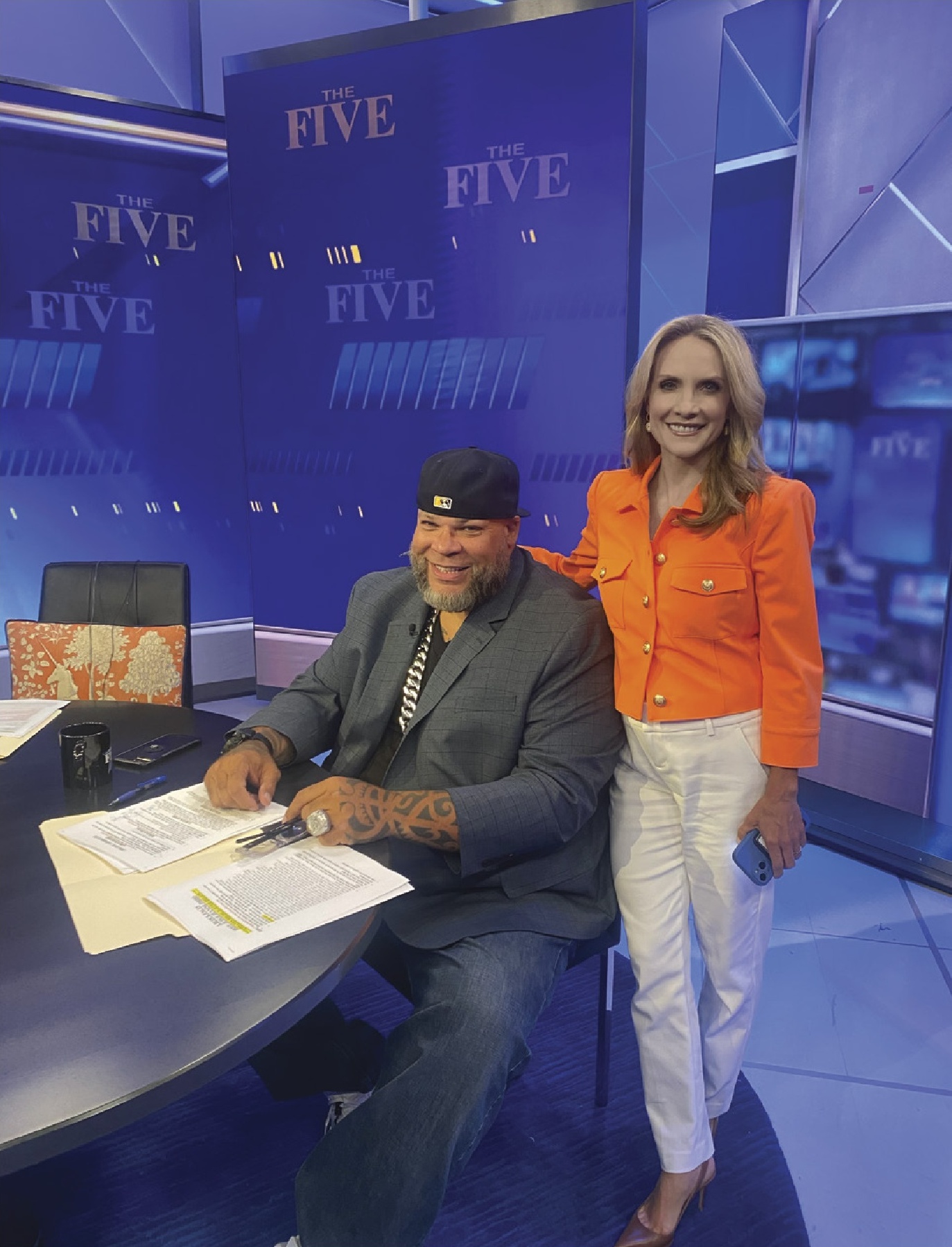
Perino is on the set of The Five with her friend Tyrus.
6 P.M. | HOME
As soon as she can, Perino heads for the comfort of home. She’ll either walk or take the car service. “I wash my makeup off. I do some sort of stretching—there’s a new app called STRETCHIT, and the stretches are only six or eight minutes long,” she says. By the time she’s done, her husband Peter has made or ordered their dinner. “There are so many things to do at night, and I have FOMO, but I know that time goes by very quickly. And I have so much I want to do…. But I only go out one weeknight a week.”
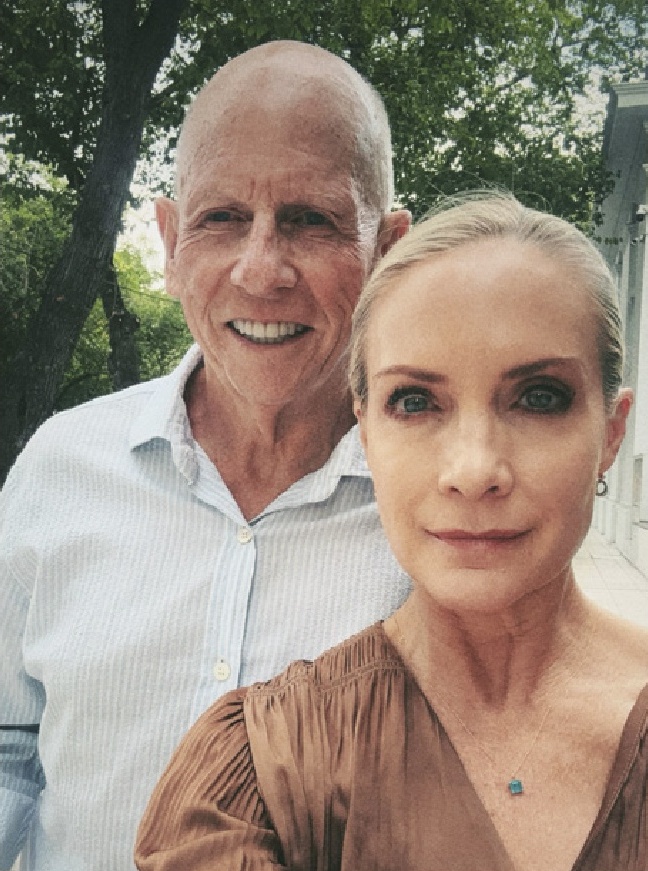
She and her husband, Peter McMahon, enjoy laid-back weekends together.
7 P.M. | TV HOUR
The relaxing hour between dinner and bedtime has just two unofficial rules: It is only one hour, and it can’t be the news. “I have to be very disciplined. So Peter and I watch together. We just finished Landman,” she said.
9 P.M. | LIGHTS OUT
When Perino finally goes to sleep, she means it. No middle-of-the-night scrolling, no checking for breaking news and no early-hours brainstorming for the day ahead. To stay true to that, she has a timer on her phone that kicks her off Instagram. “I have a time limit so I’m not tempted to buy something or watch dog videos,” she says.
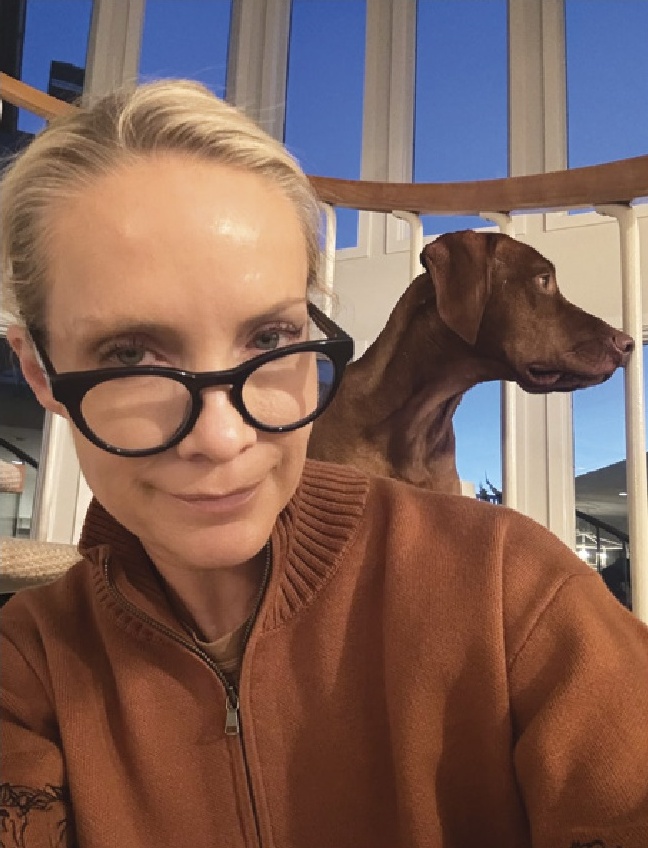
Their vizsla, Percy, poses at her weekend home in Bay Head, New Jersey.
When the weekend finally rolls around, that’s when Perino, Peter and their beloved-by-all dog, Percy, can truly unwind. Usually at their beach home in Bay Head, New Jersey. “I save all of my book writing for the weekends. I’ll have great mornings with Peter and Percy on Saturday and Sunday. And then usually from 12 p.m. to 4 p.m., I’m upstairs writing.”
Perino’s brand-new book, I Wish Someone Had Told Me…, is out now.
©ALEX KROKE/COURTESY OF FOX NEWS; COURTESY OF DANA PERINO
SOFT LAUNCH | FUTURE OF WORK
Power in Her Purpose
THE RISE OF EMPOWERED WOMEN IN LEADERSHIP ROLES IS TRANSFORMING THE WAY WE WORK AND MAKE A DIFFERENCE.




L et’s face it. Female empowerment isn’t just a trending topic. It’s a powerful movement that’s reshaping how we lead, connect and make an impact in the workplace and at home. Women are stepping up in every industry, not only as top performers but as changemakers and innovators. And in real estate, we’re seeing some of the most impressive examples of what happens when women lead with both strength and heart.
That’s why at SUCCESS Enterprises, we are making a concerted effort to change the way we perceive “success” throughout our content and community. Our goal is to showcase what people are doing to make a difference in their surroundings—no matter where they started or what hurdles they may have overcome.
As professional journalists who value the art of storytelling, we look forward to honoring entrepreneurial spirits every issue. As an extension of our popular Women of Influence program, we thought it would be appropriate to highlight some of the most inspiring females who are making waves in their respective businesses again this month. From mentorship to mission-driven work, these powerhouse professionals are not only scaling their businesses but lifting others as they rise. We all have a story that’s meant to be told. So, let the world hear it.
WHY FEMALE LEADERSHIP MATTERS
According to the National Association of Realtors 2024 Member Profile, women now represent more than 60% of Realtors in the U.S., a testament to their growing influence in the real estate industry. However, there’s still room for more women to step into leadership roles. Analysis from McKinsey & Company showed that companies with the most gender-diverse executive leadership are 25% more likely to outperform competitors with the least gender diversity. This suggests that promoting women into leadership positions is not only the right choice but also a smart business strategy for success.
SUCCESS, led by an all-woman leadership team, knows the importance of honoring women in prominent roles who are setting a standard for inclusivity and innovation.
Our publication is known for acknowledging strong, influential women every issue along with their male peers who support their wins. As a result, our team is determined to foster an environment where female professionals can thrive and lead.
Through initiatives like the Women’s Impact Network, SUCCESS’ parent company, eXp Realty, provides a platform that empowers women to connect and share knowledge within the real estate industry. The network champions mentorship, education and inclusion, ensuring women have the support they need to thrive in all areas of business.
We are honored to highlight five phenomenal women from eXp Realty who are creating a path for the next wave of leaders. When we champion female empowerment, we create environments where collaboration thrives and people feel seen. Now, that’s success worth celebrating across the globe.
Congratulations to these incredible business leaders.

Jill Leberknight
#1 The Visionary
Jill Leberknight is a visionary leader, award-winning Realtor and creative force who continues to shape the future of real estate through innovation, inclusion and purpose-driven leadership. With over 20 years of experience and a background that blends the arts, education and entrepreneurship, Leberknight’s influence reaches far beyond transactions—she inspires transformation.
As the founder and chair of eXp Realty’s Women’s Impact Network, she has built a powerful platform where women don’t just have a seat at the table—they help build it. Her mission is rooted in creating safe, empowering spaces where female leaders can rise, mentor others and reflect the true diversity of the industry. From the stage to the boardroom, Leberknight’s authentic leadership and unwavering commitment to service, education and community continue to blaze a trail for women redefining success on their own terms.
INSIGHTS & INSPIRATION:
SUCCESS: What inspired you to help launch the Women’s Impact Network at eXp Realty?
Jill Leberknight: I saw a gap. Despite our industry being rich with talented, driven women, many weren’t in the rooms where major decisions were made. WIN was born from a desire to not just give women seats at the table—but to reshape the table entirely. We needed a place where mentorship was real, leadership was accessible and where we could be unapologetically supportive of one another’s growth.
S: How do you define empowerment for women in real estate today?
JL: Empowerment means freedom—freedom to lead, to earn, to create and to define success on your own terms. It’s also about removing barriers. Real empowerment comes from a network that uplifts, educates and challenges you, while creating safe spaces for honest dialogue and bold moves.
S: In what ways is the real estate industry evolving, and how can women be part of that evolution?
JL: The real estate industry is experiencing seismic shifts—from technology and global expansion to how we define leadership. Women have a unique opportunity to lead this evolution. We are natural connectors, creative thinkers and problem-solvers. By owning our voice and collaborating, we can help build an industry that is more inclusive, sustainable and future-ready.
S: What role does creativity play in your approach to real estate and leadership?
JL: Creativity is my compass. It allows me to see solutions where others see obstacles and to approach business with heart and imagination. Whether I’m mentoring agents, speaking on a panel or crafting a new initiative, creativity helps me bring people together in meaningful ways—and that’s the real power in this work.
S: What advice would you give to women just entering the industry or looking to level up?
JL: Stay curious. Find mentors who challenge and support you. Most importantly, don’t wait for permission to lead—create your own path. Your voice matters, your perspective is needed and there is no one right way to build your business or career.
S: What’s your vision for the future of WIN and women in real estate overall?
JL: I see WIN becoming a global force of transformation. A space where women from all backgrounds connect, collaborate and grow together. My hope is that the future of real estate leadership reflects the diversity, brilliance and strength of the women who are already the backbone of this industry. We’re not just shaping homes—we’re shaping the future.

Lana Erickson
#2 The Trailblazer
Growing up in a family of business owners and inspired by her mother—a longtime Realtor—Lana Erickson entered the world of real estate with a unique blend of grit, creativity and a drive to redefine leadership. Her path to success has been anything but conventional. Erickson built her career in interior design and fitness. Her passion for transforming spaces and creating beautiful, functional homes sparked Erickson’s love for real estate. Working in the fitness field taught her the value of discipline, dedication and perseverance—skills that seamlessly translated into her new career. Now, as a leader with eXp Realty, Erickson blends her entrepreneurial mindset with her passion for community and empowerment. Erickson’s impressive resume proves that female-led teams can thrive without ego and that success can be redefined on your own terms. She’s not just changing the game in real estate—she’s inspiring others to take control of their own paths to success.
INSIGHTS & INSPIRATION:
SUCCESS: What does female empowerment mean to you in real estate?
Lana Erickson: To me, it’s about helping women recognize their power—not just as agents but as leaders. Real estate can be isolating, so it’s crucial that we build each other up and normalize collaboration over competition. Empowerment means showing up, speaking up and sharing your wins and your struggles.
S: How did your early career in the fitness and supplement industry shape your approach to business today?
LE: It taught me hustle, discipline and how to manage pressure. I was constantly traveling, working long hours—it was intense. But it also helped me develop strong communication and leadership skills. That background gave me the grit I now bring to real estate and the understanding that success comes from consistency and passion.
S: You’ve intentionally avoided naming your team after yourself. Why is that?
LE: Because it’s not about me—it’s about us. I never wanted a team where there was a hierarchy or ego. I wanted to build something where everyone felt like a peer, where we celebrated each other’s wins and losses. Collaboration is at the heart of what we do.
S: What advice do you have for women returning to work or pivoting careers like you did?
LE: Give yourself grace and don’t let fear stop you from starting again. I took time off to focus on my family, and when I came back, I questioned everything. But I leaned into my passion for homes and design—and that helped me find my place again. You don’t have to follow a straight path. Just start somewhere, stay curious and surround yourself with people who support your growth.
S: What do you think needs to change for women in business and real estate?
LE: We need more authentic leadership and less perfection. There’s so much pressure for women to always have it together, but real strength is in being vulnerable, real and supportive of one another. We also need more inclusive spaces that honor diverse voices and leadership styles—especially in an industry where so many women are the backbone but not always in the spotlight.
S: What makes you most proud of the business and culture you’ve built today?
LE: I’m proud that my team isn’t just high-performing—it’s heart-led. We’re not just chasing transactions; we’re building relationships.

Rebecca Soto
#3 The Powerhouse
Orlando-based Rebecca Soto is a powerhouse real estate entrepreneur, mentor and visionary leader whose thriving business at eXp Realty is fueled by both heart and hustle. With nearly two decades of experience, Soto has built a dynamic real estate empire alongside her husband, Josue Soto, all while raising a family and staying grounded in her values. With a production team and an organization of over 250 strong, her impact continues to grow across the U.S. and international markets.
A proud Latina of Puerto Rican and Cuban descent, Soto is passionate about representation, community and empowering women to rise. She blends high-tech innovation with high-touch connection, proving you can scale a modern business without losing the soul behind it. Her personal motto, “Make them feel special,” is more than a tagline; it’s a way of life, whether she’s mentoring agents, serving first-time homebuyers or leading with vision and care.
For Soto, success isn’t just about numbers—it’s about legacy. She’s especially proud of the strides women are making in leadership and is committed to mentoring the next wave of confident, purpose-driven professionals. Her approach is proof that real leadership starts with kindness, clarity and conviction.
INSIGHTS & INSPIRATION:
SUCCESS: What first inspired you to pursue a career in real estate?
Rebecca Soto: Honestly, it started with a friend who believed in me. I was [working] a job that didn’t light me up, and she said, “You’d be amazing in real estate.” That stuck. Josue and I wanted something meaningful and flexible for our growing family. Real estate gave us purpose, presence and the chance to help others build wealth. It was the door to something bigger.
S: You’ve worked closely with your husband in this business for 19 years. What’s been the key to growing together professionally and personally?
RS: Communication and mutual respect—those are everything. We’ve always shared a vision, and we play to each other’s strengths. That synergy made us stronger in business and in our marriage. We’ve raised three amazing kids through all the seasons of this journey, and I wouldn’t change a thing.
S: What does female empowerment mean to you in real estate today?
RS: It means we rise together. Years ago, you didn’t see as many women leading at the highest levels. Now, we’re showing up boldly, supporting each other and proving that leadership can be powerful and heart-led. I’m proud to be part of eXp’s Women’s Impact Network—it’s an incredible community where we celebrate wins and lift one another up. I am also an eXp Latino and leading FastCAP classes, a six-week course designed to get agents producing at a higher level. I’m all about educating and empowering agents!
S: What advice would you give to someone—especially a woman—just starting in real estate?
RS: Don’t wait to feel “ready.” This business moves fast, and the best way to grow is by jumping in. Surround yourself with mentors, invest in your mindset and stay curious. You don’t have to know it all—you just have to be willing to learn and lead with heart.
S: How did you manage work-life balance while raising kids and building your career?
RS: It wasn’t perfect—and that’s OK. I used to tell my kids, “Mommy’s working now, but after 5 p.m., I’m all yours.” I kept that promise. That boundary taught them respect and responsibility. Balance isn’t about doing everything all at once—it’s about being fully present where you are.
S: What’s one piece of advice you live by that keeps you grounded and successful?
RS: I treat everyone like they matter—because they do. You never know what someone’s carrying, and if I can be a beacon in their life, that’s a win. This business isn’t just about closing deals. It’s about relationships and connecting with the heart—connecting the heart to home.
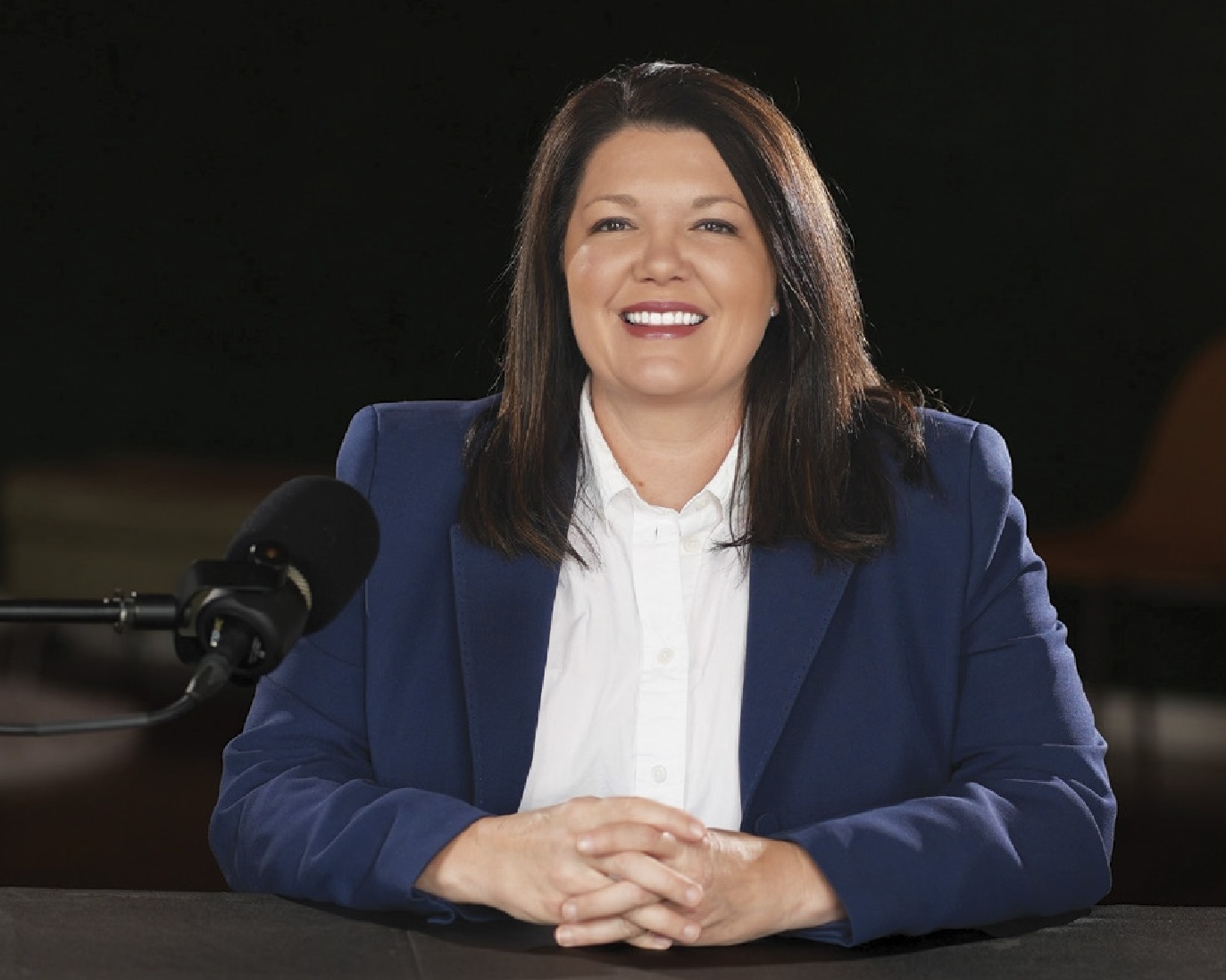
Jessica Nieto
#4 The Legacy Maker
Jessica Nieto isn’t just building a successful real estate career—she’s building a legacy rooted in grit, resilience and heart. Based in Southern California, Nieto has been ranked among eXp Realty’s Top 250 team leaders in the U.S. and recognized as a Top 10 team leader in California. Her path to success has been anything but conventional: After leaving a stable job, moving cities on a playful bet with her now-wife and taking a $12/hour Craigslist job just to break into the industry, Nieto turned self-doubt into momentum and built something extraordinary.
Known for her bold business sense, sharp market insight and unwavering commitment to inclusion, Nieto has become a powerful advocate for women in real estate—especially those breaking molds, challenging norms and carving their own path in the industry. She’s a true believer that when women understand their value and voice, everything changes, ultimately creating a life for themselves full of empowerment, financial freedom and generational wealth. Through mentorship, leadership and unapologetic authenticity, Nieto is not just making moves; she’s making a difference.
INSIGHTS & INSPIRATION:
SUCCESS: What drives your entrepreneurial mindset?
Jessica Nieto: Growing up, we didn’t have a lot of money. I didn’t know what I wanted to be, but I knew what I didn’t want—poverty and limitation. That drove me. I believed that if I just worked hard enough, I could avoid repeating the cycle. That belief has fueled every major step I’ve taken.
S: You said your success came “in spite of yourself.” What do you mean by that?
JN: My brain has always told me I wasn’t ready. That I couldn’t do it. Since I was young, I was the girl with the backpack, always prepared for battle. But I’ve learned to borrow confidence from people who believed in me when I couldn’t believe in myself. I let my heart lead when my mind tried to stop me.
S: How do you empower other women in real estate?
JN: I share the real story—not just the highlight reel. I let women know that it’s OK to be afraid and still move forward. I remind them that fear doesn’t disqualify you—it humanizes you. If my story helps even one woman believe she’s capable, then I’m doing my job.
S: What role has multimedia played in your growth?
JN: It’s been huge. Social media has given me a platform to tell my story authentically—both the wins and the struggles. Video, podcasting and Instagram have helped me connect with other agents, clients and women who just need someone to say, “You’re not alone. You’ve got this.”
S: Why is female empowerment so important in the industry?
JN: As a female entrepreneur, it can be an incredibly lonely space. What we’re dealing with—our doubts, our blocks, even our drive—is often deeply personal. It’s not just about business goals. And we don’t always find the answers within ourselves. Sometimes, we need a safe community to be vulnerable, to learn from each other and to grow through real connection.
S: That’s powerful. What kind of shift are you hoping to see?
JN: I want women to stop comparing themselves with that voice that says, “I’m not good enough.” Take the Top 250 list of real estate agents. Some women see it and think, “I’ll never get there.” I want to shift that to: “Let me call the No. 1 woman on that list, learn from her and celebrate her.” Curiosity and connection are more powerful than comparison.
S: So, success isn’t always about the sales numbers?
JN: Exactly. There’s more than one definition of success. Maybe one woman isn’t the highest earner, but she’s mastered health, wellness or time management in a way that can teach the rest of us. WIN encourages women to share across those strengths—because in business, in motherhood, in life, we all have different seasons. And we need each other to grow through them.
S: What’s the goal for this community long term?
JN: To create real proximity and access. Not just motivational quotes—but real conversations. A place where women feel seen, supported and challenged. Where we help each other develop the skills we’ve been told don’t “matter” in business—like rest, emotional intelligence or boundaries. Because those things actually do impact our success and, more importantly, our peace.
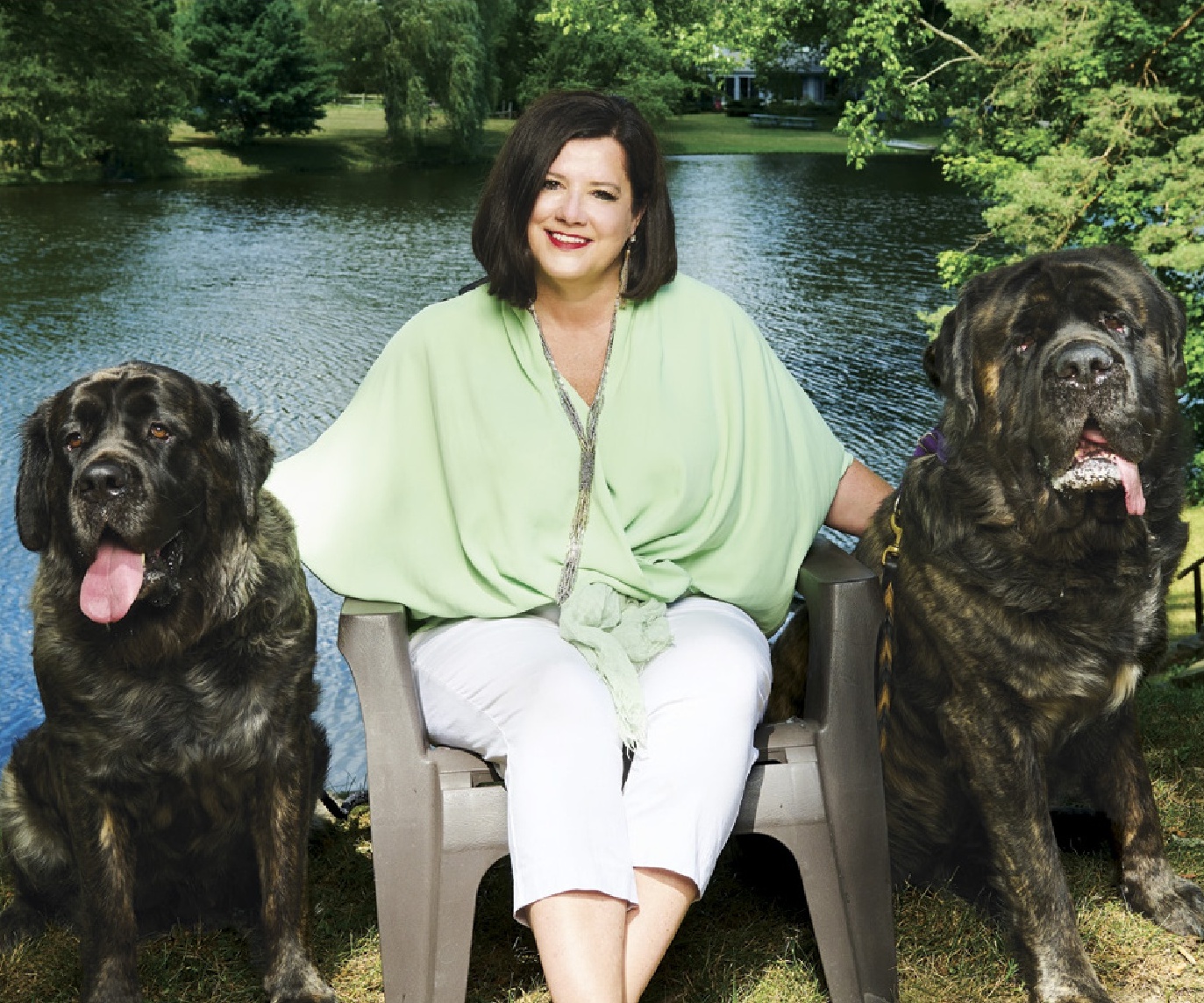
Catherine Haller
#5 The Innovator
A former educator and classically trained musician, Catherine Haller brings both discipline and creativity to everything she does. Her real estate journey began 25 years ago when she transitioned from teaching to property investment, eventually building a thriving business rooted in mentorship, innovation and purpose.
Now, a proud agent with eXp Realty, Haller leads with authenticity and a deep commitment to servant leadership. From affordable housing initiatives to large-scale developments, she uses her platform to drive meaningful change while empowering others—especially women—to step into their potential. Her story is one of reinvention, resilience and a relentless desire to uplift those around her, proving that real success is measured not just in deals but in the lives you help transform along the way. Through both her business acumen and personal authenticity, she exemplifies what it means to thrive on your own terms.
INSIGHTS & INSPIRATION:
SUCCESS: Why are you so passionate about entrepreneurship?
Catherine Haller: Entrepreneurship offers a sense of freedom and a deep sense of personal accountability. When I first entered the real estate industry, I was drawn to the idea of having full control over my business—being able to create and build something from the ground up without depending on anyone else. The ability to take ownership of my future and not rely on others to define my path was incredibly empowering. Since then, I’ve never looked back. It’s this autonomy that keeps me motivated and excited about the possibilities ahead.
S: You said, “Empowerment means giving others permission to shine.” What does this mean to you?
CH: For me, empowerment is all about supporting others—especially women—by creating opportunities for them to thrive. I love being the one who says, “I believe in you, and here’s a chance for you to shine.” As women, we often carry the weight of balancing business, home life and everything in between, but I think we need to be more open about our struggles and successes. Sharing those challenges helps foster a sense of unity and support. I’m passionate about helping others see their potential and showing them that they can succeed on their own terms. It’s about encouraging others to step into their own power, and I take great pride in playing a role in that.
S: How has technology changed the way you do business?
CH: Technology has revolutionized the way I do business, particularly with the integration of artificial intelligence. It’s been a game changer, especially when it comes to large projects like new construction. AI helps streamline processes, improve efficiency and keep projects on track. However, it’s important to use these tools with caution and ensure we don’t lose the human touch in the process. At eXp, we’ve been given the resources to learn how to harness the power of technology ethically and effectively.
S: What does success mean to you?
CH: To me, success is not about hitting certain financial milestones or having the highest sales numbers—it’s about personal fulfillment. Success means being able to look at yourself at the end of the day and feel proud of your efforts, knowing you’ve done your best. Sometimes, it’s as simple as getting through a tough day or surviving a challenging chapter in your life and business. I’ve had moments where just showing up and pushing through the hard times felt like the biggest victory.
S: How are you giving back to your community?
CH: One of the most rewarding projects I’m working on right now is a 90-property development here in Akron, Ohio, which includes affordable housing and custom-built homes. It’s a project that’s close to my heart because it’s all about creating opportunities for the community to thrive. Additionally, I’m consulting with the county’s Alcohol, Drug Addiction, and Mental Health Services Board on a project that combines multiple services under one roof, making them more accessible to the people who need them most. It’s incredibly fulfilling to know that the work I’m doing now is not only impacting my business but also helping to create a lasting, positive change in my community.
©FELICIA REED PHOTOGRAPHY/COURTESY OF JILL LEBERKNIGHT; COURTESY OF LANA ERICKSON; COURTESY OF REBECCA SOTO; COURTESY OF JESSICA NIETO; COURTESY OF CATHERINE HALLER
SOFT LAUNCH | THE INNER CIRCLE
Selling the Future
HOW ONE CONVERSATION AT SXSW CHANGED THE WAY I SEE BUSINESS.

I’ ve been to South by Southwest more times than I can count, and every time I walk through the busy conference center and crowded streets of Austin, Texas, I’m reminded why I keep coming back. It’s a melting pot of music, tech, media, innovation and bold ideas—exactly the kind of energy I thrive on.
This year was no different… except for one very meaningful twist. I had the chance to speak on stage alongside a good friend of mine, Brandon Sawalich, CEO of Starkey. Starkey is a global leader in hearing technology, expanding their devices beyond amplification to improve customers’ quality of life through an experience designed to affect all aspects of hearing and its derivatives in improving mental health.
What does that all mean? Well, Brandon explained it to me using phrases like, “The ear is the new wrist.”
Now, Brandon had never been to SXSW before, but he told me he wanted to experience the culture and learning—while taking the opportunity to introduce his innovation. I said, “I know the SXSW team well! Let me show you what it’s all about.”
Tens of thousands of people come to SXSW to learn something new from the world’s top experts. And there I was, one of the speakers… learning from my friend. During that session, Brandon dropped a bomb that I can’t get out of my head.
He said: “I always talk about challenging our ‘because.’ I will ask leaders and managers, ‘Why do we need to do it this way?’ The last answer I want to hear is, ‘Because that’s the way we’ve always done it.’”
Starkey hearing aids deliver clear, natural sound to help listeners stay connected.
That hit me hard. Because if there’s one thing that kills innovation faster than anything else, it’s comfort. It’s the belief that the way something has always been done is the way it should always be done. That mentality doesn’t leave room for growth, for disruption—or for vision.
Brandon and his team at Starkey are not just selling hearing aids. They’re selling the future.
In the same way that Apple in the 1980s wasn’t just selling computers—they were selling a new way of thinking, a new way of living—Starkey is doing the same with their mission of destigmatizing hearing aids by helping us understand that hearing is health. You may see it as a medical device; Brandon sees it as a tool for optimization—a fusion of best-in-class artificial intelligence, advanced sensors and smart tech that is helping people hear, connect and live better every day.
It’s that shift in perspective that draws me in. Because as entrepreneurs, creators and leaders, it’s not just about what we’re selling today. It’s about seeing what our product means for tomorrow. When we communicate our vision, we’re not just closing a sale—we’re opening minds.
The thing is, I’m still learning. I treat every stage I walk onto, every conversation I have, as a classroom. And when I learn something valuable, I believe in passing on that knowledge. Because that’s how we all grow. That’s how we all become teachers.
So, the next time you’re pitching your product, building your brand or planning your next move—ask yourself, “Am I selling a thing, or am I selling the future? ” Because once you start thinking like that, everything changes.
Stay hungry. Stay curious. And challenge your “because.”
COURTESY OF DAYMOND JOHN; ©STARKEY/COURTESY OF DAYMOND JOHN


REDEFINING RESILIENCE FOR A LIFE THAT THRIVES
FROM RED CARPETS TO RECOVERY ROOMS, MULTIMEDIA PERSONALITY MARIA MENOUNOS HAS TURNED PERSONAL TRIALS INTO A BLUEPRINT FOR PURPOSE—HELPING OTHERS TUNE INTO THEIR BODIES AND TAKE CHARGE OF THEIR HEALING.
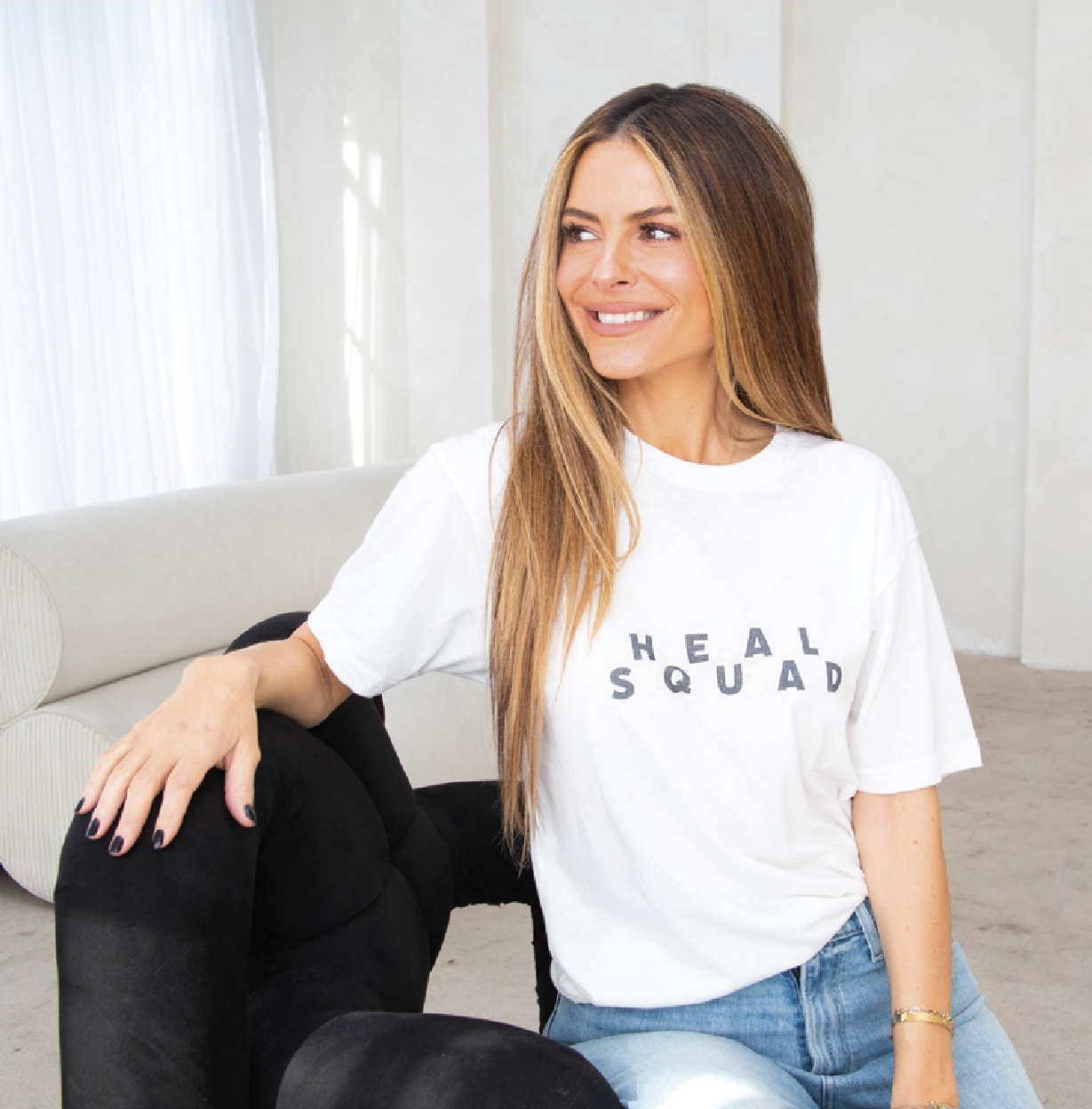
Heal Squad x Maria Menounos is a digital life improvement show focused on healing, growth and well-being, with Macy’s as its title sponsor.
B y their mid-40s, most people have either hit their stride or are searching for what’s next. But, at 47, Maria Menounos has already blazed through several iterations. Known first to millions as the sunny correspondent delivering celebrity news from red carpets across Hollywood, Menounos has transformed herself into something much larger: a self-made force in entertainment, a wellness advocate, a production trailblazer and, perhaps most importantly, a voice of resilience. Her journey is a master class in how to evolve a career, a brand and a life—all while facing personal trials that could easily have derailed it all.
Today, she doesn’t just host shows—she hosts change, courage and connection.

SMALL-TOWN START, BIG-TIME BREAKTHROUGH
Born in Medford, Massachusetts, to Greek immigrant parents, Menounos showed early signs of grit and ambition. After studying communications at Emerson College, she got her start at Channel One News, where she cut her teeth reporting on global issues like the 2001 El Salvador earthquake and interviewing President George W. Bush. But it was her pivot to entertainment journalism that made her a household name.
“Career-wise…, I feel like everything shapes you. Everything you do helps you grow, helps you learn, helps you evolve,” Menounos says. “[My] beginning at Channel One News helped shape a lot because it was my first time working on camera, and I was doing really cool stuff.… It definitely gave me an incredible amount of confidence when I moved into mainstream media, being able to do that at such a young age.” She rose to prominence on Entertainment Tonight, Access Hollywood and later, Extra—where she, along with her team, earned a Daytime Emmy for Outstanding Entertainment News Program. Her success came not from any single role but through her ability to shape-shift across them all. As a correspondent, Menounos loved telling people’s stories and feeling like she was making a positive impact on viewers and interviewees alike.
“I was less interested in the gossip and more interested in the work, or the art or telling someone’s story,” she says. “I took that same mindset into entertainment news because I always felt like I had to protect people and help them. I wanted them to shine. I didn’t want to be the person in the ‘I got you’ moment, and so I carried that thread through.”

“I REALIZED I WAS LIVING A LIFE THAT WASN’T AUTHENTIC TO ME AND MY TRUE INNER SELF. I WAS JUST DOING WHAT I SAW EVERYONE ELSE DOING, AND I WAS GOING AGAINST MY GRAIN AND MY NATURE.”
REINVENTING ENTERTAINMENT ON HER TERMS
Rather than remaining in front of the camera, Menounos started shaping stories from behind the lens. She and her husband, Keven Undergaro, launched AfterBuzz TV—a digital network focused on post-show television content born from their shared passion for TV and a gap in the market.
“We were really obsessed with TV and wanted to talk about it, and there was nothing there,” Menounos recalls. “When [Keven] saw that Lost’s series finale just broke the internet and people wanted to talk about it, he knew there was something there.” AfterBuzz anticipated where entertainment was headed. As streaming surged and fandoms grew, the platform became a hub for pop culture commentary and a launchpad for rising digital talent.
Menounos wasn’t just adapting to the changing media landscape—she was helping shape its direction. Her later ventures, including the Conversations with Maria Menounos series and additional podcast ventures, further solidified her role as both a content creator and connector. Then came her most personal project yet: Heal Squad x Maria Menounos. But before we dive into that, it’s essential to understand the health journey Menounos was navigating at the same time.

THE CHAPTER SHE DIDN’T SEE COMING
Even with all her career wins, the most meaningful parts of Menounos’ story have happened behind the scenes. In 2017, she underwent surgery for a benign brain tumor—the meningioma was discovered as she was caring for her mother, who happened to be battling another type of brain cancer at the same time.
The irony couldn’t have been more striking, and the experience sent a clear and powerful message. “Feel something, say something, do something” became her mission. She urged her fans to advocate for their own health and pushed for broader awareness around early detection and self-care. Her advice to viewers on TODAY: “If the symptoms persist, you must persist.”
A few years later, she was diagnosed with adult-onset Type 1 diabetes.
Then, less than two years after that, a full-body MRI screening revealed a stage 2 pancreatic neuroendocrine tumor, a rare but less aggressive form of pancreatic cancer. Early detection and surgery allowed her to bypass chemo and radiation. The experience only strengthened her commitment to public health advocacy.
FINDING A NEW PATH FORWARD
Menounos says her idea of success has evolved since her brain tumor. “For me, success is being healthy and working at a pace that matches my energy and my true self…. We’ve all been led to believe that the only way [to achieve] is to be a workaholic, and when I was in that hospital bed with the brain tumor, recovering from surgery, I realized I was living a life that wasn’t authentic to me and my true inner self. I was just doing what I saw everyone else doing, and I was going against my grain and my nature.”
These days, she’s still working hard—but she’s no longer sacrificing her well-being in order to keep up. “My work now and my passion is to help people get to that place where they feel safe enough to realize that, without your health, you can’t have all the other stuff,” Menounos says.
Another tactic for keeping the big picture in mind was learning how to choose wonder over worry. “We’re so conditioned to live in fear and to catastrophize. I was such an expert…, but choosing wonder over worry was what helped me shift out of the fetal position with the pancreas cancer diagnosis to, ‘Huh, maybe I’m predicting something that’s not even going to come? Why am I going to the worst-case scenario first?’”
She retrained her thoughts to lean into curiosity instead of fear. “I would say, ‘I wonder what it’s going to be like when the doctor calls me with good news.’ And then he did. ‘I wonder what it’s going to be like when I get through surgery, and I get to the other side of this and I get to meet my baby?’” (Menounos and her husband welcomed a daughter via surrogacy in 2023.) Adopting this mindset brought real relief. She also leaned into her faith and credits best-selling author and researcher Joe Dispenza’s meditation practice with helping her transform.
“We need tools, and that’s the thing,” Menounos says. “Life will beat us down, and it’s really hard to get up unless you have some tools.” She says life is about progress. “You don’t want to be living and dwelling in the past because you’re robbing yourself of the beauty of now and to come.”

STYLING Jenny Rodriguez
MAKEUP Gregory Arlt
HAIR Riawna Capri
HEAL SQUAD X MARIA MENOUNOS: WHERE WELLNESS, MEDIA AND MEANING CONVERGE
She launched Heal Squad x Maria Menounos in 2019, originally titled Better Together, as a way to share what she’d learned and help others take charge of their own healing journeys.
In the sea of celebrity podcasts, the wellness and life improvement podcast stands out for its authenticity and depth, covering topics like mindfulness, nutrition and holistic wellness. Recognizing the limitations of conventional health care and the need for accessible resources, Heal Squad serves as a comprehensive resource for those seeking guidance on various aspects of life improvement. It’s not just a celebrity chat show—it’s a safe space offering real-world value for those tackling life’s complexities. Menounos interviews thought leaders, health experts and everyday people who have overcome adversity. Topics range from mental health and nutrition to entrepreneurship, relationships and personal transformation.
To help tamp down the overwhelming info that comes with online research, the program launched Heal Squad Journeys. Now a cornerstone of her brand, it’s a meeting point of journalism, wellness and community building, and in many ways, a reflection of her own evolution: polished but personal, informative but inspiring.
“It’s just so important to be preventative, to start looking at what you can do now to accumulate better habits and better choices,” Menounos says. “Most of us spend our early lives trying to achieve, and we’re trained: Be a good girl, get good grades, go to a great college… and get a big job, make a lot of money. And then, it’s have kids and get married, but health is never ever, ever in the equation. And, you know, preventative health is so important.”
She says there are foundational things you can do for free, like syncing your circadian rhythm, and others, like preventative screenings, that are often covered by health insurance. She’s now leaning in to teach these tools via wellness retreats to help others “be the CEO of their own health.”
“I think, if your pain persists, you have to keep fighting,” Menounos says. If you feel dismissed by one practitioner, she suggests getting a second opinion. She recommends having a good health collaborator, such as a friend or podcast, to help “open your mind to other ideas, other modalities.” She says she’s not committed to diseases or illnesses and the parameters that are put around them. “I believe we can heal from anything,” she says.
THE BUSINESS OF BEING MARIA
Despite—or perhaps because of—these challenges, Menounos has never stopped building. She remains one of the few entertainment figures to span nearly every media vertical: TV, film, digital, audio, publishing and sports.
This year, she starred alongside Taye Diggs in the Lifetime short film I’ll Be Home for National Margarita Day, part of a branded content campaign with Chili’s. That ambassadorship—along with on-the-go content displayed at gas stations via GSTV, inside movie theaters with Noovie and at airports with Maria: Discover More—shows just how far-reaching her media appeal is. One day, she’s headlining a health podcast and the next, anchoring a national ad campaign. Yet she continues to resonate across age groups, bridging longtime fans of her TV work with a new generation discovering her voice in wellness and digital media.
She’s also embraced motherhood with the same candor that defines her career, sharing her fertility journey. In a world of carefully curated celebrity narratives, Menounos’ honesty is a breath of fresh air, redefining what it means to be in the spotlight.

WHAT IT TAKES: A BLUEPRINT FOR THE MODERN MEDIA ENTREPRENEUR
More than a star—Menounos is a strategist—and a survivor. In a rapidly evolving media landscape, she’s proven that staying relevant takes more than visibility—it takes adaptability, authenticity and a mission. From high-profile events to quiet recovery rooms, Menounos has managed to turn personal health setbacks into platforms, hardship into connection. What sets her apart isn’t just what she produces but how fully and honestly she shows up.
If the past is any indication, Menounos isn’t slowing down anytime soon. With a growing media portfolio, a thriving podcast and a renewed sense of purpose in motherhood, she’s poised for her most impactful chapter yet.
Her new filter for choosing projects is simple: Does it feel right? “It’s always, ‘Are they good people, and do I feel safe working with them?’” she asks herself. “I’ve dealt with a lot of toxic [work] environments, and I don’t have it in the energy budget or the health budget anymore.”
Her focus is less about fame—and more about footprint: helping others heal and thrive. In Menounos’ world, legacy isn’t inherited—it’s something you build, moment by moment, message by message. And she’s just getting started.
MARIA MENOUNOS AT A GLANCE
Reality TV: semifinalist on Dancing with the Stars
TV & Hosting: correspondent on Entertainment Tonight, Access Hollywood, TODAY and NBC Nightly News; host of Extra; fill-in for LIVE with Kelly and Ryan; and guest appearances on The View
Digital Media & Entrepreneurship: host and founder of Heal Squad x Maria Menounos podcast, co-founder of AfterBuzz TV
Books: author of The EveryGirl’s Guide series (Life, Cooking and Diet & Fitness)
Acting: appearances in Mike Myers’ The Pentaverate, Christmas at Plumhill Manor, The Holiday Dating Guide, Fantastic Four, Kickin’ It Old Skool, One Tree Hill, Without a Trace, Entourage and WWE
Endorsements & Campaigns: co-starred with Taye Diggs in the Lifetime short film I’ll Be Home for National Margarita Day; brand partnerships with Macy’s, Walmart, GSTV, Noovie and Maria: Discover More
GTCRFOTO/ALAMY STOCK PHOTO
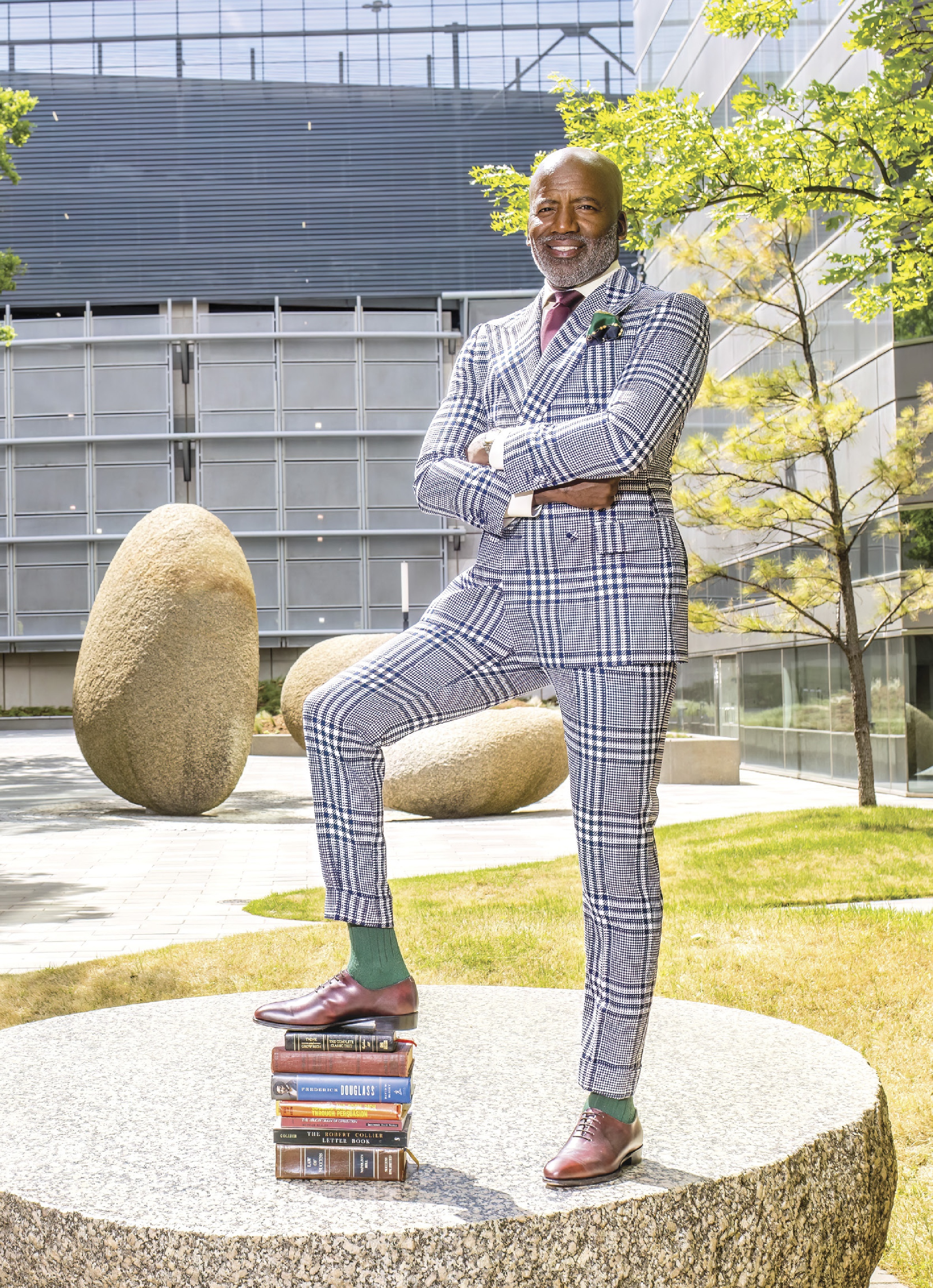
The Power of Ideas
COURTLAND WARREN HAS LOGGED A STAGGERING 18,000 HOURS AS A REVERED GROUP FACILITATOR, COACH AND MOTIVATIONAL SPEAKER. IT’S THE REALIZATION OF A LONG-HELD DREAM TO REVEAL THE POWER OF MIND TO OTHERS.
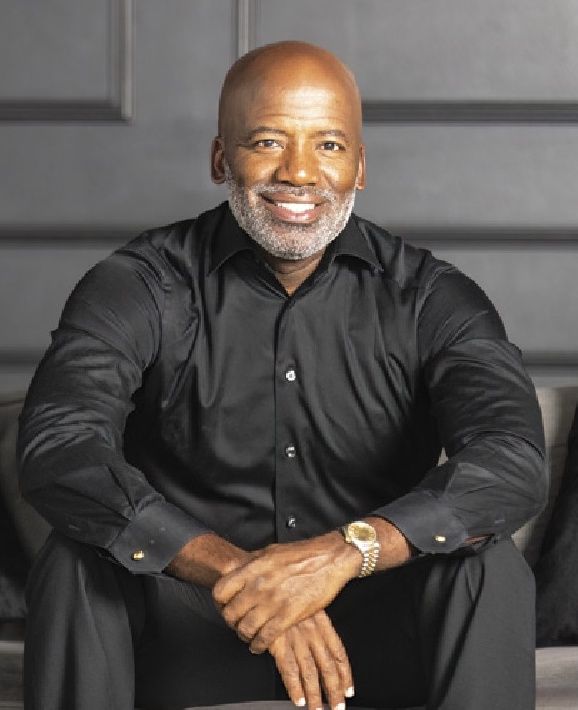
G rowing up in Idabel, Oklahoma, Courtland Warren was always aware there were two parallel existences: one for those who lived on the west side of the town’s railroad tracks and another for those on the east side. “The haves and the have-nots,” as Warren puts it. “We were in the ‘have-not’ line,” he says, “and I wanted to figure out how you change lines.”
From an early age, Warren excelled at school and sports, but his opportunity to “change lines” took a big leap forward one day when a crate of books arrived. They came to him when his father, who’d left Warren and his mother when Warren was just 4 years old, brought them to one of Warren’s high school track meets. The crate—which was the only gift Warren ever received from his father—was stacked with self-improvement titles, including Think and Grow Rich by Napoleon Hill, How to Win Friends and Influence People by Dale Carnegie and The Power of Positive Thinking by Norman Vincent Peale, among others.
With gold medals from his track meet around his neck, Warren immediately dove into the books on the bus, even as his teammates celebrated their win around him. It was then that he remembered his father, a glass installer, noticing that all the wealthiest homes he worked at had something in common: a library. Something clicked in Warren, and he thought, “OK, I got it. This is how I’m going to get into the ‘haves’ line.”
But when he got home, his mother learned about the books and demanded he get rid of them. “Later, I learned why,” Warren explains. “My father had read many books but, in my mother’s eyes, had never applied them. To her, those books represented empty promises.”
His mother had her sights set on a brighter future for Warren and consequently ran a strict household with a devout Southern Baptist rigidity. Yet, Warren calculated that a rare departure from the rules was worth it in this case and hid the books at his grandmother’s house, under a blue tarp in the backyard. One at a time, and in secret, he read every single one. It was within those pages that Warren uncovered a new world of ideas about personal potential, growth and self-improvement—a world in which, he says, the power of the mind was revealed to him.
“I TRULY WANTED TO KNOW IF I COULD CREATE SOMETHING THAT I COULD CALL MY OWN.”
TURNING A NEW PAGE
The authors of those books became Warren’s mentors, and driven by their ideas, his mother’s rigorous expectations and a desire to impress his dad, Warren completed high school with flying colors. After graduating from Oklahoma State University with a business degree, he worked in the corporate world for a couple of years, until he was laid off. It was a devastating blow for a young person who had built their future exactly as laid out in the traditional playbook.
Nonetheless, it gave Warren a chance to refocus and restart his career in a direction that aligned with some of his earliest dreams. He secured a job as a coach and group trainer, giving him the opportunity daily to inspire professionals, help them dispel their limiting beliefs and unlock their individual potential. Initially, it was a challenge as a 20-something to convince older participants that he had the wisdom to guide them to success, but Warren has a natural magnetism and authority to his presence—something he theorizes was handed down from his father, who was a preacher and impressive orator. On top of that, Warren is impeccably stylish and polished with an authoritative voice, a presence you can observe online in his recorded TEDx Talk “An Elevated Talk on Race.”
Warren built a career at PSI Seminars, a long-standing personal development and training firm, facilitating hundreds of sessions and giving keynote speeches for groups over the course of 20 years. In 2023, he launched his own consulting business, offering public speaking, group facilitation and coaching. “I truly wanted to know if I could create something that I could call my own,” he says. Immediately, he got in touch with past training participants, among them an executive who, thanks in part to a session of Warren’s he’d attended, had gone from sleeping on his mother’s couch to leading a multimillion-dollar enterprise. With the participant recalling, “‘You were the first person [who] ever told me that I could,’” Warren landed one of his first clients.
“I THINK WE ARE MOVING INTO A SPACE WHERE WE’RE GOING TO BE REQUIRED TO BRING OUR BEST, WHICH MEANS THAT WE’RE GOING TO HAVE TO UNPACK A LOT OF OUR LIMITING BELIEFS.”
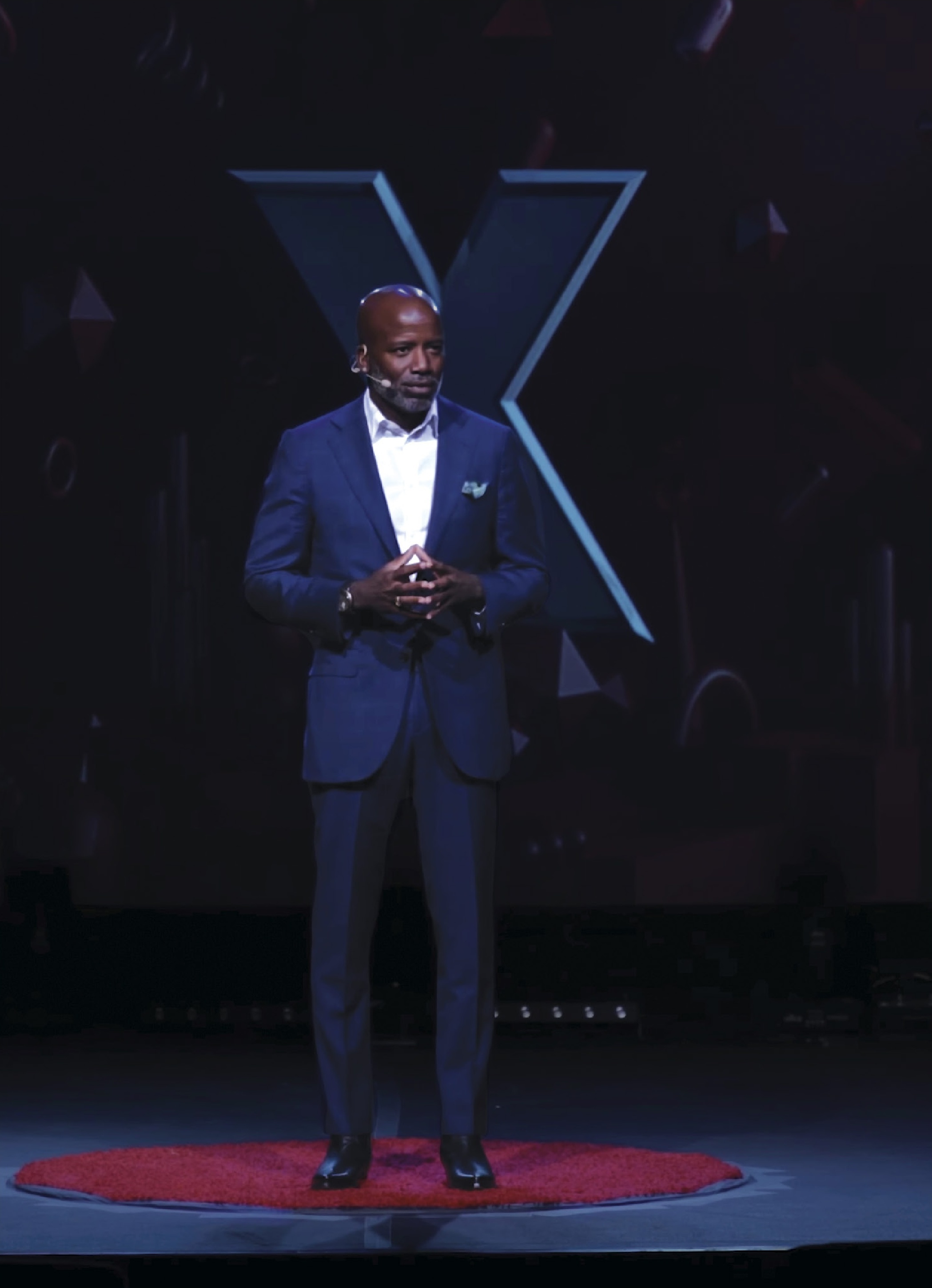
THE FUTURE OF KNOWLEDGE
Now, Warren has positioned himself at the intersection of novel technology and personal development. He is profoundly excited by the fact that, as artificial intelligence widens access to learning and expertise, it has the potential to erase the line between the proverbial east and west sides of the tracks.
Yet, while the expansion of knowledge via AI means a more level playing field, it also means greater competition. “I think we are moving into a space where we’re going to be required to bring our best, which means that we’re going to have to unpack a lot of our limiting beliefs, and that can be scary,” he notes. “But the truth of that is that we pull back enough layers… until you get back to the core of who you are, the truth of who you are, your authentic self, which is that you are remarkable, and you have something remarkable to offer the world.”
For those anxious about the evolving professional landscape, Warren reassures us: “You came into the world with everything that you need to be, to do, to have whatever you can imagine.”
To that end, Warren has built a new coaching platform called AI + You that helps his clients get to the core of their being and identify their limiting beliefs. “With the right prompts,” he says, “AI becomes a mirror that reveals what’s been running in the background for years. I teach people how to use it not just to move faster, but to move truer.”
To illustrate, he points to one client who, though highly intelligent and gifted, found herself stuck professionally. After engaging with his AI + You platform, “she uncovered a core belief tied to her childhood that had been silently running her adult decisions,” he says. “Once it came into the light, everything shifted…. That’s the kind of result AI makes possible when used with precision and care.”
RESILIENCE IS THE NEW INTELLIGENCE
As important as dispelling limiting beliefs is, Warren says the ability to harness resilience is “the greatest skill.” “You know, people talk about IQ; they talk about EQ. I think it comes down to RQ. Not intelligence quotient, not emotional quotient, [but] your resilience quotient,” Warren says.
This is especially true in a rapidly changing employment landscape affected by AI. “What happens when we enter a world where the information is available to everyone? Well, in an environment such as that, the only thing that will separate people is their willfulness, or another word for that is their resilience.”
Reflecting on his decades of success in personal development, it’s clear that Warren himself developed a grit and tenacity long before he made his way through that crate of books.
And as for that library that spelled success in his dad’s eyes? Warren says, “I’ve taken the wisdom I’ve gathered—across time, authors and experience—and built a living, breathing virtual library. It’s not housed between four walls, but it’s in every lesson I teach, every insight I share and every breakthrough I help someone achieve.”
©JAY WIGGINS/COURTESY OF COURTLAND WARREN; COURTESY OF COURTLAND WARREN

MEET THE CEOS SHAPING HOW WE INTERACT WITH MEDIA, SHOWING US THAT EVEN FAMILIAR STORIES CAN CHANGE US.
A s the media landscape continues to evolve, an innovative crop of entertainment industry professionals is using their platforms to change our relationship to how we consume entertainment.
Stephen Shaw and Jonathan Linden, co-CEOs of Round Room Live, and Isha Sesay, CEO of Areya Media, are leading the way, connecting audiences to experiences that entertain, illuminate and educate in new methods without sacrificing impactful storytelling.
“THESE EXHIBITIONS ARE DESIGNED NOT ONLY TO CELEBRATE CULTURAL ICONS BUT ALSO TO ILLUMINATE THE STRUGGLES, TRIUMPHS AND LEGACIES THAT SHAPED THEM.”
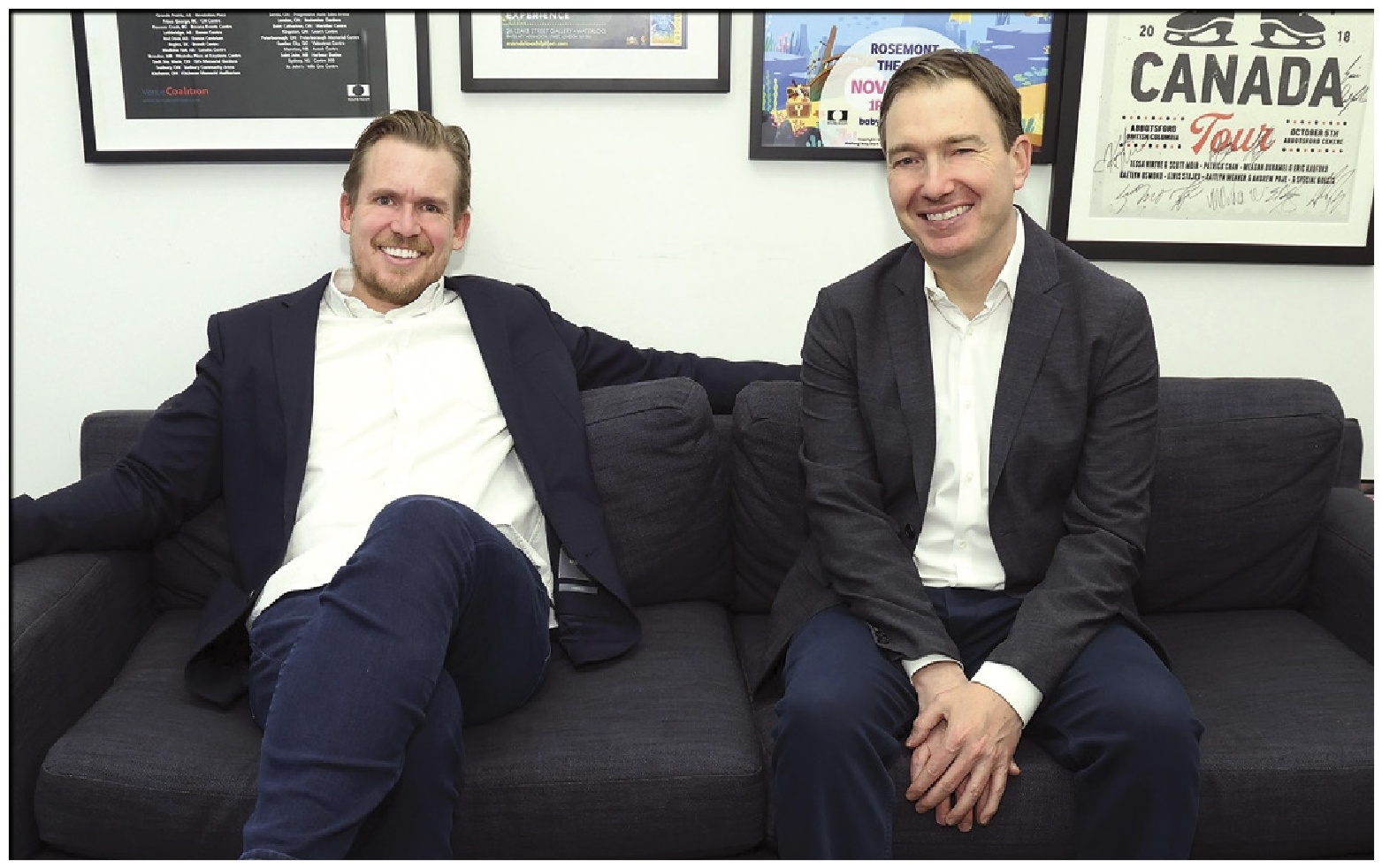
TAKING TV AND CULTURE WHERE IT’S NEVER BEEN
What do a former lawyer, a Rolling Stones roadie and “Baby Shark” have in common? A lot, if you’ve ever attended an arena show or exhibition put on by Shaw and Linden, co-CEOs of Round Room Live. After working together at live entertainment producer S2BN Entertainment, Shaw knew his tour and exhibition experience for brands like the Rolling Stones, Oprah Winfrey and Marvel, and Linden’s global licensing experience and producer credentials for two of Barbra Streisand’s tours and Rock of Ages on Broadway would be the perfect recipe for success.
Thanks to their big picture thinking, they’ve transformed the shows and songs kiddos see and hear on TVs and tablets into engaging live spectacles. As surprising as it may seem, they turned the 18-word viral sensational song “Baby Shark” into a 60-minute show seen by more than 300,000 families. Then, they proved that an on-stage reimagining of a TV show can equal, if not eclipse, the normal way we consume entertainment by taking everyone’s bespectacled friend in orange suspenders, Blippi, from behind a screen to a full-on musical.
The duo’s events aren’t just for kids, however. Family-friendly offerings like The Formula 1 Exhibition appeal to all ages, while those in search of powerful social justice and global advocacy installations can find it in Mandela: The Official Exhibition, created in partnership with The Royal House of Mandela. The exhibition, which tours internationally, examines the legacy of the human rights icon with personal effects and objects not previously seen outside of South Africa. A past exhibit, Tupac Shakur. Wake Me When I’m Free, used technology and artifacts from Shakur’s personal archives as a way to dive deeper into the activism, music and art he created.
Shaw says RRL’s approach to live events is rooted in storytelling, cultural expression and emotional connection. He points to the Mandela and Shakur exhibitions as powerful examples of how live experiences can engage audiences in critical social issues.
“These exhibitions are designed not only to celebrate cultural icons but also to illuminate the struggles, triumphs and legacies that shaped them,” he shares. “By bringing these stories to life through immersive environments, archival content and emotionally resonant narratives, we aim to foster reflection, dialogue and understanding…, creating spaces where people of all ages and backgrounds can come together to learn, feel and connect with something larger than themselves.”
Given the sheer volume of families who attend their events and exhibitions across the world, one might wonder if the duo foresees a shift from screens as a main source of entertainment to watching living, breathing actors, singers and dancers recreating something that is one-dimensional.
Absolutely, says Shaw, noting that they have seen a clear cultural shift.
“In an increasingly digital world, there’s something uniquely powerful about being in a physical space, surrounded by other people, watching stories unfold in real time,” he says, adding that “people want to feel something. They want to connect—not just with content but with each other, with history, with emotion and with the world around them. That’s what we strive to deliver.”
“WHEN I CAME TO FIND OUT THAT [AREYA] MEANT ‘SUNSHINE,’ IT FELT SO RIGHT, GIVEN WHERE THE COMPANY HAD BEEN AND WHERE I WAS TRYING TO TAKE IT.”
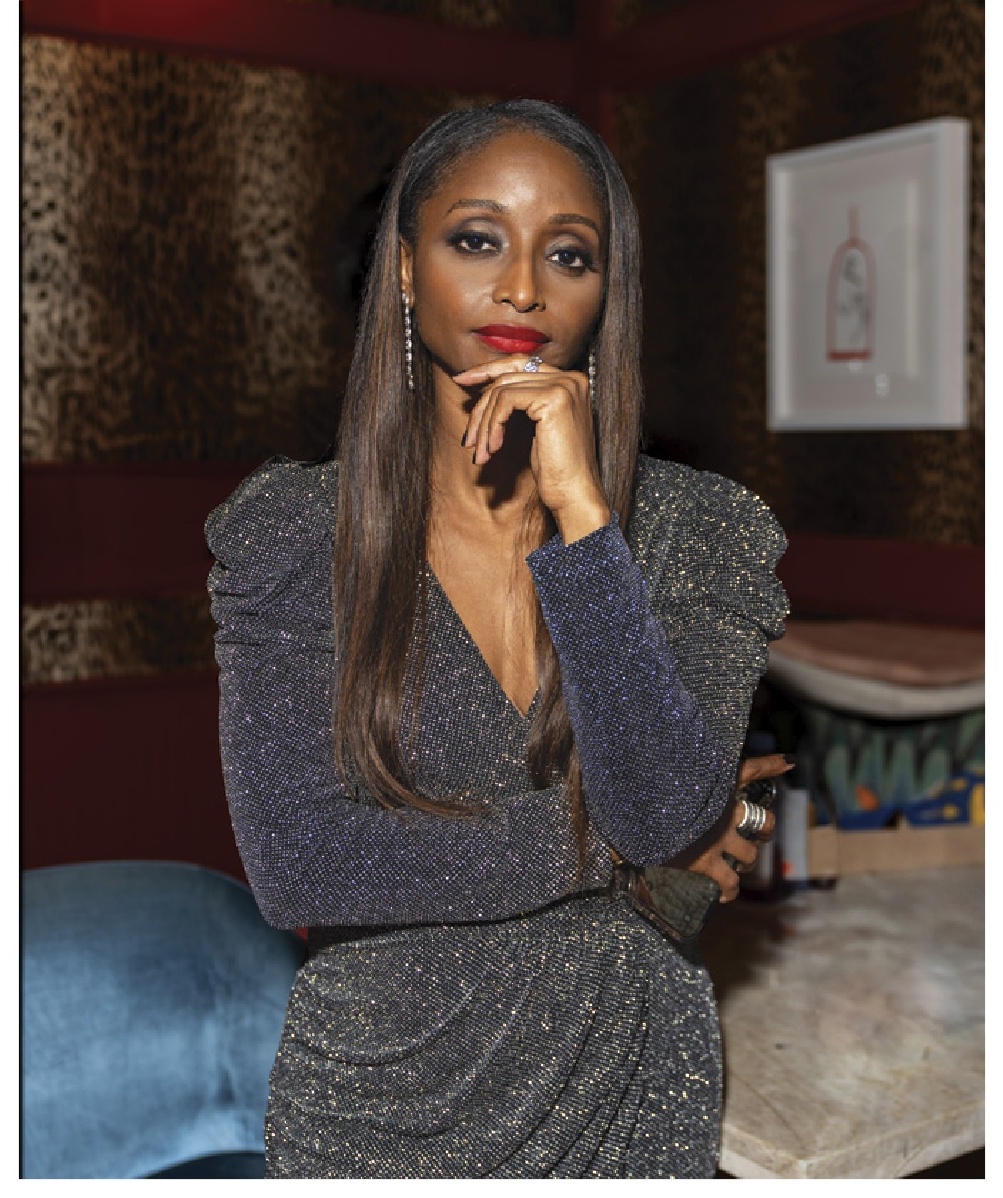
BRINGING THE AFRICAN DIASPORA INTO THE LIGHT
Connecting people with content, each other and the world is something RRL has mastered with their live events and exhibitions, but Isha Sesay is equally committed to doing similar work through a different medium.
In 2021, the former CNN international news anchor became CEO of Areya Media, a multimedia company that amplifies voices across the global Black and African community and is the parent company of Okayplayer and OkayAfrica, platforms known for their culturally driven narratives.
Sesay’s passion for creating impactful storytelling that advances underrepresented voices is a skill that earned the UK-born, Sierra Leone-raised journalist a prestigious Peabody Award a decade ago for groundbreaking work—including breaking the story of the 2014 Boko Haram kidnapping of 276 schoolgirls from Chibok, Nigeria.
Since becoming CEO, Sesay has stewarded the evolution of Okayplayer with the Webby Award-winning podcast, The Almanac of Rap. Hosted by rapper and hip-hop expert Donwill, episodes are part conversation, part history lesson and part entertainment—featuring influential artists, producers and those steeped in the rich history of hip-hop. Sesay considers it a sister offering to Okayplayer’s Afrobeats Intelligence podcast with Joey Akan, an award-winning journalist she says has deep relationships in the music industry and with the biggest stars in Afrobeat.
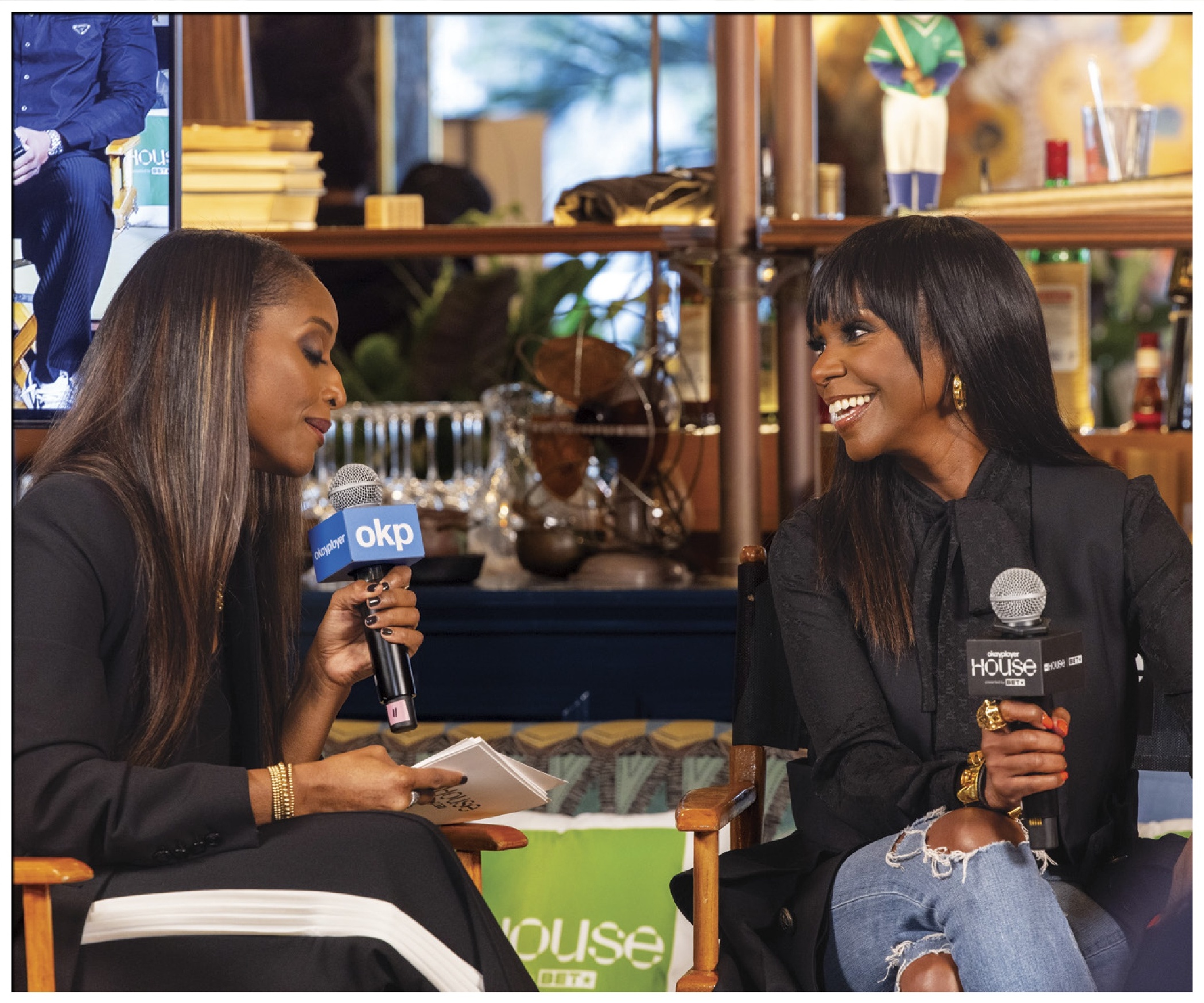
Sesay says Areya Media’s mission is to “make sure that every corner of the world sees African talent, sees our efforts, appreciates our voices and our stories.”
It’s a mission that matters to her for many reasons, but mostly because her parents are from Sierra Leone. And though she was born in the U.K. and now lives in the U.S., she lived in Sierra Leone between the ages of 7-16 before moving back to London. It’s an experience she says had a profound effect on her view of the world.
“For a large part of my youth, teenage years and maybe even up until my early 30s, I don’t think I fully appreciated… the blessing of having moved around and existed in such different cultures and what those experiences have meant for me and the person that I am today,” she says. “I’m so grateful that all three of those cultures are part of my background, but especially so that I spent my formative years in Sierra Leone in West Africa, which, for my entire life… has been… in the bottom tenth of the world’s poorest countries.… Sierra Leone is a country [that] is still battling forces of misogyny and great gender inequities and inequalities, and all of that, I find, has shaped my view on gender dynamics and how I move through the world and how I refuse to be held back by those same forces.”
When Sesay joined OkayMedia, she deliberately changed the name to Areya, which means “sunshine” in Yoruba, one of the largest single languages in sub-Saharan Africa.
She says the company experienced some turmoil before she joined, shrouding it in a bit of darkness. To her, it was just begging for a fresh start, and a name was a powerful way of doing that.
“When I came to find out that [Areya] meant ‘sunshine,’ it felt so right, given where the company had been and where I was trying to take it,” she says. “Beyond that, I felt it spoke to [a big] point [of] what we’re trying to do around Black culture and Black stories and voices and move us from the margins, from the shadows and the corners, to center stage and to the light.… I equate sunshine with joy.… We need so much more Black joy right now because things are tough, things are frightening, things feel dark. And so to have that as your mission, to combat that and to bring light, that’s the work I want to be doing.”
COURTESY OF ROUND ROOM LIVE; COURTESY OF ISHA SESAY

Beyond ‘The View’
AS A NEW EMPTY NESTER, FOUR-TIME EMMY AWARD-WINNER AND THE VIEW CO-HOST Sunny Hostin feels more creative than ever.

It’s easy to assume that TV personalities are just that on-screen personas who follow a meticulous script. But it takes little more than a glance at Sunny Hostin’s career to see that there’s a lot of lived experience that has influenced the opinions of this long-running co-host of ABC’s The View. And, no—no one is telling her what to say.
Depending on how you look at it, the spark that ignited Hostin’s impressive career was either jury duty or a simple, two-letter word: “No.”
“I’ve always thought that ‘no’ is the first answer on the road to ‘yes,’” Hostin says.
And she heard an awful lot of ‘no’ at the beginning of her career. She aspired to be a broadcast journalist like Barbara Walters or Diane Sawyer when she graduated from college, but she couldn’t get a job in the news business. Instead, she waitressed at Friday’s—“much to my parents’ chagrin.”
Eventually, she became a lawyer, inspired in part by serving as a juror. Since then, her career has taken quite a few unexpected turns. Among her many jobs, she’s been a federal prosecutor, a late-night news anchor, a bestselling author, producer, winemaker and actor.
And even now, as a recent empty nester in her 10th season as co-host of The View, Hostin feels, in many ways, like she’s just getting started.
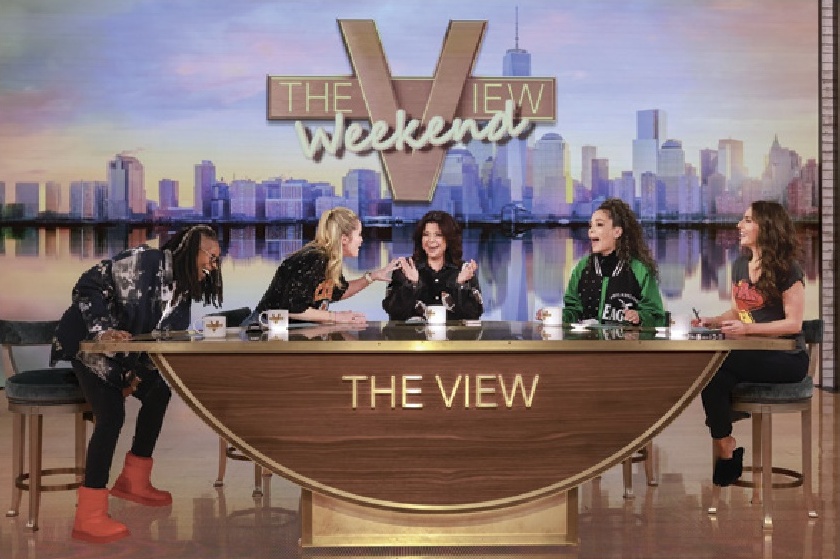
I’ve always thought that ‘no’ is the first answer on the road to ‘yes.’”
Don’t Hesitate to Take Risks
Hostin pivoted from law to journalism—her original target—after having her first child. She knew that being a federal prosecutor would not offer her much free time with her son, so she started looking for other options and landed a gig filling in for Nancy Grace on Court TV. At the time, she thought that was as good as it would get.
After working with Anderson Cooper as a legal correspondent for the Trayvon Martin case, however, Hostin got an offer to be an overnight news anchor for ABC. Her workday started at 8 p.m., and her show aired at 2 a.m. and 5 a.m.
“I didn’t think it was going to be a great experience, but it was my first real Barbara Walters-type gig,” Hostin says.
She didn’t think that many people would be tuning in, but that’s when she got her biggest break yet. Whoopi Goldberg, moderator of The View and an “infamous insomniac,” saw Hostin’s show and then called her own executive producer, Bill Geddie, to tap her for an audition. When she arrived, Walters was there for the audition, and Bette Midler was a guest. Hostin says she felt like she was watching a tennis match, to the point that Geddie asked her, “Are you in the show, or are you watching the show?”
“Just all these people I’d seen on television,” Hostin says. “I still sort of feel that way, and it’s been nine years… and every day, it feels surreal.”
It was a huge risk to leave her “thriving” legal practice to work in television, especially as she had two young children at the time, Hostin says. But she’s glad she took it.
“I was doing very well, but there was that itch that I thought that I had more to do,” she says. “And I still think I have more to do.”

Continued Appreciation
Of all the things she’s done thus far, Hostin says The View continues to surprise her.
“Every juncture of my career has been the pinnacle of my career,” she says. “As a judicial law clerk, I was like, ‘It doesn’t get any better than this,’ and then I got into the honors program at the Justice Department and I was like, ‘This is it—it doesn’t get any better than something like this.’”
And each time, she’s risen higher. Among her most memorable moments on The View was a conversation with the late Sen. John McCain, when he thanked her for her service as a federal prosecutor, saying, “We can all serve in different ways.”
Hostin also had a special moment backstage with actor Chadwick Boseman, who knew at the time that he was dying of cancer but didn’t share it with anyone.
“I told him he just had such an old soul, and he told me, ‘I feel like I’ve lived a long life,’” Hostin says. “In retrospect, he knew he was dying when he said that to me. So I’ve had some life-altering experiences on this show.”
I couldn’t do this job if I took whatever happened yesterday [at work] to work this morning.”
‘Leave It at the Table’
One of the biggest misconceptions about The View is that its co-hosts don’t like each other, Hostin says, but in reality, they’re all friends. The secret to maintaining relationships with people—friends, family, colleagues—whose opinions make you want to scream?
“It only works if it’s founded upon respect, empathy and kindness,” Hostin says, adding that finding basic common ground, such as shared experiences as parents or spouses, is crucial to protecting those relationships. Whatever the arguments are, it’s important to “leave it at the table,” Hostin says, and not let them cloud your respect for someone in other settings.
“I couldn’t do this job if I took whatever happened yesterday [at work] to work this morning,” she says. “There are some times when some of my colleagues say things and I’m like, ‘That is not my lived experience—my lens is completely different, maybe because I am a Black woman, maybe because I am a Latina woman, maybe because I’m in my 50s and you’re in a different generation.…’ But I can respect that, and I can hear everyone out.”
The show is watched by millions of people around the world, so Hostin takes the weight of her opinions seriously. She says she works hard to share facts rather than leading with “I feel.”
“I’m of the Lester Holt school, where he said, kind of infamously… that journalists do cover both sides, but if one side is factually incorrect, you don’t treat them the same way,” Hostin says. “If you really listen to what I say on the show, I generally don’t say anything that isn’t supported by a valid source that any journalist would use.”

It’s Never Too Late to Try Something New
Recently, Hostin has ventured into a different side of TV with Sunny Hostin Productions, where she’s working to adapt books by authors of color. But that’s just one of the many things she’s working on. Among the many other projects keeping her busy off-screen: co-host Joy Behar, who recently debuted an off-Broadway production called My First Ex-Husband, cast Hostin in a play, and she wants to do more acting in the future. She’s working on her next book, a science fiction novel about witches, and a producer has already expressed interest in turning it into a movie. She’s soon launching two new wines. And the first novel in her beach read trilogy, Summer on the Bluffs, is in the process of being turned into a TV series for Amazon Prime.
“I love beach reads, I love historical fiction, and I also like the getaway,” she says. “I think we kind of need escapism right now, and we’ve needed it for quite some time. I wanted to read an escapist novel that centered [on] women of different generations and women of color, and I couldn’t find anything like that. So, I wrote it.”
An Empty Nest Is a New Beginning
Even now, having interviewed thousands of high-profile guests, Hostin feels, in many ways, like she’s just getting started. At 56 with two college-aged kids, she’s newly empty nesting, which has kicked off a stage of life she never expected.
“We do not talk about that enough, because it’s a pretty hard transition,” she says, likening the emptying of the nest to the stages of grief. Some of her friends seem to be enjoying opportunities to travel the world, but she’s “not there yet.”
At the same time, she feels more creative than she ever has at any point in her career.
“I always prioritize my children, and now that they’re out of the house, I still prioritize them, but it’s given me more time to do more projects,” Hostin says. “Traditionally, women in their 50s were considered not only middle-aged but aging out of careers. But you really, all of a sudden, have quite a bit of time—and now you really feel like the sky’s the limit.”
©JEFF LIPSKY/ABC PHOTO ARCHIVE; ©LOU ROCCO/ABC PHOTO ARCHIVE; ©LOU ROCCO; ©JOSE ALVARADO, JR./ABC PHOTO ARCHIVE; ©JEFF LIPSKY/ABC PHOTO ARCHIVE

LISTEN UP
TUNE IN TO THESE 12 PODCASTS THAT ARE SHINING A SPOTLIGHT ON THE ENTERTAINMENT AND MEDIA ECOSYSTEMS.
T here’s no genre that podcasting hasn’t touched—especially in industries as fast, volatile and intriguing as entertainment and media.
While anyone can pick up a mic these days, quality will always triumph over quantity. We’ve cut through the noise with a listening tour of some of the best podcasts about the entertainment and media industries. Slip past the velvet rope for a VIP experience to unearth some of Hollywood’s oldest secrets, brace for culture-bending trends and learn about the entertainment industry… without going to film school. Queue up a few of these selections, pop in your earbuds and tap play.

THE ANKLER
Hosts: The Ankler team members
Frequency: every Friday
Since its 2022 launch, The Ankler has fast become one of the go-to platforms for an in-depth, lively look into the business side of Hollywood. Revolving hosts such as Richard Rushfield, Elaine Low, Sean McNulty and Rob Long bring wit and wisdom to dissecting power plays and sitting on the front line of the streaming wars. Expect topics ranging from artificial intelligence’s impact on storytelling to breakdowns of the Blake Lively-Justin Baldoni feud.
THE BUSINESS
Hosts: Kim Masters (The Hollywood Reporter)
Frequency: weekly
Listeners love the lively banter and in-depth coverage of what’s happening in entertainment, complete with appearances by powerhouse guests such as director Ava DuVernay and Matt Damon. Masters, editor-at-large at The Hollywood Reporter, uses her industry insight to tackle topics such as the potential impact of proposed film tariffs to how content creators are seizing the spotlight from traditional media.

THE DIGIDAY PODCAST
Hosts: Kimeko McCoy and Tim Peterson (Digiday)
Frequency: weekly
Marketing and media collide in this weekly podcast hosted by Digiday editors. Get an inside look at the stories, topics and issues that matter most to brands, publishers and agencies—which often veer into the entertainment industry. Digiday staff plunge into everything from AI-powered paywalls to how to grow a creator-based newsletter business.
HOLLYWOOD HANDBOOK
Hosts: Sean Clements and Hayes Davenport
Frequency: weekly
Billed as “an insider’s guide to achieving your showbiz dreams,” this comedic, improvisational podcast parodies entertainment industry insider shows—a move that’s gained a cult following throughout its more than 600 episodes. Clements (Workaholics) and Davenport (Vice Principals) have a lengthy list of writing and producing credits between them, paving the way for memorable guests such as Aubrey Plaza and Donald Glover.
HOW DID THIS GET MADE?
Hosts: Paul Scheer, June Diane Raphael and Jason Mantzoukas
Frequency: Mondays and Fridays
Lively banter and cutting wit meet at the mic to examine something that unites us all: bad movies. Each week, Scheer, Raphael and Mantzoukas break down the “very best of the worst films ever made,” whether it’s a Lifetime “thriller” or a summer Blockbuster flop. And they would know. Because, chances are, you’ve seen, or heard, each of the hosts in something throughout the past two decades. The trio is sometimes joined by superstar guests like Seth Rogen.

ON THE MEDIA
Hosts: Brooke Gladstone and Micah Loewinger
Frequency: twice a week
As the name implies, this podcast offers an analysis of news itself. Each week, journalists Gladstone and Loewinger break down the media’s impact on public perception through examinations of the week’s major stories. The duo also address hidden narratives in headlines and lurking threats to information freedom, all while “maintaining the civility and fairness that are the hallmarks of public radio.” The podcast’s frank and transparent reporting and commentary have earned it the prestigious Edward R. Murrow Awards for feature reporting and investigative reporting, the National Press Club’s Arthur Rowse Award for Press Criticism and a Peabody Award, among others.

THE NO FILM SCHOOL PODCAST
Host: GG Hawkins
Frequency: weekly
This podcast is for the creatives who’ve thought about a career in filmmaking… but balked at the cost of film school. Hawkins, a writer and director, covers industry trends and opportunities, touching on niche subjects like cameras and lighting while also interviewing professionals from across the industry, ranging from screenwriters to cinematographers. Listener questions are also answered, staying true to the podcast’s premise: “no film school” required.

PILOT TV
Hosts: James Dyer, Boyd Hilton and Kay Ribeiro
Frequency: weekly Can’t decide what to watch next? Tired of endlessly scrolling Netflix, Hulu and Apple TV+ for your next binge? Pilot TV is the spoiler-free “essential guide to every show that matters.” Expect a rundown of the best new shows, news, reviews and the occasional guests such as Jon Hamm and Tom Hardy. The trio also offers recommendations of older shows, all to help you use your TV time wisely.
THE REWATCHABLES
Hosts: Bill Simmons, Chris Ryan and Sean Fennessey (The Ringer)
Frequency: weekly
Film geeks, rejoice! This one’s for the cinephiles who can’t stop analyzing, quoting and, well, rewatching their favorite movies. Each episode features a new look at a beloved film, exploring memorable quotes and scenes and analyzing the film’s cultural impact. The trio has covered nearly everything, ranging from Pulp Fiction and John Wick to Dead Poets Society and Dazed and Confused. Nineties aficionados will especially love the podcast’s specific dedication to the year 1999, “an all-time great year in film,” with looks at teen classics like Election and horror favorites like The Blair Witch Project. Looking to brush up on movies for the next trivia night? Dive into this podcast’s more than 300 episodes.

POP CULTURE HAPPY HOUR
Hosts: Linda Holmes, Glen Weldon, Stephen Thompson and Aisha Harris (NPR)
Frequency: Four times a week
The podcast, hosted by a roundtable of NPR arts journalists, serves up real-time commentary and recommendations on everything pop culture. With an array of never-ending topics, you’re sure to find your next favorite book, album, video game or movie. The hosts share a little bit of everything, including what they’re reading, and analyze society’s relationship to different mediums (such as TV and why we love its weddings). There’s something new to discover with every “happy hour.”

STRICTLY BUSINESS
Hosts: Andrew Wallenstein and Cynthia Littleton (Variety)
Frequency: weekly
Tune in for a C-suite POV of the entertainment industry, straight from editors of Variety. Launched in 2018, the podcast offers depth and insight into business deals, strategy, trends and the future of media—backed by guests who, in their day jobs, are at the helm of some of the industry’s most successful and innovative companies. The podcast has covered everything from stock market volatility’s impact on Hollywood to the uncertain future of TV and film production in the wake of the LA fires.

YOU MUST REMEMBER THIS
Host: Karina Longworth
Frequency: weekly
What started as Longworth’s passion project has morphed into a beloved (and heavily researched) historical commentary on “Hollywood’s first century.” Longworth harnesses her extensive skill-set as an author and former film critic to delve into some of La-La Land’s most complex and intriguing stories—some of which have been buried in time. The podcast’s deep dives have included Charles Manson’s connection to some of the city’s most influential players to the origins of celebrity gossip. This podcast is the perfect companion for a budding historian interested in Hollywood.
PAFFY/SHUTTERSTOCK.COM
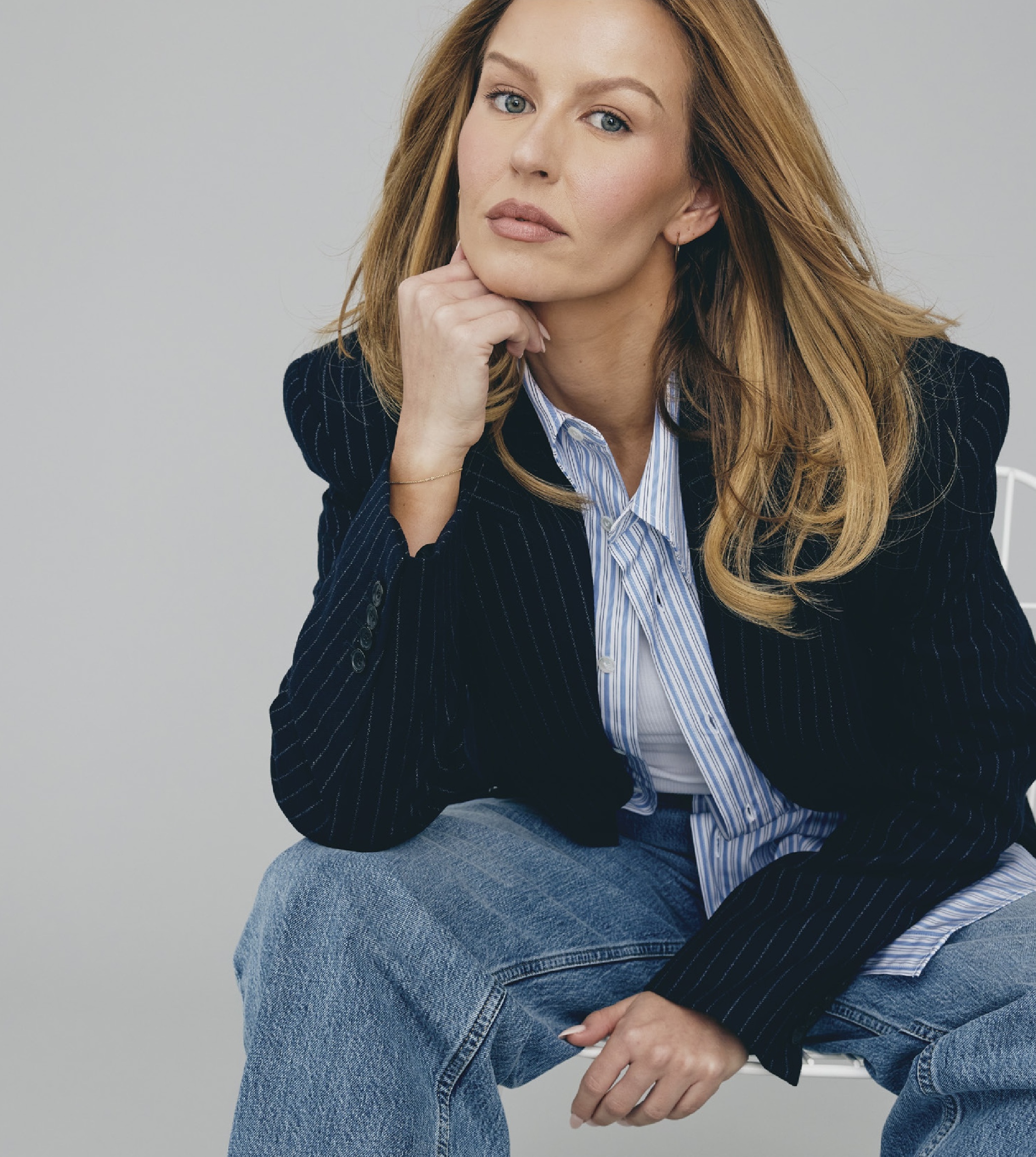
GROUP CHAT
Queen of Confidence
On the edge of turning 30, media entrepreneur Serena Kerrigan reflects on her journey and shares how she’s boldly stepping into her next chapter. From launching a viral Instagram dating show to building a multimillion-dollar brand rooted in confidence, Kerrigan is now expanding beyond her social media storytelling with her latest venture, SFKTV. Through her evolving platforms, she empowers women to prioritize themselves and build the lives—and empires—they envision.
Read more online at SUCCESS.com
©BRENDAN WIXTED
GROUP CHAT | MY WAY
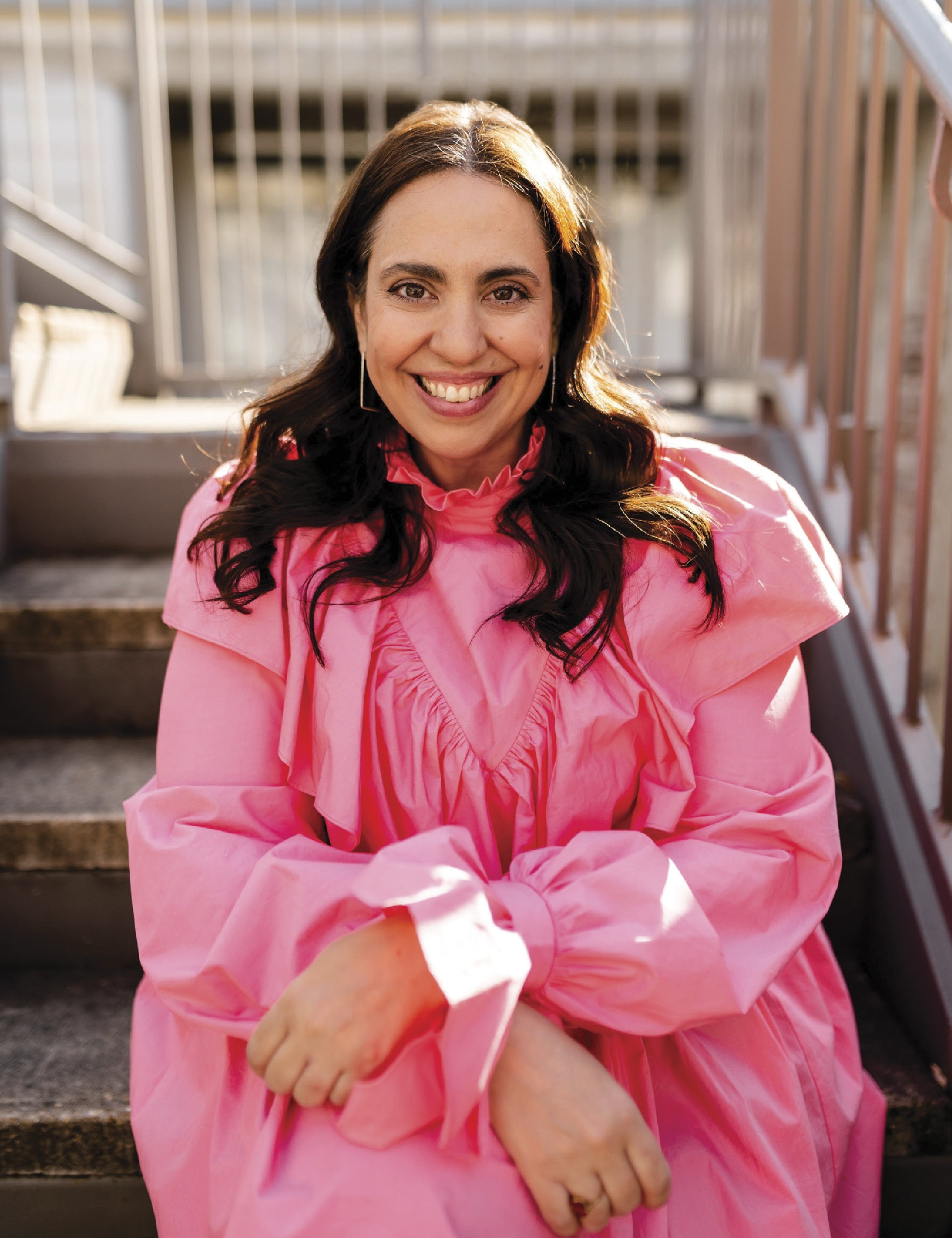
Manu Muraro
ATLANTA, GEORGIA
Manu Muraro, founder of Your Social Team, is revolutionizing the social media landscape for small-business owners. She provides personalized social media strategies to help women solopreneurs and small accounts boost engagement and visibility. Muraro also launched a content creation shop and Instagram training membership to support professionals looking to level up. In alignment with her mission, she created The Reelies Awards—an annual Instagram Reels award show celebrating women thriving on the platform. Born and raised in Brazil, the Latina entrepreneur spent a decade at Cartoon Network and two years at King of Pops leading marketing efforts. Today, the multimillion-dollar powerhouse shares her creative insights with us.
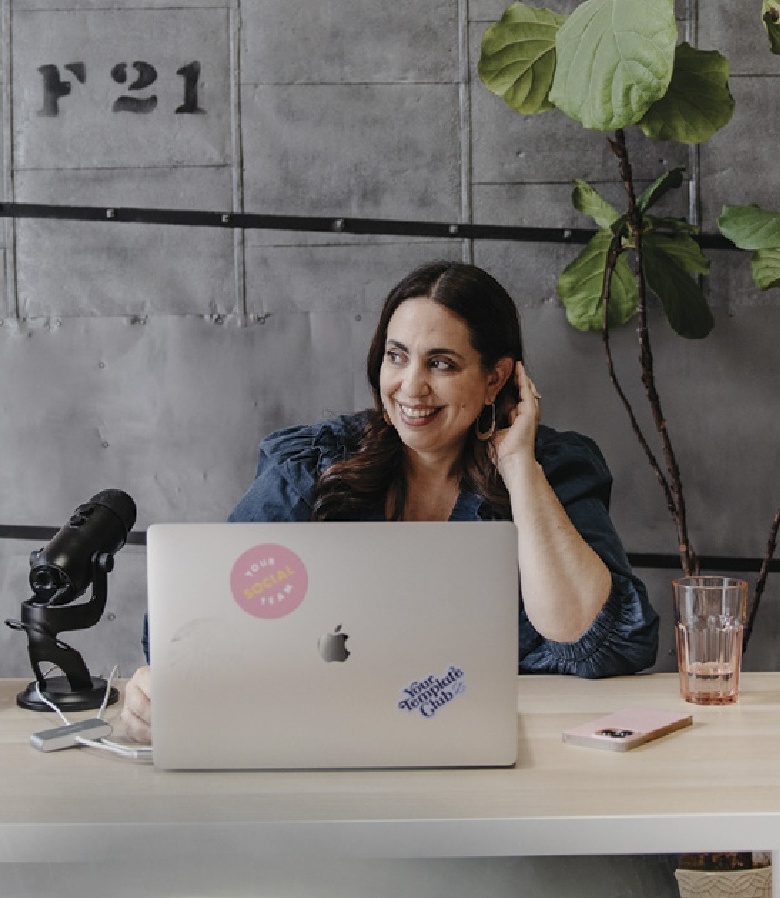
ONE THING I DO EVERY DAY IS…
take a little time for myself. Having a business, kids and dogs—this doesn’t always happen naturally. So, I make sure to pause and relax a bit, watch an episode of a show or listen to a podcast while on the move. I even do this at the office sometimes.
MY MANTRA IS…
done is better than perfect. As a business owner it’s so easy to want to overlook everything or do everything as perfectly as possible. But sometimes [completing] a task is way better than looking for perfection! Especially when it comes to social media, which is the industry I’m in!
WHEN IT COMES TO YOUR SOCIAL TEAM, I WISH MORE PEOPLE KNEW THAT…
we created a whole year of Instagram content for small businesses in 2025. It comes with feed posts, carousels and reels, ready to customize inside Canva with your colors and message. [This way], people can be consistent without spending hours on every single post.
You can still create more time consuming content here and there when you have amazing ideas and time. When you don’t, we got you.
MY BIGGEST SOURCE OF INSPIRATION…
for creative ideas is TikTok. Not in the most obvious way, which would just be the trends. I take a lot of creative inspo from the comments, from how people communicate in the app. For visuals, I take a lot of inspiration [from] nature and art.
ONE THING THAT’S DIFFICULT FOR ME BUT THAT I ENJOY IS…
hosting events! It’s a ton of work but so rewarding and energizing. This year, we started the first ever—and only—Instagram Reels award show, The Reelies. Think [of it as] the Oscars for small entrepreneurs. We had a sold-out award ceremony in a beautiful classic movie theater and everyone looked amazing on the red carpet! It was so energizing to meet 300 business owners and creators from all over the U.S. and Canada in person and recognize people for their work! I encourage everyone to enter their Reels and join us here in Atlanta in 2025!
I HANDLE NEGATIVITY BY…
[taking] deep breaths. As someone who is always on social media, I come across a lot of keyboard warriors. I feel like the best way to deal with that is [by] giving it time instead of responding back and forth in the heat of the moment. I guess the same applies to personal relationships.
ONE WAY I STAY STRONG IS BY…
focusing on my family, my business mission and goals, instead of getting caught [up] in small things that don’t matter.
WHEN I NEED A JOLT OF ENERGY…
I have some coffee, pet the dog, call my mom, play some music, act silly with my kids. Whichever is available to me at the time.
I’M CURRENTLY LOOKING FORWARD TO…
taking time off! I have a two-week trip coming up, and I am not even bringing my laptop. It’s possible, everyone!
THE MOST SURPRISING THING ABOUT ME IS…
that I’m 48! I am always shocked by that since I’m just a baby. Time is weird!
I WANT PEOPLE TO KNOW ME FOR…
being a voice of reason and a source of calm for women entrepreneurs. At a time when educators and coaches are always telling them to do more, I want to remind them [that] bandwidth comes first!
IN 10 YEARS, I HOPE TO…
be alive, healthy and enjoying life. Everything else is secondary.
COURTESY OF MANU MURARO
GROUP CHAT | MENTOR MESSAGE
Transforming Corporate Giving With Sustainable Impact
PUNAR’S ETHICALLY MADE WARES CREATE MEANINGFUL CORPORATE GIFTS AND UPLIFT ARTISANS.

A coffee cup at the back of the cupboard, a pen gathering dust in a junk drawer, a tote bag languishing on a closet shelf. While meant to celebrate a milestone or anniversary, corporate gifts are often lackluster items rarely given a second thought, if not dumped in the trash within days. Which leaves the recipient feeling empty, the environment further taxed and a missed opportunity for businesses to further strengthen connections.
But what if you could give or receive a gift so meaningful that even years later, you thought of it with a smile? A gift that benefits the environment and supports the artisan who made it? That’s where Priya Ravindra Kalyanimath’s Australia-based startup Punar comes in. The company is transforming the corporate giving industry by creating sustainable gifts and homewares, handcrafted by female artisans in India.
In her previous corporate life, founder and CEO Kalyanimath advocated for more female involvement in technology projects and also served as an elected board director. Now she leverages her passion, corporate governance experience and the power of media to bring Punar into the hearts and homes of individuals, brands and businesses looking to give thoughtfully and help drive systemic change.
“Not only are you investing in the makers by sourcing from an ethical and sustainable brand, but you are also giving that extended experience for your loved ones,” Kalyanimath says.
FROM IDEATION TO LAUNCH
Even as a child in India, the imbalance of women being paid less than men troubled Kalyanimath. But it was the often mindless consumption she observed during the pandemic that gave her the push she needed to create her company.
While her networks in India included entrepreneurs trying to eliminate textile waste, she saw a gap in companies who were bringing sustainability and equality together to weave a new narrative. Over the next two years, she built Punar to fill that gap.
“Developing fabrics, failing fast and creating long-lasting, high-quality fabrics took time because we didn’t want to create yet another product that was ending up in a landfill.”
Punar has upskilled 12 women artisans since 2021, teaching them how to create zero-emission fabrics, paying them fair wages and giving them safe and supportive jobs in an industry Kalyanimath says is notorious for mistreating workers. And by using recycled yarn to create the fabrics, as well as other recycled and upcycled materials, Punar gives textile waste new life.
Kalyanimath also wants to provide consumers the option to give more sustainably.
“If you’ve got 10 things to buy this quarter, can you put on an investigative hat and look up the label, really understand the story, the purpose, and then buy maybe one or two [sustainable] products? Can you invest in an ethical, independent brand, women founders [and] sustainable fashion?” Since its founding, Punar has reported diverting 450-plus pounds of clothing from ending up in a landfill and saving nearly 200,000 gallons of water. The company also creates an impact card that accompanies each purchased gift, so consumers can see the face of the artisan who made their product and where their money is going.
While fast fashion may be considered reasonably priced, Kalyanimath says issues with longevity can occur. “How long is it actually going to last? A couple of years? Whereas if you pick that higher price point, but [it’s] ethical and sustainable, it is going to last five to 10 times longer.”
She doesn’t believe in guilting people about their lack of a sustainable lifestyle but wants to show them the power they have as a conscious consumer.
“What can you do to choose right, to clean up this planet, to pay people the right amount of money?” Kalyanimath asks. “We all know when we cut corners or when we are cutting costs, somebody somewhere is paying the price. Either an environmental price or the consumers who are using toxic materials and fabrics or the Earth is being impacted by this waste being dumped on the planet.”

MEDIA ACTS AS A UNIFIER AND A STORYTELLER
Punar doesn’t advertise its products, relying instead on the power of media to connect humans and communities all around the world. In addition to pitching her company, Kalyanimath also works with media as a thought leader to provide ongoing awareness and education around ethical fashion and sustainability.
After reading an article that featured Kalyanimath as a contributor, a man living in Australia’s countryside converted to a customer. It was his first time hearing of Punar.
“That’s the power of media,” she says.
She says women don’t raise their hands for these opportunities as much as men do.
“This is how women are raised, to be polite, to just quietly do the work and keep things ticking along rather than standing up and asking for that recognition,” Kalyanimath says. “Yes, it is changing, but at a slow pace!”
For Kalyanimath, media placements provide Punar with multiple benefits: additional credibility, introduction to new customers and another avenue that will build trust and create conscious consumerism.
“When you build that trust and heart-based connections, I can assure you revenue will come,” she says.
She also considers the media a powerful ally for storytelling, one that offers a win-win for everyone involved.
“I think we all have the responsibility of lifting the frequency…, given all the things that are [going on],” Kalyanimath says.
This year, Punar will launch a new collection, exclusively using a portion of the profits for artisan well-being and self-care activities. Kalyanimath also wants to build on Punar’s current success to create sustainable hubs outside of India, as well as safe jobs and financial freedom for 10,000 women around the globe. She will continue partnering with media to further spread good news stories that allow us to come together as one humanity.
“This is where… media plays such a powerful tool in terms of communication,” she says. “It doesn’t matter what corner of the world you’re sitting in. It’s the power of media, technology and communication which unites us as humans.”
COURTESY OF PUNAR
GROUP CHAT | TECH TIME
Mic Drop Moments
SIGNAL AWARDS GENERAL MANAGER JEMMA ROSE BROWN SPILLS THE SECRETS BEHIND WHAT MAKES AUDIO STORYTELLING STAND OUT.
T he podcast boom is in full swing. Once considered a niche medium, podcasting has evolved into a widely embraced platform that spans several media genres—including news, entertainment, film, comedy, true crime, conspiracy theories and juicy gossip. Even with approximately 4.19 million podcasts in existence, everyone is eager to start their own podcast. So, where do you begin?
Jemma Rose Brown, podcast veteran and general manager of the Signal Awards, an awards show recognizing impactful, extraordinary audio projects, says the heart of storytelling hasn’t changed. “I think a common thread [in storytelling] is an independent spirit and an understanding that you can take a mic and say your piece.”
The appeal of podcasts often lies in the relatability of individual perspectives, which is what attracts organic listeners and fosters loyal audiences. The majority of podcasters aren’t journalism majors; they’re ordinary people offering commentary on current affairs and pop culture.
That said, while podcasting is more accessible than ever, success still requires strategy, skill and a solid understanding of the medium.
THE HUMAN IMPACT
Established with a decade of expertise in audio storytelling, Brown knows a thing or two about what makes a podcast resonate. Drawn to the emotional and human aspect of public media, she began her career at StoryCorps, a nonprofit organization dedicated to sharing stories from diverse American voices. Inspired by the power of collective storytelling, she co-founded a cultural festival designed to create a collaborative space for audio creators. Now, as the general manager of the Signal Awards, she has had a front-row seat to the evolution of podcasting—and a keen eye for what makes a show stand out.
Brown says the grassroots of compelling storytelling lies in meaningful conversation and impactful creation. “And the idea that I keep returning to that I think is true of all podcasts, regardless of form and format, is that the show has some kind of emotional impact, emotional resonance or stickiness,” she explains. It’s that emotional weight that separates a forgettable episode from one that lingers in the mind long after it ends. This kind of resonance often comes from podcasters who use their voice to spark genuine conversation and project authenticity—those who narrate in a way that feels conversational rather than didactic. “I want to feel my brain stretching and reaching,” Brown says.
“A LOT OF PEOPLE FREAK OUT WHEN THEY FIRST HEAR THEMSELVES BACK. IT’S UNCOMFORTABLE AND YOU JUST HAVE TO KNOW THAT EVERY SINGLE PERSON THINKS THEY SOUND TERRIBLE AND JUST SORT OF SUCK UP THE IMPOSTER SYNDROME AND THE SCARINESS OF THAT.”
GETTING STARTED: THE BASICS
Equipment, production and software are second to the essential components of starting a podcast. Brown encourages aspiring podcasters to begin by cultivating self-awareness and creative clarity on what they want audiences to take away from the show. After cementing your intent, it’s time to record. “A lot of people freak out when they first hear themselves back. It’s uncomfortable,” Brown admits, “And you just have to know that every single person thinks they sound terrible and just sort of suck up the imposter syndrome and the scariness of that.” She suggests recording a few pilot episodes to get comfortable and find your voice—even if no one will listen to them. This low-pressure practice will strengthen your voice, clarity and, most importantly, define your purpose.
BEFORE YOU PRESS RECORD
1. Emotional Impact: A great story or conversation should spark emotional resonance. Did it make you cry? Did you bring it up in therapy or find yourself thinking about it the next day?
2.Authenticity: The creator’s voice is the driving force behind listener loyalty. Therefore, a podcast should reflect a genuine and unique point of view.
3. Intellectual Engagement: Listeners should feel mentally stimulated, as though they’re part of a conversation rather than being lectured. A good podcast invites reflection and creates a sense of belonging.
4.Compelling Storytelling: Did the topic send you down a rabbit hole? Did you crave a part two? Were there follow-up questions you couldn’t stop thinking about?
5.Intimate Connection: Instead of sounding like a polished radio broadcast, there should be a conversational feel, as if you are in the room with them, not just a passive listener.
6.Consistency: Stick to a regular posting schedule and engage with your audience. Reliability builds trust—and trust builds community.
THE NEW GROWTH OF PODCASTING
In a time where screens dominate most forms of entertainment and quick-scroll content reigns supreme, podcasting offers something different: an intimate and nuanced medium that resonates across generations. Brown describes consuming a podcast as “hand-free and screen-free.”
Still, the medium presents ongoing challenges. Discoverability is a significant hurdle, and reaching new audiences is hard. For many creators, behind-the-scenes work—building an audience, growth pressures, technical and creative barriers—often falls on a single person. Add in the pressure to expand your reach while overcoming technical and creative barriers, it’s clear podcasting requires more than just passion. Yet, Brown believes with authenticity, a clear vision and willingness to learn, creators can thrive in the ever-evolving space.
WHERE PODCASTING IS HEADING
Given the growing saturation of podcast charts, Brown says audio storytelling is in a great place. New subdivisions have emerged in digital platforms, such as Spotify and YouTube, supporting long-term podcast production and monetization, making it easier for creators to turn passions into profession. On the listener’s end, parents are increasingly turning to podcasts as healthy, screen-free content for children. And, of course, there is the creative merge currently underway.
“Where the overlap between the creator economy sits with podcasting is something I have my eye on as well.… And more and more young people are excited about podcasts. They don’t really care what network a show is [made] on, how they’re consuming it, if it’s audio, if it’s video, they just love their creator, and they’ll go wherever that creator goes.”
Which really narrows down to the ripple effect of the creator. With a wide range of cultural, educational and personal experiences being shared, podcast hosts have the capacity to generate change and build a sense of community among listeners. The personal impact isn’t just theoretical—it’s something Brown has experienced firsthand.
“When I started in podcasting, we were such a small community,” she recalls. “You kind of knew everyone who worked in the space, and we would throw listening parties and listen to each other’s work in progress and send each other notes. It felt very small. So I definitely couldn’t have predicted how quickly and voraciously this industry has grown, but I’m so grateful for it and to have grown up with it.”
COURTESY OF JEMMA ROSE BROWN
GROUP CHAT | ROUNDUP
Under the Influence
From a ’90s TV icon to today’s social media stars, these five books live up to the buzz.
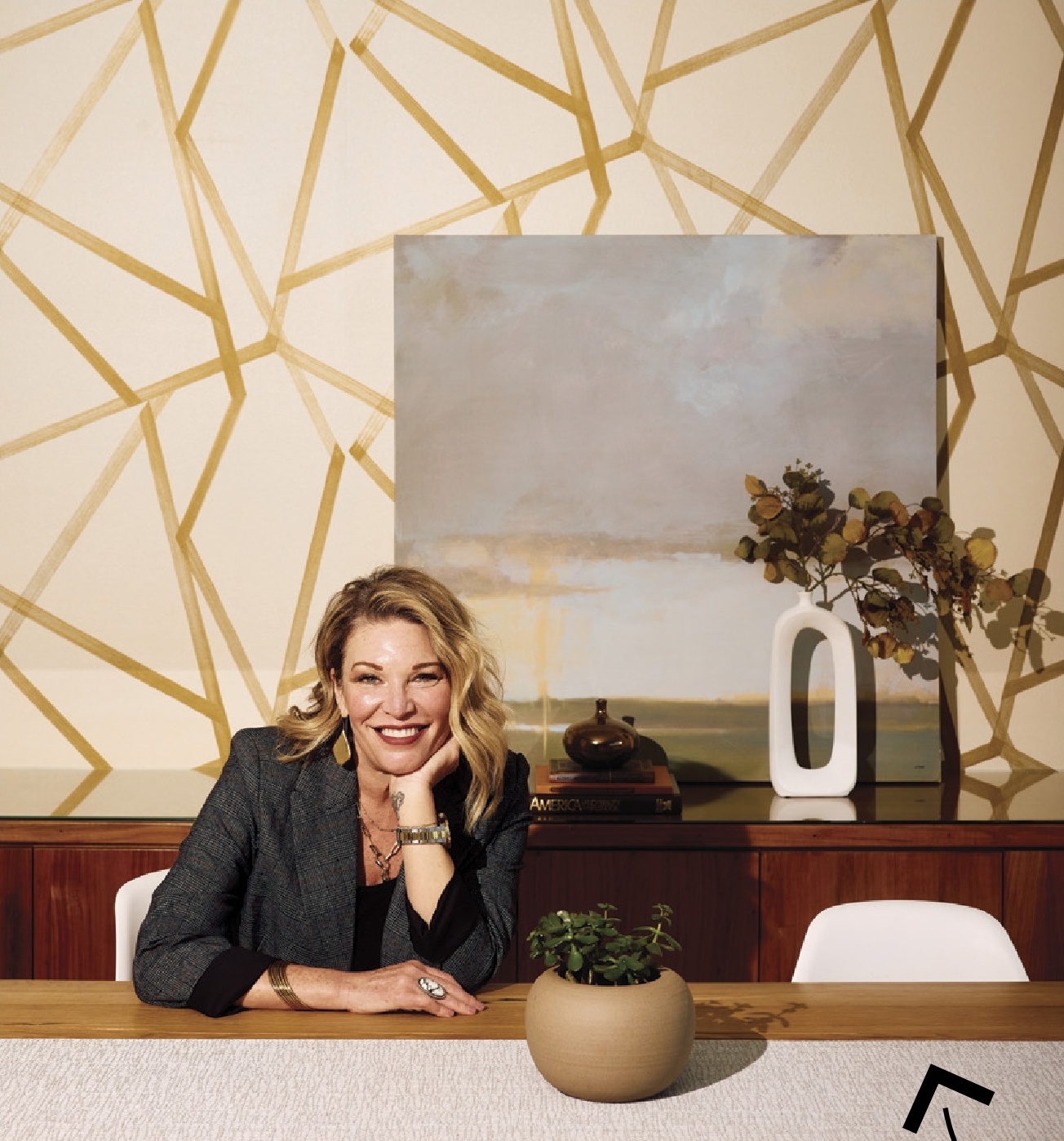
A re you a social media skeptic? In a culture that often tends to prioritize style over substance, it’s easy to be a little influencer leery. But these new books—all penned by social media sensations—are among the most inspiring and life-changing we’ve seen in a while. Whether they’re mining their own personal heartbreak, sharing their self-love journey or exploring love and loss through fiction, these internet phenoms have transformed their experiences into powerful reads. From memoir to manifesto, road map to “romantasy,” these five new books from influencers are sure to influence your life for the better.
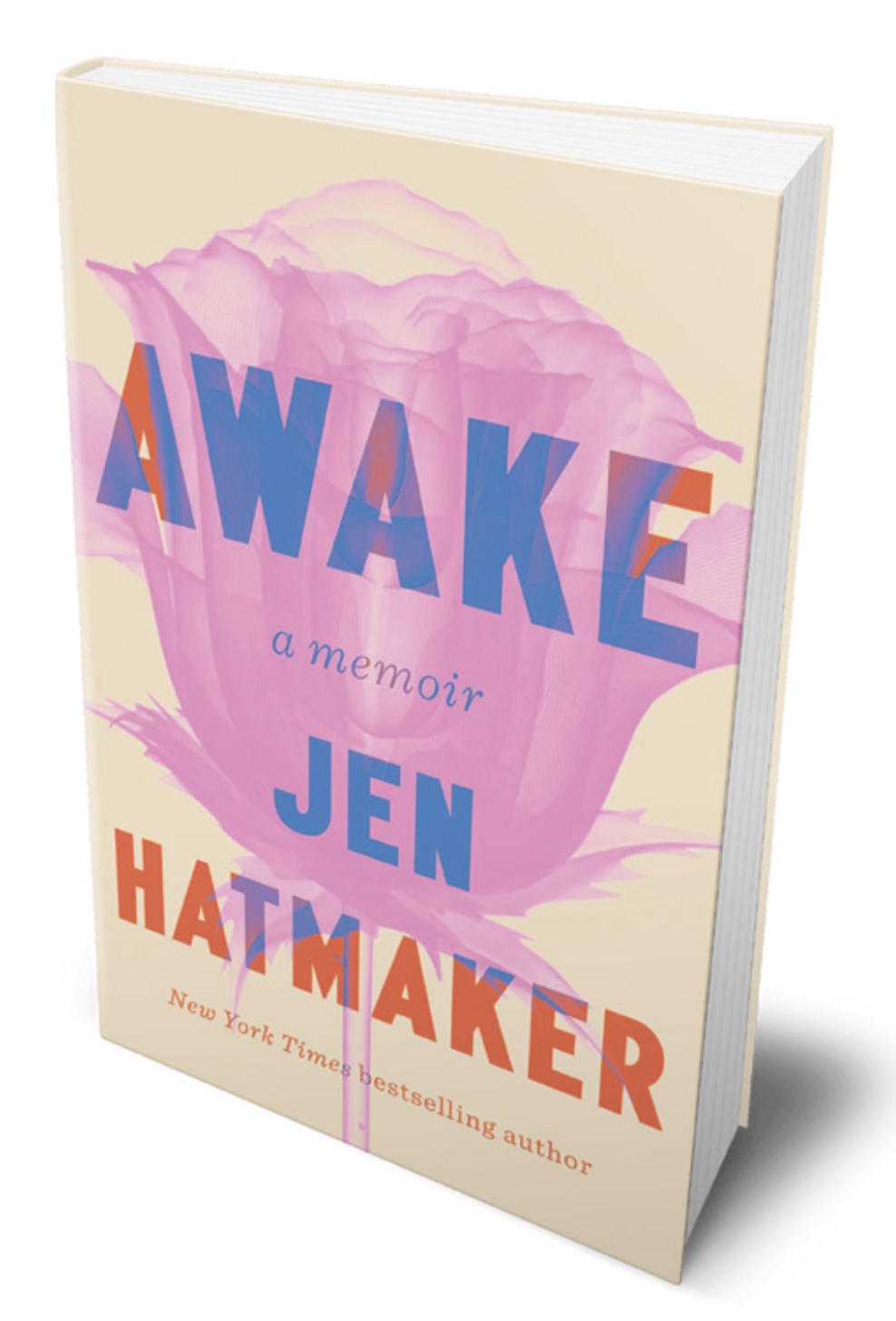
AWAKE: A MEMOIR
By Jen Hatmaker
Before her 26-year marriage imploded early on in the pandemic, Jen Hatmaker was a funny, talented bestselling author and speaker. After? She’s still just as funny, talented and popular, just maybe wiser than ever in her coming-of-middle-age memoir Awake. The For the Love podcast host takes us through crisis with her signature wit in this deeply personal chronicle, challenging everything from gender roles to religious subservience along the way. Told in real-time vignettes, we follow Hatmaker over 40 years, including the building of the life she thought she wanted, the aftermath of its destruction and how she grieved what she lost. It’s a sort of love story… just not the way you’re expecting. One thing is for certain: Hatmaker is living the second half of her life wide awake, and she’ll inspire you to do the same.

LOUD: ACCEPT NOTHING LESS THAN THE LIFE YOU DESERVE
By Drew Afualo
Social media and podcast star Drew Afualo is on a girl power-y mission to help women reclaim their power from the inside out. Her millions of fans—Afualo has more than 8 million followers on TikTok alone—know her as a straight-shooting vigilante against misogyny, calling out fatphobia, racism and other forms of bigotry in her viral videos. Both hilarious and heartwarming, Loud is her personal anecdote-filled playbook for self-love and confidence, encouraging women to reject societal pressures telling them how they should look, act, speak and, well, do pretty much everything. Afualo is the BFF every woman needs in their corner, reminding them that they deserve nothing less than to live a life of their choosing, not what men choose for them.
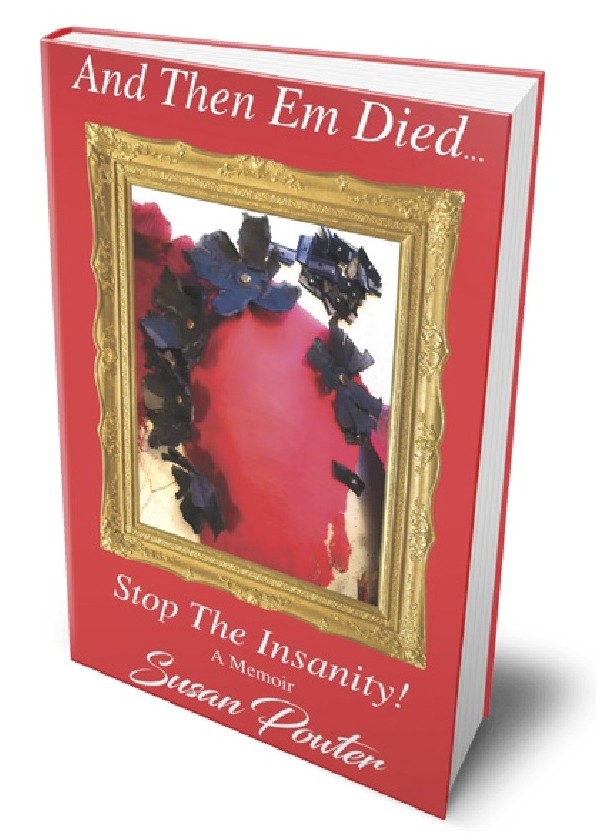
AND THEN EM DIED…: STOP THE INSANITY! A MEMOIR
By Susan Powter
In the ’90s, “Stop the insanity!” was an anti-diet mantra and fitness guru Susan Powter’s rallying cry to put down the SnackWell’s and focus on whole foods and exercise. Known for her shaved head and energetic infomercials, Powter was everywhere, even scoring her own talk show. Money mismanagement and bad business deals, though, left her with nothing—she filed for bankruptcy in 1995 and now lives in a senior community for low-income residents and works as a delivery driver for companies like Grubhub and Uber Eats. But her departure from the public eye wasn’t the end of her story. With honesty and grit, Powter recounts her experiences in this inspiring memoir, a remarkable glimpse into the life of a fitness icon and all the challenges she’s overcome.
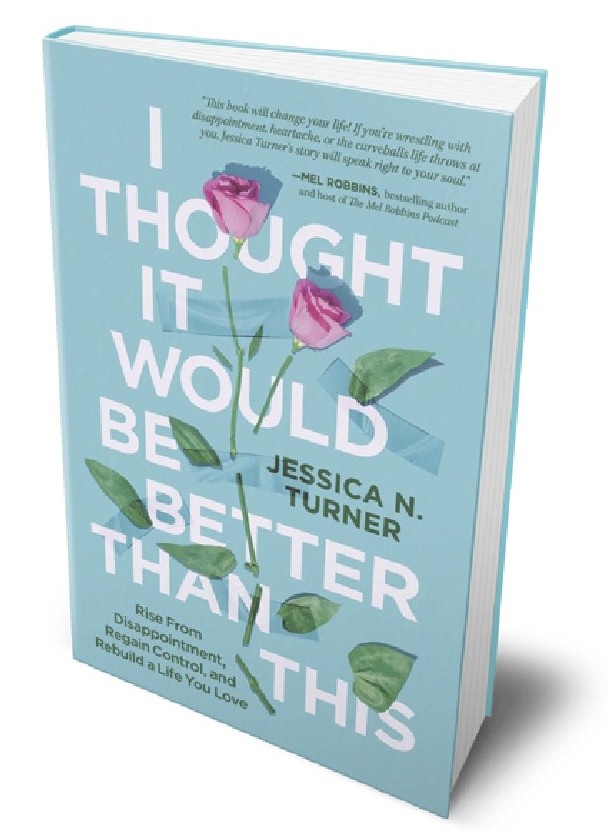
I THOUGHT IT WOULD BE BETTER THAN THIS: RISE FROM DISAPPOINTMENT, REGAIN CONTROL, AND REBUILD A LIFE YOU LOVE
By Jessica N. Turner
Raise your hand if you’ve experienced pain and disappointment. Yes, literally everyone will learn something from content creator Jessica N. Turner’s latest book, where she uses her own painful experience navigating the end of her 16-year marriage to help readers confront their own disappointments and create a fulfilling life. It’s for anyone who’s felt stuck or who’s taken a look around them and wasn’t exactly thrilled with where they’re at. But don’t worry, Turner is here with the unstuck solution. I Thought It Would Be Better Than This is a relatable road map to take control of your circumstances and make intentional changes, a how-to manual for creating more meaningful relationships and a manifesto for hope.
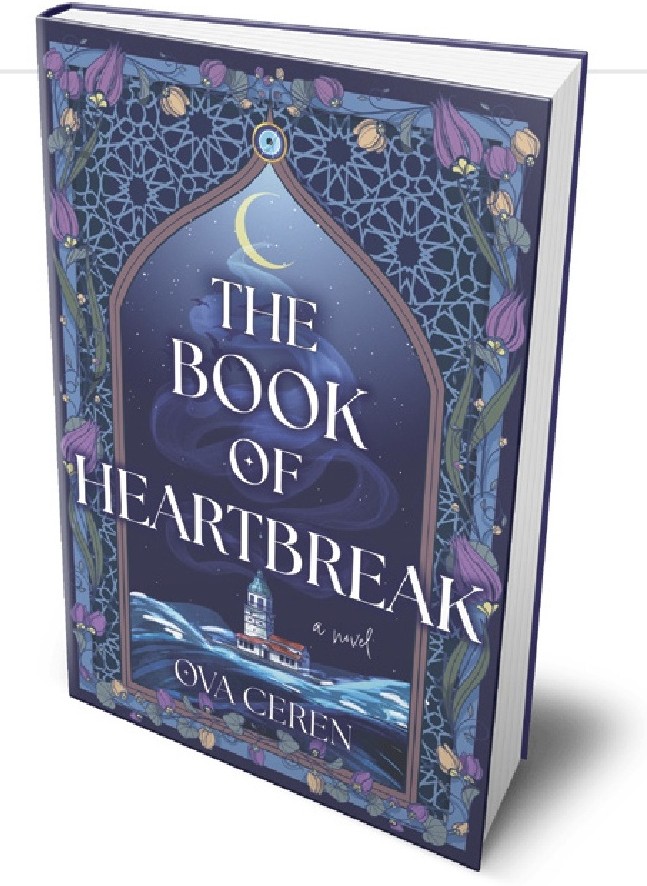
THE BOOK OF HEARTBREAK: A NOVEL
By Ova Ceren
What if heartbreak could actually kill you? That’s the premise of BookTok and Bookstagram influencer Ova Ceren’s romantasy novel following a girl cursed to die every time her heart gets broken. Ceren, better known to her thousands of followers as @excusemyreading, trades reading for writing in her debut novel, and who better than a self-described “half-woman, half-book” to write the page-turner we all need right now? After surviving four heartbreaks, main character Sare has one final chance to stay alive. Exploring love, loss and the fragility of all our hearts, we journey with Sare to Istanbul as she attempts to unlock the mysteries of her mother’s past and end this curse once and for all.
©MACKENZIE SMITH/COURTESY OF JEN HATMAKER
GROUP CHAT | CALENDAR
Who, What, Where
DON’T MISS THESE IN-PERSON AND VIRTUAL INDUSTRY EVENTS HAPPENING SOON.
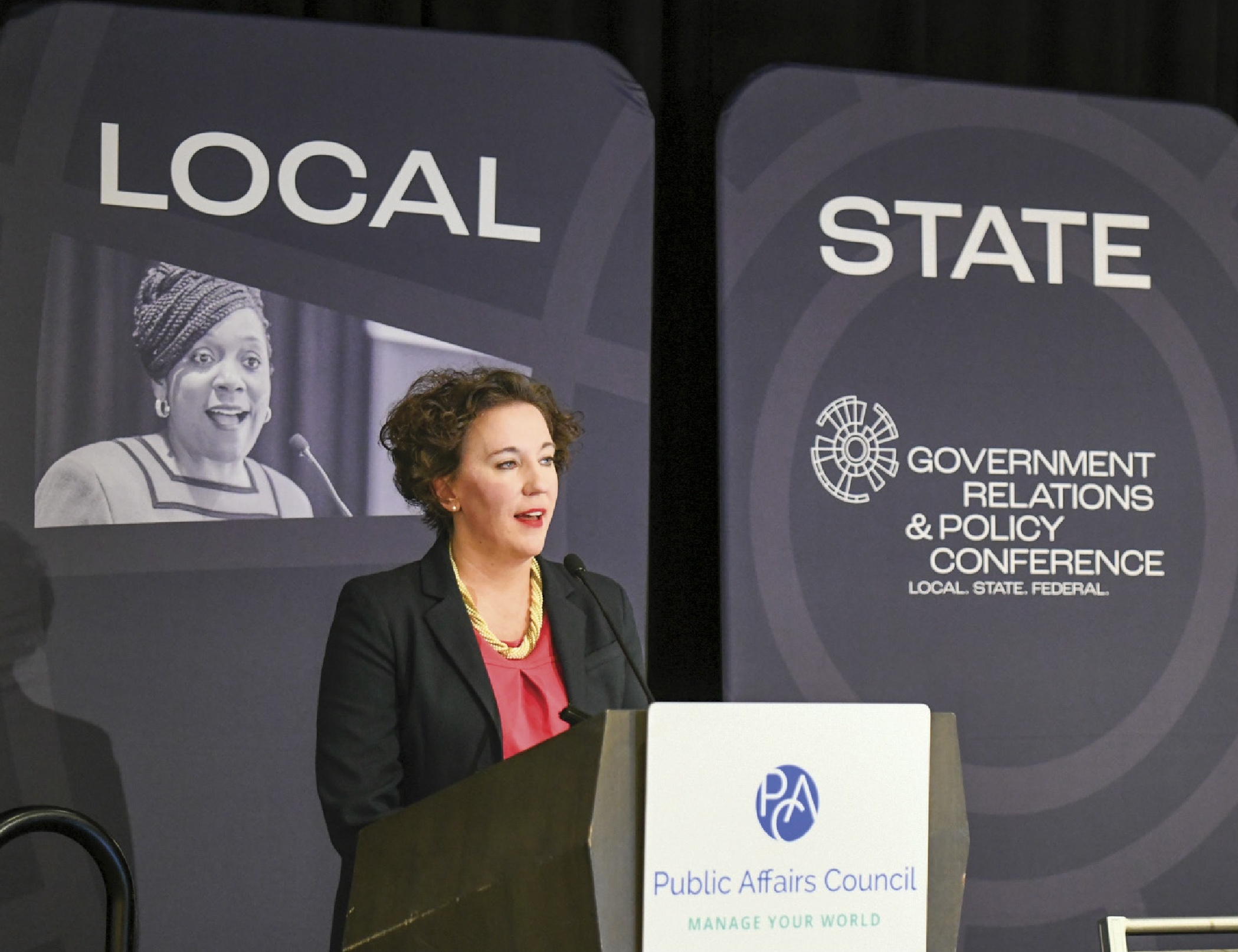
INBOUND
SEPT. 3–5
San Francisco, CA
CONTENT MARKETING WORLD
SEPT. 16–17
San Diego, CA
FESTIVAL OF MARKETING
OCT. 2
London, England
WORLD COMMERCE & CONTRACTING SUMMIT
OCT. 6–7
Denver, CO
AI LAWS, SAFETY, ETHICS & COMPLIANCE
OCT. 8–9
Washington, D.C.
RETHINKING STRATEGY & INNOVATION IN BIOPHARMACEUTICAL & HEALTHCARE INDUSTRIES
OCT. 10
San Francisco, CA
EUROFINANCE INTERNATIONAL TREASURY MANAGEMENT
OCT. 15–17
Budapest, Hungary
ANNUAL CONVENTION & EXPO
OCT. 19–22
Las Vegas, NV
AFROTECH WORLD
OCT. 27–31
Houston, TX
TEXAS CONFERENCE FOR WOMEN
OCT. 29
Austin, TX
COURTESY OF PUBLIC AFFAIRS COUNCIL
GROUP CHAT | FROM THE ARCHIVES
Walter Cronkite
NOVEMBER 1980 KNOWN ON A FIRST-NAME BASIS IN 12 MILLION HOUSEHOLDS, TV’S MOST RESPECTED NEWSMAN EXPLAINS THE ‘THAT’S THE WAY IT IS’ APPROACH OF HIS CAREER.
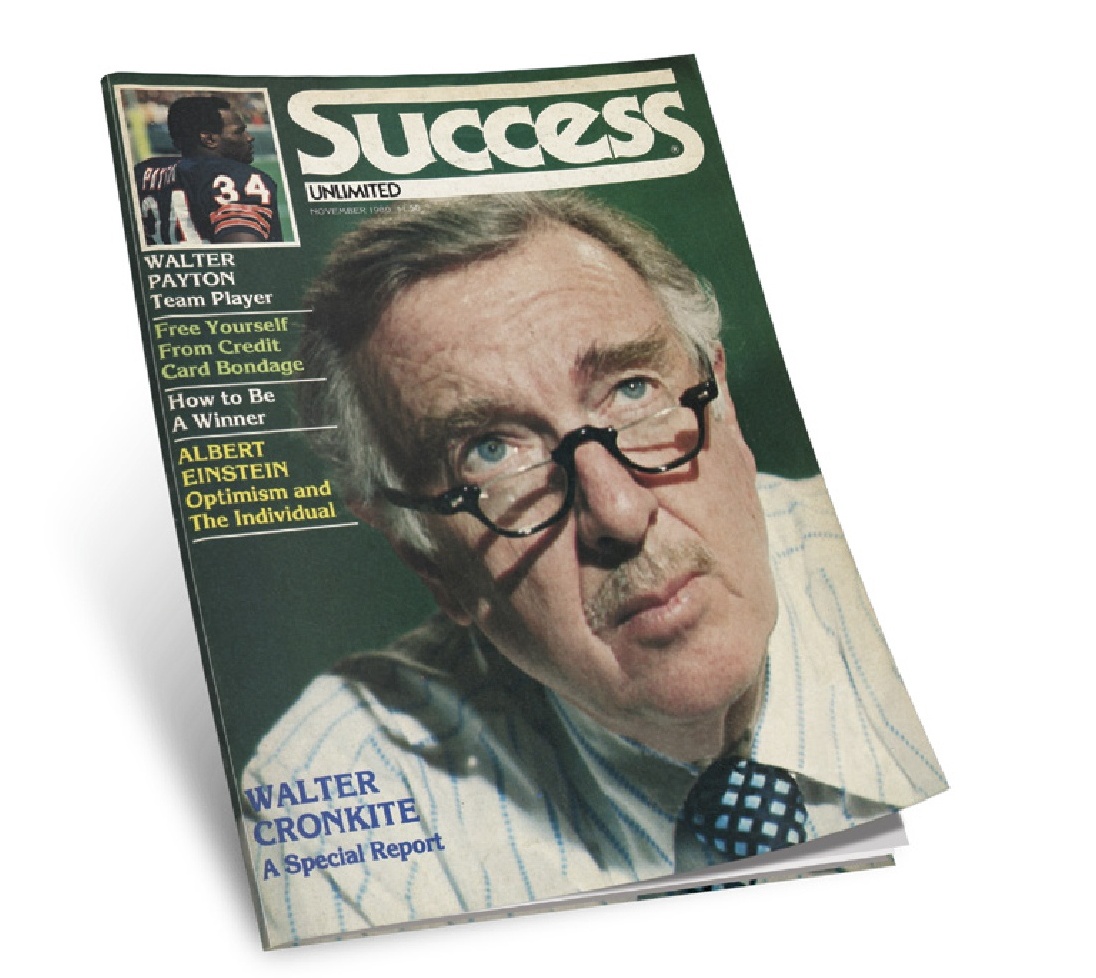
F or a man who’s watched in 12 million homes every night, who earns more than $1 million a year and chats with world leaders, Walter Cronkite has maintained, to a remarkable degree, the common touch.
Polls to determine public trust have regularly placed him at or near the top in America’s confidence. After all, this is the man who’s been telling them, “That’s the way it is,” for as long as they can remember, who’s guided them through political conventions, space shots, recessions, assassinations and foreign turmoil, who’s calmly and cogently explained to them what the world has been up to that day.
In his three decades on CBS television, Walter Cronkite’s bushy eyebrows, salt-and-pepper mustache and warm but slightly gravelly voice have come to be a source of great comfort to millions of American viewers. He is quite gracefully, and without really meaning to, assumed the role of America’s favorite uncle.
“It’s obviously an honor that people trust me,” says Cronkite in his familiar, studied tones, “because that’s basically what every newsman wants—to be believed.”
On Feb. 14, it was announced that Cronkite would be stepping down voluntarily from the Evening News anchor chair he has occupied for the past 18 years, in order to enjoy a kind of semiretirement. “In any case, I’m going to stay with CBS,” he says, laying to rest any rumors of a network switch. “I’ll definitely do the science series Universe, and I hope to appear on the Evening News quite a lot.”
After college, Cronkite landed a job with the Houston Press, covering everything from band concerts to local elections. In 1937, he moved to Kansas City, Missouri, to radio station KCMO where he worked as sports editor and broadcaster.
Despite the great success of his sports reporting, Cronkite abruptly quit his job at station KCMO after a professional dispute with the program manager. Cronkite wanted to check a story with the fire department first, but the manager insisted that he go ahead and broadcast it. Cronkite refused—to his mind, elaborating a bit on football games was one thing, but inaccurately reporting “hard news” stories was another.
But the run-in was enough to convince the young Cronkite that reporting and investigating news stories were what he really wanted to do. For the next few years, he worked for the United Press in several cities. After the Japanese attacked Pearl Harbor in December 1941, Cronkite was one of the first newsmen accredited to the U.S. military forces.
He crossed the Atlantic in a convoy that was transporting the vanguard of the Eighth Air Force to England. Covering that air squadron was Cronkite’s first war “beat,” and it nearly proved to be his last.
He covered the combat landing of U.S. troops in North Africa, the Allied invasion of Normandy and the Battle of the Bulge. One of the last war stories Cronkite filed for the UP was the German surrender of Northwest Europe.
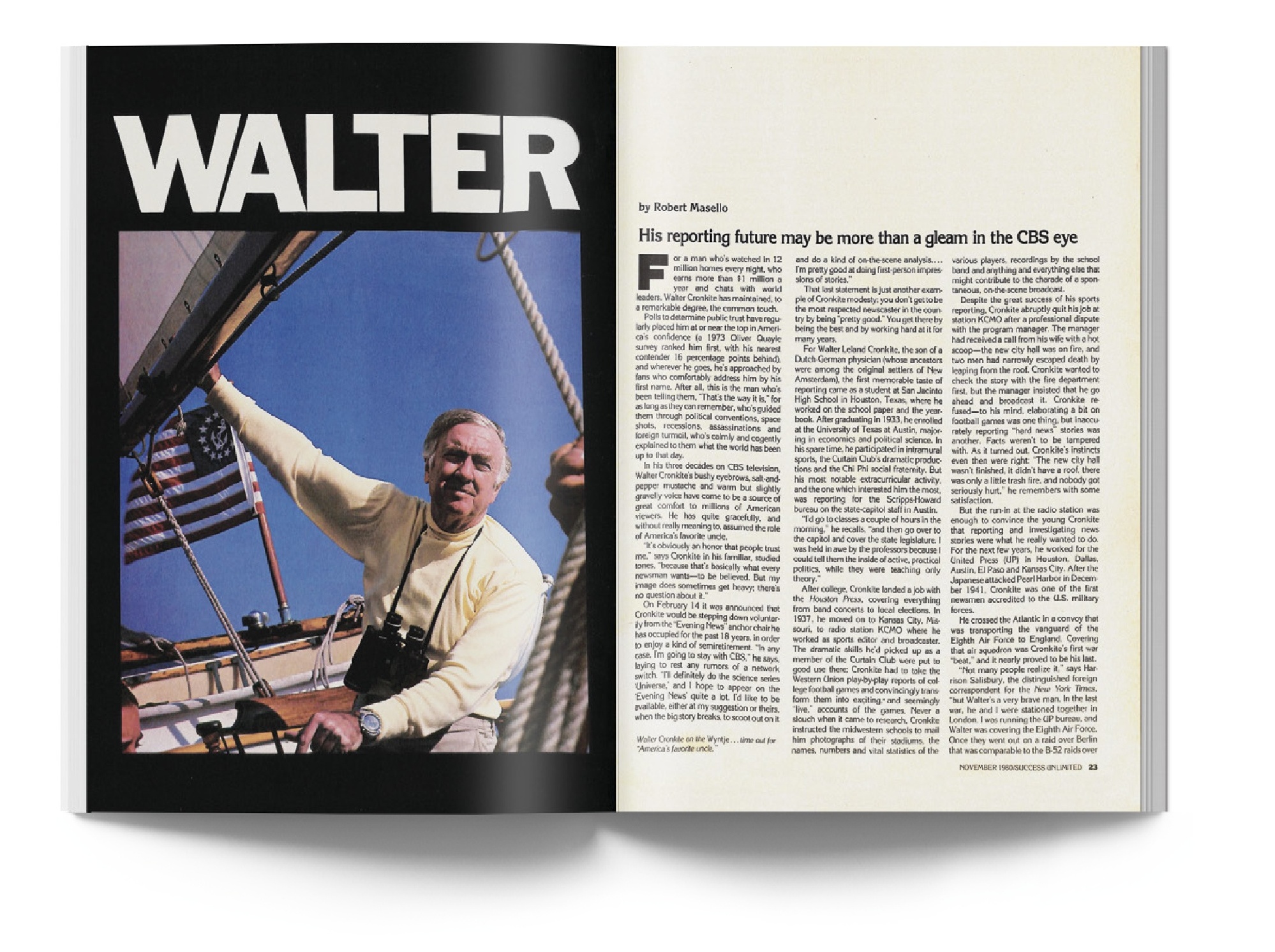
Walter Cronkite on the Wyntje… time out for “America’s favorite uncle.”
After the Allied victory, Cronkite remained in Europe, first to reestablish UP offices in Belgium, the Netherlands and Luxembourg, then to cover the war-crime trials in Nuremberg. Two more years as the UP chief correspondent for the Soviet Union and Cronkite’s overseas duty came to a close.
It was in July 1950 that he made his historic liaison with the Columbia Broadcasting System; he had hopes of covering the Korean conflict, but CBS had other plans for him. It sent him down to Washington, D.C., to work on a local news show. “I was madder than hell,” he recalls. “Sold down the river to a lousy local TV station!”
Perhaps in part to placate their disgruntled new employee, the powers at CBS decided to take a gamble and appoint Cronkite as anchorman for the 1952 political conventions. It was a gamble that would pay off handsomely, both for the network and for Cronkite.
The scene in Chicago in 1952 received extensive airtime and was broadcast in 52 markets from coast to coast.
Through it all, Cronkite dutifully manned the CBS anchor desk, providing a highly informative, running commentary on the political machinations and subtle strategies that weren’t so evident to the average viewer. Reporting on the seventh session of the Democratic convention that began at noon on July 24 and finished up at 3 a.m. on July 25, Cronkite earned his enduring nickname among television newsmen, “Old Iron Pants.”
His fluent coverage of the conventions made Cronkite a national figure overnight. CBS promptly dispatched him to headquarters in New York, where he has remained ever since, covering everything from the Cuban-missile crisis to Watergate.
He has conducted important interviews with Soviet author Aleksandr Solzhenitsyn, the late President Tito of Yugoslavia and Great Britain’s Prince Philip. He reported on the assassinations and funerals of John F. Kennedy and Martin Luther King Jr. He helped preside over America’s bicentennial celebration.
Perhaps the most notable case occurred in November 1977, when Cronkite’s adept questioning, via satellite, of Egyptian President Anwar Sadat and Israeli Prime Minister Menachem Begin helped to bring about the first historic summit conference between those two nations.
In a taped interview, Sadat announced that he was willing to go to Israel. When Cronkite asked how that could be done, Sadat suggested, “Why not through our mutual friend, the Americans?” Six hours later, Cronkite conducted another interview, this time with Begin, who said he would send a letter the next day inviting Sadat to address the Israeli Knesset. William Safire, columnist for the New York Times, called it “Cronkite diplomacy.”
Over the years, he has won every major award in broadcast journalism.
“I don’t want to retire in the sense of getting a little place somewhere and putting my feet up…. I’d like to be able to speak out on a few important issues, without feeling that I was in any way impinging upon the independence and integrity of the Evening News,” says Cronkite.
WHO’S BEEN ON THE AIR THE LONGEST?
T he longest tenure as a news anchor on a nationally syndicated show (not continuous hours) goes to Walter Cronkite, who anchored CBS Evening News for 19 years. The second runner up is Bob Barker, who hosted The Price Is Right for a whopping 35 years.
GROUP CHAT | MARKETING MEMO
Beyond Personal Branding
DIGITAL MARKETING EXPERT NEIL PATEL EXPLAINS WHY CORPORATE BRANDS OUTPERFORM PERSONAL ONES AND THE PATIENCE NEEDED FOR SUCCESS.
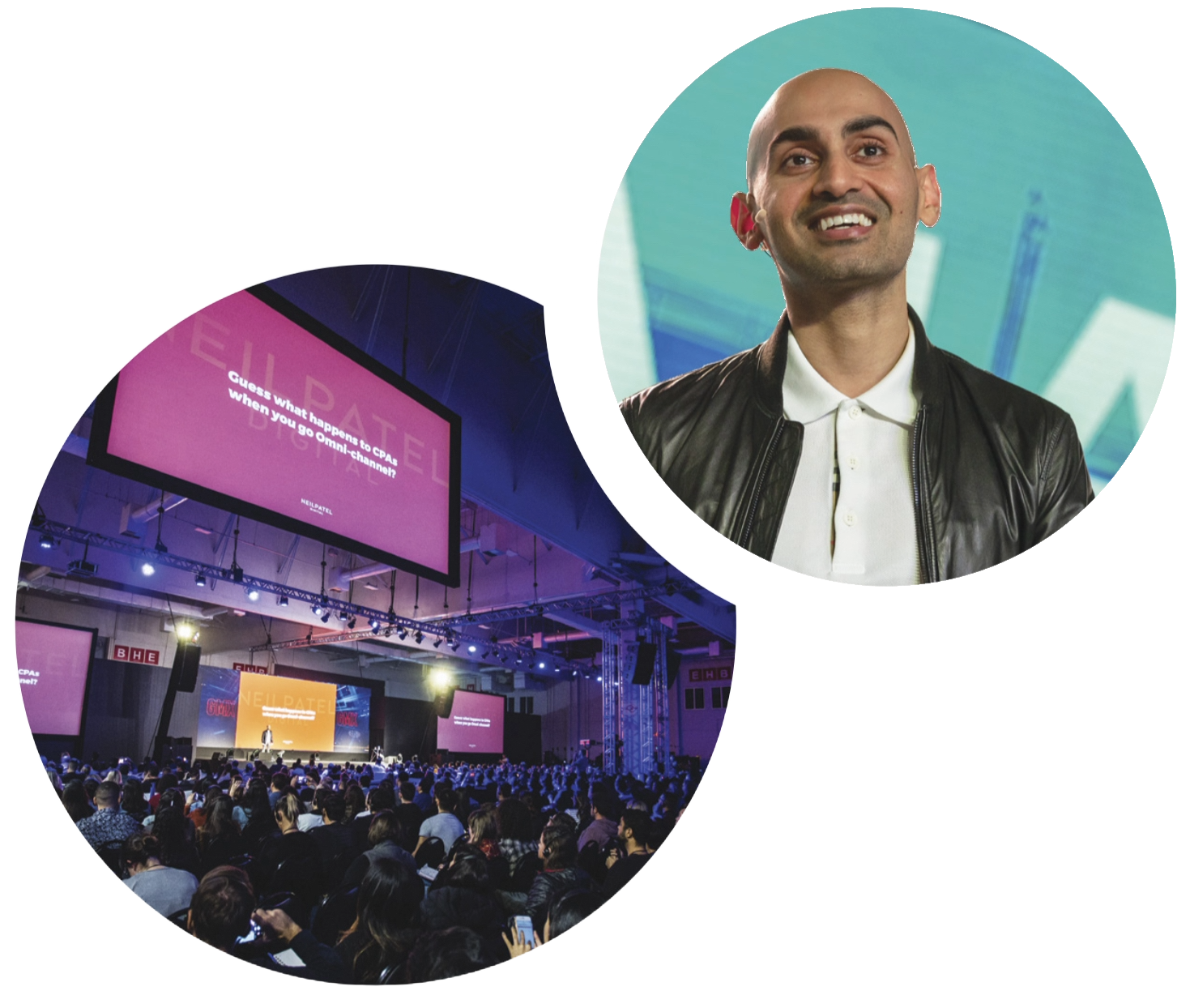
N eil Patel has certainly made a name for himself. The New York Times bestselling author was honored at the White House as one of Empact’s Top 100 entrepreneurs under 30 and was named a Top 10 online marketing expert to follow by Forbes. His agency, NP Digital, operates in over 20 countries and generates tens of millions in revenue annually. Simply put, Patel’s personal brand is among the strongest in the digital marketing world.
But despite leveraging his personal brand to launch this global success, Patel now offers some unexpected advice to aspiring entrepreneurs: don’t follow his path. While this may seem contradictory to his own experience, it reflects hard-earned lessons from seven years of scaling his business.
THE PERSONAL BRAND PLATEAU
“I believe it’s better to not build a personal brand than it is to build one,” Patel says bluntly. “I’m not saying a personal brand is bad. What I’m saying is a corporate brand is better and, in an ideal world, you would have both a personal and a corporate brand, but most people don’t have time to do both.”
Patel says NP Digital (formerly Neil Patel Digital) generated around $5 million in revenue in its first year, largely stemming from Patel’s personal brand. By the second year, that figure jumped to $18 million, with approximately $10 million attributed to his personal brand. As the business grew beyond $30 million, his personal brand consistently plateaued at that $10 million contribution. “It’s not bad,” Patel acknowledges. “Now my personal brand’s not as big as Kylie Jenner or LeBron James or anyone like that, and it drives decent revenue. It’s a great way to kick-start a business. But what I learned is if you want to make a ton of money, people prefer just paying corporate brands.”
“I LEARNED THAT, OVER TIME, THINGS HAVE A COMPOUNDING EFFECT IF YOU’RE WILLING TO PUT IN THE TIME AND ENERGY.”
IT’S A MARATHON, NOT A SPRINT
Whatever type of brand you’re building, Patel emphasizes that patience isn’t just a virtue—it’s a necessity.
“The first three years of building my brand, I was speaking at conferences for free,” he recalls. “I was creating tons of goodwill and content online, blogging like crazy, and it wasn’t driving much revenue in the first year.”
Patel says revenue picked up in the second year and got better in the third year, but it still wasn’t significant. Rather than giving up when things weren’t growing as rapidly as he’d hoped, Patel recognized that his patience would eventually pay off.
“I learned that, over time, things have a compounding effect if you’re willing to put in the time and energy,” he says. “It doesn’t work for most people because they quit after the first three months or six months.”
Patel’s advice for maintaining patience? “Instead of analyzing how well and how much money it’s making or how many followers you have, you should just think about it as a normal routine that’s part of your life. You should work on your brand just like you brush your teeth or try to stay healthy. Just dedicate a certain amount of time each and every single day to it.”
FIND YOUR FOCUS
One critical lesson Patel learned early on was the importance of specificity. “I thought about going more mainstream instead of focusing on a vertical,” he recalls. “When I did that, my revenue declined but my reach went up.” This experiment taught him a valuable principle: “What I learned is it’s not great to be known for just anything. You want to be known for something specific. It’s too hard to monetize just being well-known.”
To illustrate his point, Patel uses the example of Nathan Apodaca’s viral TikTok video of him longboarding to work while drinking cranberry juice and listening to Fleetwood Mac’s “Dreams.”
“It was a really cool video,” he acknowledges. “But how well is he monetizing his personal brand today? Being known for longboarding doesn’t do much. That’s not going to help you build a personal brand. You need to post content on something. You may not get the most followers, but you need to post content about a specific vertical and that’s what’s going to help you the most.”
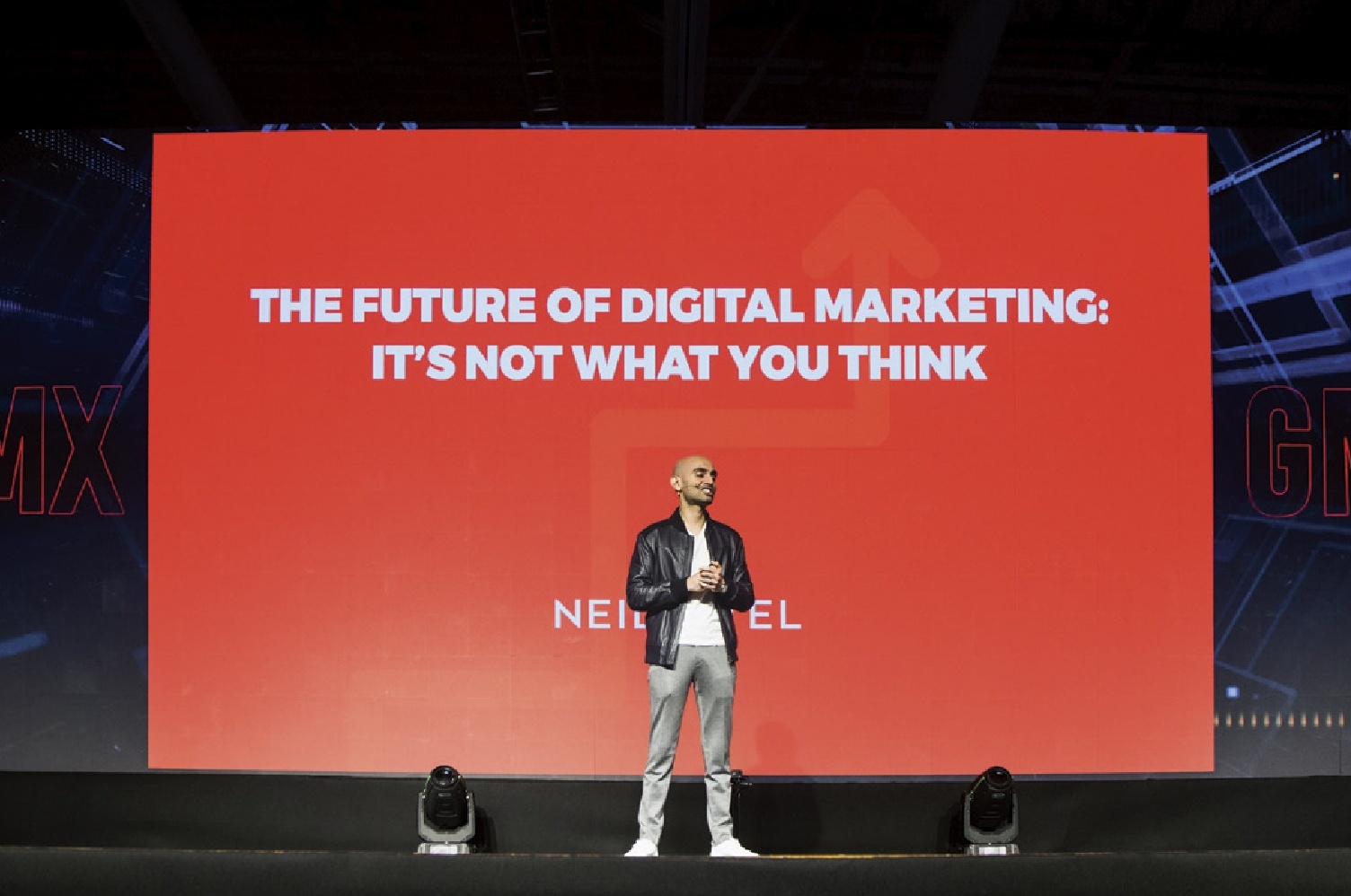
THE 3 PILLARS OF EFFECTIVE BRAND BUILDING
Patel offers three core recommendations for those just starting their brand-building journey:
1. Create unique, valuable content: “If you’re not adding value with something that’s new, fresh, unique—it’s not going to do well.”
2. Go omnichannel: “You have to be on Instagram, Snapchat, Twitter or X or whatever you call it, Facebook, YouTube, LinkedIn.”
3. Balance short- and long-form content: “People resonate more with long-form video. Long-form video is a great way to build a deeper connection with your audience. Short-form videos tend to get more views. It’s a great way to get followers, but short-form videos are a terrible way to build relationships.” Combining these three pillars creates a winning branding strategy. Create unique short-form content and publish it across multiple channels to attract followers. Then, follow it up with long-form content to build relationships that lead to conversions.
BRIDGING BRAND AND REVENUE
For entrepreneurs struggling to monetize their personal brand, Patel’s advice is characteristically direct: “Focus on the pain points of your customers and create content around that. Build your brand around that. Don’t build your brand around something that’s cool. Build it around solving a problem for the masses.”
This problem-solving orientation forms the bridge between brand recognition and revenue growth—a bridge that becomes stronger when built on a corporate foundation rather than a personal one.
As counterintuitive as it might seem coming from one of digital marketing’s most recognizable personal brands, Patel’s experience offers a compelling case for rethinking our approach to brand building. Perhaps lasting impact lies not in becoming the next influencer but in creating something bigger than yourself.
COURTESY OF NEIL PATEL
GROUP CHAT | GIVING BACK
Breaking the Cycle
FREE ALL MINDS ACADEMY FOUNDER RICCARDO DALE USED HIS OWN CHILDHOOD STRUGGLES TO FUEL A MOVEMENT FOR AT-RISK YOUTH.
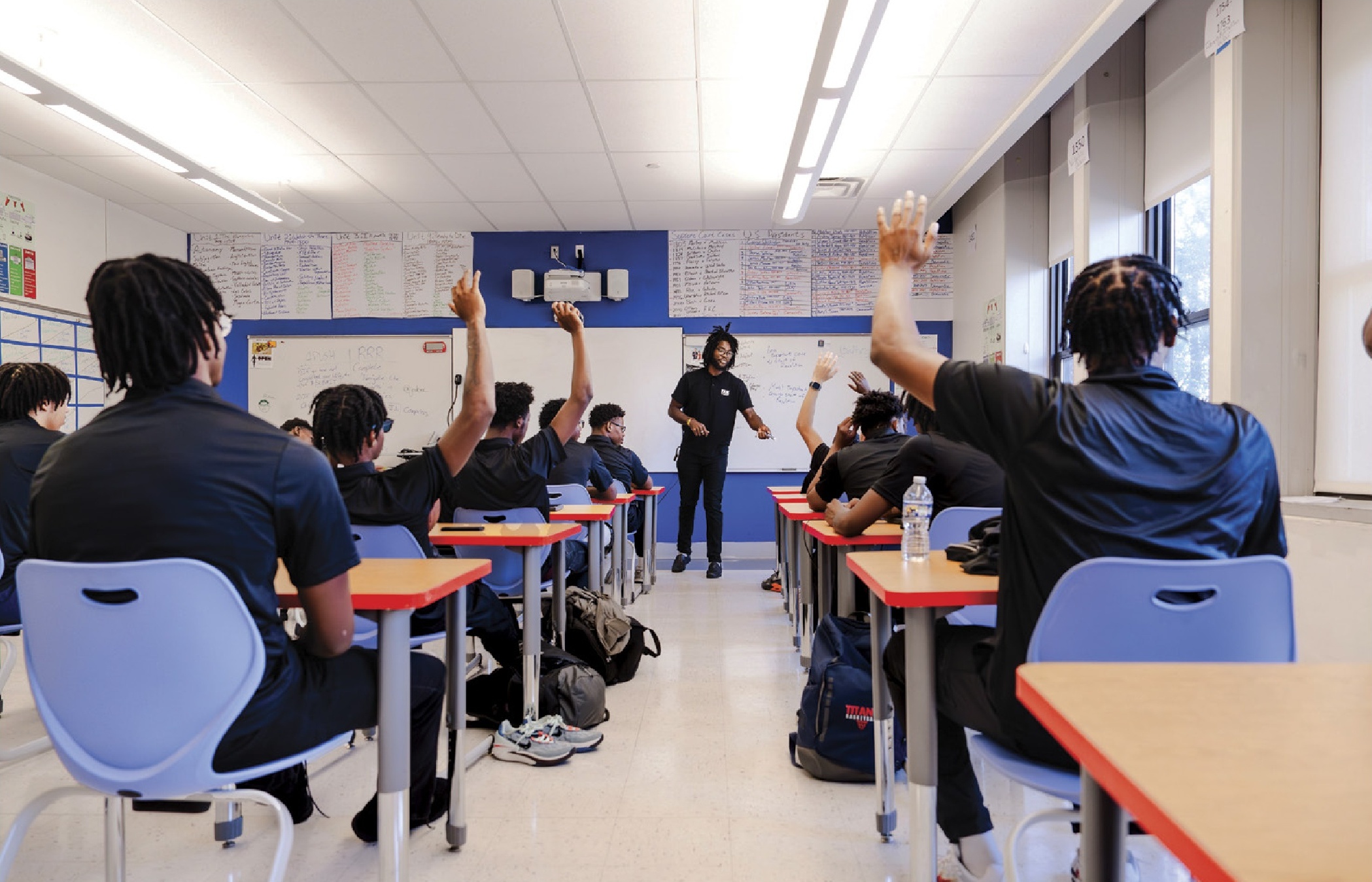
O pportunity is not doled out equally to all children. Young Black men, in particular, are disproportionately incarcerated in the U.S. and one of the least likely demographics to graduate high school.
But there is a way to provide bright futures for children living in low-opportunity environments, believes Riccardo Dale, founder of Free All Minds Academy (FAM), a nonprofit that seeks to reduce arrest rates and increase graduation rates for young men of color. His solution: identifying and filling resource gaps.
After dropping out of high school and becoming homeless at 16, Dale was on track to follow what he calls “the wrong path” until a mentor stepped in and reenrolled him in school. With guidance, Dale became a leader on campus and eventually earned a full scholarship to attend college, while at the same time, he watched a childhood friend descend into a life of violence. Their stories began similarly, but their futures couldn’t have been more different. That unfair disparity sparked Dale’s passion for improving the futures of at-risk teens, and FAM was born.
“I didn’t see myself as any different from him,” Dale says. “I very well could have been in [his] same situation without the right opportunities and guidance. I received some breaks that I know for a fact [he] never received. It made me really wonder, ‘How many kids out there are just like him?’”
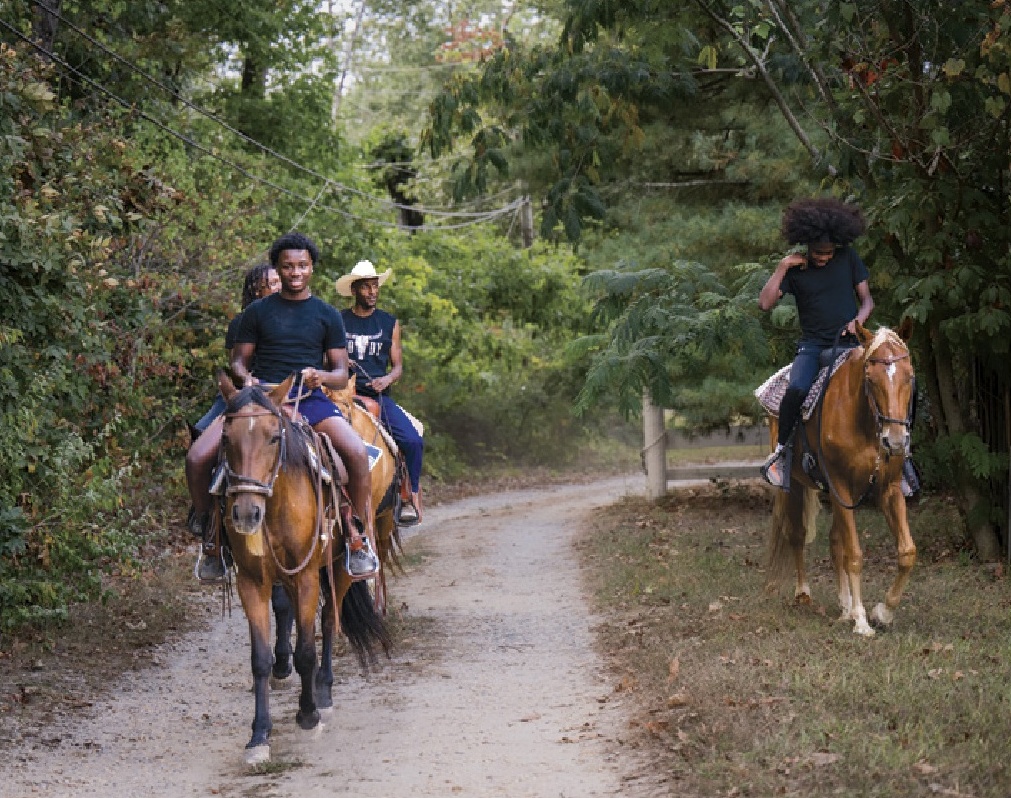
CREATING SELF-MOTIVATED TEENAGERS
The goal of FAM was to combat a systemic problem that stretched across the nation, but Dale was convinced that infusing resources into the lives of the young men in his community at an early age could prevent problems before they happened.
“I don’t want to wait until a kid has thrown his life away to come and throw a bunch of resources and money behind him,” Dale says.
The goal became focusing on helping kids before their life took a negative turn, and Dale and his team began meeting with students on a weekly basis, helping them make informed decisions about trade school and college. This was an uphill battle, and within a few weeks, it became clear that students couldn’t be receptive to education when their everyday lives felt unpredictable.
“I literally had a student that I’m dropping off to his house, and he doesn’t have a [bedroom] door,” Dale says. “He has six siblings, and his mom is strung out on drugs, and I’m talking to him about college in three years. You could throw all the resources you want at that kid educationally and that is not going to do him service when his basic needs are not met.”
It was an epiphany that expanded Dale’s vision, and FAM reoriented its approach to make sure students had access to food seven days a week, clothing to wear and a place to wash those clothes so they could show up confident and present. With these needs met, he began introducing the students to new career fields and organizations to find what ignited their individual interests and how to effectively motivate them. The addition of a basketball program allowed him access to students who might not otherwise be interested, and Dale designed the rest of his curriculum, including health and wellness classes, tutoring and community engagement workshops, as mandatory for athletic participation.
“It’s self-motivating,” Dale says. “Because I can tap into what you want to do as an athlete, [and] I’m going to get you to do what you need to do.”
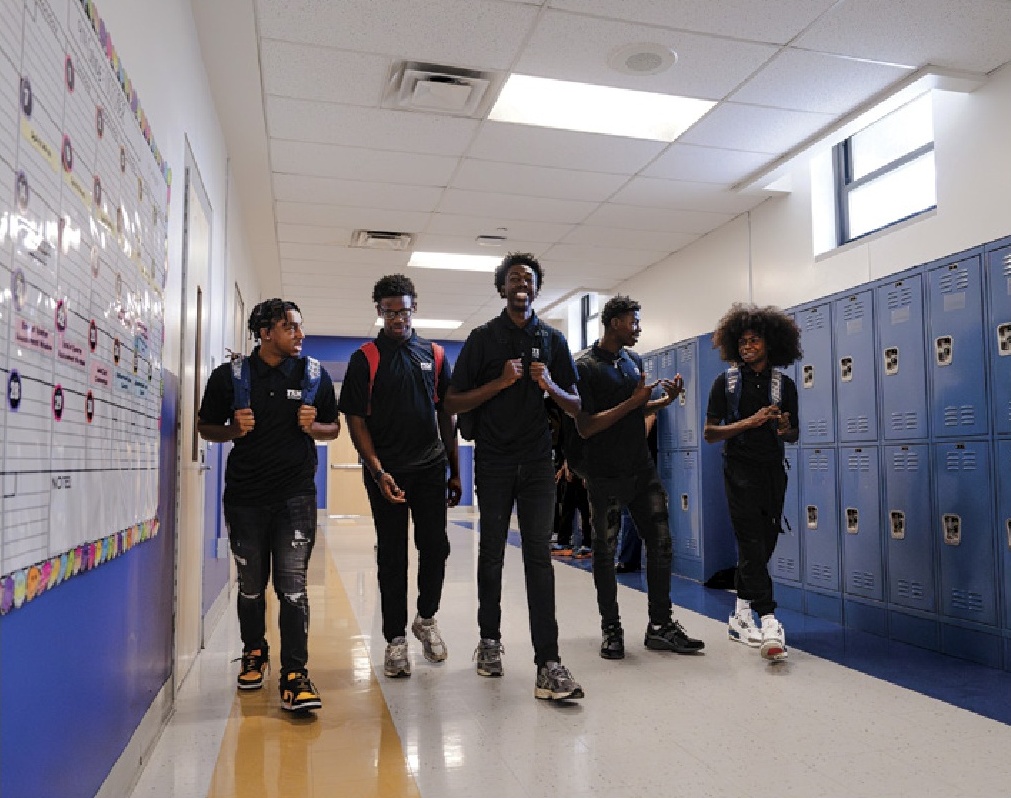
TRADING GANG AFFILIATION FOR GRADUATION
It is not uncommon for Dale to see men in his community—his family members included—succumb to gang affiliation. In the neighborhoods in New Jersey and Pennsylvania where FAM is present, gang affiliation is rampant, but Dale knew from experience that young men were not joining gangs because they were inherently violent.
“Young Black and Brown boys across the country that are making up a mass majority of gang violence, they’re not joining these gangs because they want to be a menace to society,” Dale says. “From the outside looking in, they’re a bunch of stupid teenagers making poor decisions that are bringing down their community. When you take a deeper dive into what that truly is, they’re people who just want a sense of belonging.”
With this in mind, Dale designed FAM to be an exclusive brotherhood and provided a positive version of security, protection and provision that young men typically seek in a members-only gang culture. Students meet Sundays for “family dinners,” a weekly meal that encourages young men to have open conversations about what is going on in their lives, and positive peer pressure from their classmates makes exhibiting good behavior and staying out of trouble the norm.
This consistent connection has produced metrics of success that include a reported 100% graduation rate and a 96% college acceptance rate. Students who Dale says grew up in extremely difficult situations and were essentially “set up for disaster” are now attending university, taking on paid leadership roles and exhibiting emotional intelligence.
“A lot of these boys don’t have anybody to rely on, and for lack of better words, they don’t have anybody to let down,” Dale says. “It’s a lot easier to throw your life away when nobody’s expecting you to do anything more.”
Today, Dale is working to scale his efforts beyond the East Coast and increase capacity to serve more students who remain on the waiting list due to limited funding and space. FAM is always open to volunteers and donations, but he emphasizes that there are plenty of ways for people to make a positive impact on a local level.
“You can volunteer as a coach in your local rec center or high school,” Dale says. “You can just have a conversation. You never know the difference that it will make to that kid you always see at the pizza shop. The worst thing you could do is just not get involved. There is no level of assistance that is too small.”
COURTESY OF FREE ALL MINDS
Action Plan
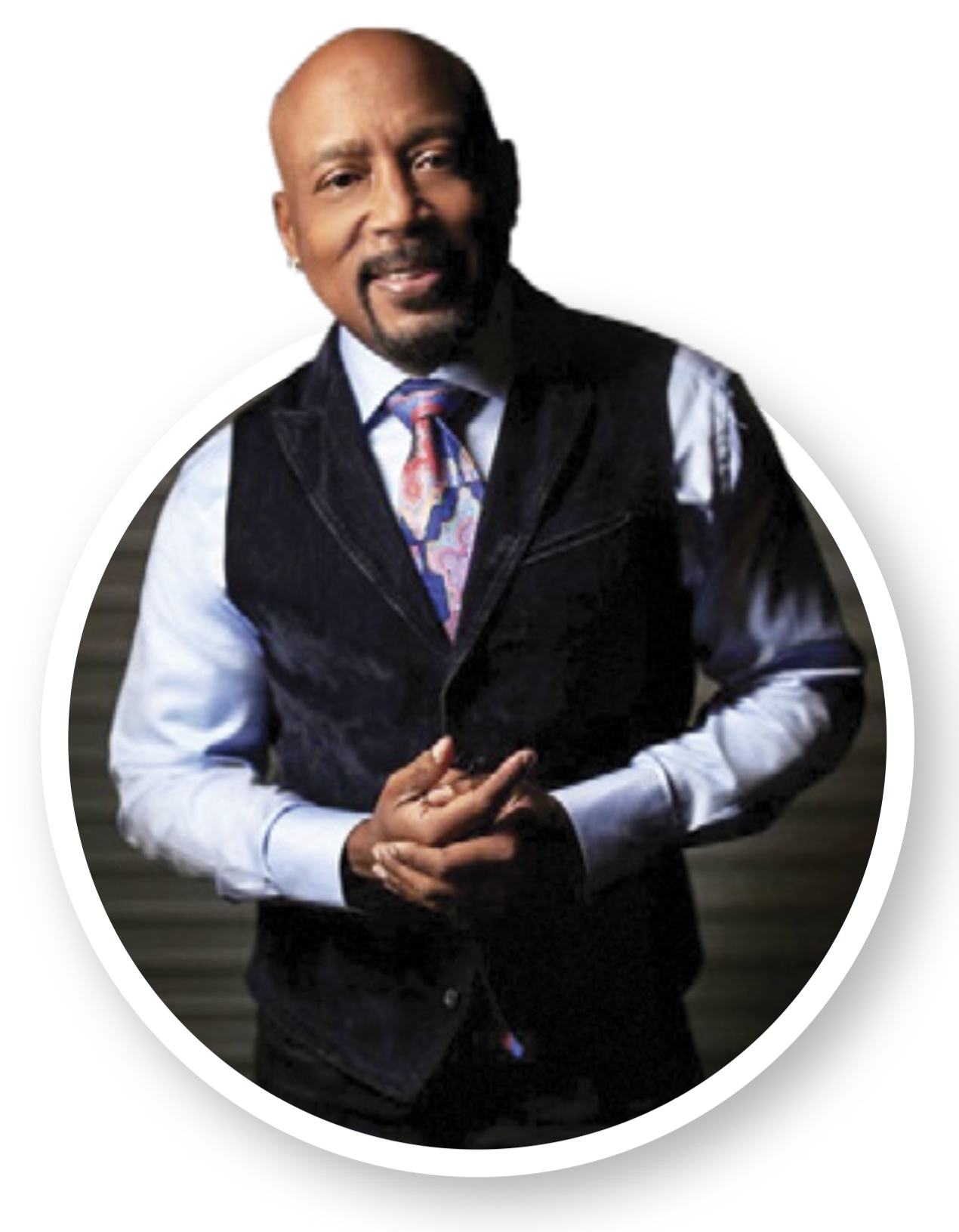
1 DRIVE INNOVATION
Take bold steps toward selling the future, not just products.

2 REDEFINE WHAT’S POSSIBLE
Change starts with one courageous decision to reclaim your power.
3 CORPORATE GIVING REIMAGINED
Source ethically made products that support artisans, reduce waste and drive social and environmental impact.
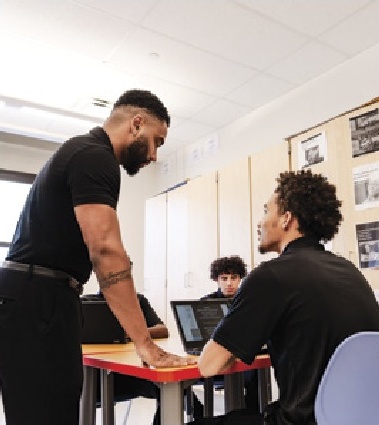
4 BREAK THE CYCLE
Turn struggles into purpose by empowering and lifting others to rise above their circumstances.

5 BRIDGE THE GAP
Take charge of your finances by breaking free from outdated systems and forging your own path.
©STARKEY/COURTESY OF DAYMOND JOHN; FIONA MADDEN PHOTOGRAPHY; COURTESY OF PUNAR; COURTESY OF FREE ALL MINDS; COURTESY OF KRISTY KIM