FROM OUR CEO
The Essence of a Changemaker
W ho comes to mind when you think of a “change-maker”? I thought about this question as we prepared for our SUCCESS® Changemakers award nomination process. To my delight, a flood of faces and names came to mind: individuals I’m fortunate to know, those I aspire to meet, colleagues I’ve worked alongside and those I’ve had the honor to serve. This includes the remarkable individuals featured in SUCCESS magazine and those we hope to highlight in the future.
It turns out, I define “changemaker” in a variety of ways—community leaders, activists, authors, innovators, visionaries, inventors and pioneers. But I also think of the team member who goes the extra mile, the neighbor who rallies for change, the coach and the teacher who inspire, the entrepreneur who thinks outside the box and the volunteer who put smiles on faces.
Being a changemaker, to me, is about character, intention, purpose and impact. It’s the character that steers decisions toward positive change. The intentional clarity and sincerity behind actions. The purpose, mission and passion that drives meaningful transformation. And the impact… the tangible difference, whether it’s a small gesture that brightens someone’s day or a groundbreaking innovation that reshapes an entire industry. Greatness in making a difference doesn’t always come with fanfare, celebrity or headlines. It lies in the quiet determination of individuals who consistently embody these qualities in their daily lives.
As we honor and celebrate our SUCCESS® Changemakers, I am reminded of the power of collective action. Each person highlighted in SUCCESS magazine represents hope, inspiration and determination. Their stories demonstrate that positive change is not just possible but achievable. Together, by sharing these stories and encouraging others to join in, we create a path toward a future where changemakers, by all definitions and from all backgrounds and endeavors, can be recognized and celebrated for their contributions.

SUCCESS® magazine November/December 2024, Volume 67, Issue 6 (ISSN 0745-2489) is published bimonthly by SUCCESS Enterprises LLC, 5473 Blair Rd, Suite 100, PMB 30053, Dallas, TX 75231. Periodicals postage paid at Dallas, TX and additional mailing offices. POSTMASTER: Send address changes to SUCCESS magazine, P.O. Box 435 Congers, NY 10920. SUBSCRIPTIONS: U.S.A., 6 issues $24.99; Canada, 6 issues $36.99; International, 6 issues $49.99. To subscribe to SUCCESS magazine or to receive our free weekly newsletters and online exclusives, log on to SUCCESS.com. CUSTOMER SERVICE: For service on your subscription, including renewal, change of address or other customer service matters, call 800-570-6414, send an email to Subscriptions@SUCCESS.com or write to SUCCESS magazine, P.O. Box 435 Congers, NY 10920. Please include your mailing label. ARTICLE REPRINTS: Call 866-782-2377. ARTICLE PROPOSALS and unsolicited articles can be emailed to Editor@SUCCESS.com or mailed to Editor, SUCCESS magazine, 5473 Blair Rd, Suite 100, PMB 30053, Dallas, TX 75231. Submissions specifically for SUCCESS.com should be sent to WebEditor@SUCCESS.com. SUCCESS magazine cannot process manuscripts or art material, and we assume no responsibility for their return. ©2024 SUCCESS Enterprises. All rights reserved. Material may not be reproduced in whole or in part in any form without prior written permission. Printed in the U.S.A.
©MIKE D’AVELLO
FROM THE EDITOR
Trailblazers Transforming Tomorrow
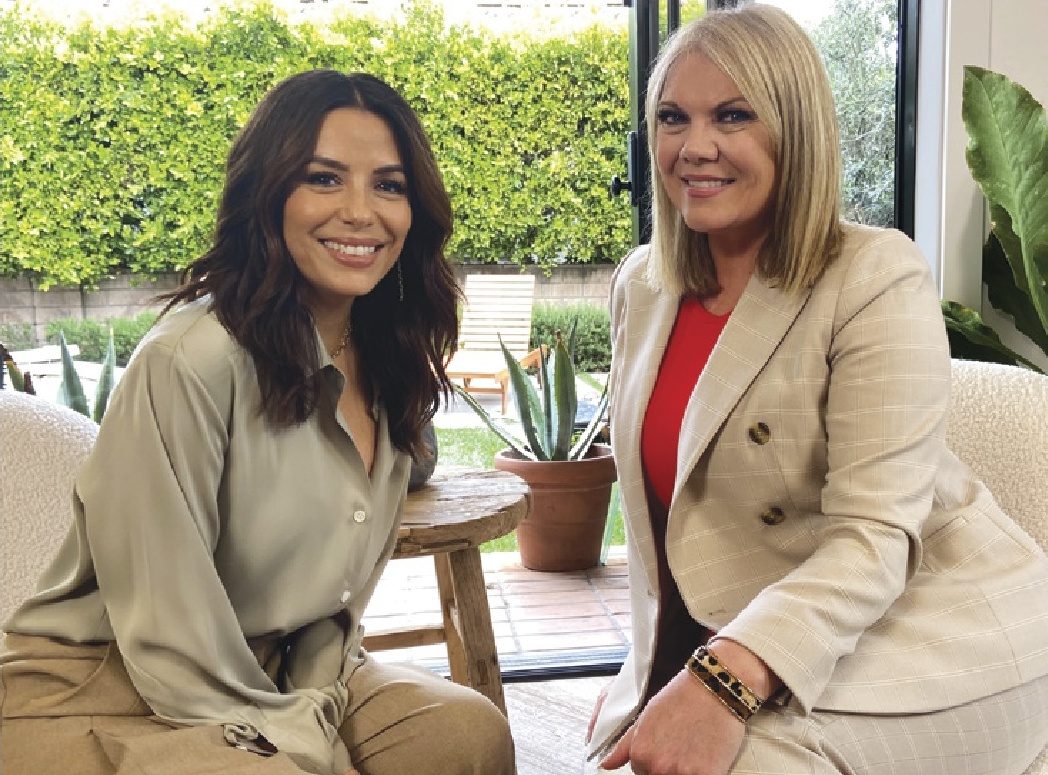
STAR POWER Eva Longoria with Kerrie Lee Brown
A s I sit down to reflect on this special edition of SUCCESS magazine, I’m filled with an overwhelming sense of pride and excitement. This issue, dedicated to changemakers, celebrates individuals and organizations whose unwavering commitment has transformed communities, industries and the world at large.
At SUCCESS, we’ve always championed the entrepreneurial spirit. Yet, this issue marks a significant evolution in our editorial journey—a deep dive into the stories behind the entrepreneurs who are not only achieving business success but are also leaving an indelible mark through their social impact initiatives, philanthropic endeavors and commitment to giving back.
It’s a personal milestone for me as well. When I took the helm, I envisioned a magazine that not only inspires but also educates and empowers our readers to make a difference beyond their bottom line. This issue exemplifies that vision, highlighting individuals like Eva Longoria, whose namesake foundation has become a pillar of hope for countless women striving for a brighter future.
Eva’s story is not just about her remarkable career as an actress and producer but also about her unwavering dedication to creating opportunities for others. Her foundation’s focus on education and entrepreneurship empowers Latinas to build better lives for themselves and their families—a testament to the transformative power of social change.
Throughout this issue, you’ll meet entrepreneurs who have redefined success by integrating purpose into their business models. From renewable energy pioneers and tech innovators to community leaders and advocates for social justice, each story illustrates the profound impact that individuals and organizations can have when they align their ambitions with a commitment to social responsibility.
As you flip through these pages, I encourage you to reflect on your own journey. What impact do you aspire to create? How can your work and passions contribute to a more equitable and sustainable world? The changemakers featured here remind us that every action, no matter how small, has the potential to spark significant change. Turn to page 58 to meet our incredible 2024 SUCCESS Changemakers award winners and nominees. We are proud of each and every one. Thank you for participating!
I’m immensely grateful to our dedicated team and contributors who have brought these stories to life with passion and integrity. Their commitment to journalistic excellence has ensured that each narrative is not just a profile but a source of inspiration and insight.
Thank you for joining us on this journey of exploration and discovery. Together, let’s celebrate the change-makers among us and design a future where success is defined by what we achieve and how we impact the world around us.
Warm regards,

What do you think about our latest issue?



SOFT LAUNCH
Ios Island
As natives of Greece, Angelo Michalopoulos and his wife, Vassiliki Petridou, grew up with vivid memories of the country’s beautiful natural environment. Despite its current reputation for lavish and welcoming resorts, the couple sought to develop their own property as green owners and came up with an untraditional but eco-friendly approach. As longtime owners of Ios, they’ve accomplished preserving 99% of its natural beauty while establishing a luxury resort and making environmentally conscious decisions to protect Greece’s unique habitat.
Read more online at SUCCESS.com
COURTESY OF IOS ISLAND
SOFT LAUNCH
New & Noteworthy
NATIONAL PHILANTHROPY DAY
Make an Impact With What You’ve Got
To celebrate National Philanthropy Day on Nov. 15, let these words encourage thoughtful giving.

“The best philanthropy is anonymous charity.”

“Not all of us can do great things, but we can do small things with great love.”
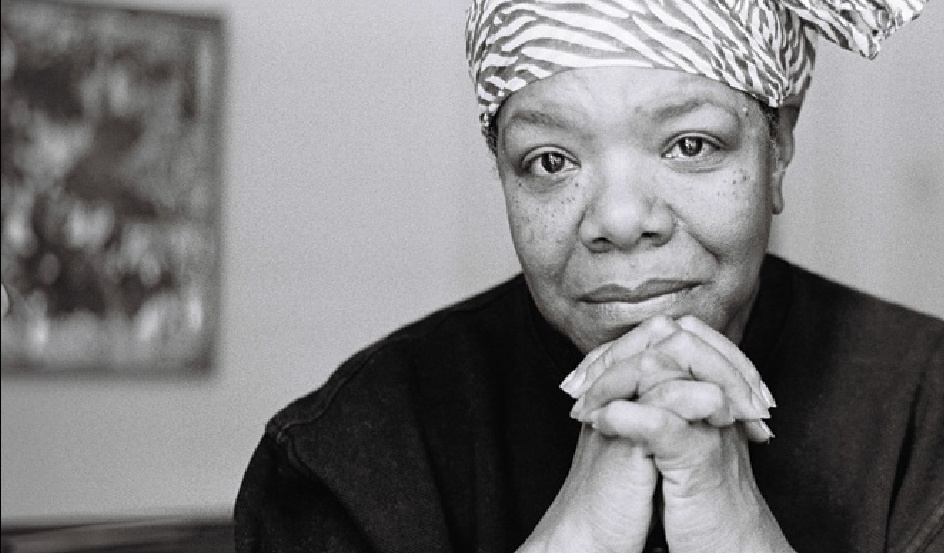
“I have found that, among its other benefits, giving liberates the soul of the giver.”
UNLEASHING GROWTH
Inspire Your Success
Whether you want to focus on personal development or business growth, let these popular TED Talks inspire your success:
WHY BUSINESSES NEED A DREAMER’S MAGIC AND A DOER’S REALISM
Culture strategist Beth Viner explains how business magic unfolds when dreamers and doers collaborate, sharing a blueprint for harmonizing creativity and practicality.
THE POWER OF VULNERABILITY
Researcher and professor Brené Brown dives into human connection, exploring empathy, belonging and love in an insightful, humorous talk.
WHY AI WILL SPARK EXPONENTIAL ECONOMIC GROWTH
Cathie Wood, founder and CEO of ARK Invest, delves into the evolution of five innovation platforms, envisioning artificial intelligence’s impact on economies and urging businesses and investors to adapt for success.
THE SURPRISING SCIENCE OF HAPPINESS
Dan Gilbert, author of Stumbling on Happiness unveils how our “psychological immune system” allows us to discover true happiness—even when life doesn’t go as planned.
HOW TO STOP SCREWING YOURSELF OVER
Mel Robbins—author, life coach and TV host—reveals how breaking comfort zones and ditching autopilot lead to a fulfilling life in this witty talk.
CHANGE BY THE NUMBERS
Increasing Demand for Green Energy
90%
Renewable energy claims the top spot as the fastest-growing energy source in the U.S., according to the Center for Climate and Energy Solutions, soaring 42% between 2010 to 2020. Looking further back (between 2000 to 2020), it’s increased 90%.
Net 0
Targeting net-zero emissions by 2050, the U.S. aims to transform the energy system. Mapping out a path forward in The Long-Term Strategy of the United States, the report champions renewable energy sources like solar, wind and hydropower.
2.8 TRILLION
According to the International Energy Agency’s World Energy Investment 2023 report, an estimated investment of $2.8 trillion will go into the energy sector in 2023, with over $1.7 trillion earmarked for clean energy.
70%
In a 2022 survey of 10,237 U.S. adults, Pew Research Center found that nearly 70% prioritize developing alternative energy sources (like wind and solar) instead of expanding the production of traditional energy sources (like oil and coal).
NATIONAL ENTREPRENEURSHIP MONTH
Celebrate Business Risk-Takers
National Entrepreneurship Month celebrates entrepreneurs, those daring dreamers who take risks to launch businesses, spur innovation and contribute to economic growth.
From 2021 to 2023, the U.S. witnessed an unprecedented surge in new business applications, reaching a historic high of 10.5 million—the largest number ever recorded within a two-year period in American history. Notably, businesses owned by Asian Americans, Blacks and Latinos are experiencing accelerated creation rates.
How can you celebrate? See these suggestions from Bennett College:
1. Support local businesses by purchasing goods or services, and spread the word through recommendations, reviews or social media posts.
2. Follow and engage with entrepreneurs on social media to stay updated on their products and services.
3. Get inspired to plan and launch your business, leveraging online resources and mentorship.
4. Share your experiences and knowledge with budding entrepreneurs, either through one-on-one mentorship or by posting content online.
5. Connect with like-minded individuals, businesses and potential supporters for collaboration opportunities and success.
MEDIAPUNCH INC; DWIGHT CENDROWSKI; STEPHEN PARKER/ALAMY STOCK PHOTO
SOFT LAUNCH | SUCCESS INTERVIEW
Making Modeling More Inclusive
Britney Wittes is standing up for short models—and creating opportunities for people of all shapes, sizes and backgrounds.

B ritney Wittes was just 10 years old when she landed her first modeling gig. From there, her career took off almost overnight: She began booking job after job, working with top brands like Kohl’s, American Girl, Walgreens and Procter & Gamble, among others. But around the time she hit puberty, the calls started to slow down. Wittes had stopped growing and stood just 5 feet, 3 inches tall—noticeably shorter than the typical 5-foot-7 baseline for female models. She took a break to be a “normal” kid for a while and then got a degree from Columbia College Chicago. But modeling was always in the back of her mind.
In 2022, she started an Instagram account called Why Not Petites and began posting about navigating the fashion industry as a short model. Soon, Why Not Petites blossomed into an active community, and Wittes and her team began hosting in-person events and sharing resources.
Through Why Not Petites, Wittes is promoting inclusion and creating opportunities for models of all shapes, sizes and backgrounds.
“THERE ARE PEOPLE WHO ARE GOING TO BE UPSET WITH YOU. BUT IF THEY’RE UPSET, IT’S BECAUSE YOU’RE DOING SOMETHING WORTHY OF BEING UPSET ABOUT. YOU’RE DISRUPTING THE STATUS QUO.”

SUCCESS: What was the inspiration behind Why Not Petites?
Britney Wittes: I started having lots of conversations with friends and other petite models about the struggles we all have. A lot of people who were models when they were younger got pushed into acting because, with acting, it doesn’t matter what your height is.
We were talking about why we get forced out of the industry at a certain age, when other people—just because they’re taller than us—don’t have that issue. It started as a bunch of conversations.
I wanted Why Not Petites to be an Instagram where people could ask questions, and we could chat about obstacles we’ve dealt with. It kind of developed into more than I thought it would. People were saying, “We want to meet you, we want to know what’s happening or how to get into the industry as petite models. I didn’t know I could actually do this.” It developed into classes and runway shows.

S: So, why aren’t brands hiring petite models, in your opinion?
BW: Historically, the idea behind modeling was… the unattainable women, the unattainable person women should strive to be. But in 2024, no one really cares to be perfect. People love perfectly imperfect, so why aren’t we embracing that?
The average woman in America is 5-foot-4. But the disconnect is… brands and agencies still have this ideal person that they’re trying to keep as unattainable. But people want to see themselves in the ads. Why have taller models if that’s not who your consumer is or what they’re looking for?
There are petite models who are starting to break some barriers, which is amazing to watch. But, again, it’s just a handful of people. Petites are such an untapped market.
S: What’s one of the biggest lessons you’ve learned since launching Why Not Petites?
BW: It’s OK to have those days where you question, “Why am I doing this? Is this really worth it for anyone? Is this really helping anyone in the way it thought it was going to?’ But then you have those days where it just feels like magic. Someone comes up and says, “Hey, I signed with an agency. I tried for three years, and then I chatted with you and had you look at my book and we organized things and helped me get ready.” I was told recently by someone that I’m who they look up to. We’re showing people that the thing they dreamed of is attainable. It’s really amazing to see what Why Not Petites is meaning to people. Even on those bad days, I can still find that little reason as to why we do this.
S: What’s your approach to being a changemaker?
BW: There are people who are going to be upset with you. But if they’re upset, it’s because you’re doing something worthy of being upset about. You’re disrupting the status quo. They’re feeling threatened. And I’m OK with that. Why Not Petites is meant to ruffle feathers. We’re not here to always play nice. If we play nice, we’re not going to get anywhere. We’re meant to disrupt and we’re meant to call attention to the unfortunate things that are going on in this industry. We’re going to have to ruffle feathers.
If you look at anyone who’s actually made changes in the world, they were not always very well-liked people.
“IF YOU DON’T BELIEVE IN YOURSELF, PEOPLE ARE GOING TO WALK ALL OVER YOU.”



HOW TO GET OVER REJECTION AND BOOST YOUR SELF-CONFIDENCE
Models and other creatives constantly face rejection. Yet, they remain confident in themselves and their craft. Wittes shared a few tips and tricks for being resilient and staying true to yourself, even when things aren’t going your way.
Adopt an abundance mindset. Whether you miss out on a second interview or a second date, remember there will always be other opportunities. Focus on abundance, not scarcity. “There’s always going to be a next one,” she says. “If you didn’t get something you wanted, it just wasn’t your day or it wasn’t meant for you. Move on to the next one.”
Be your own advocate. You can have lots of people in your corner—and you should. But, at the end of the day, you have to be your own biggest cheerleader. “If you don’t believe in yourself, people are going to walk all over you,” Wittes says. “It’s up to you to make sure people know where there’s a line they can’t cross.”
Practice saying “no.” It’s hard, especially for women, but saying “no” is a pure power move. Don’t make up an excuse—simply say you’re not interested. “I’m a big advocate of always being honest,” Wittes says. “You have to say, ‘No. No, I don’t want to, because that’s taking away time I could be giving toward something I care about.’”
©ABRAHAM JIMENEZ/COURTESY OF BRITNEY WHITTES
SOFT LAUNCH | LEADERSHIP
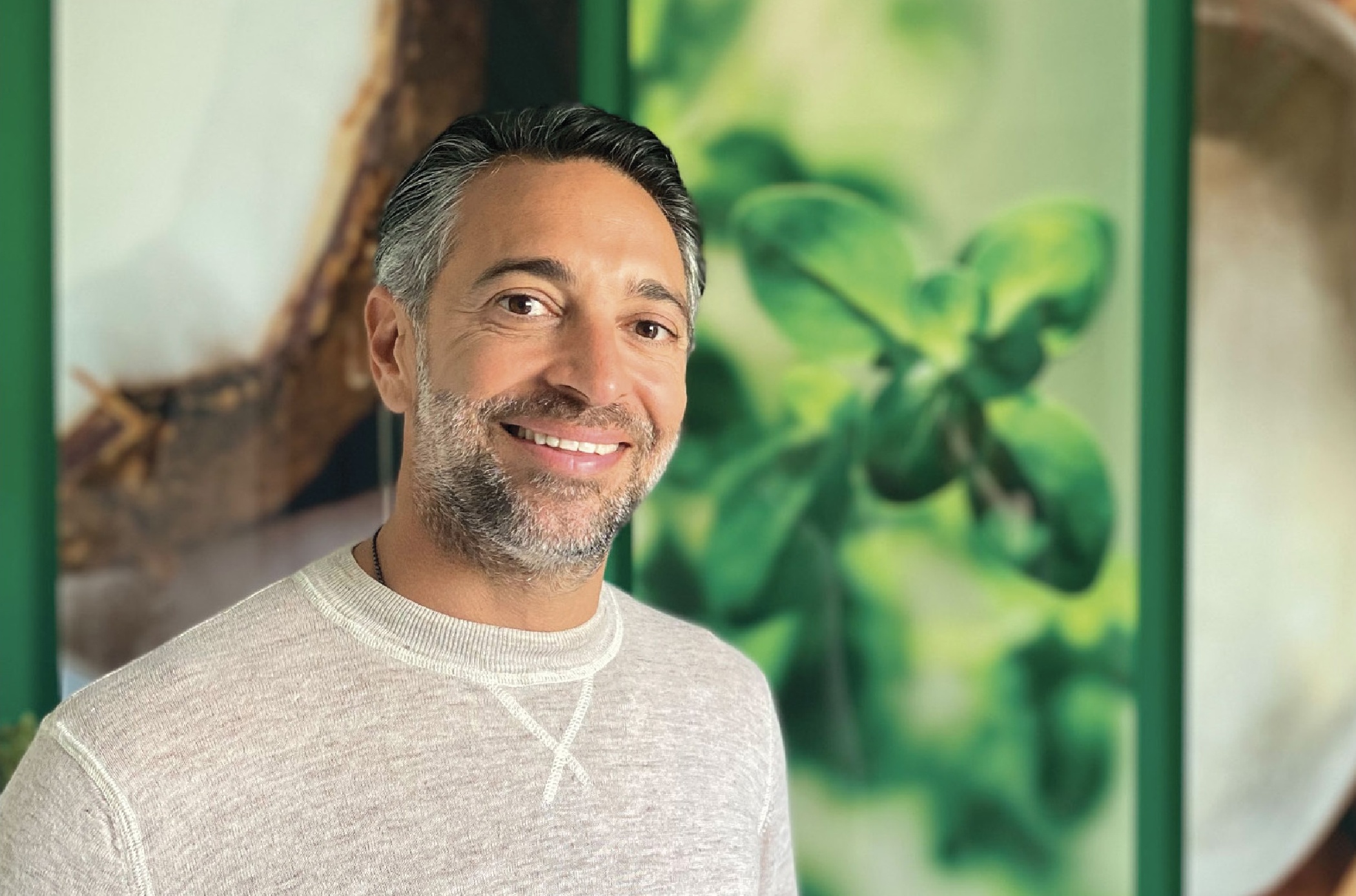
From the Beauty Counter to the Front Office
HOW JOEY CABASSO ELEVATED MARIO BADESCU FROM A TWO-BEDROOM APARTMENT TO A GLOBAL SKIN CARE BRAND.
M ario Badescu occupies a niche unlike almost any other in the skin care market.
It’s a legacy brand, founded in the 1960s by the Romanian immigrant whose name it bears, and its lengthy list of celebrity clients includes Martha Stewart, Heidi Klum and Jennifer Aniston. But here, legacy is not a euphemism for luxury; they don’t use “prestige” to mean “pricey.” Mario Badescu is also an affordable, family-owned brand. And that’s largely thanks to the vision of its president, Joey Cabasso, who’s been with the company for more than a quarter century.
It was Cabasso’s father who bought the skin care company in the 1980s, but it was the younger Cabasso who steered its growth from a little two-bedroom apartment in New York City to a global brand you’ll find in more than 70 countries today. He still remembers getting their first retail account with the department store Henri Bendel, back when the products were made in the salon’s basement.
“WORK WITH THE EMPLOYEES LIKE YOU’RE ON THE SAME LEVEL AS THEM. WE ARE A FAMILY BUSINESS; WE LIKE FOR EACH AND EVERY EMPLOYEE… TO FEEL THEY’RE FAMILY.”
“We used to pack the products. I used to put it in my trunk, unload it into Henri Bendel’s, stock the shelves and work the counter. I really started from when the business was nothing,” Cabasso says. “I remember, my car—you know when you put too many boxes and it’ll be down to the ground? That’s how my car was.”
Cabasso’s time as delivery boy and shopkeeper paid off. Before long, intrigued by the masks and moisturizers that were doing so well at Henri Bendel, bigger retailers like Nordstrom started reaching out.
“Ulta came to us, I think it was maybe 17 years ago, 18 years ago. They came to us, and we were like, ‘Who are these people, Ulta?’” Cabasso chuckles.
At the time, he recalls, Ulta had maybe 70 stores; now, they have more than 1,300, in which Mario Badescu is a big leader.
Mario Badescu grew alongside its retailers. “And we grew with our customers,” he adds. “You could take someone like Martha Stewart—she came in the ’70s; she’s still coming—there are thousands and thousands of customers, tens of thousands, that are the same.”
In some ways, they’ve been lucky. Having Stewart as an early champion, for example, gave them crucial exposure in her Martha by Mail catalog.
That growth is due to the chances Cabasso was brave enough to take—like signing on at Ulta, a small chain they weren’t sure about in those initial days. Cabasso credits the fact that they’re a family-run business for making leaps like that, jumps that might have scared off a bigger business with the resources (and experience) to say no to such an uncertain proposition.
“We weren’t that corporate company that really looked into companies and really cared that much,” Cabasso says. “We want our products to be out there; we want people to have our products.”
This is the ethos that drives Cabasso’s leadership of Mario Badescu even today. When it comes down to it, he wants to see their eye creams and exfoliants in as many medicine cabinets and makeup bags as possible. Inclusivity and affordability are the name of the game.
Take the brand’s March 2022 entry into BEAUTYSPACENK, a new retailer of beauty products located inside Walmart. “That was a big jump for us,” Cabasso admits. “But when we saw Ulta went into Target, and Sephora went into Kohl’s, we said, ‘OK, we’re a prestige company. But our prestige company is very affordable. And our price point is a mass price point.’ And that’s how we always were.”
Of course, it can be challenging to balance the legacy and history of a company that’s been around for nearly 60 years with the changing times. “We try to keep everything like Mario Badescu left it,” Cabasso says. “Yes, we come out with new products, but we don’t just throw products out on the market. We really are very involved.” It’s not uncommon for employees to take new products home to try themselves; Cabasso is always bringing in-development items home for his wife to try out.
Cabasso is modest about his success at the helm of Mario Badescu, and his advice for other leaders is in line with that. “Stay very humble. Very, very humble,” he says. “Work with the employees like you’re on the same level as them. We are a family business; we like for each and every employee… to feel they’re family.
“And don’t be embarrassed to tell your story,” he adds. Cabasso knows that Mario Badescu’s status as a family-operated skin care brand makes it something of an anomaly in the space, and that’s a fact that fills him with pride. Even when, or maybe especially when, that fact surprises influencers who come by Mario Badescu’s New Jersey production facility and get a tour from Cabasso’s 85-year-old father, who still regularly comes into the office.
Ultimately, as much as things have changed since Cabasso started filling up his trunk and making deliveries for Mario Badescu, an awful lot has stayed the same. Many of the formulas are the same ones developed by Badescu back in the ’60s and ’70s. The label is as traditional and simple as they come, each bottle bearing a simple line of text—“Mario Badescu Skin Care, Since 1967”—above its emerald green logo. And there’s the price point: $8 facial sprays, $12 cleansers, $18 masks.
“I think we’re busy because of the price point,” Cabasso says. “Nowadays, price point is huge. And I see a lot of skin care companies that are suffering because they have creams that are $80, $100, $200, and they’re not selling it like they were.”
Cabasso says they have no plans to change. With a customer retention rate that hovers around 63%, why would you?
“Even though we’re not making as much as these other companies, we’re keeping that customer for a lifetime,” Cabasso continues. “We’re not out to make a killing; we’re out to keep the customer happy and keep them forever.”
COURTESY OF JOEY CABASSO
SOFT LAUNCH | EDUCATION
The Future of Education
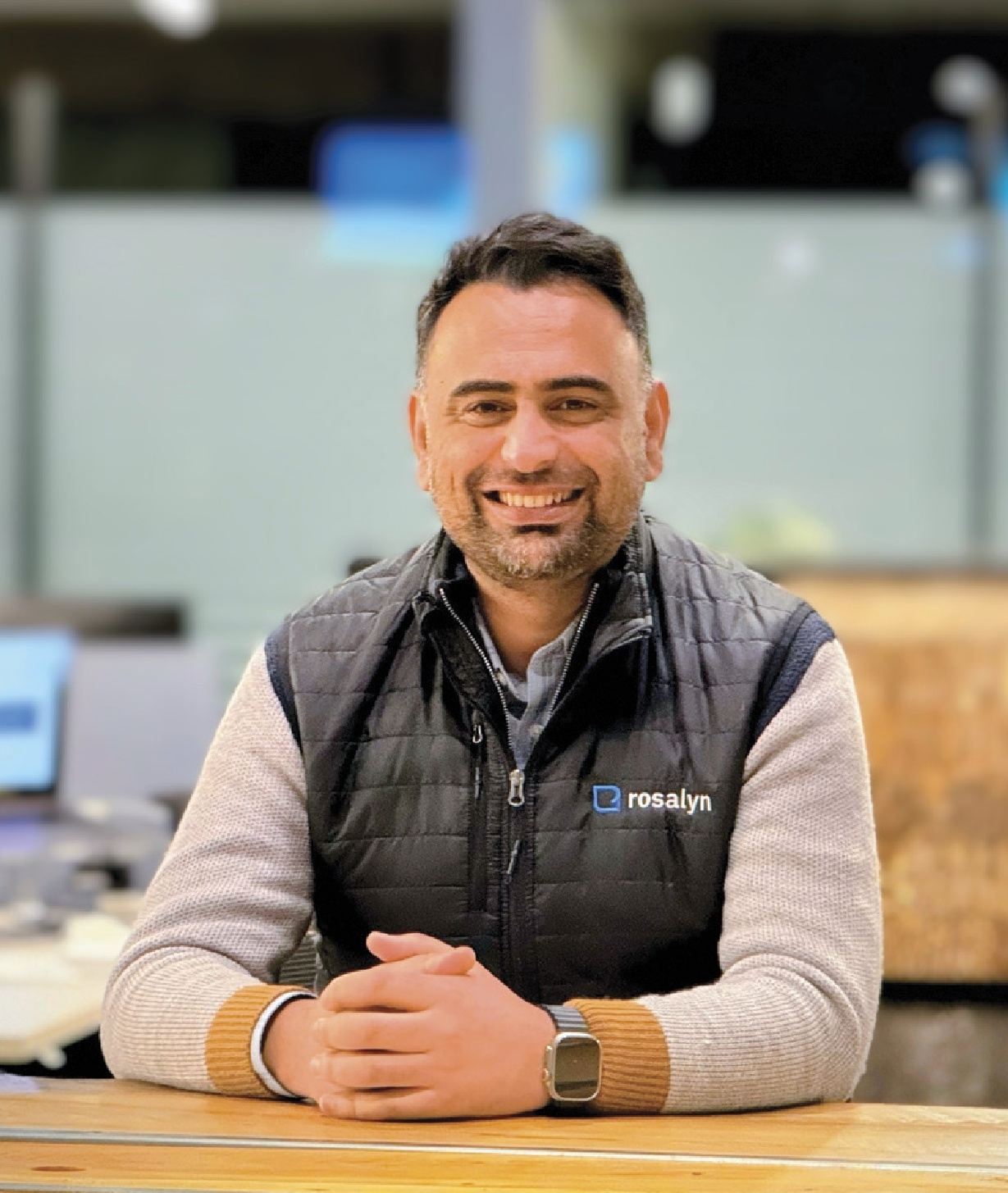
ROSALYN.AI CEO NOOR AKBARI IS DETERMINED TO MAKE EDUCATION GLOBALLY ACCESSIBLE.
N oor Akbari is on a mission to make education available to everyone, everywhere. As CEO of Rosalyn.ai, an artificial intelligence-based proctoring company used by online education platform Coursera and the Department of Defense, he’s well on his way to achieving that mission. Akbari grew up in Afghanistan, where he lived through three wars and several different regime changes. He eventually started the country’s first digital printing company before working as a translator and adviser for the U.S. military.
REMOVING THE BARRIER OF ACADEMIC INTEGRITY
Akbari relocated to the United States in 2007 to work for a defense company. While there, his entrepreneurial spirit blossomed. He started a medical services company, followed by a language assessment company. The latter was spending a ton of money flying test-takers to its offices for exam proctoring. To solve that problem, Akbari created a tool that automated the monitoring process remotely.
“The future of learning will be online,” Akbari says. “There are billions of people who don’t have access to quality education. Online education is going to provide that access. It’s going to change the world for the better. But one of the barriers to that changed world is ensuring academic integrity. So, how do we solve that?”
He grew curious as to how higher education institutions approached remote assessment integrity and learned they didn’t really have a good solution. Universities were either not ensuring academic integrity in online exams or they were achieving it through the traditional method of watching people take tests using GoTo Meeting. His entrepreneurial instincts kicked in once again and Rosalyn.ai was born with the help of Akbari’s cofounder Martin Jakobsson, a former Microsoft AI research manager.
Since its founding in 2018, Rosalyn.ai has built a product that allows universities and other learning organizations to deliver exams all over the world in an easy, accessible and low-cost way that also ensures academic integrity. But the company’s path to success wasn’t always smooth. Akbari and Jakobsson faced several challenges along the way.
“IF WE CAN ENSURE THE INTEGRITY OF ONLINE EDUCATION IN THE SAME WAY WE DO IN-PERSON EDUCATION, THEN IT BECOMES MORE EFFECTIVE, ACCESSIBLE, FLEXIBLE AND MORE PERSONALIZED.”
BUILDING TRUST IN ONLINE EDUCATION AND AI
Akbari notes that online education is growing really fast, spurred by COVID-19. He says the biggest hurdle with its widespread adoption is the public’s belief that a degree earned online is not as valuable as one earned at an in-person institution.
“If we can ensure the integrity of online education in the same way we do in-person education, then it becomes more effective, accessible, flexible and more personalized,” he says. “If we build that trust, then imagine people in Afghanistan, my home country, who don’t have access to quality education locally but all of a sudden can go to Harvard or MIT.”
If the public has misgivings about online education, those doubts are multiplied when AI is involved. As AI continues to reshape the educational landscape, Akbari acknowledges the uphill battle of building trust in the technology. He also understands the hesitancy. While AI holds immense potential in regards to personalized learning, enhanced accessibility and combating disparities in education, it also poses some ethical challenges, particularly when it comes to academic integrity. Akbari advocates for a balanced approach that leverages AI’s capabilities while mitigating its risks through regulation and public policy.

Noor Akbari when he served in the U.S. military as a translator and cultural adviser. His particular visit aimed to secure funding for a literacy program for the Afghan National Army, which later became one of the most successful programs, teaching tens of thousands of soldiers to read and write.
NAVIGATING THE PITFALLS OF STARTUPS
According to Harvard Business School, around 90% of startups fail, with 10% failing in the first year. Everything from inability to secure funding to lack of vision to improper product-market fit are all contributing factors to that failure rate. For Akbari and Jakobsson, it was their unwavering conviction in Rosalyn.ai’s mission of making education available to everyone, everywhere that propelled them forward. The pair pitched the company to several people before securing their first round of funding from angel investors.
“The earliest challenges were around product-market fit,” Akbari recalls. “How do we build a product that people can trust in early on? How do we solve the right problems? This is a process where you can get carried away; you can build the wrong thing, which is the cause of failure for a lot of startups. This is a very delicate time when you need to get things right.”
He continues: “We were very fortunate to go through an accelerator program called Alchemist, and they taught us how to really hone in on product-market fit and talk to customers and really listen and build things—not because we think it’s a good idea, but it’s what the customers need.”
Akbari’s advice to aspiring entrepreneurs when navigating the startup landscape is to be steadfast in your convictions, embrace resilience and learn from your mistakes. He also encourages people to hone their sales and storytelling skills, as both are critical to a startup’s success.
“If you don’t have the conviction and if you don’t believe in your vision, and if you’re not a little bit crazy about it, don’t start a startup,” he says. “The journey requires a lot of resilience and comes with a lot of challenges that a lot of people are not prepared for.”
BALANCING PROFIT AND PURPOSE
In our capitalistic society, profit often takes precedence over everything. But Akbari’s journey with Rosalyn.ai underscores the power of aligning business objectives with social impact. He acknowledges that there are different kinds of entrepreneurship and some are solely focused on making money rather than having an impact. By marrying profit with purpose, however, entrepreneurs can achieve a profitable impact.
“I believe if you have a vision and that vision is grand enough [to] have wide impact, the incredible thing about capitalism is that you can monetize that as well,” he says. “You don’t have to choose between one or the other.”
COURTESY OF NOOR AKBARI
SOFT LAUNCH | HOW TO
Customer Service
BUSINESS MANAGEMENT EXPERT AMANDA WEBSTER EXPLAINS HOW TO LAND AND RETAIN YOUR FIRST CUSTOMERS AS A STARTUP.

T aking the first step toward anything is always the hardest, and the same can be said for startups securing their first customers. Even if you have the most ingenious, groundbreaking idea, you don’t have a company until you have people willing to pay for your product or service.
Business management expert Amanda Webster knows a thing or two about helping startups as COO at Fund&Grow, a national lending program that connects entrepreneurs with funding. Webster specializes in launching new businesses at Fund&Grow, taking entrepreneurs from that initial seed idea to securing those all-important first customers.
“I love the whole American dream thing—that people can start their passions,” Webster says. “They can start small and build…. I love being able to see that transition and that path, to watch people completely change their world and have not only money but freedom—the freedom to do what they want to do and develop their passion.”
During her 20-plus years working with and helping launch law firm startups, Webster has learned what it takes to earn those first key customers. Here are her four tips for how to find your initial clients—and keep them coming back.
1. TAP INTO THE ONLINE WORLD
The average American spends about seven hours per day online. Capitalizing on social media and internet search engines, and their seemingly boundless reach, is essential for every business. It’s also a low- or no-cost way to get your name out there. It’s free to set up accounts on platforms like Instagram, Facebook and TikTok, and it’s fairly affordable to budget for small campaigns to boost your searchability on Google.
“You should have a presence on every platform that’s available because you never know where your clients are hanging out,” Webster says. “Younger generations might be on Instagram and older on Facebook and LinkedIn. That’s free. Get that organic reach out there, and get it set up.”
Joining social media groups that make sense for your business can be a big boost. “There are thousands and thousands of Facebook groups out there for every industry,” Webster says. Those free groups could end up being the most valuable learning tools for your business.
Once you’ve made your social media entrance, create content to attract your customers. Make it easy for them to click that “follow” button by making your accounts an accurate extension of your company, which could include anything from service-oriented expert advice to humorous takes on your offerings.
“THE IMPORTANCE OF HAVING SOMEONE SMARTER THAN YOU IS GREAT. I NEVER WANT TO BE THE SMARTEST PERSON IN THE ROOM, UNLESS I’M THE TEACHER. I WANT TO BE LEARNING FROM EVERYONE I’M INTERACTING WITH AT ALL TIMES.”
2. CONNECT IN REAL LIFE
Once we get our noses out of our phones, though, face-to-face interactions can be very powerful. Webster suggests joining your local chamber of commerce, networking groups and other in-person meetings with low barriers to entry. “Go to those meetings; go and put yourself in that room,” she says. “Networking in this day and age is the key to your growth.”
Getting in those rooms will do multiple things for you—you’ll develop relationships with potential customers and with potential mentors, both of whom are essential to getting your business off the ground. And don’t get so focused on landing customers that you miss the opportunity to learn from mentors who’ve already done what you’re trying to do.
“There’s no amount of schooling or on-the-job experience that will give you exposure to people who have been successful in your lane,” Webster says. “The importance of having someone smarter than you is great. I never want to be the smartest person in the room, unless I’m the teacher. I want to be learning from everyone I’m interacting with at all times.”
3. DON’T OVERLOOK TRADITIONAL ADVERTISING
Paying for advertising can be a good next step once you’ve done all the free things you can to get your company out there.
To make sure you’re not pouring money into a black hole, you need to be very specific about reaching your customers. Webster says to learn everything you can about them—who they are, where they might be hanging out and what they’re doing there. Then, you can best target them in a variety of ways.
“Advertising can mean many different things. It could be Google search ads, on social media, putting a sign up at a sports field,” she says. “If you’re national, it has to be online. If you’re local, it could be doctors’ offices; you could get a mobile billboard on your car! There are so many ways you can advertise, and it needs to happen.”
“CLIENT SUCCESS IS THE CENTER OF YOUR ENTIRE UNIVERSE.”
4. WRITE CUSTOMER SATISFACTION INTO YOUR BUSINESS PLAN
Once you’ve attracted those initial customers, the best way to keep them is to make sure they’re happy. “Client success is the center of your entire universe,” Webster stresses. Whether you offer a product or a service, you should know exactly how you’re going to deliver on that offer so your clients will want to keep coming back.
One of the biggest mistakes Webster sees startups make is simply not developing a thorough business plan from the get-go. That lack of planning can impact how they attract and maintain customers. Instead of ensuring that the initial crop of customers is thrilled, they’re instead left disappointed. “Invest the time to develop that plan and process before you roll it out,” she says. “Cleaning up bad reviews and unhappy clients is much harder than putting in the work in the beginning.”
Your goal is for your customers to be so delighted with your product or service that they’re itching to write positive reviews and tell their friends. If they’re happy, not only will they become advocates for your business (hello, free advertising!), but they’ll also become repeat customers.
©LIANA RICCI/COURTESY OF AMANDA WEBSTER
SOFT LAUNCH | FUTURE OF WORK

Get Sparked
JONATHAN FIELDS, CAREER THOUGHT LEADER AND COFOUNDER OF GOOD LIFE PROJECT, WANTS YOU TO FIND WORK THAT MAKES YOU COME ALIVE.
W hen Jonathan Fields was working as a lawyer in one of the biggest law firms in the country, enduring long hours and massive amounts of stress, he became an unexpected witness in one of the most important trials of his life. After being hospitalized when his immune system shut down during a massive infection, he traded the law for his health, embarking on a wellness journey that led to ownership of a fitness studio, a yoga studio and, eventually, two movements that disrupt what we think about when it comes to living a good life.
On his top-ranked Good Life Project podcast, which launched in 2012, Fields has had deeply personal conversations with some of the most well-regarded thought leaders of our time. He says it’s not the renown of those he interviews that moves the needle, but the fact that they’ve figured out something important—and are willing to share.
Fields himself has always had something to share. Selfdescribed as a person “almost pathologically steeped in possibility,” he’s “had a deep fascination with the way that we work… and the way that it makes us feel.”
Two years after his third book, How to Live a Good Life, came out in 2016, he got the spark of an idea (aptly named “Sparketype”) that would change the trajectory of his career and the careers of hundreds of thousands of others. He was creating a new way to look at work.
CAREERS THAT MAKE US COME ALIVE
Fields wanted to better understand the impulses that drive us to work and how we could better align with those impulses in a way that made us feel good. He started looking for things that existed in every person, regardless of job titles, industries or companies—intangible things people took with them wherever they went because they were inherent and personal, not learned or cultivated. He looked for people’s alignment with the work they were doing and what made them feel energized and excited.
“I literally started deconstructing massive lists of industries and jobs and roles and titles to see if we could identify them,” Fields recalls. “And it distilled down to these 10 core impulses really quickly. They just kept showing up over and over and over in different patterns.”
He started to notice that archetypes could be formed. “So, we started calling them ‘Sparketypes’ for fun—shorthand for the archetype for work that sparks you…. We spent all of 2018 building the Sparketype assessment—building it up, breaking it down, rebuilding it, running beta testers through it—until we found that it was pretty robust and pretty stable, and people were reporting solid results that felt really on point. Then, we released it out of beta at the end of that year and were kind of not ready for what happened after that.”
To date, more than a million people have taken the Sparketype assessment, offering up over 50 million data points. Fields wrote a book about it, Sparked, in 2021 and started the SPARKED podcast in 2022.

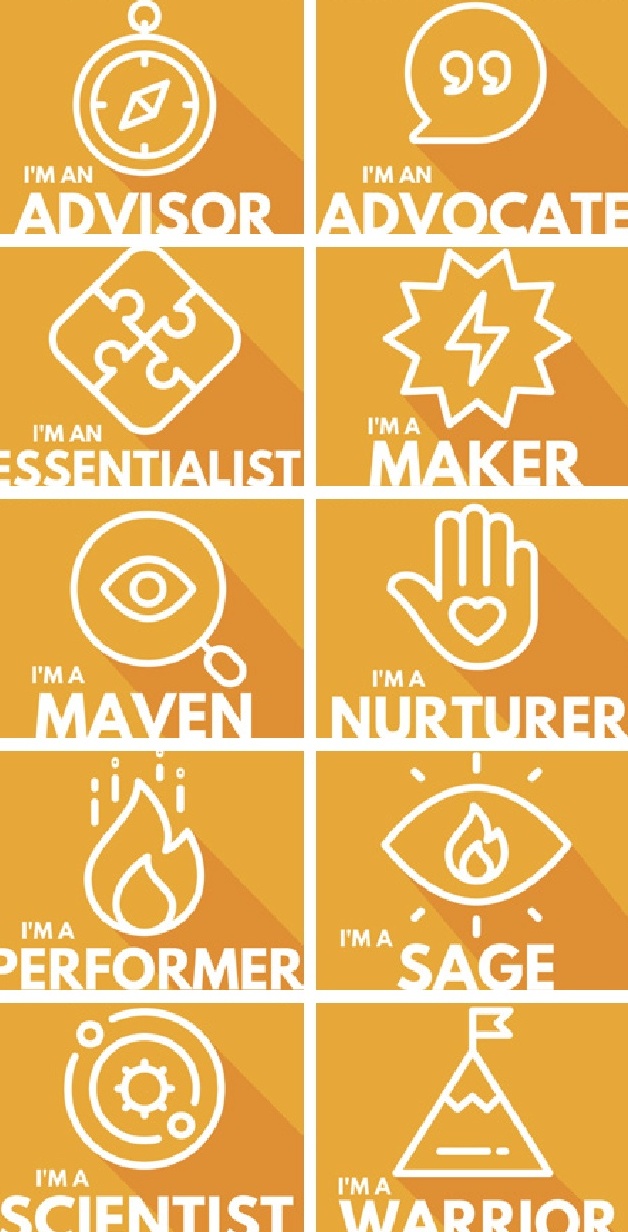
“SO, WE STARTED CALLING THEM ‘SPARKETYPES’ FOR FUN—SHORTHAND FOR THE ARCHETYPE FOR WORK THAT SPARKS YOU….”
HOW SPARKETYPE DIFFERS FROM OTHER CAREER ASSESSMENTS
While there are several great assessments on the market, Fields notes his is focused in a specific way. “We’re looking at the question, ‘What is the underlying impulse for effort or work that makes a person come alive?’ Because if we can identify that and then help somebody align the work they’re doing with that, everything changes—both for them and for the organizations that they might work for and for the people they’re in service of.”
Knowing your Sparketype, he says, gives people a chance to figure out who they really are and make the necessary shifts to get to where they’d like to be. He recognizes, though, that not everyone has the luxury of making grand career moves just because they’re not doing work that makes them come alive. Often, circumstances simply don’t allow for it.
“Maybe I’m working three jobs; I’m supporting extended family,” he says. “I’m not going to blow anything up to try and figure out how to make this a center and start over and rebuild around it.… But, at the same time, that doesn’t mean that you have to walk away from this impulse. That means that maybe [it’s] 15 minutes a day or an hour on a Saturday and a Sunday morning on the weekends: Find a way to make art or to volunteer to be of service.”

“WE’RE LOOKING AT THE QUESTION, ‘WHAT IS THE UNDERLYING IMPULSE FOR EFFORT OR WORK THAT MAKES A PERSON COME ALIVE?’ BECAUSE IF WE CAN IDENTIFY THAT AND THEN HELP SOMEBODY ALIGN THE WORK THEY’RE DOING WITH THAT, EVERYTHING CHANGES—BOTH FOR THEM AND FOR THE ORGANIZATIONS THAT THEY MIGHT WORK FOR AND FOR THE PEOPLE THEY’RE IN SERVICE OF.”
HOW CAN SPARKETYPE CHANGE YOUR LIFE FOR THE BETTER?
If the work you’re doing isn’t aligned with who you are, it’s going to affect your relationship with yourself, impacting physical and mental health as well as personal relationships.
Fields looked for correlations between doing the work of your Sparketype and feelings of:
• meaningfulness
• energy and excitement
• flow
• expressed potential or performance
• purpose in life
“And the data actually proved that out in a really strong way…. We know the more that you say you’re doing the work of your Sparketype, the more likely you are to actually experience all five of those states,” Fields says. “The opposite is also true. The less that you say you’re doing the work of your Sparketype, the less likely you are to say that you experience all or any of those five states. And those five states are really important to individuals, but also as an entrepreneur and to leaders and to founders and organizations, because on a human level, they’re critical to flourishing. We need a sense of meaning and purpose.”
He’s proud that the tool he created helps productivity and efficiency. But, at its core, it “creates a more human environment where people can feel like they’re seen and appreciated and more empowered to actually do the things that make them feel the way that they want to feel.”
©NICK ONKEN/COURTESY OF JONATHAN FIELDS

SOFT LAUNCH | TOP OF MIND
Stepping Up
WHAT DOES IT MEAN TO BE A CHANGEMAKER IN TODAY’S WORKFORCE?
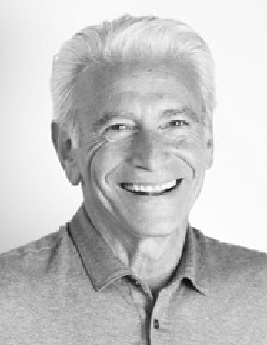

COURTESY OF PERSONA PR; ©MANUEL PELLON; COURTESY OF HARRY COHEN, PH.D.; ©RICHARD LUU

SOFT LAUNCH | MONEY
How to ‘Invest Like a Girl’
WHEN YOU UNDERSTAND THE RULES OF INVESTING, IT’S STRAIGHTFORWARD.
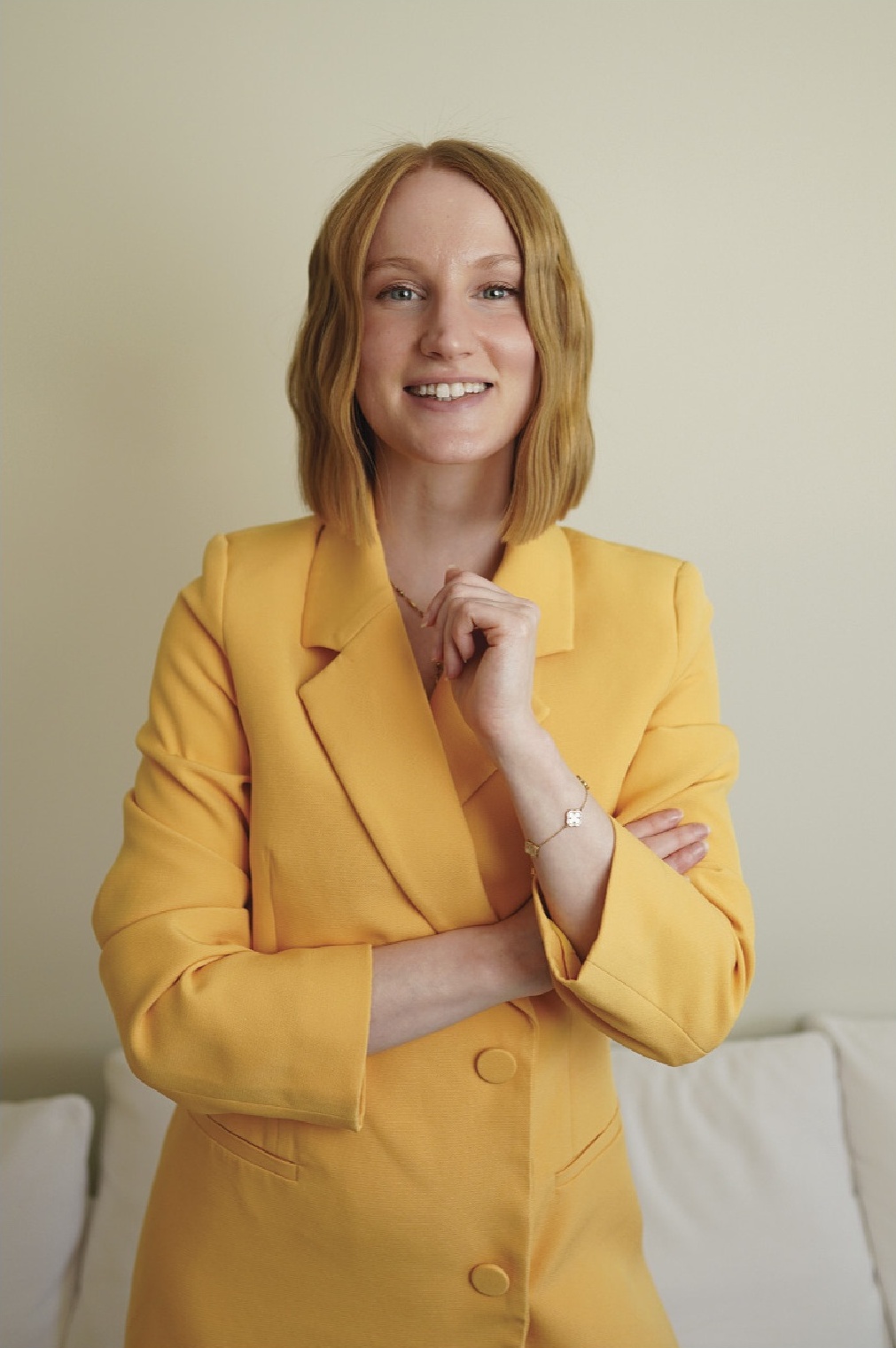
J essica Spangler, Pharm. D., started making clever money literacy videos during COVID-19’s delta wave in 2021. She was working as a pharmacist in the emergency room of a New England hospital, and during rounds, patients would say to her, “If I make it out of here, I have no idea how I’m going to afford this hospital bill.”
Coworkers also discussed their finances with Spangler, including a colleague who wondered aloud if she needed to set up her 401(k) or if she was automatically enrolled in the program.
These offhanded comments led Spangler, 30, to the realization that “nobody really knows about money,” so she decided to share bits of financial literacy, such as how to negotiate a hospital bill and set up your 401(k) at work. She now has over 1 million followers across social media platforms, where she’s known as “ecommjess.”
Spangler still works as a pharmacist at a hospital emergency room, but she is passionate about helping people increase their financial literacy. Her book, Invest Like a Girl: Jump into the Stock Market, Reach Your Money Goals, and Build Wealth, was released in March. The book provides a step-by-step guide that allows readers to design a custom investment strategy based on their individual experience, their risk tolerance and their financial goals.
“I THINK THERE’S INTENTIONAL BARRIERS THAT ARE PUT IN PLACE TO KEEP CERTAIN PEOPLE OUT OF THE CONVERSATION AND MAKE [INVESTING] SEEM LIKE IT’S VERY DIFFICULT WHEN, IN FACT, IT’S QUITE SIMPLE.”
The irony of the book’s title is not lost on Spangler. “If you go to any store, you’ll see ballpoint pens for women, razors for women, laxatives for women, as if somehow being a woman makes these otherwise gender-neutral products different,” she says.
Yet, most financial products aren’t geared toward women, and, in fact, many were created to keep women out. Before the Equal Credit Opportunity Act was signed into law in 1974, women could not open a credit card in their own name.
“I think there’s intentional barriers that are put in place to keep certain people out of the conversation and make [investing] seem like it’s very difficult when, in fact, it’s quite simple,” Spangler says.
When you understand the rules of investing, it’s straightforward, Spangler says. “But a lot of people are made to feel they’re not invited and that it’s going to be difficult, and that alone is a huge barrier,” she says.
While the fundamentals of investing are the same for everyone, women often have a different experience with money and investing, Spangler says. Because of the gender pay gap, women typically only make 82 cents for every dollar a man makes.
Yet, a recent study by Fidelity Investments about women and investing, found when women invest in the stock market, they have higher returns than men—about 0.4% higher. “While that sounds marginal, when you compound that over time, it can add up to tens of thousands or even hundreds of thousands of dollars more,” Spangler said.
“I DON’T HAVE A FORMAL EDUCATION IN FINANCE. I’M A PERSON WHO FIGURED IT OUT AND FELT LIKE THERE HAS TO BE SOMETHING I CAN SHARE WITH OTHER PEOPLE.”
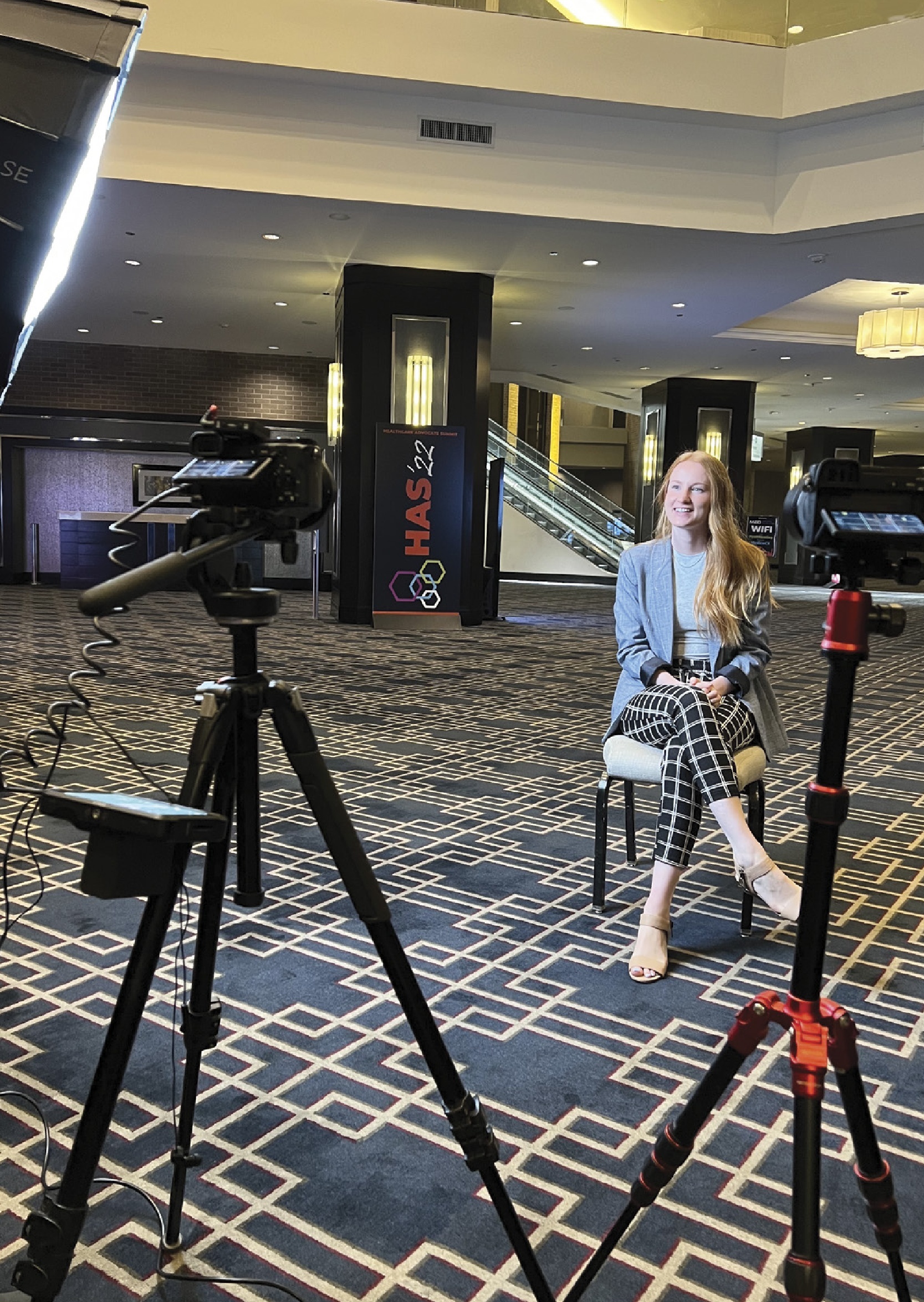
Spangler giving an interview on patient advocacy and medication access at the Healthcare Advocate Summit.
Spangler is no stranger to financial challenges. Her father had a heart attack and suddenly died when she was 7 years old. At the time, her mother was a stay-at-home mom taking care of Spangler and her younger brother.
“I watched my mom recreate her life and work her butt off to get a job in real estate,” she says.
Neither parent had a college degree, so Spangler wanted to earn a degree that would ensure a solid paycheck. But she soon discovered that her paycheck wasn’t going to be enough, especially not with inflation and student loans. She realized that investing her money would help her earn more, so she began reading every book she could find on earning money through investments.
“I don’t have a formal education in finance,” Spangler admits. “I’m a person who figured it out and felt like there has to be something I can share with other people.”

5 STEPS TO ‘INVEST LIKE A GIRL’
When most people think about investing money, they immediately think of an individual brokerage account that allows you to buy and sell a variety of investments. But there are other ways to invest money. Here are Spangler’s five actionable steps to investing.
1. ESTABLISH AN EMERGENCY FUND.
Before you start investing, Spangler recommends setting up an emergency fund. Without an emergency fund, you will dig into savings or take on debt to pay for an expected expense like a hospital bill or a car repair. She recommends saving the equivalent of three to six months of your living expenses in a high-yield savings account.
2. CONTRIBUTE TO AN EMPLOYER-SPONSORED RETIREMENT FUND.
Put a percentage of your paycheck into an employer-sponsored retirement account. Contributing to a 401(k) will allow you to dip your toes into investing, Spangler says. If your employer matches your contribution, put enough money into the account to receive the employer match because that is free money. Also, a retirement contribution will reduce your taxable income for the year.
3. FUND A ROTH OR TRADITIONAL IRA.
If you have additional money to invest, consider opening a traditional or Roth IRA. A traditional IRA also lowers your taxable income. Spangler prefers a Roth IRA over a traditional IRA because you can withdraw the money from a Roth IRA without penalty, and if you leave the money in the account, it grows tax-free. When you withdraw money after age 59.5, it will not be taxed.
4. FUND A HEALTH SAVING ACCOUNT (HSA).
Most people don’t realize that an HSA gives you a triple tax advantage, Spangler says. It will lower your taxable income, allow money to grow tax-free and when you use the money to pay for a qualified medical expense in retirement, it will not be taxed. This money also can be invested just like a 401(k) or IRA.
5. SET UP A BROKERAGE ACCOUNT.
You should only open an individual taxable brokerage account after completing the first four steps, Spangler says. “It’s the account that you should open last because it doesn’t give you any tax advantages,” she says.
COURTESY OF JESSICA SPANGLER
COURTESY OF JESSICA SPANGLER
SOFT LAUNCH | A DAY IN THE LIFE
David Brownlee
THE BUSINESS COACH SHARES LESSONS HE’S LEARNED FROM TEACHING OTHERS TO SUCCEED.

W hen your success comes from the success of others, there’s no such thing as a typical day. Nobody knows that better than David Brownlee, one of the country’s leading business coaches. His work with companies like McDonald’s, Amazon, HP, CVS, Google and more happens behind the scenes. But his fingerprints are all over the steps those brands are taking for success in sales, service and scales.
Brownlee founded his own firm—The Brownlee Group—in 2012, after working for one of Tony Robbins’ companies for a decade. Now, Brownlee’s work is everywhere it needs to be: his YouTube channel, his bestselling books, the LinkedIn Learning platform, his keynote speeches and in one-on-one sessions. Whatever he’s teaching, he’s learned the lessons himself and puts them to good use with a disciplined approach to his own work-life balance.
In a video call from his office in Pacific Beach, California, Brownlee broke down his workday into specific blocks. That’s his way of guiding his purpose and productivity. After years in the entertainment industry, Brownlee found himself at a crossroads. “It was a lot of stress but a lot of fun,” Brownlee says. “But I felt like I was missing purpose in my life…. That’s when I discovered coaching. There was something cathartic about helping somebody else.
“We all set goals, but you need to be able to close that gap between the goal and where you’re starting…. Trying to figure out a system has been the science project for the last decade.”

“I’M SUCH A BELIEVER IN GOAL SETTING, BUT IT COMES WITH A CAVEAT. I HAVE AN ANNUAL GOAL, QUARTERLY GOALS, MONTHLY GOALS, WEEKLY GOALS AND THEN DAILY TASKS. THEY’RE ALL CONNECTED TO THE BIGGER GOAL.”
5:30 A.M. – PRAY
When Brownlee wakes up, he’s careful not to touch his phone. Instead, he prays. And not intercessory prayers but prayers of sincere thanks. “I pray to God and give Him actual gratitude,” he says. “Whether it’s the people in my life or the material things I have, when you put yourself in that gratitude space, there’s something real about connecting with gratitude that affects how you feel.”
6 A.M. – MEDITATION
Brownlee sets aside 16 minutes for meditation to quiet his mind. “It’s detaching and not having to think about anything else, which is hard for me,” he says, admitting that his mind was all over the place when he started. “Whether you’re religious or not, something that’s spiritual connects you to something higher.”
7 A.M. – FATHERING
Since Brownlee’s wife is a professional athlete, she is out of the house by 4 a.m. So, he makes breakfast, wakes up his kids and gets them to school. “I was a latchkey kid in the ’80s, so I was 8 years old and my sister was 4. I’d put her on my banana seat bike and ride her to preschool before going to my elementary school. My parents were teachers, so they missed a lot of stuff,” he recalls. He made the choice, then, to not miss a thing. “I want to bring them to school every day, make them breakfast, chaperone events. Everything.”
8 A.M. – GYM TIME
“I believe in the MBS rule of mind, body, soul,” Brownlee says of his fitness routine. He lifts weights and does cardio before heading to the office. “I’m as ready as I can be for anything that’s coming.” He is also an avid stand-up paddleboarder, which means that if the California weather cooperates, which it so often does, he might work that into his wellness regimen as well.
9 A.M. – GOALS
There have always been and always will be goals. “I’m such a believer in goal setting, but it comes with a caveat. I have an annual goal, quarterly goals, monthly goals, weekly goals and then daily tasks. They’re all connected to the bigger goal,” he says. And he accomplishes meeting his goals with his blocking system. “I block time as if it’s a meeting. Usually in one- or two-hour blocks. And those don’t move.... They are inked.”
NOON – CALLS
By putting “calls” on his workday schedule, it frees up Brownlee to make calls at the designated time. In doing so, it almost guarantees that his morning and afternoon blocks are not interrupted with calls. Talking one-on-one with clients is always his top priority, as it should be, but he’s at his best when he’s had a productive morning first.

“WHERE I HAVE LUNCH WILL CHANGE, BUT I ALWAYS HAVE LUNCH BLOCKED OUT FOR AN HOUR. IF SOMEBODY’S LOCAL AND I CAN DO LUNCH, THEN IT’S LIKE A DOUBLE WHAMMY.”
1 P.M. – LUNCH
It’s an old-fashioned concept, but a literal lunch hour can work in a modern entrepreneur’s day. “Where I have lunch will change, but I always have lunch blocked out for an hour. If somebody’s local and I can do lunch, then it’s like a double whammy,” he says. “I can eat lunch and have a meeting.”
2 P.M. – CONTENT
When he’s focusing on his morning workout, Brownlee’s mind often comes up with new ideas he wants to share with his followers. He hopes that whatever has inspired him will inspire others. Afternoons are his time to create the content with his production team. “I tell my video, lighting and sound people that I’m going to shoot content…, and then they’ll start working on editing it,” he says.
3 P.M. – STRATEGIZE
Brownlee takes a bit of his own advice when it comes to taking a moment—or more—to bask in and build on a success. “If you’re a high achiever, you’re achieving, you’re achieving, you’re achieving, and even if you hit your goal, you don’t take time to celebrate it. Because you’re onto the next goal,” he says. “I was talking to executives today, and I had them take an assessment so I can see where the disparities are between who they are and who they have to be at work.” Once you can determine that, there will be balance.
6 P.M. – FAMILY
Family first. Especially after a busy day for the kids, mom and dad. “You have time for yourself and time for family. I take my daughter to gymnastics, I take my son to basketball or soccer, then we’ll do homework together. Once the kids are down, my wife and I really get our alone time,” he says. He’s working on bringing his A game to date nights with his wife.
8 P.M. – REVIEW
While so many busy executives might go to bed thinking of what the following day holds, Brownlee ends his day by looking back on it. “I end the day by reviewing the day. If something rough happened during the day, I think about what I could have done differently. Then, I always try to pick out something good that happened in the day, too. Because when we go to bed, the last thing that’s in our mind is the thing that we’ll think about in our subconscious when we’re sleeping.”
THESE EVENTS WERE TAKEN FROM A TYPICAL DAY AND SOME ILLUSTRATE THE HIGHLIGHTS OF BROWNLEE’S LIFE.
COURTESY OF DAVID BROWNLEE


EVA-LUTION
EVA LONGORIA WENT FROM HOLLYWOOD ACTRESS TO A MULTIHYPHENATE DIRECTOR, PRODUCER AND AUTHOR WHO IS ‘PRODUCING WITH PURPOSE.’

TWENTY YEARS AGO, in the fall of 2004, Eva Longoria stepped into the Jimmy Choo shoes of Gabrielle Solis, a glamorous former New York City model who married a wealthy businessman and moved to the suburbs, where she had a scandalous affair with her teenaged gardener (played by Jesse Metcalfe) on ABC’s hit prime-time drama Desperate Housewives.
The role turned Longoria—who, up until then, had mostly been known for the daytime soap opera The Young and the Restless—into an instant A-list star, posing for the covers of prestigious magazines (including Vanity Fair), hosting Saturday Night Live and earning her a Golden Globe nomination. Longoria portrayed the now iconic “Gaby” for eight seasons and a whopping 180 episodes from 2004-2012. While she was becoming a household name to the show’s millions of fans around the world, Longoria was spending her time on Wisteria Lane doing what she does best: multitasking.
Longoria says she’s always been a director who “fell into acting.” She spent nearly 10 years on the Los Angeles set of Desperate Housewives—which premiered to an audience of over 21 million. Longoria wisely used that time to learn everything she could about directing, producing and working behind the camera. When the show came to an end in 2012, Longoria says, “That’s really when I started to get more and more behind the camera.”
Longoria, a L’Oréal Paris ambassador who’s been named to PEOPLE magazine’s “50 Most Beautiful” list multiple times, traded in endless blowouts and “tiring” hours sitting in a makeup chair for a life that allowed her to roll out of bed and go to work in sweatpants behind the scenes. In 2013, less than a year after the show wrapped, Longoria reteamed with her Desperate Housewives boss, creator Marc Cherry, on the dramatic comedy Devious Maids. The prime-time TV show, which ran on Lifetime for four seasons, was the first to have an all-Latina lead cast. Although Longoria could’ve easily played any of the roles on the show, she opted instead to work behind the scenes as an executive producer on the series. By 2015, she was executive producing and starring in another comedy, Telenovela (NBC), a show she created that also featured a mostly Latino cast.
“When I created Telenovela, I was walking on the set with my friend Shaun Cassidy, who’s a big showrunner, and I was looking at all the people building the sets and Shaun goes, ‘Isn’t it crazy that you had an idea and now 300 people have a job?’ That’s the best part of [producing]. Filmmaking is such a collaborative process. You have to work with so many people, and I love it,” Longoria says.
The role of producer—someone who could develop projects and give opportunities to talented individuals, especially in her own community—fits the type A Longoria like a glove. “I produce with purpose,” explains Longoria, who’s worked with the American Latino Media Arts Awards (ALMA) for several years. (Don’t miss our Latina Changemakers article here.)

“With the ALMA Awards, I knew I could amplify all the talent we had in our community and celebrate it and applaud it but also [say], ‘Look, there’s not one well you have to tap into—we have all of this talent,’” she says. “I’ve always been a multiplier. I know there’s only one of me—I want more of those multihyphenates.”
Although Longoria was still acting after Desperate Housewives (including recurring roles on hit FOX shows like Empire and Brooklyn Nine-Nine and a starring role opposite Eugenio Derbez and Anna Faris in the big screen comedy Overboard ), she seemed to be more focused on laying the foundation for a new career behind the camera. She would spend the rest of the decade building her resume as a director on hit TV shows: Devious Maids (2014); Jane the Virgin (2016); black-ish (2017-2019) and The Expanding Universe of Ashley Garcia (2020), followed by Gordita Chronicles (2022), which she also executive produced.
“I touched every rung of the ladder: short films, documentaries, TV episodics, half-hour, one-hour, multicam, single-cam, little pilots, big pilots,” Longoria says.
Then, in 2023, Longoria finally made her feature directorial debut with Flamin’ Hot, a biopic based on the true story of Mexican-American Richard Montañez, a Frito-Lay janitor who helped disrupt the food industry by channeling his Mexican heritage to turn Frito-Lay snacks into an iconic global pop culture phenomenon. The film premiered at SXSW in March 2023, where it won the Audience Award, and shortly after, it became Searchlight Pictures’ most-watched streaming motion picture of all time when it premiered simultaneously on Disney+ and Hulu. Longoria won several Best Director awards for the film and Flamin’ Hot received an Oscar nomination for Best Achievement in Music Written for Motion Pictures (for the original song “The Fire Inside” written by Diane Warren and performed by Becky G). But for Longoria, what really mattered was the Latino community’s response to the film.
“The love we received from our community... , that, to me, is who really mattered because I made it for them,” Longoria says. “The fact that it was a commercial success was the icing on top, but I really wanted to show my community a hero who looked like them. And somebody they could say, ‘Wow, if that guy did that, imagine what I can do?’”
Longoria made sure to stay true to her mission of “producing with purpose” while making Flamin’ Hot. In fact, she didn’t just make a unique movie for her community, but she also made the movie with her community. The self-described “multiplier” made sure to put the talented Latinos she knew to work. “I was obsessed with Richard’s story and so obsessed with packing this movie with [Latino] talent not only in front of the camera but [also] behind the camera,” Longoria says. “Every department head was Latino.”
Given how rarely Latinas get to direct studio films—and how rare it is for a story like Flamin’ Hot to get told in Hollywood—Longoria says her cast and crew knew they had something to prove. “Everybody knew how important it was for us to get it right,” she says.
For the lead role of Montañez, Longoria championed Mexican-American character actor Jesse Garcia. “We don’t get roles like this,” she says. “We don’t get a lot of bites at the apple—playing three different decades [where] you have to be funny; you have to be charming; you have to be scary, dangerous, tough, witty. There’s so many gears he had to have to play this character, and he knocked it out of the park!” Longoria says. “People were surprised [about] that. I was never surprised that he could do it. Never.”
‘YOU BETTER FIGURE THAT OUT’
Longoria’s resourcefulness, efficiency and tremendous success as a Hollywood multihyphenate isn’t surprising considering how she was raised. Growing up in Corpus Christi, Texas, Longoria’s mother, Ella Eva Mireles, a special education teacher, had a response at the ready whenever the young Longoria wanted something as a child. “Anytime I came to my mom with a problem, she’s like, ‘You better figure that out,’” Longoria says. “And we had to. It was like, ‘Mom, I want to be a cheerleader.’ She’s like, ‘That’s expensive; you better figure that out…. That’s not my problem; that’s a you problem.’ ‘I’m hungry.’ ‘You better figure it out.’”
Longoria grew up “middle to lower class” in a well-educated family that had high standards and stressed the importance of getting a good education.
“They expected me to be successful,” Longoria says. “Whether I was a dentist or a lawyer, they were like, ‘You’re going to do well in whatever you choose to do.’ … They raised me to know that I would be a successful, independent, intelligent adult, and that was a gift because everybody in my family was that. They all went to college. They all were educated. They were all independent—especially the women.”
But Longoria—who holds a master’s in Chicano studies and political science—has long been aware that not everyone has the same access to educational opportunities.
In 2012, she started the Eva Longoria Foundation to help Latinas build better futures for themselves and their families through education and entrepreneurship.
“I want every Latina to reach [her] full potential,” explains Longoria, whose foundation has helped more than 10,000 Latinas combined between all of its programs.
“We are the fastest-growing demographic in the United States, so in turn, that makes us the future workforce,” Longoria says. “I want to make sure that our community is ready for those jobs and ready for that opportunity.”
One of the areas the foundation has focused on is Latinas in STEM. Despite Hispanics making up 17% of the total workforce, only about 3% of Latinas work in STEM—the reason for which Longoria says is complicated.
“There are so many reasons, from socioeconomic status to their ZIP code to food insecurity, but I didn’t focus on the barriers because we already know the barriers,” Longoria says. “I focused on, ‘What do successful Latinas have in common?’ [We] found a lot of them have an engaged parent in their schooling. They had after-school programs; they took a robotics class in the second grade. We really modeled all of our programs on things that we know work.”

ESTABLISHING EVA’S HEROES
Longoria comes from a family of women, including three sisters and nine aunts. When she realized that one of her sisters, who has special needs, needed help, she started Eva’s Heroes. The San Antonio nonprofit, established in 2006, “is dedicated to enriching the lives of individuals with intellectual special needs ages 14 and older,” according to the organization’s mission. They achieve this by integrating participants into their communities through activities, dances, field trips, classes and summer enrichment camps.
“My sister turned a certain age as an adult with special needs, and there was nothing for her once you get out of a school system,” Longoria says. “There was a huge white space for the adult community with special needs, and I just go, ‘Well, if my sister needs this, many others must need it.’ So many families now depend on it. It’s one of the things I’m probably most proud of.”
As a result of Longoria’s philanthropy and her longtime advocacy for the advancement of the Latino community, Amazon founder Jeff Bezos and his fiancée, Lauren Sánchez, announced in March that they would be honoring Longoria with the Courage and Civility Award—the billionaire’s annual prize to individuals who make significant contributions to society. As part of the award, Bezos will grant Longoria $50 million dollars to help those in need.
“We’re very specific about what we’re going to do with that money, and the reason he gave it to me is because of the work that we’ve been doing over the last 10 years,” says Longoria, who says the money will go toward expanding the Eva Longoria Foundation’s work. “We’re going to continue to expand the work of helping Latinas through educational programs, civic engagement programs, culturally specific programs—really making sure we reach our full potential.”
A TRUE MULTIHYPHENATE
Longoria may be passionate about directing these days, but that doesn’t mean you won’t be seeing her back in front of the camera—and soon. “This year, I’m only in front of the camera,” says Longoria, who recently appeared in a recurring role on the new season of the hit murder-mystery comedy Only Murders in the Building and wrapped filming on a slew of projects, including The Pickup with Eddie Murphy; the holiday comedy Oh. What. Fun. with Jason Schwartzman; and the CNN Original Series Searching for Spain, which follows her on a gastronomic pilgrimage across the rich tapestry of Spanish cuisine. This past summer, she also starred in the Apple TV+ series Land of Women, which she also executive produced.
“This year has been about acting and being back in front of the camera while I read what I’m going to [direct] next. I haven’t had the same spark that I had with Flamin’ Hot, so I’m not in a rush to go back and direct. I love directing, but I want something to speak to me and say something.” In other words: producing with purpose.
Longoria also announced in late 2023 that she was teaming up with veteran unscripted producer, Cris Abrego (The Surreal Life, Flavor of Love) to launch a new company called Hyphenate Media Group, which will be part production company, part talent scouting agency and part business incubator. Longoria will serve as the company’s cofounder and chief creative officer.
“The reason we started Hyphenate and named it ‘Hyphenate’ is because, not only am I a hyphenate of being Mexican-American and straddling that hyphen of identity, but I’m a multihyphenate of actor, director and producer, and there are so many of us that are these hyphenates,” Longoria explains. “This industry wants you to stay in your lane, and so we’re [like], ‘No, I can be an entrepreneur and a good actress. I can direct and produce and act. Being a hyphenate is almost necessary now.”
Abrego, who serves as cofounder and CEO of Hyphenate, explains what makes Eva the ultimate multihyphenate. “She knows instinctually where to focus her time and attention. She does so many things well because she approaches each of her endeavors—her directing, her producing, her activism, her business—with a clear sense of purpose and a commitment to excellence” he says. “I’ve known her for two decades, and I am always impressed by her ability to cut through the noise and focus on what really matters to get the job done.”

MAKEUP: ELAN BONGIORNO; HAIR: JUSTINE MARJAN; WARDROBE: MAEVE REILLY
TAKING A STAND
THESE FIVE LATINA WOMEN ARE BREAKING NEW GROUND AS CATALYSTS FOR CHANGE.
W hat does it mean to be a changemaker? It means stepping up to bat for what you believe in. It’s the willingness to fill leadership roles, promising to advocate for and shedding light on the unrepresented and undervalued. These people are innovators, groundbreakers and resistors. They’re not afraid of change and demonstrate their dedication through years of hard work.
Nobody is doing this better than the following five Latina women. Hailing from all walks of life, these incredible achievers are driven and enterprising. Paving the way in their respective industries, these multihyphenate women are fostering a future for the Latino community and continuing to push boundaries.
JACQUELINE VAZQUEZ
EVENT PLANNER, EDUCATOR & MENTOR

F ounder and CEO of Lifetime Events, Vazquez is a speaker, educator and mentor, as well as a wellness advocate through her podcast, Inspired by Jacqueline. As her decade-long career in accounting was coming to an end, this seasoned businesswoman and author dreamed of launching a wedding and event planning company. The career shift provided her the opportunity to plan events for professionals across various careers while embracing and including cultural representation for her clients. She cultivates her brand, Classy and Inspiring, by collaborating with other planners across the world and has become a coveted industry expert.
In all of her roles, Vazquez strives to connect authentically with individuals, cultivating unique connections and using her platforms to support others in transforming their lives. She is also the author of The Creative Life of an Elite Event Planner and co-author of the anthology Becoming An Unstoppable Woman: The Journey Continues. As a changemaker, she believes, “The world needs more people who are really looking to change the reality we live in, for us and for the future.”
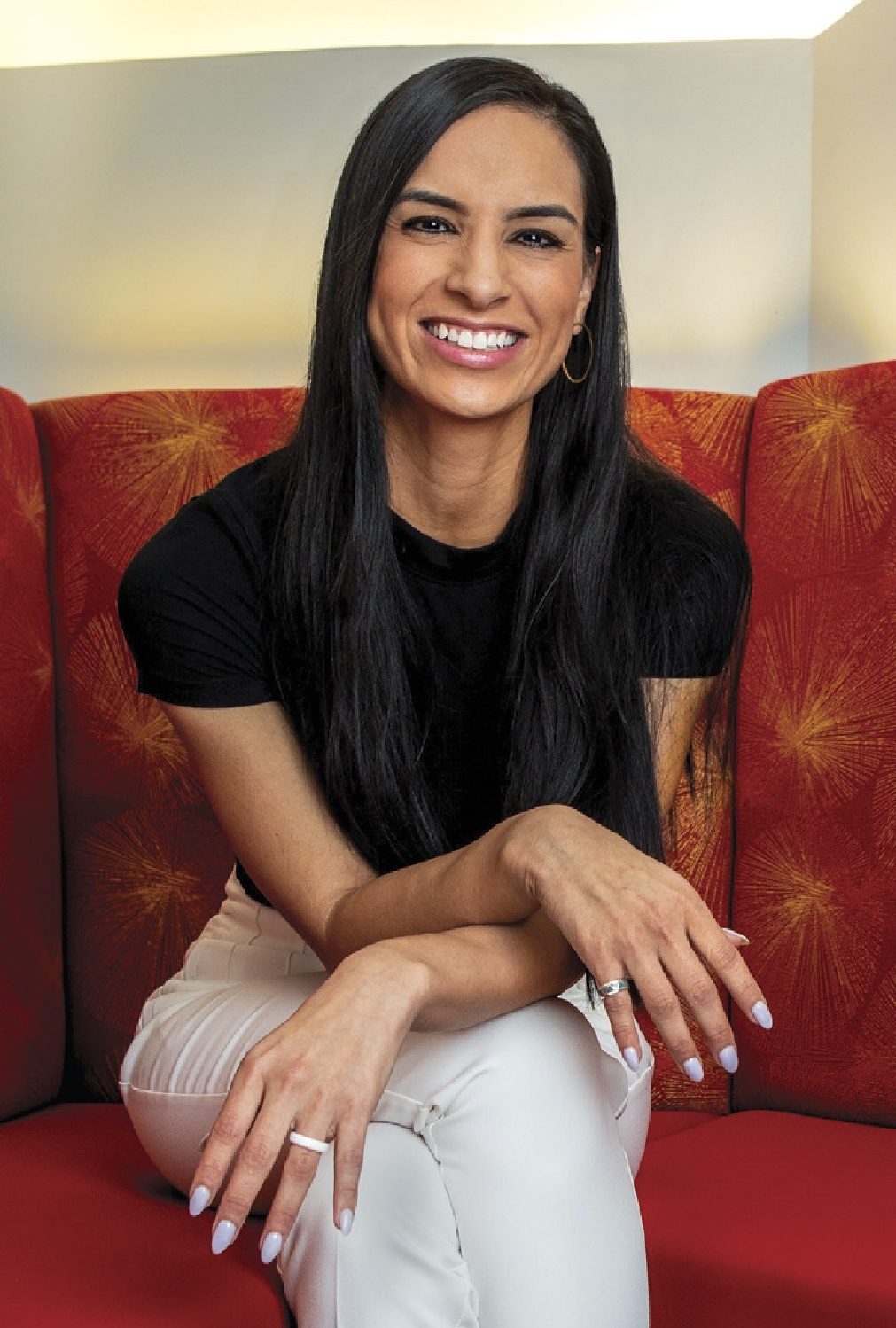
KELLIE ANN JURADO, Ph.D.
ASSISTANT PROFESSOR, POSTDOCTORAL FELLOW & PRINCIPAL INVESTIGATOR
J urado’s initial scientific spark happened during an undergraduate “Intro to Psychology” class when she asked her professor for a lab-based volunteer opportunity. This spark turned into a flame when she fell in love with the field and envisioned a career of “continuous curiosity.” After graduating from New Mexico State University, she continued her studies at Harvard University, earning a Ph.D. in virology, and then completed her postdoctoral fellowship in Yale University’s immunobiology department.
She is now the principal investigator at Jurado Lab within the University of Pennsylvania Perelman School of Medicine’s microbiology department, where she’s opening a research program that will study immune crosstalk in early life and women’s health. As lead scientist, she mentors rising researchers and students, emphasizing the importance of inclusivity and core values while advancing in the field of science. She understands that in research science, progress is slow, but it is incredibly meaningful. Achieving smaller wins to reach larger feats is what makes her proud. “Being a great scientist does not come at the loss of identity, and, in fact, it is my identity—my culture, my values, my community—that makes me a great scientist,” she says.
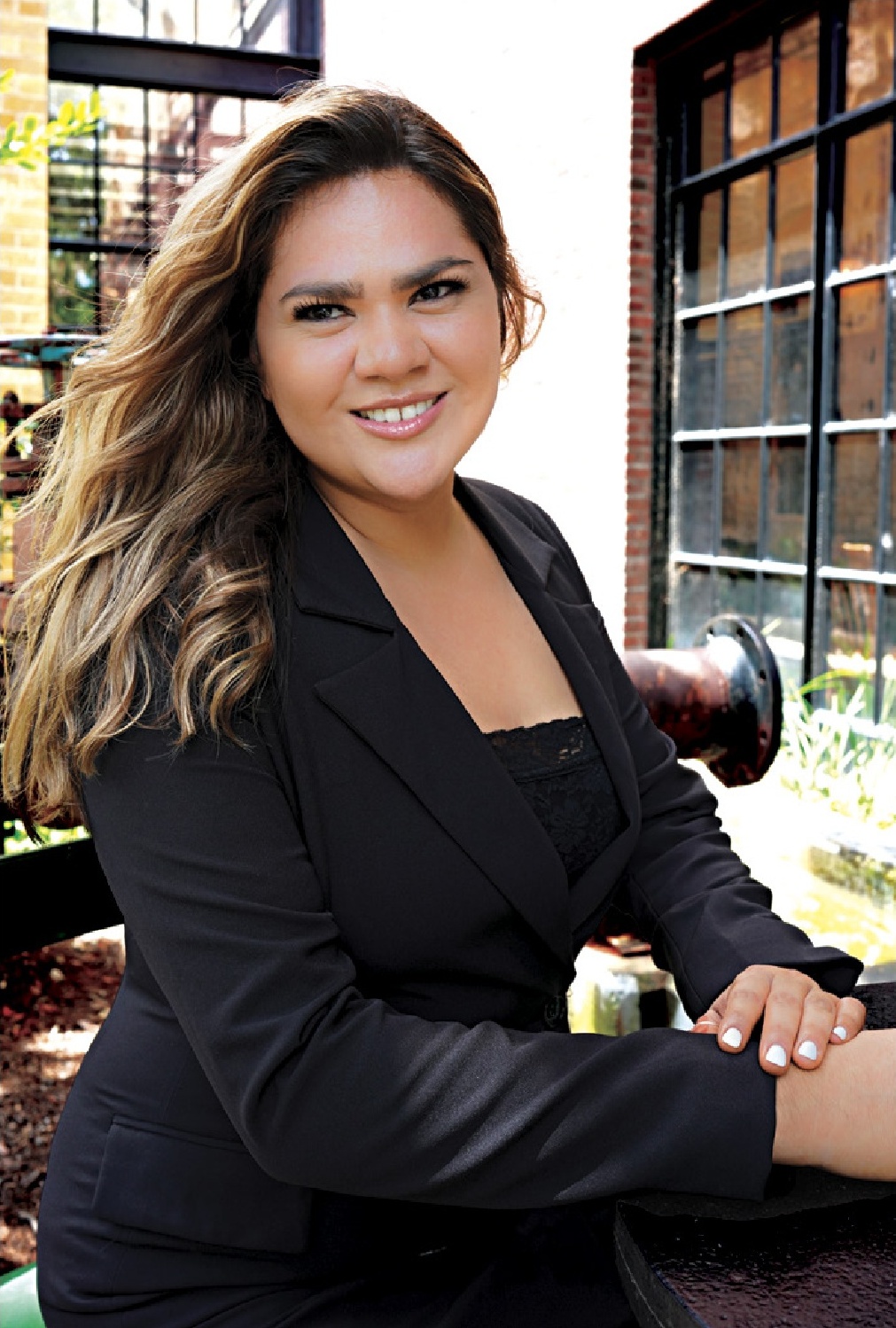
AMBER YBARRA
CEO, AUTHOR & SPEAKER
B efore embarking on her entrepreneurial journey, Ybarra worked as a professional plus-size model, photographer and painter. Now, she is an award-winning author, keynote speaker, business coach and founder of Cityline Fence Co. Her varied vocations and diverse skill set enabled her to pursue her wildest dreams. She has collaborated with high-profile celebrities, participated in art shows and worked behind the scenes as a makeup artist for a popular R&B group.
After deciding to focus on her entrepreneurial career, she partnered with a construction company. When that relationship dissolved, she launched her own construction business. With her venture into entrepreneurship, Ybarra steered herself toward success, earning certifications from Yale University and ranking among the top 10 speakers through Grant Cardone and Pete Vargas’ 10X Stages program.
Ybarra is grateful for her diverse experiences, knowing she wouldn’t have found her path without exploring various fields. Now, she shares her journey and supports entrepreneurs, speaking on stages to spread fellow business owners’ messages and stories. Reflecting on her representation as a Latina, Ybarra states, “Life, people, circumstances... they’ll all push us to think we’ve met the cap of our highest potential—until we realize we are meant to break that status quo.”

DR. BETTY® URIBE
FOUNDER, CEO & BUSINESS AND LIFE STRATEGIST
U ribe started her entrepreneurial journey as a teenager, shadowing her father on his day-to-day work visiting clients, suppliers and employees. This valuable experience set her up to establish her first company in biomedical engineering and manufacturing. Later, she shifted careers when Wells Fargo approached her for a banker position. As a banker, she excelled at creating lasting relationships, quickly rising through the ranks and successfully managing a couple of internal hostile takeovers. Her cutthroat expertise and tactical skills led her to handle multibillion-dollar turnovers, with her latest position as managing director at JPMorgan Chase.
Today, Uribe, who holds a doctorate with honors in organizational leadership, is the founder and CEO of Effectus Enterprises, a company that focuses on values-centered turnarounds and investments; business, corporate, global and executive leadership development; and philanthropy. Uribe believes in being a human leader, fostering people’s passions and values while challenging the status quo. “I absolutely love being Colombian and North American,” she says. “I get to take the best from both cultures and bring others with me on this amazing journey. I make it a point to recognize and elevate minorities and immigrants, as we are still not well represented. Imagine what would happen if every leader did the same?”

GABY NATALE
SPEAKER, AUTHOR & ENTREPRENEUR
E quipped with a master’s degree, Natale entered the Argentine job market in 2001 during one of the country’s worst economic and social crises. Even in dire times, and a challenging job market, she remained undeterred, volunteering at an international marketing conference in Buenos Aires. Unexpectedly, Natale served as a translator for American companies, which led to a job offer from a U.S. consulting firm a year later.
Then, after working as a news anchor for a few years, she pursued creating content that deviated from mainstream media, launching her own company, AGANARmedia. As a result, she became the first Latina in daytime TV to win three consecutive Emmy Awards. Natale is also a keynote speaker and the bestselling author of The Virtuous Circle: Restore Your Confidence, Bounce Back, and Emerge Stronger. Currently, she works as a corporate consultant with Fortune 500 companies, leveraging her speaking skills to advocate for and elevate these companies by establishing and reforming leadership standards. As a Latina entrepreneur and leader, she emphasizes that representation is everything; being a pioneer championed her to push boundaries. “Every time we choose to pioneer, we move the world forward,” she says.
Read about more Latina changemakers: success.com/latina-changemakers
COURTESY OF JACQUELINE VAZQUEZ; ©JOHN SOARES; COURTESY OF AMBER YBARRA; ©KL MEDIA; ©BILLY SURFACE LLC.
TOP 50 SUCCESS®
CHANGEMAKERS
MEET THE WORLD’S MOST INFLUENTIAL AND EFFECTIVE THOUGHT LEADERS AND POWERHOUSES FOR CHANGE.
A s dire and desolate as headlines can be, one thing rings true: “Look for the helpers.” The beloved Mister Rogers was onto something, which is why SUCCESS honors the world’s most dynamic changemakers each year.
Meet 2024’s SUCCESS® Changemakers, who range from everyday heroes to platform-bending celebrities to organizations dedicated to a positive worldwide impact.
Power Pairs
GRANT + ELENA CARDONE
The Cardones are known for their combined financial success and advice, with Grant’s globally popular 10X Rule and Elena’s empire-building curriculum. The power couple helps underserved and at-risk adolescents via financial literacy mentorship with the Grant Cardone Foundation.
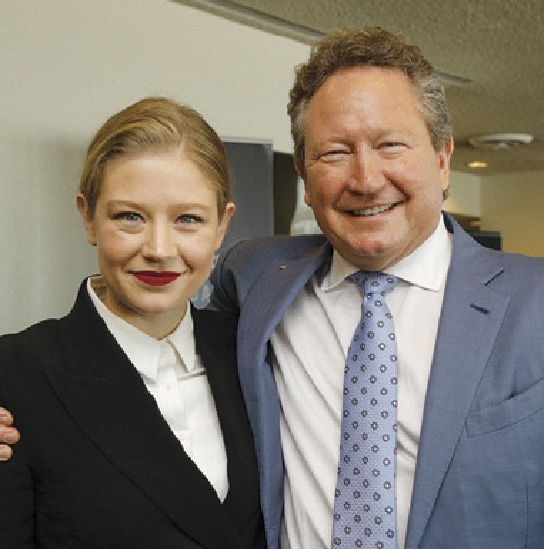
GRACE + ANDREW FORREST
Inspired by her work at a Nepalese orphanage, Grace cofounded Walk Free with her Australian billionaire father Andrew. The international human rights group is dedicated to eradicating modern slavery through legislative change and grassroots community engagement.
JAY-Z + BEYONCÉ KNOWLES-CARTER
The cultural icons and performers have shaped modern culture, influencing everything from music to politics to fashion. Some of their most impactful work has come from BeyGOOD and The Shawn Carter Foundation, bringing opportunities and resources to underserved communities.
DAVID + VICTORIA BECKHAM
The former footballer and pop icon were the premier ’90s “it” couple—and they’ve had staying power. Nearly three decades later, the couple still generates interest from fans, brands and organizations, while using their respective platforms for philanthropic work.
GEORGE + AMAL CLOONEY
Leaning into Amal’s background as an international human rights attorney, the couple founded the Clooney Foundation for Justice in 2016, giving human rights victims free legal support in over 40 countries.

JAY SHETTY + RADHI DEVLUKIA
The pair presses for a peaceful, balanced world rooted in wellness, mindfulness and personal growth. Shetty is a former monk turned purpose-driven entrepreneur who’s known for inspirational videos with billions of views, while Devlukia is a wellness influencer and New York Times bestselling author.

DEMI-LEIGH + TIM TEBOW
The former Miss Universe and athlete are revered for their strong faith and philanthropic work through the Tim Tebow Foundation. Recently, the duo partnered with a manufacturing company to give formerly incarcerated people a second chance.
CIARA + RUSSELL WILSON
The Grammy winner and Super Bowl-winning quarterback were powerhouses in their own rights before marrying in 2016. Together, they’ve established the nonprofit Why Not You Foundation, which fights poverty through access to education and teaching leadership skills.
TOM + LISA BILYEU
The billion-dollar masterminds behind Quest Nutrition and Impact Theory are longtime influential thought leaders in the wellness space. Married for more than 20 years, the couple aim to inspire millions through their podcasts and courses focused on mindset, personal growth and entrepreneurship.

CRISTINA MITTERMEIER + PAUL NICKLEN
Mittermeier is a leader in conservation photography, while marine biologist Nicklen is a renowned National Geographic photographer. With their talents combined, the SeaLegacy founders are garnering attention for Earth’s oceans to advocate for global conservation efforts.
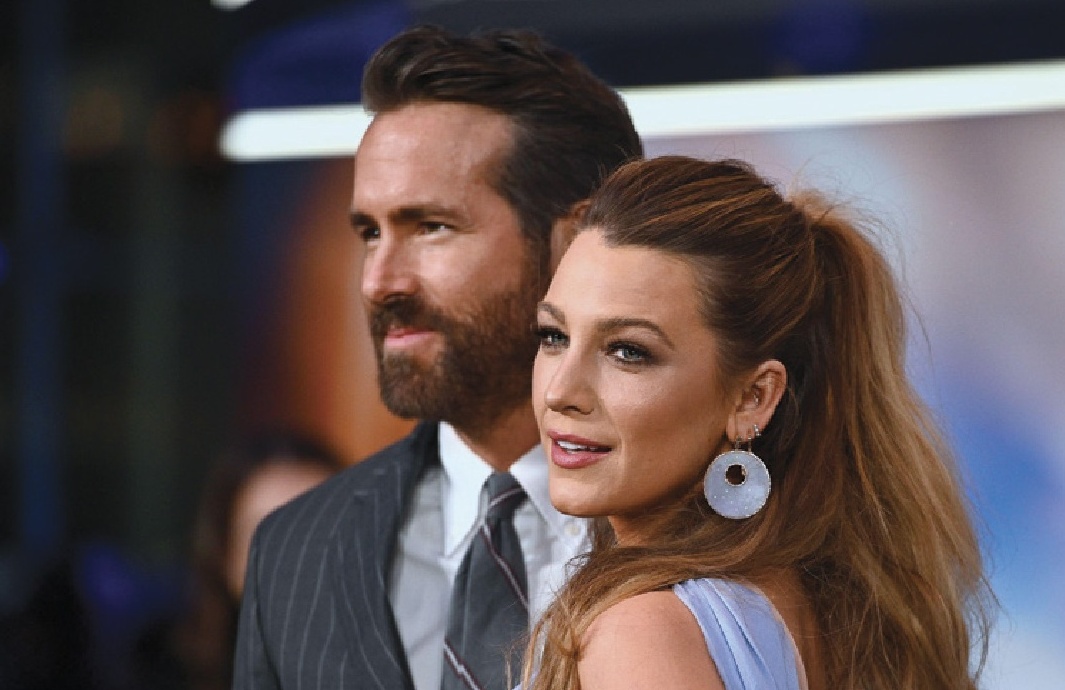
BLAKE LIVELY + RYAN REYNOLDS
One of Hollywood’s most treasured couples, the pair are admired for playful, hilarious social media interactions and charming red carpet quips. But they’ve used their superstar status to empower a variety of causes, most recently donating $1 million to help children in Israel and Gaza.
Individuals

TREVOR NOAH
While at the helm of The Daily Show, the South African comedian transformed the late-night scene, delivering insightful, heartfelt political commentary to help viewers understand the world and their place in it. The bestselling author and podcast host gives kids in disadvantaged African communities access to high-quality education through his namesake foundation.
PAUL POLMAN
Believing that business should be a force for good, the former Unilever CEO made waves during his decade-long tenure, encouraging other executives to adopt ethical, sustainable practices and improve workers’ conditions. He’d set these same goals for Unilever, where shareholder returns increased nearly 300%.
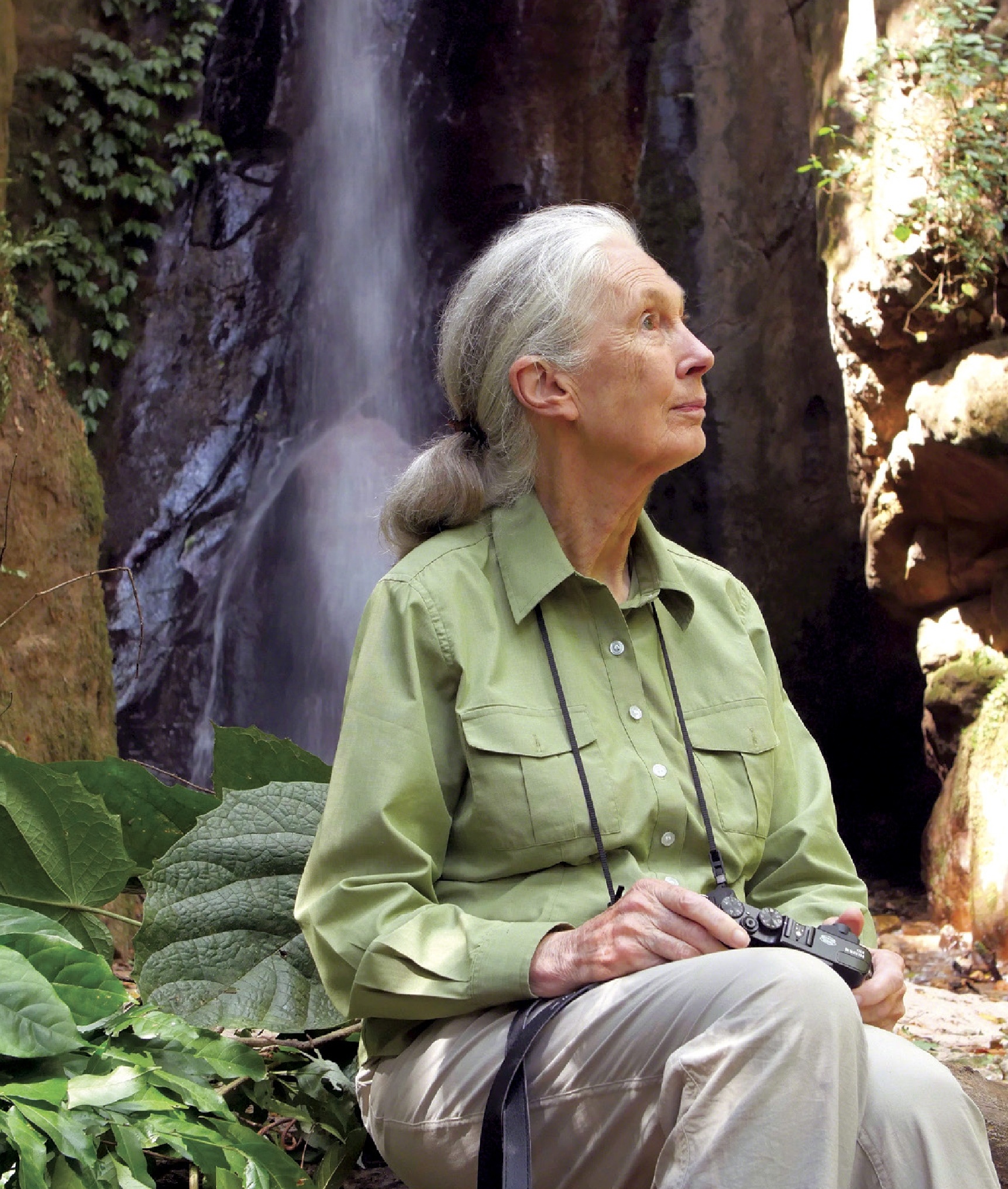
JANE GOODALL, Ph.D.
Goodall’s groundbreaking work with Tanzanian chimpanzees in the 1960s revolutionized primatology and set the standard for animal behavioral studies. She’s been a fierce advocate, and activist, for conservation, inspiring global wildlife protection efforts. Goodall kickstarted the world’s longest-running chimpanzee study and encouraged women to enter primatology.
SIR RICHARD BRANSON
The vivacious British billionaire’s Virgin Group is one of the most recognizable brands in the world, encompassing more than 40 companies across 35 countries. Branson has dabbled in everything, ranging from a record company and an airline to space tourism and a Formula One team.
MICHAEL J. FOX
The charismatic actor has experienced many transitions in his life, from ’80s teen icon to beloved Emmy winner to Parkinson’s patient and advocate. Fox, who’s lived with the disease for more than three decades, established a research foundation that has helped advance scientific progress toward a cure.
GRETA THUNBERG
The Swedish climate activist and 2019 TIME Person of the Year has become one of the most recognized—and passionate—voices in the climate change arena. What started as a solo school strike in 2018 has morphed into a global youth movement, urging leaders to take meaningful, urgent action against climate change.
LARRY FINK
As one of the most influential figures in global finance, the BlackRock CEO has become known for his stance on sustainable investing and corporate social responsibility. Fink is also known for his annual chairman’s letters to investors, which often gain a wide readership.
ANNA ALEX
A pioneer in sustainable business practices, Alex cofounded the now-defunct Planetly, a startup aimed at helping other organizations reduce their carbon footprint. The German serial entrepreneur is also an angel investor in the climate tech space.
ANGELINA JOLIE
The Oscar-winning actress was transformed while filming Laura Croft: Tomb Raider in war-ravaged Cambodia. Inspired, Jolie worked with the United Nations for 21 years, completing over 60 field missions and advocating for displaced people. The humanitarian continues to support refugees, sexual violence prevention, education and health care.
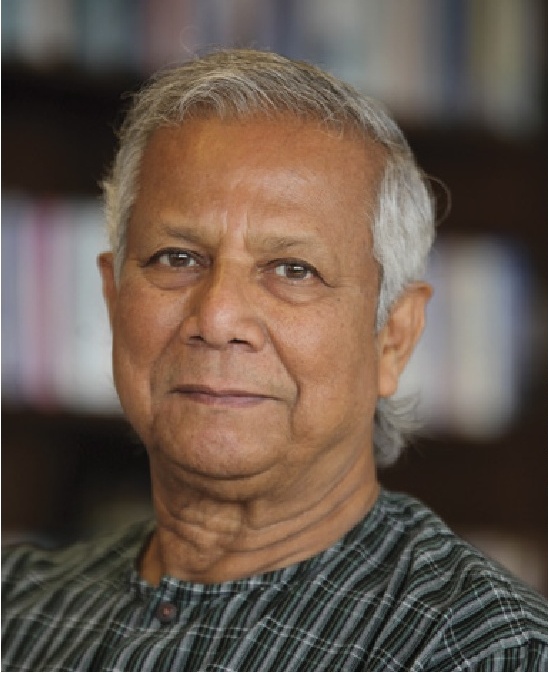
MUHAMMAD YUNUS
The “banker to the poor” and Nobel Prize recipient’s Grameen Bank has loaned billions in small, but effective, collateral-free loans to millions of impoverished people across the world—while maintaining a repayment rate above 98%. This feat empowered a traditionally voiceless sector of society while helping reduce global poverty.
QUAVO
The Georgia rapper and producer was part of the genre-enhancing, vernacular-bending hip-hop trio Migos. Now, Quavo is emerging as a key voice against gun violence. He launched The Rocket Foundation to honor his nephew and fellow Migos member Takeoff, who was fatally shot in 2022.
BONO
Throughout his nearly 50-year career, the U2 frontman and Irish activist has used his influence and celebrity to bring attention to humanitarian causes around the world, ranging from HIV/AIDS and extreme poverty in Africa to helping foster peace in Northern Ireland.

21 SAVAGE
The London-born rapper has built a career on his raw, honest verses that chronicle his gritty streets-to-success story. He’s embraced as Atlanta rap royalty, thanks to his vocal stance on social issues and philanthropic efforts, including a financial literacy movement that’s helped over 8,000 students.

KYLE KUZMA
The Washington Wizards forward’s influence expands beyond the court through his bold wardrobe, colorful social media interactions and appearances on the New York Fashion Week runway. He’s also making waves with his namesake nonprofit, which impacts single mothers.
MARISKA HARGITAY
Hargitay’s long-running Emmy-winning portrayal of the empathetic Det. Olivia Benson on Law & Order: Special Victims Unit imprinted on her everyday life. The actress and advocate started the Joyful Heart Foundation in 2004 with the intention of transforming societal response to sexual assault, domestic violence and child abuse, focused on forever ending this violence.
MATT DAMON
On screen, the Academy Award winner is known for memorable performances. Off screen, Damon is a pivotal force in providing global access to safe water and sanitation. Inspired by international travel as a kid, the producer and humanitarian cofounded two clean water-focused nonprofits.
CHARLIZE THERON
Throughout her career, the South African actress has used her platform to bring awareness to HIV prevention and eliminating gender-based violence. The United Nations Messenger of Peace supports “community-driven change” through the Charlize Theron Africa Outreach Project.
SHAKIRA
The Colombian singer and dancer brought Latin flow to a Western audience in the early 2000s. Named Billboard’s first “Latin Woman of the Year,” Shakira has sold more than 80 million records worldwide. She’s also used her superstar status to improve education in her home country through her Barefoot Foundation.

EMMA WATSON
The world first met the British actress as the precocious Hermione Granger in the Harry Potter series. Over time, Watson evolved into an activist, taking on the role of a UN Women Goodwill Ambassador and bringing attention to gender equality.

ADITI MAYER
The visual storyteller and climate activist was moved to action after the 2013 Rana Plaza collapse in Bangladesh left over 1,100 dead—most of whom were garment factory workers. Through her work in Vogue and National Geographic, Mayer blends sustainable fashion with environmental activism.
AMANDA GORMAN
So far, the 26-year-old has made U.S. history twice: once as the first-ever National Youth Poet Laureate, then as the youngest inaugural poet at President Joe Biden’s 2021 inauguration. Her star continues to rise, as her words confront Black identity, feminism and climate change.

INDYA MOORE
The model and actress found fame through their portrayal of an aspiring model on the revolutionary, Golden Globe-nominated series Pose. As Elle’s first transgender cover star, Moore has used their voice to empower marginalized communities, promote inclusivity and advocate for LGBTQ+ rights.

LEWIS HAMILTON
Hamilton brought international attention to Formula One racing as the motorsport’s first Black driver and the youngest-ever world champion, which he cinched in his second year. Outside the track, the British driver has advocated for diversity in the sport and promoted positive social change.
Organizations

BYD
The Chinese EV company started out making cellphone batteries. Now, it’s giving Tesla a run for its money. Literally. As BYD continues to rapidly expand, it is focused on sustainable innovation and helping “cool the Earth by 1°C.”
APPLE
Beloved for its sleek, innovative designs, the tech giant is also highly regarded as an innovative leader in supply chain management and logistics. Apple is leading its strategically managed supply chain, which reaches across more than 50 countries, toward a goal of carbon neutrality by 2030.
B LAB
The nonprofit network certifies B Corporations, a high-level designation for organizations focused on social and environmental factors, transparency and accountability. B Lab wants to shift the global economic system by balancing profit with purpose to benefit everyone through stakeholder-driven models that ensure equity and embrace interdependence.
BAIN CAPITAL
As a leading private investment firm, Bain Capital scales mission-driven companies to expand social impact while delivering significant financial returns. As an active partner, the firm provides strategic guidance and industry insight, allowing companies to grow while preserving their core values.
CHIEF
The private network geared toward senior executive women connects leaders while offering members access to exclusive coaching. Since its 2019 launch, Chief has blossomed to more than 20,000 members from 10,000 companies and reached a value of more than $1 billion.
DE BEERS GROUP
The world’s leading diamond company created Tracr™, a tamper-proof digital platform for tracing natural diamonds “from source at scale.” Traceability builds trust in the supply chain, while supporting ethical sourcing and environmental responsibility.
EVOQUA WATER TECHNOLOGIES
Focused on aiding the world’s most critical water challenges, the company provides innovative water treatment solutions to customers at every level, from industrial to municipal. Xylem acquired Evoqua in 2023, creating an advanced solution for critical water challenges.
FORMULA ONE
The world’s most prestigious motor racing competition has experienced exponential growth in revenue and attendance in America over the past few years. The explosion in popularity is partially thanks to Netflix’s Formula 1: Drive to Survive docuseries and strategically hosting races in cities like Las Vegas and Miami.
IBM
A longtime technological trailblazer, IBM is a foundational pioneer in quantum computing, which uses a specialized approach to solve complex problems faster than classic computers. IBM is establishing research and developing quantum hardware to generate the speed and capacity to advance the world.
LVMH GROUP
For nearly 40 years, the French luxury goods conglomerate has been a global tastemaker and trendsetter in everything from leather goods and couture to perfumes and luxury hotels. LVMH (Moët Hennessy Louis Vuitton), the only group present in all five major luxury sectors, is lauded for its quality and craftsmanship.
REGROW AG
Regrow has a global team—including software developers, scientists and agronomists—focused on decarbonizing the planet through sustainable, regenerative agriculture and working with companies like General Mills to measure supplier farms’ carbon impacts. So far, more than 600,000 tonnes of CO2e have been sequestered through Regrow programs.

PATAGONIA
On top of supporting environmental initiatives and sustainable practices, the outdoor apparel company donates 1% of sales to environmental preservation. Patagonia is proving that profit doesn’t have to cost the Earth.
The company is now encouraging others to do the same.
SORENSON IMPACT INSTITUTE
The nation’s first student-run venture is focused on cultivating the “next generation of impact leaders” through hands-on experience, mentorship and world-class, rigorous academics. Housed at the University of Utah’s business school, the institute’s innovative finance structuring helps provide scalable solutions for social and environmental issues.

SPACEX
The final frontier is becoming more accessible than ever thanks to Elon Musk’s innovative aerospace company. SpaceX is the first private company to take humans to the International Space Station and plans to land a spacecraft on Mars in a few years, “making humanity multiplanetary.”
SCHNITZER STEEL (RADIUS RECYCLING)
Billed as the world’s most sustainable company, the nearly 120-year-old organization has long been a leader in metals recycling. Now, Schnitzer Steel is leading the way toward a low-carbon future by providing the metals needed to produce renewable energy infrastructure and electric vehicles.
UNILEVER
In 2010, Unilever set out to become a global leader in business sustainability by reducing environmental impact and increasing positive social impact. Since then, notable achievements have included reaching 1.3 billion people through health and hygiene programs and reducing manufacturing greenhouse gas emissions by 32%.
COURTESY OF GRACE & ANDREW FORREST; ©BJORN LOOSS; ©NANCY PAULINE PHOTOGRAPHY; ©SEALEGACY; SIPA USA/ALAMY STOCK PHOTO; ©MARYELLEN MATTHEWS/NETFLIX; ©BILL WALLAUER/COURTESY OF JANE GOODALL INSTITUTE; NASIR ALI MAMUN/COURTESY OF YUNUS CENTRE; RITZAU/ALAMY STOCK PHOTO; COURTESY OF KYLE KUZMA; ©MARA HOFFMAN/COURTESY OF ADITI MAYER; EVERETT COLLECTION INC; DOUG PETERS/ALAMY STOCK PHOTO; CCORLEVE/ALAMY STOCK PHOTO; COURTESY OF BYD; ANDREW BURR/COURTESY OF PATAGONIA; EVGENIYQW/SHUTTERSTOCK.COM

JOIN US AS WE CELEBRATE THE VISIONARIES WHO ARE RESHAPING OUR WORLD FOR THE BETTER.
E ach year, SUCCESS Changemakers honors individuals and organizations whose relentless passion and innovative spirit foster meaningful social, environmental and economic impact worldwide. Whether they are everyday community heroes, social entrepreneurs with groundbreaking solutions or corporations driving sustainable progress through corporate social responsibility initiatives, the 2024 SUCCESS Changemakers acknowledges 25 exceptional winners dedicated to making a difference. We applaud their dedication, courage and steadfast commitment to forging a more inclusive, sustainable and prosperous future for all.
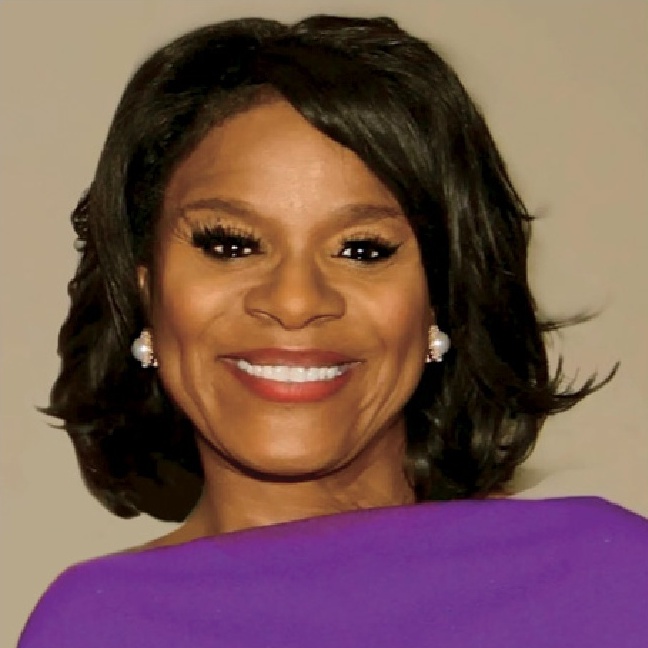
KIM ANTHONY
Emancipated from the foster care system at 18, Anthony’s passionate study of personal development principles and strategies enabled her to cultivate her talents, skills and abilities to build a future she could be proud of.
Honoring a long-held promise to one day become the mentor she wished she’d had, Anthony leveraged her three decades of leadership in the community and the economic development field to launch the Urban Excellence Institute. This first-of-its-kind training and development company intentionally curates and delivers world-class transformational training modalities, making them available and accessible to all, especially in under-resourced communities.
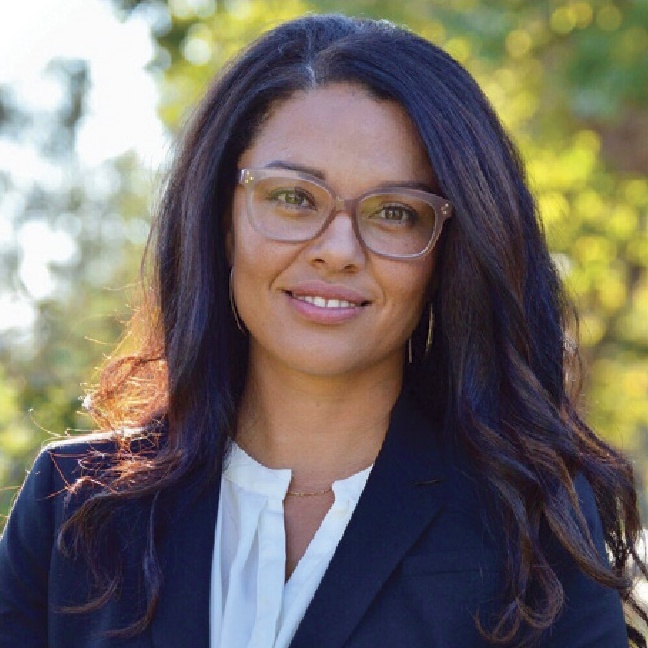
HILLARY BLOUT
The former prosecutor is dedicated to addressing racial disparities and overcrowding in the U.S. prison system. Initially recruited by then-San Francisco District Attorney Kamala Harris, Blout now serves as the founder and executive director of the national nonprofit For the People. Blout pioneered a new approach to justice by developing the nation’s first law enabling prosecutors to safely release people from prison—a stark departure from traditional incarceration practices. Over five years, this initiative has been adopted in five states, providing over 1,000 people a second chance at freedom. Blout has also been instrumental in spearheading criminal justice reform efforts across her home state of California, advocating for thousands of people previously convicted of lower-level felonies to receive opportunities for redemption.
LEIGH BURGESS
Burgess is a CEO, founder, coach and driven entrepreneur who is passionate about helping organizations and individuals achieve their fullest potential faster. After 20-plus years working in health care and education, Burgess founded and launched Bold Industries Group, Inc. (BIG) in 2020. BIG encompasses her passion for business consulting, coaching and curated events. Recognized for her groundbreaking approach to personal and organizational performance, Burgess harnesses the power of strategy, mindset and wellness to achieve optimal results. This unique blend of elements forms the cornerstone of the signature BOLD (believe, own, learn and design) Framework she uses with organizations and individuals for advanced agile performance. Her upcoming book, Be BOLD Today: Unleash Your Potential, Master Your Mindset, and Achieve Success, is on bookshelves November 2024.
JODY CARROLL
A distinguished entrepreneur and advocate celebrated for her significant contributions to the cleaning industry, Carroll has successfully built and scaled a residential cleaning business and a commercial cleaning business. Carroll is the CEO of Power X3 Property Maintenance and the director of sales and development for Oxygen Powered. She actively participates in the International Sanitary Supply Association (ISSA), the world’s leading trade organization for the cleaning, hygiene and facility management industry, where she serves on several committees for North America. Carroll strongly believes in the development of industry standards and training programs, and she is committed to influencing policy and regulatory changes that benefit the cleaning industry on the local and federal levels. This year, Carroll played a crucial role in setting and participating in meetings with the Environmental Protection Agency.

STEFANIE COUCH
An entrepreneur, speaker, coach and innovator, Couch’s extensive experience also includes managing successful business operations. Couch grew up in a family retail lumber yard in Georgia, where she worked for over 15 years. She later led a startup division of a Fortune 500 building materials company, scaling their door and millwork division as a regional sales and marketing leader. Two years ago, she founded Build Women, providing targeted education, business coaching, branding and leadership development programs for women in the construction industry. Additionally, she launched GRIT Blueprint, specializing in branding, marketing and strategically scaling businesses within the building materials and construction sector.
MARLINE CEPOUDI DUROSEAU
Duroseau is a successful CFO, CPA and leadership business executive with a career spanning more than two decades. She is also an educator, doctoral candidate, entrepreneur, author, speaker and fertility coach. Duroseau set out to empower and help build confidence among her fellow female cohorts through launching MCD Business Enterprise LLC. She understands the challenges of cultivating a successful leadership career and knows what it takes to overcome obstacles and achieve growth. She leads in a manner that taps into the strengths of those who work with her, allowing them to perform at their utmost capacity while also cultivating efficiency and productivity for the company.
XAVIER RUBIO FRANCH
After a 25-year career in advertising, Franch combined his passion for marketing, the ocean and surfing and established Old Surfer. The global agency catalyzes change by connecting consumers and brands in the U.S., Europe and Latin America to sustainability. Franch is also the founder and president of the Foundation for Sustainable Consumption, which is dedicated to promoting sustainable habits among American consumers. He’s created a methodology he calls “Green StoryDoing,” which encourages companies to take actionable steps while effectively communicating their efforts. Additionally, he launched the Ocean Connections platform to highlight Old Surfer’s many creative projects focused on ocean sustainability.

OLIVIA DePIORE
International model DePiore travels the world advocating for inclusion and makes herself visible to help normalize those who are different. DePiore, who has Down syndrome, has graced New York Fashion Week almost 100 times and has appeared in Paris, Milan, Dubai and more. She has done numerous ads and commercials for companies, including Delta Airlines. DePiore’s mission is to see more nontraditional models gracing all types of media, including TV, print, store ads and runways. In addition, she is a cancer survivor and has raised over $100,000 for cancer treatment and awareness.
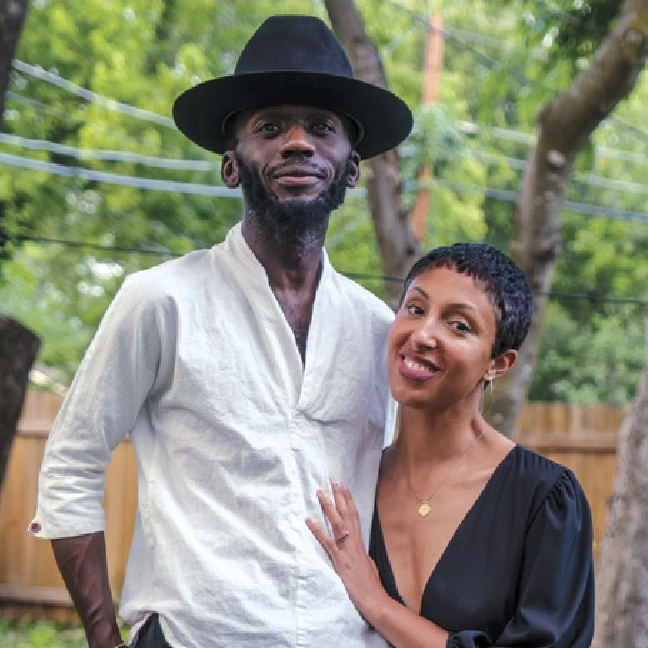
MOYO AND ANNA OYELOLA
Husband-and-wife team—artist and creative director Moyo and executive adviser and campaigner Anna—stand hand-in-hand at the forefront of change, merging creativity with purpose to transform communities. Under their organization Mmmultiple, they work to build bridges and unite diverse communities through art, consulting, speaking engagements, convening, philanthropy and advisory roles. Notably serving as creative director for Beyoncé’s Cécred, Moyo has collaborated with global brands and cultural icons, highlighting his flair for merging artistic innovation with meaningful social narratives. Anna has spent two decades shaping the trajectories of high-profile CEOs, philanthropists and executive directors in sectors like social impact, nonprofits and technology. Together, this dynamic duo has launched groundbreaking projects and created community spaces that spark dialogue and drive tangible change.

ISAIAH (DELE) OYEKANMI
A versatile, multitalented leader and philanthropist, Oyekanmi has over 35 years of experience as a commercial, contracts and procurement professional in the U.K. construction industry. Oyekanmi’s leadership in the industry is evident through his involvement with the International Conduct and Competence Global Advisory Group, as well as his involvement within the Royal Institution of Chartered Surveyors (RICS), where he holds a nonexecutive director role on the organization’s Standards and Regulations Board. Currently, he’s engaged in one of the world’s most innovative and impactful giga-projects in Saudi Arabia. Oyekanmi has been an assessor, counselor and mentor for potential chartered surveyors worldwide, and he is a global ambassador for RICS LionHeart and a director of Destiny Builders.
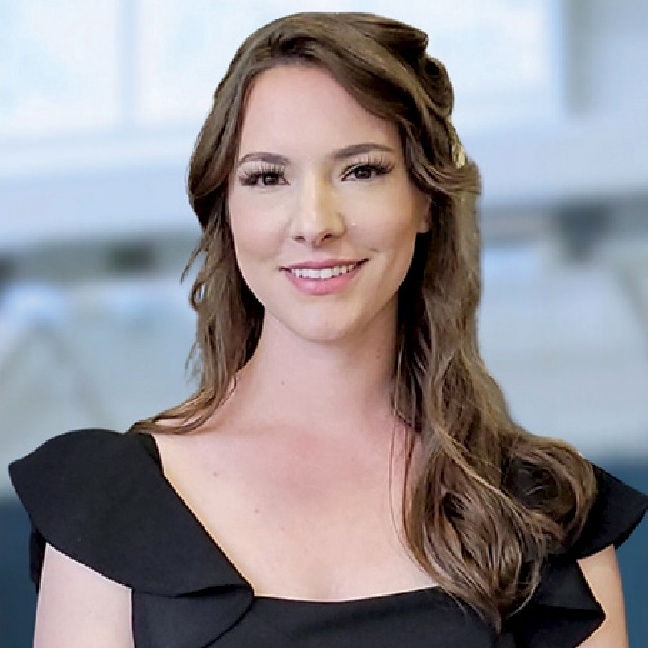
MORGAN LEIGH MILLER
Miller entered the health care field as a patient care tech for IU Health Bloomington Hospital. Several years into the profession, she sustained a back injury while repositioning a patient that required time off from work to rehabilitate in physical therapy. It was during this time that she began thinking of ways to automate the current manual system of turning patients. Miller created a therapeutic mattress overlay, which promotes blood flow from head to toe. Her company, Miller Co Medical Devices, will save patients from bedsores and pressure ulcers, which cost health care establishments about $26 billion yearly, while reducing hospital-acquired injuries. By automating patient turning, the devices ensure timely repositioning, giving caregivers more time for quality patient care and fostering meaningful patient relationships.

JESSICA MUÑOZ
A powerful force in the health care and nonprofit sectors, Muñoz is an outspoken advocate for vulnerable populations. She is the founder of Ho’ōla Nā Pua (HNP), an organization dedicated to eradicating sex trafficking of children and providing healing resources for young people. In this position, Muñoz utilizes her background as a clinical emergency and trauma nurse practitioner to illuminate pathways for those healing in darkness. Her multifaceted expertise encompasses nearly two decades of advancing health care, pioneering entrepreneurial ventures and spearheading community initiatives. Known for her transformative approach to systemic change, Muñoz has cultivated widespread partnerships to fortify a collective crusade to protect children from sexual exploitation around the globe. She’s raised millions of dollars to help address the crisis and provide victims with aftercare needs.
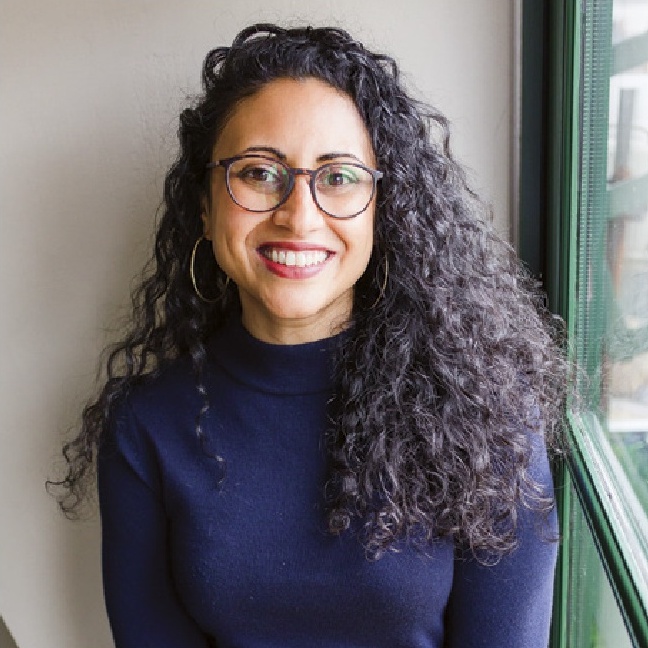
RUPAL PATEL
The former CIA agent is dedicated to developing the next generation of leaders and entrepreneurs. Patel’s career has taken her from military briefing rooms to corporate boardrooms. She’s also earned war zone service medals and recognition from the CIA director for superior support to the president. After leaving the CIA, Patel earned her MBA and founded an award-winning business. As a speaker and consultant, she has delivered leadership programs for Fortune 500 companies and the White House, and her work has been featured in elite MBA programs and other prominent outlets. Patel mentors for Startup and Techstars. She authored the bestselling book From CIA to CEO and delivered a TEDx Talk on the power of “owning your weird” to unleash personal excellence.

DR. LAURA PURDY
As the visionary CEO and founder of SWELL Medical (SMed) and the innovative cofounder of JellyMed, Purdy exemplifies expertise, credibility and a profound commitment to advocating for cutting-edge health care solutions. SWELL Medical serves as a beacon of innovation under Purdy’s expert guidance, pioneering telehealth advancements and prioritizing holistic patient care. With a relentless devotion to breaking barriers and empowering individuals through accessible health care, SWELL Medical reflects Purdy’s unwavering mission to revolutionize the industry. Her titles not only define her roles but encapsulate her missions—as CEO, she leads with a vision of inclusivity and transformation; as founder, she forges paths for innovation and positive change; as cofounder of JellyMed, she pioneers health care with a heart grounded in compassion.

PRIYA RAVINDRA KALYANIMATH
Founder and CEO of the award-winning social enterprise Punar, Kalyanimath is a force of nature in the world of sustainable business and gender equality. Hailing from southern India, Kalyanimath moved to Australia alone as a teenager to pursue an engineering degree. Her life’s purpose has always been to help women rise, and through Punar, she is turning this vision into reality on a global scale. Under Kalyanimath’s visionary leadership, Punar is one of the world’s first companies to weave gender equality and sustainability seamlessly into the textile and gifting industries. By committing to equal pay, safe work conditions and blending traditional handloom fabrics with modern green textile innovations, Kalyanimath is revolutionizing the textile and gifting industry.
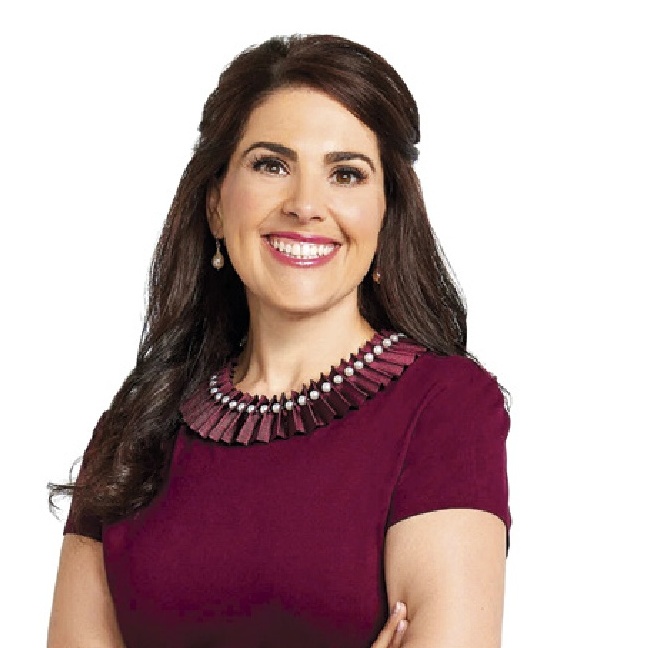
ELLIE SHEFI
Dedicated to empowering others to use their voice, Shefi is a distinguished attorney, strategist, keynote speaker and author who drives change by helping organizations optimize their impact and individuals build the world they envision. With over 30 years of experience, she founded MTC Consulting to assist organizations in building resilient teams, fostering world-class cultures and developing influential leaders. She is also the founder of Made to Change the World Publishing, a full-service independent publishing house, where she guides aspiring bestselling authors through the writing and publishing process and helps leaders amplify their message so they can scale their impact. Serving as a strategic adviser to governments, universities, corporations, entrepreneurs and nongovernmental organizations, she’s championing initiatives that prioritize people and drive meaningful change.
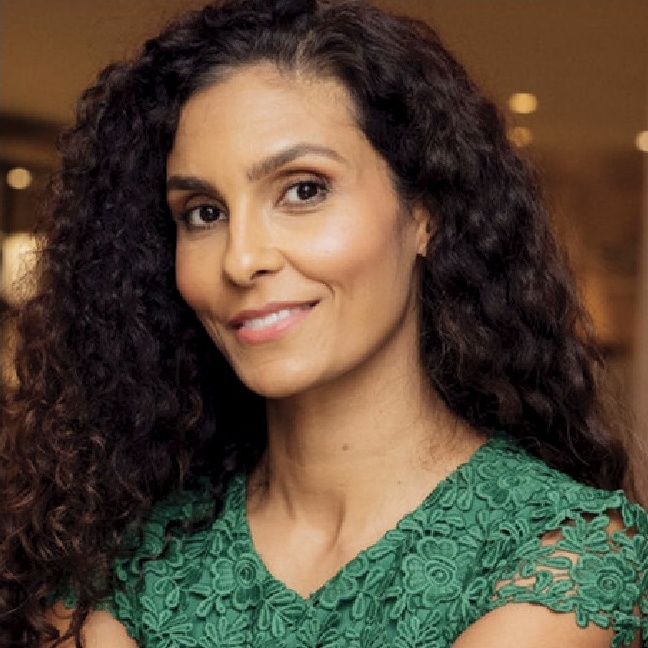
MANUELA TESTOLINI
Testolini, founder and president of In a Perfect World (IAPW), has empowered the next generation on a global level. From Mali to Haiti and beyond, her leadership has fostered education, mentorship and artistic expression for underserved youth. Domestically, IAPW’s programs provide tools for young people to succeed and create youth-driven service moments. Testolini’s commitment to service has earned her widespread recognition, including the United Communities Against Poverty’s Award of Service and the Boys & Girls Clubs of America’s Fearless Leader Award. Notably, she was honored with the Muhammad Ali Voice of Humanity Award, an accolade whose inaugural recipient was President Barack Obama.
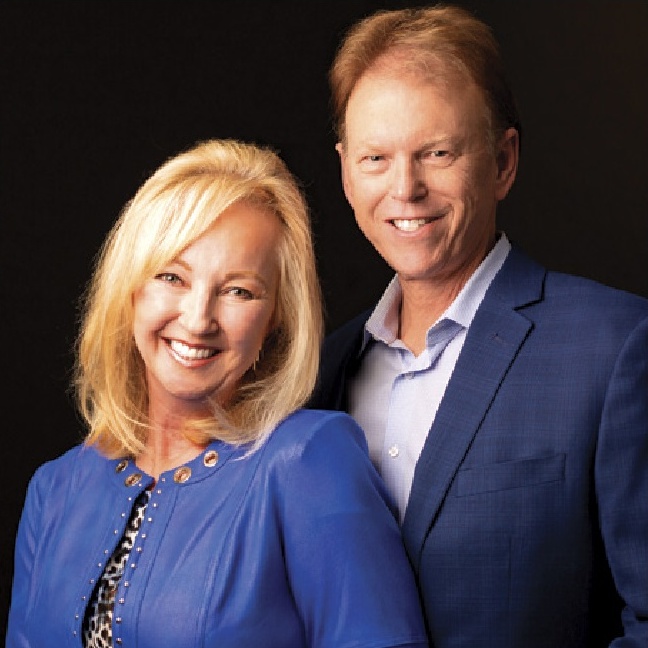
BETH AND BRAD THORP
Beth Thorp is an author, speaker and cofounder of the Mitchell Thorp Foundation, a 501(c)(3) organization that financially and emotionally supports families with children facing life-threatening illnesses, diseases and disorders. Her book, ANEW Creation: Finding Meaning in the Midst of Tragedy, was written in memory of her son Mitchell, who died unexpectedly from an undiagnosed illness, and aims to bring hope to others during difficult circumstances. Beth is passionate about being the light in the dark to others and bringing hope and encouragement in the direst of circumstances. Her husband, Brad Thorp, CEO and cofounder of the Mitchell Thorp Foundation, leverages nearly 40 years of management and sales expertise to lead the foundation’s strategic and development efforts, carrying out plans and policies. Over the past 15 years, this dynamic duo’s philanthropy and leadership work has been recognized and awarded nationwide.

NARMANDAKH TSOLMON
Entrepreneur, construction and investment manager, and consultant helping immigrants achieve their American dreams, Tsolmon has eight years of accomplishments as a U.S.-based entrepreneur. She’s been a managing partner of OG Construction, founder of Wayease Agency LLC and cofounder of the Evendow Consulting Firm. Tsolomon is a licensed notary and certified business and immigration consultant with a successful track record in managing over 25 real estate investment projects in Illinois and Florida. She has played a pivotal role as a general construction and investment manager, pioneering the first three co-living house concepts in the Tampa Bay area. This showcases her innovative approach and dedication to improving living standards and making a significant impact in the field of U.S. immigration consultancy.

JYOTHI VEMU
An accomplished founder and entrepreneur, Vemu has left an indelible mark on the education technology landscape. As the driving force behind Futurebytes, a pioneering educational technology company, she has revolutionized the way children learn and engage with artificial intelligence, robotics and coding. Futurebytes provides students with in-person and online camps, classes, workshops, competition training and outreach events, all designed to foster a love for learning in children and equip them with essential skills for the evolving digital world. By providing both in-person and online programs, the company endeavors to reach a wider audience, regardless of geographical limitations. Through these innovative programs, children can immerse themselves in hands-on experiences, nurturing their curiosity, critical thinking and problem-solving abilities.

THE CANCER JOURNEY INSTITUTE
The Cancer Journey Institute offers specialized coaching through emotional, mental (mindset) and spiritual support. Since 2012, it’s trained individuals with cancer or those who have a passion for helping others going through a cancer journey. In 2013, it was the first cancer coach training company to be accredited by the International Coaching Federation (ICF), the gold standard for the coaching profession. Before its inception, cancer coaching was largely nonexistent, leaving patients to manage their emotional, mental and spiritual health on their own. Using proprietary cancer-specific tools and concepts tailored for cancer patients, The Cancer Journey created frameworks and structures to facilitate holistic healing.

DSP CONNECTIONS
DSP Connections (DSPC) supports people with intellectual or developmental disabilities by providing a direct support professional (DSP), a specialized caregiver who offers individualized care. DSPs provide individualized care and support a wide variety of goals, such as behavioral support/prevention, safety, community inclusion, socialization, hygiene skills, communication, cooking, budgeting and more. DSPC provides weekly activities aimed toward skill building and partners with local arenas and organizations to help its clients get out in the community. DSPC is deeply committed to creating an inclusive environment where everyone feels a sense of belonging.

THE FEMALE QUOTIENT
The Female Quotient (The FQ) is an events and media company focused on advancing equality in the workplace. Serving as an engine of equality, the company offers visibility and connections for women and conscious leaders at a global scale. The FQ’s signature Equality Lounge®, formerly Girls Lounge®, has influenced the business agenda at major conferences including CES, Davos, Cannes Lions and more. As the Business of Equality®, The FQ’s mission is to fight for gender equality through the community they’ve created with their famous equality lounges and through research and media that raises the profile of women.

SPLASH BOX MARKETING, LLC
Making online content accessible to everyone one website at a time, Splash Box Marketing, LLC was initially established as a creative design agency. Offering accessibility services for people with vision impairment, the company has since grown into a multifaceted organization serving a national client base. It provides 508 remediation of PDF, Word, Excel and PowerPoint documents, including fill-able forms in all languages as well as video compliance. Additionally, it offers website accessibility testing and HTML consulting to meet the requirements for U.S. Department of Health and Human Services and website reviews. It has remediated almost 2 million web pages since 2020 and helped over 250 clients become compliant so their customers with blindness or low vision can access their content with ease.

WOMEN THRIVE MEDIA
The women’s empowerment platform Women Thrive Media spotlights the stories of females across the globe. It hosts the annual Women Thrive Summit, the largest annual women’s empowerment event supporting women in entrepreneurship, leadership, coaching and personal development. Its mission is to create a supportive, inclusive and empowering platform where every woman’s voice and story matters, spotlighting women’s stories through events, podcasts, magazines and events. The judgment-free platform encourages women to be authentic in their true selves. Through this work, many women have healed their traumas and found the ability to speak their truth, own their voice and become liberated in the power of their voice.
BLURRYME; PARILOV; RAWPIXEL.COM; KIKUJIARM; STEKLO; IVAN KURMYSHOV/SHUTTERSTOCK.COM; ALL IMAGES COURTESY OF HONOREE; ©JOSH STUDIODUBAI

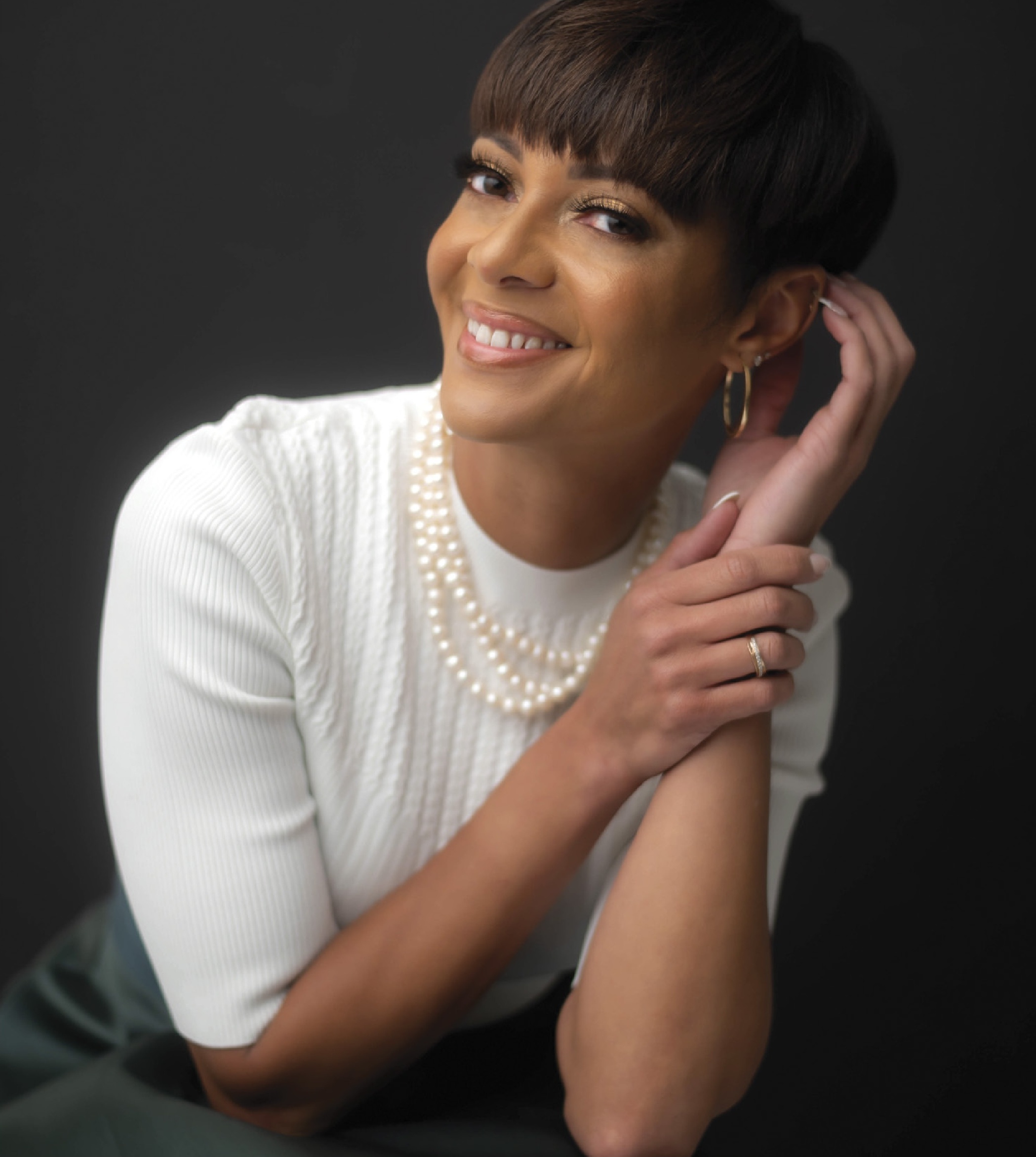
GROUP CHAT
Rising Up
A decade ago, Simone Ross was undeniably acing her career game as a corporate leader in the health care industry. However, holding a C-suite position as a Black woman came with drawbacks, including battling negative remarks and biased criticism against her race, age and gender. Although her experience as an executive was less than stellar, she channeled her energy into tackling systemic issues in corporate offices for women and leaders by founding her own consulting business.
Read more online at SUCCESS.com
©CHERMETRA KEYS
GROUP CHAT | MY WAY
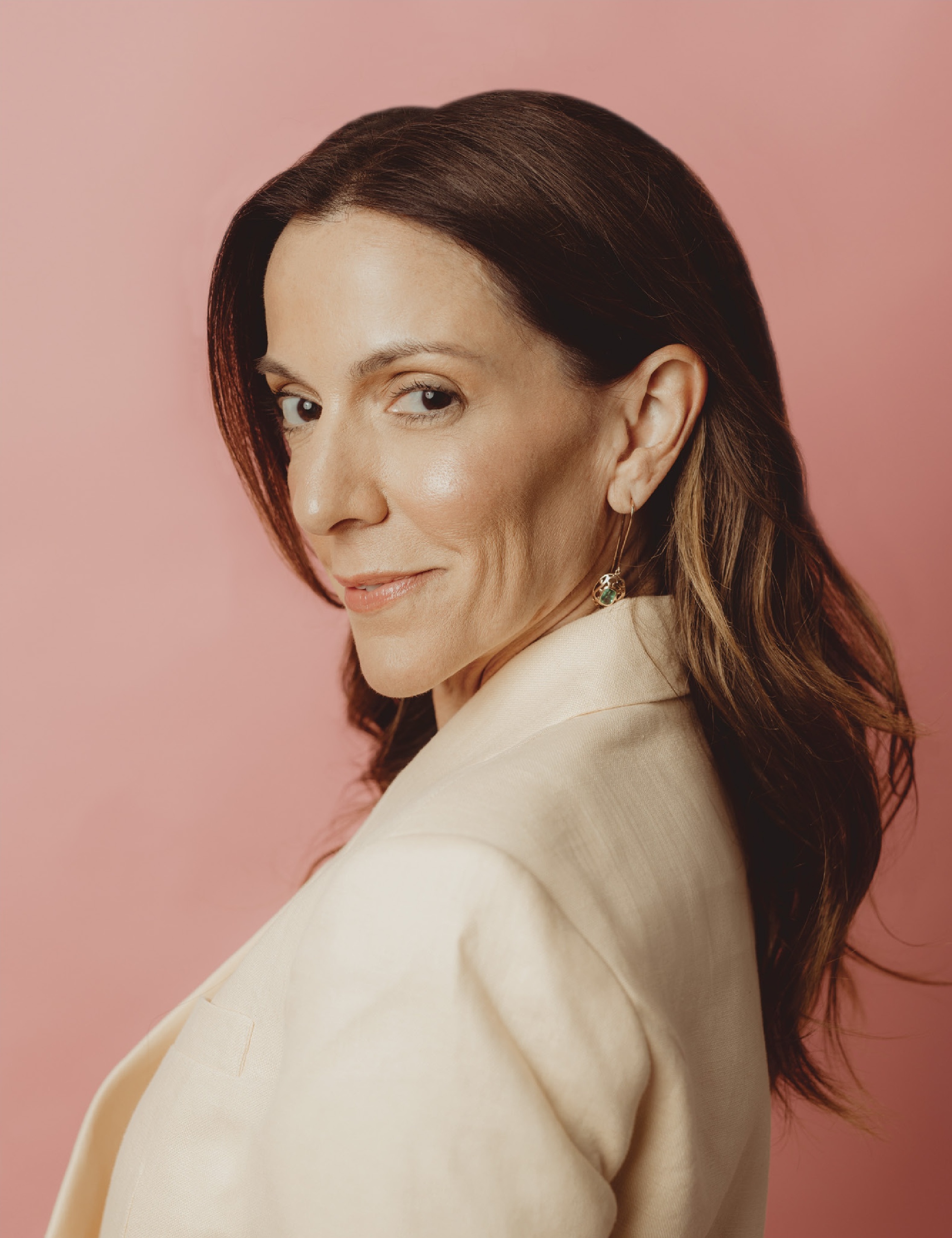
Carolina García Jayaram
MIAMI, FLORIDA
Carolina García Jayaram, who is among the 1% of philanthropic Latino leaders, is an unstoppable force in the nonprofit sector. As founding CEO of the Elevate Prize Foundation, her core belief in the power of activism to create positive movements in our society propelled her to pursue an altruistic career. With over two decades of experience operating nonprofit organizations under her belt, she focuses on helping community members and leaders with mentorship, strategic planning, fundraising and more. In addition, she is the founding ambassador of the Georgetown University’s Institute for Women, Peace and Security, a member of Fast Company’s Social Impact Council, an emeritus board member of Guitars Over Guns and the newly appointed cochair of the University of Miami School of Law’s LL.M. Program in Entertainment, Arts and Sports Law.

Carolina García Jayaram at the Clinton Global Initiative Conference last year, where Michael J. Fox was awarded the Elevate Prize Catalyst Award.
I ALWAYS START MY DAY WITH…
meditation, journaling and coffee, in that order, followed by taking my boys to school with my husband—the highlight of my day.
ONE THING I DO EVERY DAY IS…
pranayama breathing.
MY MANTRA IS…
“May I be filled with loving kindness. May I be well. May I be peaceful and at ease. May I be happy.” I then repeat it directed to others I love to cultivate what Buddha called “universal friendliness toward oneself and others.”
MY BIGGEST SOURCE OF INSPIRATION…
is reading.
WHEN IT COMES TO NONPROFITS, I WISH MORE PEOPLE KNEW THAT…
the greatest innovation and problem-solving is happening in the nonprofit space. At Elevate, we see this firsthand on a daily basis across our Elevate Prize winners, who are all at the cutting edge of using innovation to quite literally save the world. From piloting AI to solve diseases to designing technologies to stop plastic from going into the ocean and so much more, creativity and innovation play a larger role in social impact than people think.
ONE PIECE OF ADVICE I’D GIVE MY YOUNGER SELF IS…
to learn to love yourself first.
I HANDLE NEGATIVITY BY…
tapping into compassion.
ONE WAY I STAY STRONG IS BY…
practicing yoga.
WHEN I NEED A JOLT OF ENERGY…
I do a handstand!
I’M CURRENTLY LOOKING FORWARD TO…
spending a month in our summer spot, Biarritz, on the southern coast of France.
THE MOST SURPRISING THING ABOUT ME IS…
I went to cooking school.
I WANT PEOPLE TO KNOW ME FOR…
living a life of purpose.
IN 10 YEARS, I HOPE TO…
have built the first global fan base for good.
COURTESY OF CAROLINA GARCIA JAYARAM; COURTESY OF ELEVATE PRIZE FOUNDATION
GROUP CHAT | CALENDAR
Who, What, Where
DON’T MISS THESE IN-PERSON AND VIRTUAL INDUSTRY EVENTS HAPPENING SOON.

CONVERSATIONAL AI & CUSTOMER EXPERIENCE SUMMIT
NOV. 6-7
Munich, Germany
SAAS NORTH
NOV. 13-14
Ottawa, Canada
WORLD BUSINESS FORUM
NOV. 13-14
Sydney, Australia
MICROSOFT IGNITE
NOV. 19-21
Online
SMALL BUSINESS EXPO
NOV. 20
Dallas/Fort Worth, TX
WOMEN OF SILICON ROUNDABOUT
NOV. 27-28
London, England
AWS RE:INVENT
DEC. 2-6
Las Vegas, NV
CXO 2.0
DEC. 3-5
Dubai, UAE
SOFIA ROCHA/COURTESY OF WEB SUMMIT

GROUP CHAT | MENTOR MESSAGE
5 Reasons Some Women Entrepreneurs Aren’t Coach-Ready
THINKING ABOUT HIRING A COACH OR JOINING A COACHING PROGRAM? HERE’S HOW TO KNOW YOU’RE READY.
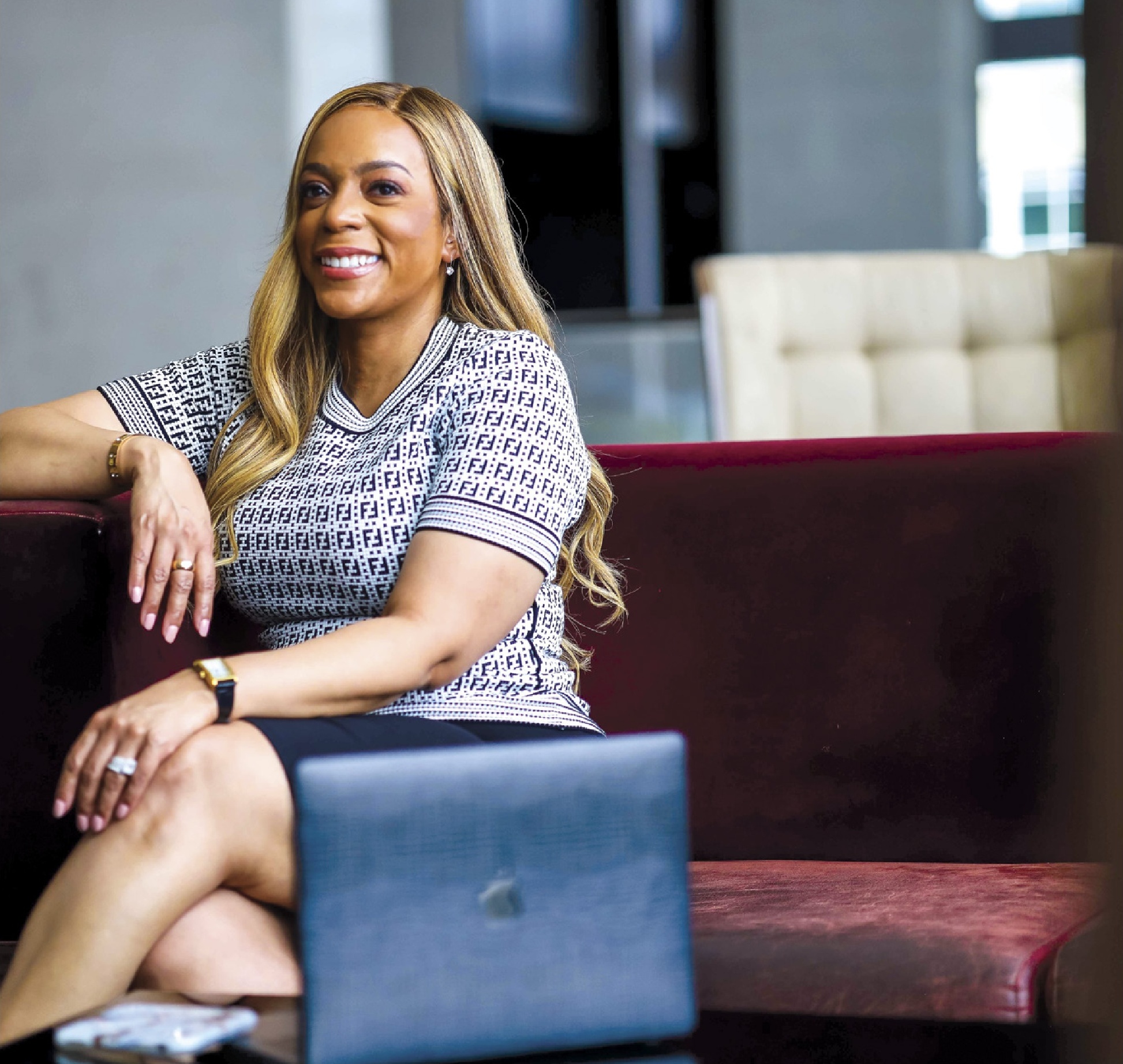
“IT DOESN’T MATTER HOW AMBITIOUS YOU ARE; YOU MUST BE WILLING AND READY TO RECEIVE KNOWLEDGE AND GUIDANCE FROM A COACH WHILE HAVING THE CAPACITY TO PUT IT INTO REAL ACTION.”
Y es, it’s true: Some women entrepreneurs are not ready to be coached. Ask any vetted and verified coach; they’d echo the same belief. The truth is that most women business owners are coachable—but not all are coach-ready. There is a difference between the two. For example, some entrepreneurs may lack the time or resources to commit to a coaching program. Others may lack the motivation to make the necessary changes. Further still, some business owners may be afraid of being judged or are not open to taking advice, making it difficult for a coach to help them reach their desired outcomes.
It doesn’t matter how ambitious you are; you must be willing and ready to receive knowledge and guidance from a coach while having the capacity to put it into real action. Most coaching programs require time and financial resources, so it’s imperative to know when you’re ready so you can take full advantage.
Here are five ways to test your readiness.
1. YOU CAN’T MAKE THE TIME INVESTMENT.
Sometimes, we have the monetary resources, but we cannot leverage time to our advantage. Some would say this is why you need a coach. And I agree, to a point. Coaching isn’t the solution when adding another item to your already overflowing plate might be detrimental. You need time and space in your life to receive the full advantages of the coaching experience. Coachees need to be able to receive the guidance and take action.
2. YOU CAN’T MAKE A MONETARY INVESTMENT.
When you are bootstrapping your business, investing revenue back into your company is key for sustainability and growth. If you find yourself having to make the hard choice of hiring a new assistant, investing in business infrastructure or hiring a coach, investing in your business should always be the priority. Why? Because there are enough available free options—like finding a free mentor—until you have the funds to invest in a coach. Places like SCORE and Sky’s the Limit, a 501(c)(3) nonprofit organization that supports young entrepreneurs from underrepresented communities, are excellent alternate options.
While you’re working with your mentor to build your cash flow, you now have the fantastic opportunity to research coaches who might be the right fit when you’re ready to make the investment. Better yet, you can use a coach-matching service to ensure you’re finding a vetted and verified coach.
“A COACH CAN HELP YOU UNCOVER BLIND SPOTS, LIMITING BELIEFS AND AREAS OF IMPROVEMENT THAT YOU MAY NOT HAVE BEEN AWARE OF BEFORE, PROVIDING SUPPORT, GUIDANCE AND ACCOUNTABILITY TO HELP YOU STAY ON TRACK WITH YOUR GOALS.”
3. YOU’RE NOT OPEN TO TAKING—AND ACTING—ON OUTSIDE ADVICE.
I’ve belonged to this camp before—team mistrust. Maybe you can relate because you’ve previously worked with a coach and had a bad experience or you never made a good connection with a coach. My two main issues were a lack of trust and true connection. I found the coach via a referral, and we were not an ideal match. I didn’t trust their advice because I believed they needed to know me better. So, rather than follow their recommendations, I did a hybrid of theirs and my own. When my results were significantly slower than anticipated, I had to reevaluate my approach and understand why I resisted their advice. This is natural; it can take time to develop trust and truly connect with your coach.
4. YOU’RE AFRAID OF BEING JUDGED OR CRITICIZED BY THE COACH.
This is a common concern among business owners. It is important to remember that a coach is there to help you reach your goals and objectives—not to judge or criticize you. In most cases, working with a coach can be liberating, helping you finally find a safe and supportive environment where you can be vulnerable about your business fears and the massive goals you want to accomplish. A good coach will provide constructive feedback and guidance in a supportive and nonjudgmental manner. They will also be open to hearing your ideas and suggestions and helping you develop strategies for achieving success.
5. YOU DON’T RECOGNIZE THE VALUE OF BEING PERSONALLY COACHED.
“Well, coaching may be good for some, but it’s not for me.” I’ve heard many women entrepreneurs who think coaching isn’t for them say this after witnessing its positive transformations on friends and family members. Some believe coaching is overrated or that they can DIY it and get better results. And, of course, that’s OK. Ultimately, having a coach is a deeply personal decision; everyone has different needs and preferences. If you feel like something other than a coach is right for you, there are many other ways to work on personal growth and development, such as reading books, attending seminars or taking classes.
Critical components to having a successful coaching experience involve self-awareness, commitment and a genuine desire to improve and work toward goals. Understanding if you are ready to be coached before embarking on the journey is essential. A coach can help you uncover blind spots, limiting beliefs and areas of improvement that you may not have been aware of before, providing support, guidance and accountability to help you stay on track with your goals. But all of that is only possible if you are fully coach-ready. When you finally are, it’s vital to find one who understands your needs and has the expertise to help you reach your desired outcomes. That ensures you will have a great experience.
©BRI CROW/BRI CROW CREATIVE
GROUP CHAT | TECH TIME

Is the Future Traffic-Free?
TRAFFIC TECH COMPANY LYT IS CLEARING ROADS FOR EMERGENCY VEHICLES. COULD THE FUTURE BE GRIDLOCK-FREE FOR ORDINARY DRIVERS, TOO?
I t has happened to virtually everyone at least once: You hear the sirens before you see the flashing lights. You know you need to stay out of the way, but you’re approaching an intersection, and the light’s about to change—which means you have nowhere to go. There’s certainly no room for an ambulance or fire truck to squeeze through. They can run red lights, but you can’t. It’s a nightmare scenario for emergency responders rushing to an urgent call. And it wastes precious minutes that can be the difference between life and death for someone going into cardiac arrest.
But what if artificial intelligence could change traffic lights so ambulances never get stuck?
Good news: It’s already happening. LYT (pronounced “light”), a California-based traffic tech company, has been revolutionizing the way first responders travel to emergency scenes. Founder and CEO Tim Menard likens the technology to air traffic control but for ground transportation. Alongside 911 dispatch centers, there’s a traffic room where people try to keep the city moving in real time to respond to emergencies. “Imagine that stuff was just linked up directly, so that 911 call comes in, you know where it’s at, and all of a sudden the traffic lights can just change automatically,” Menard says. “That’s the magic over here—being able to take all these lessons learned from two to three decades… and now put them into one window with automation behind it, so that you can just clear routes.”
“WE CAN CONTINUE TO USE THE CITY LAYOUTS AND THE ENVIRONMENTS THAT WE HAVE BUT USE THEM TO THEIR BEST POSSIBLE CAPACITY.”
HOW IT WORKS
Whenever emergency vehicles are dispatched, the system automatically changes traffic lights so that emergency vehicles almost always get the green light, making it easier for other cars to move out of the way so ambulances, fire trucks and police cars can keep moving. The system both proactively changes lights based on anticipated arrival times of emergency vehicles and responds to the vehicle’s active location so it doesn’t get stuck with a string of red lights if there’s an unexpected delay.
Each locality can set its own rules for the system—say, for example, that ambulances get priority over police cars, and that there’s a hierarchy for different classes of emergency. Responding to a cardiac arrest would likely take priority over a vehicle that has picked up a patient whose life is not in immediate danger and is en route to the hospital. So far, LYT’s services have been enlisted by cities including Seattle; Boston; Toronto; Portland, Oregon; Tempe, Arizona; and several others across the U.S. In Sacramento, California, Menard said response times improved by about 70% after partnering with LYT. By the end of this year, he said they’ll be working with nearly every major metropolitan area on the West Coast and getting started is pretty “plug and play for a city that has been investing itself.” While getting on board requires some staff training, compatible systems can be brought online the same day the municipality signs up for the service.
AI INVESTMENTS COULD SAVE TAXPAYER MONEY IN THE LONG RUN
LYT’s most obvious use case is for emergency vehicles, but the technology also works to help buses run more efficiently. And while that’s great for people riding the bus who don’t want to get stuck in traffic on their way to work, it’s also great for the rest of the city’s taxpayers—they can save untold thousands of dollars each year in fuel costs and staff overtime when everything runs as intended. Menard declined to share information about how much LYT services cost for a city to implement but shared that LYT partners across North America reduced their fuel costs by 14% in 2023.
As with emergency vehicles, the system is responsive. So, if a bus is delayed for some reason, such as to pick up a passenger who needs some extra assistance, the lights will be instructed not to wait for the bus and to allow traffic to move normally until the bus gets back on track.
THE REAL-LIFE TROLLEY PROBLEM
The classic trolley problem often comes up in conversations about how AI could impact our future. The basic gist is this: You’re driving a trolley, and you see a group of five or six people on the tracks up ahead. You won’t be able to stop in time, but you can divert the trolley to a track where there’s just one person who’s in the way. Do nothing, and six people die. Pivot, and one person dies. Ethicists have debated the hypothetical scenario inside and out for years on end, but now we’re in a position where we have to tell AI what to do in such a scenario.
If you ask Menard, though, AI is likely to be a better—or at least fairer—arbiter of life-and-death decision-making than flawed humans might be.
“There’s physical bias that can build up in these systems, and that’s always something that’s curated and trimmed in a system like this,” he says. In other words: The system is unbiased. It doesn’t prioritize an ambulance responding to an event in a wealthy neighborhood over one responding to an event in a low-income area. Where humans might act with unconscious bias, AI can treat everyone equally.
“It’s all system-dependent on rule and logic,” Menard says.
A TRAFFIC-FREE UTOPIA
The long-term vision, Menard says, is to create a society where AI essentially acts as air traffic control for ground transportation. In a future where vehicles are autonomous, people will walk out their front door and get picked up and taken where they want to go—with no gridlock, thanks to a smart, responsive traffic management system that’s completely automatic.
“This is actually a part of everyone’s, I would say, shared vision,” Menard says—a utopian vision, with autonomous vehicles. “Where you don’t own [a car]. It’s just like Uber or you subscribe to it, and even more so it’s totally integrated with your life. It knows your calendar and your schedule, and cars just show up and go.”
For now, LYT is the public sector’s answer to how to use big data in the environments we already have, Menard says.
“We can continue to use the city layouts and the environments that we have,” he says, “but use them to their best possible capacity.”
GAVIN PAK HEI SO/SHUTTERSTOCK.COM
GROUP CHAT | ROUNDUP
Getting Unstuck
Executive coach and consultant Erica Anderson Rooney dispels the limiting beliefs that hold us back.

“U ndeniable.” That’s the message Erica Anderson Rooney has been known to carry on her wrist lately in the form of a plastic, handmade friendship bracelet inspired by her daughter and the bracelet-making trend Taylor Swift fans have ignited.
Both the bracelet and one-word mantra are emblematic of Rooney, who is simultaneously driven and down-to-earth in her roles as a human resources executive, keynote speaker, podcaster, career advancement coach, consultant and mother of two.
Her new book, Glass Ceilings and Sticky Floors: Shattering Limiting Beliefs and Toxic Behaviors to Uncover Infinite Possibilities, takes a closer look at why high-performing leaders, particularly women, seem to experience negative professional outcomes, ranging from general dissatisfaction or feeling stuck to burnout and defeat. What she discovered in her own journey from student to personal fitness trainer to rising corporate HR leader was that, yes, there were, indeed, glass ceilings that loomed large in her male-dominated work environments, but there was something else, too. Something unreckoned inside her that seemed to be holding her back.
When she stopped to take a closer look, during a particularly challenging period within the COVID-19 pandemic, she recognized a number of limiting beliefs and toxic behaviors had emerged. As she looked around at the few female executives she knew, many were experiencing the same phenomena—from imposter syndrome to perfectionism—and it was impacting their ability to thrive in the workplace and at home.
Rooney decided to dive headlong into the issue. Both her podcast and her new book are devoted to helping leaders see and shatter their own limiting beliefs so they can bust through glass ceilings.

“GIVE YOURSELF THE GRACE TO RECOGNIZE THAT YOUR FIRST THOUGHT MIGHT NOT ALWAYS BE A HELPFUL ONE, AND THAT IS OK. BUT WE CAN WORK AND SHIFT AND PIVOT. AND THE MORE FREQUENTLY YOU DO THAT, YOU WILL START TO NOTICE THAT YOUR FIRST THOUGHT IS LESS NEGATIVE, LESS HARMFUL AND MORE EMPOWERING.”
FROM THE GROUND UP
“Our whole lives, we have been told about this glass ceiling, right?… We spent so much time looking upwards at something that was so far away, when really, if we just looked within, and we looked down for a moment, and took stock of our own lives and our own emotions and our own actions…, we could start to make that climb a lot faster,” Rooney explains.
By her definition, the “sticky floors” in her book and podcast title are the flawed thoughts and damaging behaviors that most of us experience to some degree. Left unexamined, she argues, they hold us back professionally and personally.
Glass Ceilings and Sticky Floors devotes a chapter each to imposter syndrome, perfectionism, addiction, toxic relationships, fear of failure, overvaluing others’ opinions, burnout, lack of confidence and “human giver syndrome,” a term that refers to doing so much for others that you have no energy left for yourself. Included in each chapter are exercises and tips the reader can use to help identify and overcome the limiting belief.
A METHOD TO ‘SNAP’ OUT OF IT
Rooney arms her readers and podcast listeners with a step-by-step, science-backed process she developed for dispelling self-restricting mentalities and behaviors.
Named SNAP, it stands for the framework’s four steps: stop, name it, ask and answer, and pivot. Informed by research she’s studied on brain plasticity, the approach demonstrates how to pause and listen to the signals your body is giving you (increased heart rate, sweaty palms and rapid breathing, for example) to help pinpoint your feelings. From there, a series of questions helps you dig into why you’re feeling or reacting this way so you can then determine how to shift your circumstances or—more often—your mindset. “Give yourself the grace to recognize that your first thought might not always be a helpful one, and that is OK,” Rooney says. “But we can work and shift and pivot. And the more frequently you do that, you will start to notice that your first thought is less negative, less harmful and more empowering.”
It’s a perpetual process that she compares to one of her passions: fitness. Rooney points out that “there is no final destination” when it comes to exercise and health. She adds, “People always ask me…, ‘Are we ever free from our ‘sticky floors’? And the answer is, ‘We’re never free from them. We just get more adept at dealing with them and recognizing them and moving through them.’”
SETTING OUT TO BECOME IRRELEVANT
Rooney is realistic about the forces that women, racial minorities, LGBTQ+ individuals and historically disadvantaged people face. Addressing one’s own limiting mindset, she acknowledges, “is not going to close the pay gap…, but it is going to help us make massive progress,” she says. “When you do the internal work, you are building the tools that you need to push through a lot of those systemic issues.
“Radical change,” she says, “has to start individually and from within.”
She hopes that, when people find themselves stuck, they realize they often have the resources within to free themselves and go on to smash ceilings—and that it is our duty to do what we can to right the inequalities of the world.
“My whole goal for this book is that it becomes obsolete in 10 years. If my daughter, who’s 6 now, picks it up and is like, ‘What is this archaic piece of crap?,’ I have done my job,” she laughs.
©KATE POPE PHOTOGRAPHY/COURTESY OF ERICA ROONEY
GROUP CHAT | FROM THE ARCHIVES
Gifts for Achievers
DECEMBER 1982
A BEHAVIORAL SCIENTIST SHARES TIPS ON CHOOSING THOUGHTFUL GIFTS FOR SUCCESSFUL INDIVIDUALS.
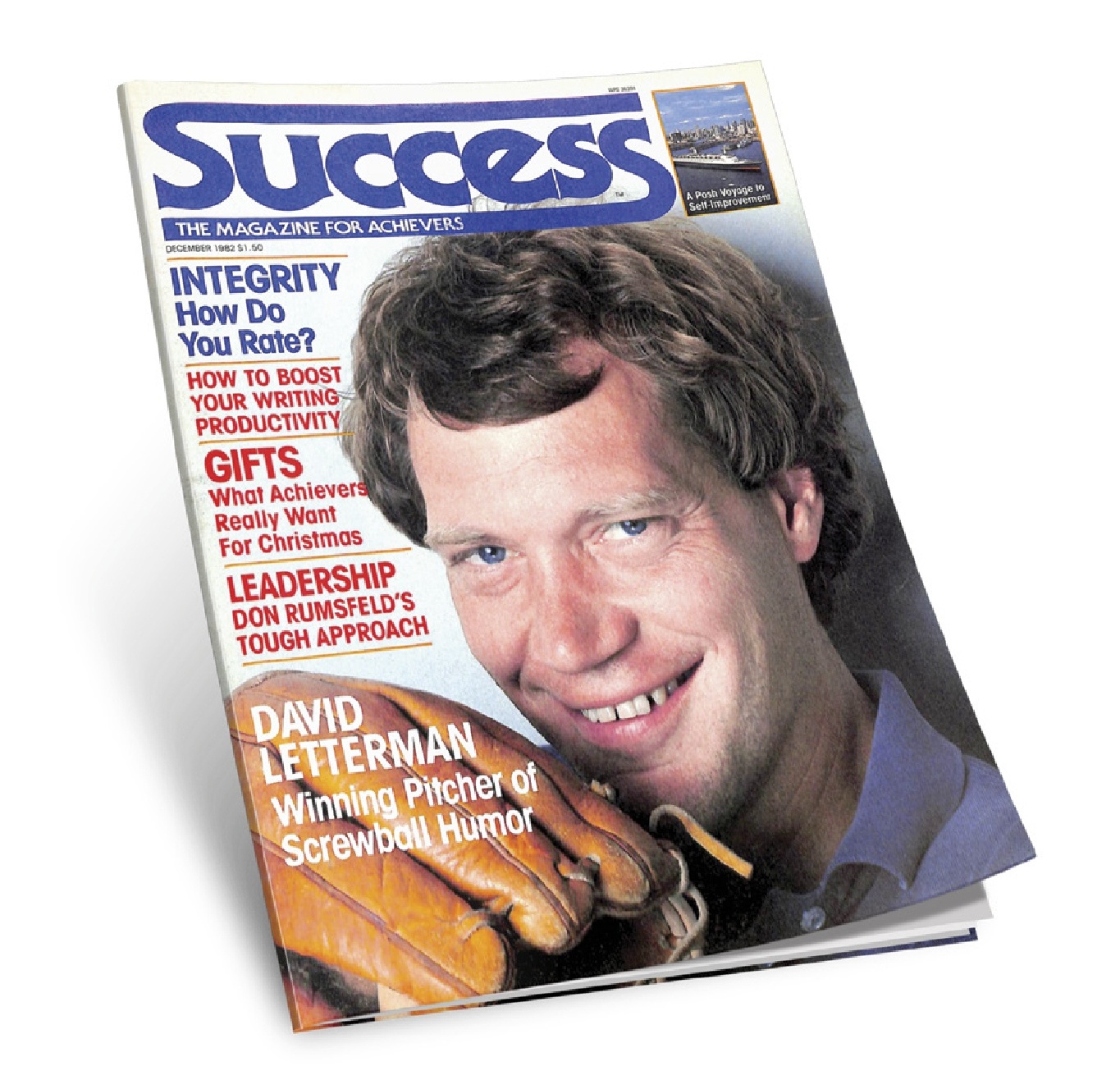
S ome Christmas shoppers think that all they need to do when selecting a gift is to plug in the right recipe. In other words, they simply pick a tie for a man and a pretty box of chocolates for a woman. That’s an easy approach, but wrong. Recipes work with spaghetti, not with gifts—especially gifts for achievers.
Professor Mihaly Csikszentmihalyi, a behavioral scientist at the University of Chicago, and an expert on “the meaning of things,” has some ideas for arriving at interesting and unusual gifts. To begin with, he says, you must consider whether the person works in a competitive or noncompetitive environment. If he is in a competitive situation, where achievement means that he must constantly figure out all the angles, you are not going to choose a gift for him on impulse. You will be analytical and aim to find something impressive. It would be a waste of time to try and determine what this person can use. Instead, flatter him with an object that makes him feel he has good taste and knows what is fashionable.
This approach simplifies the problem of buying a gift for someone whose interests you don’t know much about, says Csikszentmihalyi. And it doesn’t mean that you have to spend a lot of money. However, it does mean selecting for status and quality. Choose the very best item you can afford within a given category.
“If you are choosing a tie,” Csikszentmihalyi says, “then buy the silkiest one.” If you are giving a pen, choose one that registers an image of quality because it is advertised in the better magazines.
On the other hand, for the achiever who operates in a noncompetitive environment, it is important to find an appropriate gift. It need not be expensive, but it can be unique, such as a handcrafted belt buckle. A noncompetitive achiever is apt to be flattered by something made or selected especially for him, and such a gift can relate to the person’s past, present or future.
“BEING AWARE OF HOW AN INDIVIDUAL ORDERS HIS SURROUNDINGS AND WHAT MAKES HIM FEEL GOOD ABOUT HIMSELF IS THE KEY TO CHOOSING A REALLY MEANINGFUL GIFT.”
For the person whose career is well-established, and whose environment is a competitive one, you can hardly go wrong with fine wine or wine accessories. If money isn’t a major consideration, you can also impress this person with one of the compact, 35mm cameras that are becoming so popular—or, for a knockout present, a video camera and recorder. The established person in a noncompetitive environment will enjoy well-chosen theater tickets, records or tapes of music that suit his taste.
Looking to the future means keying your gift selection to some new interest the person would like to have. And, as Csikszentmihalyi says, “Usually, people who are successful are always on the brink of doing something new. They like to explore and try things that are challenging.”
This opens the door to gifts of sports equipment and accessories or to travel items, ranging from a spectacular photography book about an exciting destination to such things as a weekend at a snazzy hotel, good luggage and even cruise or airplane tickets. Other possibilities include music lessons, flying lessons and subscriptions to magazines that deal with an area of special interest.
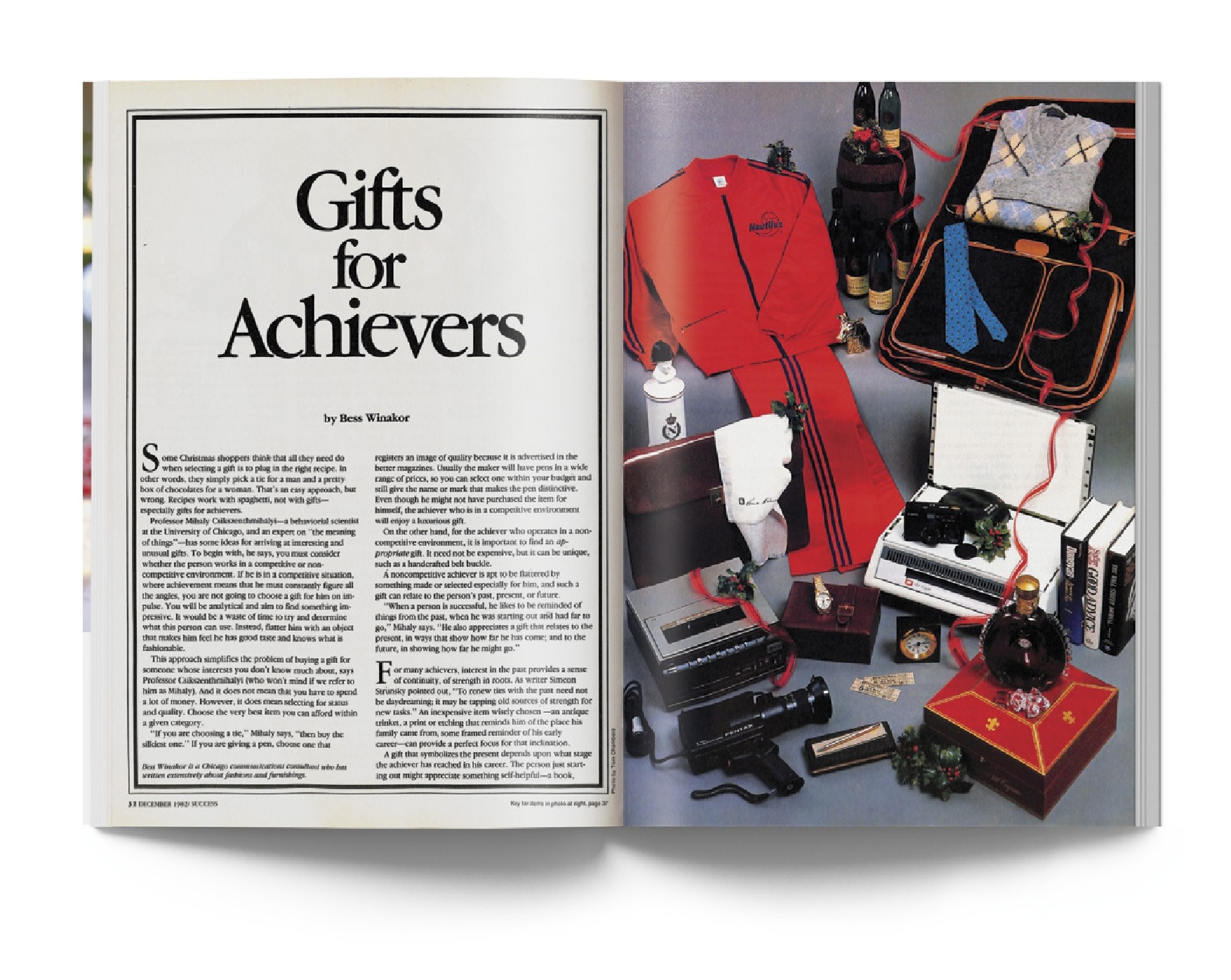
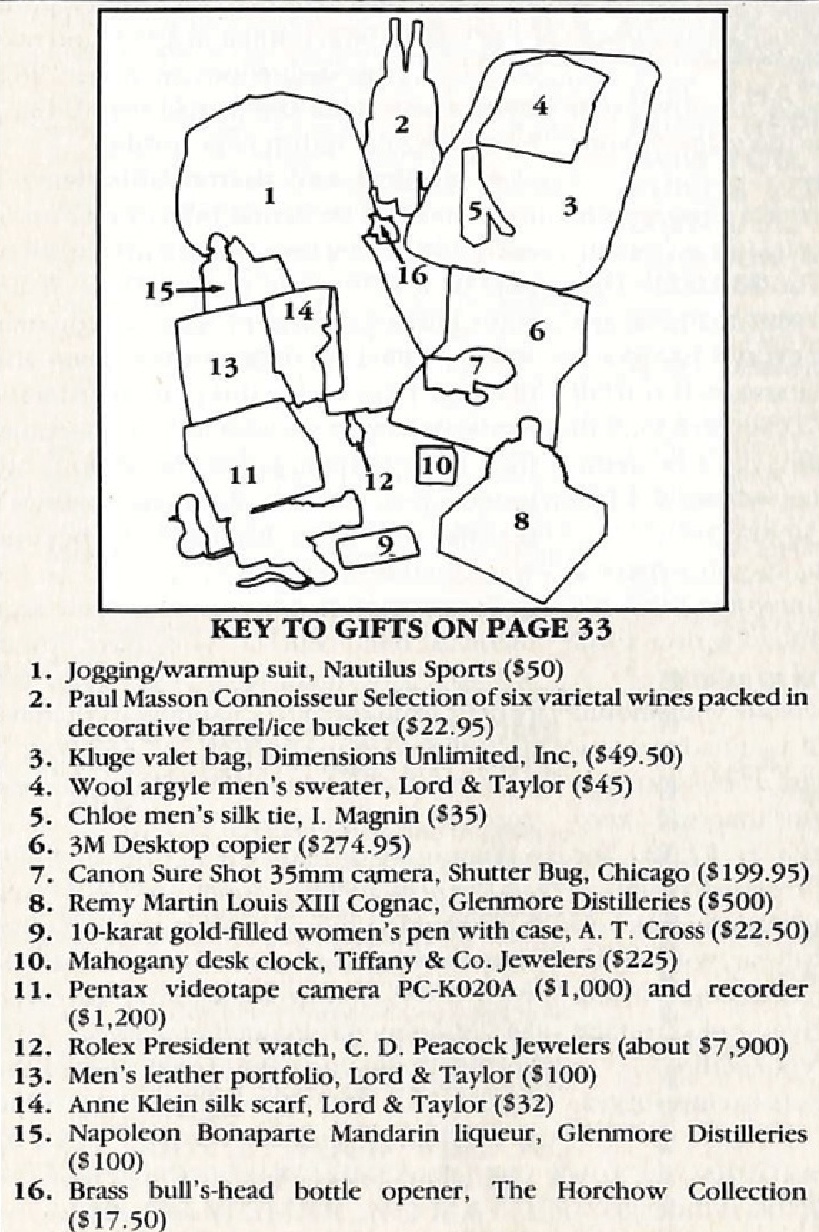
The important thing to remember when choosing a gift of this kind, Csikszentmihalyi says, “is that it ought to require a greater level of skill than most people usually have. If it’s a book, it should be a challenging one, whether it’s about collecting butterflies or exploring the Amazon.”
Ideas for personal gifts for family and close friends can also be sparked by Csikszentmihalyi’s concepts. Here, too, you can consider the competitive/noncompetitive factor as well as the aspect of appealing to the person’s past, present and future interests.
Your gift’s success will depend on the meaning or interpretation given to it by the recipient. This makes it necessary to choose the gift according to that person’s taste rather than your own. Therefore, the only way to be confident in your shopping is to pay attention to the other person and have a genuine concern for his or her point of view. Being aware of how an individual orders his surroundings and what makes him feel good about himself is the key to choosing a really meaningful gift.
The bottom line for all gifts—business and personal—is that they must be the best items you can select within a given category and price range. They should, of course, be timely and tasteful, but when these characteristics are elusive, rely on quality to compensate.
THIS EXCERPT HAS BEEN EDITED FOR LENGTH AND CLARITY.
GROUP CHAT | MARKETING MEMO
Connection Through Authenticity
MILLENNIAL ENTREPRENEUR KATE KENNEDY’S PATH TO SUCCESS WAS BUILT BY LISTENING TO—AND CONNECTING WITH—HER COMMUNITY.
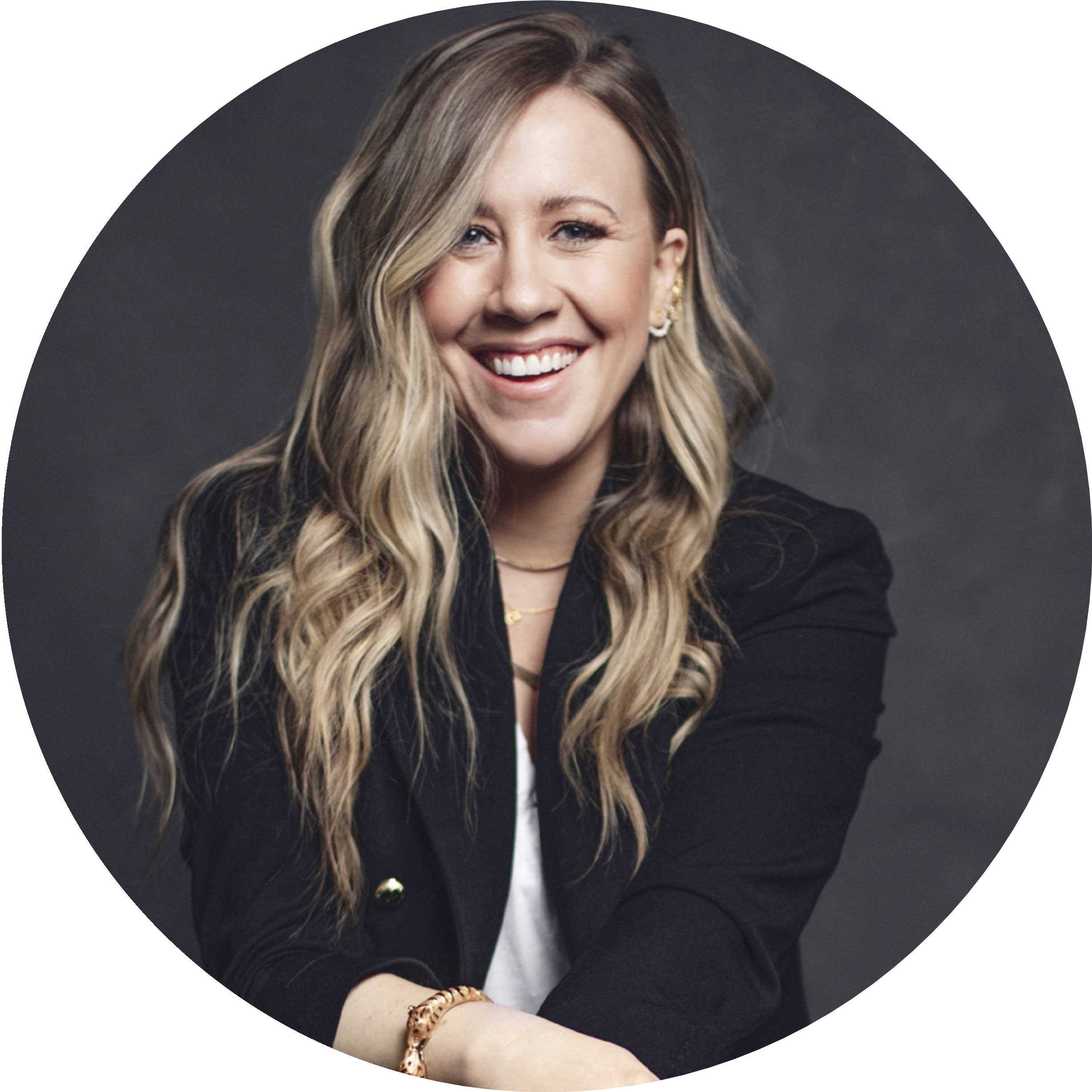
C hicago-based entrepreneur, author and podcast host Kate Kennedy did not set out to become an internet sensation, but when an Australian radio station shared her “turn off your straightener” doormat on their social media a decade ago, the post went viral. “I was in a very Pinterest-forward era where I wanted cute home decor,” Kennedy reflects. “I didn’t want a paper sign on my door, so I built it into another household item…. Doormats welcome you in your home, and I wanted to make one to see you on your way out.”
Viral opportunity knocked and Kennedy’s marketing expertise answered, reverse engineering the business of product development to fill the demand. She called her new business Be There in Five because she figured that the people who wanted a reminder to turn off their curling iron were the same people texting their friends “be there in five” when they hadn’t even left their house.
Kennedy realized she wanted to pivot the creative direction of Be There in Five to connect deeper with her audience and take charge of her new solopreneur career. “I pivoted into a podcast once I realized the reality of entrepreneurship and the difficulty of having a product-run business, which not everybody was talking about in the ‘girl-boss-hustle-grind-start-a-business-monetize-your-hobby’ era,” Kennedy says.

“I’M REALLY PROUD OF CARVING OUT A SPACE FOR THESE ASPECTS OF GIRLHOOD, OR OF WOMANHOOD, WHERE WE FEEL MISUNDERSTOOD, MISREPRESENTED OR UNDERREPRESENTED AND BREATHING LIFE INTO THEM ON THE PODCAST.”
A POP CULTURE PODCAST BUILT ON CONNECTION
Her market research background informed the launch of her podcast Be There in Five after noticing a gap in the podcasting landscape for solo female hosts who engage in long-form, broad discussions without a defined niche. Drawing inspiration from her love of popular culture and nostalgia, Be There in Five celebrates the multifaceted interests of millennial women, rejecting societal pressures to speak less and niche down. In her weekly podcast, Kennedy speaks to her audience like a friend having an intimate, lighthearted conversation about any and everything, talking in-depth on subjects often dismissed.
“I’m really proud of carving out a space for these aspects of girlhood, or of womanhood, where we feel misunderstood, misrepresented or underrepresented and breathing life into them on the podcast,” she shares.
These days, Kennedy is a well-known name in the millennial zeitgeist, and the community around Be There in Five has become a global empire of best friends.
FOSTERING AN ONLINE COMMUNITY
After receiving countless direct messages from listeners addressing her as “Beth” and expressing their appreciation for her work, Kennedy embraced the mix-up, which ultimately led to the formation of an official online community. “The Beths are the best!” Kennedy says. “It’s an affectionate term for my audience because my handle used to be @bethereinfive, which looks like the name Beth Erin Five.” Kennedy expanded her creative process into a collaboration with her audience, reflecting their diverse experiences in her content.
During the pandemic lockdown, she got to know her community by hosting “PowerPoint Nights” through Patreon, where listeners shared 15-minute presentations on topics they were passionate about, essentially hosting their own mini podcasts for the community.
TRANSFORMING PODCAST TOPICS INTO A BESTSELLING BOOK
Kennedy says that her book, One in a Millennial, is the culmination of everything discussed in The Beths online community over the past six years. It’s a playful, reflective memoir that creatively tells universal experiences through personal stories. The tone is nostalgia tempered with whip-smart reverence for the small details of coming of age in the era of AOL Instant Messenger, Saved By The Bell, American Girl dolls, summer camp and more. Kennedy’s poetic prose elevates small details of life to important cultural milestones that make up a shared experience, the collected folklore of the overlooked zeitgeist of millennial youth.
What was once laughed off as girlish and therefore unimportant is transformed into immersive cultural reflections explaining the politics of ’90s sleepover culture and the details of suburban pagan seances performed in someone’s attic. She details a shared language of pop culture separate from celebrity or entertainment news. “I think that I’ve achieved success by finding the ways people want to be seen and kind of uncovering them and making them public,” Kennedy says.
Kennedy, who found out the book landed on the New York Times bestseller list while she was washing baby bottles, says people often assume life looks different once you’ve achieved “certain guardrails. But, for me,I feel the exact same.
“I took a break—and went back and finished. Like, what am I supposed to do? Spray champagne on my 6-month-old?” she says. “These achievements are important, but they’re not everything,” Kennedy says.

KENNEDY’S POETIC PROSE ELEVATES SMALL DETAILS OF LIFE TO IMPORTANT CULTURAL MILESTONES THAT MAKE UP A SHARED EXPERIENCE, THE COLLECTED FOLKLORE OF THE OVERLOOKED ZEITGEIST OF MILLENNIAL YOUTH.
SOCIAL MEDIA: A SENSITIVE PERSON’S GUIDE TO SUCCESS
Over the past decade, Kennedy’s fame has continued to rise without skyrocketing into “can’t-be-in-public” celebrity, but with increased fame comes internet commentary. “Sensitive people are needed online, but they need to create systems that protect them from feeling drained by negativity,” Kennedy says. She suggests the following tips for healthy social media and audience engagement.
-
Set Boundaries: Develop boundaries for when and what you engage with to protect your energy. Turn off push notifications, avoid negative input before bed and be mindful of who you interact with.
-
Know Your Target Market: People often get talked out of their business ideas when they rely on feedback from nontarget audiences like close family and friends, whose opinions feel important but can lead to poor decisions.
-
Create Content You’re Passionate About: Finding your audience takes time, so it’s important to create content you’re proud of and consistent with, even without an audience.
-
Don’t Throw Away Your Shot: If you’re lucky enough to go viral, create an email list, start a newsletter, launch a podcast—whatever allows you to collect your audiences’ user information and stay connected is the key to success.
-
Value Your Audience: Focus on and reward your engaged customers who support your work and repeatedly come back instead of constantly seeking new audience members.
-
Foster Positive Community: Taking your audience seriously from the beginning, engaging with them directly and using platforms like Patreon to build a positive, supportive community allows you to foster deeper connections and filter out spicy comments and negative hot takes from trolls.
©AESTHETIICA/COURTESY OF KATE KENNEDY; ©WITTPICS/COURTESY OF KATE KENNEDY
GROUP CHAT | GIVING BACK
Honoring Performer and Activist Harry Belafonte’s Legacy of Social Justice
THE BELAFONTE FAMILY FOUNDATION’S PILLARS OF MULTIGENERATIONAL ACTIVISM RUN DEEP.
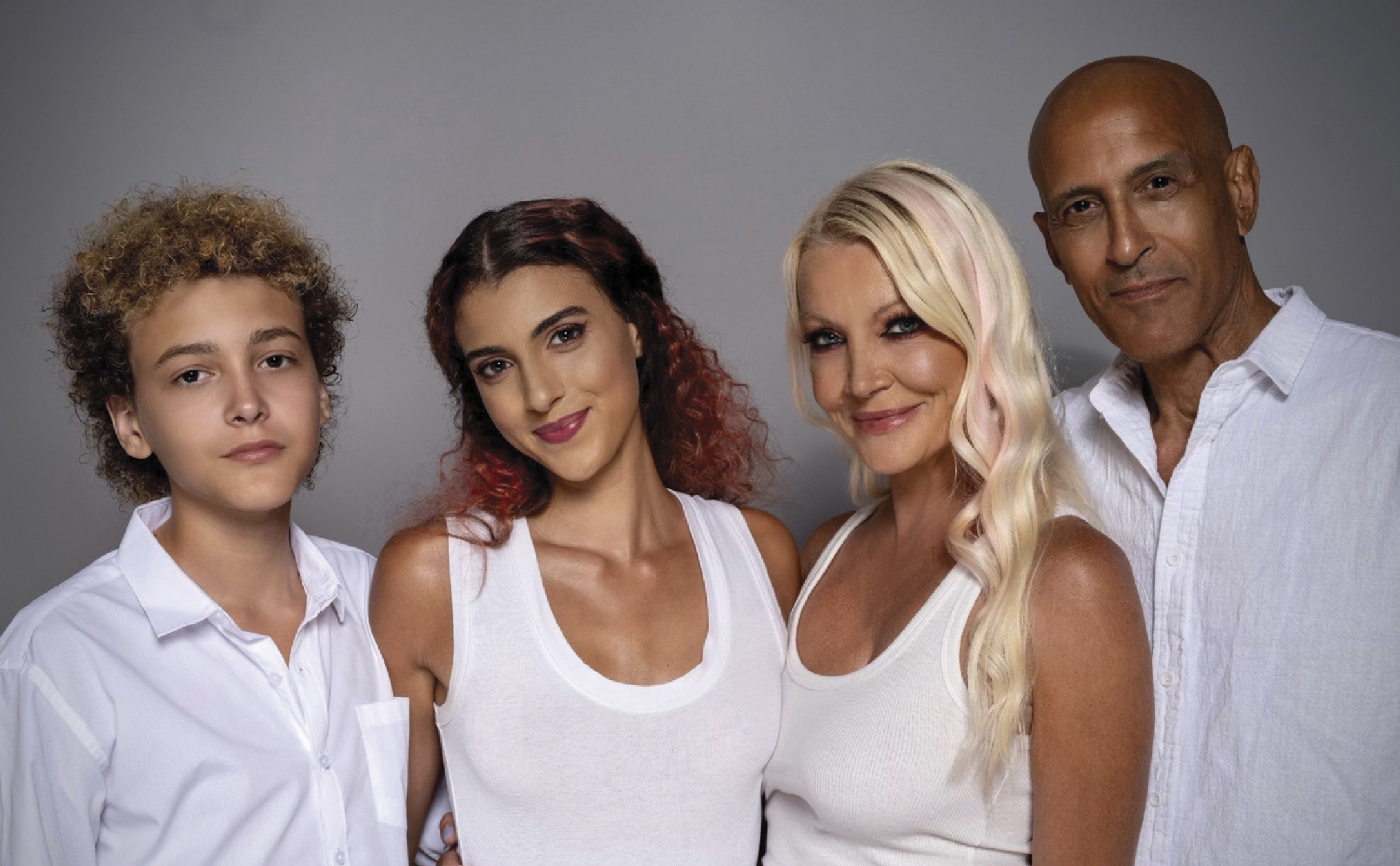
S ocial justice can be as simple as picking up dog excrement.
“In kindergarten, we had this unit that was called ‘Agents of Change,’ and we had to find something that we saw wrong in the world—but, I guess, specifically Manhattan or New York—and we wanted to try to right those wrongs,” Amadeus Belafonte says. “I always noticed that, a lot of the time, there was dog poop on the sidewalks, and no one would pick it up.”
Amadeus told his grandfather—the late singer, actor and activist Harry Belafonte—about his plan to change the world through a simple flyer campaign that urged Manhattan dog owners to pick up after their pets. Harry was thrilled. “He was always wondering what we were doing in terms of rising up, in a sense. I was in kindergarten,” says Amadeus, now 17. “This was a smaller thing, but I told him and he loved it.”
“He placed them, too,” says Malena Belafonte, Amadeus’ mother and Harry’s daughter-in-law. “He was like, ‘We got a real social justice kid here.’ He’s like, ‘I always stepped in poop, and it really bothered me. I’m really happy that you are now trying to take that on.’”
Now, the Belafonte family is using a multigenerational approach to make the world better through the efforts of The Belafonte Family Foundation (BFF), established in 2020 by Malena; Harry’s son, David; and Harry’s grandchildren, Sarafina and Amadeus.
THE ACTIVISM OF HARRY BELAFONTE
When people think of Harry Belafonte, they mostly think about his music. When my children were toddlers, I used to put on “Jump in the Line,” and we would have a dance party in the living room. As we shook our bodies to the King of Calypso’s energetic warbling, we were simply right there, enjoying the way the tune spoke to us at a cellular level and made our feet move effortlessly across the living room carpet.
Harry’s rendition of the Jamaican folk song “Day-O (The Banana Boat Song)” is the most well-known recording of the song, and its chipper melody is beloved with little effort. But when unpacked, the lyrics of the song dissect the labor of Black people in the colonized Caribbean as they load bananas onto a boat until the sun comes up.
But through his career as a singer and an actor, the Harlem-born child of Caribbean immigrants championed social justice and worked tirelessly to champion equality through the Civil Rights Movement—and until he died in 2023 at the age of 96.
“WHILE THE PROGRAMS ARE VERY FAR REACHING AND THEY JUST SPAN A LOT OF DIFFERENT TOPICS, THE RED THREAD IS ABOUT CREATING ACCESS.”
MULTIGENERATIONAL PILLARS
The Belafonte Family Foundation is a multigenerational project that seeks to create access and opportunity across multiple pillars representing causes dear to the family members.
This philanthropy spans across “pillars that are diverse but not unrelated,” according to BFF. The foundation, indeed, offers a variety of programming that addresses human trafficking, domestic violence, mental health support, education and access to healthy foods.
Although the majority of the pillars are still being developed, the organization announced three full-ride scholarships to students from Haiti at their inaugural gala in October 2023.
The scholarship requires that recipients return to Haiti and use their education to serve their community.
“They’re furthering and finishing their education in engineering, nursing, these different areas to bring their services back into the Haitian community,” David says. “It’s a condition that is attached to that…. They’re living with purpose and making it better where they are.”
Additionally, BFF is developing a scholarship to fund martial arts programming for youth.
Bright Road Martial Arts is named for the 1953 film Bright Road, Harry’s first feature film. BFF has partnered with Mid-Hudson Valley Camp and Academia de la Costa in the Dominican Republic to develop martial arts programming for youth.
“My preference would be to create healthy humans rather than repair ones [who] are already broken,” David says. “It was important for me to find ways to bring what I learned through my experiences as a man, and as a martial artist, and come up with a mentoring program that we could bring to these kids [who] couldn’t afford to have that piece of the puzzle.”
Another program named for the film will be the Bright Road Farms, a container farming initiative that will provide education on vertical farming and equipment to communities that need healthy produce.
“While the programs are very far reaching and they just span a lot of different topics, the red thread is about creating access,” Sarafina says. “What is very important about Bright Road Farms is the fact that it is creating access to these places where there are food deserts.”
BFF is also developing the following pillars: a house of healing, which will serve survivors of sex trafficking and domestic violence; an online space for youth struggling with mental health; and a service that functions like “Meals on Wheels but for legal advice” for people who cannot afford to hire attorneys.
The foundation is currently funded through strategic partnerships and has partnered with Sony Music Group and the company’s Global Social Justice Fund.
PRESERVING A LEGACY
BFF is not tied to any political campaigns or directly affiliated with any political parties.
“Harry’s politics were very specific, and he was vocal about that,” David says. “But the lanes were very separate and clear. That is something we try to apply to what we’re doing. It is about creating a quality-of-life scenario.”
But Harry’s legacy was always rooted in social justice and his family does not shy away from that.
“We come from one of the first big Black legacies, and he was always very vocal about what his politics were,” Sarafina says. “His existence was political and so is ours as an offshoot and as an interracial family in the United States.”
Learn more about opportunities to volunteer, serve on committees or partner to create programming at belafontefamilyfoundation.org.
COURTESY OF THE BELAFONTE FAMILY FOUNDATION
GROUP CHAT | ENTREPRENEUR

Solar for Social Good
THIS 30-YEAR-OLD SERIAL ENTREPRENEUR IS ON A MISSION TO MAKE SOLAR ENERGY SUSTAINABLE AND ACCESSIBLE.

W alid Halty, a serial entrepreneur in the climate tech space, has come a long way since his humble beginning. Halty’s parents emigrated to the U.S. from Morocco and were fortunate enough to secure government housing. The oldest of five children, Halty remembers his childhood home being small but filled with a lot of love. Although Halty’s parents hoped he would become a doctor, he ultimately forged a different path: one where he’d run a $41 million company by age 23.
Growing up in Greater Boston, Halty excelled at school as a child and was often at the top of his class. He remembers studying calculus as a sixth grader on top of his normal classes, and in high school, Halty took upward of a dozen Advanced Placement courses. On weekends, he attended Saturday school for Arabic.
Halty chose to drop out of college at the beginning of his sophomore year to help provide for his family. “I was selling iPhones, selling flowers on Valentine’s Day, figuring out a way to make money,” he recalls. He finally caught a break after connecting with a friend who was in sales at SolarCity—a company acquired by Tesla in 2016 for $2.6 billion. Halty, who was 18 at the time, managed to secure an internship in hopes of being hired. Less than two months later, he was. Halty soon climbed the ranks of SolarCity’s top-performing salespeople—no small feat given that there were about 10,000 sales reps at the time. He remembers making $20,000 in his first month, which, up until that point, was more than he had made in an entire year. “At first, it was about money,” he shares. “Not in a selfish way. It was like, ‘I gotta find a way to figure this out because it’s more than me.’”
Halty credits much of his early success to luck and being at the right place at the right time. “I was lucky that it was solar,” he says, adding that he’s grateful he landed in an industry that is also doing good for the world. “I could have been selling jets…. But it was figuring out a way to apply myself right and earn enough money that I felt like I could start helping my family.”
In 2017, Halty founded Colossus (formerly Dvinci Energy and later acquired in 2023), a solar marketplace that helped businesses sell more solar. In addition to making clean energy more affordable and accessible to homeowners, the company donated 10% of its profits to charity each year and contributed to educational scholarships.
Halty’s newest venture is Monalee, a climate tech company that is accelerating the adoption of home solar, storage and electrical vehicle charging. By leveraging advanced machine learning and removing salespeople and system designers from the process, Monalee makes it possible for homeowners across the U.S. to go solar at about half the price as what it traditionally costs. Considering that people pay significantly more money for solar in the U.S. compared to other countries, it’s a big step toward bridging the electricity gap.
“AS I THINK ABOUT HANDING OFF A WORLD TO MY SIBLINGS AND MY DAUGHTER, WE NEED A WORLD THAT IS HEALTHY, THAT WE CAN PROTECT THAT CAN BE SUSTAINED OVER A LONG PERIOD OF TIME.”
Monalee is taking a digital-first approach to a process that has, for the most part, been mostly done offline. Halty explains that there hasn’t been software available to streamline and expedite the process, which causes soft costs to be about 75% of the homeowner’s total cost.
In founding Monalee, Halty and his team are trying to reduce those soft costs to the point where it becomes a “no-brainer” for homeowners. “The main barrier to entry is cost and savings, and so, if we can reduce that, it becomes such an easy decision for them to make,” he says.
The company’s patent-pending artificial intelligence technology uses millions of data points to give customers the most optimal solar design for their home. It considers factors like the navigational direction of the roof—for example, in the northern hemisphere, roofs facing south will get the most amount of sun—as well as the roof type and pitch (angle to which it slopes).
While Monalee is growing fast, that’s not to say there aren’t challenges. One thing they’re having to work against is the negative perceptions many homeowners have about solar sales. For context, solar salespeople can be pushy and play with bait-and-switch pricing.
Having been a solar salesperson himself, he gets it. “If someone is being pushy, you don’t want to talk to them…. That’s been the connotation that’s been associated with [solar sales],” he explains. “At Monalee, we’re not pushing anything—actually, we’re pulling consumers towards this now and positioning ourselves in the product and technical building, where it’s very digital e-commerce and very modern versus what’s traditional,” he explains.
In many ways, Monalee—and the solar industry as a whole—is just getting started. “Solar is an industry that’s still young,” Halty explains. “We’re at 3% market adoption in the U.S., but the industry has been growing 24% compounded annual growth rate right now. And we’ve just sort of crossed the chasm, where at 3-5% is when products start to achieve mass adoption.”
When looking back at his entrepreneurial journey, Halty feels lucky that the industry he happened to fall into is one the world needs. “As I think about handing off a world to my siblings and my daughter, we need a world that is healthy, that we can protect that can be sustained over a long period of time,” he says.
It’s also been incredibly rewarding being able to give back to his family. A personal milestone for Halty was being able to buy a house for his parents. They swapped their 700-square-foot government housing for a 4,000-square-foot home. “My mom’s on salary from my income and so is most of the rest of my family,” Halty shares. His next goal is to help his father retire. “I have an opportunity to change the trajectory of my family,” he says.
COURTESY OF MONALEE
Action Plan
1 ATTRACT CUSTOMERS
Get and retain your first customers as a startup.

2 INVEST IN YOURSELF
Learn how to be money-savvy to empower your future.

3 FEEL INSPIRED
These are some of the world’s most compelling, influential and effective powerhouses for change.

4 FOSTER GENUINE CONNECTIONS
Propel your business by listening to your community.
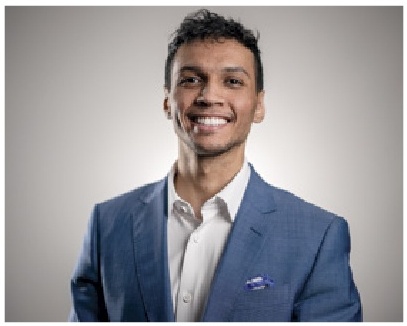
5 NAVIGATE NONLINEAR PATHWAYS
One man’s decision to leave college catapulted him on a new trajectory.
©LIANA RICCI; ©MARY ELLEN MATTHEWS/NETFLIX; ©NANCY PAULINE PHOTOGRAPHY; ©MARY ELLEN MATTHEWS/NETFLIX; CORLEVE/ALAMY STOCK PHOTO; @NICOLETTE.PORTRAITURE; COURTESY OF MONALEE